






Intel's Q2 results and guidance significantly exceeded expectations, with AI demand driving the fastest growth in 15 years


- Key Takeaways: Intel's Q2 2026 results comprehensively beat expectations, with strong growth in Data Center and AI businesses. AI infrastructure demand is driving server CPU and custom chip businesses, but its foundry division continues to report substantial losses and awaits external customer order validation. The substantial increase in capital expenditure guidance puts pressure on cash flow.
- Key Elements:
- Q2 revenue reached $16.13 billion, up 25.4% year-over-year, significantly surpassing market expectations. Adjusted EPS was $0.42, nearly double forecasts. Adjusted gross margin was 41.8%, up 12.1 percentage points year-over-year.
- Data Center and AI business revenue was $6.26 billion, up 59% year-over-year, with custom chip revenue nearly tripling. The midpoint of Q3 revenue guidance is $16.3 billion, above expectations.
- Intel Foundry's operating loss narrowed to $2.09 billion, with external revenue of only $293 million, accounting for about 5%. 18A wafer output grew over 50% quarter-over-quarter, but lacks validation from large customer production orders.
- The 2026 capital expenditure guidance has been raised to over $20 billion, with a significant increase expected in 2027. Some supply bottlenecks will ease between late Q3 and Q4, but server CPU demand cannot be fully met before year-end.
- The company holds approximately $10 billion in disposable non-core assets. If expansion needs exceed cash flow support, it may seek financing in the capital markets.
This article is from: SoSoValue Research
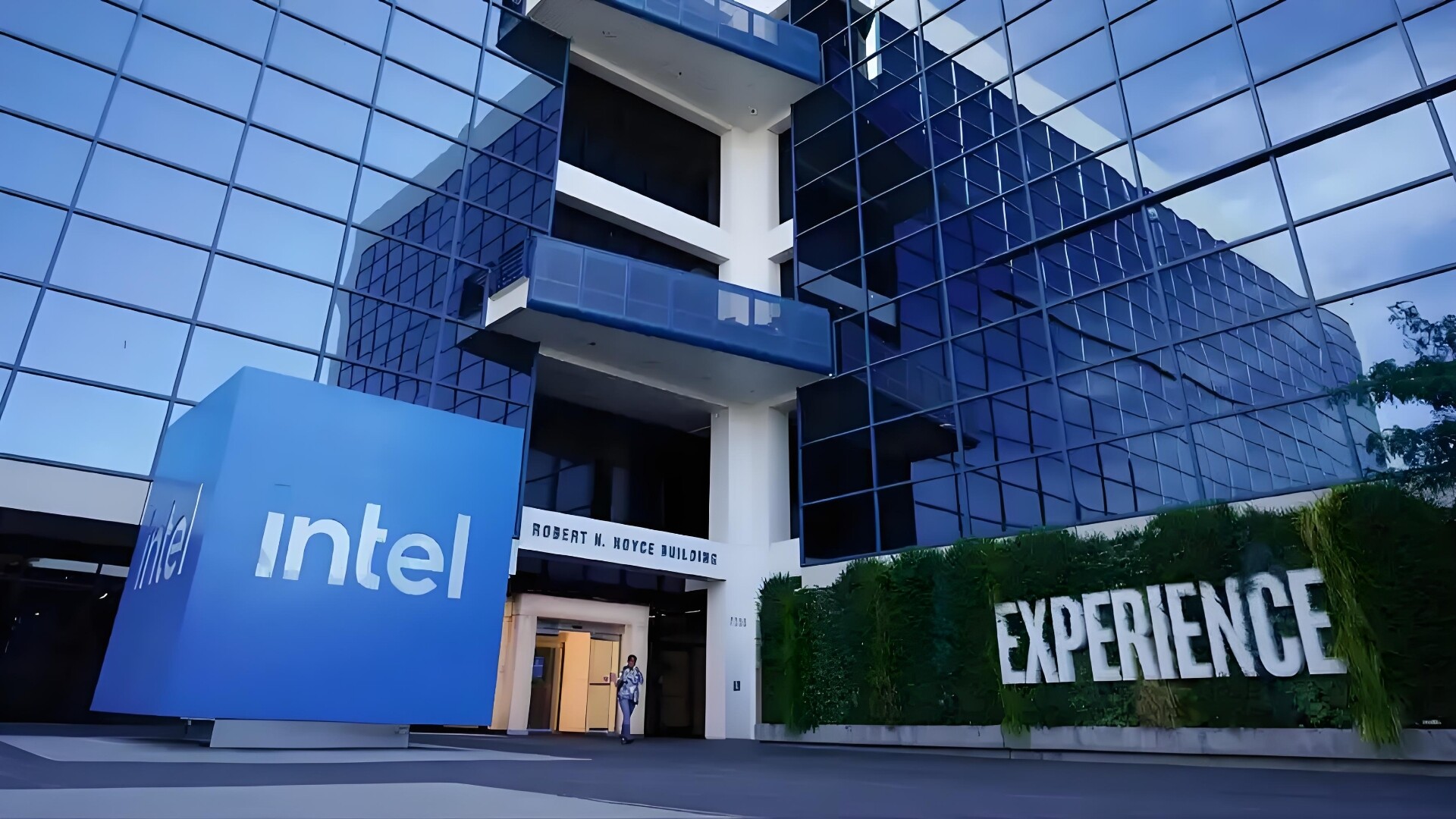
Intel released its Q2 2026 earnings: Revenue, adjusted EPS, and gross margin all significantly exceeded market expectations. The Data Center and AI business achieved its fastest growth in history, and the Client business also outperformed forecasts. The company's Q3 revenue guidance continued to substantially surpass consensus estimates, indicating that AI infrastructure buildout is reigniting demand for server CPUs, custom chips, and wafer fabrication.
The company simultaneously raised its 2026 capital expenditure guidance from $18 billion to over $20 billion and expects a significant increase in spending in 2027, providing support for the semiconductor equipment, cleanroom, advanced packaging, substrate, and memory supply chain.
However, Intel Foundry still recorded an operating loss of over $2 billion, with external foundry revenue remaining a small portion. The rapid expansion of capital expenditure will also continue to test cash flow. Intel's stock initially rose about 13% in after-hours trading before paring gains to roughly 4%.
Q2 Results: Revenue and Margins Beat Across the Board, Cash Flow Still Impacted by Special Items
Q2 revenue was $16.13 billion, up 25.4% year-over-year, marking the fastest growth in 15 years. This exceeded the consensus estimate of approximately $14.4 billion and was $1.8 billion above the midpoint of the company's prior guidance.
Adjusted EPS was $0.42, nearly double the market estimate of $0.22. Adjusted gross margin was 41.8%, up 12.1 percentage points year-over-year and 2.8 percentage points above company guidance. Revenue growth, higher average selling prices, an improved product mix, and better manufacturing process yields drove adjusted operating profit to $2.8 billion, compared to an operating loss of $500 million in the same period last year.
GAAP net loss was $11.0 billion, with EPS of -$2.16, primarily due to a $12.5 billion non-cash fair value loss related to shares held in trust with the U.S. Department of Commerce. Excluding related adjustments, the company achieved a net profit of $2.2 billion.
Q2 operating cash flow reached $7.0 billion, with cash and short-term investments totaling approximately $30 billion. However, impacted by $12.2 billion in net partner funding outflows, adjusted free cash flow was -$8.4 billion. As Q2 capital expenditure itself was $2.7 billion, the negative free cash flow largely reflects partner funding arrangements. As manufacturing and backend capacity investments increase further in 2027, cash flow improvement may still be delayed.
Data Center Growth at 59%, Client Business Beats Expectations but PC Demand Under Pressure
Data Center and AI business revenue was $6.26 billion, up 59% year-over-year and 24% quarter-over-quarter, significantly exceeding the market expectation of approximately $5.4 billion. Operating profit rose to $2.47 billion, and operating margin improved to 39.5% from 16.1% in the same period last year.
Growth was primarily driven by strong demand for server CPUs from hyperscale cloud providers and enterprise customers. Custom chip revenue nearly tripled year-over-year and is now on an annualized run rate close to $2 billion. Intel expects server CPU industry shipment volumes to maintain strong double-digit growth in 2026 and 2027, with momentum potentially extending into 2028.
Client and Physical AI business revenue was $8.88 billion, up 13% year-over-year, exceeding the market expectation of approximately $8.0 billion. AI PC revenue grew 26% quarter-over-quarter and now accounts for roughly two-thirds of Client business revenue; edge computing contributed about 10%.
Growth in the Client business was mainly driven by a higher mix of premium products, rising average selling prices, and cost pass-through. Due to memory price increases and supply constraints, the company expects 2026 global PC consumption to decline by a low double-digit percentage, and second-half performance will also be weaker than normal seasonal levels. Intel plans to shift more limited capacity towards higher-demand data center CPUs.
Foundry Losses Continue to Narrow, External Customers Still Need to Materialize
Intel Foundry revenue was $5.77 billion, up 31% year-over-year. Operating loss narrowed to $2.09 billion from $3.17 billion in the same period last year, with the loss rate decreasing from 71.7% to 36.2%.
18A wafer starts grew over 50% quarter-over-quarter, approximately 25% above the company's target. Improvements in yield, cycle time, and factory utilization have driven down the manufacturing cost of major products like Panther Lake by about 50% year-to-date, and the company expects a further reduction of around 20% within the year.
18A-P has entered risk production. PDK 0.9 for 14A is scheduled for delivery in October, with risk production expected to begin in the second half of 2027 and high-volume manufacturing in 2028.
However, Foundry's external revenue this quarter was only $293 million, accounting for about 5% of the segment's revenue. Growth continues to be driven primarily by Intel's internal products. Management stated that external customer feedback is positive but has not yet disclosed large-scale production orders that verify the commercial appeal of 18A-P or 14A.
Earnings Call: Supply Gap Persists, Capital Investment Still Needs Order Validation
Management indicated that advanced process logic chips, silicon wafers, memory, substrates, and advanced packaging are facing severe supply constraints, with shortages expected to persist. Some bottlenecks may ease between the end of Q3 and Q4, providing further room for Q4 revenue growth, but the company expects it will not be able to fully meet server CPU demand by year-end.
The upward revision in capital expenditure is based on long-term customer agreements and demand signals. However, the company did not disclose how much of the new investment corresponds to external Foundry customers, nor did it confirm that 14A or 18A-P has secured formal high-volume manufacturing orders from major customers.
Intel currently has approximately $40 billion in liquidity and holds roughly $10 billion in non-core assets available for divestiture. Management also stated that if future expansion needs exceed the support capacity of internal cash flow and customer prepayments, the company may access capital markets for financing. The effective return on 2027 capital investment will depend on the duration of server demand, the speed of 18A cost reduction, and the realization of external foundry orders.
Q3 Guidance Significantly Exceeds Expectations, 2027 CapEx Set to Increase Further
Intel expects Q3 revenue between $15.8 billion and $16.8 billion, with a midpoint of $16.3 billion, representing roughly 19% year-over-year growth and exceeding the consensus estimate of about $15.1 billion. The company guided for adjusted EPS of $0.38 and an adjusted gross margin of 42%.
Q3 gross margin is expected to be roughly flat compared to Q2. New products like Panther Lake and Granite Rapids are still in the early stages of production ramp-up, with unit costs higher than the company average. As 18A yields and volumes continue to improve, the costs of new products are expected to gradually translate into gross margin support by 2027.
The company raised its 2026 capital expenditure guidance from $18 billion to over $20 billion and expects 2027 capital expenditure to be significantly higher than 2026. The additional spending will cover Intel 3, 18A, 18A-P, and 14A process technologies, advanced packaging and EMIB-T, cleanroom construction, as well as substrate and memory supply assurance.
This earnings report shows that Intel is regaining growth opportunities from the AI infrastructure cycle. Server CPUs, custom chips, and the 18A production ramp are jointly driving rapid improvements in revenue and profit. The Q3 guidance also proves that current demand remains strong.
The after-hours stock price gain narrowed from approximately 13% to around 4%, reflecting that the market has already adopted a higher evaluation standard: short-term earnings beats support the recovery thesis, but Foundry external revenue, advanced process customers, return on capital, and free cash flow will determine whether this recovery can translate into a sustainable valuation re-rating.





