Hedge fund manager Russell Clark: US Treasuries are a bigger speculative bubble than AI, and tech giants' massive spending is to "keep Musk at bay"


- Core Thesis: Hedge fund manager Russell Clark argues that the biggest speculative bubble in current markets is not AI, but US Treasuries. He predicts the 10-year Treasury yield will rise to 10%, and points out that tech giants' massive capital expenditures on AI are actually a defensive maneuver aimed at keeping Elon Musk from entering the playing field, rather than a pure bet on AI's prospects. This signals a market shift from an era of "low interest rates and capital abundance" to a new cycle of "high wages, high inflation, and high interest rates."
- Key Elements:
- The Treasury Bubble and High-Yield Forecast: Clark believes that for the US government to make housing affordable for the younger generation, wages need to grow by 7% annually. Achieving this requires real interest rates of around 3%, which, plus inflation, would push nominal rates to 10%. He sees the 10-year Treasury yield reaching this level.
- AI Capital Expenditure as Defensive Investment: Clark argues that the core motive behind the massive AI spending by giants like Google and Microsoft is defensive—to protect their own business moats and prevent Musk from entering the AI field through avenues like SpaceX and disrupting the existing landscape.
- AI's Impact Focused on White-Collar Workers: Clark believes AI's impact on the labor market will primarily hit professional white-collar groups such as lawyers, accountants, and fund managers. Their wages are linked to asset prices, rather than affecting lower-tier labor, thus not breaking the narrative of the high-wage era.
- Semiconductor Analogy to 1970s Oil: Clark likens semiconductors to the "oil" of the new era, arguing that their prices will remain high due to supply constraints, similar to oil in the 1970s. This supports the long-term high pricing of chips from companies like Nvidia and continues to drive related investments.
- Private Credit as a Hidden Risk: Clark calls out the private credit and private equity sectors, stating their asset quality is poor and that redemption restrictions have already emerged. Once money market fund yields rise to 7%-8%, investors will begin to question the rationale for holding highly illiquid private credit funds.
Original Author: Zhao Ying
Original Source: Wall Street News
A hedge fund manager bluntly stated: the biggest speculative bubble in the market isn't AI, but US Treasuries — he predicts the 10-year Treasury yield will rise to 10%, and believes tech giants' massive spending on AI is essentially a defensive move to "guard against Musk."
Recently, hedge fund manager Russell Clark appeared on the podcast "Other People's Money" for an interview with host Max Wiethe. He shared a series of颠覆性观点 on hot market topics including the US Treasury market, the logic behind AI capital expenditure, semiconductor industry trends, and private credit risks.
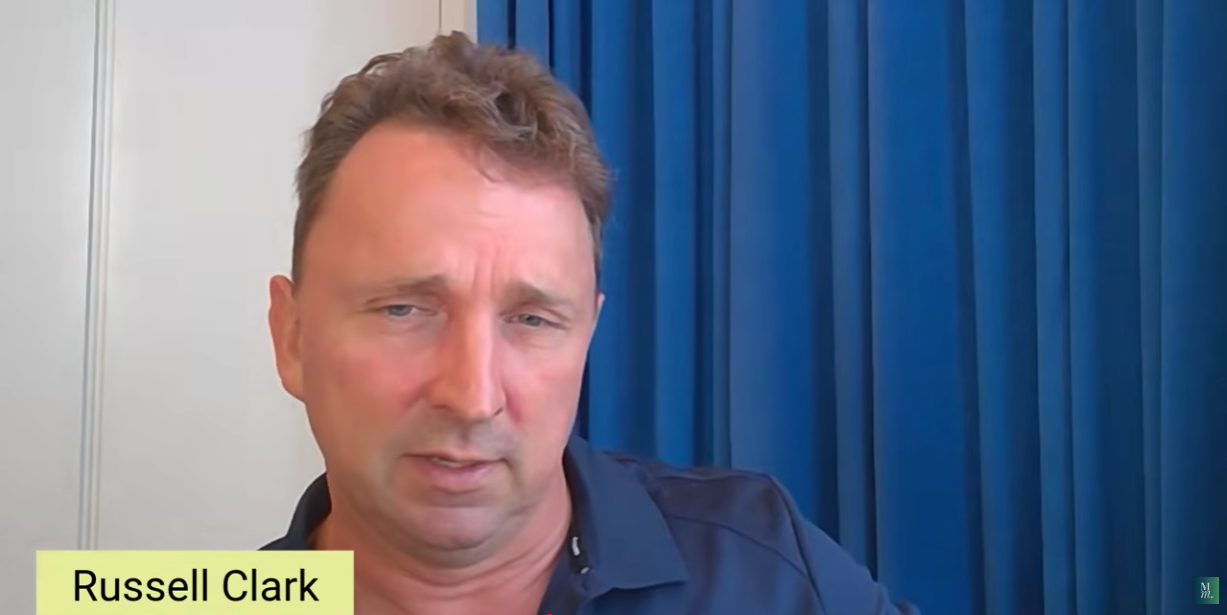
Clark, currently based in London, manages a hedge fund and regularly writes market commentary on Substack. His series of judgments have garnered attention in the market — the core logic is: we are transitioning from an era of "capital surplus and low interest rates" into a new political and economic cycle characterized by "high wages, high inflation, and high interest rates."
Treasuries Are the Biggest Bubble: 10-Year Yield Target of 10%
Amid the heated debate over the AI bubble, Clark instead targets a much larger market.
"I still have a 10% yield as my target for Treasuries this year," he stated directly, revealing this astonishing figure.
His logical chain is clear: If the US political goal is to make housing affordable again for those under 40, wages need to grow by about 7% annually, doubling within 10 years; simultaneously, nominal housing prices should remain unchanged, while real prices continue to fall. To achieve this, real interest rates need to be around 3% — combining with inflation, this means interest rates need to rise to approximately 10%.
"If real interest rates stay around 3%, people would deposit money in banks rather than invest in physical assets."
Clark places this judgment within a longer historical perspective. Citing the leading indicator significance of Japanese government bonds (JGBs) — "I have always believed JGBs are an excellent leading indicator for US Treasuries" — he points out that JGBs were once known as the "widowmaker trade," with the market discussing their debt unsustainability for nearly 30 years, "until it finally collapsed."
He also notes that the freezing of Russia's foreign exchange reserves in 2022 is a significant signal: "If a country has foreign exchange reserves, why keep them there?" He believes global reserve assets will naturally shift from Treasuries to gold — a trend quietly unfolding, albeit slowly.
More broadly, Clark sees the current political transformation as the fundamental driver: since the Reagan Revolution of 1980, capital accumulation has depressed wages and interest rates; now, the political pendulum is swinging back, with demands for "full employment, high wages" once again dominating the policy agenda, implying sustained inflation and rising interest rates.
"Tech Giants' AI Spending Isn't for AI — It's to Guard Against Musk"
On the issue of AI capital expenditure, Clark offers an interpretation截然不同 from the mainstream narrative.
"The real question is, Elon Musk, through SpaceX, is essentially saying: I want to enter the AI field too. I produce computing devices, and I have a way to make cheaper computing equipment."
He believes this is the true motivation behind the massive spending by tech giants like Google, Microsoft, and Amazon — not betting on AI's future, but defensively protecting existing business moats.
"Google, Microsoft, and even Amazon have highly profitable businesses. They are all striving to stay ahead, trying to keep Elon Musk from getting a foothold. That's my understanding of this situation."
Clark draws a parallel to Tesla's rise: traditional automakers struggled to produce competitive electric vehicles because they were still protecting their legacy combustion engine businesses, resulting in "Tesla being worth multiples of those traditional automakers." He believes the tech industry is undergoing the same logic — "if we don't invest, we're finished."
For this reason, he is highly skeptical of views predicting sharp cuts in AI capital expenditure: "I very much doubt we will see Microsoft, Meta, Google, or Amazon announce a 50% cut in AI capex tomorrow — I think the first to cut spending are often the companies that are about to lose money."
Clark also dismisses the idea that AI will disrupt the labor market, thereby undermining his macro narrative of a high-wage era. He argues AI's impact is mainly concentrated among professional white-collar workers — lawyers, accountants, fund managers, senior doctors — "whose wages are already tied to asset prices," rather than impacting the lower-level labor market. Citing the post-WWII era as an example: major technological breakthroughs like nuclear energy and jet engines followed, yet wages rose by 1000%. "Technological change and wage issues are actually two different topics."
Semiconductors Are the New Oil; Supply Constraints Will Support Prices
Clark proposes an imaginative analogy: semiconductors today are like oil in the 1970s.
"If you look at the 70s, holding both oil and gold was a good strategy. Oil was key to economic growth everywhere, and its supply was constrained... Modern economic growth is actually driven by semiconductors or computing technology, so semiconductor prices remain high, like the new oil of the 70s."
He points out that Nvidia's chip prices have remained high for the past five to six years. Traditionally, semiconductor prices fall with capacity expansion, but this time they haven't. Meanwhile, supply-side hard constraints exist, highly analogous to the logic of oil in the 1970s.
Private Credit: A Severely Underestimated Time Bomb
Clark specifically calls out private credit and private equity — which he sees as harboring the market's most overlooked risks.
"Why would I hold this illiquid private credit fund? I have no idea about the value of these assets, and their condition is quite poor."
He notes instances of "redemption restrictions" — where redemptions have, for the first time, exceeded new subscriptions, forcing funds to activate redemption limits. He bluntly states that once money market fund yields reach 7% or 8%, rational investors will start questioning the need to hold illiquid private credit funds.
"Private equity and private credit emerged in the 1980s, when we had already moved away from pro-labor policies. To me, these businesses are essentially relics of that era."
He believes problems in these asset classes were apparent a year and a half ago, but the market has been slow to face them — while extremely low credit spreads and high stock markets mask the underlying real risks. "The problem will continue to affect the market slowly but surely."
Transcript
Russell Clark: 00:00
If you look at people aged 40 and under, specifically the 20 to 30 age group, their biggest problem is being unable to afford housing costs. If you want to bring housing costs back to more reasonable levels, wages need to grow by about 7% annually, doubling within 10 years. At the same time, the nominal value of the housing market should remain stable, while the real value should fall. This requires real interest rates to be around 3%, so that people deposit money in banks rather than invest in physical assets. This means interest rates could reach around 10%. That remains my target for this year: Treasury yields hitting 10%. So, the question is: how high can wages actually go?
Russell Clark: 00:49
This episode of "Other People's Money" is sponsored by the Tocurium Soybean Fund, ticker symbol Soy B. Welcome to "Other People's Money." I'm Max Wiethe, and with us today is hedge fund manager Russell Clark from London.
Max Wiethe: 01:02
Russell, thanks for joining us. You not only write a blog but also manage a hedge fund. I recently read your articles and found your piece from last week on AI investment very interesting. Many people think this might be the end of a major speculative bubble. In AI investment, you pointed out another asset class that you believe is much larger and more speculative. Can you tell me why you think this larger market is now facing many risks? I think you're talking about the Treasury market, right? Two questions: First, is the AI market speculative?
Russell Clark: 01:44
So, why do I think there's speculation in the US Treasury market? Typically, when I look back at any major sell-off event in my investment career, there are always obvious signs that things are wrong. But people choose to ignore them, partly due to human psychology — when a problem arises and action is needed, people often prefer to ignore it because it's easier. That's probably human nature.
Russell Clark: 02:25
For example, during the 2008 financial crisis, people recognized the housing problem 3 to 4 years before it fully materialized. The issue was indeed beginning to show. Everyone thought it was a problem we could handle because we had dealt with similar situations before. Of course, some said bank balance sheets were in terrible shape, so this housing crisis would cause bigger problems. Eventually, everyone accepted that fact.
Russell Clark: 02:58
What I'm saying, especially regarding the US Treasury, but government bonds in general, is this: In recent years, as voters and politicians have gradually realized that the government will do whatever it takes to maintain economic growth, the government seems more willing to spend. So, if any problem arises, the government steps in — that's what happened with the Trump administration. They even took a more extreme approach: willing to spend whatever is necessary while not taxing anyone, especially large corporations.
So, the government spends but doesn't try to increase taxes. If you look closely at government financial statements, current revenue can barely cover essential expenses like Social Security and interest payments. I think such expenses account for about 90%. Of course, this doesn't include other expenditures like defense, education, infrastructure, etc. So, overall, the government's spending and tax mechanisms are quite well-established. This applies not only to the US but also to Japan.
Russell Clark: 04:23
What I found interesting was that in 2022, I was bearish on Treasuries for a while. There were other reasons, but mainly because after Russia's foreign exchange reserves were frozen, the Russian government couldn't use them after invading Ukraine. I thought, if a country has foreign exchange reserves, and it's the Russian government, why keep that money there? Thinking further, why would any country choose Treasuries as their foreign exchange reserves?
Russell Clark: 05:20 So, I expected to see a natural shift from the Treasury market to the gold market. That seemed likely to me. However, I also suspected that investors seeking fixed income would gradually disappear, especially those seeking sovereign government bond investments. And indeed, that's what happened. The Treasury market has performed relatively well.
But if you look at more peripheral sovereign bond markets, like Japan, the situation is different. Japan is one of the world's largest sovereign bond markets, but yields there have risen significantly. The UK situation is more complex, with the market still very unstable. Over the long term, investors are still selling Treasuries. I think the US Treasury market is performing okay, but the truly willing investors are gradually disappearing.
Russell Clark: 06:13
This is the point I've been emphasizing when discussing this issue. I am 52 years old and getting older.
Russell Clark: 06:24 The idea of establishing large sovereign wealth funds and accumulating massive foreign exchange reserves is actually relatively new. Until 1980, people didn't know how to hold another country's fixed income as foreign exchange reserves. That makes sense because all foreign exchange reserves were essentially gold. Then, Japan started buying a lot of Treasuries to prevent their currency from appreciating.
Max Wiethe: 06:55
So, when you look at those 500-year charts, you see that the former reserve currency was the pound sterling, and before that, another European currency. We can trace it back to the Portuguese era, when people thought that currency was closely related to the world's strongest navy. But that wasn't really the case. Unlike today, we didn't hold other countries' bonds or currencies.
Russell Clark: 07:17 So, reserve currencies are a relatively new concept. Historically, gold was the only form of foreign exchange reserves. Usually, countries with strong militaries had the most gold for various reasons — basically, they would take gold from other places or from countries that had it. Therefore, if a country lost a war, its gold reserves would be used to compensate the victors.
So, when people talk about foreign exchange reserves, they often conflate them with the main trading currency or the currency used for transactions. And these currencies were often backed by gold. In fact, the dollar was backed by gold until the 1970s. You know, after World War I, the British Empire began to disintegrate.
Max Wiethe: 08:11
You saw the pound sterling depreciate because their calculations couldn't accurately reflect reality. So, do you think we are now returning to a historical period where hard assets, especially gold, will become a major component of foreign exchange reserves, or perhaps the concept of foreign exchange reserves has changed?
Russell Clark: 08:32
They will really disappear. Yes, I do think so, because I believe it's all a political debate, not a reasoning based on facts. So people often use empirical data to refute me, claiming that's how it was in the past. My response to them is that we are in a constantly changing political environment, so this change is inevitable.
Russell Clark: 08:59
I think that after 1980, with the Reagan Revolution, people gradually de-emphasized full employment and rising wages. There was a greater tendency to let prices float freely and let wages adjust according to market conditions. Wages can be adjusted in two ways: either cut wages or devalue the currency to lower wage levels and increase competitiveness. Therefore, I think from the 1980s onwards, when many countries faced fiscal, financial, or current account crises, they typically chose to devalue their currency. This lowered the wages of domestic workers, thereby driving economic growth through exports.
This model was further developed in Japan, which bought Treasuries to keep the yen undervalued, attempting to create inflation and economic growth through this method. Part of these arguments also involved free trade, i.e., lowering trade barriers.
Russell Clark: 10:14
We are gradually moving away from that government-led model of industrial organization. When I was a child, all major airlines were government-owned. Later, the government sold off these companies, and unions disappeared. In those countries, there were once three major automakers — General Motors, Ford, Chrysler — which were heavily regulated and protected by the government. After 1980, Japanese automakers entered these industries, undermining the union organizations within these companies. Therefore, the entire environment became very unfavorable for wage growth.
For highly competitive countries like Switzerland, Japan, or even Germany, they would strive to appreciate their currencies and then offset this appreciation by buying dollars. So this capital-driven growth model was actually designed to somehow maintain low wages.
Russell Clark: 11:13
But now I feel the political environment is gradually shifting towards a post-WWII state — achieving high wages, full employment, etc. While this hasn't fully materialized yet, it's getting closer. We can observe this trend from US corporate investment. Various government policies are also constantly adjusting, like increasing tariffs. Therefore, I think we are gradually returning to this inflationary environment