






"News Selling" or Cycle Peak? The Real Logic Behind the Plunge in Samsung and SK Hynix Stock Prices


- Core Thesis: AI memory (HBM) is the most critical bottleneck in the current AI infrastructure. Three companies – Samsung, SK Hynix, and Micron – hold a monopoly, with profits surging. However, their stock prices have fallen due to cyclical panic, revealing a cognitive divergence between short-term market trading and long-term fundamentals.
- Key Elements:
- Samsung's Q2 2026 profit reached $58.5 billion, surpassing Nvidia's $53 billion for the same period. Over 94% of this came from the AI memory (HBM) division, with a gross margin of 52%.
- The global HBM market is a monopoly of just three players: Samsung, SK Hynix (combining for a 60% share), and Micron. Each 1GB of HBM consumes the production capacity equivalent of 4GB of standard DRAM, leading to price increases across Apple's entire PC lineup.
- AI inference requires reloading the entire model weight each time, and new models have 10-20 times the memory demand of the previous generation, creating a "memory black hole" effect.
- HBM prices have surged continuously: up 90% in Q1, another 50-60% in Q2, with an expected further 20% increase in Q3. Samsung's annual profit has exceeded the combined total of the past 40 years.
- Despite record profits, Samsung's stock fell 9% and SK Hynix fell 15% on earnings day, primarily due to a "sell the news" event compounded by cyclical panic, with the market worried about a slowdown in capital expenditure.
- SK Hynix listed on the Nasdaq via an ADR offering, raising approximately $30 billion, and was oversubscribed 4 times, with Leopold Aschenbrenner as a seed investor.
- Production capacity from new wafer fabs is not expected to come online until 2030. Demand growth is 3-5 times that of supply, leading to sustained tight supply for the coming years.
Organized & Compiled by: TechFlow
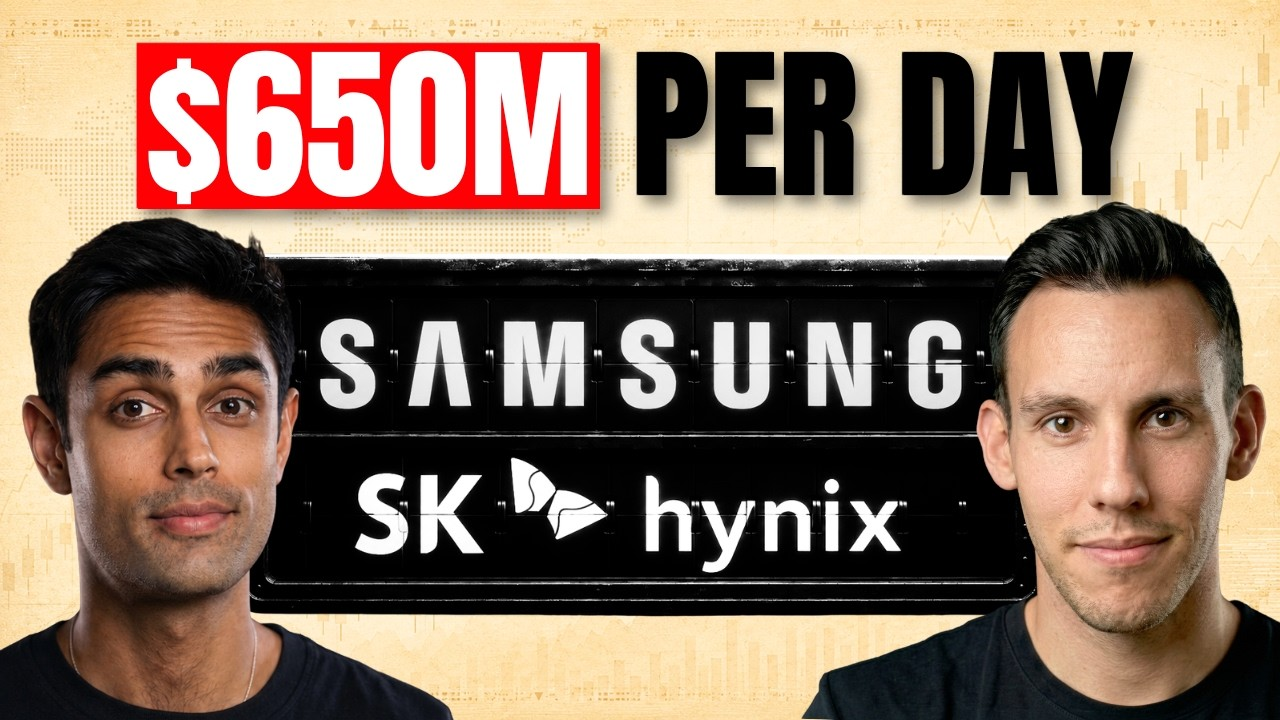
Guest: EJ, Co-host of Limitless Podcast
Host: Josh, Limitless Podcast
Podcast Source: Limitless Podcast (formerly Bankless channel)
Original Title: The AI Trade Everyone's Getting Wrong
Air Date: July 9, 2026
Key Takeaways
Samsung posted a record quarterly profit of $58.5 billion, surpassing NVIDIA's $53 billion for the same period. Over 94% of this profit came from a single division: AI memory. Only three companies globally can produce HBM (High Bandwidth Memory): two in South Korea (Samsung and SK Hynix) and one in the US (Micron). Every AI inference requires re-reading the entire model's weights, leading to memory demand 10 to 20 times that of consumer products, and this demand doubles with each new model generation. Furthermore, producing 1 GB of HBM consumes the wafer capacity equivalent to 4 GB of standard DRAM, directly squeezing memory supply for phones and PCs, a consequence reflected in Apple's price hikes across its product line.
The paradox: Memory companies are seeing record profits and rising prices, yet their stock prices have collectively entered a bear market. Samsung fell 9% on its earnings day, SK Hynix dropped 15%. The hosts believe this is a combination of "sell the news" events and cyclical panic, with no change in fundamentals. SK Hynix is listing on Nasdaq via ADR, raising approximately $30 billion with 4x oversubscription, with Leopold Aschenbrenner participating as a seed investor.
Highlight Reel
Memory Monopoly's Profit Margins Trump All
"Samsung's gross margin is 52%, SK Hynix's is 72%. For every $100 worth of memory sold, $72 goes straight to the bottom line. In comparison, Apple's hardware gross margin is around 30%."
"Samsung memory division employees received year-end bonuses equivalent to 6 times their annual salary. South Korea's luxury goods market sales have tripled in the past 4 months."
AI is a Memory Black Hole
"AI is essentially a memory black hole, more extreme than any consumer or enterprise tech wave we've ever seen."
"Every time you submit a prompt, whether to ChatGPT or Claude, it has to re-read the entire model weights. Every single time."
"Each new model demands 10 to 20 times more memory than its predecessor. With models having 15 trillion or 20 trillion parameters, this demand is only going up."
The Price Surge Isn't Over
"Prices rose 90% in Q1, another 50-60% in Q2, and are expected to rise another 20% in Q3. Samsung earned more money in one year than in the previous 40 years combined."
Record Profits, Bearish Stock Prices
"Samsung beat earnings expectations on its earnings day, posting a single-quarter profit higher than NVIDIA's. Then its stock dropped 9%. SK Hynix dropped 15%."
"Meta hinted at cutting back on AI capital expenditures. Honestly, they haven't really produced anything useful."
"If you bought a month ago, you look pretty foolish now. But 6 to 24 months out, these companies are still very strong businesses."
Main Content
Samsung: The Misunderstood King of AI Profits
Josh: Samsung just became the world's most profitable company, but almost no one knows exactly what's driving it. I used to think of Samsung for smartphones and PCs, but actually, 96% of their profit comes from one division: memory. The memory market has only three major suppliers, and two happen to be in South Korea. The two most profitable companies globally are in the same country. What's going on? EJ, how did Samsung do it?
EJ: I only knew Samsung as a phone seller when I was a kid. Over the past year and a half, I've heard its name tied to AI, and I got curious about what the company actually does. Let's look at some numbers. Samsung's Q2 profit was $58.5 billion, beating analysts' estimates of $55 billion by $3 billion. More importantly, they crushed NVIDIA, which only had $53 billion for the same period. A year ago, in Q2 2025, Samsung's profit was just $3.4 billion. From $3.4 billion to $58.5 billion in one year. What happened in between?
The answer is HBM, or High Bandwidth Memory. Samsung is currently the world's second-largest HBM supplier. Why is HBM so valuable? Because every GPU NVIDIA sells, every TPU Google makes, and any AI chip requires a massive amount of memory. Note the word "massive." Consumer devices (laptops, PCs) have predictable memory needs, but AI's memory demand is exponential.
Samsung makes $650 million a day, $27 million an hour, $7,500 a second. That's more than the world's most valuable companies. Yet Samsung isn't the world's most valuable company, which is interesting.
The Memory Triopoly and HBM Monopoly
Josh: Computers need two things: a workbench (memory) and a filing cabinet (storage). Only three companies in the world can build these.
EJ: Right. There are three types of memory, each with its own purpose. DRAM is like the DDR5 in your PC; it's the workbench, temporary RAM that clears when you power off. NAND is your SSD or iPhone flash storage; it's the filing cabinet, slower but cheaper. Then there's HBM, High Bandwidth Memory, which is everything in the AI era.
HBM manufacturing is incredibly complex. DRAM chips are stacked like skyscrapers, 12 to 16 layers high, using extremely precise processes. SK Hynix holds about 60% of the entire HBM market. Any AI chip made likely uses their memory. A triopoly is established, and with it, profit margins have expanded.
Josh: Here's a telling number. 1 GB of HBM consumes the wafer capacity equivalent to 4 GB of standard DRAM. This means for every wafer shifted to AI memory, four times the capacity for phone and PC memory disappears. Apple raised prices across its entire product line for the first time: MacBook Air from $1100 to $1300, MacBook Pro from $1700 to $2000, Mac Studio from $4000 to $5300. Because people buying Mac Studios want to run local inference, requiring huge memory, and there simply isn't enough.
AI is a Memory Black Hole
EJ: To put it in one sentence why everyone is so bullish on these companies: AI is basically a memory black hole, more extreme than any technology wave we've ever seen.
You write a prompt and submit it, whether to ChatGPT or Claude. Every single time, it has to re-read the entire model weights. What are model weights? They are the parameters those companies spent billions of dollars training. Every inference re-reads them. And each new model demands 10 to 20 times more memory than the previous one. With models having 15 trillion or 20 trillion parameters, the demand only goes higher.
But that's not even the biggest part. Your chatbot remembering what you said last time, remembering your information across conversations – that temporary storage uses NAND flash, and the demand there is equally immense. So all three types of memory demand are being pulled simultaneously.
Some call it a bubble that will burst. Historically, there's merit to that. The memory industry has always been cyclical. Three years ago, SK Hynix was almost acquired by Micron, the absolute bottom of the cycle. They invested in HBM, not knowing if they could sell it, and Micron almost bought them. They didn't sell, doubled down on HBM, and now they are South Korea's most valuable company.
Price Surge: A Staircase from 90% to 20% Increases
EJ: Look at the pricing. SK Hynix and Samsung's pricing over the last 6 months: Q1 was up 90%. The memory in your everyday phone and PC suddenly doubled in price because one component surged nearly 100%. Q2 was up another 50-60%. Samsung plans another 20% increase in Q3.
Samsung made more money in one year than in the previous 40 years combined, 19 times its profit from the same period last year.
Gross margins: A grocery store makes $3 on every $100 sold, an automaker $7, Apple hardware $30. Samsung is at 52, SK Hynix at 72. For every $100 of memory sold, $72 goes straight to the bottom line. Samsung memory employees received year-end bonuses of 6 times their annual salary. South Korea's luxury goods market sales tripled in the last 4 months. Someone in Taiwan borrowed $60,000 in high-interest loans to buy TSMC stock. Some crazy things are happening in the Asian AI market.
Josh: This surge is brutal. Consumers are already feeling the pain. A 32GB RAM stick is 2 to 3 times more expensive than last year. When building a PC, a third of the cost is now memory. These prices have transmitted to the real consumer market. The question is: can this last? Can they keep raising prices?
EJ: It depends on one variable: will the number of people using AI continue to grow? That's the only proxy metric for whether memory demand will keep increasing. If you believe everyone in the future will run multiple AI agents and use AI for work and life, then memory demand is exponential.
What about supply? New fabs won't be operational until 2030. These fabs are incredibly precise to design and cannot flood the supply in the short term. Demand is 3 to 5 times faster than supply; supply constraints will persist for years. In China, CXMT is producing similar DRAM and HBM, but all their capacity is consumed by local Chinese AI labs. Apple tried to find alternative suppliers in China but found none available.
Another argument: what if a new model architecture emerges that doesn't need as much memory? I think the logic is the opposite. Memory becomes cheaper, more use cases become viable, more AI agents are deployed, and overall economic output increases. The demand for memory actually grows larger.
The Paradox: Record Profits, Bearish Stock Prices
Josh: We've been very bullish on memory. Micron is up 150% since our recommendation late last year. But recently, all memory stocks are down over 20% from their highs. A technical bear market. Samsung beat earnings expectations on its earnings day, posting a single-quarter profit higher than NVIDIA's, and then dropped 9%. SK Hynix dropped 15%. Profits are at records, prices are still rising, but the market is saying "slow down."
What might have spooked the market is Meta hinting at pulling back on AI capital expenditures. Though honestly, they haven't really produced anything useful. It's this strange moment: companies say, "We're great, record profits, strong demand," and the market says, "Wait, this has run up too much, there's unknown risk." What's your take?
EJ: My judgment is simple: this is sell the news. Quarterly earnings season just ended. Global funds had heavy positions in these stocks and were waiting for a good price to re-enter. It's understandable if you think I'm just talking my book. But if you are a long-term AI investor, memory is a necessity, and only these three companies can produce it. That landscape won't change in the short term.
People are worried about the cycle. During the last memory super-cycle in 2017-2018, Micron's P/E dropped to 4-5, and then the stock fell 60%, even while profits were still rising. History does seem to be repeating, but the difference this time: the last cycle was driven by smartphones; you could predict the demand ceiling. This time it's driven by AI; there is no visible demand ceiling.
Here's an interesting historical detail. At the bottom of the last cycle, when memory was cheapest, who was aggressively pushing for lower prices and stockpiling memory? Apple. Apple had pricing power over Samsung and SK Hynix, forcing them to supply DRAM and HBM at the lowest prices. Now the tables have turned. Samsung and SK Hynix are doing what Apple did back then. In an efficient market, this is normal.
SK Hynix Lists on Nasdaq
Josh: There's a major test coming up. SK Hynix is a Korean company, but on July 10th, it is listing on Nasdaq via ADR, raising approximately $30 billion. This is a pivotal moment for the memory industry. How the US market prices SK Hynix will determine the next phase of this memory trade. EJ, will you participate?
EJ: Short answer: yes. I'm bullish on memory. I hold Micron and also a DRAM ETF (a basket of memory companies). If you're a US citizen, buying Korean stocks directly is inconvenient, but you can get exposure through these basket products. I've been waiting for SK Hynix to list in the US for a long time, and I will buy.
Currently, reports say this IPO is 4 times oversubscribed. Institutions, pension funds, and retail investors are all scrambling. Achieving this scale indicates institutions have done deep research on the memory sector and plan to hold long-term.
Josh: Guess who accounts for $2 to $3 billion of that $30 billion? Leopold Aschenbrenner. He's back. Last time we did an episode analyzing his holdings, some questioned his short thesis on NVIDIA. Then NVIDIA dropped 20% from when we recorded that episode. Now he's participating as a seed investor in SK Hynix's IPO. You can question his judgment, but he hasn't been wrong yet.
Long-Term View: Super Cycle or Bubble?
Josh: Let's summarize. Long-term, memory demand has no ceiling. Only these three companies can make it, and new entrants cannot create meaningful competition in the short term. Short-term, people are scared because of the shadow of historical cycles and the rapid run-up. That makes complete sense. If you bought a month ago, you look pretty foolish now. But 6 to 24 months out, the fundamentals of these companies haven't changed.


