






From Pokémon to World Cup: CardBox Aims to Build the RWA Infrastructure for TCGs


- Core Thesis: CardBox is dedicated to building the world's first TCG (Trading Card Game) RWA infrastructure. By combining physical custody, authoritative grading, and on-chain authentication, it aims to solve core pain points in the multi-billion dollar card market, such as poor liquidity and opaque transactions, bringing cultural assets into the realm of digital finance.
- Key Elements:
- The global TCG collectibles market is valued at approximately $13 billion and is expected to grow to over $20 billion within a decade, yet it suffers from low liquidity, high cross-border friction, and a lack of transaction transparency.
- CardBox's solution includes: authorized partnerships with grading agencies like CGC, distributed bank-grade vaults, on-chain instant settlement, and smart contract-guaranteed blind box probabilities, achieving "physical custody with digital circulation."
- Within one month of the beta launch, the platform has attracted over 20,000 registered users, processed monthly trading volumes of hundreds of thousands of USD, and generated over 100,000 on-chain transaction records on the BNB Chain.
- The platform lists over 5,000 card assets and 5 blind box products (featuring Pokémon, sports trading cards, and One Piece), with connections to offline channels in Japan, South Korea, and other regions.
- Future plans include transitioning from a self-operated model to an open asset network, onboarding external asset providers and professional investment institutions; expanding to more IPs like sports cards; and launching a task system to incentivize user trading and collecting behavior.
The Overlooked Hundred-Billion Dollar Sector
Since 2024, RWA (Real World Assets) has become one of the most promising narratives in Web3. However, market attention has been almost exclusively focused on "traditional financial assets" like U.S. Treasuries, real estate, and private credit.
Few have noticed that one class of assets, possessing strong consensus, high liquidity, and deep emotional value, has long been trapped in inefficient offline markets — Trading Card Games (TCG).
According to estimates from multiple market research firms, the TCG collectibles market, represented by Pokémon cards, is a global market worth approximately $13 billion, projected to grow to over $20 billion in the next decade. Over the past twenty years, the returns on top-tier blue-chip cards have significantly outperformed mainstream financial assets. Yet, this market has always been plagued by three major issues: poor liquidity, high cross-border friction, and opaque transactions.
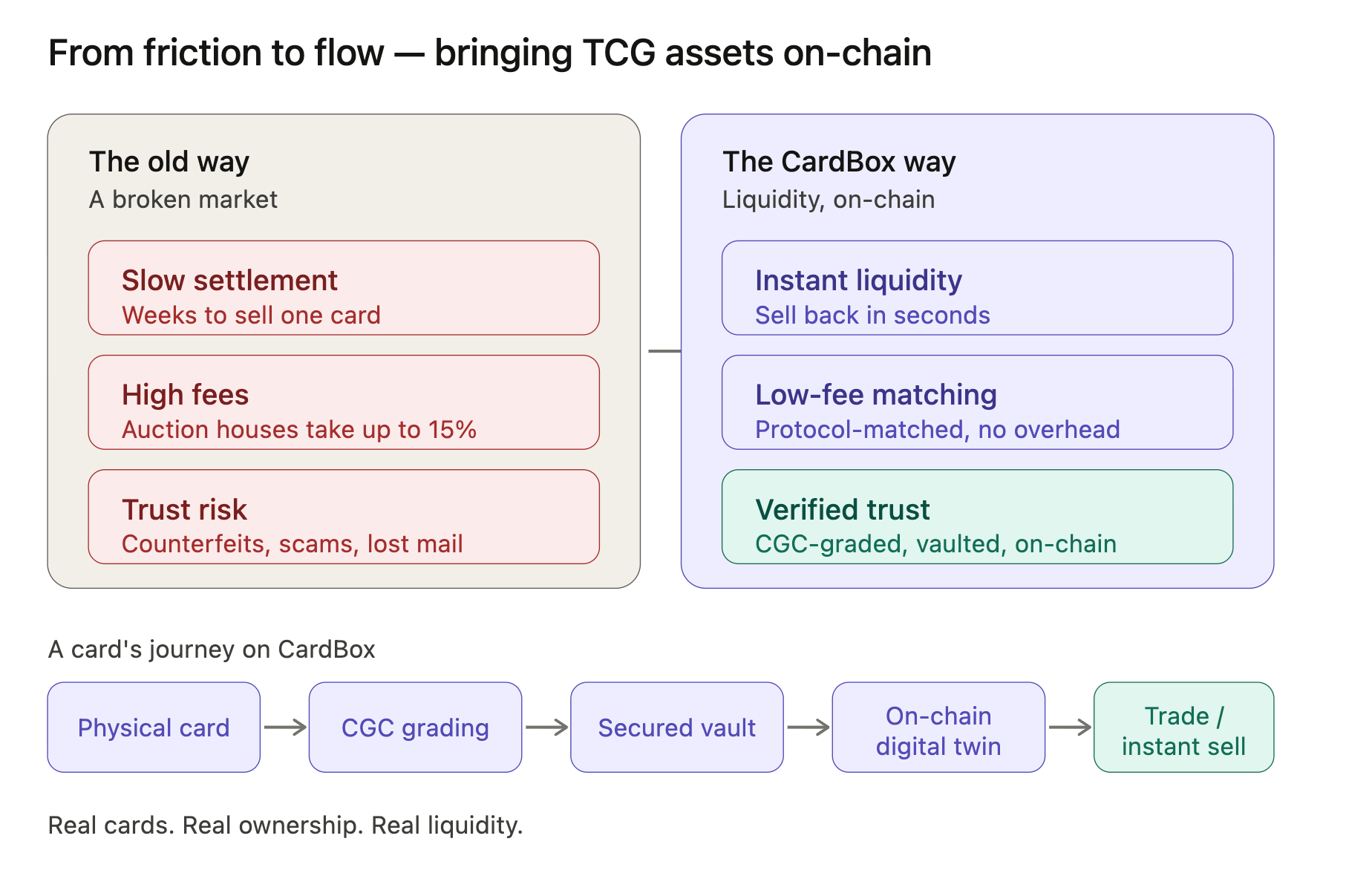
Listing a card for sale to finalizing a deal can take weeks; auction houses charge fees as high as 15%; P2P transactions are perpetually shadowed by the risks of counterfeits and scams. This multi-billion dollar cultural asset market has never truly entered the orbit of digital finance.
What CardBox aims to do is bring it onto the blockchain.
What is CardBox: Not a Blind Box Store, but a TCG RWA Infrastructure
Website: https://cardbox.io/
At first glance, CardBox offers blind box card packs, card trading, and instant buyback services. However, its long-term positioning is not merely a retail platform for selling cards.
CardBox’s goal is to become a leading global TCG RWA infrastructure platform – by connecting asset holders, liquidity providers, and global collector users, it provides underlying services such as physical custody, digital rights verification, liquidity networks, and trade matching for the trading card market.
Simply put: CardBox's value lies not in how many cards it owns, but in building an open network that enables the digitization, circulation, and globalization of collectible assets worldwide.
Why They Can Succeed: Building "Trust" as Infrastructure
The hardest part of bringing cultural assets onto the chain isn't the technology, but trust – how can users be confident that behind an on-chain certificate there is a real physical card?
CardBox answers this question with a complete set of infrastructure:
- CGC Officially Authorized Broker: Partnering with the authoritative grading agency CGC, institutional-grade authentication is embedded directly into the Web3 workflow. Every card undergoes professional grading and anti-counterfeiting measures.
- Distributed Bank-Grade Vaults: Distributed vaults are established in the USA, Japan, and South Korea. Physical cards are stored locally with full insurance, while digital assets circulate globally.
- Liquidity & On-Chain Rights Confirmation: Users can receive instant settlement when selling assets. The physical card remains in the vault, while ownership rights, represented as a digital twin, can be freely transferred on-chain.
- Provably Fair Card Drawing Mechanism: Blind box probabilities are guaranteed by smart contracts, with all assets backed 1:1 by physical vault inventory.
Let the physical remain physical; let the circulation happen on-chain. This is the core philosophy behind CardBox's solution to the "trust" problem.
Platform Traction: Behind the Numbers, A Verifying Real Market
CardBox's growth isn't built on narratives but is written in real data. Since the Beta version launched one month ago, the platform has already achieved a solid set of metrics:
- Over 20,000 registered users, with monthly transaction volume already reaching hundreds of thousands of dollars – This is an exceptionally high conversion rate in the Web3 industry where paid conversion rates often hover in the single digits. It indicates CardBox is attracting not speculators looking for a quick profit, but collector users with genuine interest in card assets who are willing to invest real money.
- The platform has generated over 100,000 on-chain transaction records on BNB Chain, all publicly verifiable and immutable, serving as a testament to the real circulation of digitized card assets.
- Over 5,000 card and box assets, and 5 blind box products (covering Pokémon, Sports Cards, and One Piece series), connecting card partners from Japan, South Korea, Hong Kong, and other regions as liquidity providers and offline channels, jointly building an open TCG asset network ecosystem.
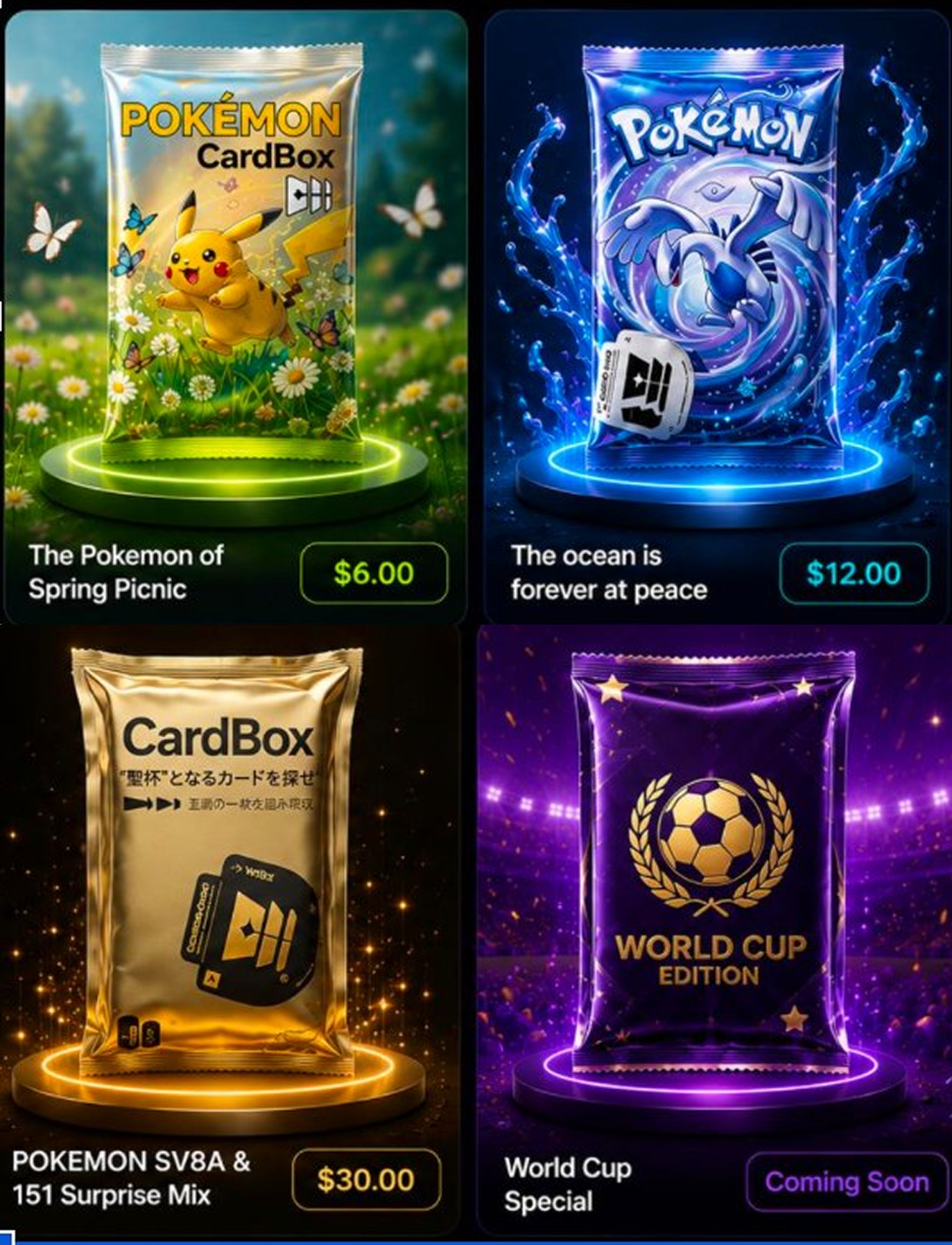
In an industry that often prioritizes "narrative over substance," these numbers answer the most fundamental question: Is the demand in this sector real? The transactions happening daily on CardBox are the answer.
A Real "Unboxing": A $650 Perfect Grade Card and Its Two Destinies
Beyond the data, real "unboxing moments" happen on CardBox every day.
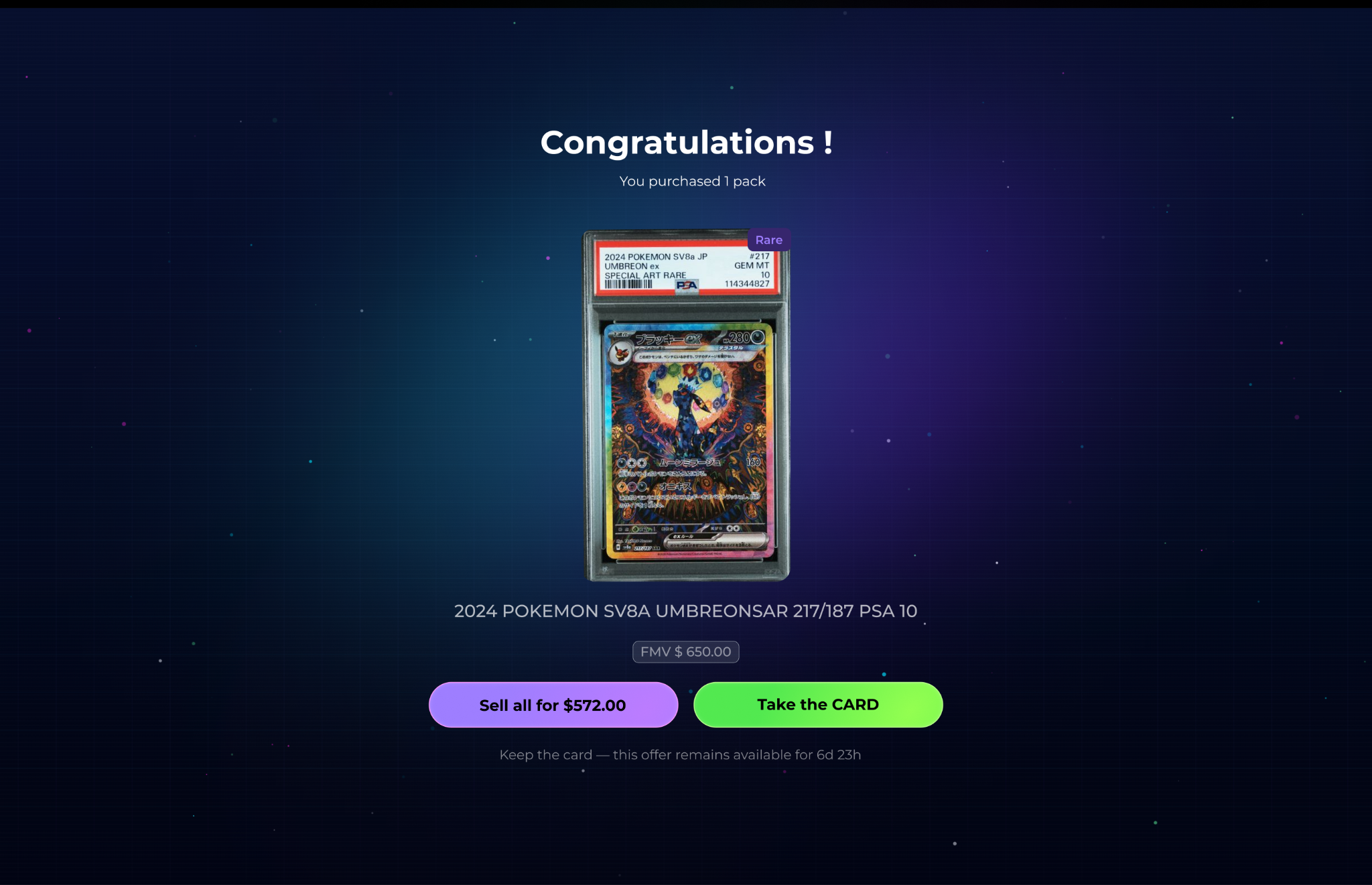
Not long ago, a user opened a blind box and pulled a 2024 Pokémon Umbreon SAR (Umbreon SAR 217/187), graded PSA 10 GEM MT – a perfect score, valued at approximately $650. The user could then choose to keep this physical card or instantly cash it out on the platform with funds arriving immediately – CardBox, leveraging its underlying liquidity network, provides a trading experience with instant matching, no mailing required, and no waiting.
This is the core experience CardBox aims to deliver: The joy of collecting and the liquidity of assets can coexist frictionlessly for the first time. Every card you pull is professionally graded and backed by a vault; its value can be liquidated anytime or held in your hands, whenever you choose.
CardBox: Enabling More Assets and More Scenarios to Flow
CardBox's next chapter revolves around a core goal – continuously enhancing asset liquidity and encouraging more active user participation on the platform. This will be driven along three main lines:
First, evolving from a self-operated model to an open asset network. The platform is progressively introducing external asset providers like card shops, dealers, and collecting institutions, and further engaging collecting funds and professional investment institutions to build an open liquidity network. Asset types will also expand from graded cards to booster packs and booster boxes, offering users richer scenarios and gameplay.
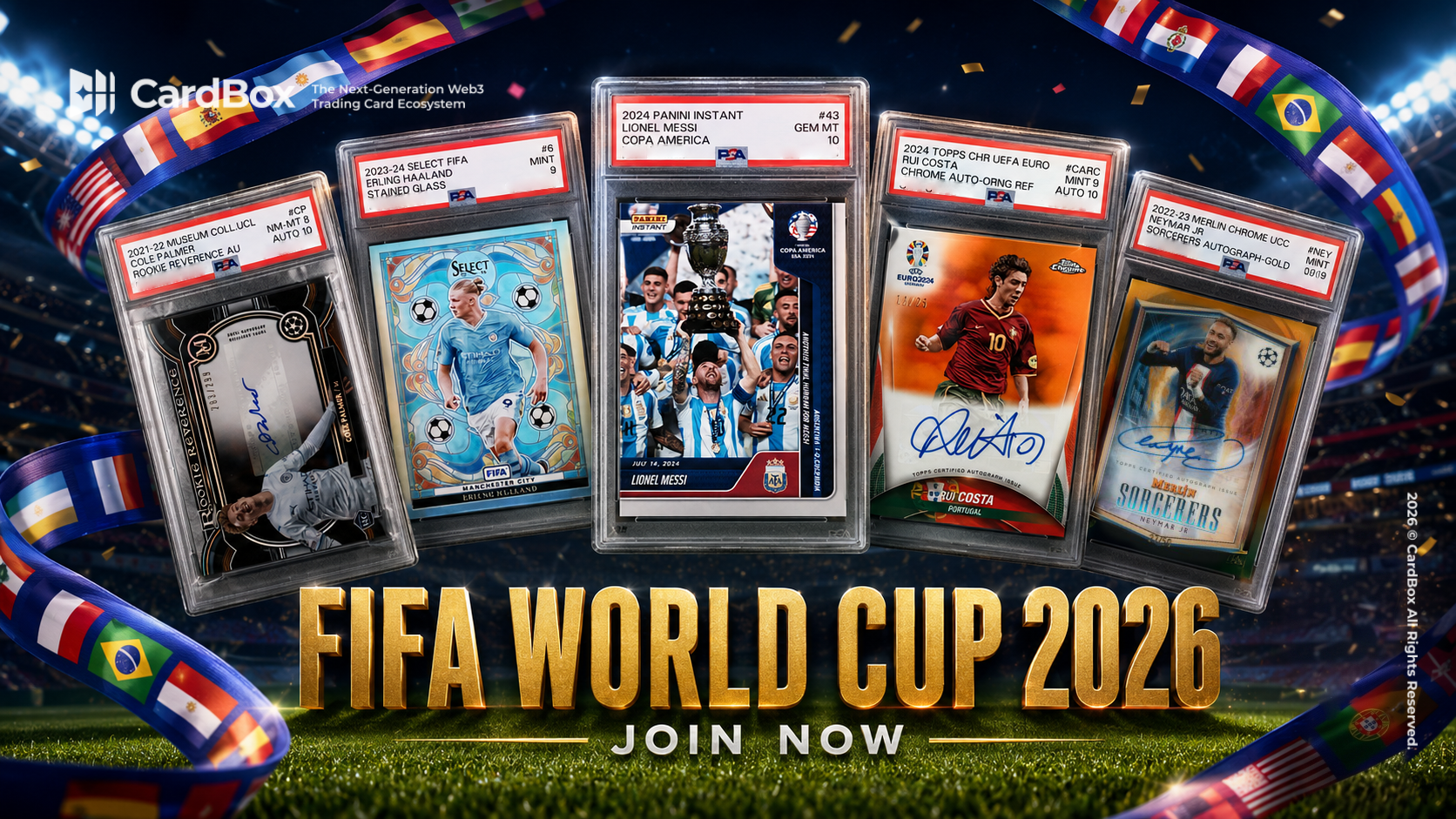
Second, expanding from Pokémon to Sports Cards and more iconic IPs. With the official start of the 2026 FIFA World Cup, the global sports collectibles market is heating up, with significantly increased attention and trading activity for sports cards, event memorabilia, and related assets. CardBox has officially launched World Cup sports card blind boxes, integrating sports collectibles into a unified custody, rights verification, and circulation system, providing users with a richer collection and trading experience.
Third, launching a quest system, making participation itself valuable. CardBox has already introduced a quest and incentive system: users complete tasks through trading, collecting, community participation, etc., to earn rewards. Its significance goes beyond just "benefits" – it transforms users' daily activity into a continuous driver of platform liquidity, linking every action of "browsing, pulling, collecting, and selling" with positive incentives.
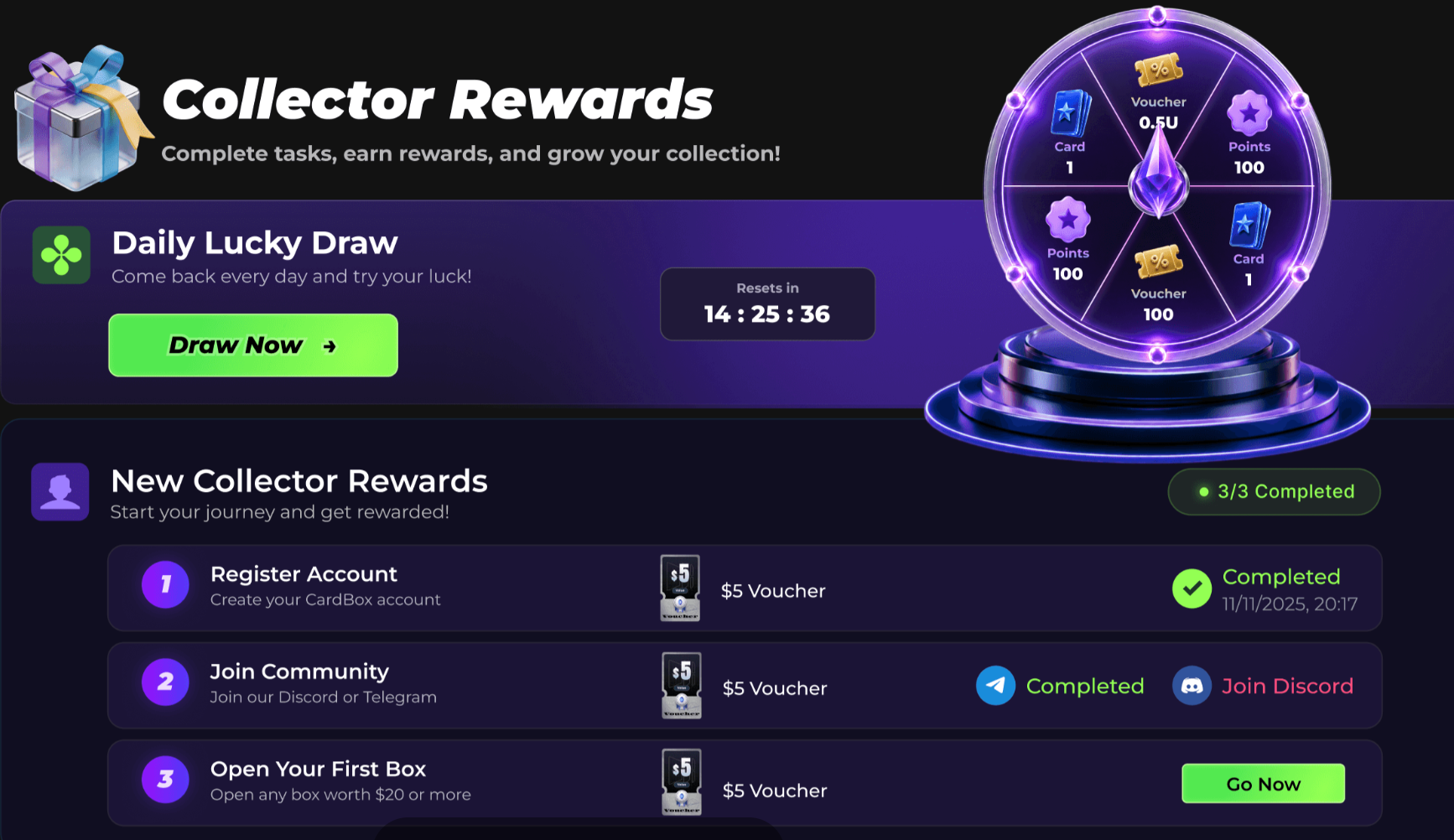
More assets, more scenarios, higher activity – these three lines point to a single destination: A TCG RWA network with continuously thickening liquidity and sustained user engagement.
The next phase of RWA isn't just about putting U.S. Treasuries on-chain. When culture itself becomes a liquid asset, CardBox aims to be the track that makes it flow.


