SpaceX has such a high valuation ceiling; the answer lies in Elon Musk's business ecosystem.


- Core Thesis: Through SpaceX's IPO and ecosystem integration, Musk has constructed a comprehensive business loop encompassing AI computing power, satellite communications, space transportation, intelligent manufacturing, and human-machine interfaces. The underlying logic is synergistic cost reduction and mutual empowerment among sectors, all vying for the core dominance of the next-generation intelligent industry.
- Key Elements:
- SpaceX surged 19.2% on its first trading day, pushing its market cap beyond $2.1 trillion and setting a record for the largest IPO in history, establishing itself as the core infrastructure hub of Musk's ecosystem.
- The ecosystem consists of four major segments: xAI & Orbital Computing (the intelligent brain), Starlink & Starship (information transmission & transportation), Tesla & Optimus (manufacturing execution), and Neuralink & X (human-machine interface & data).
- Following the merger of xAI into SpaceX, its Colossus computing cluster has deployed 200,000 H100 GPUs. However, ground-based computing is constrained by energy and physical bottlenecks, with a planned orbital AI computing demonstration targeted for the end of 2027.
- Starlink contributes approximately 60% of SpaceX's revenue, boasting over 10.3 million users. The target cost per launch for Starship is below $10 million, providing a low-cost pathway for large-scale space deployment.
- Tesla has ceased production of its flagship Model S/X models, fully shifting toward mass production of the Optimus humanoid robot. Its positioning is transforming from an electric vehicle company into a "physical AI company," sharing its sensing and manufacturing systems.
- Three positive feedback loops have formed within the ecosystem: the manufacturing & space logistics flywheel, the data & design iteration flywheel, and the energy & computing synergy flywheel, driving down costs and improving efficiency.
- Risks are concentrated in three areas: technology validation (e.g., orbital computing heat dissipation), corporate governance (related-party transactions & shareholder interest conflicts), and global regulation (data sovereignty & communication permits).
On June 12, 2026, Eastern Time, SpaceX officially landed on the Nasdaq stock exchange under the ticker SPCX. The company's IPO opening price was set at $135, and the stock price continued to fluctuate upward during the trading session, eventually closing at $160.95, a significant single-day increase of 19.2%.
With this epic IPO, SpaceX's market capitalization surged past $2.1 trillion in a single day, setting a record for the largest single IPO in business history (Post-IPO, SPCX continued to rise, reflecting the market's seemingly boundless imagination for SpaceX's future development).
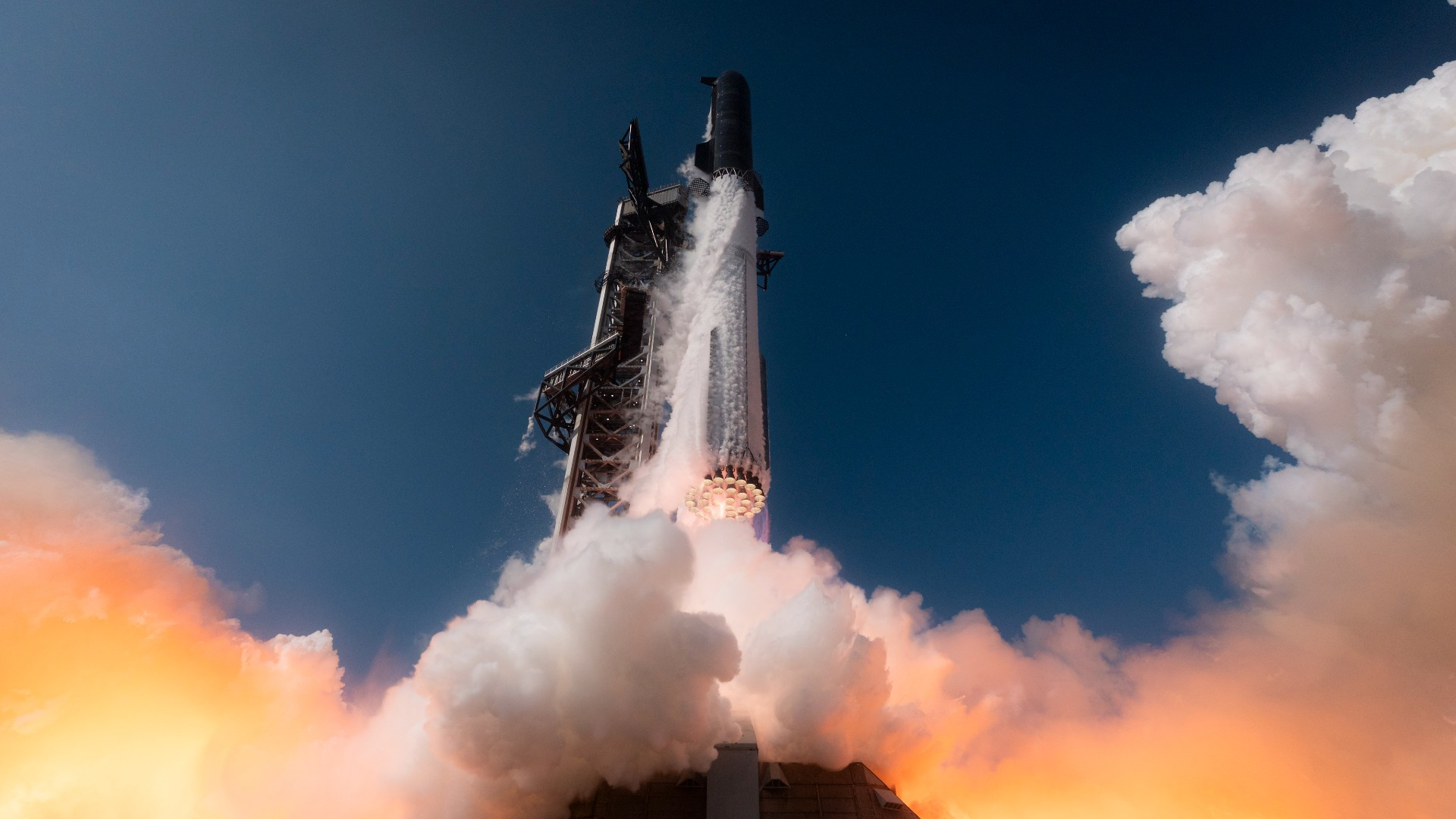
Figure: Starship launch photo. Source: www.space.com/
This capital feast also directly propelled Musk to the pinnacle of global wealth, making him the first ultra-wealthy individual in human history with a personal net worth exceeding $1.1 trillion.
Of course, looking back over a longer timeframe at Musk's series of maneuvers in recent years, it becomes clear that the SpaceX IPO was merely a logical step within his vast industrial landscape.
Behind this lies a well-planned underlying business logic. All seemingly disparate actions quietly serve a larger, comprehensive global ecological system.
Tesla's intelligent manufacturing, xAI's artificial intelligence, Starlink's global network, and Neuralink's cutting-edge technology form layers of groundwork for data entry points, manufacturing systems, intelligent computing power, and aerospace technology. Progressing step by step, interlocking with each other, and leveraging capital dividends, they continuously integrate, iterate, and empower one another, gradually forming a complete, self-sustaining business loop that evolves continuously.
In fact, global technological competition today has long moved beyond the stage of competing over a single product or point technology. Future industrial battles will be more about competition in the entire chain of ecosystems encompassing computing power, energy, manufacturing, data, and physical execution.
The key to gaining core influence in the next generation of smart industries lies more in breaking down barriers between different fields and building a complete ecological closed loop. The SpaceX capital event might signify the starting point of a new cycle; a deeper competition in the technology industry is just beginning to unfold.
Deconstructing the Musk Empire's Ecological Landscape
In fact, over the years, Musk has undertaken many things that lacked validation at the time or were even unimaginable. From reusable rockets and global satellite internet to humanoid robots, brain-computer interfaces, and orbital computing power, each endeavor involves enormous investment, long gestation periods, and extremely high uncertainty.
If we look at these projects collectively, we see they are closely interconnected. Musk has been systematically filling in all the key capabilities needed for the complete technological system he envisions, centered around artificial intelligence, communication networks, aerospace transportation, intelligent manufacturing, and human-computer interaction.
Currently, I roughly divide this landscape into four parts:
- xAI and Orbital Computing form the intelligent brain;
- Starlink and Starship handle information transmission and physical transportation;
- Tesla and Optimus are responsible for manufacturing and physical execution;
- Neuralink and X connect neural signals and human societal data, respectively.
The development stages of these segments are not uniform. Some have already generated stable commercial revenue, others are entering scaled validation, and some are still in long-term technological exploration.
However, together they form Musk's highly imaginative industrial moat, continuously extending SpaceX's value boundaries towards communication, computing, manufacturing, and future space infrastructure.
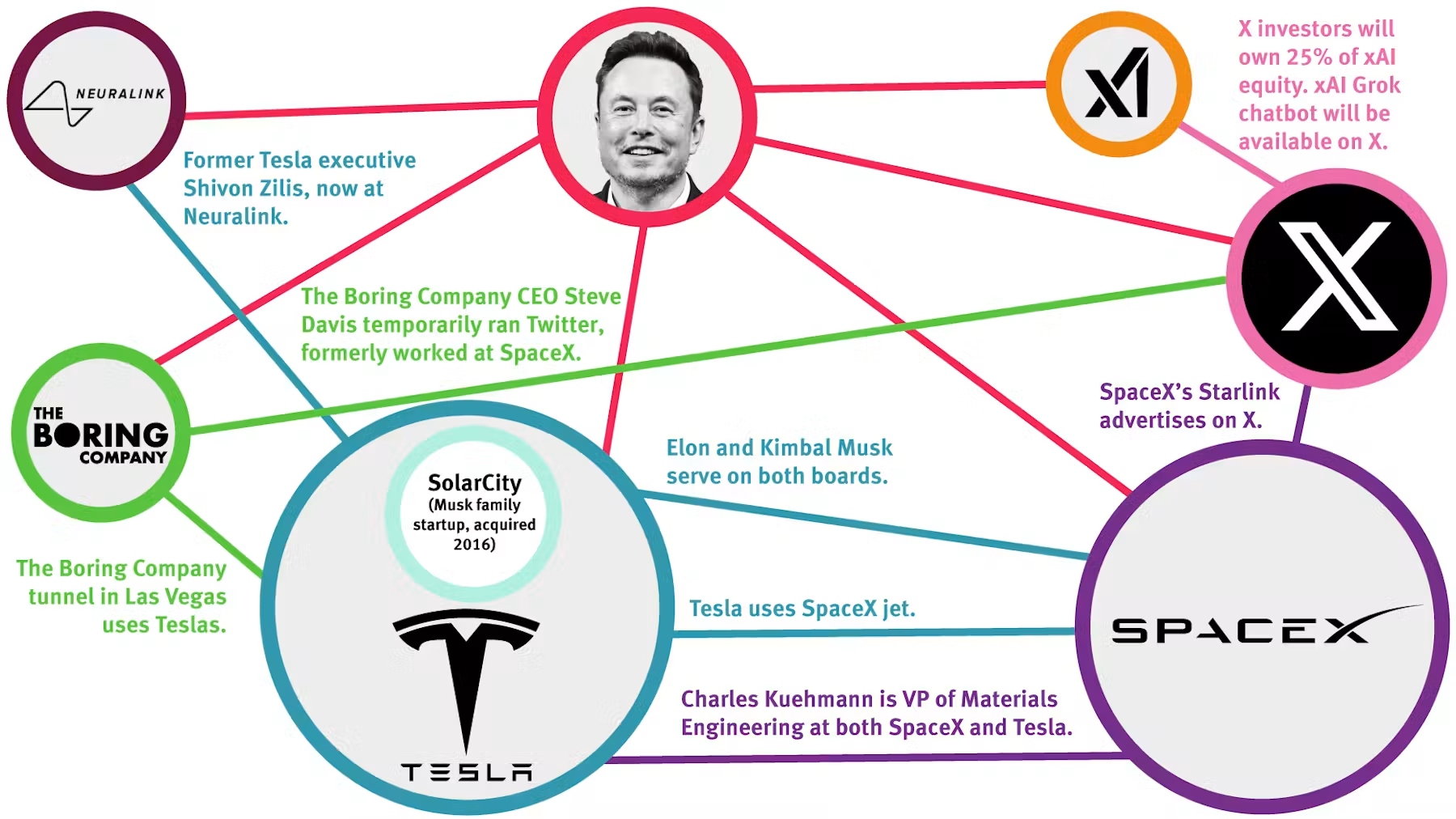
Figure: Musk's Empire Ecological Landscape. Source: www.theinformation.com
The Brain: xAI + Orbital Computing
xAI is Musk's artificial intelligence company, best known for its product Grok. However, xAI's role is far more significant than just a chatbot. It simultaneously controls large models, supercomputing clusters, and AI infrastructure, acting as the intelligent and computing core of Musk's entire technological system.
In February 2026, SpaceX fully acquired xAI, valued at $250 billion, further integrating AI with its deeply established aerospace technology and Starlink satellite network.
Since both companies are under Musk's control, many at the time viewed this acquisition as pre-IPO financial packaging, a "left-hand-to-right-hand" maneuver aimed at paving the way for SpaceX's IPO.
But from a longer-term perspective, this acquisition was more about strategically filling the AI and computing capabilities within the SpaceX system. After the integration, SpaceX simultaneously covers space transportation, satellite communication, artificial intelligence, and computing infrastructure, forming a technology matrix spanning aerospace and AI.
Therefore, we shouldn't view xAI in the same way we understand OpenAI or Anthropic. Grok is just one front-end product xAI offers to the public. Its deeper value lies in providing models, computing power, and intelligent decision-making capabilities for Musk's aerospace, robotics, intelligent manufacturing, and future orbital facilities.
xAI's substantial and unique computing system is one of its most fundamental distinctions from ordinary AI companies.
From the perspective of conventional computing clusters, according to official xAI disclosures, its Colossus cluster has deployed 200,000 H100 GPUs. The entire cluster was initially built in just 122 days and subsequently doubled in size within 92 days, setting an extremely fast construction record.
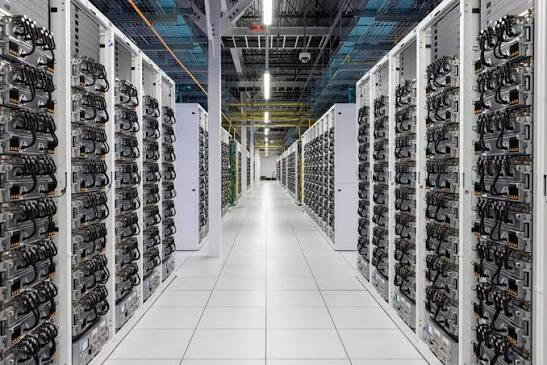
Figure: Image of the xAI Colossus supercomputing cluster. Source: www.naddod.com
This means xAI has entered the most capital-intensive and asset-heavy global AI computing race, building its own intelligent iteration capabilities from the ground up.
Leveraging this top-tier computing power, xAI can perform billions of uninterrupted virtual simulations for various hardcore physical scenarios like rocket combustion parameters, robot motion trajectories, space material degradation, and space station construction. It sifts through vast numbers of scenarios to select the optimal implementation path, providing precise intelligent support for the physical operations of the entire system.
However, the iterative upgrade of ground-based AI computing systems has already hit a natural physical bottleneck – an inevitable constraint of technological development.
AI supercomputing research data shows that while cutting-edge AI supercomputer performance roughly doubles every nine months, the corresponding hardware costs and electricity demands also double annually.
For top-tier clusters like Colossus, industry estimates place hardware costs around $7 billion and operational power consumption as high as 300 MW. This presents four major challenges: energy consumption, heat dissipation limitations, land resources, and network latency. In other words, the upgrade ceiling for ground-based data centers is limited. Simply stacking more GPUs or expanding server rooms cannot achieve a qualitative leap.
It's like trying to put things into a warehouse of a fixed size; no matter how much you reorganize, the maximum storage capacity is limited.
Therefore, the core reason for Musk's deployment of orbital computing is to break free from the constraints of ground-based computing and shift towards space.
Space offers an inexhaustible supply of free solar energy and a naturally cold environment for low-energy dissipation cooling. Deploying computing clusters in low Earth orbit can completely circumvent the hard constraints of terrestrial resources, providing a continuous and powerful core driver for the ongoing evolution of AI.
So, you see, in recent years, Musk has been relentlessly launching satellites. One of the key purposes is to build his space computing network, preparing for the future space computing system.
Furthermore, a Reuters report indicates that SpaceX plans to complete an orbital AI computing demonstration as early as the end of 2027. It has also received approval to launch up to 1 million space data center satellites (Musk's cost for launching satellites is extremely low, as we will detail later, making this something only Musk can realistically do).
In March last year, xAI acquired the social media platform X. One of the purposes of the X acquisition was data. X accumulates vast amounts of real-time human behavioral traces, group preferences, and social dynamics data daily. Combined with xAI's own accumulated physical scenario simulation data, this allows the intelligent system to thoroughly comprehend the complete operational logic of both the physical world and human society.
Compared to the static, lagging, sample-based datasets commonly purchased by competitors, Musk's system generates real-time, authentic, and multi-dimensional data internally, creating an irreplaceable and differentiated advantage for iterative improvement.
The Neural Logistics Core: Starlink + Starship
Starlink is SpaceX's low Earth orbit satellite internet system. It provides global broadband coverage via a large constellation of satellites, especially for remote areas, maritime zones, and airborne scenarios where traditional communication networks are difficult to deploy. It functions as a global communication network built by SpaceX in space and is already widely adopted.
For example, during the Russia-Ukraine conflict, after Ukraine's ground communication infrastructure was damaged, it relied on Starlink's network services to maintain military command, drone operations, government communications, etc. In 2024, when Hurricane Helene caused network outages in parts of the US, rescue teams deployed numerous Starlink terminals to restore emergency communications.
Starlink has achieved significant commercial success. SpaceX's sales in 2025 reached $18.67 billion, with Starlink contributing approximately 60% of the revenue, serving as the group's core cash flow source. Currently, Starlink has over 10.3 million global users and approximately 9,600 operational satellites in orbit – meaning it has matured from an experimental project into a stable, core infrastructure.
Of course, the core value of Starlink extends far beyond ordinary satellite broadband services. It is essentially the all-domain, real-time information network for the entire ecosystem within Musk's system.
Unlike the common perception of "replacing terrestrial networks," Starlink's core advantage lies in complementary empowerment.
Traditional terrestrial fiber optic networks rely on glass fiber transmission, suffering from high latency, significant signal loss, and strong geographical limitations. They are ill-suited to meet the millisecond-level, all-domain collaborative scheduling demands of advanced AI.
In contrast, a low Earth orbit satellite network equipped with inter-satellite laser links can bypass certain path constraints of submarine cables in intercontinental, long-distance communications. It achieves lower latency through shorter transmission paths and builds a unique network advantage in scenarios like seamless global coverage, remote area connectivity, extreme environment communication, and low-latency intercontinental transmission. This ensures the efficient linkage and precise operation of the entire system.
With Starlink, the future orbital computing center can maintain low-latency interaction with ground-based data systems. For instance, a ground-based AI inference request can be uploaded via Starlink to the space computing center for processing, and the results can be transmitted back to the ground in real-time through Starlink.
Starship is SpaceX's next-generation super-heavy lift launch system under continuous development, designed to transport people, satellites, and large equipment into space. The previously seen "chopstick catch" of the rocket was a Starship recovery test. After launch, the first-stage booster automatically flies back to the launch tower, where two giant mechanical arms catch it directly. This minimizes refurbishment time and enables rapid reuse, significantly reducing Starship's launch costs.
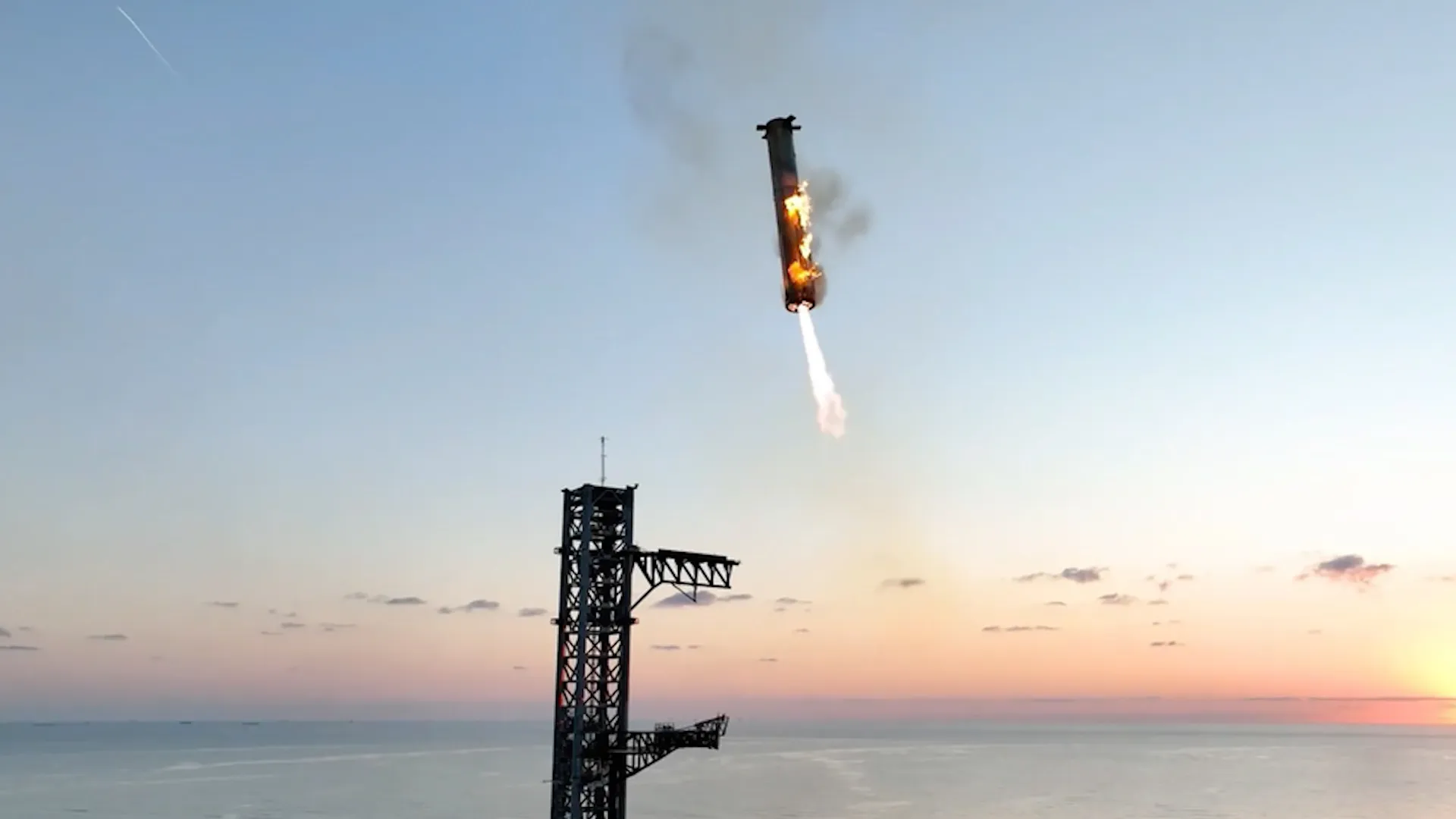
Figure: Capture moment of the Starship 'chopstick catch'. Source: san.com
Although Starship is still in the testing phase and hasn't established stable commercial launch pricing, Musk has previously stated that the mature per-launch cost could drop below $10 million, with the long-term marginal cost potentially approaching $2 million.
To put this in perspective, SpaceX's operational Falcon 9 standard commercial launch price of around $74 million is already considered quite low, considering NASA's SLS program costs between $2 billion and $4 billion per mission.
Therefore, a Starship with such low costs will be the world's only scalable, low-cost, and repeatedly reusable space transportation vehicle, capable of delivering over 100 tons of payload to low Earth orbit. Traditional aerospace launches are prohibitively expensive and infrequent, completely unable to support large-scale commercial space deployment. Starship, through technological reuse, mass production, and high-iteration frequency, dramatically compresses the cost of space operations.
Leveraging its immense payload capacity and low-cost advantage, Starship can batch-complete core tasks such as deploying orbital computing nodes, assembling large Starlink satellite constellations, servicing space equipment, and shuttling materials between space and Earth.
Starlink handles the rapid flow of information, while Starship handles low-cost physical deployment. One handles the virtual, the other the physical; one handles information, the other objects. Together, they completely open a two-way channel between space and Earth, allowing Musk's ecosystem to fully break free from the competitive constraints of traditional terrestrial technology.
The Physical Body Core: Tesla + Optimus
We won't elaborate too much on Tesla, the electric vehicle company.
In January 2026, Tesla officially announced the permanent discontinuation of its two flagship models, Model S and Model X. In fact, these two models were once Tesla's flagship products and stable, high-margin core businesses. However, their sales declined over time amid intensifying industry competition, and they long occupied significant R&D effort, production line capacity, and core talent, while their value to the overall intelligent closed-loop layout continuously diminished.
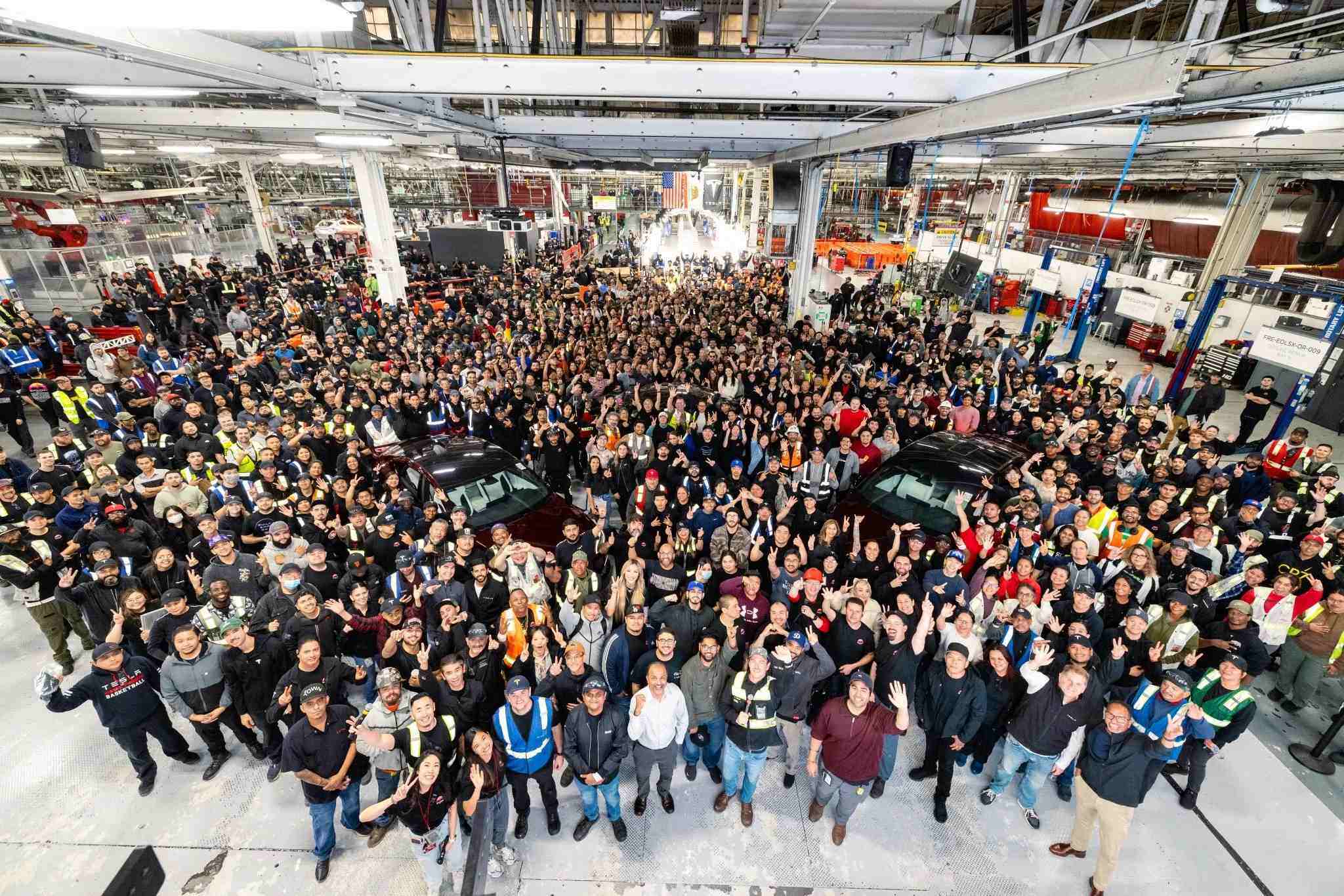
Figure: Group photo of Fremont factory employees with the final two Model S / Model X. Source: cdn.shopify.com
According to Axios, the core reason for ending Model S and Model X production was to free up premium capacity and factory space at the Fremont plant, pivoting entirely towards the development and mass production of the Optimus humanoid robot. Similarly, The Guardian explicitly stated that the essence of this product line adjustment is an iteration of Tesla's corporate positioning – a complete transformation from a traditional EV company to a "physical AI company."
In essence, a car is an intelligent robot on wheels, while Optimus is a general-purpose robot that walks on two legs. Their underlying logic is entirely interchangeable, sharing perception algorithms, intelligent decision-making, motion control, supply chain systems, and mass production capabilities. Discontinuing the flagship models is fundamentally about concentrating all premium resources to fully empower the iterative deployment of Optimus.
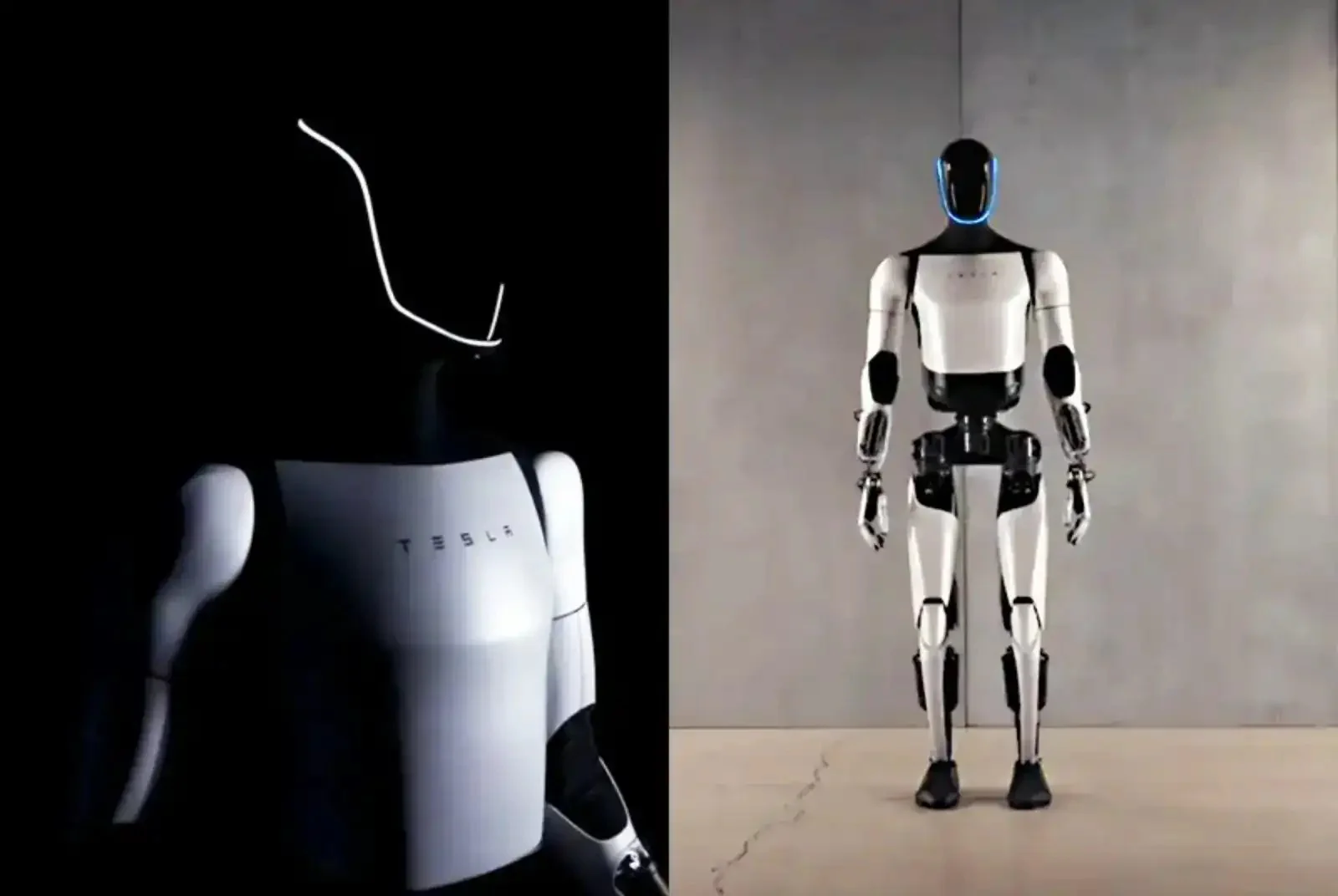
Figure: Full-body photo of Tesla Optimus humanoid robot. Source: tesery.com
It's no secret that Musk is fond of humanoid robots, and he harbors high hopes for Optimus. Optimus itself is far from being an ordinary civilian tech product. It's designed as a general-purpose industrial worker adaptable across the entire industrial chain, capable of undertaking high-precision, repetitive, and high-risk tasks such as aerospace equipment assembly, precision industrial manufacturing, and inspection and maintenance of hazardous equipment. In the future, it could even be stationed in space bases to perform various extreme environment operations, filling the gap in the system's physical execution capabilities.
On the other hand, the real-world physical data generated during Optimus's operations – including motion trajectories, environmental parameters, and equipment malfunctions – will be fed back in real-time to the xAI core. This provides a continuous stream of authentic data to support algorithm model training, hardware optimization, and the upgrade of operational plans.
So, you see, Tesla's mature global supply chain and mass production system lay the industrial foundation for the commercialization of robots. This forms a complete self-circulating loop of hardware production, scenario application, data feedback, and intelligent iteration, allowing AI's virtual computing power to truly materialize into sustainable physical productivity.
The Human-Machine Interface Core: Neuralink + X
Another crucial line is Neuralink + X.
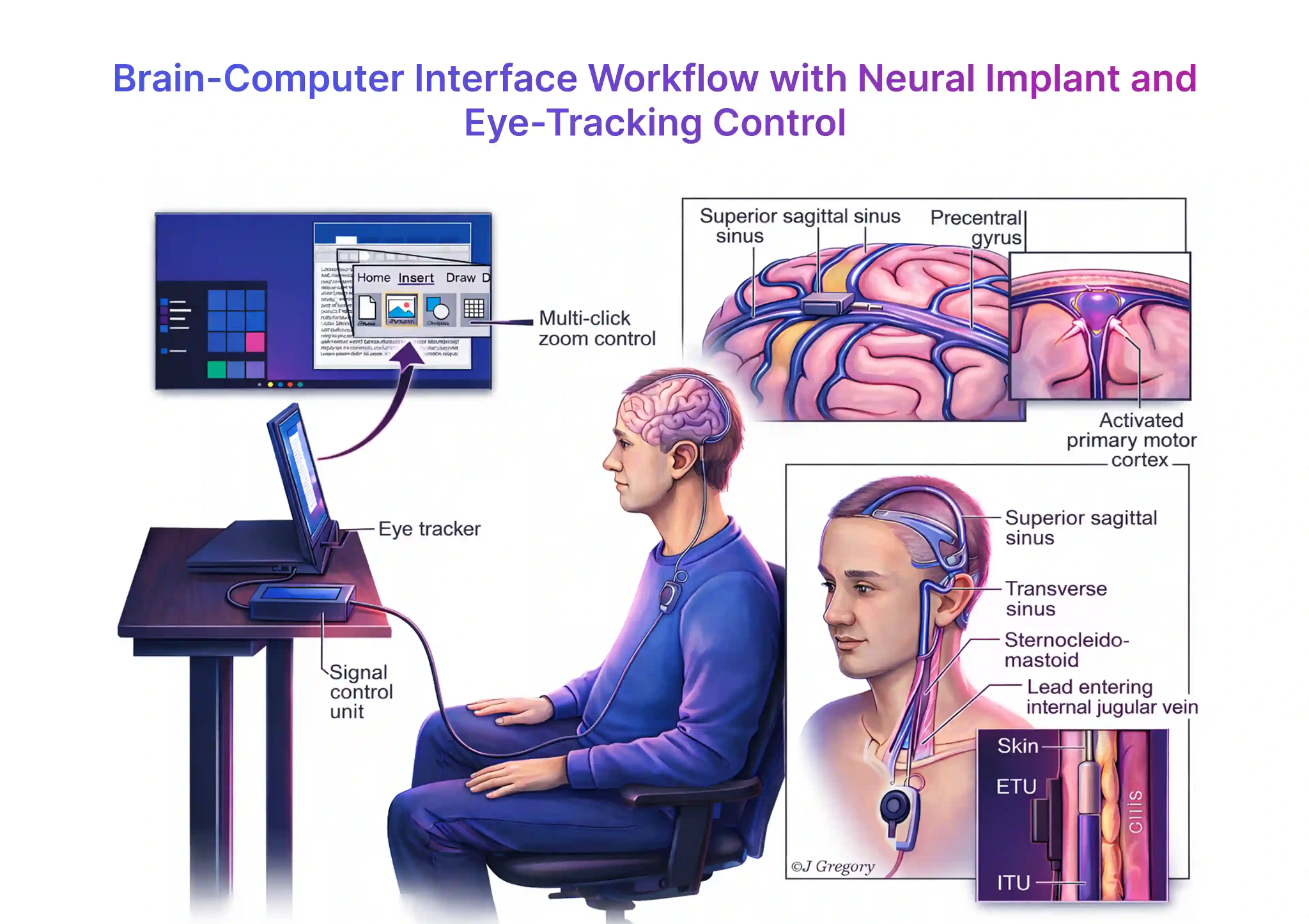
I've actually been aware of Neuralink for a long time. Its role is similarly highly technological, even bordering on science fiction. Neuralink is Musk's brain-computer interface company. Its core function involves implanting a tiny microchip into the human brain, reading neural signals via electrodes, and translating these signals into operational commands understandable by a computer.
Its most practical application currently is to help patients with paralysis or severe mobility impairments control computers, phones, and robotic arms using just their "mind." For example, after receiving the implant, a patient doesn't need to move their hands or feet. Simply by forming an intention to act in their mind, they can move a cursor, type, or control external devices.
Put more simply, Neuralink aims to establish a direct communication channel between the human brain and machines. In the short term, it is primarily a medical technology to help patients regain communication and mobility. Its long-term goal is to further enhance the efficiency of information interaction between humans, AI, and robots.