






OpenAI's Hyperliquid Pre-Market Pricing Business: Why Did It Only Last Half a Year?


- Core Thesis: In Hyperliquid's Pre-IPO contract market, anonymous team Trade.xyz succeeded by selecting targets with confirmed listing dates and public pricing (e.g., SpaceX). In contrast, Paradigm-backed Ventuals, which bet on OpenAI and Anthropic without public markets, saw its "self-referential" oracle-based pricing mechanism fail, leading to its acquisition and shutdown. This exposed the fatal flaw of this sector: the lack of a fair anchor price.
- Key Elements:
- Trade.xyz accounts for over 90% of open interest in Hyperliquid's pre-market contracts. By selecting targets like SpaceX with clear Nasdaq listing paths, it leveraged public market pricing as a correction anchor, accumulating over $130 billion in cumulative trading volume.
- Ventuals, backed by Paradigm, chose OpenAI and Anthropic. With no listing dates, half of its oracle price came from external secondary share transactions, and the other half from its own contract price average. This created a self-referential pricing loop, leading to a long-term premium that lacked verification from real supply and demand.
- Upon Ventuals’ shutdown, settlements were based on 24-hour average prices. The final prices for OpenAI and Anthropic ($1,341.80 and $1,618.90, respectively), reliant on this self-referencing mechanism, were questioned as being precise but inaccurate. Ironically, external employees and venture capitalists still used these valuations as a reference.
- Institutions like Coinbase, Polymarket, and Citi are entering the pre-market pricing space, confirming the genuine and increasingly formalized demand. However, the core challenge—the lack of public market correction—is not automatically resolved by the entry of larger brands.
Original Author: Kuli, TechFlow
In the days leading up to SpaceX's listing, the pre-market price of SPCX on Hyperliquid dominated the headlines, but few stopped to examine who was behind deploying this market.
In fact, it's a team called Trade.xyz. Anonymous, only emerging this year, and now it alone accounts for over 90% of the open interest in pre-market contracts on Hyperliquid. The hype around SpaceX's on-chain Pre-IPO was essentially driven single-handedly by this team.
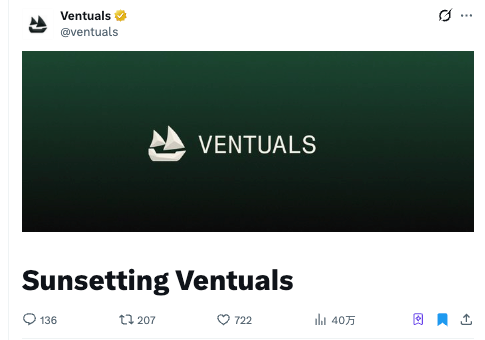
Just three days after SpaceX's debut, on June 15th, another team operating in the same business announced its closure.
This team is called Ventuals, backed by Paradigm, also offering pre-market contracts for SpaceX, as well as OpenAI and Anthropic. It launched earlier this year but operated for only nine months from start to finish.
Same chain, same HIP-3 mechanics, same track. One team turned SpaceX into the largest market on the platform, while the other, holding OpenAI and Anthropic in its grasp, ended up failing.
What's worth pondering is the way Ventuals exited. According to its official account's social media posts, it wasn't a desperate exit due to unsustainable losses. The announcement stated it was acquired, with the team integrating into another project within the Hyperliquid ecosystem. User principal was returned 1:1, marking a graceful exit.
But therein lies the issue. Holding the two most scarce and sought-after names in the entire space, OpenAI and Anthropic, Ventuals should have been the last to bow out. So, where did it fall short?
Trade XYZ vs. Ventuals
The currently successful team, Trade.xyz, remains anonymous to this day.
The project founder only revealed some background in an interview with Hyperliquid founder Jeff Yan, mentioning he bought his first Bitcoin for $66 in 2013 and had been an investor since, never having built a project before. He claimed he would have left the crypto space long ago if he hadn't met Jeff.
This relative newcomer built the largest pre-market on Hyperliquid. According to a report by Colossus, Trade.xyz has grown 38% weekly since last October, with cumulative trading volume exceeding $130 billion.
It started with silver, moved to crude oil, then the S&P 500, and finally got to SpaceX.
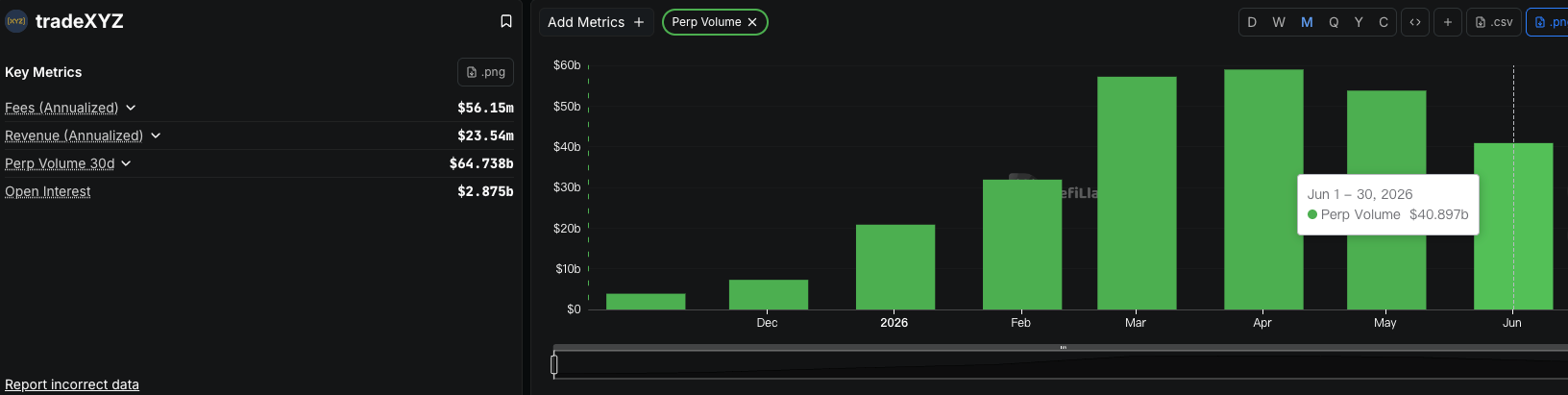
Its choice of SpaceX was strategically savvy.
SpaceX was set to ring the bell on the Nasdaq on June 12th, with a confirmed offering price and listing date. By listing a pre-market contract, Trade.xyz was essentially betting on an event with a scheduled reveal. On the listing day, Nasdaq would provide a true price. This true price acts like an anchor, preventing the pre-market price from drifting too far. Even if the price was off initially, it would be corrected at the bell.
And so it happened. In the days before the SPCX listing, the pre-market traded between $154 and $172, pricing in a premium above the $135 offering price. When it opened, the price indeed surged upward, proving the bet correct.
Ventuals chose a different type of target.
Backed by Paradigm, one of the top-tier VCs in crypto, its pedigree was far more respectable than the anonymous Trade.xyz. Its chosen names were bigger too: OpenAI and Anthropic, the two most scarce assets in the space.
The problem, however, is that these two companies have no imminent IPO date.
It's not that there are no reference prices externally. According to Bloomberg, Anthropic is allowing employees to sell shares at a $350 billion valuation this year, and OpenAI does this periodically too. But these prices are set in private transactions. In a secondary stock sale, buyers and sellers are often the same existing large shareholders who are already heavily invested. The assets haven't truly changed hands in an open market.
Such pricing might be accurate at times, but it lacks an open order book where anyone can challenge the price and correct errors.
By bringing this type of pricing on-chain for contracts, Ventuals effectively suspended the entire market on a couple of off-chain price feeds. More problematic was the mechanism it used, which essentially created a self-referential loop.
An on-chain analyst scrutinized Ventuals' pricing logic:
Its oracle price was half derived from external secondary stock transactions and financing valuations, and the other half from the moving average of the contract's own price. This means a significant portion of the price was referencing itself. Buying pressure would lift the moving average, causing the oracle feed to rise, pushing the upper limit higher, which in turn encouraged more buying.
The consequence was that contracts like OpenAI and Anthropic consistently traded near their upper limits, making it difficult for sell orders and liquidations to occur. The charts looked like a steady uptrend, but in reality, the price was structurally stuck, having little to do with genuine supply and demand.
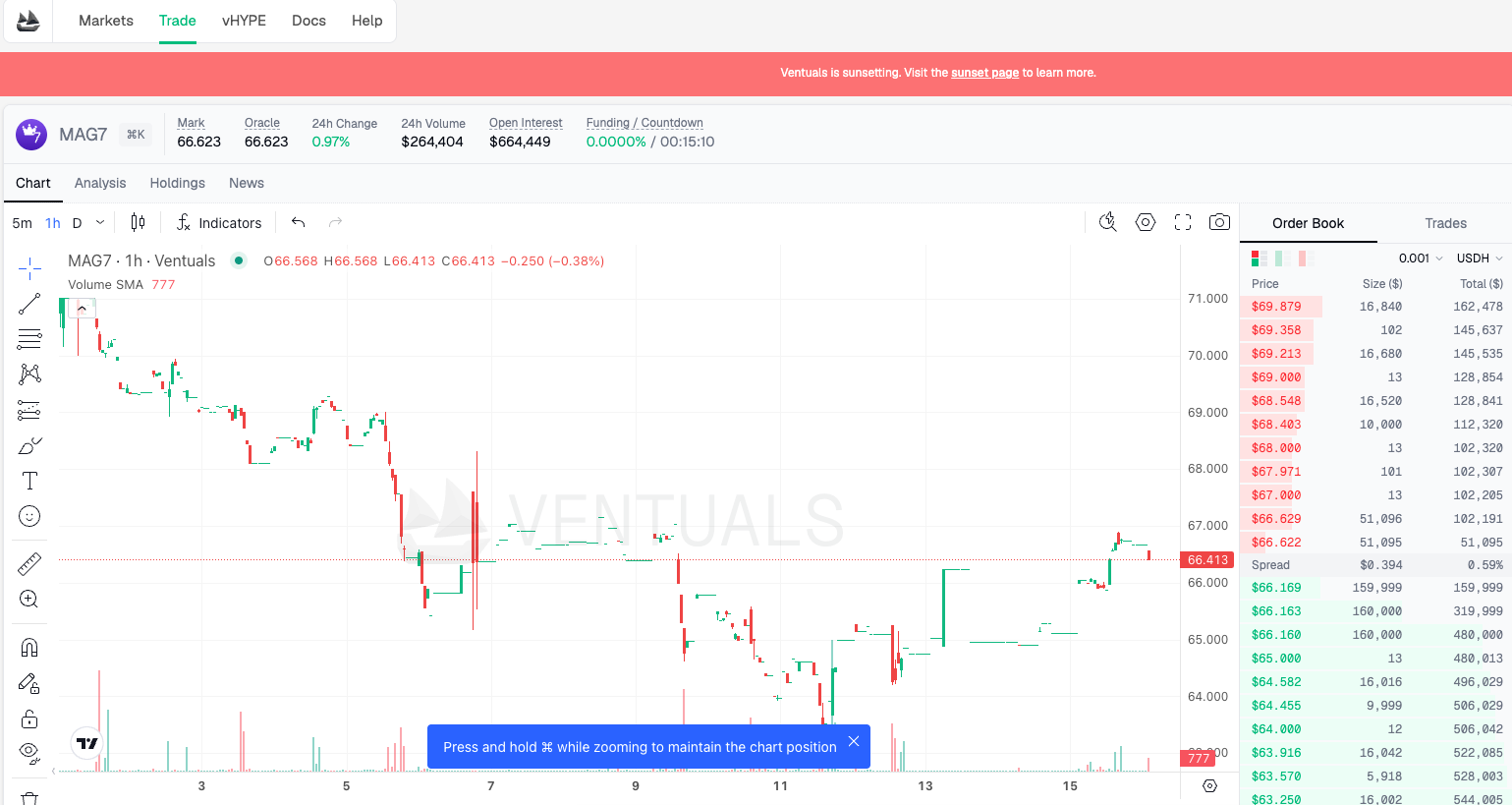
Source: MAG7 asset on Ventuals. Note the intermittent K-line chart showing periods without trading activity.
So, this Pre-IPO market felt less like the market telling you what OpenAI is worth, and more like a machine pushing the price up, only to use that self-generated price as a basis for further increases.
Trade.xyz bet on an asset destined for a future Nasdaq settlement, with a fallback to a true price if wrong. Ventuals bet on assets living temporarily only in internal valuations and then wrapped them in a self-referential pricing mechanism, leaving the price suspended in mid-air without a solid foundation.
Closure Price Reference: OpenAI $1300, Anthropic $1600
When it came time to close, did the final quoted prices hold any weight?
Upon its shutdown, Ventuals needed to set a final price for its contracts to settle everyone's positions. Its method was to freeze the average price over the previous 24 hours. OpenAI was finally set at $1,341.80 per share, and Anthropic at $1,618.90 per share.
These two numbers are now etched into the settlement records, becoming the final on-chain price quotes for these two companies.
As mentioned, this price was half-dependent on external secondary prices and half on the moving average of its own price, constantly climbing along the upper limit. In other words, a significant portion of the $1,341.80 figure is the result of a machine further inflating a price it had already pushed up.
It is precise to two decimal places, but that doesn't necessarily make it true.
Ironically, some external parties actually took this price seriously.
According to Bloomberg, employees of SpaceX, OpenAI, and Anthropic, as well as some late-stage venture capital investors, approached Ventuals, stating they were using the platform to value their equity holdings.
This is an interesting situation to dissect.
These individuals hold real, tangible secondary shares. In theory, they should know better than anyone what their stock is worth. However, the primary market provides price updates only sporadically, like squeezing toothpaste once a year. Between funding rounds, there is a blank space, and no one knows if the price went up or down in the meantime.
A platform like Ventuals, despite its flaws, at least provides a continuous price feed, 24/7, showing ups and downs.
This creates a paradoxical situation: insiders, who should have the most pricing power, end up looking at a number from a retail-facing platform to find some psychological comfort.
This is the deepest contradiction in the pre-market pricing business.
The most scarce assets lack a fair price the most; the more a fair price is lacking, the more people cling to anything that looks like a price, even if it's generated by a machine competing against itself.
Ventuals closed down, and its final prices are now frozen in time. But the demand for using such numbers as reference points is certainly still going strong.
Pre-Market Pricing Business Sees Influx of Players
Demand hasn't decreased; in fact, supply is increasing, and it's becoming more institutional.
In the same week Ventuals shut down, Coinbase launched its own pre-market perpetual swap, with SpaceX as its first target, available to users outside the US.
It's not just Coinbase. Polymarket uses Nasdaq data to create prediction markets for private company valuations. Citi introduced tokenized private company stock for its wealth management and institutional clients. The crypto space is active, and so are traditional investment banks.
This is no longer a small game played by a few anonymous teams on Hyperliquid. Providing a tradable price for unlisted companies is becoming a serious business that everyone wants a piece of.
For domestic readers, this demand is familiar. Getting in on an IPO requires queuing, primary market allocations are divided among institutions and high-net-worth individuals, and retail investors can't even find the door. Now, platforms are listing prices for companies like OpenAI and SpaceX, allowing 24/7 trading. For many, this is their first chance to access such assets. The demand is real.
However, the shutdown of Ventuals over the past six months has clearly exposed the fatal flaw of this business.
A price requires more than just willing buyers and sellers; it needs an open market where anyone can challenge the price to constantly correct errors. Simply having Coinbase take over doesn't automatically solve this flaw. It just swaps one brand (an anonymous team) for a bigger brand. The underlying company remains unlisted, and that truly fair price remains elusive.
Will the next entity to price these assets do a better job than Ventuals? The answer likely won't be known until OpenAI actually stands in front of the bell on its IPO day.


