「The Queen of Mining Circles」Lyu Yongshuang: Once Controlled 9% of Global Bitcoin Hashrate, Defrauded of $60 Million in the US by a Fake「Middle Eastern Prince」


- Core Thesis: This report details the story of Chinese female mining entrepreneur Lyu Yongshuang, who once controlled approximately 9% of the global Bitcoin hashrate. After China's crackdown on mining in 2021, she expanded operations to the United States, where she was defrauded by a group impersonating members of Middle Eastern royalty, losing over $9.4 million. Simultaneously, she faced a lawsuit in China where a court ruled a mining contract invalid, ordering her to refund nearly 20 million yuan.
- Key Elements:
- Lyu Yongshuang (Fiona Lyu) founded Chengdu Universal Hashrate Technology. Its mining pools, 1THash and Bytepool, collectively accounted for approximately 9% of the global Bitcoin hashrate at their peak in 2020.
- After China's crackdown on Bitcoin mining in May 2021, Lyu was forced to relocate her mining machines to Ohio, USA, aiming to restart operations using the region's cheap electricity.
- The scammers, the Zubair brothers, fabricated an "UAE Royal Family" identity. By bribing a city official's chief of staff, they staged a fake signing ceremony at City Hall, defrauding Lyu of over $9.4 million (including 1,067 mining machines).
- A 2026 ruling by the U.S. Department of Justice sentenced the masterminds, the Zubair brothers, to 24 and 23 years in prison respectively, while the bribed chief of staff received an 8-year sentence.
- Domestically, the former chairman of A-share listed company ST Zhongchang misappropriated funds to purchase mining machines from Lyu's company. The contract was ruled invalid due to its involvement in mining, and Lyu was ordered to refund nearly 20 million yuan.
Original Author: Nicky, Foresight News
Caixin published an article on June 11 titled "Female Crypto Tycoon Defrauded of $60 Million in the US: How Did the 'Middle Eastern Royal' Brothers Set the Trap?" Following the clues in the article, we investigated the dramatic story of this "female crypto tycoon," Ms. Lyu, within the crypto space.
According to a Caixin report, a wealthy female entrepreneur from China's crypto circle was the victim of an investment fraud in the United States, losing over $9.4 million (approximately RMB 60 million). The individual is Lyu, the CEO of a computing technology company in Southwest China. At its peak, her mining pool was said to account for around 9% of the total global Bitcoin hashrate.
The report indicates that two brothers surnamed Al Zubair, who claimed to have a "Middle Eastern royal" background, orchestrated the fraud through identity forgery. One of them posed as a "royal son-in-law from the Middle East," claiming to control Middle Eastern family funds, international business connections, and resources from local US governments; the other mimicked a character from the US TV series *Billions*, packaging himself as a hedge fund manager. The duo successfully contacted and influenced Michael Smedley, the Chief of Staff to the Mayor of East Cleveland, Ohio, ultimately inducing Lyu to sign a crypto mining farm development contract.
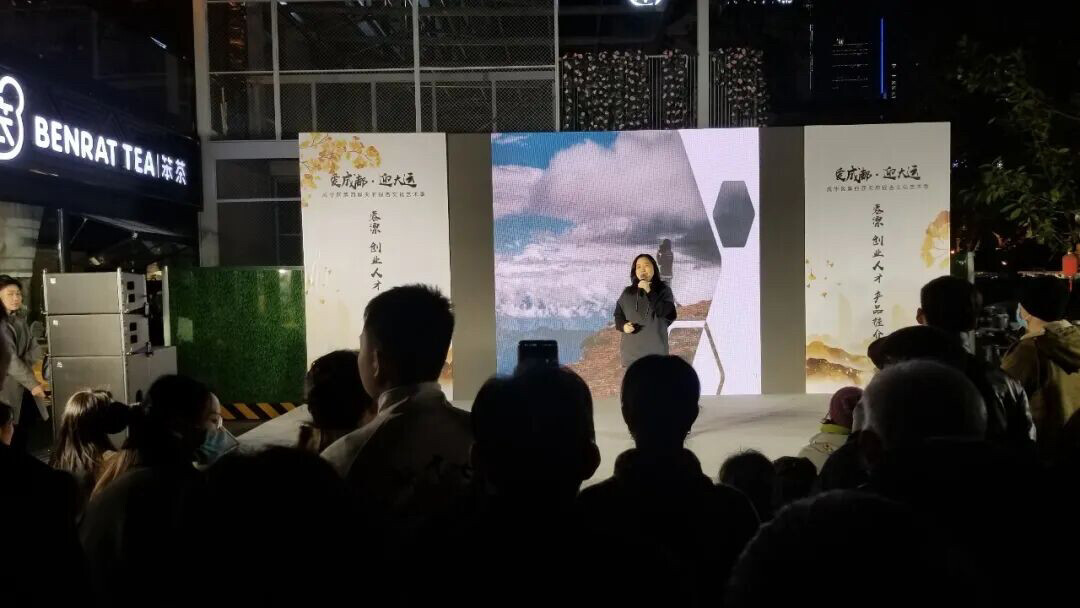
Lyu mentioned in the report is Lyu Yongshuang (Fiona Lyu), a female entrepreneur born in the 1980s. Her company, Chengdu Valarhash Technology Co., Ltd., operates two mining pools: 1THash and Bytepool.
According to the Caixin report, Lyu Yongshuang was born in Ningbo in the 1980s. Before entering the cryptocurrency industry, her life trajectory had no connection to finance or technology. In her early years, she worked in international trade and later founded a custom travel agency. She is an avid outdoor traveler, diver, and sailor. In a 2020 interview, she mentioned that from 2008 to 2018, she spent over half of each year traveling, visiting places all over the world.
As previously reported by TokenInsight, she stumbled upon Bitcoin in 2013 and immediately dove headfirst into this emerging industry. At that time, China's crypto mining industry was still in its early stages, requiring miners to venture deep into the mountains of Southwest China to seek cheap hydropower resources. Lyu recalls being among the first to "find electricity" in Sichuan. "Conditions were tough back then, but electricity was cheap and profits were high, so everyone was very excited."
In 2016, she began formally building her own mining farms; from 2017 to 2018, she transitioned to mining machine distribution. In July 2019, she founded Chengdu Valarhash Technology Co., Ltd., serving as its CEO, integrating her business into a comprehensive platform encompassing mining pool operations, farm construction, machine hosting, and hashrate trading. In December of the same year, the company held a new product launch in Chengdu, officially introducing the 1THash and Bytepool mining pool brands, along with the 1TMine hashrate contract trading platform.
During its peak in the first half of 2020, 1THash ranked 7th globally among Bitcoin mining pools, and Bytepool ranked 11th. Together, the two pools controlled approximately 9% of the global Bitcoin hashrate. This was a remarkably impressive figure at the time, meaning that for every 100 Bitcoins generated globally, roughly 9 flowed to her pools.
A Government Ban and a Turning Point in Fortune
On May 21, 2021, the State Council's Financial Stability and Development Committee held its 51st meeting, explicitly stating the need to "crack down on Bitcoin mining and trading activities."
In mid-June, the Sichuan Provincial Development and Reform Commission and the Sichuan Provincial Energy Administration jointly issued a notice, requiring power generation companies to self-inspect and immediately stop supplying electricity to virtual currency "mining" companies. For miners in Sichuan, China's largest mining hub, this was a fatal blow. During the rainy season, hydropower prices were as low as RMB 0.2-0.3 per kWh, making it one of the cheapest electricity sources globally.
According to the Caixin report, Lyu later told friends it was an "extremely anxious" period. Her company operated nine data centers spread across China, the United States, Canada, Russia, and Sweden, but several large domestic farms constituted the core hashrate source. "Overnight, thousands of mining machines were forced to shut down, hundreds of containers were waiting to be shipped out, and money was being burned every single day."
Source: Caixin
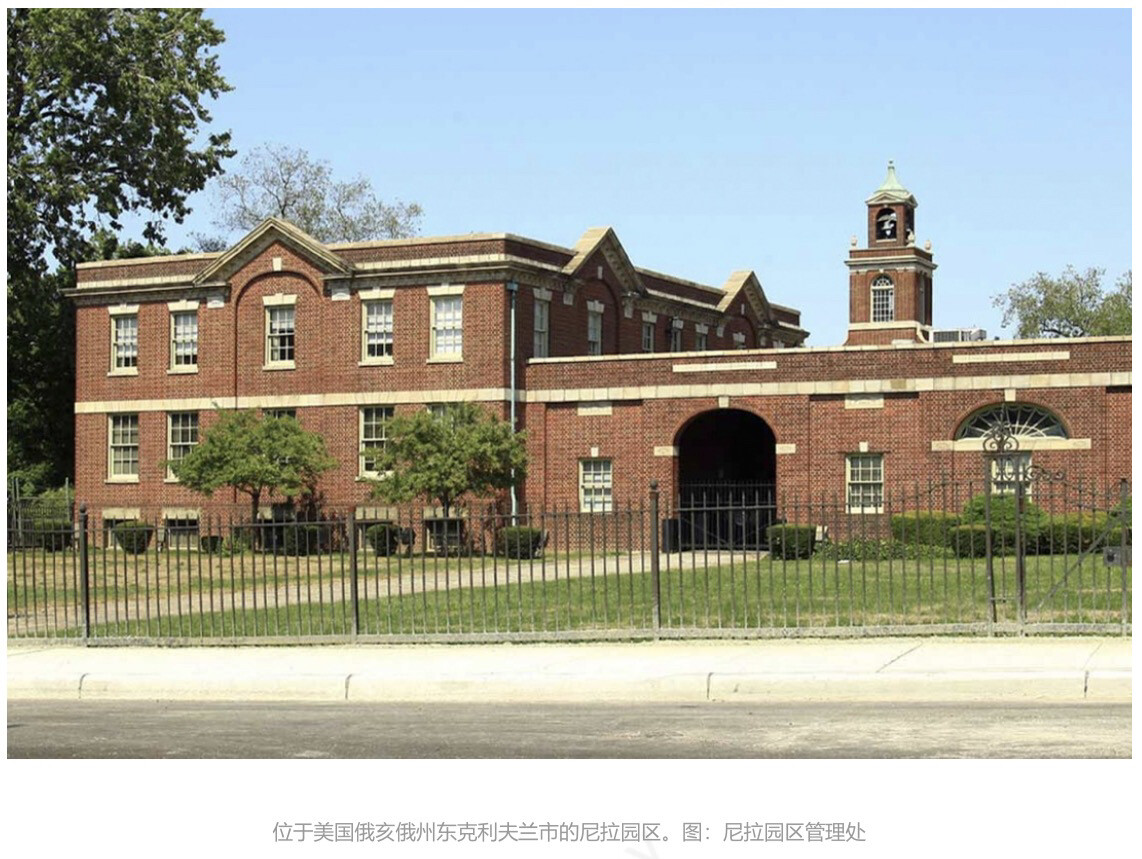
She ultimately chose the US as her first destination for expanding overseas. However, when she transported hundreds of containers of mining machines across the ocean, seeking a new foothold in Ohio, what awaited her was an elaborately orchestrated scam.
Per the Caixin report, in July 2021, through an intermediary, she met Zubair Al Zubair. He claimed to be a "royal son-in-law of the UAE" from the "House of Zubair," supposedly controlling Middle Eastern family funds and resources from local US governments. Zubair recommended an industrial property in East Cleveland, Ohio, known as Nela Park, promising to supply electricity at a low price of $0.04 per kWh.
On August 11, 2021, a seemingly formal contract signing ceremony was held inside the East Cleveland City Hall. Witnessed by then-Mayor Brandon King and other municipal officials, a hopeful Lyu Yongshuang signed a crypto mining farm development contract. She paid $3 million to Zubair's company, "Dubai Bridge," and wired an initial $1 million from a Hong Kong account.
Source: Caixin
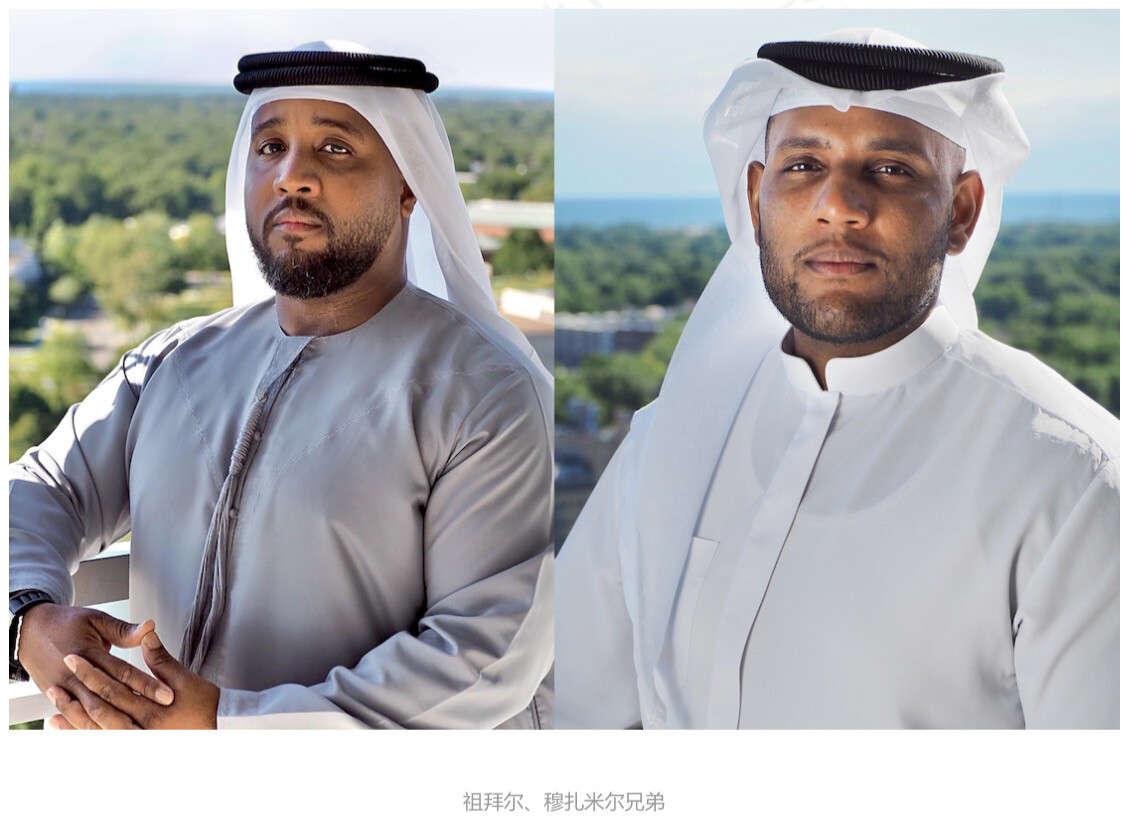
However, this was merely the beginning of a meticulously planned fraud. In reality, Zubair and his brother Muzammil were native-born Americans with no connection to any Middle Eastern royal family. The older brother's claim of being a "royal son-in-law" was entirely fabricated; the younger brother's "hedge fund manager" title was "self-taught" by watching YouTube videos and the US TV series *Billions*.
During their subsequent interactions, Zubair established a "close personal relationship" with Lyu. In Lyu's view, this relationship was romantic in nature. Prosecutors later pointed out that such personal relationships were part of Zubair's fraud pattern, aimed at making the victim less likely to question his claims.
The scam ultimately cost Lyu over $9.4 million (approx. RMB 60 million), including contract payments and 1,067 mining machines worth $6.17 million, which were later swindled by Zubair's brother and sold to Canada. Furthermore, the signing ceremony held in the mayor's office was merely a facade, orchestrated by Zubair bribing the Mayor's Chief of Staff, Michael Smedley.
In May 2026, the US Department of Justice announced the verdict: Zubair was sentenced to 24 years in prison, Muzammil to 23 years, and Smedley to 8 years. Lyu appeared in the case under the alias "Victim 2."
Another Legal Battle Back Home
While Lyu was entangled in the scam in the US, she was also facing another legal dispute back in China – a lawsuit with Shanghai Jincai Network Technology Co., Ltd., a subsidiary of the A-share listed company ST Zhongchang (600242.SH).
Source: Shanghai Securities News
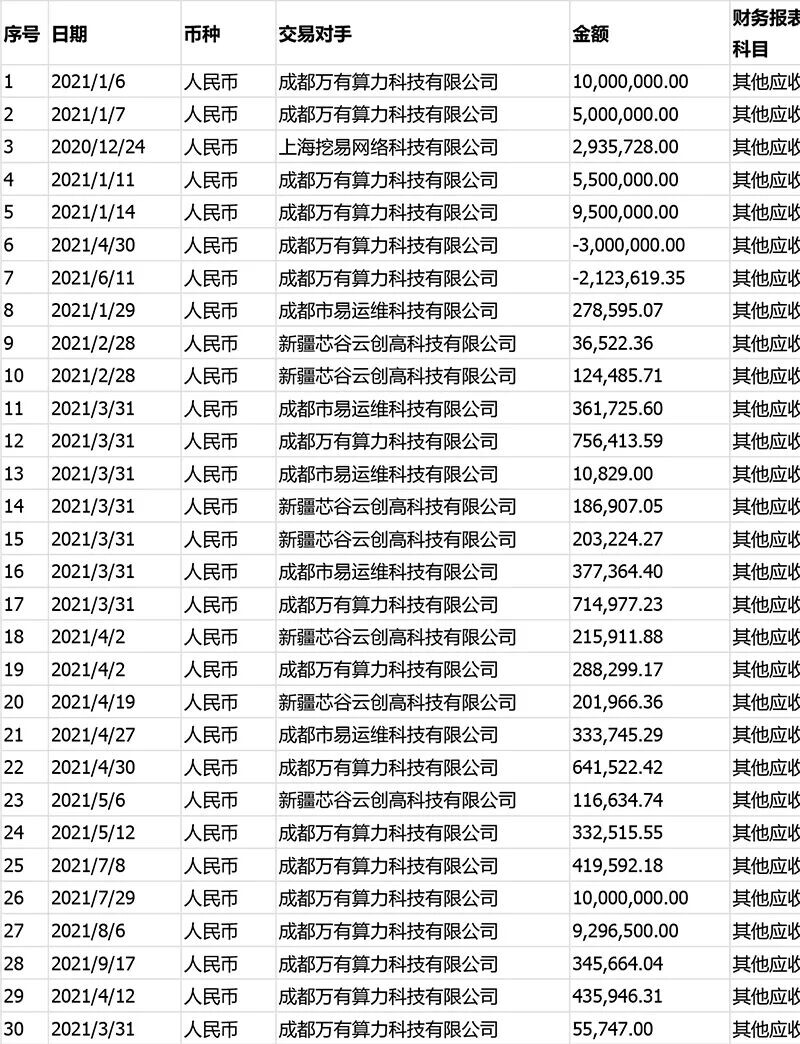
According to previous reports from The Economic Observer and Jiemian News, the trigger for the incident was Li Qunnan, then-Chairman of ST Zhongchang. Between January and September 2021, Li Qunnan was suspected of misappropriating company funds totaling RMB 53.5472 million to purchase Bitcoin mining machines and pay related hosting fees. This included a total expenditure of RMB 30 million paid to Chengdu Valarhash for the purchase of servers (Bitcoin mining machines). These purchases were disclosed in the 2021 semi-annual report as "company fixed assets used for actual operations," but an audit revealed that the relevant funds were not actually reflected as assets on the company's books.
In this context, ST Zhongchang's new management, seeking to recover losses, filed a lawsuit against Chengdu Valarhash in April 2022 under the name of Shanghai Jincai. The lawsuit sought to terminate the "Computing Technology Service Contract" signed on April 1, 2021, and demanded the return of the contract payment of RMB 19.2965 million.
In October 2022, the Chengdu High-tech Industrial Development Zone People's Court issued a first-instance verdict: The contract was deemed invalid as it involved Bitcoin "mining" activities, ordering Chengdu Valarhash to refund RMB 19.2965 million within ten days. The company appealed, but the second-instance trial upheld the original judgment.
This lawsuit, from filing to final judgment, ran almost concurrently with Lyu's victimization in the US. Facing a total loss of $9.4 million overseas and being ordered to refund nearly RMB 20 million in contract payments domestically, the "Queen of Mining," who once controlled 9% of the world's Bitcoin hashrate, entered the darkest period of her life.