






Cerebras IPO Surges 68%, On-Chain Market Priced It Hours Earlier


- Core Thesis: This article analyzes the surge in Cerebras's stock price on its debut day, highlighting that the on-chain Pre-IPO perpetual contract platform TradeXYZ achieved far superior pricing accuracy compared to traditional platforms. It argues that TradeXYZ's structural advantages—open global participation, a two-way trading mechanism, and continuous pricing—have the potential to disrupt the traditional IPO pricing model dominated by investment banks.
- Key Elements:
- Cerebras's IPO was priced at $185, but its opening price on the first trading day was $350, representing a premium of over 108%. The stock closed at $311. Traditional platforms like Forge and Hiive provided final pricing estimates of $113.50 and $224.93 respectively, showing massive deviations from the actual opening price.
- TradeXYZ's Pre-IPO Perp contract maintained a stable price range of $288-$320 for two weeks. Just before the opening, the price rapidly surged to $380, more closely reflecting the true market value. The 24-hour trading volume reached $280 million.
- Traditional IPO pricing relies on the information monopoly of investment bank order books, where banks underprice shares to offer institutional investors substantial first-day gains, thereby maintaining their own bargaining power.
- TradeXYZ allows anyone globally to participate without barriers, supporting both short and long positions, creating a two-way betting dynamic. In contrast, traditional platforms are one-sided markets (long-only), making their prices susceptible to systemic optimism bias.
- The on-chain market provides continuous, 24/7 pricing with updates every three seconds, capable of reflecting news and sentiment changes in real-time. Traditional platforms, however, have low update frequencies (e.g., Forge's daily updates), and their data does not represent real-time trades.
- The article predicts that as high-value IPOs from companies like SpaceX and OpenAI approach, the on-chain Pre-IPO market will continue to challenge Wall Street's pricing authority.
Considered the industry's "strongest challenger to Nvidia," Cerebras went public on the Nasdaq today.
Cerebras opened at $350, with an IPO price of $185. It briefly surged to $385, a premium of over 108% from the IPO price of $185 per share, triggering an upside circuit breaker on its first day.
While this premium is staggering, traders have noticed that the Pre-IPO Perp on TradeXYZ was the most accurately priced platform for Cerebras trading, outperforming a host of traditional Pre-IPO platforms.
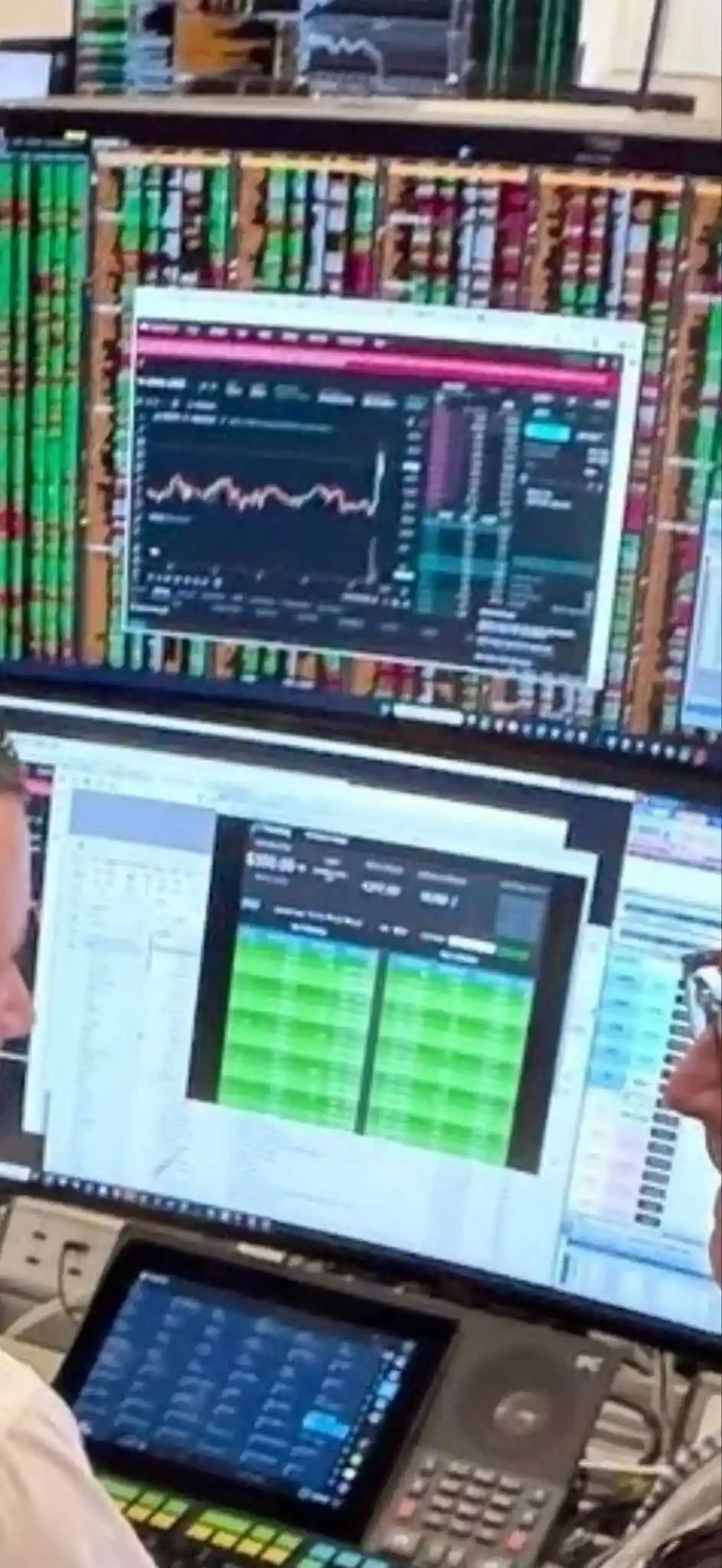
Rumor has it that traders at Morgan Stanley are also watching the Cerebras price K-line on Hyperliquid, source from community
What Exactly Did Pre-IPO Perp Disrupt?
Before diving into the comparison, let's first talk about Cerebras' opening price for this IPO.
On May 4, Cerebras filed an amended S-1 with the SEC, with an initial pricing range of $115 to $125. This was the first public number provided by the joint underwriting team from Morgan Stanley, Citigroup, Barclays, and UBS.
On May 8, the price range was raised to $125 to $135. On May 11, it was raised again to $150 to $160, and the number of shares increased from 28 million to 30 million. On the evening of May 13, the final price was set at $185. On May 14, when trading opened, it jumped directly to $350.
Alright, now let's look at those platforms.
First is Forge Global, a private secondary market used by professional institutions, which appears to have the worst pricing.
Forge is currently one of the world's largest private equity secondary trading markets, listed on the NYSE, serving institutional investors, VCs, and accredited individual investors. Its core product, "Forge Price," is an algorithmic pricing model that aggregates secondary market transactions, funding round information, and platform order book data, considered one of the most authoritative price references in the private market.
Accessing Forge requires accredited investor verification, with an annual income threshold of $200,000 or a net worth exceeding $1 million. This is not a place the average person can access.
The price trajectory of Cerebras on Forge is clear from the chart: from approximately $20 per share in 2023, stabilizing in the $30 to $40 range in early 2025, then rapidly climbing in early 2026 following funding news. On May 12, the day before the IPO pricing, the final Forge Price reading was $113.50, corresponding to a valuation of $29.26 billion.
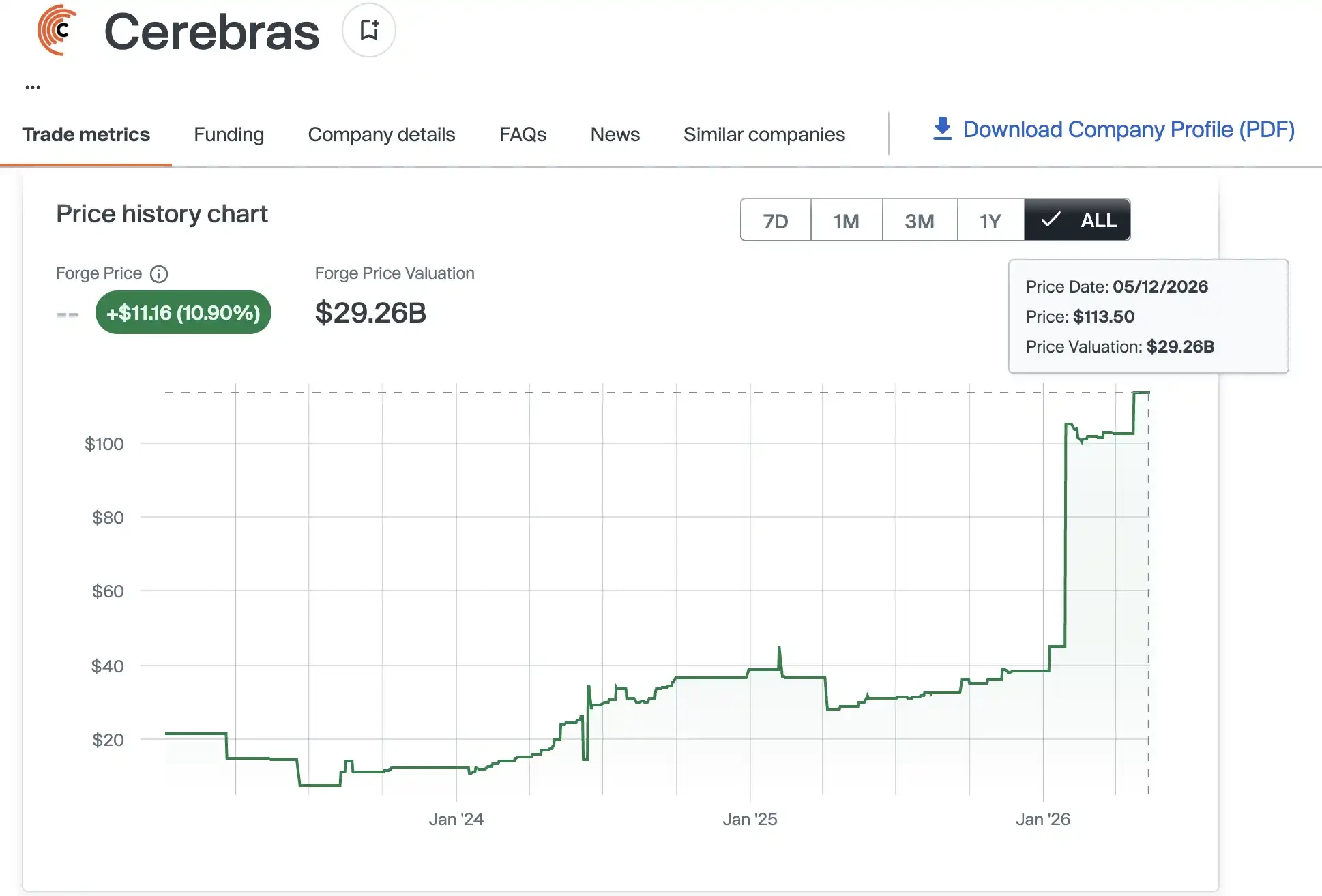
Forge Price's $113.50 showed a 174% deviation from the closing price of $311, let alone the opening price of $350.
Then look at the more active secondary market, Hiive. Hiive's positioning is similar to Forge, but it focuses more on active trade matching, with a user profile leaning towards high-net-worth individual investors and smaller VCs, resulting in higher trading frequency than Forge. The price chart on Hiive shows more frequent updates and more volatile fluctuations for Cerebras.
Hiive's final reported trading price was $224.93, labeled as "Final Hiive Price," which was the last valid price on the platform before Cerebras went public.
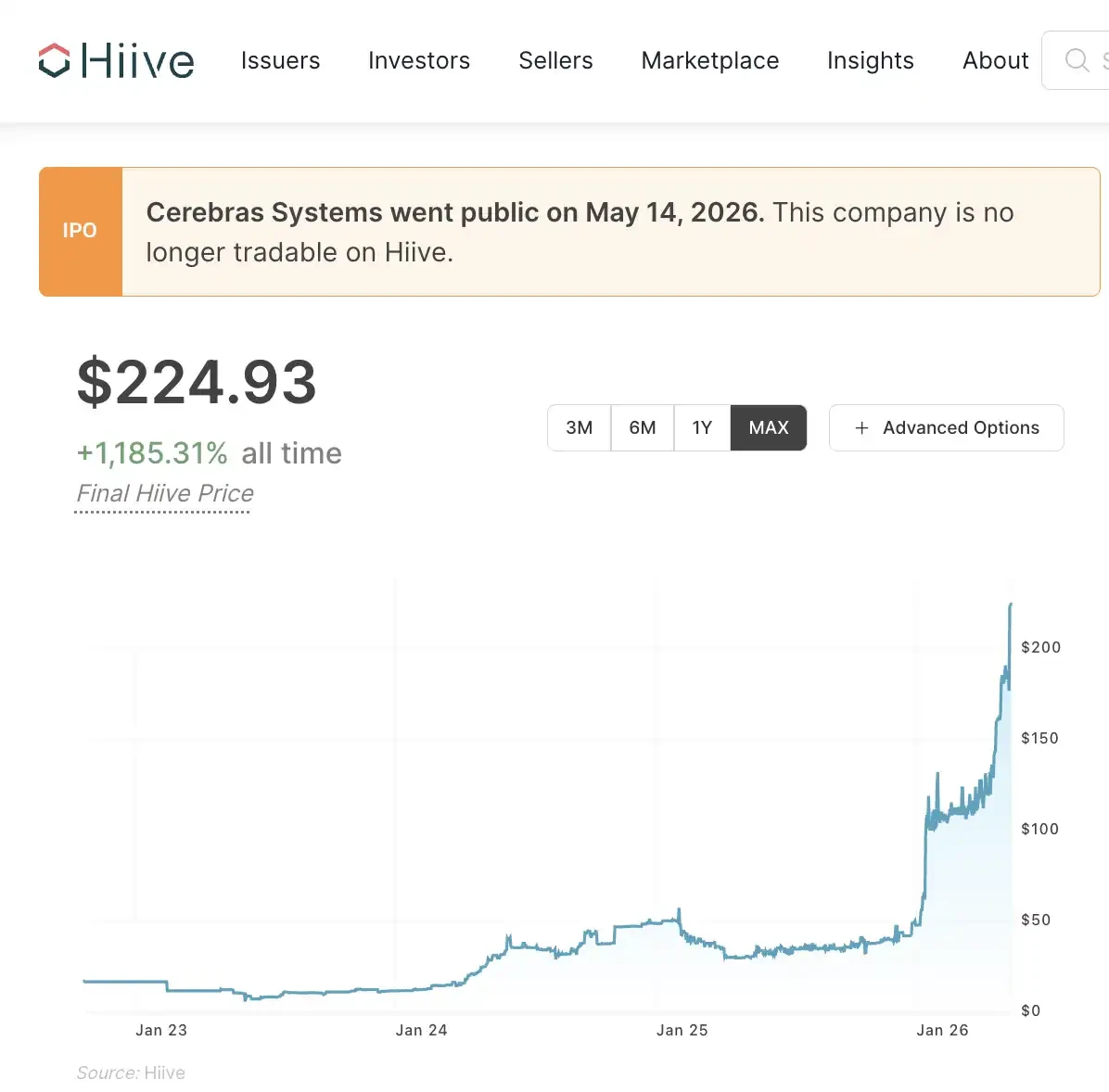
$224.93 is much more accurate than Forge's $113.50, but it still had a 38% deviation from the closing price of $311 and a 56% deviation from the opening price of $350.
The reason Hiive's number is more accurate than Forge's is that its trades occurred later and more frequently, capturing more market sentiment close to the IPO. However, it remains a one-way market, only trading actual equity, without a short-selling mechanism or 24/7 continuous matching.
Now let's look at TradeXYZ.
Launched on May 1, with an initial reference price of $175 and maximum leverage of 5x, anyone globally with a USDC wallet could participate, going long or short.
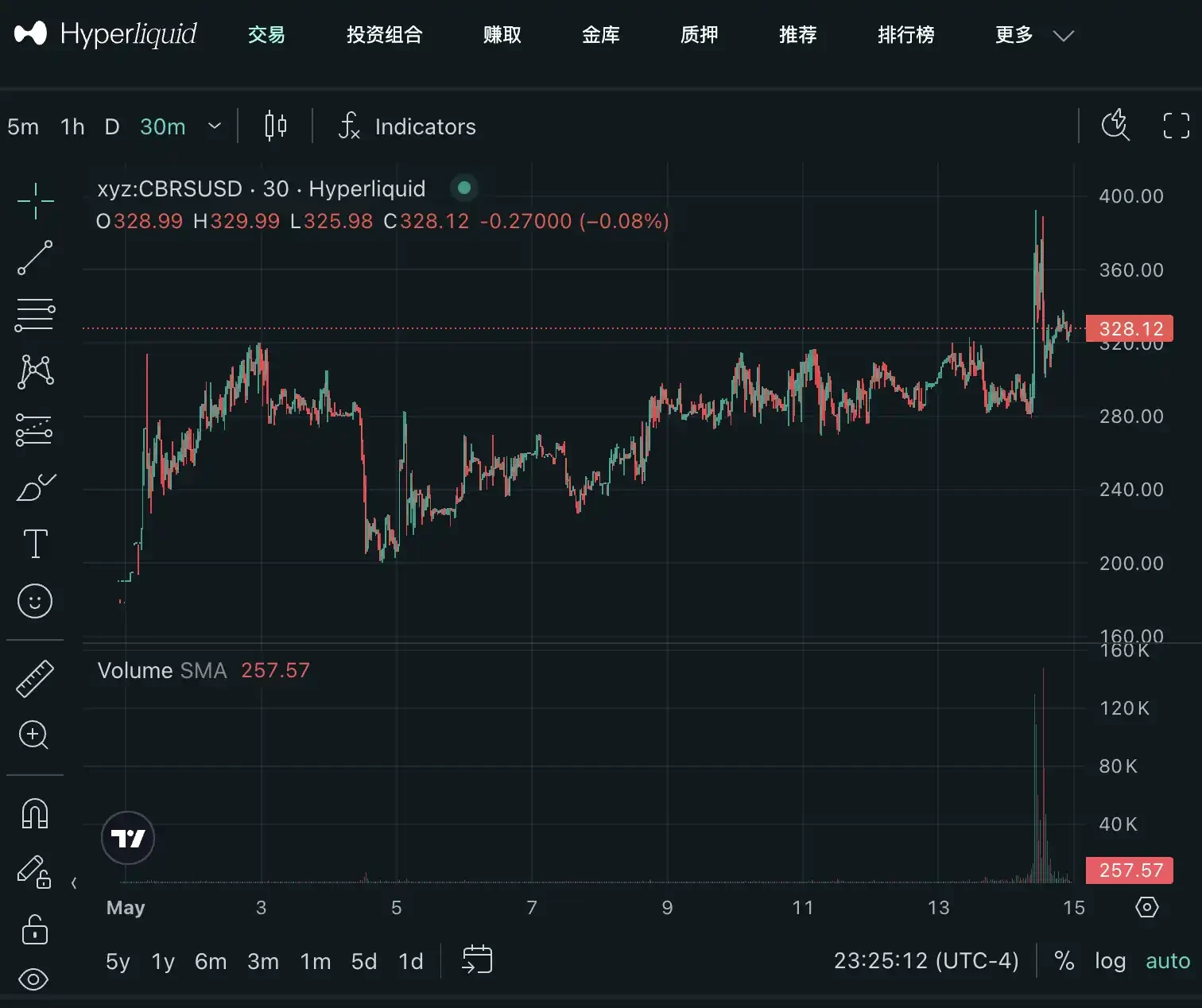
Within two weeks, the on-chain Pre-IPO Perp traded steadily in the $288 to $320 range. At 10 PM on May 14, three hours before the Nasdaq officially opened for retail trading, the CBRS on-chain contract price rapidly surged from the $290 range to $380, with single-hour trading volume nearing $100 million. The 24-hour total trading volume reached $280 million, with open interest of $57.77 million, making it the platform's fourth most active stock contract.
Some might say TradeXYZ was just lucky this time, and the accurate pricing was merely a coincidence.
But this rebuttal overlooks a more important point: TradeXYZ's accurate pricing wasn't accidental; it's structural.
Why TradeXYZ's Pricing Is More Accurate
To understand why TradeXYZ's pricing is more accurate, you must first understand why investment banks could monopolize IPO pricing power for so long.
The traditional IPO pricing mechanism relies on a core premise: all judgments about "what this company is worth" must be aggregated through the investment bank's order book.
CEOs and CFOs travel to major financial centers, meeting with all key institutional investors within two weeks, telling the company's story one-on-one, and collecting indicative prices. These indications all flow into the order book controlled by the underwriter.
No one knows Fidelity's bid, how many shares BlackRock subscribed for, or Tiger Global's indicative price. The investment bank is the only one with a complete view.
This information asymmetry creates the bank's bargaining power. They can set the price at a level "that clears the order book while leaving enough first-day pop for institutions." This is an art. An order book 20 times oversubscribed means all institutions know $185 is low; but the bank locks in this information, sets the issue price at $185, institutions reap an 89% first-day gain, and they'll come back for the next roadshow.
But when a 24/7 market exists that allows anyone to participate, permits short-selling, and makes all positions verifiable in real-time on-chain, price information no longer needs to be aggregated through an order book.
The higher the barrier, the worse the pricing. The more open it is, the more accurate the pricing.
TradeXYZ allows global participation for anyone, with no asset threshold, no geographical restrictions, and no invitation system. Every trade and every order is a participant publicly expressing their judgment of Cerebras' value with real money.
This means TradeXYZ's price aggregates a much broader set of information than a roadshow, including not just institutional judgment, but also the judgment of all market participants aware of this IPO opportunity. More information sources mean a price closer to true value.
Simultaneously, the short-selling mechanism makes it harder for the price to be distorted.
Forge and Hiive are essentially one-way markets. Sellers are employees or early investors looking to cash out, and buyers are accredited investors bullish on the company. No one can publicly bet "I think this company is overvalued" because the channel for short-selling simply doesn't exist.
This creates a systemic bias: prices in a one-way market can only be driven by upward pressure, bearish forces have no outlet to express themselves, and the resulting price systematically leans towards optimism.
TradeXYZ allows short-selling. Anyone who believes Cerebras is overvalued can open a short position with margin, expressing their judgment with a real position. This two-way competition is necessary for price equilibrium. The tug-of-war between long and short positions makes it harder for a single sentiment to dominate price.
Most importantly, Forge Price updates once daily; it's the output of an algorithm model, not a real-time market trade. Hiive trades are discrete, potentially days apart. During the roadshow, the bank releases price signals to the market every few days, selectively disclosing information.
TradeXYZ is a continuously operating matching market, updating prices every 3 seconds. For instance, when news breaks about Sam Altman appearing in a roadshow video, a rumor leaks that Arm and SoftBank had tried to acquire Cerebras, or reports emerge that the order book oversubscription multiple went from 10x to 20x, the price moves immediately.
The PreIPO frenzy this year is just beginning.
Cerebras is just the first. Later this year, SpaceX, OpenAI, and Anthropic are all preparing to go public. This will be the largest batch of tech IPOs in human history, with total fundraising potentially exceeding hundreds of billions of dollars.
And this means Hyperliquid and TradeXYZ will continue to disrupt Wall Street's perceptions, wielding more pricing power.


