






Asia's first offline Ethereum community center opens


- Key Point: ETH Hong Kong Hub, Asia's first offline Ethereum community center, opened its doors on April 21, 2026. It marks Ethereum's first long-term sustainable physical community space in Asia. Core figures like Vitalik Buterin attended, emphasizing that the technological inflection point has arrived, with Ethereum transitioning from underlying innovation to mass adoption, positioning Hong Kong as a key coordination node for the global Ethereum ecosystem.
- Key Elements:
- Supported by the Ethereum Foundation's 'Ethereum Everywhere' program and co-operated by SNZ and ETHTAO, the ETH Hong Kong Hub's opening event attracted over 1,500 registrants, with speeches from 16 founders/CEOs and other senior executives.
- Vitalik Buterin pointed out that Zero-Knowledge Proof (ZK) technology is maturing and AI is lowering development barriers. He stated that L2 should complement L1, and future scaling will cover data and computation, requiring early preparation for challenges such as quantum resistance.
- Ethereum Foundation Chair Aya Miyaguchi emphasized her "philosophy of subtraction," aiming for the ecosystem to have long-term independent operational capability through coordination rather than control, enabling stable evolution even in the Foundation's absence.
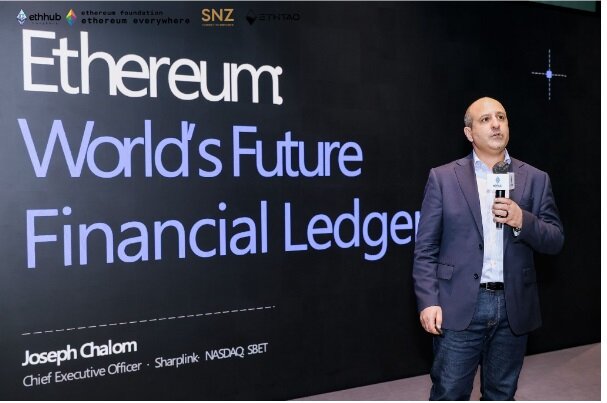
- Sharplink CEO Joseph Chalom believes Ethereum is becoming a global financial ledger and trust infrastructure, with stablecoins, RWAs, and DeFi building an on-chain financial system, and institutional adoption accelerating to drive mass adoption.
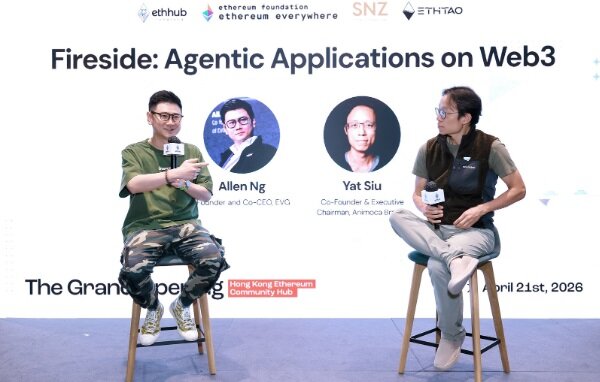
- Animoca Brands Co-founder Yat Siu pointed out that AI agents will reshape business models, with the future key being agent-driven micro-transactions. Blockchain provides low-cost, real-time settlement to support their economic operation.
- The Hub's first cohort hosts over 30 Ethereum ecosystem projects covering areas like infrastructure, DeFi, and institutional services, aiming to connect developers, institutions, and entrepreneurs through a regular physical space.
Asia's first Ethereum offline community center, ETH Hong Kong Hub, officially opened on April 21, 2026. Supported by the Ethereum Foundation's Ethereum Everywhere (EE) team and co-operated by SNZ and ETHTAO, this physical community space marks Ethereum's first long-term, open, and sustainable offline community center in Asia, further solidifying Hong Kong's critical position in the global digital asset and technological innovation landscape.
The grand opening gathered core figures from the global Ethereum ecosystem, institutional representatives, and technology communities. Speakers included Ethereum co-founder Vitalik Buterin, Ethereum Foundation President Aya Miyaguchi, Hong Kong SAR Legislative Council Member (Technology and Innovation Sector) Duncan Chiu, Director of the Office for Attracting Strategic Enterprises Peter YAN, SNZ founder Gilles Shi, Sharplink CEO Joseph Chalom, and HashKey Group Chairman & CEO Dr. Xiao Feng. The event attracted over 1,500 registrants and participants including developers, institutions, and innovators from around the world, becoming one of the most anticipated events during this year's Hong Kong Web3 Carnival. A total of 16 founders/CEOs and 10 SVPs or business heads from various enterprises were invited as guest speakers for Keynote sessions and Panels.
The ETH HK Hub Grand Opening & Meetup was sponsored by Spark, Lido, Galaxy Digital, and Zand Bank, jointly promoting communication and development within the Ethereum ecosystem in Asia.
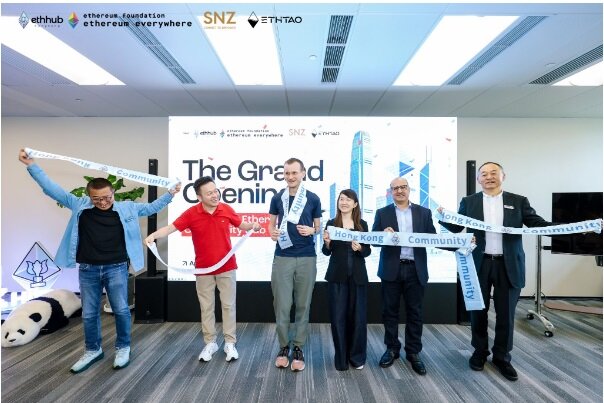
Making Hong Kong a Place Builders "Can Come Back To"
ETH Hong Kong Hub is more than just a physical space; it is a long-term operational offline community center connecting developers, institutions, and entrepreneurs to drive the deep integration of Web2 and Web3.
Henry Chen, Chief Business Officer of SNZ Holding, stated:
"With Vitalik, Aya, and other core Ethereum figures coming to Hong Kong, the city is once again becoming a gathering point for global builders—a place they 'can come back to.'"
"Hong Kong is a financial and tech innovation hub in Asia and one of the most active and well-regulated Web3 harbors globally. Located in the heart of West Kowloon, ETH Hong Kong Hub connects with the world."
"Over the past ten months, we've built this space from the ground up alongside the Ethereum Foundation. Today's official opening feels more like a 'new beginning'—a community that requires everyone's participation and collective growth."
"ETH Hong Kong Hub serves as the community gathering center within this 'home,' allowing builders from diverse backgrounds to meet, collaborate, and grow. The Hub will provide one-stop services for community center members and Ethereum builders, ranging from office space and event venues to localized support (including enterprise services and talent recruitment), as well as ecosystem empowerment, incubation investment, and business collaboration. 'A million spacious mansions' – a true community is one where everyone feels a sense of belonging."
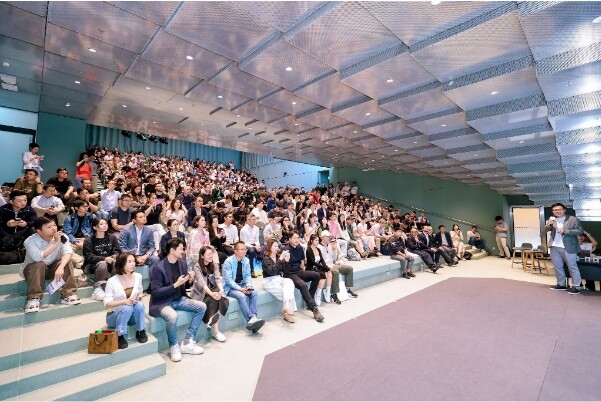
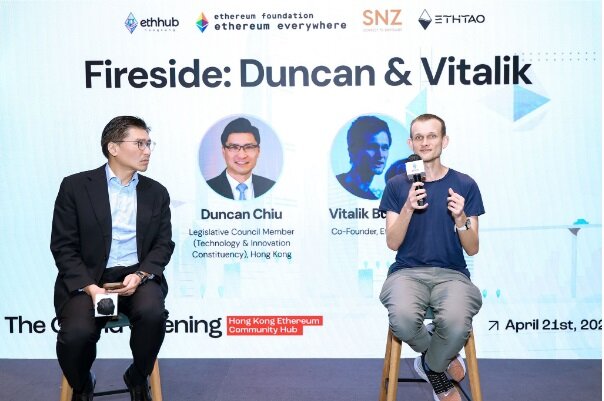
Vitalik: The Technological Inflection Point Has Arrived, A New Building Cycle Is Beginning
In the opening fireside chat, Vitalik Buterin communicated in Mandarin with Duncan Chiu, reviewing his over-a-decade-long connection with the Chinese-speaking community and engaging in an in-depth discussion on topics including the latest Ethereum roadmap, L2, AI, and quantum resistance.
Vitalik stated that with the maturity of Zero-Knowledge Proof (ZK) technology and artificial intelligence significantly lowering development barriers, a new generation of developers is gaining unprecedented opportunities. He noted:
- L2 should complement L1, not simply replicate it
- L1 remains the irreplaceable native settlement layer
- Future scaling includes not only data scaling but also computation scaling
When discussing AI and quantum resistance technologies, Vitalik said these challenges are "completely solvable, but require serious effort," emphasizing that infrastructure needs to be prepared in advance for long-term future changes.
He also encouraged builders in the Chinese-speaking community to start from real-world needs, explore the integration of Ethereum with AI, open-source hardware, and other directions, creating new application forms different from the past.
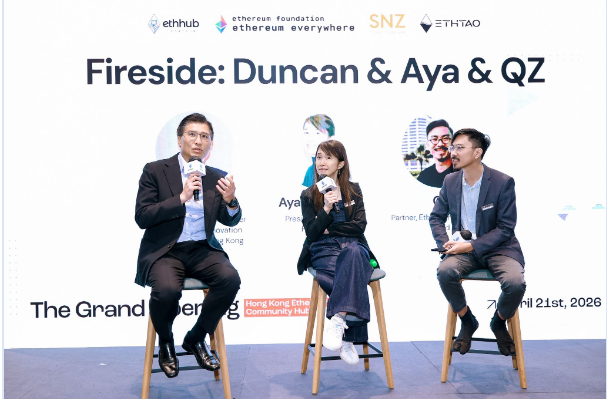
Aya Miyaguchi: Building a Long-Term Sustainable Ecosystem with the "Subtraction Philosophy"
In another fireside chat, Ethereum Foundation President Aya Miyaguchi shared the core philosophy behind the long-term development of the Ethereum ecosystem.
She stated that the Foundation's goal is not to dominate or control the ecosystem, but to ensure its ability to operate independently in the long run. She proposed that Ethereum needs to pass the "walk-away test," meaning at some point in the future, the protocol and ecosystem should continue to operate stably even without the Foundation's presence.
"The system needs to function continuously even without the Ethereum Foundation."
Aya pointed out that this philosophy stems from the Foundation's long-standing "subtraction philosophy." During the ICO boom, the Foundation faced external suggestions to expand its team and establish corporate structures (like appointing CTOs or CMOs). However, it ultimately chose a different path, supporting ecosystem development through "coordination rather than control."
She further explained that this design allows the Ethereum ecosystem to evolve continuously without relying on a single center, constantly generating new innovations.
Aya also mentioned that community spaces like ETH Hong Kong Hub are manifestations of the Ethereum ecosystem's spontaneous evolution, reflecting the continuous development and activity of the global community across different regions.
Joseph Chalom: Ethereum Is Becoming the "Global Financial Ledger"
In his keynote speech, Sharplink CEO Joseph Chalom systematically elaborated on Ethereum's long-term value from an institutional financial perspective.
He stated that the current global financial system is undergoing a profound transformation, where traditional trust mechanisms are inefficient:
- Trade settlement still takes 1–3 days
- There are numerous fragmented databases globally
- High costs are incurred for intermediaries and trust establishment
He pointed out: "Ethereum is becoming the global financial ledger and trustware."
Joseph further stated that Ethereum has established a leading advantage in security, liquidity, and institutional trust. The development of stablecoins, Real World Assets (RWA), and DeFi is building a new on-chain financial system.
He emphasized that as regulations become clearer and institutions accelerate their entry, blockchain technology is moving from the experimental stage towards large-scale adoption.
Animoca Brands × EVG: AI Agents Are Reshaping Business Models and On-Chain Economic Structures
In another fireside chat, EVG Co-founder and Co-CEO Allen Ng engaged in a discussion with Animoca Brands Co-founder and Executive Chairman Yat Siu on AI Agents and Web3 applications.
Yat Siu stated that AI Agents are evolving from information tools into systems with execution capabilities, able to participate in real-world tasks and form large-scale automated collaboration networks in the future. He noted that as users increasingly obtain information through AI rather than clicking links, the traditional advertising-centric internet business model is being challenged.
"The future key is no longer traffic, but micro, high-frequency payments driven by Agents."
He further emphasized that as the scale of interactions and transactions between Agents grows, the low-cost, real-time settlement capabilities provided by blockchain make it the ideal infrastructure to support the Agent economy.
Allen Ng added that AI Agents will significantly lower the barrier to entry for Web3, allowing users to perform on-chain operations through Agents, thereby driving broader application adoption.
From AI to On-Chain Finance: Agenda Outlines a Complete Application Landscape
The opening event of ETH HK Hub focused on key application directions within the Ethereum ecosystem. The agenda systematically presented the complete path of Ethereum from technological evolution to scaled adoption, covering infrastructure, AI × blockchain integration, on-chain finance, and real-world assets.
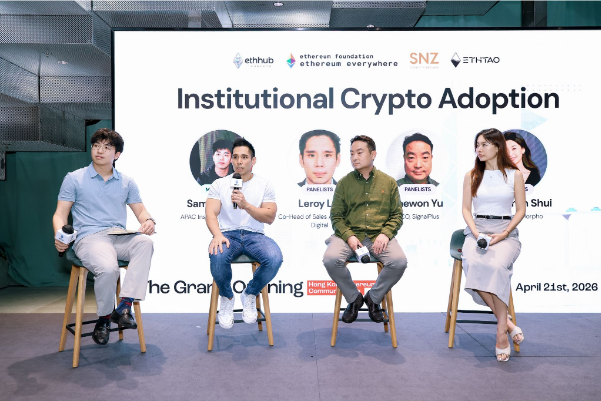
During the Institutional Crypto Adoption roundtable, Samuel Chong from Lido, Leroy Lin from Galaxy Digital, Jaewon Yu from SignalPlus, and Shan Shan Shui from Morpho discussed institutional crypto asset adoption. The discussion explored dimensions such as liquid staking, institutional trading services, and on-chain lending, examining how institutional capital is progressively entering the on-chain ecosystem.
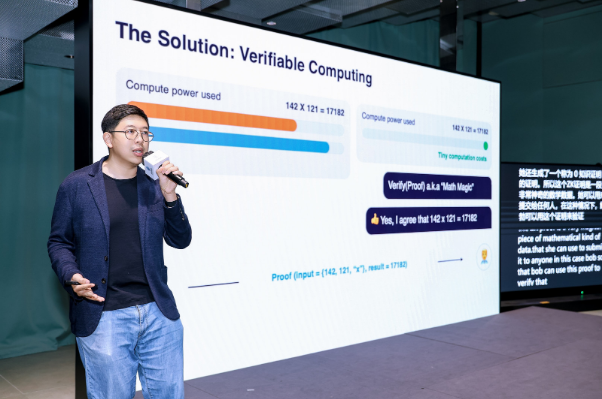
In his keynote speech "100X Ethereum L1: The ZK Path to Infinite Compute," Michael Dong, Co-founder and CEO of Brevis, shared insights on Zero-Knowledge Proofs (ZK) and verifiable computation. He proposed that by "decoupling computation from verification," it is possible to break through the performance bottlenecks caused by blockchain's repetitive computation, providing an infrastructural path for Ethereum's large-scale scaling.
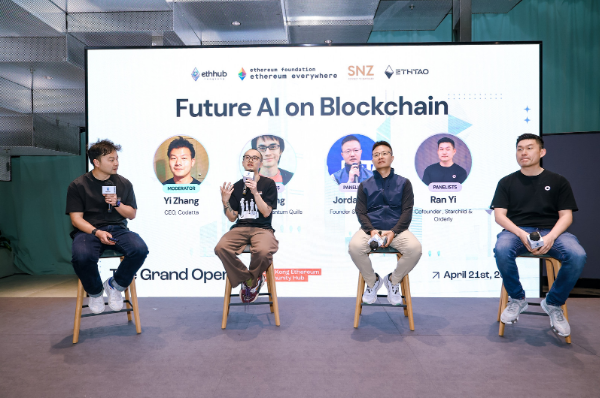
In the Future AI on Blockchain roundtable, Codatta CEO Yi Zhang, Quantum Quills Co-founder Rui Ding, Alsa Founder & CEO Jordan Liu, and Starchild / Orderly Co-founder Ran Yi discussed the convergence of AI and blockchain. They argued that AI Agents are transitioning from tools to economic participants, and blockchain will provide them with a decentralized payment and settlement network.
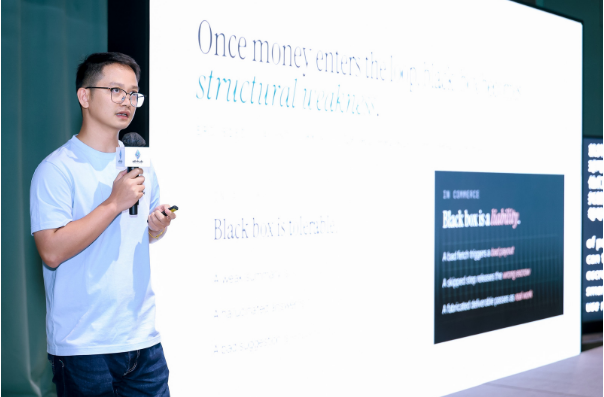
In his keynote speech "Building Verifiable Agents for the Autonomous Economy," Xie Xiang, Co-founder and CEO of Primus, proposed that future AI Agents not only need execution capabilities but also verifiability. The on-chain Verification Layer will become the critical infrastructure supporting automated Agent transactions and trusted collaboration.
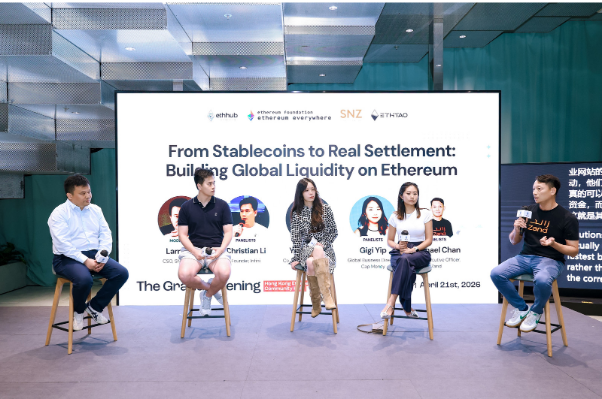
In the "From Stablecoins to Real Settlement: Building Global Liquidity on Ethereum" roundtable, Larry Ma (Chief Strategy Officer, SNZ Holding), Christian Li (Founder, Infini), Yolanda Liu (Co-founder, Pay Protocol), Gigi Yip (Global Head of Business, Cap Money), and Michael Chan (CEO, Zand Bank) discussed stablecoins, on-chain settlement, and global liquidity. They pointed out that stablecoins are driving capital migration on-chain, gradually building a financial system based on blockchain settlement.
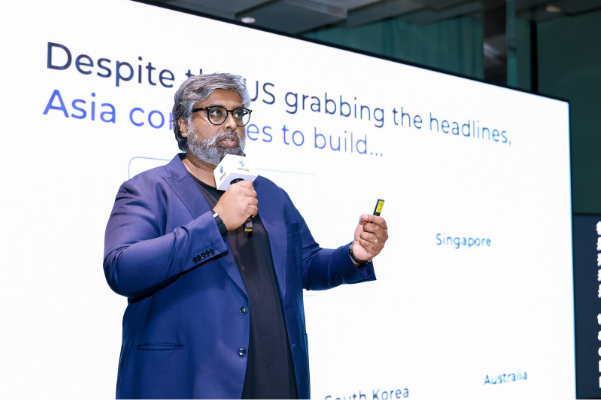
In his keynote speech "Integrating TradFi with Web3: Growth in Asia," Niki Ariyasinghe, Vice President of APAC & Middle East at Chainlink, shared the latest developments in on-chain compliance, asset tokenization, and cross-border asset distribution from an institutional perspective. He highlighted Hong Kong's emergence as a vital hub for global institutions advancing on-chain finance.
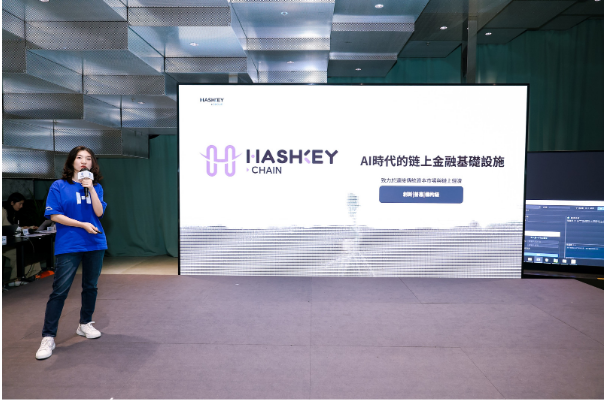
In her keynote speech "On-chain Financial Infrastructure for the Age of AI," Serena Wang, Head of HashKey Chain, introduced the layout of on-chain financial infrastructure designed for institutions, developers, users, and AI Agents. She emphasized connecting traditional capital markets with the on-chain economy through compliant DeFi, RWA issuance, and institutional-grade service systems.
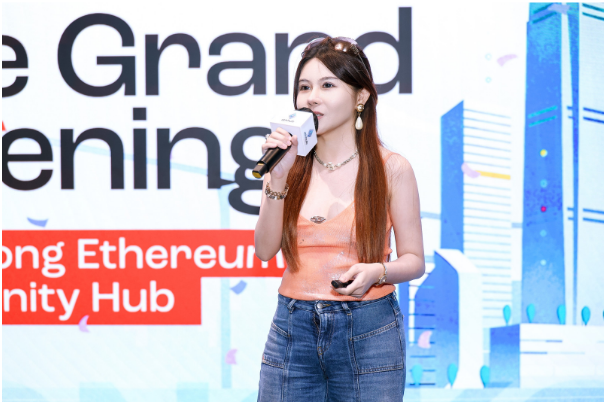
In her keynote speech, Yuxin, representative of GCC, shared GCC's long-term support for open-source infrastructure, privacy networks, and developer communities from the perspective of public goods and the open-source ecosystem. She emphasized that the long-term development of Web3 depends not only on commercial drivers but also on the sustained investment of public goods and non-profit funds.
Overall, the opening agenda, centered on the themes of "Institutional Adoption – Technological Scaling – AI Agents – Payments & Settlement – On-Chain Finance – Public Goods," comprehensively presented the evolutionary path of the Ethereum ecosystem from underlying innovation to real-world applications.
Hong Kong: A Key Coordination Node in the Global Ethereum Ecosystem
As a crucial hub connecting Asian and global capital, Hong Kong possesses unique advantages in regulation, finance, and cross-border resource integration.
Duncan Chiu stated that the establishment of ETH Hong Kong Hub will further strengthen Hong Kong's position as an international technology and digital asset hub, providing an open and compliant platform for exchange and cooperation among global developers and enterprises.
Unlike short-term events, the core of ETH Hong Kong Hub lies in its sustainability:
- A regularly accessible offline collaboration space
- Regularly held technical sharing and community events
- Long-term connection between developers, institutions, and entrepreneurs
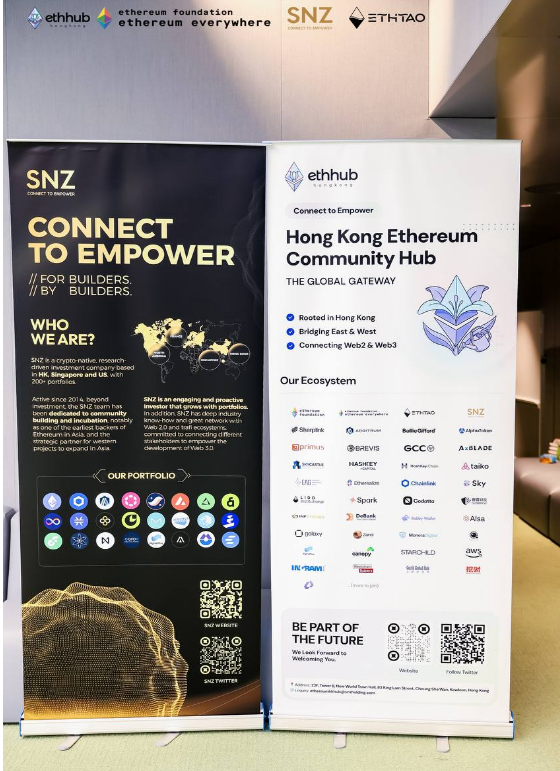
With this positioning, the first batch of residents in ETH Hong Kong Hub has attracted over 30 Ethereum ecosystem projects, institutions, and enterprises, covering areas such as infrastructure, DeFi, institutional services, and emerging applications, forming an initial offline ecosystem network with multi-faceted collaborative capabilities.
About ETH Hong Kong Hub
ETH Hong Kong Hub is Asia's first Ethereum offline community center. Supported by the Ethereum Foundation's Ethereum Everywhere team and co-operated by SNZ and ETHTAO, the Hub is dedicated to connecting Eastern and Western ecosystems and bridging Web2 and Web3. Through continuous community building, technical exchange, and resource coordination, it aims to drive the long-term development and application adoption of Ethereum in Asia.


