"Crypto Czar" Steps Down: 130-Day Political Performance Concludes, How Much of Trump's Crypto Promises Remain?


- Core Viewpoint: The article argues that David Sacks' tenure as "Crypto Czar" was more akin to a political performance staged for Trump. Most of the initiatives he pushed (such as the White House Crypto Summit, Bitcoin Strategic Reserve) held more symbolic value than substance, failing to bring the industry a clear regulatory framework and tangible benefits.
- Key Elements:
- The White House Crypto Summit did not release substantive policies; the content was hollow. The market declined post-summit, indicating its symbolic significance far outweighed actual regulatory progress.
- The U.S. Strategic Bitcoin Reserve merely involved reclassifying government-seized Bitcoin, with no commitment to new purchases, offering little real market support.
- The *GENIUS Act* is the main policy achievement, establishing a federal legal framework for dollar-backed stablecoins, which holds practical compliance significance.
- The crucial *CLARITY Act* is stalled. The latest revised draft favors banking industry interests, potentially harming DeFi, contradicting initial promises.
- David Sacks stepped down as "Crypto Czar" due to the 130-day term limit. His future focus shifts to artificial intelligence, marking the end of this phase of the crypto political agenda.
Original | Odaily (@OdailyChina)
Author|Golem (@web3_golem)
The "Crypto Czar" David Sacks is leaving. David Sacks explained that he is stepping down from his role because he has reached the 130-day limit for a Special Government Employee. In the future, he will continue to be involved in relevant government affairs as the Co-Chair of the President's Council of Advisors on Science and Technology.
On December 6, 2024, Trump announced the appointment of David Sacks as the White House lead on AI and cryptocurrency matters. Because Trump directly referred to him as the "White House A.I. & Crypto Czar," David Sacks earned the title "Crypto Czar." This is not an official government title, but rather a role to formalize David Sacks's influence. In his appointment letter, Trump specifically expressed his expectations for David Sacks in the crypto field: "to advance a clear legal framework that provides the long-needed clarity for the cryptocurrency industry to thrive in the United States."
From a motivational perspective, in 2024, Trump made numerous crypto promises to gain the support of the American crypto community. Therefore, after successfully becoming president, he needed a capable person to help him fulfill these promises. David Sacks was the policy executor chosen by Trump.
David Sacks indeed lived up to Trump's expectations, achieving some political successes during his 130-day tenure: banning CBDCs, convening the first White House Crypto Summit, establishing the U.S. Strategic Bitcoin Reserve Act, and facilitating the passage of the CLARITY Act, among others.
David Sacks essentially fulfilled most of the promises Trump made to the crypto industry during his campaign. Therefore, many are willing to frame his tenure as a victory narrative. On the surface, this seems true. However, upon reviewing what David Sacks actually did for the crypto industry, there is a common characteristic—the political gestures were grand, but the tangible gains for the crypto industry were minimal.
During these 130 days, David Sacks was not reshaping the crypto industry; he was merely performing a crypto political show on behalf of Trump.
1. White House Crypto Summit = Trump Praise Session
The highlight of this performance was the White House Crypto Summit, which appeared full of sincerity but was actually filled with flattery and empty slogans. (Related reading: White House Crypto Summit: A Political Performance of Flattery and Slogans)
On March 7, 2025, representing Trump, David Sacks invited a group of crypto companies and industry figures to the White House. Attendees included a16z partner Chris Dixon, Ripple CEO, Robinhood CEO, MicroStrategy founder Michael Saylor, Coinbase CEO, among others. Several U.S. government officials also spoke, including Trump and the Treasury Secretary.
Crypto figures going to Washington was not unprecedented, but previously, they mostly went for hearings, to be scolded, or to explain whether they were scams. This time was different. The setting shifted from the witness stand to the White House, and the atmosphere changed from tense confrontation to respectable photo ops. For the first time, crypto figures were treated as "honored guests" by the U.S. government. David Sacks sat next to Trump, resembling a director responsible for cueing the lines.
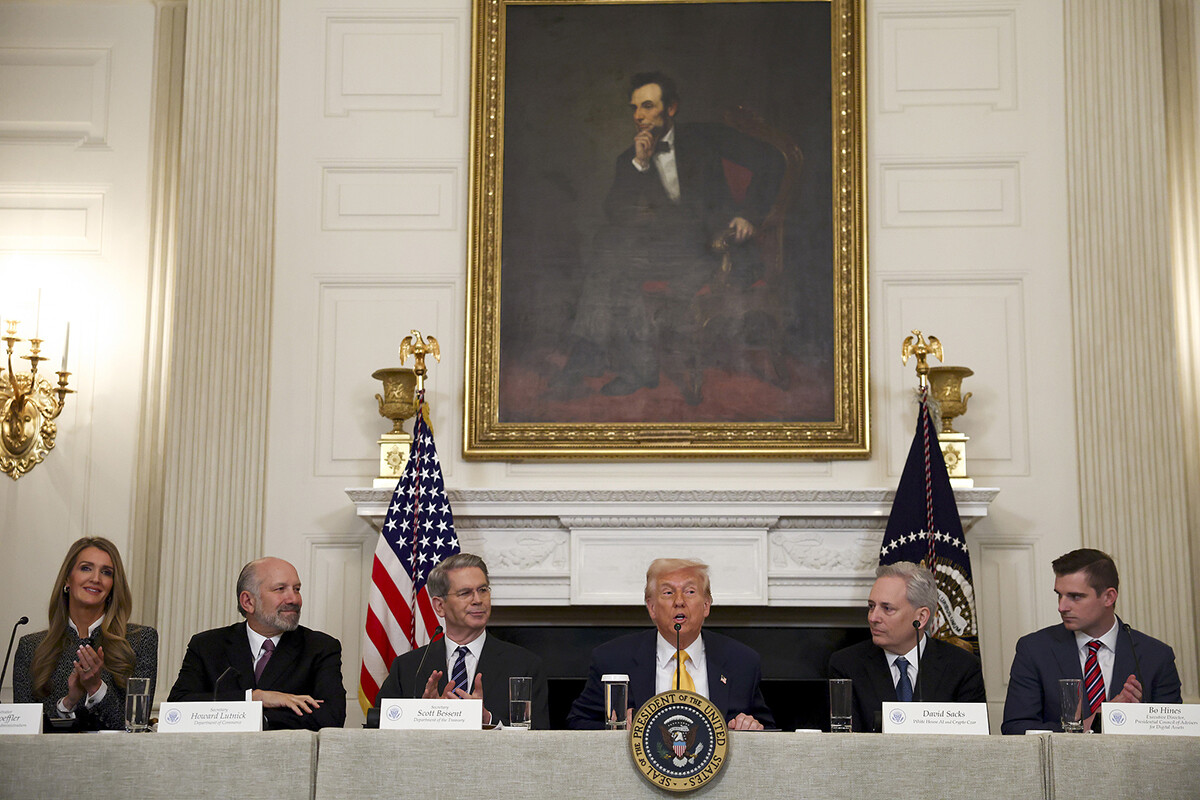
David Sacks sits to Trump's left at the White House Crypto Summit.
What was discussed at such a high-level and highly anticipated government crypto meeting?
According to records from an Odaily reporter who monitored the live stream that night, everyone spent the entire time praising Trump. The closed-door meeting, which was supposed to define the direction of crypto regulation for the next four years, concluded without releasing any substantive policy documents. Because the meeting content fell far short of market expectations, the crypto market immediately dropped following the summit, as reflected in OKX's market data that day.
This summit certainly had symbolic significance, but the problem is precisely that it was *only* symbolic. It performed Trump's alignment with crypto once again, but the things the industry most wants—such as unified, stable, and predictable regulatory boundaries, long-term rules that allow institutions to enter with peace of mind, and project teams not having to guess what stance the SEC and CFTC will take tomorrow—still haven't been truly delivered. The meeting was lively, emotions were high, but what ultimately landed on the industry was just market sentiment.
Why was this meeting so hollow? Because it wasn't part of the original plan. Trump's campaign promise was to establish a cryptocurrency council, expected to enable crypto industry leaders to have direct, ongoing dialogue with the White House and the President. However, this didn't materialize for various reasons. As compensation, a crypto summit was hastily organized, with promises to hold it regularly. Yet, so far, the White House has not held a second crypto meeting of the same level.
2. Bitcoin Strategic Reserve = Moving Bitcoin to a Different Drawer
The second major thing David Sacks pushed for, the U.S. Strategic Bitcoin Reserve, if taken seriously, was not a performance but a magic trick.
A few hours before the White House Crypto Summit began, Trump signed an executive order to establish the strategic bitcoin reserve. However, after the news broke, the price of Bitcoin still fell. The core reason was that David Sacks explained the bitcoin for this strategic reserve came from assets seized by the U.S. government in previous criminal or civil forfeiture proceedings, not from new purchases, and didn't cost taxpayers a single cent.
Although the order authorized the Treasury and Commerce Departments to study "budget-neutral" strategies for acquiring additional bitcoin, it did not provide any clear timeline or scale for purchases. Therefore, the message this Bitcoin Strategic Reserve sent to the market was: we won't sell any more bitcoin, but we won't buy any more either.
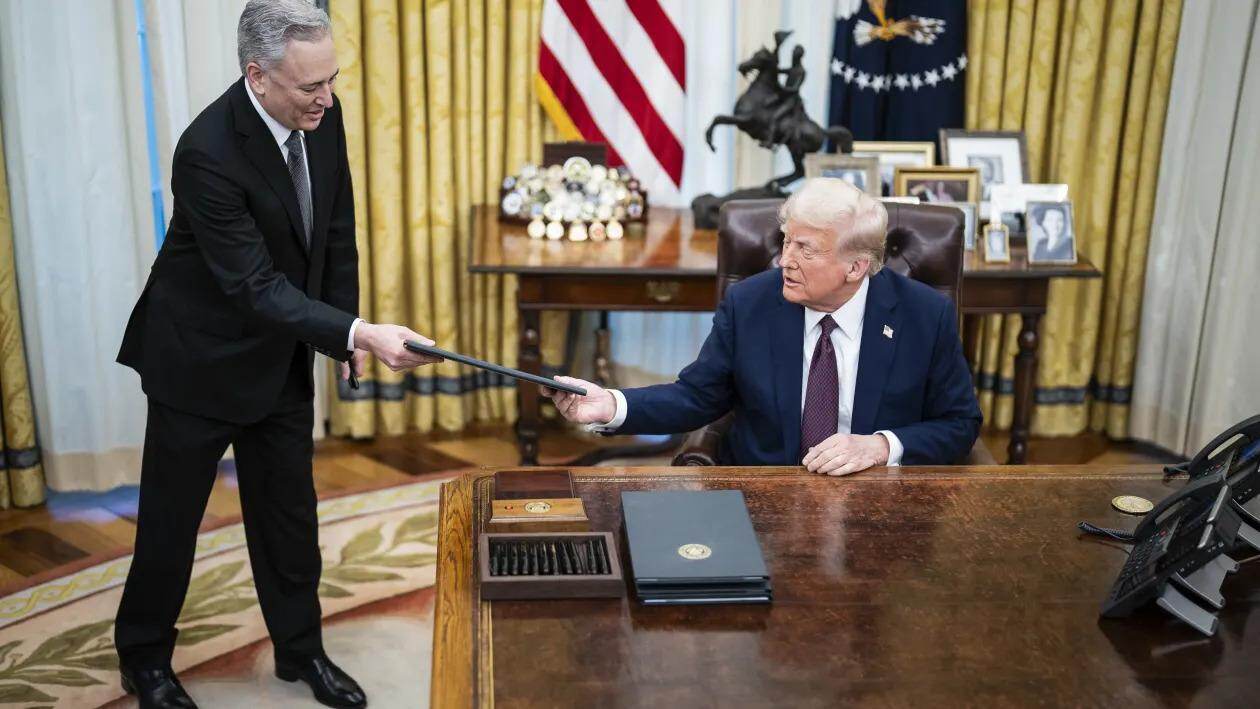
Trump signs the Bitcoin Strategic Reserve executive order.
Did David Sacks handle this well? For Trump, of course it was brilliant—fulfilling a promise without spending a dime. But for the crypto industry, it again held only symbolic meaning. The market originally expected the U.S. government to step in and increase its bitcoin holdings, injecting liquidity and providing endorsement. What they got instead was "moving the previously seized bitcoin to a different drawer."
3. The GENIUS Act is the Real Achievement
The GENIUS Act might be the true achievement of David Sacks as Crypto Czar.
On July 18, 2025, Trump formally signed the GENIUS Act into law in the White House East Room. It holds not only symbolic but also practical significance. From an industry impact perspective, the GENIUS Act establishes a federal-level framework for dollar-denominated stablecoins, meaning stablecoins have moved out of the wild growth phase and into the realm of compliance, becoming a new financial instrument backed by the force of federal law.
This wasn't accomplished by David Sacks alone, but he certainly deserves credit. However, there is another bill, the twin of the GENIUS Act—the CLARITY Act—which is still struggling. The CLARITY Act was passed by the U.S. House of Representatives alongside the GENIUS Act on July 18, 2025, but it has yet to complete the Senate process, remaining stuck in a negotiation deadlock between the banking and crypto industries.
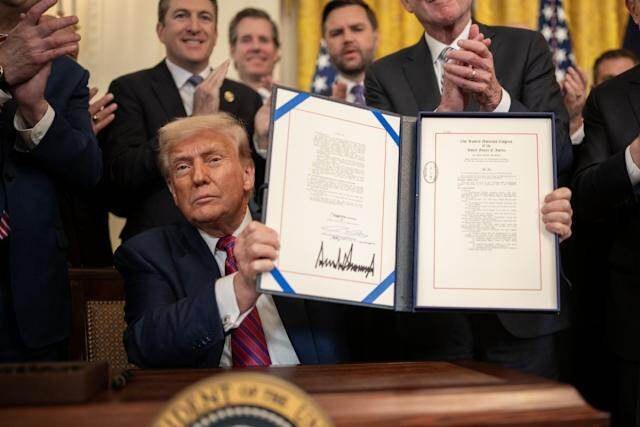
Trump signs the GENIUS Act.
David Sacks once confidently stated that both the CLARITY Act and the GENIUS Act would pass within the first 100 days of this administration. Currently, it seems he has been proven very wrong.
The failure of the CLARITY Act to pass isn't solely David Sacks's fault, but he certainly bears some responsibility, just as he can claim some credit for the GENIUS Act's passage. The White House Digital Assets Working Group led by David Sacks explicitly called the CLARITY Act an "excellent foundation." Since the White House has already treated it as the core draft for market structure legislation, can David Sacks be a completely detached bystander when it subsequently stalls?
The core deadlock of the bill centers on the conflict between the banking and crypto industries over stablecoin interest-bearing. According to the latest revised text, the banks have prevailed. Following this news, on March 25, Circle (CRCL) stock price fell by up to 18%, and Coinbase (COIN) fell by about 8%. Moreover, if such a CLARITY Act were to pass, it would be a blow to the entire DeFi sector. (Related reading: CLARITY Act Rewrites DeFi's Fate: Circle Feasts, DeFi Tokens Bleed)
This is quite different from the pro-crypto industry script Trump and David Sacks originally promoted. It's ironic that a bill touted as promoting the crypto industry ultimately benefits banks, not the crypto industry.
On March 4, despite his busy schedule, Trump still found time to mention the crypto industry. He posted on Truth Social stating that the U.S. must pass the CLARITY Act as soon as possible, and Americans should earn higher returns on their money. It seemed Trump was still concerned about the crypto industry. However, it wasn't until the latest revised text of the bill was released on March 24 that we saw it was yet another "symbolic" statement.
Now, the "Crypto President" Trump has completely gone silent. As for David Sacks, the White House had already written the script for him. As the Crypto Czar, his role was to stand in the spotlight and translate Trump's campaign slogan of "making America the crypto capital of the world" into a few decent political actions. Once the show was mostly over, it was time to exit. Now, as Co-Chair of the President's Council of Advisors on Science and Technology, David Sacks stated that he will continue working on AI policy and technology strategy in the future, not even mentioning crypto.
The former Crypto Czar is gone, and Trump's flirtation with cryptocurrency has ended.