






Market Recovery or False Rebound? Where Are the Market Opportunities Amidst Rotating Narratives?


- Core View: The current market rebound is more of a phase driven by macro events like geopolitics rather than a trend reversal. Accelerating narrative rotation and increased uncertainty require traders to focus more on risk management, position allocation, and trading discipline rather than simply judging market direction.
- Key Elements:
- On-chain data shows the recent BTC rebound was primarily driven by short-term trading, with no significant increase in long-term capital allocation, indicating the market structure is still seeking balance.
- Common retail trader mistakes include misinterpreting volatility as a trend, chasing rallies and selling on dips, and using high leverage. In a highly uncertain environment, controlling risk is more important than pursuing returns.
- Capital flows primarily to high-liquidity core assets like BTC and ETH. Short-term narrative-driven hype tends to burn out quickly and is unsuitable for heavy, long-term bets. Trading timing is more crucial than the narrative itself.
- The recommended trading strategy is layered allocation, e.g., using part of the capital as a spot base position in BTC/ETH, part for low-leverage contracts to capture volatility, and keeping flexible funds to respond to unexpected events.
- In fast-paced markets, discipline and execution are paramount. Utilize platform tools and activities (such as trading challenges, copy trading) to assist strategy execution, but maintain independent control over final risk.
Market Recovery or False Rebound? Where Are the Opportunities in a Rapidly Rotating Market?
Global market volatility has increased significantly recently. Tensions in the Middle East have driven a rapid rise in crude oil prices, fueling a surge in risk-aversion sentiment. Meanwhile, risk assets like BTC and ETH have also experienced a phased rebound. Capital is rapidly shifting between safe-haven and high-liquidity assets, noticeably accelerating the market's pace. Hotspot rotation is becoming faster, narratives are constantly being refreshed, and short-term opportunities and risks are intertwined, making it increasingly difficult to rely solely on intuition or a single logic to judge market trends. Traders must not only gauge direction but also pay close attention to position sizing, timing, and risk management.
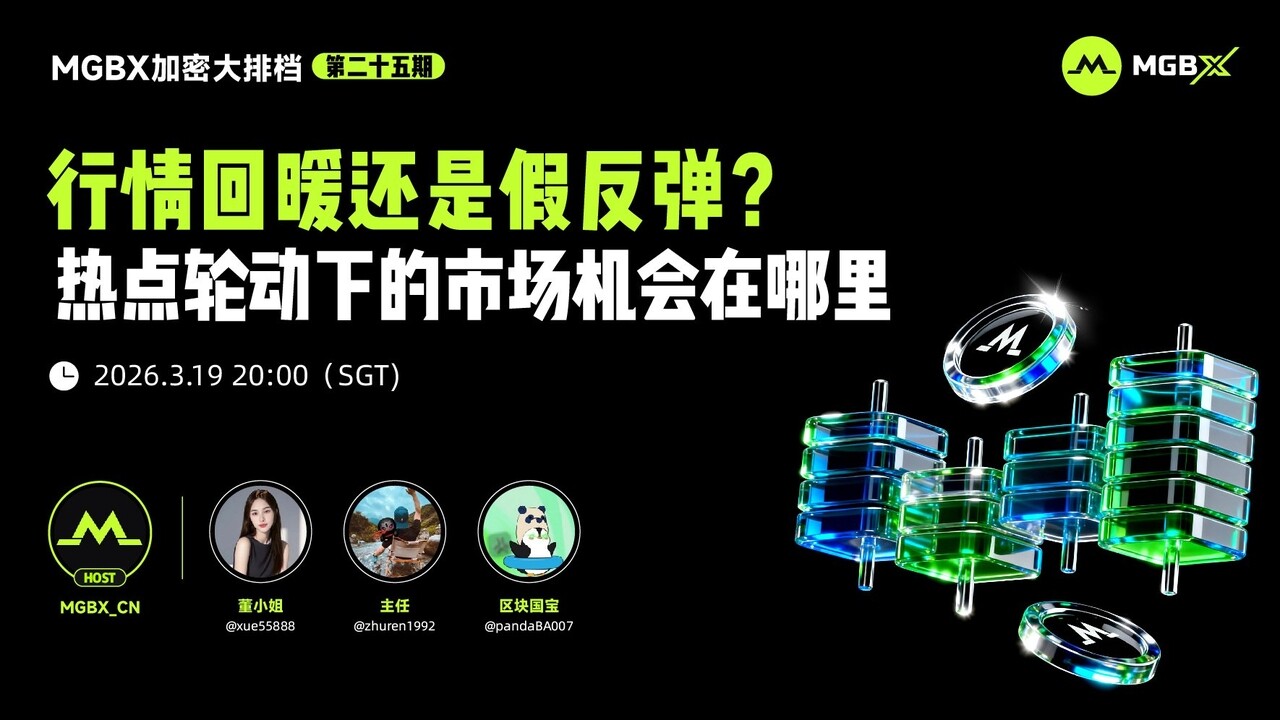
In such an environment, we invited three guests—主任, 区块国宝, and OnChainMetrics—to our Space. From the perspectives of data analysis and practical experience, they engaged in an in-depth discussion on the market's nature, common mistakes made by retail investors, the logic behind hotspot rotation, and specific trading strategies.
OnChainMetrics believes this rebound resembles a phased recovery rather than a trend reversal. He pointed out that while safe-haven funds driven by the Middle East situation have indeed flowed into BTC, on-chain data shows no significant increase in long-term capital positions. Short-term trading has driven price volatility. Therefore, opportunities exist but should not be misinterpreted as the start of a new bull market. "Short-term volatility may intensify, but the market structure is still searching for a new equilibrium," he reminded traders.
Discussing common mistakes made by retail investors, 区块国宝 stated bluntly that many mistake volatility for a trend—chasing rallies, panicking during dips, or using high leverage to bet on direction. He emphasized that the uncertainty in such macro-event-driven markets is very high. Even if one correctly judges the direction, they can still be shaken out if they cannot withstand the volatility. "The key isn't being right; it's surviving. Controlling risk is more important than chasing returns."
Against the backdrop of accelerating hotspot rotation, 主任 added that narratives can now be exhausted within days, but capital consistently flows first to assets with good liquidity and high certainty, such as BTC and ETH. Short-term hotspots can be participated in but are not suitable for heavy, long-term bets. "The old strategy of relying on a single point of judgment to ride a trend is becoming increasingly difficult. Trading rhythm and capital flows are more important than narratives alone."
Regarding trading allocation strategies, OnChainMetrics shared his approach: If he had 10,000 USDT, he would allocate it in layers—50% in BTC and ETH spot as a core position, 30% in low-leverage contracts to capture short-term volatility, and 20% as flexible capital to respond to unexpected events. He emphasized that the focus isn't betting on direction but using position sizing and strategy to counter uncertainty. "The market is fast-paced and volatile; discipline and execution are more important than simply judging price movements."
Looking back at today's discussion, it's clear the market is no longer a simple trend-following game. Rapid hotspot rotation, accelerated capital flows, and constant emergence of uncertainties mean relying solely on directional judgment is insufficient. What traders truly need are methodology and mindset: layered allocation, maintaining flexible capital for sudden volatility, controlling drawdowns, and not altering the original strategy due to short-term price swings. Spot holdings can stabilize core assets, while contracts or leverage can be used to capture phased opportunities, but position sizes must always be within one's risk tolerance.
In this process, platform tools and events can help implement strategies in practice, not just in theory. For example, the recent "Global Market Trading Week" event, with a total prize pool of 11,000 USDT, allows traders to combine their trading strategies with event rewards by participating in milestone challenges for US stocks or crypto contracts while controlling risk, simultaneously observing capital flows and market rhythms. Copy trading features can provide insight into the operational pace of experienced traders, but ultimately, position sizing and risk must be managed personally. Wealth management or stable products can help secure returns for a portion of capital, cushioning against volatility pressure.
In summary, when market rhythms accelerate and volatility intensifies, those who understand layering, timing, and risk management are more likely to hold their ground than those who simply chase rallies and sell on dips. Reasonably combining platform events with trading strategies not only helps capture phased opportunities but also maintains clarity amidst volatility, making market opportunities more likely to translate into actual profits.
👉 Download MGBX from the official website: https://mgbx.com/
Company: MGBX
Email: business@mgbx.com
Official Business Contact: @MGBXVIP


