






Trillion-Dollar Real-World Asset Settlement Infrastructure: DID Alliance Chairman Eugene Xiao Explains Global Digital Passport at Hong Kong Consensus Summit


- Core Viewpoint: At the RWA 2026 Hong Kong Consensus Conference, Eugene Xiao, Chairman of the Global Digital Identity Alliance, proposed that Decentralized Identity (DID) protocols are the key infrastructure for solving the core obstacles to the scaled development of Real-World Assets (RWA)—trust and compliance. They aim to provide a globally applicable "digital passport" for RWAs to support trillion-dollar asset liquidity.
- Key Elements:
- The current RWA market faces three major pain points: difficulty in verifying the authenticity of identities, ambiguous ownership logic, and high compliance friction across jurisdictions, which hinder institutional capital entry and large-scale liquidity.
- DID protocols establish on-chain trusted anchors for physical assets through cryptographic verification and unique mapping, aiming to eliminate risks like double pledging and provide bank-grade technical endorsement.
- Combined with technologies like zero-knowledge proofs, DID can perform compliance verification while protecting privacy. Its built-in programmable compliance modules can dynamically adapt to the requirements of different global legal frameworks.
- The DID-driven instant settlement engine can shorten cross-border asset settlement cycles to milliseconds, enabling 7×24 global real-time value exchange and significantly improving efficiency.
- The strategic vision of the DID Alliance is to promote DID as a universal settlement protocol for the RWA field (similar to TCP/IP), aiming to usher in an era of efficient and fair value exchange by building a global trust network.
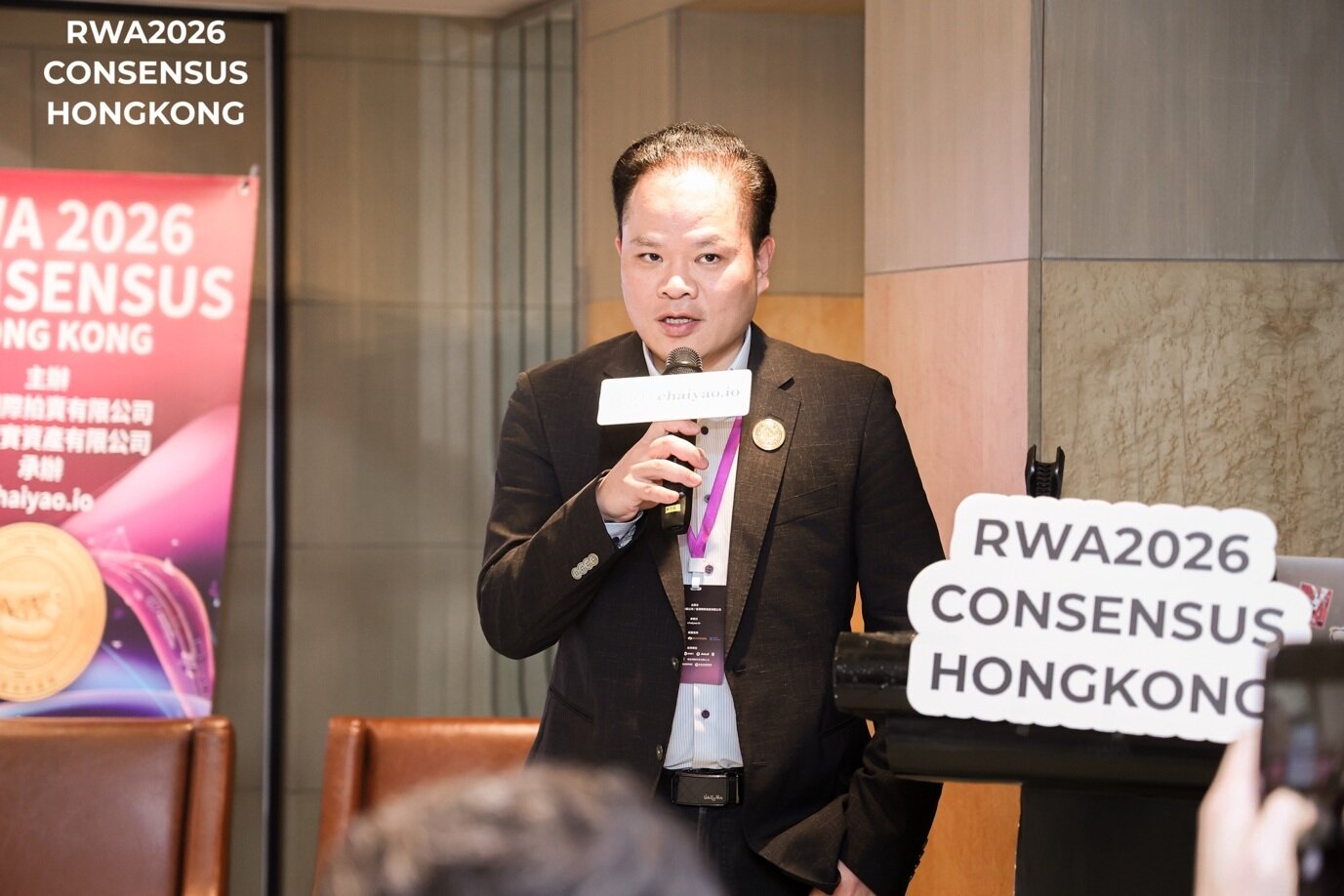
February 11, 2026 | Hong Kong — The Consensus Hong Kong 2026 grandly opened at the Wan Chai Convention and Exhibition Centre. As one of the highly anticipated VIP sessions of the conference, the "RWA 2026 Hong Kong Consensus Summit", jointly hosted by Hong Kong CITIC International Auction Co., Ltd. and Hong Kong Real World Assets Ltd., concluded successfully that afternoon.
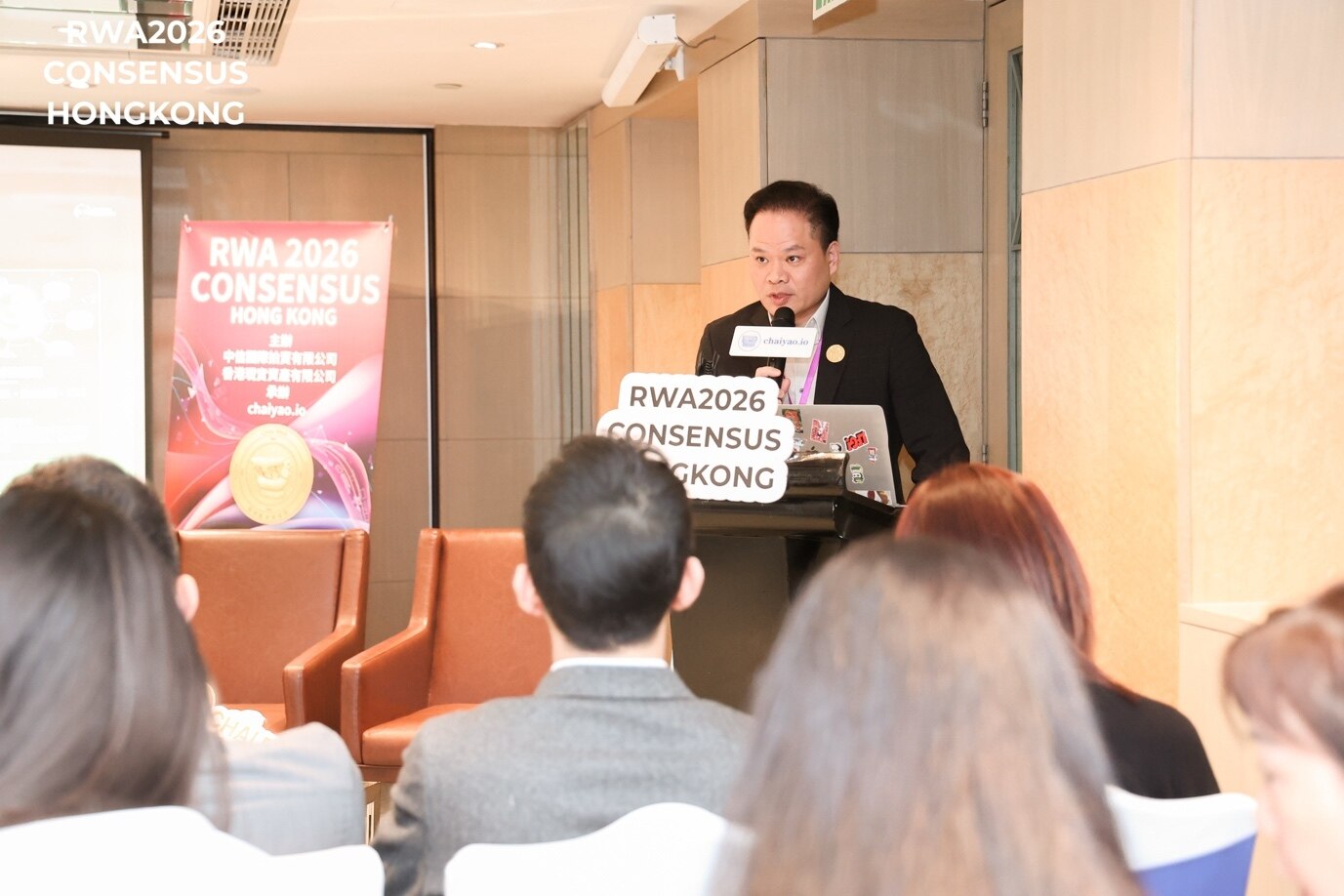
This summit gathered nearly a hundred industry leaders and technical experts, focusing on the digitalization pathways for Real World Assets (RWA). Eugene Xiao, Chairman of the Global Digital Identity Alliance (DID Alliance) and Founder of the Asia-Pacific Innovation Centre (APIC), was invited to attend and delivered a keynote speech titled "DID: The Global Passport for Real-World Assets Entering the Digital World." He provided an in-depth analysis of the institutional logic behind the DID protocol as the foundational settlement layer for trillion-dollar assets.
Infrastructure Reconstruction: Breaking the "Trust Deadlock" Hindering RWA's Scalable Growth
In his remarks, Eugene first offered a sober reflection on the quality of growth in the current RWA market. He pointed out that despite the explosive growth in RWA asset scale over the past two years, the industry remains plagued by three systemic issues: "difficulty in verifying the authenticity of identities, ambiguous logic of ownership attribution, and high compliance friction across jurisdictions." These problems directly cause institutional capital to linger on the sidelines, unable to form cross-chain, cross-regional scalable liquidity pools.
"To some extent, the current RWA market is still mired in the remnants of 'digital feudalism'," Eugene stated. "Users and institutions contribute value, but the control and verification rights of assets are still pledged in the hands of a few intermediaries. If RWA merely remains a shadow mapping of legal rights without programmable, verifiable identity anchors, then such assets will forever be trapped in 'information silos' lacking consensus. The intervention of the DID Alliance is, in essence, pre-installing a 'logical constitution' in the digital space for every real-world asset entering the Web3 world, ensuring it carries indisputable legal and technical weight at every node of its circulation."
He further emphasized that DID is not just a technical protocol but a process of reshaping "trust anchors": "We must achieve unification of asset ownership, disposal rights, and profit rights at the mathematical level. Only then can RWA transcend mere 'debt tokenization' to achieve true 'asset sovereignty.'"
Asset Activation: The Four Operational Variables Driven by DID
Addressing the summit's focus on technology implementation and scenario expansion, Eugene detailed how the DID Alliance utilizes Zero-Knowledge Proof (ZKP) and Verifiable Credential (VC) protocols to complete compliance verification in complex business scenarios while strictly isolating user privacy. He believes the driving logic of DID for RWA is primarily manifested in the activation of four core variables:
· Cryptographic Attestation and Uniqueness Mapping: Eugene noted that establishing a consistent mapping between physical assets, proof of ownership, and responsible entities through DID is the industry's baseline. "This multi-locking mechanism can fundamentally eliminate the risk of double pledging assets across multi-chain platforms from the ground up. What we need is a 'trust premium,' allowing the scarcity consensus of on-chain assets to receive bank-grade technical endorsement."
· Millisecond-Level Instant Settlement Engine: Discussing liquidity, Eugene said: "By coupling with decentralized financial infrastructure, we are reducing cross-border asset settlement cycles that originally took days down to milliseconds. This efficiency leap breaks the time-lag barrier between traditional finance and crypto markets. In 2026, if an RWA transaction cannot achieve 7×24 global real-time value exchange, it loses the meaning of tokenization."
· Decentralized Governance and Revenue Distribution: Eugene deconstructed the identity-driven governance closed-loop in detail: "Token holders can directly participate in dividend distribution decisions based on the reputation weight of their DID. By automatically executing governance rules through smart contracts, we have significantly reduced the risk of human intervention in traditional governance, ensuring algorithmic fairness in the distribution mechanism. This means assets are no longer static but become self-governing entities."
· Real-Time Adaptation to Global Judicial Frameworks: "The DID protocol has built-in programmable compliance modules," Eugene explained. "It can dynamically adjust verification thresholds based on changes in the laws of the asset's location. This flexibility is the only path to attracting globally compliant capital into Web3. We are providing global investors with a deterministic, borderless settlement channel."
Strategic Vision: The 2026 Global Evolution Blueprint and the Convergence of Rights
Eugene disclosed on-site that the DID Alliance is accelerating the deployment of hubs for its global collaboration network. He mentioned that the Alliance has successfully assisted several sovereign-level entities in completing pilot projects for on-chain mapping of population databases. This is not only an experiment in government digitalization but also builds "trust capillaries" with real credit endorsement for global cross-border finance.
Concluding his speech, Eugene offered a clear judgment on the future commercial order: "We are experiencing a process of rights convergence from 'identity leasing' to 'identity sovereignty.' The ultimate goal of the DID Alliance is to promote DID as the universal settlement protocol for the RWA field, a status equivalent to TCP/IP in the internet era. We are not just building a technological highway; we are defining the underlying logic of the next generation of digital commerce. When 'one identity, infinite access' becomes a global financial consensus, Web3 can truly carry the trillion-dollar liquidity of traditional asset markets, ushering in an era of efficient, fair, and sovereignty-restored value exchange."
About the Global Digital Identity Alliance (DID Alliance)
The Global Digital Identity Alliance is a decentralized identity infrastructure initiative jointly launched by top-tier strategic funds and professional research institutions. By deeply integrating decentralized financial settlement gateways and APIC's global resource orchestration, the DID Alliance is accelerating the deep integration of Web3 with the real economy.


