What Are Tokenized Gold and Silver? The New Form of Safe-Haven Assets in the Digital Age



- Core View: Tokenized gold and silver stocks are on-chain financial products that track traditional ETF prices, providing crypto investors with a convenient way to access safe-haven assets. However, their structure means they do not confer physical ownership or shareholder rights and introduce new liquidity and compliance risks.
- Key Elements:
- Product Nature: Tracks gold or silver ETF prices, providing indirect exposure; does not represent direct ownership of physical metal or related shareholder rights.
- Core Value: Seamlessly integrates precious metal exposure into digital asset portfolios through crypto exchanges and stablecoin settlement, enhancing accessibility and trading convenience.
- Main Risks: Include limited rights, liquidity fluctuations, price volatility during non-trading hours, and being subject to both traditional securities and digital asset regulatory frameworks.
- Application Positioning: More suitable as a small-proportion hedging tool within an investment portfolio for risk diversification and volatility smoothing, rather than as a replacement for systematic risk management.
- Platform Example: Exchanges like XT.com offer spot trading pairs such as GLDX/USDT and SLVON/USDT for users to trade these tokenized stocks.
Quick Takeaways
- Tokenized Gold and Silver Stocks primarily track ETF prices, not the corresponding physical metals, which defines their rights and product structure.
- Tokenized Metal Stocks offer crypto users easier access to safe-haven assets but retain the volatility and risk characteristics of traditional markets.
- Extended or Non-Trading Hours can affect liquidity and price performance when reference markets are closed.
- XT.com provides trading access to tokenized gold and silver stocks through clearly labeled spot trading pairs.
- Tokenized metals are better suited as a portfolio supplement for diversification, not as a replacement for systematic risk management strategies.
What Are Tokenized Gold and Silver Stocks
Tokenized Gold and Silver Stocks are a category of on-chain financial products whose price performance primarily tracks traditional gold or silver Exchange-Traded Funds (ETFs), rather than representing direct ownership of the underlying physical metals.
In practice, these tokens use the price movements of well-known ETFs as a reference benchmark, trading within digital asset markets. They leverage crypto-native trading and settlement infrastructure to provide users with indirect exposure to precious metal prices.
It is crucial to clarify that tokenized stocks are not equivalent to gold-backed tokens or physical bullion products. They typically do not represent ownership of physical metal in a vault, nor do they grant holders any shareholder rights or voting powers related to the underlying ETF.
In short, the core value of tokenized gold and silver stocks lies in price access and trading convenience, not in being a substitute for holding physical assets or fund shares.
Why Defensive Assets Are Being Re-evaluated in Digital-First Portfolios
The current market environment is no longer dominated by single disruptive events, but is shaped by a persistent state of uncertainty. Liquidity rhythms change frequently, and asset correlations converge rapidly during market stress. Assets once considered "independent" often move in sync during periods of heightened volatility. For investors focused on crypto assets, this presents a structural challenge: How can one introduce defensive allocations without leaving the digital asset ecosystem?
Gold and silver have long been viewed as classic safe-haven assets, commonly used to hedge against inflation risk, smooth portfolio drawdowns, and withstand macro pressures from monetary policy shifts or geopolitical uncertainty. What has changed is not their historical role in asset allocation, but the way investors access and allocate these assets.
As financial infrastructure gradually moves towards "24/7 operation", precious metal exposure is entering the digital asset world in tokenized form. These products can integrate naturally with crypto exchanges, stablecoin trading pairs, and digital wallets, making gold and silver no longer external to the crypto asset system but directly embedded within it.
This article will focus on the specific category of tokenized gold and silver stocks. These on-chain assets use traditional ETFs as price references, rather than representing direct ownership of physical metal. Before considering them as a new form of defensive tool, it is particularly important to understand their operational mechanisms, potential risks, and how they differ from both crypto assets and traditional ETFs.
Tokenized Stocks vs. Physical Metals: Understanding the Essential Differences in Structure
In discussions about "digital gold," a common issue is conceptual confusion. Although both are related to gold or silver, tokenized gold and silver stocks are often mistakenly lumped together with gold-backed tokens or physical bullion products. In reality, they differ fundamentally in structural design and risk logic.
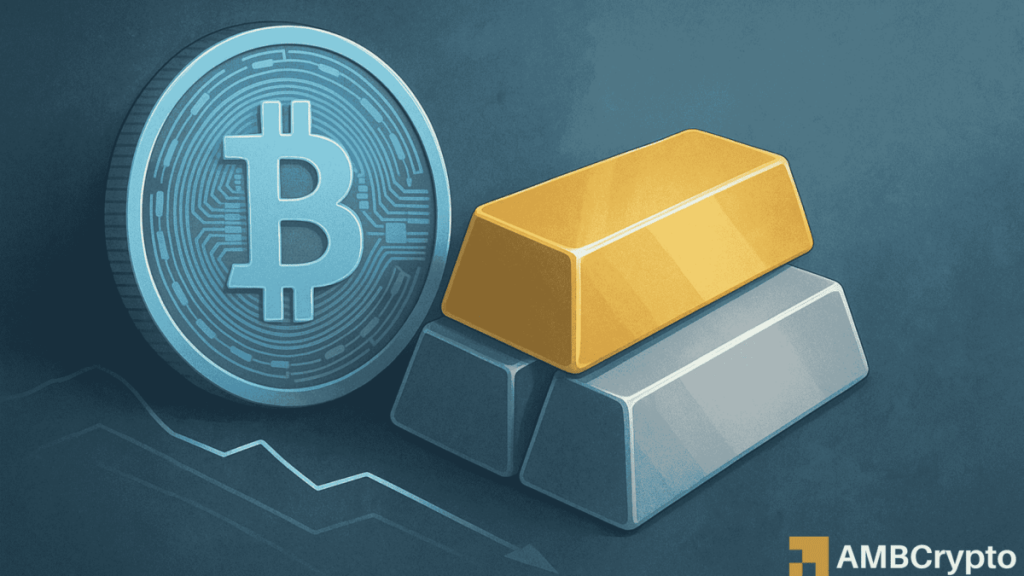 Source: AMBCrypto
Tokenized Gold and Silver Stocks
- Primarily track the price performance of gold or silver ETFs
- Trade within crypto asset exchanges
- Do not represent direct ownership of physical metal
- Typically do not grant holders any shareholder or voting rights
Gold-Backed Tokens or Physical Metal Products
- Claim to be directly backed by physical metal in vaults
- Highly reliant on the reliability of custody, audit, and redemption mechanisms
- Face different regulatory requirements and counterparty risks
Both paths share the common goal of introducing precious metal exposure into a digital environment, but their risk structures and trust foundations are not the same. For investors seeking defensive allocation through gold or silver, understanding this structural-level difference is crucial. After all, the performance of a safe-haven asset depends not only on the underlying asset it tracks but is also deeply influenced by its structural design.
Why Gold and Silver Are Still Considered Safe-Haven Assets
Historically, gold has always been highly correlated with monetary stability. During periods of declining real interest rates, rising inflation expectations, or waning confidence in fiat currency systems, gold tends to attract more safe-haven capital inflows. Silver possesses somewhat similar attributes, but due to its dual role as an industrial metal, its price is more sensitive to economic growth cycles.
It is important to clarify that neither gold nor silver are "zero-volatility" assets, nor can they provide absolute protection in all market environments. However, in long-term asset allocation, they are often used to reduce overall portfolio volatility and diversify single sources of risk, which is the core value of their "safe-haven" attribute.
For investors primarily focused on crypto assets, the appeal of gold and silver lies more in their diversification effect. During periods of market stress, correlations between crypto assets and other risk assets often rise significantly. In contrast, the pricing logic of precious metals is more driven by macro factors, helping to introduce risk exposure from a different dimension.
Tokenized Gold vs. Tokenized Silver: Differences in Defensive Attributes
DimensionTokenized GoldTokenized SilverCore RoleMonetary safe-haven toolSafe-haven attribute coexists with cyclical attributeVolatilityRelatively lowerRelatively higherMacro SensitivityReal interest rates, uncertaintyEconomic growth, industrial demandCommon UseStability allocationDefensive allocation with upside potential
In practical application, tokenized gold is more commonly used to enhance portfolio stability, while tokenized silver may be more suitable for investors who wish to retain some cyclical upside potential on a defensive foundation. Simply equating the two as the same type of safe-haven asset can easily lead to expectation bias, thereby affecting overall allocation effectiveness.
What Changes Does Tokenization Bring to Gold and Silver Exposure
Tokenization does not change the underlying economic logic of gold or silver. Their core attributes as defensive assets still depend on macro factors such as inflation expectations, real interest rates, and market uncertainty. What truly changes is the way investors access, trade, and manage this exposure within a digital-first environment.
Compared to relying on traditional brokerage accounts, tokenized gold and silver stocks typically trade within crypto exchanges and are paired with stablecoins for settlement. This structure allows precious metal exposure to integrate directly into digital wallets and crypto-native portfolios, making the allocation and rebalancing process smoother for investors already active in on-chain markets.
Simultaneously, tokenization introduces new dynamics distinct from traditional ETF trading. Extended or non-trading hour mechanisms increase flexibility but may also trigger price volatility when reference markets are closed. Furthermore, liquidity is more determined by exchange participation rather than the market depth of the underlying ETF, which can affect trade execution quality during heightened market volatility.
To understand these trade-offs more intuitively, the table below summarizes the changes brought by tokenization.
How Tokenization Changes the Exposure Structure of Gold and Silver
DimensionChanges Brought by TokenizationKey Points for InvestorsMarket AccessTrading via crypto exchanges, replacing traditional broker channelsLower access barrier, but greater reliance on exchange infrastructureSettlement MethodPaired with stablecoins for simplified settlement processIncreased efficiency does not equal reduced market riskPortfolio IntegrationCan be directly included in digital wallets and crypto asset portfoliosConvenience does not equal asset ownershipTrading HoursSupport for extended or non-trading hour tradingPrices may still fluctuate when ETFs are closedLiquidity SourceLiquidity determined by exchange participationDepth varies significantly across platforms and market conditionsOwnership AttributeProvides price exposure, but does not confer shareholder rightsNo voting rights or shareholder privileges
Overall, tokenization significantly enhances the accessibility and portfolio integration of gold and silver exposure within the digital asset system, making it particularly suitable for crypto-native investors. However, it also introduces structural and market variables distinct from traditional ETF holding methods. Fully understanding these differences is a prerequisite for formulating a sound investment strategy before incorporating tokenized precious metals into a defensive allocation.
What Are You Actually Trusting When Buying Tokenized Metal Stocks
When purchasing tokenized gold or silver stocks, investors rely not on a single asset itself, but on an entire multi-layered infrastructure system.
Typically, these critical layers include:
- Reference ETF: The core benchmark determining the product's price performance
- Issuance and Structuring: Often involves custodians or special purpose vehicles, whose compliance and operational capabilities are crucial
- Settlement and Reconciliation Mechanism: Ensures accuracy in price tracking and asset mapping
- Exchange Order Book: Directly impacts liquidity levels and trade execution efficiency
Unlike directly holding an ETF, tokenized stocks typically do not grant investors any shareholder rights or constitute a legal claim on the fund's assets. Their value depends on the accuracy of price tracking and the operational stability and reliability of the entire tokenization framework.
For defensive assets, understanding "what you are trusting" is as important as "what you are buying." This is the core cognitive calibration that must be performed before incorporating tokenized precious metals into an asset allocation.
Where to Trade Tokenized Gold and Silver Stocks on XT
XT.com provides users with trading access to tokenized gold and silver stocks through clearly labeled spot trading pairs, helping investors allocate defensive assets within a digital trading environment.
Currently available spot pairs include:
- GLDX/USDT Spot (Gold xStock): Provides tokenized exposure linked to gold ETF pricing.
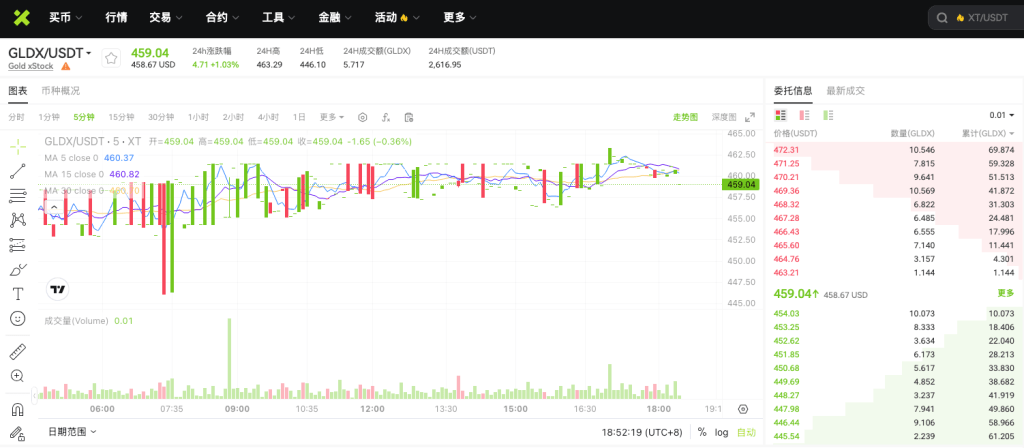 GLDX/USDT Spot trading is now live on XT.com.
- SLVON/USDT Spot (iShares Silver Trust): Silver price exposure based on an ETF structure.
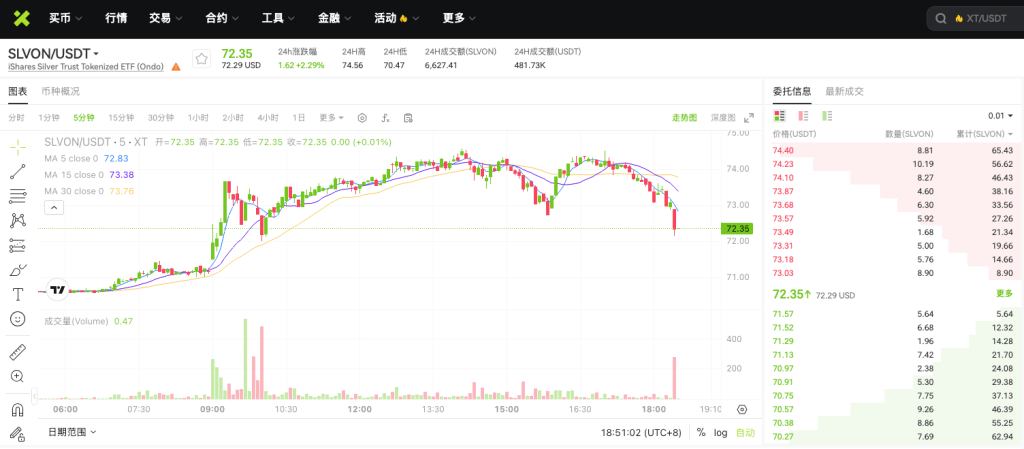 SLVON/USDT Spot trading is now live on XT.com.
- IAUON/USDT Spot (iShares Gold Trust): Another type of tokenized gold stock referencing a different ETF benchmark.
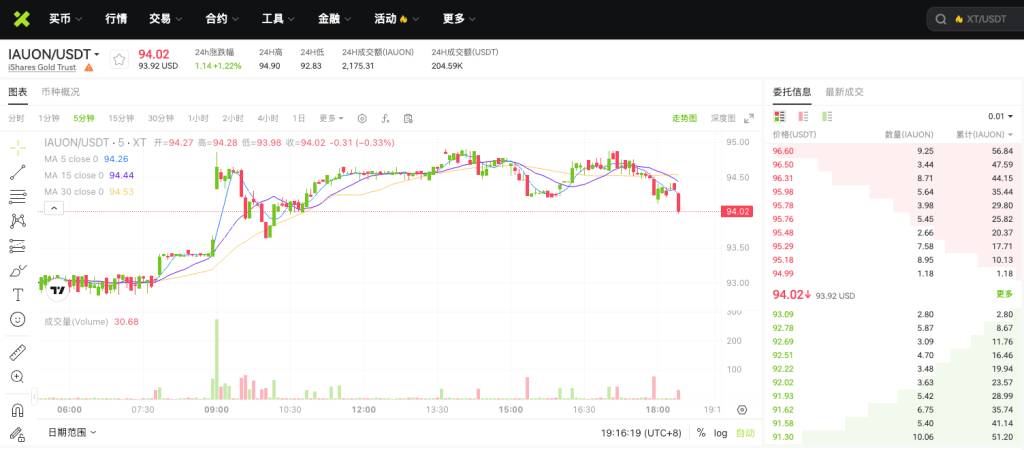 IAUON/USDT Spot trading is now live on XT.com.
Through these products, users can directly compare the price performance and allocation differences between gold and silver within the crypto asset ecosystem. Additionally, XT offers derivative instruments related to precious metals, suitable for more advanced trading strategies, though their risk characteristics differ from those of spot tokenized stocks.
Risk and Compliance Reality: Why Structure Matters More Than Narrative
Tokenized gold and silver stocks sit at the intersection of traditional securities and digital assets, inevitably carrying risk characteristics from both systems.
In practical use, investors need to focus on the following aspects:
- Limited Rights: Token holders typically lack legal protections or related rights at the shareholder level.
- Regulatory Scope: Tokenization does not mean exemption from securities legal frameworks; relevant compliance requirements still apply.
- Liquidity Volatility: Trading depth can change rapidly during market stress periods.
- Non-Trading Hour Pricing: Extended trading mechanisms increase flexibility but may also amplify price volatility.
Regulators have repeatedly emphasized that when tokenized products resemble traditional assets in appearance but operate under different frameworks, investor cognitive bias itself constitutes a real risk. It should be noted that these risks do not mean tokenized precious metals are "unsuitable for investment." They are more like a set of boundary conditions, prompting investors to allocate with greater caution, manage positions reasonably, and incorporate them into an overall risk management system rather than relying on them exclusively or excessively.
How to Rationally Use Tokenized Gold and Silver Stocks
Professional investors rarely simply ask if an asset is "safe." They are more concerned with: Under what conditions can this type of asset play a defensive role, and based on what assumptions?
When used appropriately, tokenized gold and silver stocks can provide some defensive support to an investment portfolio, for example:
- As a small-proportion hedging tool to smooth overall volatility.
- Serving as a reference tool for asset rotation during shifts in the macro environment