






Global Asset Rotation: Why Liquidity Drives Cryptocurrency Cycles (Part 1)


- 核心观点:加密货币牛市由资本流动性驱动,而非新叙事。
- 关键要素:
- 加密货币是流动性敏感型资产,无传统现金流锚定。
- 价格取决于外部资本流入,而非协议基本面。
- 宏观流动性、利率、风险偏好是关键驱动变量。
- 市场影响:强调宏观分析框架,引导投资逻辑转向资本流动。
- 时效性标注:长期影响。
Introduction: Starting with Capital, Not Stories
This article marks the beginning of a new series of studies on global asset allocation and rotation. Upon delving deeper into this topic, we uncovered a most unexpected yet crucial fact: ultimately, it wasn't the emergence of a new narrative that determined the cryptocurrency bull market.
Whether it's RWA, X402, or any other concept, these topics are usually just triggers, not the real driving force. They attract attention, but they don't provide energy on their own. The real driving force comes from capital. When liquidity is abundant, even weak arguments can be amplified into market consensus. Conversely, when liquidity dries up, even the strongest arguments struggle to maintain momentum.
The first part focuses on building the foundation: how to construct a global asset allocation and rotation framework that places cryptocurrencies within the appropriate macroeconomic context. The latter part of the framework will be elaborated in subsequent articles.
Step 1: Step outside the cryptocurrency space and map the global asset landscape.
The first step is to deliberately step outside the cryptocurrency market and build a comprehensive view of global assets. Traditional classifications—stocks, bonds, commodities—are useful, but insufficient for understanding capital rotation across different cycles.
Instead, we can categorize assets based on the role they play at different stages of the economic and liquidity cycle. What matters is not whether an asset is labeled "equity" or "commodity," but rather what it depends on and what factors it is susceptible to. Some assets benefit from falling real interest rates, some from inflation uncertainty, and others from radical risk aversion.
Building a "portfolio map" doesn't require in-depth knowledge of every market. What it truly needs is an intuitive understanding of the interdependencies between each asset: what conditions support it, and what conditions weaken it. This mind map will serve as a reference system for all subsequent decisions.
Within this framework, cryptocurrencies should be treated specially.

Why are cryptocurrencies considered alternative assets, rather than traditional risk assets?
Cryptocurrencies are often grouped with stocks (especially US tech stocks) because their price movements are highly correlated. On the surface, this classification seems reasonable. Cryptocurrencies exhibit extremely high volatility, high beta coefficients, and significant drawdowns—all characteristics similar to risky assets.
However, correlation alone cannot define the essence of the economy.
From a capital structure perspective, stocks have cash flow. Companies generate earnings, distribute dividends, and can be valued using discounted cash flow models or valuation multiples. Even if the price deviates from fundamentals, its anchoring logic remains based on cash flow.
Crypto assets operate on a completely different logic than traditional assets. They do not generate dividends, nor do they have intrinsic cash flows that can be discounted. Therefore, traditional valuation frameworks are simply inapplicable.
Conversely, cryptocurrencies behave like a purely liquidity-sensitive asset. Their price movements are primarily driven by capital inflows and outflows, rather than changes in fundamental productivity. Related arguments help explain this. Why do funds flow? But they don't determine everything. Regardless of capital flows...
Therefore, cryptocurrencies are best understood as a non-cash flow alternative asset that sits at the extremes of the risk appetite spectrum. They perform best when liquidity is ample and risk appetite is high, and poorly when capital prioritizes safety and returns.
Liquidity is the core driver of cryptocurrency performance.
Once cryptocurrencies are viewed as liquid assets rather than valuation assets, their behavior across different cycles becomes easier to explain.
In stock research, target prices typically stem from a structured process: forecasting future earnings, applying valuation multiples, and discounting the results to present value. This approach is effective because the asset itself generates measurable economic output.
Cryptocurrencies do not possess this anchoring effect. Their upside potential depends on whether new funds are willing to enter the market and accept higher prices. And these funds almost always come from outside the cryptocurrency ecosystem—from stocks, credit, or cash idle due to declining yields.
Therefore, understanding the source and timing of liquidity is more important than tracking individual protocols or events. Cryptocurrencies become one of the most attractive investment destinations when capital seeks higher volatility and convexity. Conversely, cryptocurrencies are often among the first assets to be sold off when capital prioritizes preserving value.
In short, liquidity is the decisive factor; everything else is secondary.
Step Two: First focus on macroeconomic drivers, then pay attention to asset details.
The second pillar of this framework is macroeconomic analysis. It's more efficient to start by identifying the variables influencing price movements rather than studying specific assets. All assets are then integrated.
At the highest level, five macroeconomic indicators play a core role:
- Interest rates, especially the difference between nominal and real interest rates.
- Inflation indicators, such as the Consumer Price Index (CPI) and Personal Consumption Expenditures (PCE).
- Economic growth indicators, such as the Purchasing Managers' Index (PMI) and Gross Domestic Product (GDP) trends
- Systemic liquidity is typically reflected in the central bank's balance sheet and money supply.
- Risk appetite is typically measured by volatility indices and credit spreads.
Many cryptocurrency participants closely follow Federal Reserve meetings, but often focus only on interest rate decisions. However, institutional capital places greater emphasis on the real interest rate (the nominal interest rate adjusted for inflation), as it determines the true opportunity cost of holding a non-yielding asset.
Inflation data is widely discussed in the cryptocurrency community, but liquidity and risk appetite rarely receive attention. This is a blind spot. Money supply dynamics and volatility mechanisms often explain overall market behavior long before any explanations emerge.
A useful mental model is a simple chain of transmission:
Inflationary pressures can affect interest rates.
Interest rates affect liquidity conditions.
Liquidity conditions influence risk appetite.
Risk appetite drives asset prices.
Understanding the economy's place in this value chain provides deeper insights than analyzing assets in isolation.
Step 3: Construct a cycle-based mental model
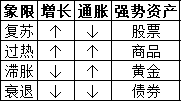
The economic cycle is a familiar concept, but it remains crucial. From a macroeconomic perspective, economic cycles tend to alternate between expansion and contraction, and between easing and tightening.
Simply put, this pattern usually looks like this:
Monetary easing periods favor risk assets, including cryptocurrencies and small-cap stocks.
Periods of monetary tightening favor defensive assets such as cash, government bonds, and gold.
This framework is not intended to be applied mechanically. Each asset will react differently depending on timing, expectations, and positioning. Nevertheless, a cycle-based reference can help avoid making emotional decisions during periods of market shifts.
An important nuance is that global economic cycles are not synchronized. The world does not operate as a single economy.
As economic growth slows, the US may be shifting from high interest rates at the end of the cycle to more accommodative rates. Japan may be cautiously ending decades of ultra-loose monetary policy. China continues structural adjustments in a low-inflation environment, while parts of Europe are still struggling with economic stagnation.
Despite these differences, the United States remains the anchor for global capital flows. Dollar liquidity and US interest rates continue to exert the strongest influence on global capital flows. Therefore, any framework for global asset rotation should begin with the United States and expand outwards.
Conclusion: A framework is needed before prediction.
The first part of this framework emphasizes structure rather than prediction. Its goal is not to predict short-term price movements, but to understand the factors that make certain assets competitive at a particular point in time.
By redefining cryptocurrencies as liquidity-driven alternative assets, focusing on macro drivers before narratives, and basing decisions on cyclical awareness, investors can avoid many common analytical pitfalls.
The next article will build on this foundation to explore the sequence of capital flows, real-world indicators, and how to identify when liquidity is truly shifting towards higher-risk assets.
The above viewpoints are partly referenced from @Web3___Ace





