






Before heading towards a $1.5 trillion IPO, Musk almost lost everything.


- 核心观点:SpaceX估值飙升,IPO将成史上最大。
- 关键要素:
- SpaceX估值达8000亿美元,计划2026年IPO。
- 星链业务成核心,贡献超80%预期收入。
- 第一性原理驱动,实现火箭回收与成本革命。
- 市场影响:重塑航天与通信行业格局。
- 时效性标注:中期影响。
Original author: Xiaobing, TechFlow
In the winter of 2025, the sea breeze in Boca Chica, Texas, was still salty and fierce, but the air in Wall Street was exceptionally hot and dry.
On December 13, a piece of news, like the Falcon Heavy rocket, made headlines in the financial world: SpaceX's latest round of internal stock offerings has locked the company's valuation at $800 billion.
The memo reveals that SpaceX is actively preparing for its 2026 IPO, planning to raise over $30 billion. Musk hopes the company's overall valuation will reach $1.5 trillion. If successful, this would bring SpaceX's market capitalization close to the record level set by Saudi Aramco during its 2019 IPO.
For Musk, this is an incredibly magical moment.
As the world's richest man, his personal wealth will break historical records again with the launch of SpaceX's "super rocket," making him the first trillion-dollar billionaire in human history.
If we turn back the clock 23 years, no one would believe this ending. Back then, SpaceX was nothing more than a "manufacturing loser" that could be crushed at any moment in the eyes of giants like Boeing and Lockheed Martin.
More accurately, it was more like a disaster that dragged on without ending.
When a man decides to build a rocket
In 2001, Elon Musk was 30 years old.
He had just cashed out from PayPal, holding hundreds of millions of dollars in cash, standing at the typical "point of freedom" in Silicon Valley. He could have sold the company and become an investor, an evangelist, or even done nothing at all, like Marc Andreessen, the founder of a16z.
But Musk chose the most incredible path.
He wants to build a rocket and then go to Mars.
Driven by this dream, he and two friends traveled to Russia in an attempt to purchase refurbished Dnepr launch vehicles as a launch vehicle to realize the Mars Oasis project.
The outcome was humiliating.
During talks with the Lavochkin Design Bureau, a Russian chief designer spat at Musk, suggesting that the American nouveau riche knew nothing about space technology. Ultimately, the bureau offered an exorbitant price and implied that he should "get out if he didn't have the money," and the team left empty-handed.
On the return flight, while his fellow travelers were downcast, Musk was typing away on his computer. A moment later, he turned around and showed them a spreadsheet: "Hey, I think we can build this ourselves."
That year, China had just launched Shenzhou II, and space exploration was seen as a "miracle" achieved through the collective efforts of the entire nation, a game only major powers could participate in. For a private company to want to build a rocket was as ridiculous as a primary school student claiming to build a nuclear reactor in his backyard.
This is SpaceX's "from zero to one".
Growth is about constantly failing.
In February 2002, SpaceX was officially founded in an old warehouse of 75,000 square feet at 1310 Grand Avenue East, El Segundo, a suburb of Los Angeles.
Musk used $100 million of the proceeds from cashing out PayPal as seed money, setting the company's vision as "Southwest Airlines of the space industry," providing low-cost, highly reliable space transportation services.
But reality soon dealt this idealist a heavy blow: building rockets was not only difficult, but also exorbitantly expensive.
There's an old saying in the aerospace industry: "You can't wake Boeing up without a billion dollars."
Musk's $100 million in seed funding is a drop in the ocean in this industry. Even more challenging is that SpaceX faces a market tightly controlled by century-old giants like Boeing and Lockheed Martin, who not only possess formidable technological capabilities but also deep-rooted government networks.
They are used to monopolies and large government contracts. As for SpaceX, this intruder, they have only one attitude: to watch it fail.
In 2006, SpaceX's first rocket, the Falcon 1, stood on the launch pad.
This is both a tribute to the Defense Advanced Research Projects Agency (DARPA) Falcon project and an implicit homage to the Millennium Falcon from Star Wars. It is small, even a bit shabby, like an unfinished product.
As expected, the rocket exploded 25 seconds after liftoff.
In 2007, it launched for the second time. After a brief flight of a few minutes, it still went out of control and crashed.
The laughter was deafening. One person commented sarcastically, "Does he think the Rockets are like coders? They can patch things up?"
In August 2008, the third launch failure was the most devastating, with the first and second stages of the rocket colliding and the hope that had just been ignited instantly turning into debris over the Pacific Ocean.
The atmosphere had completely changed. Engineers started having insomnia, suppliers were demanding cash, and the media was no longer polite. Most critically, the money was running out.
2008 was the darkest year of Musk's life.
The financial crisis swept the globe, Tesla teetered on the brink of bankruptcy, and his wife of ten years left him… SpaceX's funds were only enough for one last launch. If the fourth launch fails, SpaceX will dissolve, and Musk will lose everything.
Just then, the sharpest blade stabbed through.
Musk's childhood idols, Neil Armstrong, the first man to walk on the moon, and Cernan, the last man to walk on the moon, have publicly stated that they have no confidence in his rocket program. Armstrong bluntly said, "You don't understand what you don't know."
Recalling those days later, Musk's eyes welled up with tears on camera. He didn't cry when the rocket exploded, he didn't cry when his company was on the verge of bankruptcy, but he cried when he mentioned the mockery from his idol.
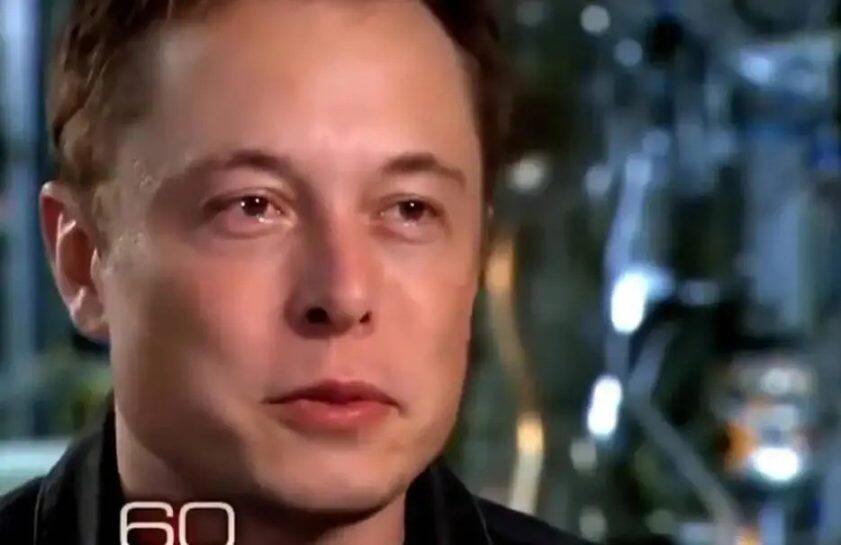
Musk told the host, "These people are my heroes, and it's really tough. I wish they could come and see how hard my job is."
At this moment, a line of text appears on the screen: Sometimes, your idols will disappoint you.
PUBG
Before the fourth launch, no one talked about the Mars program anymore.
A somber silence enveloped the entire company. Everyone knew that Falcon 1 was scraped together with their last penny; if this failed, the company was doomed to dissolve.
On the day of the launch, there were no grand declarations, no passionate speeches. There was only a group of people standing in the control room, silently staring at the screens.
On September 28, 2008, the rocket lifted off, and a fiery dragon illuminated the night.
This time the rocket did not explode, but the control room remained deathly silent until nine minutes later, when the engine shut down as planned and its payload entered its intended orbit.
"It's a success!"
Thunderous applause and cheers erupted in the control center. Musk raised his arms high, and his brother Kimball, standing beside him, began to cry.
The Falcon 1 made history, making SpaceX the world's first private commercial space company to successfully launch a rocket into orbit.
This success not only saved SpaceX, but also provided the company with a long-term lifeline.
On December 22, Musk's phone rang, marking the end of his unlucky year of 2008.
NASA's chief of space exploration, William Gerstämmerer, brought him good news: SpaceX has secured a $1.6 billion contract to conduct 12 round trips between the space station and Earth.
"I love NASA," Musk blurted out, then changed his computer login password to "ilovenasa".
SpaceX has survived a brush with death.
Jim Cantrell, who was among the first to participate in SpaceX's rocket development and is also Musk's old friend who once lent him his college rocket textbooks, recalled the successful launch of the Falcon 1 with deep emotion:
"Elon Musk's success is not because he is visionary, not because he is exceptionally intelligent, and not because he works tirelessly, although those are all true. The most important element of his success is that the word 'failure' does not exist in his dictionary. Failure has never been part of his thinking."
Let the rocket fly back
If the story ended here, it would just be an inspirational legend.
But the truly terrifying part of SpaceX only begins from there.
Musk insists on a seemingly irrational goal: rockets must be reusable.
Almost all the internal experts opposed it. It wasn't technically impossible, but commercially too radical, just like the argument that "nobody will recycle disposable paper cups."
But Musk persisted.
He believes that if airplanes are discarded after a single flight, no one can afford to fly; and if rockets cannot be reused, spaceflight will forever remain a game for a select few.
This is Musk's underlying logic: first principles.
Going back to the beginning of the story, why did Musk, a programmer by training, dare to personally build rockets?
In 2001, after consulting countless professional books, Musk broke down the various cost data for building rockets in detail using an Excel spreadsheet. The analysis showed that the manufacturing cost of rockets had been artificially inflated by traditional aerospace giants by dozens of times.
These well-funded giants are accustomed to the comfort zone of "cost-plus pricing," where even a single screw can cost hundreds of dollars. Musk, however, would ask, "How much do the raw materials for this—aluminum and titanium—cost on the London Metal Exchange? Why does it cost a thousand times more to make a part?"
If costs are artificially inflated, they can certainly be artificially suppressed.
Guided by first principles, SpaceX embarked on a path with virtually no turning back.
Repeatedly launch, analyze the explosions, then launch again, and repeatedly attempt recovery.
All the doubts came to an abrupt end that winter night.
December 21, 2015, is a day destined to be recorded in the history of human spaceflight.
A Falcon 9 rocket carrying 11 satellites lifted off from Cape Canaveral Air Force Station. Ten minutes later, a miracle occurred: the first-stage booster successfully returned to the launch site and landed vertically in Florida, just like in a science fiction movie.
At that moment, the old rules of the aerospace industry were completely shattered.
The era of affordable spaceflight was ushered in by this once-low-end company.
Starships built with stainless steel
If reusable rockets represent SpaceX's challenge to physics, then building Starship from stainless steel is Musk's "lower-dimensional attack" on engineering.
In the early stages of developing Starship, a spacecraft designed to colonize Mars, SpaceX also fell into the trap of focusing on "high-tech materials." The industry consensus at the time was that to fly to Mars, the rocket had to be lightweight enough, thus requiring the use of expensive and complex carbon fiber composite materials.
To this end, SpaceX invested heavily in creating massive carbon fiber winding molds. However, the slow progress and high costs alerted Musk, who returned to first principles and did the math:
Carbon fiber costs as much as $135 per kilogram and is extremely difficult to process; while 304 stainless steel, the material used to make kitchen pots and pans, costs only $3 per kilogram.
"But stainless steel is too heavy!"
Faced with the engineers' questions, Musk pointed out a neglected physical truth: melting point.
Carbon fiber has poor heat resistance, requiring thick and expensive heat insulation tiles. Stainless steel, on the other hand, has a melting point as high as 1400 degrees Celsius, and its strength actually increases at extremely low temperatures in liquid oxygen. Considering the weight of the heat insulation system, a rocket built with "bulky" stainless steel has a total system weight comparable to that of carbon fiber, but at a cost 40 times lower!
This decision freed SpaceX from the shackles of precision manufacturing and aerospace materials. They no longer need cleanrooms; they can simply set up a tent in the Texas wasteland and weld rockets like building water towers. If one explodes, they won't be heartbroken; they can just sweep up the debris and continue welding the next day.
This first-principles thinking has permeated SpaceX's entire development process. From questioning "Why can't rockets be reused?" to "Why must space materials be expensive?", Musk always starts from the most basic laws of physics and challenges the industry's existing assumptions.
"Using affordable materials to build top-notch engineering projects" is SpaceX's core competitive advantage.
Starlink is the ultimate weapon.
Technological breakthroughs have led to a surge in valuations.
From $1.3 billion in 2012 to $400 billion in July 2024, and now to $800 billion, SpaceX's valuation has truly "taken off like a rocket."
But what truly supports this astronomical valuation is not rockets, but Starlink.
Before Starlink, SpaceX was just a spectacular sight in the news, with occasional explosions and landings, for ordinary people.
Starlink changed everything.
This low-Earth orbit constellation, consisting of thousands of satellites, is becoming the world's largest internet service provider, transforming "space" from a spectacle into an infrastructure as essential as water and electricity.
Whether on a cruise ship in the middle of the Pacific Ocean or in the ruins of a war-torn region, as long as there is a receiver the size of a pizza box, signals will pour down from near-Earth orbit hundreds of kilometers away.
It not only changed the global communications landscape, but also became a super money-printing machine, providing SpaceX with a continuous stream of cash flow.
As of November 2025, Starlink had 7.65 million active subscribers globally, with over 24.5 million actual users. North America accounted for 43% of subscriptions, while emerging markets such as South Korea and Southeast Asia contributed 40% of new users.
This is why Wall Street dared to give SpaceX such a high valuation—not because of how frequently the rockets launch, but because of the recurring revenue generated by Starlink.
Financial data shows that SpaceX's expected revenue in 2025 is $15 billion, and it is projected to soar to $22-24 billion in 2026, with more than 80% of the revenue coming from the Starlink business.
This means that SpaceX has completed a magnificent transformation, no longer just a contract-dependent aerospace contractor, but has evolved into a global telecommunications giant with a monopolistic moat.
Eve of IPO
If SpaceX successfully raises $30 billion through its IPO, it will surpass Saudi Aramco's record of $29 billion raised in 2019, becoming the largest IPO in history.
According to some investment banks, SpaceX's final IPO valuation may even reach $1.5 trillion, potentially challenging Saudi Aramco's $1.7 trillion listing record set in 2019 and directly entering the ranks of the world's top 20 listed companies by market capitalization.
Behind this astronomical figure, the first to be excited were the employees of the Boca Chica and Hawthorne factories.
In the recent internal stock sale, the price of $420 per share means that a large number of engineers who slept on the factory floor with Musk and endured countless "production hells" will become millionaires or even billionaires.
But for Musk, an IPO is not a traditional "cash out and leave" but an expensive "refueling".
Musk had previously opposed going public.
At a SpaceX conference in 2022, Musk poured cold water on the hopes of all employees, telling them not to have any illusions about going public: "Going public is absolutely an invitation to pain, and the stock price will only distract you."
Three years later, what made Musk change his attitude?
No matter how ambitious one's aspirations may be, they all require capital backing.
According to Musk's timeline, within two years, the first Starship will conduct an unmanned Mars landing test; within four years, human footprints will be imprinted on the red Martian soil. His ultimate vision—to establish a self-sufficient city on Mars within 20 years through the transit of 1,000 Starships—still requires an astronomical sum of money.
In numerous interviews, he has stated frankly that the sole purpose of accumulating wealth is to make humanity a "multiplanetary species." From this perspective, the hundreds of billions of dollars raised in the IPO can be seen as "interstellar tolls" that Musk is charging Earthlings.
We eagerly anticipate that the largest IPO in human history will not ultimately become yachts or mansions, but will instead be transformed into fuel, steel, and oxygen, paving the long road to Mars.


