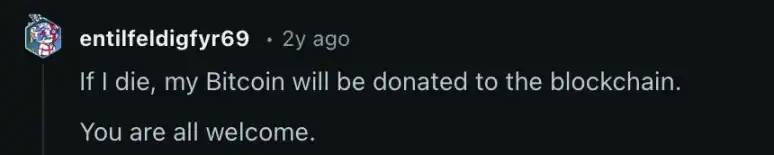
Death is the biggest "buyer" of cryptocurrencies.


- 核心观点:死亡导致大量加密货币永久退出流通。
- 关键要素:
- 每年约100万加密货币持有者去世。
- 保守估计每年20亿美元加密货币因此“被销毁”。
- 个人保管资产缺乏有效传承机制。
- 市场影响:长期减少流通供应,可能推高资产价格。
- 时效性标注:长期影响
Original title: The Biggest Buyer of Crypto Is Death
Original author: @PixOnChain, crypto KOL
Original translation by: Saoirse, Foresight News
People in the cryptocurrency world often say, "If it's not your key, it's not your coin." This sounds powerful, and it's often true. But there's a hidden layer of logic behind it—"Only your key owns your cryptocurrency."
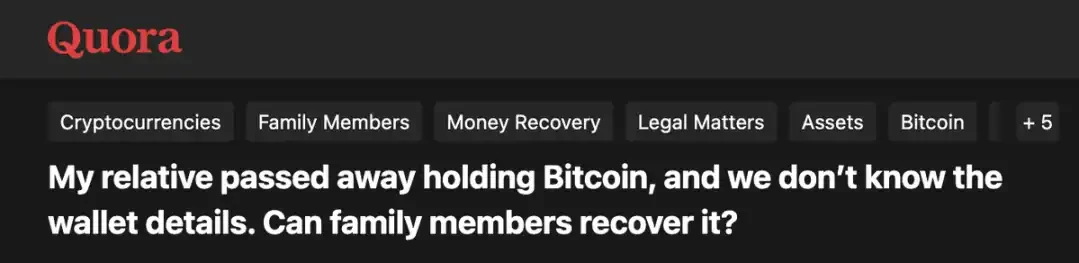
If no one else knows how to access your wallet, your cryptocurrency is essentially "cease to exist" the moment you stop breathing. Of course, this isn't a literal disappearance—it still exists on the blockchain ledger—but from an economic perspective, it's no different from being burned.
So how big is this "dead buyer"?
Today, most cryptocurrency holders are young, with the majority being between 28 or 29 years old and in their early 40s.
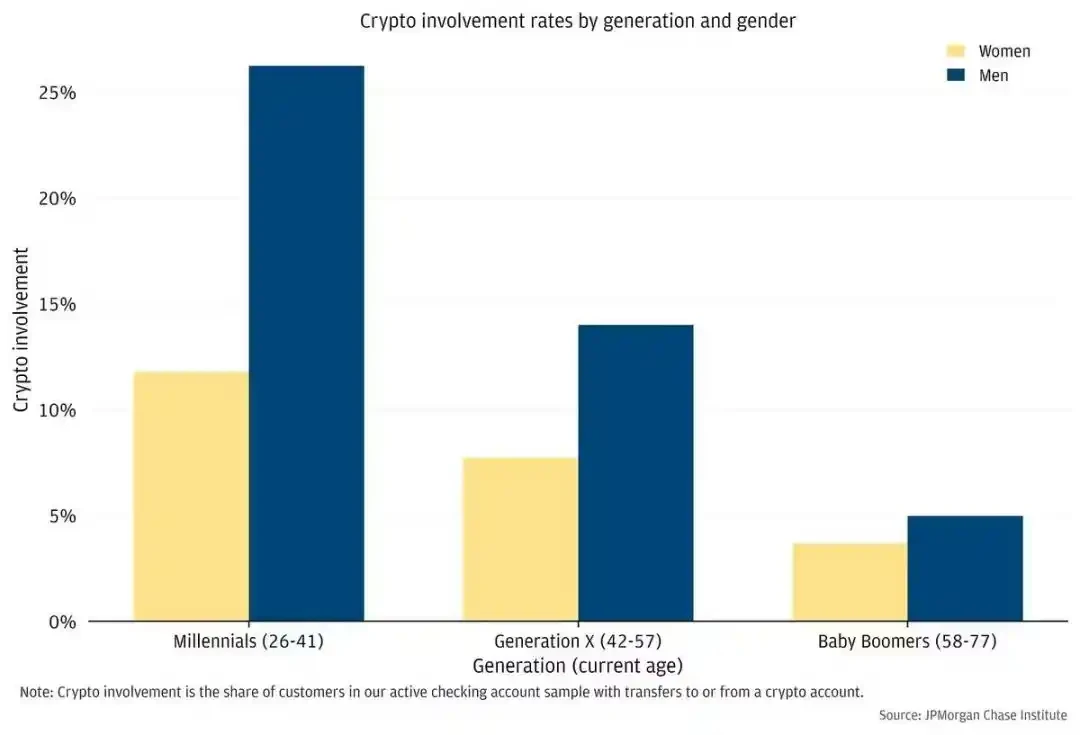
Very few holders are past retirement age, making it easy to overlook the issue of "cryptocurrency outflow due to death." Even so, the relevant data is still staggering:
Approximately 60 million people die globally each year (based on a global population of approximately 8 billion).
There are approximately 500 million cryptocurrency holders worldwide (equivalent to 1 in 16 people holding cryptocurrency).
• Because cryptocurrency holders are younger than the global average population, they also have a lower mortality rate, conservatively estimated at around 0.2% per annum;
Based on this calculation, approximately 1 million (500 million x 0.2%) of the 500 million holders will die each year.
Currently, most cryptocurrencies are still held by individuals, and holders rarely make estate plans for them. Even if only 10% of deceased individuals' wallets are inaccessible due to a lack of known access methods, approximately 100,000 wallets would become invalid each year. If we conservatively assume that the average balance of these invalid wallets is only $20,000, then approximately $2 billion worth of cryptocurrency would exit circulation annually. Moreover, this number will continue to grow over time—after all, the younger generation will gradually age.

The percentage of cryptocurrency "destroyed" each year due to death.
This leaves us with a crucial question: since the advantage of individuals holding their own cryptocurrencies is that it eliminates intermediaries, how can we transfer these assets without reintroducing intermediaries?
Inheriting assets that were not originally designed to be "transferable".

Most current solutions fall into two extremes: either simple but fragile, like storing mnemonic phrases in a bank safe deposit box (easily lost or stolen); or secure but so complex that no one wants to actually use them. Neither solution is ideal, so I adopted a compromise—a simple three-step inheritance method that is easy to remember, difficult to crack, accessible anytime, anywhere, and guarantees 100% non-managed (i.e., no intermediary required). The specific steps are as follows:
Step 1: Build your own single-page website
Create a single-page website using a niche domain name consisting of 3-4 words—the kind of domain that most people wouldn't easily type into a search bar, but which should have special meaning for you personally and be easy for you to remember. Also, prepay for website hosting fees for at least 10 years and set up automatic renewal to ensure the website remains accessible in the long term.
Step 2: Encrypt the mnemonic phrase and convert it into a number string.
First, choose a book you like, find its most common publisher, and buy 10 copies (ensuring that the page numbers and layout of each book are exactly the same). Then, convert your cryptocurrency wallet mnemonic phrase into a string of numbers one by one: for each word in the mnemonic phrase, find its position in the book and record "page number - line number - word position in that line". For example, "112, 3, 5" means "the 5th word on page 112, line 3". Convert all the mnemonic phrases into strings of numbers in this way.
Step 3: Upload the number string to the dedicated website
Simply publish the converted number strings as a list on your dedicated website, in the following format:
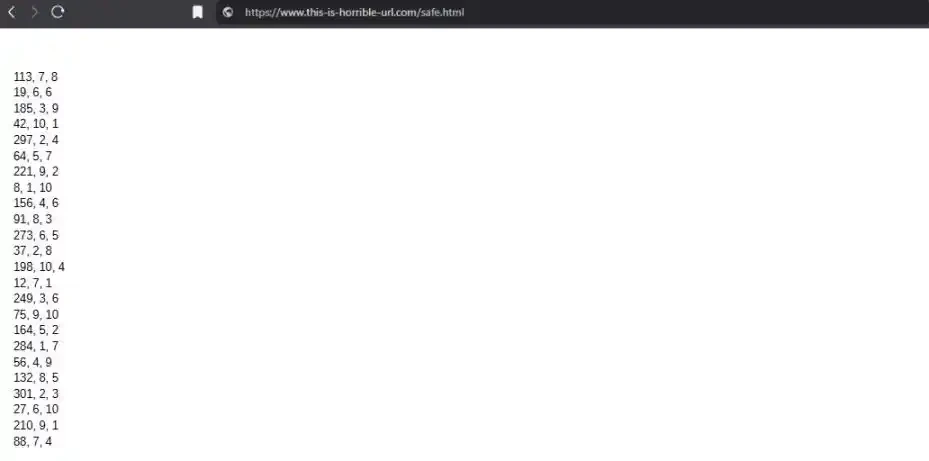
By the way, this is a real mnemonic phrase corresponding to a string of numbers, linked to $500 in cryptocurrency. However, the website domain is fictitious; the real mnemonic phrase is hidden in a book. Just one hint: it's from a detective novel I absolutely love. Happy treasure hunt!
I know this might sound like overkill, and some might think it's unnecessary, but this method does make asset transfer more flexible while maintaining security. You can further enhance security by using rare books or self-printed copies to store the location information corresponding to the mnemonic phrase; of course, you can also go to less trouble—simply place a hardware wallet (Ledger) and a metal plate engraved with the mnemonic phrase in a safe. Otherwise, your cryptocurrency may ultimately only be "donated" to the blockchain (i.e., permanently untradeable).