






Pakistan, from "Iron Brother" to "Iron Chain"?


- 核心观点:巴基斯坦正将加密热潮纳入国家战略。
- 关键要素:
- 监管机构向头部交易所颁发运营许可。
- 计划对20亿美元国家资产进行代币化。
- 拥有超4000万用户,全球加密采用率第三。
- 市场影响:为Web3行业开辟关键增量市场。
- 时效性标注:长期影响。
I. The Pawn Crosses the River: Pakistan's Cryptocurrency Ambitions Emerge
On December 12, 2025, the Virtual Asset Regulatory Authority of Pakistan (PVARA) issued No Objection Certificates (NOCs) to two of the world's top cryptocurrency exchanges. This low-key administrative action, like a pawn crossing the river in chess, may not be earth-shattering, but it is a crucial step towards a larger goal. This move not only signifies Pakistan's formal embrace of blockchain and cryptocurrency technology but also conveys its ambition to the global digital economy market: to secure a place in this global digital game.
This "pawn" is far stronger than it appears. According to data from the country's Ministry of Finance, Pakistan already has over 40 million digital asset users, with an estimated annual transaction volume exceeding $300 billion. Such a massive market size gives Pakistan undeniable potential in the digital asset sector. These figures make every move Pakistan makes all the more significant.
This country, affectionately known as "Iron Brother" by Chinese netizens, is using the language of blockchain and cryptocurrency to attempt to tell a story of economic revival on the global economic chessboard. Its move to "cross the river" may well be the exciting opening chapter of this story.

II. From Grassroots Craze to National Strategy: Pakistan's Crypto Story
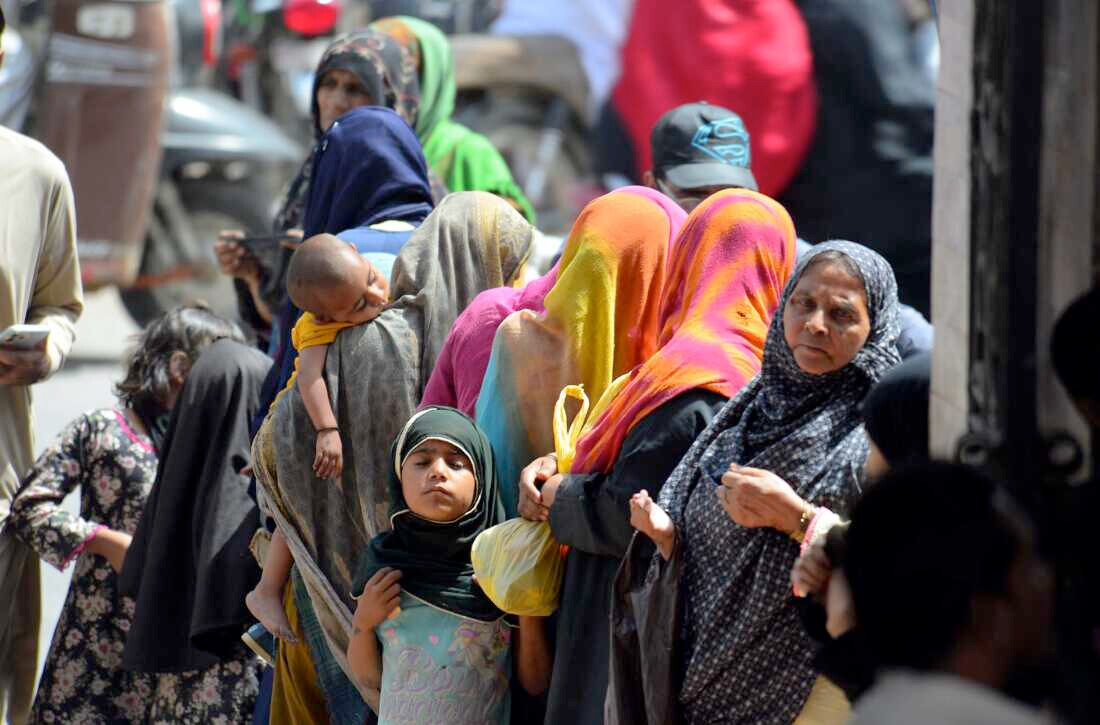
Pakistan's cryptocurrency story can be said to have begun on the streets. The country's crypto boom wasn't driven by the government, but rather by the spontaneous actions of ordinary citizens. According to Chainalysis's 2025 Global Crypto Adoption Index, Pakistan has firmly established itself as the third largest cryptocurrency market globally, behind only India and Vietnam—a leap of six places in just one year, from ninth in 2024, making it a true "dark horse."

Global Crypto Adoption Index 2025. Source: Chainalysis
Geopolitics and Economy: Pakistan's Crypto Advantage
With a land area of 880,000 square kilometers and a population of 240 million, this country is the fifth most populous country in the world. It borders Iran to the west, Afghanistan to the north, has a long-standing standoff with India to the east, and is situated on the Arabian Sea to the south, making its strategic location extremely sensitive. More importantly, it lies precisely at the center of a "crypto-friendly neighborhood circle":
- To the west is El Salvador's "spiritual ally" in the Middle East, Iran, which has already adopted Bitcoin as its legal tender (although Iran has not officially recognized Bitcoin, it legalized mining as early as 2019 and used it to circumvent sanctions).
- To the north lies Afghanistan (where the Taliban, after coming to power, tacitly allowed Bitcoin transactions to be used for cross-border settlements).
- To the east is India, which is number one in the world (and also has a huge number of grassroots users).
- This geographical environment naturally makes Pakistan a crossroads of three densely packed corridors: Central Asia, South Asia, and the Persian Gulf.
Therefore, Pakistan is almost naturally positioned at the node of the entire regional chain of capital flows.
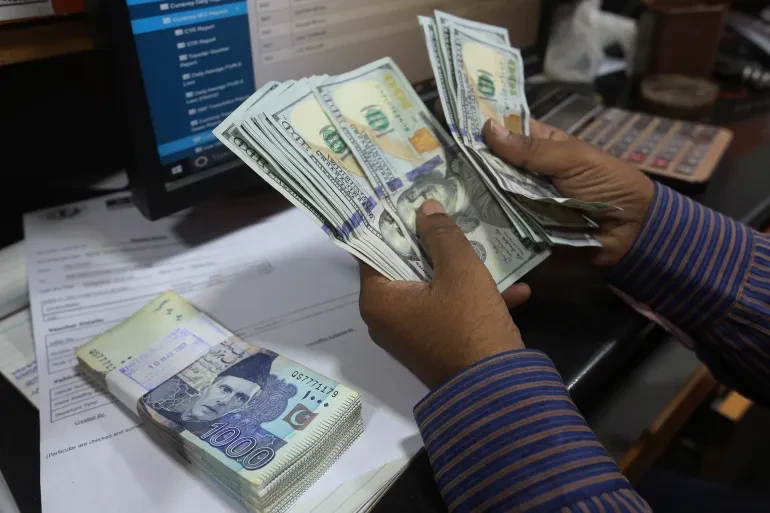
Why is this so important? Because Pakistan receives over $30 billion in remittances annually from overseas Pakistani workers (ranking fifth globally). Traditional remittance channels incur fees as high as 7-12%, while using USDT or Bitcoin costs less than 1%, reducing processing time from days to minutes. Let's look at the economic structure:
- The traditional pillars are textiles and apparel (accounting for 60% of exports), agriculture (rice and cotton), and remittances from overseas workers.
- However, these industries are highly vulnerable to the impact of rupee depreciation – between 2022 and 2025, the Pakistani rupee depreciated by more than 110% against the US dollar.
- Bank account penetration is only 27% (even lower for women), but smartphone penetration has exceeded 70%, making young people (70% of whom are under 30) natural "on-chain natives".
Pakistan and El Salvador: A Multi-Dimensional Comparison

El Salvador conducted a "national experiment" with a population of just over 6 million, while Pakistan, if successful, would directly impact 240 million people —the scale is completely different. PVARA Chairman Saqib's widely circulated statement at the 2025 Bitcoin MENA conference reflects this comparison:
“My point is very simple,” he said. “If El Salvador can do it, with a population of only 6 million, then imagine what Pakistan, with 40 times that population and being one of the fastest-growing digital powers in Asia, could achieve.”
However, there are hidden concerns behind this boom. Due to a long-term lack of regulation, illegal transactions, money laundering, and fraud occur frequently. Seeing the market growing larger and larger, the government finally couldn't sit still any longer.
- In February 2025, Pakistan officially established the world's first Virtual Asset Regulatory Authority (PVARA) to use artificial intelligence to assist in regulation, and at the same time introduced the "Virtual Asset Act 2025".
- In May 2025, Saqib announced that the country was preparing to establish a strategic reserve of Bitcoin (BTC) and was moving towards a more cryptocurrency-friendly regulatory policy.
From this moment on, the "grassroots carnival" on the streets began to be included in the national strategic vision—the goal was no longer to ban it, but to turn this third largest on-chain grassroots economy in the world into a transparent, controllable, taxable, and foreign exchange-generating super engine for the country.
National Asset Tokenization: An Economic Revival Experiment Where Everything Is On-Chain
If Bitcoin is the "new engine" of Pakistan's economy, then blockchain technology is its "new track." Pakistan is experimenting with a $2 billion economic project—asset tokenization.
The issuance of these No Objection Certificates (NOCs) is more than just market access; it represents a deep collaboration between Pakistan and the global blockchain industry. Among the most noteworthy aspects of the MOUs signed between the government and the approved exchanges is an asset tokenization plan: digitizing national assets such as sovereign bonds, government bonds, oil, and gas through blockchain technology. This $2 billion project aims to transform traditional financial assets into digital assets tradable on the blockchain.
In simple terms, asset tokenization is the process of transforming Pakistan's traditional national assets, such as bonds, treasury bills, and commodity reserves, into digital assets that can be traded on the blockchain using blockchain technology. Through asset tokenization, Pakistan can not only increase asset transparency but also attract the attention of international capital. This innovative model is expected to be a significant boost to Pakistan's economic recovery, especially for a country with limited foreign exchange reserves; this attempt could be key to overcoming its economic difficulties.
On the 12th of this month, Pakistani authorities signed an MOU with Binance to explore the tokenization of $2 billion in state-owned assets.
Pakistan's goal is clear: to combine its traditional resource advantages with blockchain technology to explore a path to economic revitalization. While this is a bold experiment, its potential should not be underestimated. If successful, it could become a significant driver of the country's economic recovery and even provide valuable experience for other developing countries.
III. Exploring Incremental Markets: Hot Opportunities and Sober Thinking
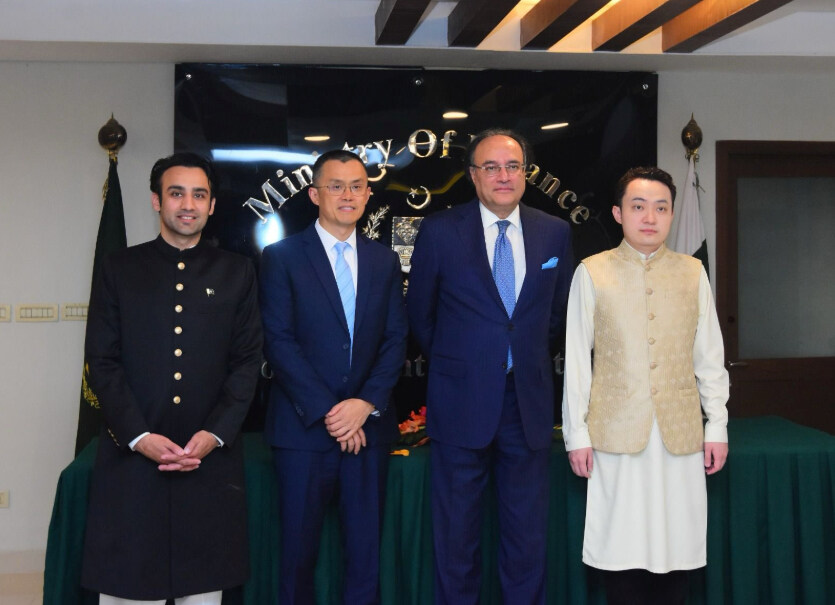
PVARA Chairman Bilal bin Saqib, Binance co-founder Changpeng Zhao, Finance Minister Mohammed Aurangzeb, and HTX advisor Justin Sun (from left to right). Source: PVARA
With the gradual improvement of its regulatory infrastructure, Pakistan is attempting to transform the privately driven cryptocurrency boom into a new engine for national economic transformation. Recently, Pakistani authorities have begun regulating major global cryptocurrency exchanges and have issued preliminary licenses to several leading platforms, allowing them to establish branches in the country.
The platforms that have received regulatory approval are all major players in the global cryptocurrency industry, possessing advantages in market size and technological capabilities. In recent years, these exchanges have actively pursued compliance processes and obtained operating licenses in multiple countries. Their entry into the Pakistani market is a key step in their expansion strategies in emerging markets.
The reality is that the global Web3 market urgently needs new incremental users.
Currently, cryptocurrency penetration rates in developed markets in Europe and America are relatively high. Most users who wanted to enter the market have already done so, leaving behind either those who are hesitant or staunch opponents. This means that in these mature markets, exchanges can only compete for users through fierce competition for existing customers, leading to increasingly higher customer acquisition costs and increasingly limited growth potential.
More importantly, the massive user base accumulated during the Web2 era is waiting to be "converted." Billions of people worldwide are still accustomed to traditional internet services but remain unfamiliar with blockchain and cryptocurrency. Pakistan is a prime example—with over 240 million people, digital payment acceptance is steadily increasing, and cryptocurrency penetration still has significant room for growth.
Despite the significant potential for the "Web2 to Web3 migration" in Pakistan, not all exchanges are currently optimistic about this market. However, for exchanges seeking long-term growth and expansion into new markets, such emerging markets are a crucial component of their globalization strategies. Instead of competing for existing users in already saturated developed markets, it's more advantageous to preemptively enter these emerging markets with substantial conversion potential. Here, a Pakistani user with no prior cryptocurrency experience may, in the long run, be far more valuable than a seasoned user from Europe or America who frequently switches between multiple platforms.
Conclusion: At the beginning of the game, be cautious in placing your pieces.

On the grand chessboard of the global digital economy, Pakistan has cautiously declared its entry, like a pawn crossing the river. This move, from issuing initial No Objection Certificates (NOCs) to exploring potential asset tokenization cooperation, from planning a strategic Bitcoin reserve to the gradual iteration of the regulatory framework, may only activate the tip of the iceberg of local grassroots power, but it has opened up initial possibilities for the incremental market of Web3.
For other emerging economies facing similar challenges such as high remittance rates, currency devaluation, and the youth dividend, Pakistan offers a cautious yet realistic example: blockchain is not a distant, exclusive domain of wealthy nations, but rather a potential path to revitalization that requires gradual exploration, control, taxability, and foreign exchange earnings, while balancing compliance and risk. The interplay between regulation and innovation has only just begun, and Pakistan's blockchain experiment will serve as a case study worthy of continued observation.





