Short seller Burry warns: The Fed's RMP is intended to mask the vulnerabilities of the banking system and is essentially a restart of QE.



- 核心观点:美联储购债计划暴露银行体系深层脆弱性。
- 关键要素:
- 美联储重启购债以应对回购市场利率波动。
- 银行体系在超3万亿储备下仍需央行“输血”。
- 每次危机后美联储资产负债表被迫永久扩张。
- 市场影响:引发对金融系统稳定性和流动性依赖的担忧。
- 时效性标注:短期影响
Original author: Zhang Yaqi
Original source: Wall Street News
Michael Burry, the real-life inspiration for the film "The Big Short," issued a stern warning about the Federal Reserve's latest bond-buying program, pointing out that its name, "Reserve Management Purchases" (RMP), actually exposes deep-seated vulnerabilities in the US banking system. He believes this move is essentially a restart of quantitative easing (QE), intended to mask the liquidity crunch facing the banking system, rather than a routine operation as claimed by the Fed.
As previously reported by Wall Street News, the Federal Reserve announced overnight that it will begin purchasing short-term Treasury bonds as needed to maintain an ample supply of reserves. The New York Fed simultaneously announced plans to purchase $40 billion in short-term Treasury bonds over the next 30 days, the latest move since officially halting balance sheet reduction last week. This action comes against the backdrop of recent unsettling interest rate fluctuations in the $12 trillion U.S. repurchase market, with continued turmoil in the money market forcing the Fed to accelerate its actions.
However, Burry believes this action precisely demonstrates that the banking system has not yet escaped the aftermath of the small banking crisis of 2023. He warns that if the banking system, with over $3 trillion in reserves, still needs central bank bailouts, it is not a sign of strength, but a strong signal of systemic fragility.
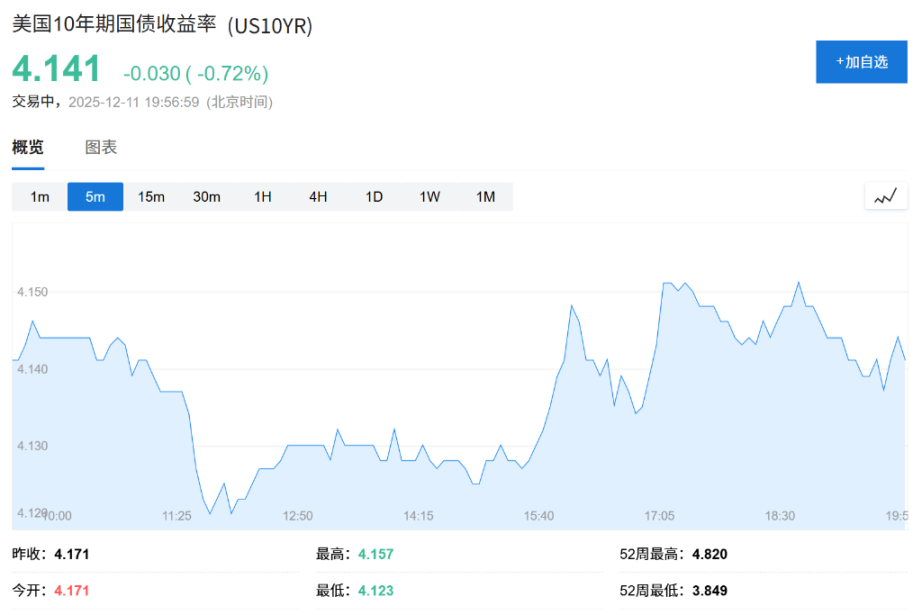
Burry further analyzes that each crisis seems to force the Federal Reserve to permanently expand its balance sheet, otherwise a banking funding crisis cannot be avoided. The ensuing market reaction confirms the tight liquidity situation: the yield on the 2-month U.S. Treasury note jumped, while the yield on the 10-year Treasury note fell. Meanwhile, persistent volatility in the repo market has fueled concerns about year-end funding tightening, forcing investors to reassess the stability of the financial system.
Covert quantitative easing and a fragile banking system
Burry questioned the Federal Reserve's use of the term "reserve management purchases," interpreting it as a covert move aimed at stabilizing the still-struggling banking sector. According to FRED data, U.S. bank reserves totaled only $2.2 trillion before the 2023 crisis, but have now climbed to over $3 trillion.
Burry issued a warning:
"If the U.S. banking system cannot function without more than $3 trillion in reserves or the Federal Reserve's 'life support,' it is not a sign of strength, but a sign of fragility."
He added that the current pattern appears to have evolved into a situation where the Federal Reserve needs to permanently expand its balance sheet after each crisis, or risk the collapse of bank funding chains. While this mechanism explains to some extent why the stock market has performed strongly, it also reveals the financial system's extreme dependence on central bank liquidity.
Market operation mismatch and hedging strategies
From an operational perspective, Burry highlighted a significant shift in strategy between the U.S. Treasury and the Federal Reserve: the Treasury tends to sell more short-term notes, while the Fed focuses on purchasing them. This strategy helps avoid pushing up the 10-year Treasury yield. As expected, following the Federal Open Market Committee (FOMC) meeting, the yield on the 2-month U.S. Treasury note rose, while the yield on the 10-year Treasury note fell.
Given the continued volatility in the repo market, some analysts expect the Federal Reserve may need to take more aggressive action to avoid a year-end liquidity crunch. Against this backdrop, Burry sees this as further evidence of underlying weakness in the financial system. He warned investors against misleading advice from Wall Street to buy bank stocks and revealed that for funds exceeding the FDIC's $250,000 limit, he prefers to hold Treasury money market funds as a hedge against risk.
It's important to note that the primary objective of quantitative easing (QE) is to lower long-term interest rates by purchasing long-term Treasury bonds and mortgage-backed securities (MBS) to stimulate economic growth. The Reserve Principles (RMP), on the other hand, is more technically focused, concentrating on purchasing short-term Treasury bonds to ensure sufficient liquidity in the financial system's "pipeline" and prevent unforeseen events. Bank of America states that, based on the experience of 2019, liquidity injections will quickly lower the Secured Overnight Financing Rate (SOFR), while the federal funds rate (FF) reacts relatively slowly. This "time lag" will create significant arbitrage opportunities for investors.