The Federal Reserve's rate cut exposed deep divisions and triggered market uncertainty.



- 核心观点:美联储内部分歧加剧,政策路径不确定性上升。
- 关键要素:
- 会议出现三张反对票,内部共识破裂。
- 点阵图预示未来降息保守,宽松步伐放缓。
- 鲍威尔转向中性立场,避免提供前瞻指引。
- 市场影响:市场波动性增加,资产价格或陷盘整。
- 时效性标注:中期影响。
The impact of this policy move goes far beyond a 25 basis point interest rate cut.
On December 10, the Federal Reserve lowered its benchmark interest rate by 25 basis points, marking the third consecutive rate cut and a total of 75 basis points since September. However, the impact of this decision is far more profound than the numbers suggest. Beneath the surface, the meeting exposed widening divisions within the Federal Open Market Committee, escalating political pressure, and a rapid deterioration in the consensus on monetary policy.
This meeting saw three dissenting votes, the most in a single meeting since 2019. One governor has voted against the proposal three times in a row, and another twice in a row, indicating that Powell's ability to maintain committee unity is weakening. When internal cohesion declines, the clarity of the Fed's policy direction is also affected. Investors rely on the committee's consensus to interpret the future path of interest rates, and the December meeting suggests that this reliability is declining.
At the heart of the disagreement lies a thorny macroeconomic dilemma: inflation has ceased to rise significantly, while employment indicators remain persistently weak. In a typical economic cycle, data tends to point in one direction—either clearly towards easing or clearly towards tightening. But now, with persistently high price pressures and slowing job growth, policymakers are at an impasse. Insufficient tightening could lead to persistently high inflation; excessive easing could exacerbate unemployment. Historically, such intense internal divisions have only arisen during periods of extreme economic uncertainty.
Raster graphics convey clearer information.
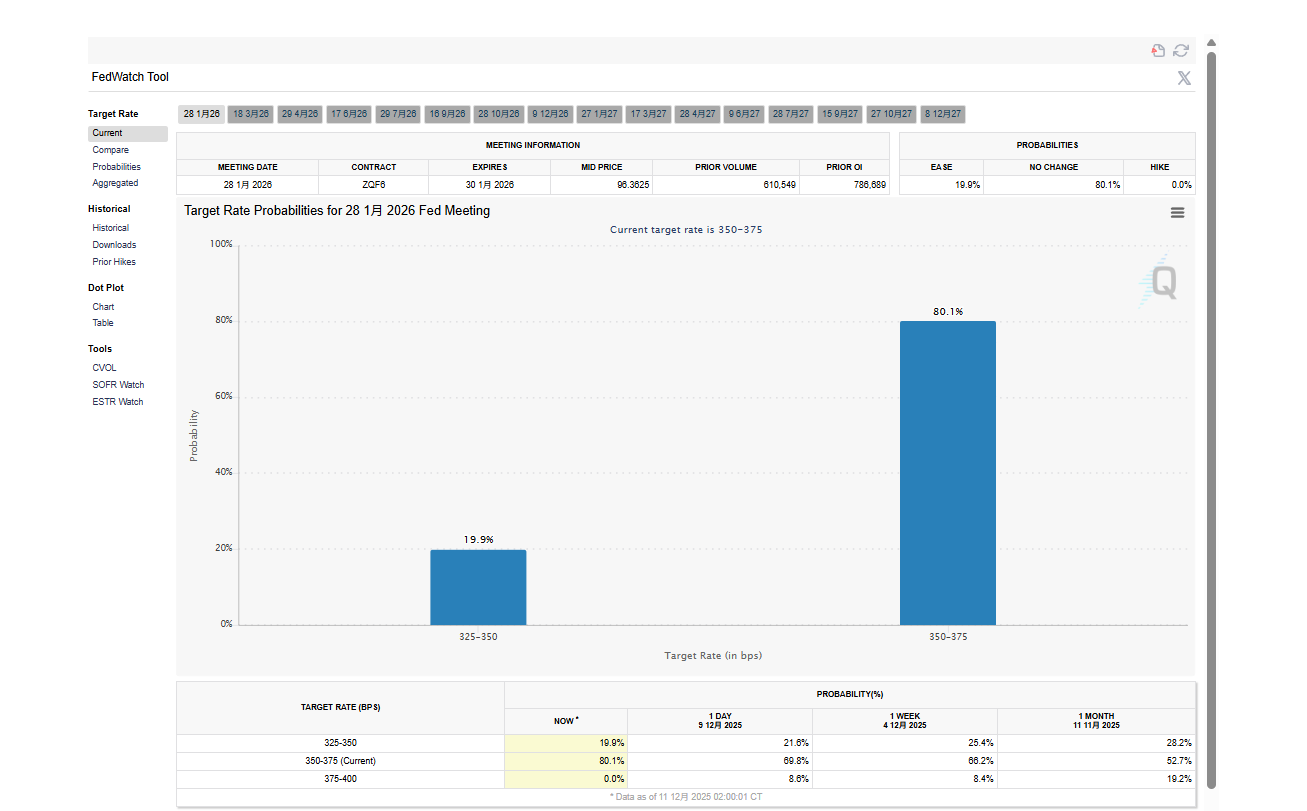
If previous disagreements weren't enough, the updated dot plot has further exacerbated market caution. Current projections indicate only one rate cut each in 2026 and 2027, with the long-term policy rate remaining around 3%. This is significantly more conservative than investors expected. Despite weak labor market data, the projections are virtually unchanged from the September update, highlighting the significant differences among committee members.
Slowing the pace of easing implies that the Federal Reserve is unwilling to commit to a smooth or sustained reduction in interest rates. Instead, policymakers appear concerned that the economy cannot withstand rapid easing, or that inflation may remain too high to support such easing. Whatever the reason, the message is clear: future easing will not follow the predictable linear pattern of past cycles.
Powell shifts to a neutral, cautious framework
Jerome Powell's press conference exacerbated market uncertainty. Unlike previous meetings, he did not hint at further rate cuts. He stated that current policy is "in good shape" and noted that interest rates are currently in a neutral range. This shift is significant. If the Fed views policy as neutral, it means it believes there is no need for further easing at present and intends to react to economic data rather than adhering to a pre-set direction.
Powell repeatedly emphasized that the Federal Reserve will not follow a predetermined policy path, but will make decisions based on the specific circumstances of each meeting. This is quite different from the market's expectation of a smooth, multi-quarter easing cycle. In fact, Powell hinted that interest rate movements may become uneven: depending on changes in inflation and the employment situation, there may be periods of unchanged interest rates, followed by rate cuts, or even a pause in rate hikes.
This approach reflected the overall chaotic situation at the time. Powell treaded carefully amidst deep divisions among committee members, persistently high inflation, slowing job growth, and increased political scrutiny. He avoided triggering panic but offered no roadmap. Today, the lack of forward guidance itself is a source of market volatility.
Political Frontline: Trump Pushes for Accelerated Easing of Policies
Political pressure added another layer of complexity. President Donald Trump publicly criticized the rate cuts as too small, arguing that they should at least double. Since the president cannot directly instruct the Federal Reserve, public statements became his channel for exerting influence. His dissatisfaction with the pace of easing was increasingly evident.
More importantly, Trump announced he would expedite the selection process for a new Federal Reserve Chair. Powell's term ends in May 2026, meaning he has only three meetings left to formulate policy. Kevin Warsh has emerged as the frontrunner, but Christopher Waller, Michelle Bowman, and Rick Riedel of BlackRock remain in contention. Given Trump's erratic personnel decisions, markets are unlikely to remain stable until the formal nomination is announced.
The impending power transition has heightened policy uncertainty. Markets must simultaneously interpret Powell's remaining decisions and anticipate the policy framework of his successor. If Trump ultimately chooses someone more aligned with his aggressive easing policy preferences, the entire interest rate path beyond 2026 could change dramatically.
Why is the market calm in the short term, but faces higher risks in the future?
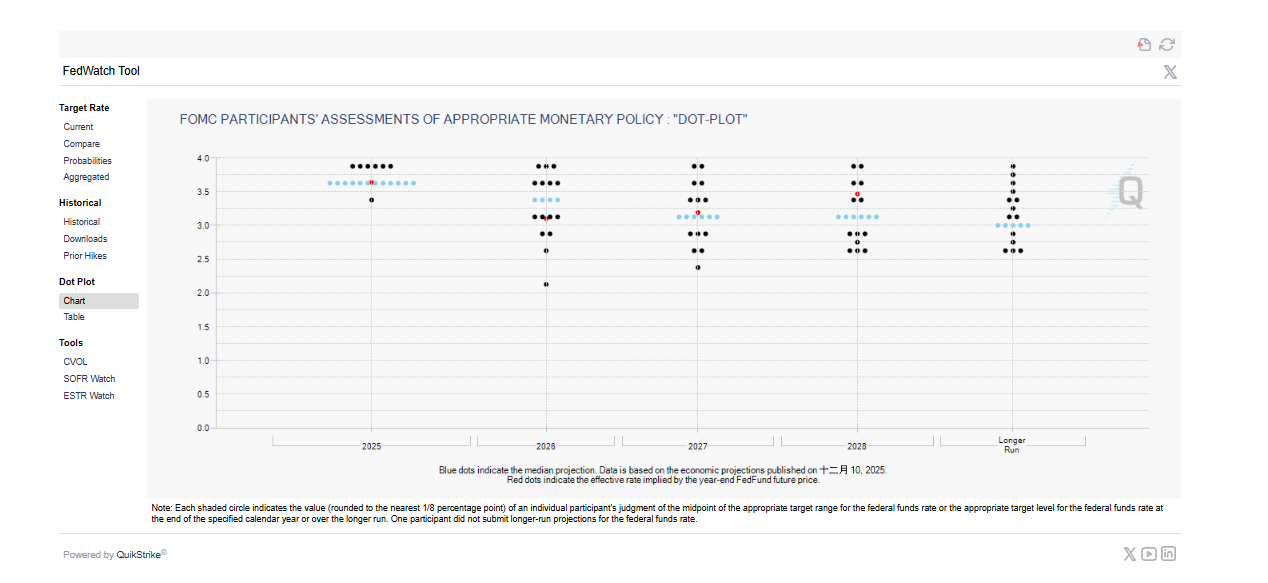
Despite deeper concerns, the market initially welcomed the rate cut. Powell's assurance that no one on the committee was considering raising rates boosted market sentiment and fueled a rally. Stocks rose and volatility eased. However, this optimism is likely only temporary.
The medium-term situation is now more complex. Internal divisions within the Federal Reserve and Powell's avoidance of explicit commitments make the path of easing policy more unpredictable than at any other time in this cycle. This uncertainty often translates into broader market volatility. Furthermore, the upcoming leadership change introduces a political variable that investors cannot accurately price in.
For Bitcoin and other digital assets, the predictability of liquidity conditions is crucial. While a confirmed rate cut may boost short-term market sentiment, the uncertainty surrounding the next move in monetary policy could prolong the current consolidation phase. The cryptocurrency market may not see a clear upward trend, but rather a longer period of sideways trading as market participants await clearer signals.
Investors now need to pay close attention to two parallel forces: Powell's remaining decisions and the political evolution surrounding the next Federal Reserve Chairman. Both forces will influence market expectations, especially as monthly economic data continues to reshape related discussions.
A period filled with uncertainty
The December meeting was more than just a routine policy adjustment. It exposed the predicament faced by monetary policy institutions in dealing with conflicting economic forces, growing political influence, and weakening internal coordination. This meeting also laid the groundwork for a turbulent transformation that could reshape the future of U.S. monetary policy.
The short-term economic situation remains stable, but structural uncertainty is rising. The Federal Reserve is shifting from a predictable easing cycle to a more volatile, data-dependent phase. With inflation remaining high, unemployment declining, and a leadership change imminent, the road ahead is more uncertain than at any time in recent years.
Until the situation becomes clearer—whether through improved data, internal consensus, or a change of chairman—markets, including Bitcoin, are likely to continue trading in a volatile and uncertain environment.