A Comprehensive Guide to ACU Tokens: Acurast Redefines Computing Power with Billions of Smartphones



- 核心观点:Acurast利用闲置手机构建去中心化计算网络。
- 关键要素:
- 已连接超15.8万手机作为计算节点。
- 代币ACU近70%分配给社区。
- 已完成1100万美元融资。
- 市场影响:挑战传统云服务,推动计算资源去中心化。
- 时效性标注:长期影响
Acurast (ACU) is revolutionizing global computing by leveraging billions of idle smartphones, rather than relying on traditional centralized data centers. Its verifiable, scalable, and confidential computing network enables users to run secure applications and AI workloads at scale without sacrificing speed or privacy.
With over 158,000 computing units already connected to its incentive testnet, Acurast has established a decentralized, verifiable computing network that supports mission-critical applications with stringent security and AI capabilities.
Acurast is more than just another DePIN protocol; it transforms everyday devices into a global computing network, tightly connecting developers, device providers, and end-users through the ACU token economy. From staking and governance participation to rewards for contributing computing resources, the platform advocates a community-centric decentralized philosophy, redefining the future of computing.
ACU tokens are now officially listed in the ACU zone of XT pre-market trading – join now and participate!

Quick Summary
- Acurast (ACU) transforms billions of idle smartphones into a decentralized, verifiable computing network.
- Users can earn ACU tokens by contributing computing power, staking, and participating in governance.
- The network can support secure and scalable applications and AI tasks without the need for traditional data centers.
- The community-centric ACU token economy drives the growth of the decentralized computing ecosystem.
What is Acurast (ACU)?
Acurast is redefining computing with billions of smartphones—without data centers. Its network is verifiable, scalable, and privacy-secure, enabling users to run secure applications at scale on decentralized infrastructure without sacrificing speed or privacy.
The Acurast Incentive Testnet has connected more than 158,139+ computing units, making it one of the most decentralized and verifiable computing networks available, and it has taken on core computing tasks in high-security and AI scenarios.
This is not just another DePIN model, but a transformative force that is reshaping the way the world computes.
It is this innovative capability that has attracted the attention of many investors. On November 13, Acurast announced the completion of a $11 million funding round, with investors including Ethereum and Polkadot co-founder Gavin Wood, MN Capital founder Michael van de Poppe, and GlueNet founder Ogle, among others.
How ACU Works: Core Mechanism Analysis
Core infrastructure: Computing power → Decentralization → DePIN
At the heart of Acurast is “computing power”—the computing resources used to run applications, AI models, or process data.
Unlike traditional cloud services that rely on large centralized data centers, Acurast uses idle smartphones as computing nodes, making each device a mini data center, reducing reliance on centralization and avoiding single points of failure.
This model belongs to DePIN (Decentralized Physical Infrastructure Network), which means that the infrastructure is provided by users rather than dominated by institutions, realizing an open-source, community-driven computing resource network.
How to connect your phone to a network | Reliability mechanisms and reward models
Any smartphone can become a Processor node for Acurast.
The device runs tasks in the background through a Trusted Execution Environment (TEE), ensuring secure execution without compromising privacy.
The system will evaluate device performance based on benchmark scores, including CPU, memory, and storage. The higher the score, the more tasks and rewards you can claim.
The device also needs to send heartbeat signals periodically (approximately every 30 minutes). If it fails to send a heartbeat signal for an extended period, it will be considered offline, and tasks and rewards will be reduced.
Token mechanism, staking and incentive model
Acurast's economic system is driven by the native token ACU (previously the test token cACU before the mainnet). Contributing computing power and running nodes can earn cACU, which can be converted to ACU after the mainnet and TGE launch.
Users can stake ACU to improve node reputation. Stable nodes will receive additional rewards, while unstable nodes may face a penalty mechanism that reduces the amount of staked.
After the mainnet launch, ACU will be used for:
- Pay computing power fees
- Node staking and rewards
- Governance Voting
- Rewards to computing power contributors
ACU Token Economy: Value, Uses, and Incentive Mechanisms
Acurast is a decentralized computing network that connects developers, computing power providers, and end users, unifying incentives and contributions to drive the development of the decentralized computing economy. ACU, its core token, is the economic driver of the entire ecosystem, ensuring network security, scalability, and high decentralization while incentivizing collaboration, contribution, and sustainable growth. The token economic design adheres to the principles of long-term sustainability and community priority, ensuring that value is returned to users and contributors, rather than controlled by a few institutions.
Key Token Highlights
- Initial supply (TGE): 1,000,000,000 ACU
- Inflation adopts an adaptive model: 1%–5% per year.
- Early investors received only 6.5% , which, while intended to help the network grow from its early stages to the mainnet, was allocated a relatively small percentage to ensure a fair start.
- Nearly 70% of the tokens will be allocated to the community or used for community support mechanisms (community treasury, TGE launch incentives, operating funds, and liquidity provision).
- The team and consultants have the longest lock-in period , aligning with the project's long-term goals.
By limiting early backers to 6.5% and allocating the vast majority of tokens to the community and ecosystem development, Acurast's token distribution mechanism prioritizes ecosystem interests, recognizes early contributors, and incentivizes the creation of more Acurast-based products, services, and computing power applications.
This structure further promotes network decentralization because decentralized computing power belongs to the majority, not the minority.
Initial token distribution structure
Early Backers are a small but diverse group of participants who primarily provide initial funding to support the protocol's smooth transition to the mainnet while preventing excessive institutional control.
Team & Advisors are allocated to core contributors, including employees, advisors, founders, and key future members, and have the longest lock-up period to ensure that their interests are tied to long-term development.
TGE Community Activation is used for participation during the launch phase, such as Launchpad subscription, test token exchange, airdrops, and community expansion.
The Community Treasury has been decentralized from day one. The future development direction of the Community Treasury will be determined by ACU holders through on-chain governance, and long-term support and fund allocation will be provided to contributors.
Operational Funds are managed by the Acurast Foundation Board and are used to advance the protocol’s growth, expansion, and business development.
Liquidity Provision funds are dedicated to ensuring that ACU has sufficient trading depth and availability on centralized and decentralized trading platforms.
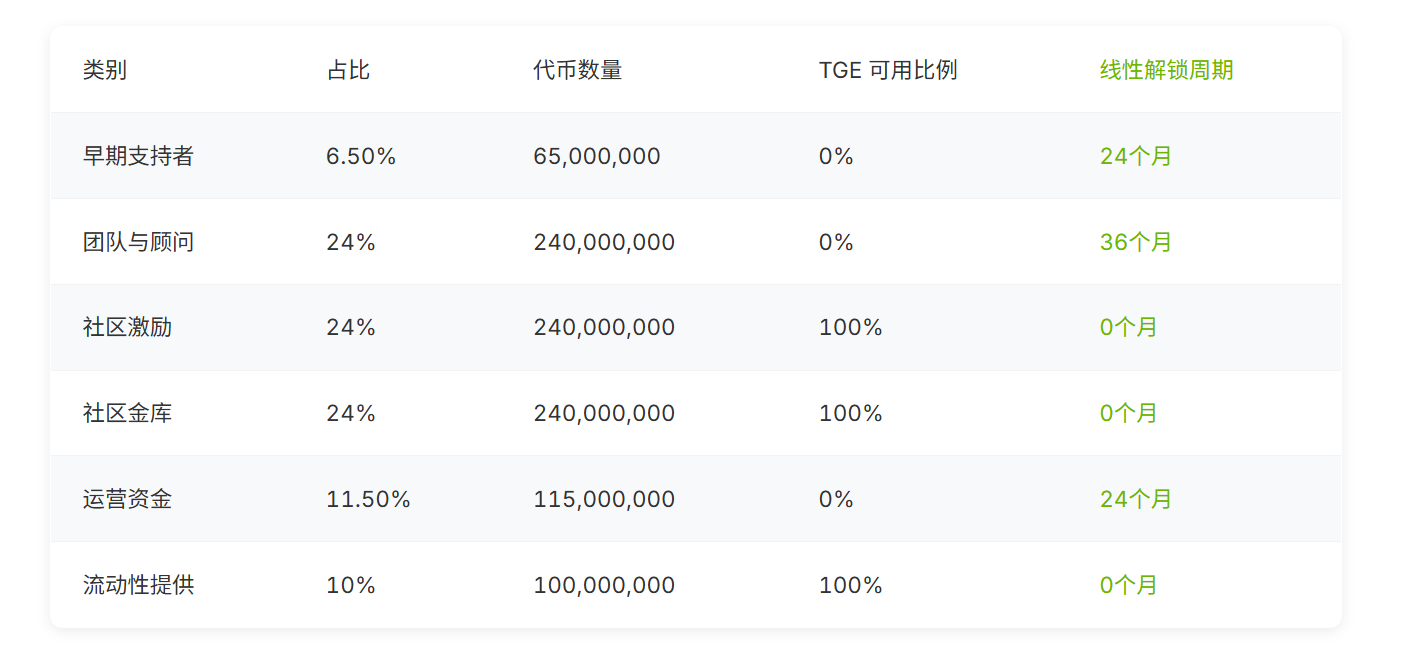
Only tokens allocated to the community and for community support purposes will be unlocked at TGE. The remaining allocations will be locked for at least 24 months and released gradually during that period.


Token Uses
Network Fees: Acurast uses a Proof-of-Stake (PoS) blockchain as the coordination and settlement layer for its decentralized computing economy. Users need to use ACU to pay transaction fees when interacting on the network.
Staking: While network computing itself has inherent security features, staking by processors adds an extra layer of economic security to the network. Stakers earn transaction fee rewards for providing economic security to the network. All ACU holders can participate in staking through delegation without having to run processors themselves.
Settlement: ACU is the unified token for computation settlement, used to measure the reputation and quality of computing services. 30% of the tokens are burned for each settlement to prevent manipulation of reputation scores. This mechanism is transparent and abstract to users, so decentralized computing services can be paid for using any token on Acurast, with settlement still uniformly based on ACU at the underlying level.
Governance: ACU holders can participate in on-chain governance, vote on community proposals, drive the iterative upgrades of protocols and components, and achieve true decentralization and long-term sustainable evolution.
The inflation mechanism rewards active participation in the network, ensuring the protocol's continued decentralized operation in the long term. The protocol's annual inflation rate is set between 1% and 5%, dynamically adjusted based on on-chain metrics, and can be further modified through governance.
How to Purchase $ACU | Participation Guide
ACU is now available for purchase in the XT pre-market ACU zone, providing an opportunity for users who wish to participate in the ecosystem before the mainnet launch to get in early. By acquiring tokens through the pre-sale market, users can participate in the expanding Acurast ecosystem and become part of the network's early foundational community.

In addition to purchasing $ACU, users can explore various ways to participate in the Acurast ecosystem. From contributing computing power through devices to staking ACU to earn network rewards, the platform offers multiple incentive channels, allowing users to both earn rewards and actively participate in community interaction. Staying updated on ecosystem developments also allows users to discover new opportunities, including participating in governance, performing tasks, and future integration and applications within the decentralized network.
ACU token's competitive advantages
Acurast's competitive advantage lies in its ability to combine decentralized infrastructure, verifiable computing, and a community-driven token economy. Unlike traditional cloud services, Acurast leverages billions of idle smartphones to build a secure, scalable, and cost-effective computing network without relying on centralized data centers.
The ACU token further strengthens the ecosystem by incentivizing and aligning developers, computing resource providers, and end-users. Through staking, task rewards, and governance participation, ACU encourages continuous activity and reliability while ensuring network integrity. The token's economic design prioritizes community participation, with nearly 70% of tokens allocated to the community and community-supported projects to ensure that decentralization is not just in theory but in practice. Combined with adaptive inflation, secure settlement mechanisms, and reputation-based rewards, ACU becomes a robust utility and governance token, driving a real-world decentralized computing economy—creating a network effect: more participants bring more computing power, more computing power brings more developers, and more developers ultimately create more value for the ecosystem.
Key Risks and Challenges of ACU Tokens
While ACU offers unique opportunities to participate in the decentralized computing ecosystem, potential participants should be aware of certain risks. As the native token of an emerging network, ACU's value and utility depend on Acurast's adoption and development. Market volatility, regulatory changes, or delays in network milestones can all impact the token's performance.
At the operational level, reliance on distributed devices brings issues such as device availability, performance differences, and user engagement, which can affect overall computing reliability. Although staking and governance mechanisms can improve security and decentralization, participants still need to assess their own risk tolerance before depositing tokens.
As an early-stage project, the ACU ecosystem is still evolving. Users should continue to monitor protocol updates, token economics adjustments, and new opportunities to make informed decisions within the network.
ACU Future Outlook: The Expansion of Decentralized Computing
Key milestones in the 2025 roadmap include:
- Genesis Mainnet Launch and Token Issuance (TGE) (Q4 2025)
- Initiate governance to achieve decentralized community participation
- Codenamed Cargo (Compute Container): Modular workloads that make serverless deployments easier to scale and apply.
- Codenamed Cray (Compute Cluster): A high-performance computing cluster consisting of hundreds of devices, capable of running the largest LLM currently available, significantly alleviating the vertical limitations imposed by mobile computing.
The future roadmap also includes:
- Codenamed Bazaar (Computational Economy): Building a vibrant decentralized computing economy to help developers seamlessly distribute complete software solutions.
- Codenamed Rice (Computation Futures): An innovative long-term decentralized computing economic strategy that allows computing resource providers to fully utilize their infrastructure and support future expansion.
Acurast's 2025 growth strategy aims to activate a scalable network effect—more phones bring more computing power, more computing power attracts more developers, and more developers create more value for the ecosystem. This is a positive-sum cycle driven by real-world demand, seamless integration, and decentralized ownership, forming a flywheel effect in the computing market.
About XT.COM
Founded in 2018, XT.COM is a leading global digital asset trading platform with over 12 million registered users, operating in more than 200 countries and regions, and boasting an ecosystem traffic exceeding 40 million. The XT.COM cryptocurrency trading platform supports over 1300 high-quality cryptocurrencies and over 1300 trading pairs, offering diverse trading services including spot trading , leveraged trading , and contract trading , and is equipped with a secure and reliable RWA (Real World Asset) trading market. We are committed to the philosophy of "Explore Crypto, Trust Trading," dedicated to providing global users with a safe, efficient, and professional one-stop digital asset trading experience.