






SFT-Chain Of Chains: Multi-chain integration empowers the new journey of DePIN ecology


introduction
With the continuous development of blockchain technology, SFT Chains multi-chain integration DePIN platform provides new possibilities for the seamless connection of hardware infrastructure and Web3. This article will introduce the innovative concept of Chain of Chains built by SFT and its important contribution to the DeFi ecology, and demonstrate its key role in promoting the application of blockchain technology and the ecological development of hardware infrastructure, and in promoting the development of Web2 and Web3.
1. What is DePIN?
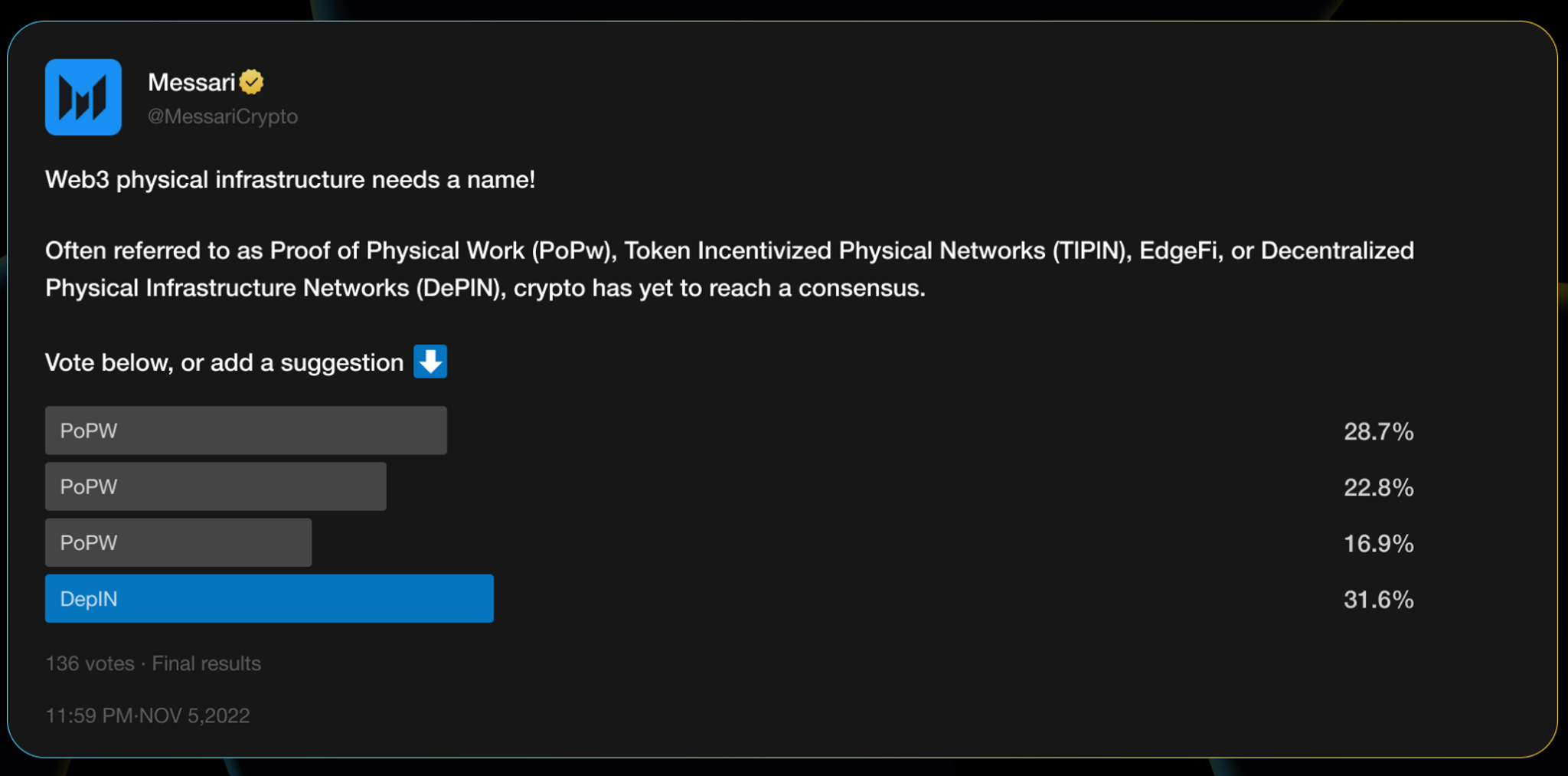
Decentralized Physical Infrastructure Network (DePIN) is the name for a decentralized application, a blockchain protocol that incentivizes the decentralized community to build and maintain physical hardware, with users providing hardware or software resources (e.g. equipment, electric vehicle charging) to the network , telecommunications, software interfaces, etc.) and receive token rewards. The industry has been around for many years, but the discussion around the name led to a unified understanding: DePIN.
DePIN has the potential to unite the most promising sectors of the real world: Internet/IoT, energy, telecommunications, mobility, environment, smart cities, smart homes, and more. Currently, physical infrastructure has historically been monopolized by large technology companies because it requires a large amount of capital to build and high maintenance costs, which is beyond the reach of small players. However, DePIN has many advantages over centralized solutions as it is able to: reduce costs; scale horizontally; reward network contributors; and enhance security.
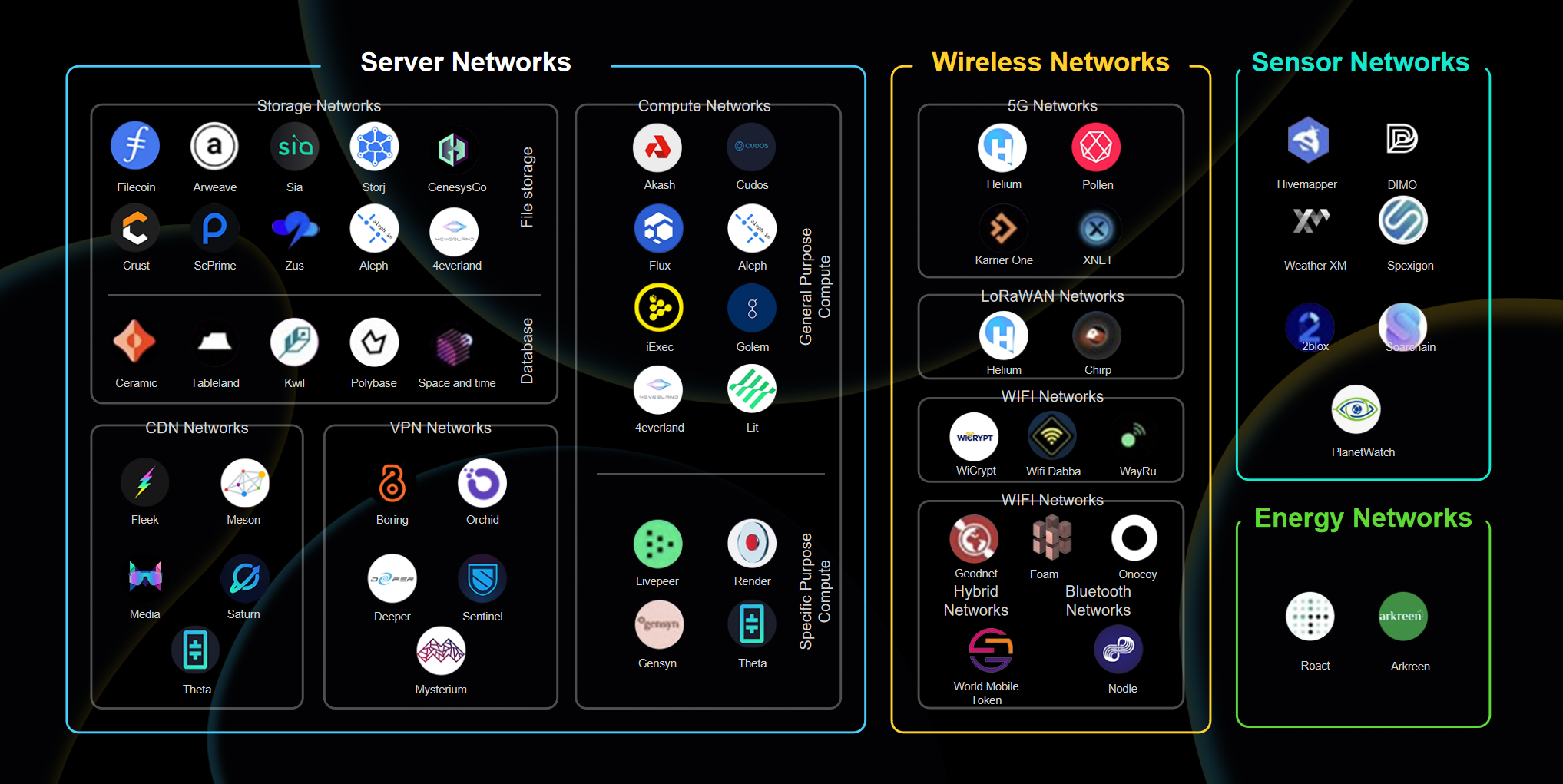
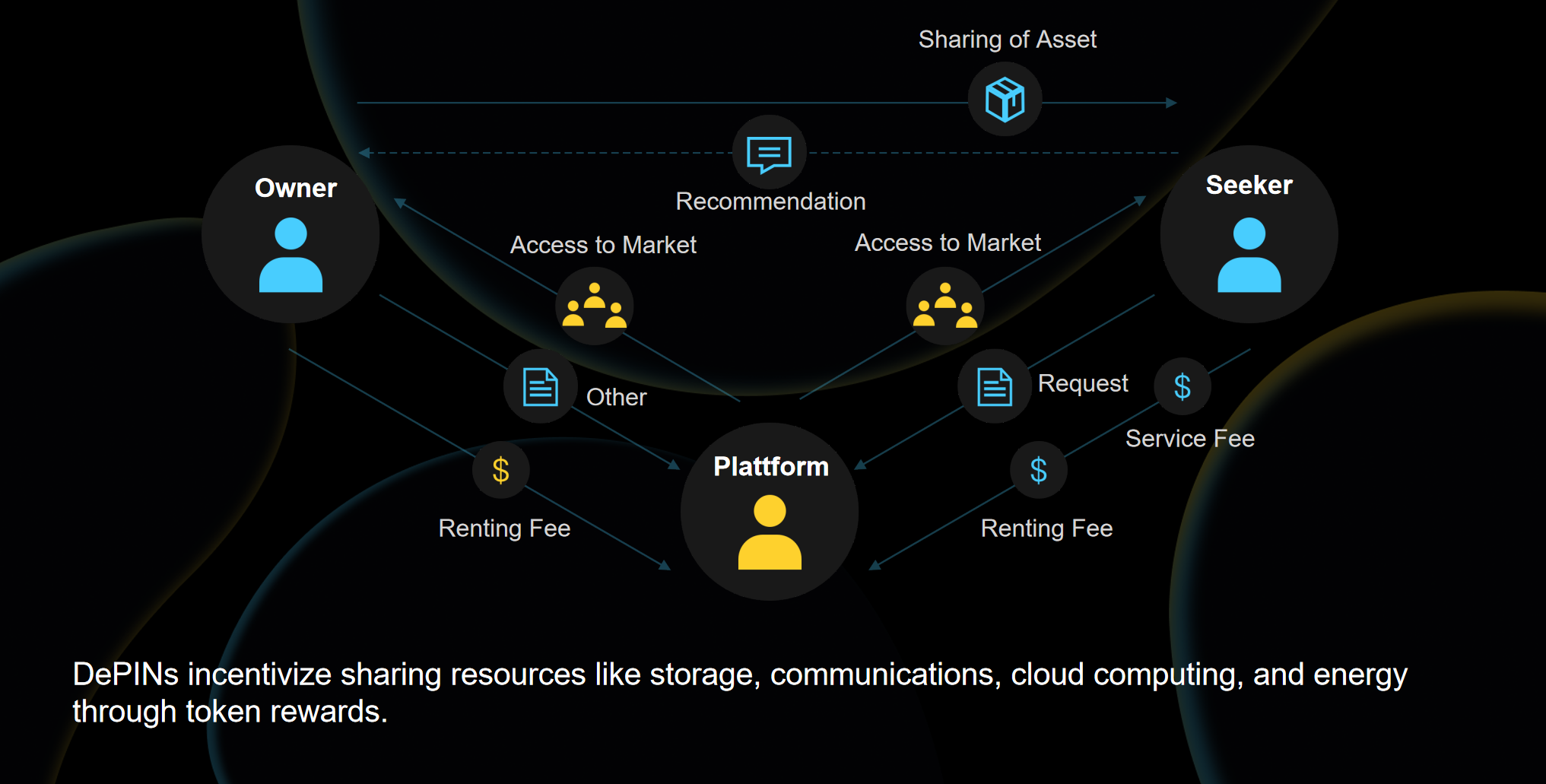
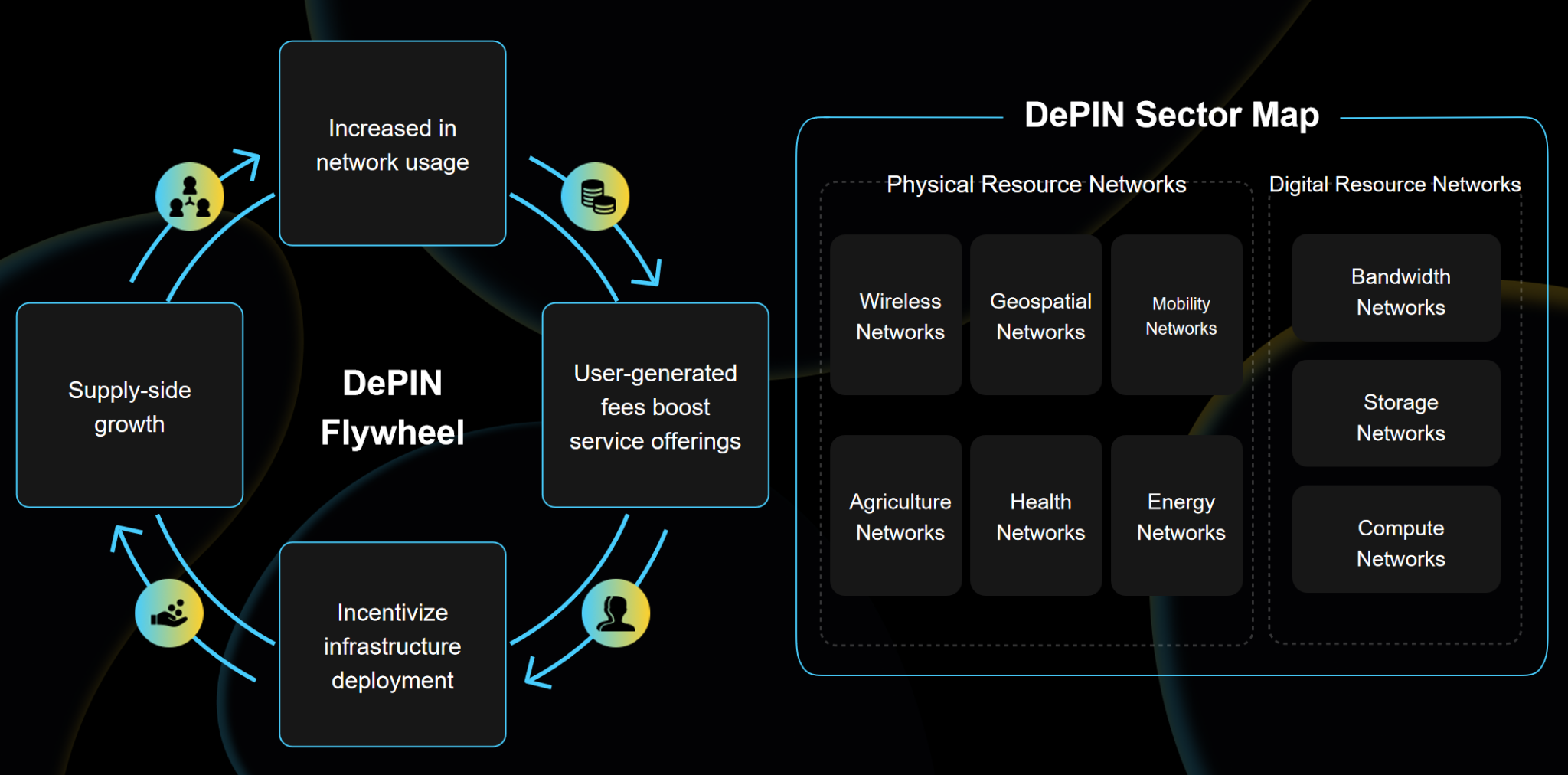
In this context, SFT Chain has taken a key step to build a decentralized physical infrastructure network (DePIN), committed to building a platform in this field, connecting the Internet/Internet of Things, energy, telecommunications and other fields to achieve better Serving the social economy and peoples lives.
2. What is SFT Chain?
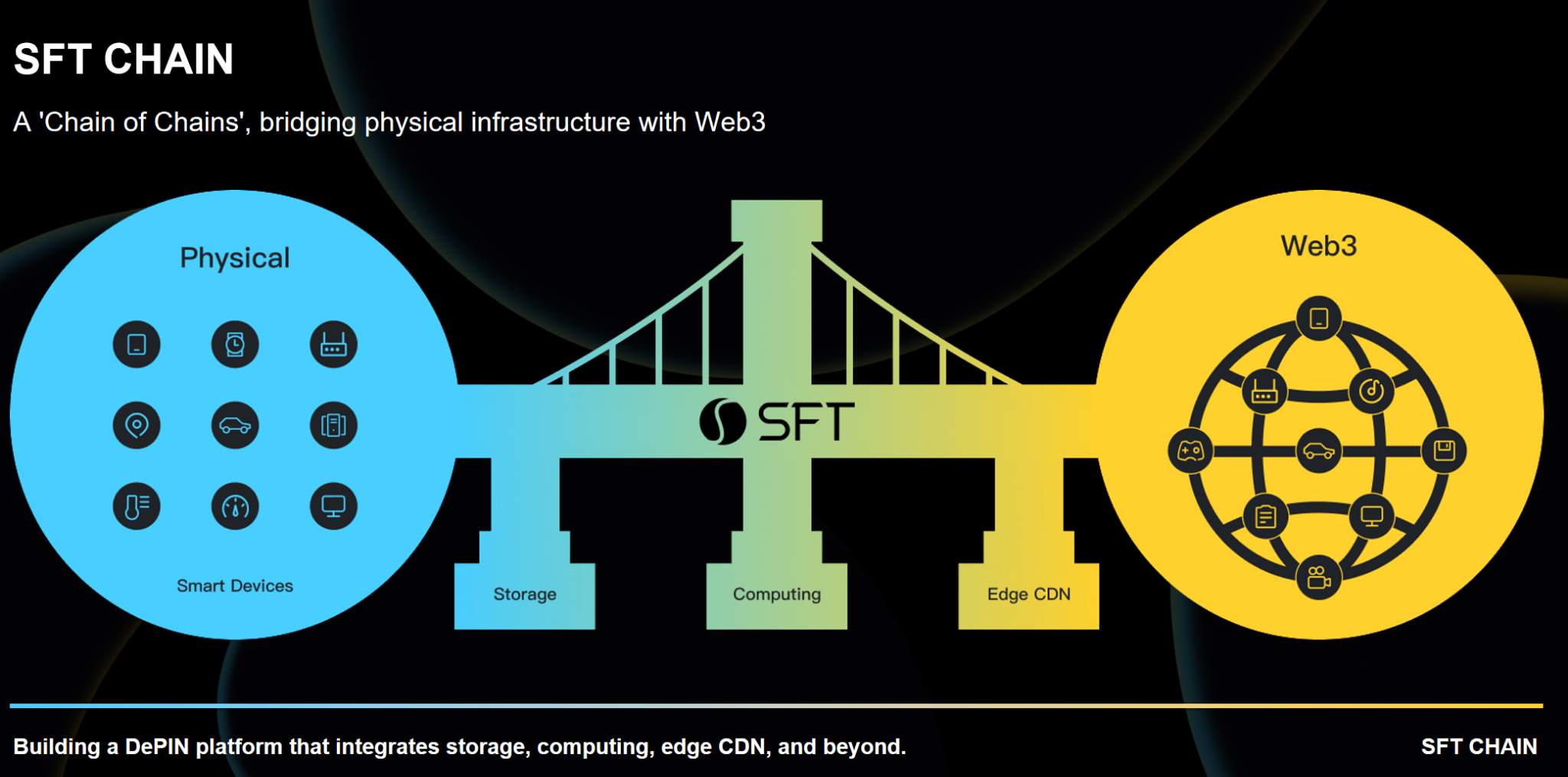
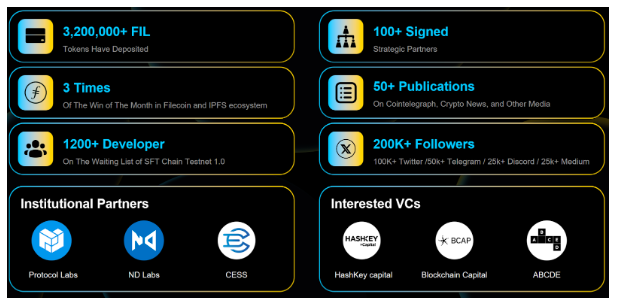
SFT Chain is a multi-chain integration platform that bridges physical infrastructure and Web3 application chains, and is committed to building a DePIN platform that aggregates storage, computing, CDN and other fields. As a leader in decentralized infrastructure networks, SFT Chain is committed to building an open and inclusive platform that integrates and cooperates with multiple public chains to provide users with more flexible and diverse service options. Currently, SFT Chain has reached strategic cooperation with TP Wallet, Xinhuo Technology, Filecoin, Filfox wallet, CESS, etc., and has launched Filecoin, Cess, Spacemesh and other infrastructure to jointly promote the development of decentralized physical infrastructure network (DePIN) . This strategic partnership marks an important step in building a comprehensive DePIN platform, ushering in a new era of blockchain-powered decentralized storage and CDN networks.
3. SFT ecological vision
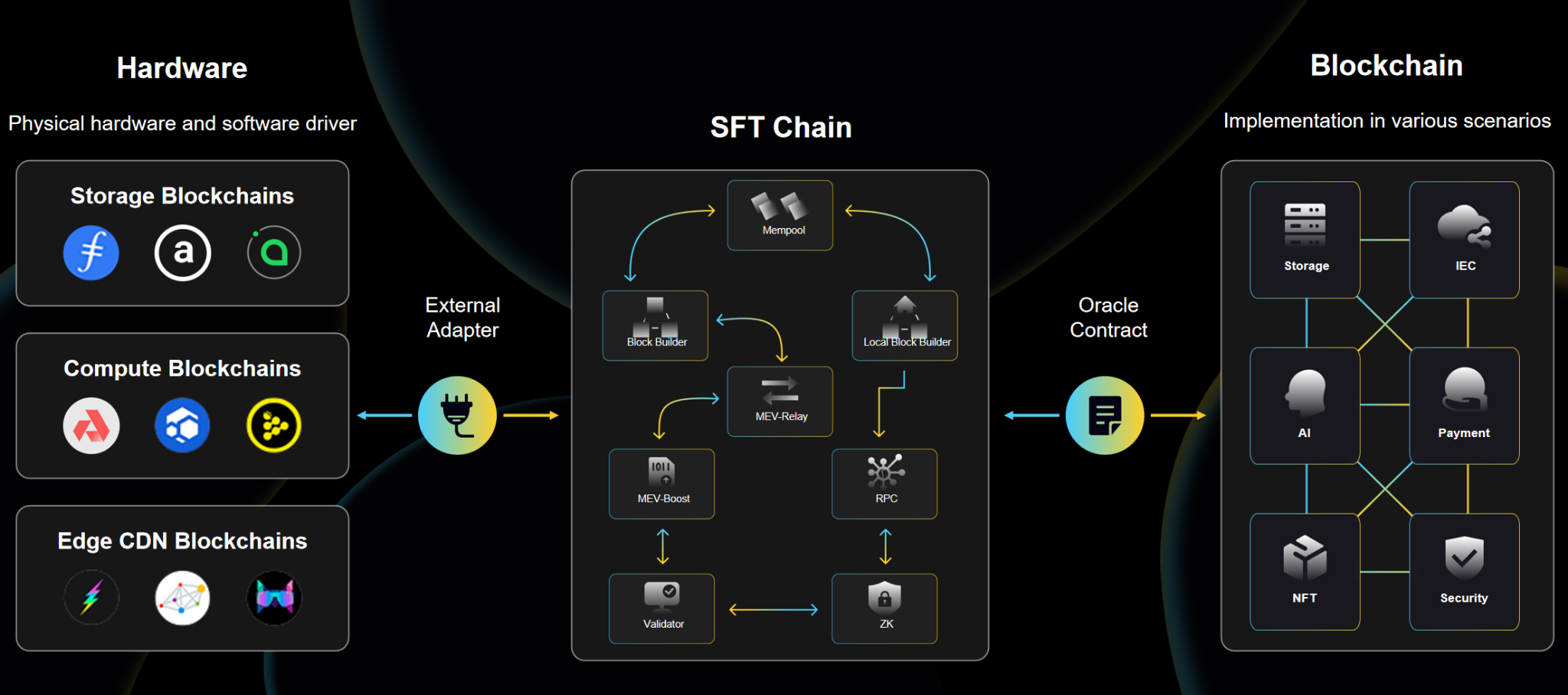
SFT Chain of Chains, based on the concept of multi-chain integration based on hardware infrastructure, integrates high-quality public chains in storage, computing, CDN and other fields into SFT Chain. By expanding more hardware infrastructure, it will be linked to storage, computing, edge cloud CDN and other fields to provide data related services for artificial intelligence (AI), data storage, encryption, computing, network acceleration, DAPP, and Web2/Web3 enterprises or organizations. Serve.
3.1 Key services provided by SFT for data
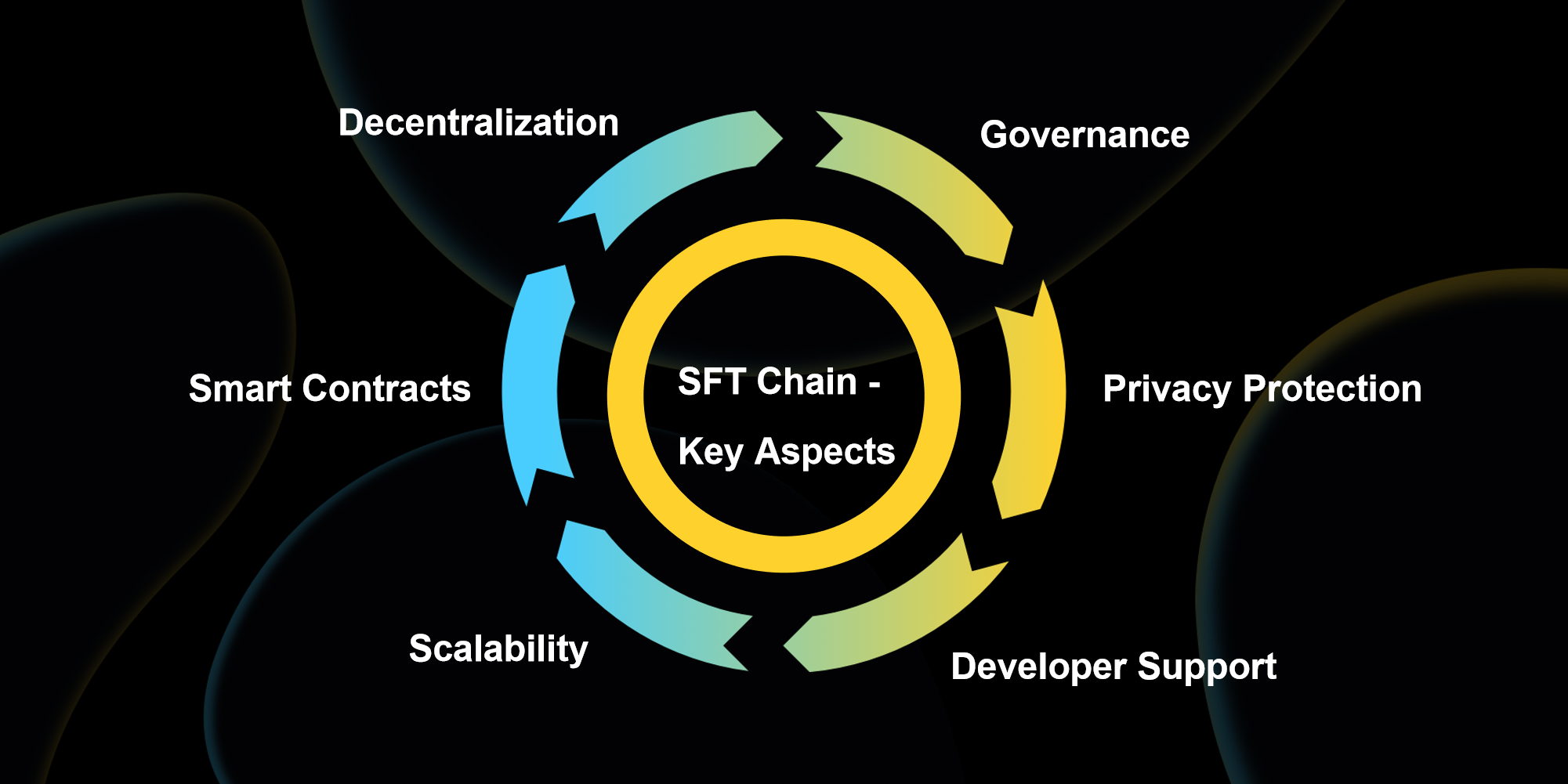
The key services provided by SFT for data include decentralization, DAO governance, smart contracts, data privacy protection, scalability, and developer freedom.
4. SFT overall technical architecture
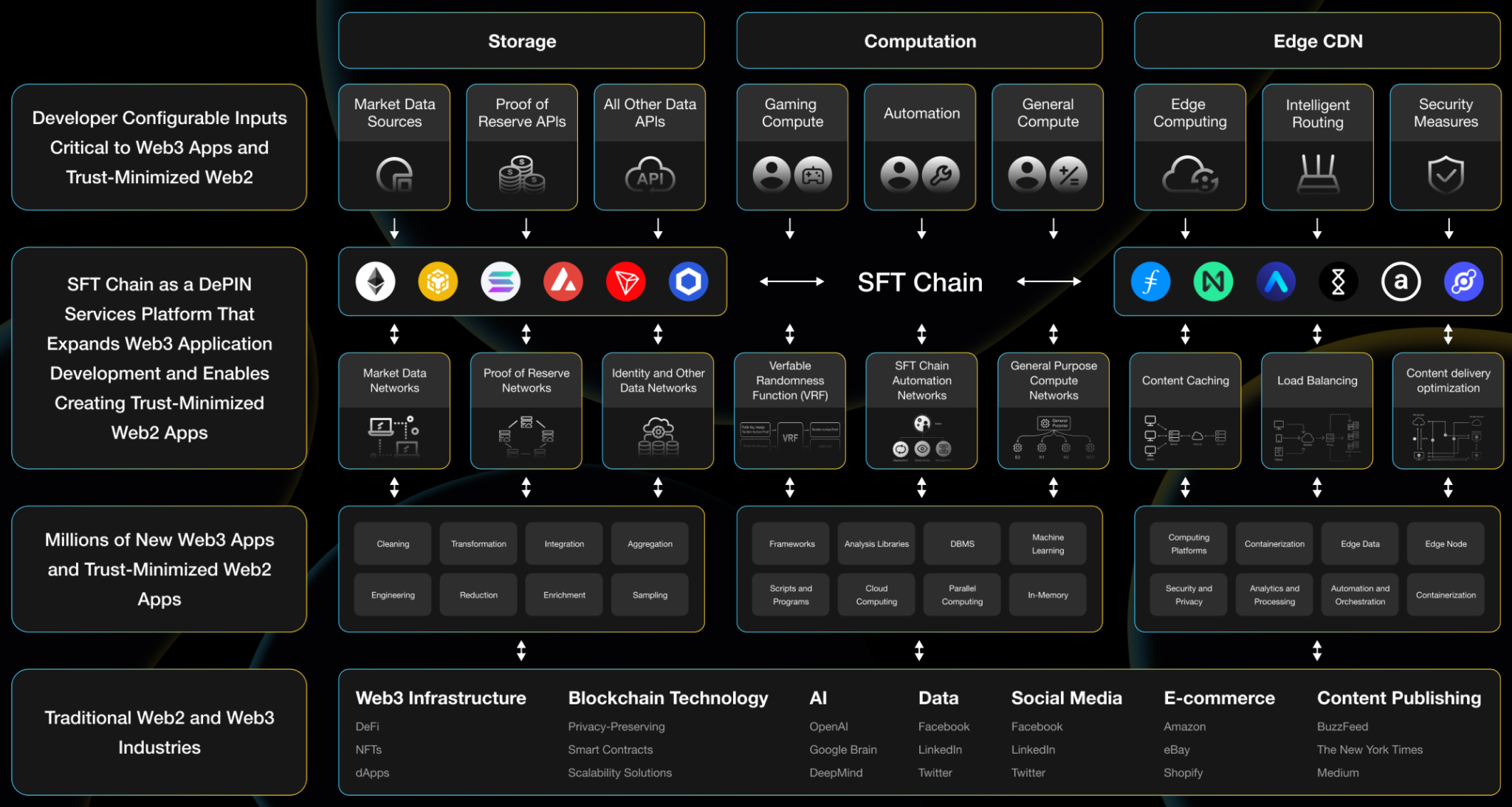
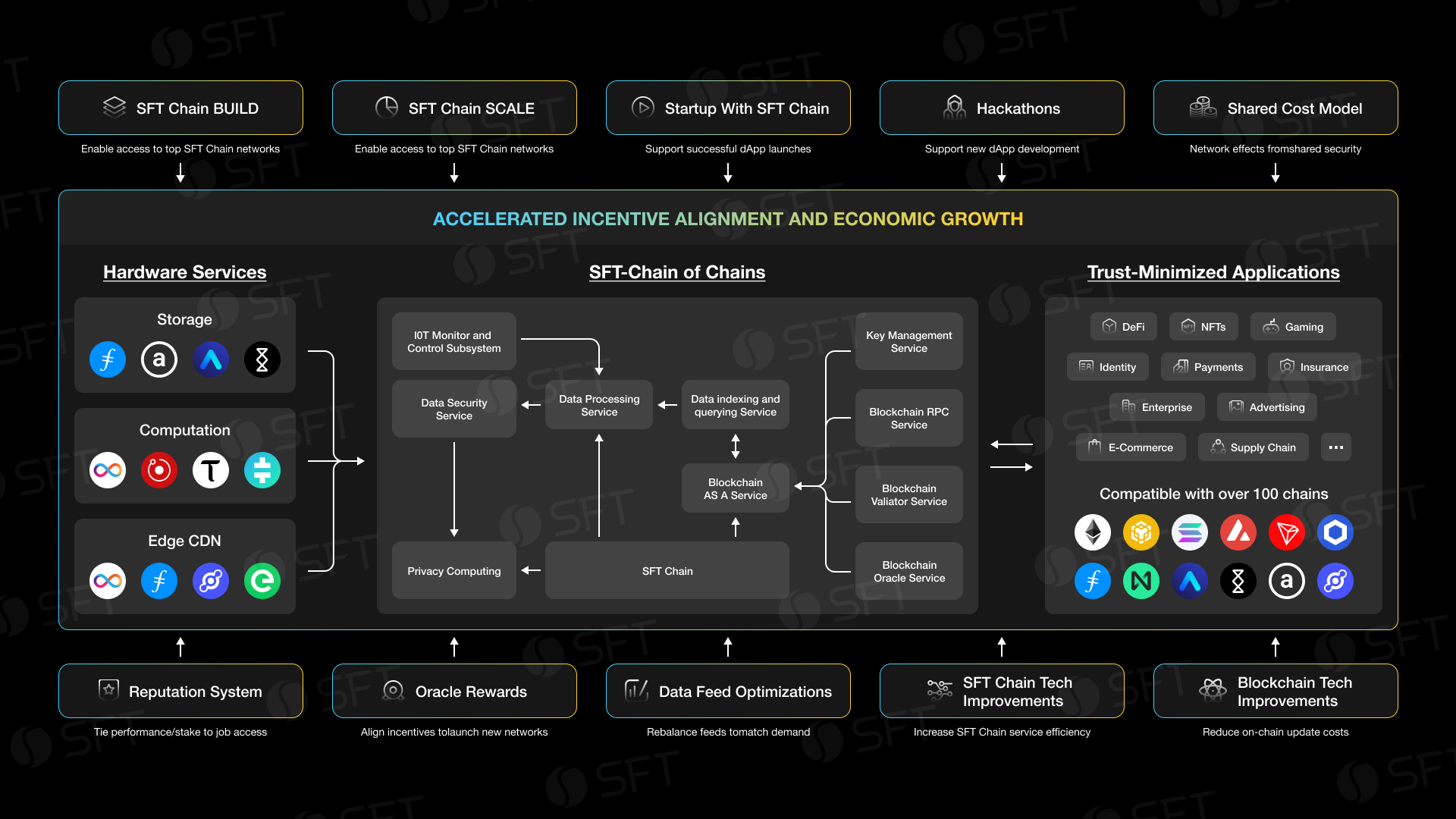
Brief description:
4.1 Developers can freely configure data parameters for data retrieval, storage, encryption, verification, calculation, etc., serving Web2/Web3.
4.2 High degree of scalability is based on hardware infrastructure, compatible with various blockchain ecosystems, and enables free transmission of data and application services.
4.3 The service application ecosystem meets thousands of new Web3 applications and trust-minimized Web2 applications, and realizes high-speed data transmission and verification through the SFT Chain interface.
4.4 Industry support includes Web3 infrastructure, blockchain technology, artificial intelligence, data storage and transactions, social media, e-commerce, news media, etc.
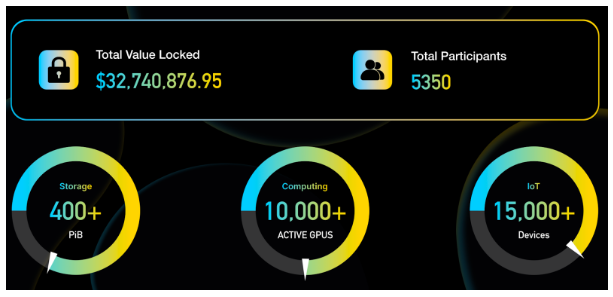
5. Current SFT-DePIN ecological development situation
6. SFT Chain roadmap
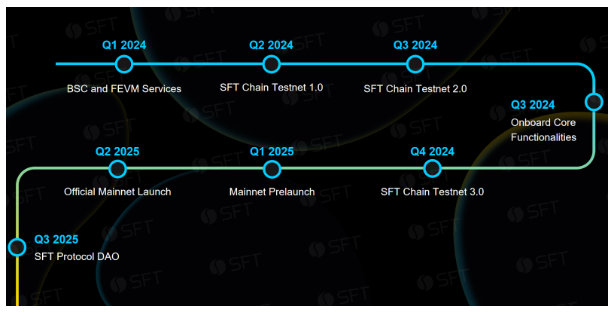
7. DeFi ecology on SFTChain
The mainnet of SFT Chain has not yet been launched, but the project is about to release a testnet to provide developers and community members with the opportunity to test and explore the functions and performance of the chain in a real environment, laying the foundation for the mainnet to be launched. At the same time, community members can still participate in the early hardware infrastructure construction of SFT Chain and the development of the DeFi ecosystem through rSPD points.
7.1 What is rSPD?
rSPD is the early points of SFT Chain, which are obtained through incentives, community activities, etc., and will be converted into SPD at a ratio of 1:1 in the future. In the early stages before the SFT Chain mainnet goes online, rSPD serves as points and assumes the testing function of SFT-DePIN infrastructure redemption. rSPD, as points, can be used to redeem infrastructure in storage, computing, edge CDN and other fields built by SFT Chain.
7.2 LSD-DeFi
7.2.1 6-month regular farm (maximum airdrop incentive)
All addresses that have participated in the regular farm for 6 months will receive massive airdrop incentives before the mainnet is launched (specific details await official announcement); in the current activities, by staking FIL to the farm with one click, you can obtain At the same time as daily FIL, the daily income of 10 times rSPD is enabled.
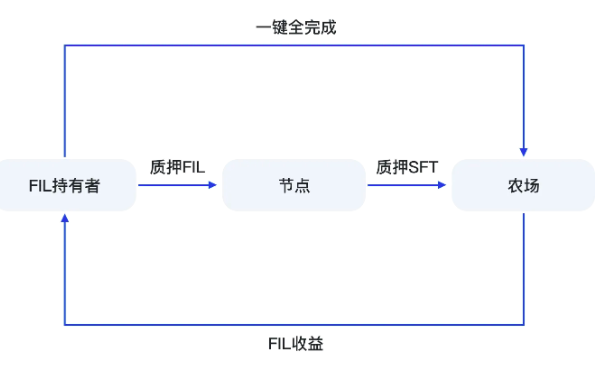
SFT Chain introduces an automated staking and casting mechanism, which significantly improves the convenience of asset management. For example, if a user holds FIL, they only need to pledge FIL tokens directly to the node, and the contract will automatically mint the corresponding amount of SFT at a ratio of 1:1 and pledge it to the farm, without cumbersome operations. This design makes SFT not only a computing power certificate for FIL holders, but also a symbol of income rights. At the same time, users can redeem FIL in real time at any time through the redemption interface to ensure the liquidity of their assets.
7.2.2 Liquidity pool deposit
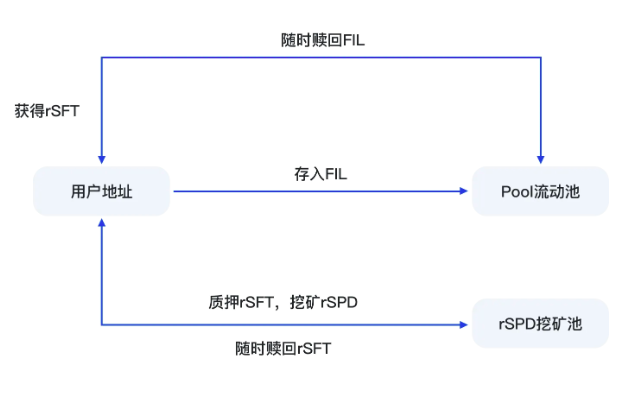
The FIL liquidity pool under the SFT protocol is a liquidity mortgage and leverage mining liquidity pool built on Filecoin Virtual Machine (FVM). The protocol allows users who hold FIL tokens to obtain stable income without a lock-up period, while providing loan services to users who need FIL liquidity.
Income 1: Income from FIL deposited in the Pool liquidity pool.
Income 2: rSPD income, which is 2 times the income of Pool liquidity pool FIL (pledged rSFT)
7.2.3 Build LP and pledge to earn Spacemesh/ALEO
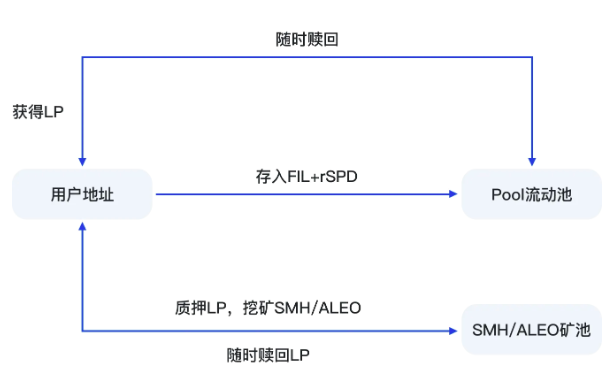
7.2.4 SFT Chain Sushi-LP pledge liquidity pool
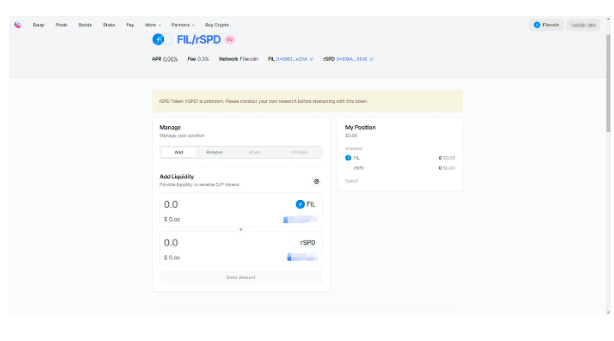
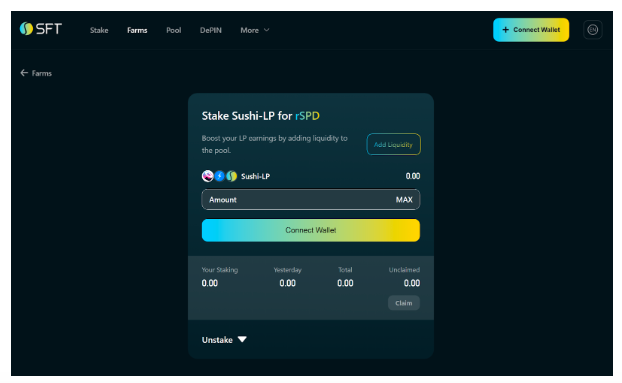
The Sushi-LP Liquidity Pool is an opportunity that SFT Chain provides users with the opportunity to provide digital assets to the liquidity pool and receive rewards, which will increase the liquidity, value discovery and decentralization of rSPD.
7.2.5 SFT Chain-CESS Creation Node
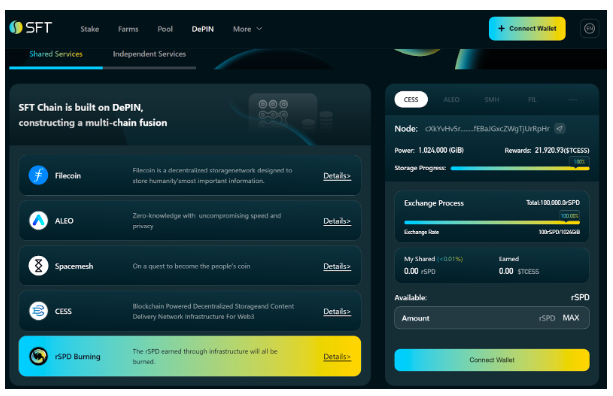
Recently, SFT Chain and CESS officially reached a strategic cooperation to provide infrastructure services for genesis nodes. Participants can participate in the construction of genesis nodes through rSPD:
The official details are:
Any user holding rSPD tokens can participate. You can get a share of the 1000 T-CESS hardware infrastructure node by transferring rSPD into the contract of SFT Chain, thereby participating in the operation of the node, and the rSPD transferred into the contract will be destroyed immediately.
In addition to the infrastructure node share, SFT Chain will also build an additional 1000 T-CESS independent nodes. Different from infrastructure nodes, the income rights of these independent nodes will belong to the reserve pool to provide support for the stability and development of the entire network.
The SFT-DePIN hardware infrastructure is continuously expanding its service scope to cover more genesis nodes. This means that the expansion and stability of the network will be further improved, providing users with a better experience.
It should be noted that although SFT Chain’s CESS node has been online, the test network is still not equivalent to the main network. Therefore, final rewards will be distributed according to the CESS Official Rules. Every effort will be made to ensure fairness and transparency in rewards.
8. DePIN activities on SFTChain
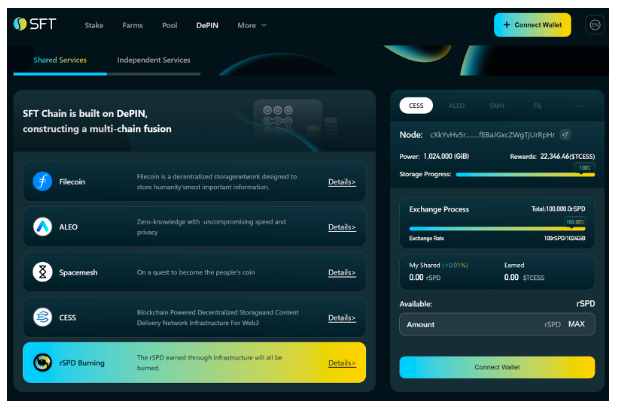
SFTChain is a public chain with infrastructure integration, covering storage, computing, CDN and other fields, aiming to provide users with hardware services to participate in early testing.
Currently underway, storage public chains include Filecoin, Spacemesh and CESS; computing public chains include ALEO and IO.NET.
Upcoming projects include Render Network, CDN, ICP, etc.
9. End
9.1 SFT Chain of Chains proposes the concept of building multi-chain integration based on hardware infrastructure, providing bridging services for Web2/Web3 users, DApps and enterprises, achieving distributed operation, higher scalability, and lower maintenance operations costs, lower usage fees, and more stable infrastructure.
9.2 After 1 year and 6 months of development, SFT Chain has completed the early launch of the DePIN network and is in a relatively mature stage. With a large-scale node group and growing TVL, transaction volume, and community size, it is heading towards sustainable development. One stage transition.
9.3 SFT Chain is a multi-chain integration platform that aims to establish a decentralized physical infrastructure network (DePIN), connect physical infrastructure and Web3 application chains, and provide users with open and inclusive service options. Through strategic cooperation with multiple partners, SFT Chain has launched Filecoin, Cess, Spacemesh and other infrastructure to jointly promote the development of decentralized physical infrastructure networks.
9.4 SFT’s automated pledge and casting mechanism enables users to manage assets more conveniently and ensure the liquidity and security of assets. SFT Chains DeFi ecosystem is gradually improving, providing users with a wealth of ways to participate and earn through rSPD points and multiple liquidity pool mechanisms.
We look forward to SFT Chain bringing more innovations and possibilities to the construction of physical infrastructure network DePIN and the development of Web3 applications, and contributing to the realization of an open, free, and trustworthy blockchain world.


