What other potential airdrop opportunities can you get by staking TIA? (Attached is TIA staking tutorial)



Celestia is a modular blockchain project focusing on data availability. Recently, the price trend of its native token TIA has been strong. According to CoinGecko data, as of the time of writing, the price of TIA was US$11.5, with an increase of 123.7% in the past month. Today’s price has declined, with a 24-hour decrease of 4.3%. TIA currently has a market capitalization of $1.677 billion, ranking 44th among cryptocurrencies.
Related Reading:A quick look at the design advantages of modular blockchain Celestia and the market value potential of TIA tokens in one article》
Combined with Celestias business model, we can find that TIA has many application scenarios. Users can stake TIA to participate in consensus and protect Celestia. The more valuable the token, the more secure the network. In addition, developers can use TIA as Gas to start Rollup; and Celestia, as a mainstream project in the Cosmos ecosystem, will certainly not abandon the model of staking to earn airdrops.
As the popularity of the Cosmos ecology rises, there are also voices in the community discussing staking TIA, and it is said that projects in the Celestia ecology will issue airdrops for TIA staking in the future. Combining the Cosmos ecological tradition and Celestias airdrop distribution method, perhaps next year a group of projects will adopt this method to issue airdrops. Therefore, BlockBeats has compiled the TIA staking process for readers’ reference, and also sorted out the projects in the Celestia ecosystem that can pledge TIA to obtain potential airdrop opportunities.
How to stake TIA?
The Celestia official website provides two ways to pledge TIA, namely the Keplr wallet channel and the Leap wallet channel; as of press time, the APRs of the two staking channels are 16.98% and 16.13% respectively.
Use Keplr wallet to stake TIA
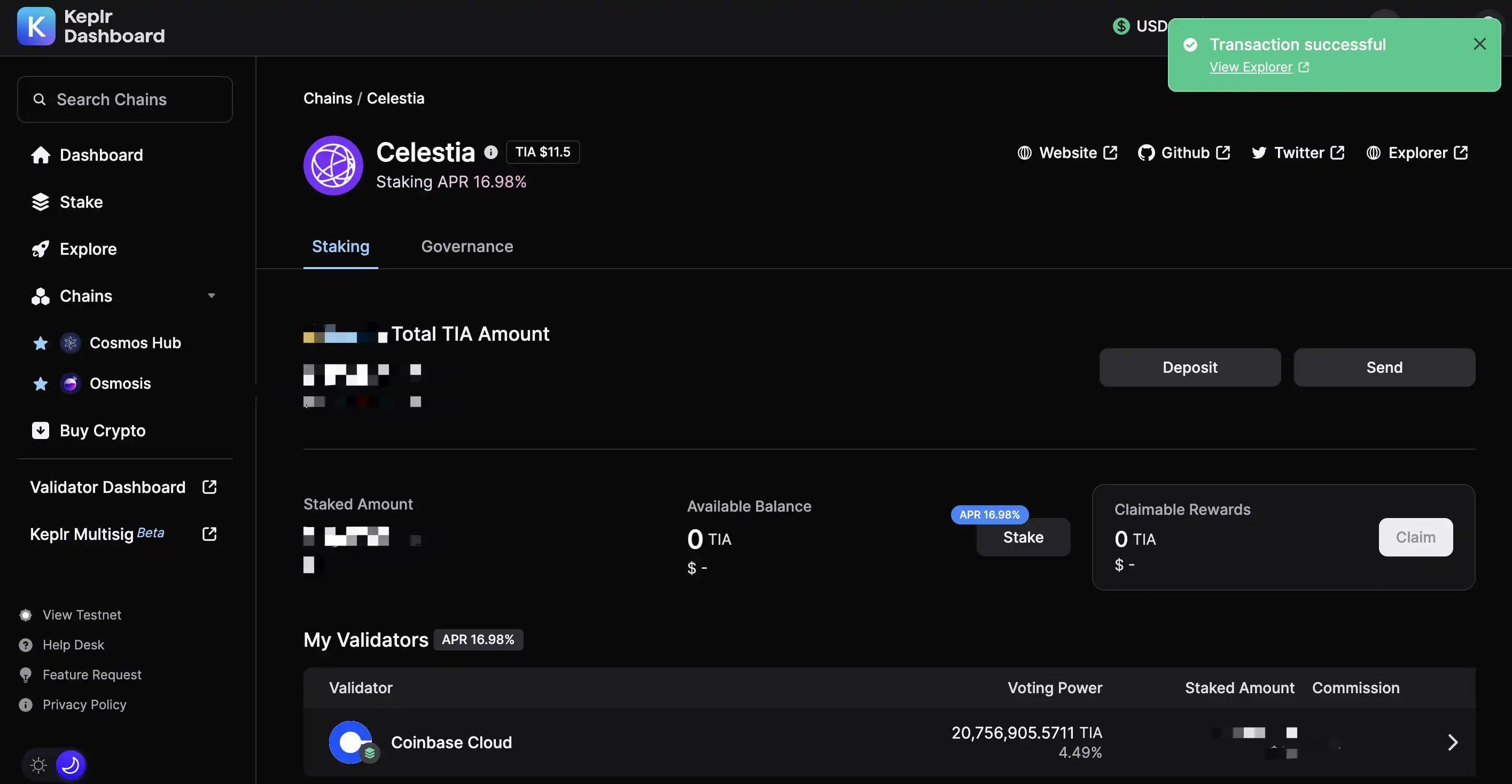
1. Open the Keplr wallet Staked interface and select Stake with Keplr Dashboard;
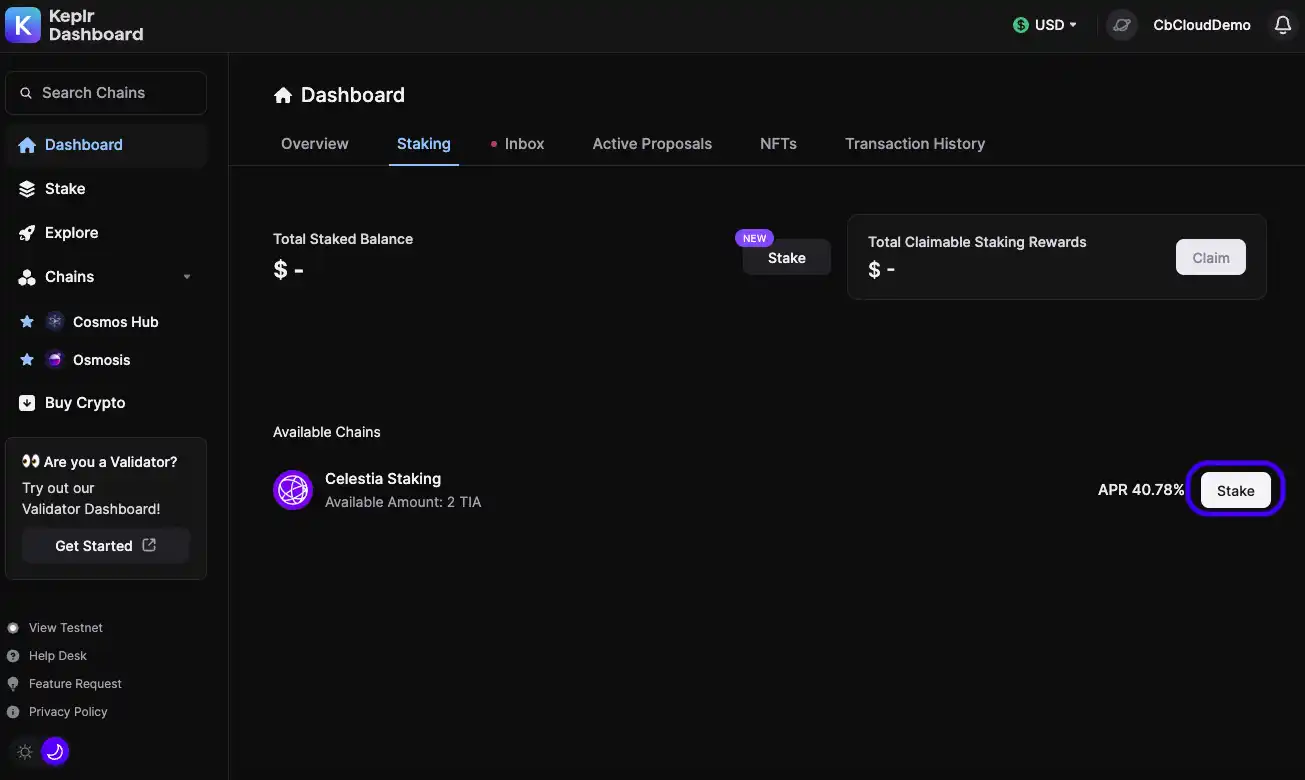
2. If there is TIA in the wallet, you can see the Celestia staking option and click the Stake button;
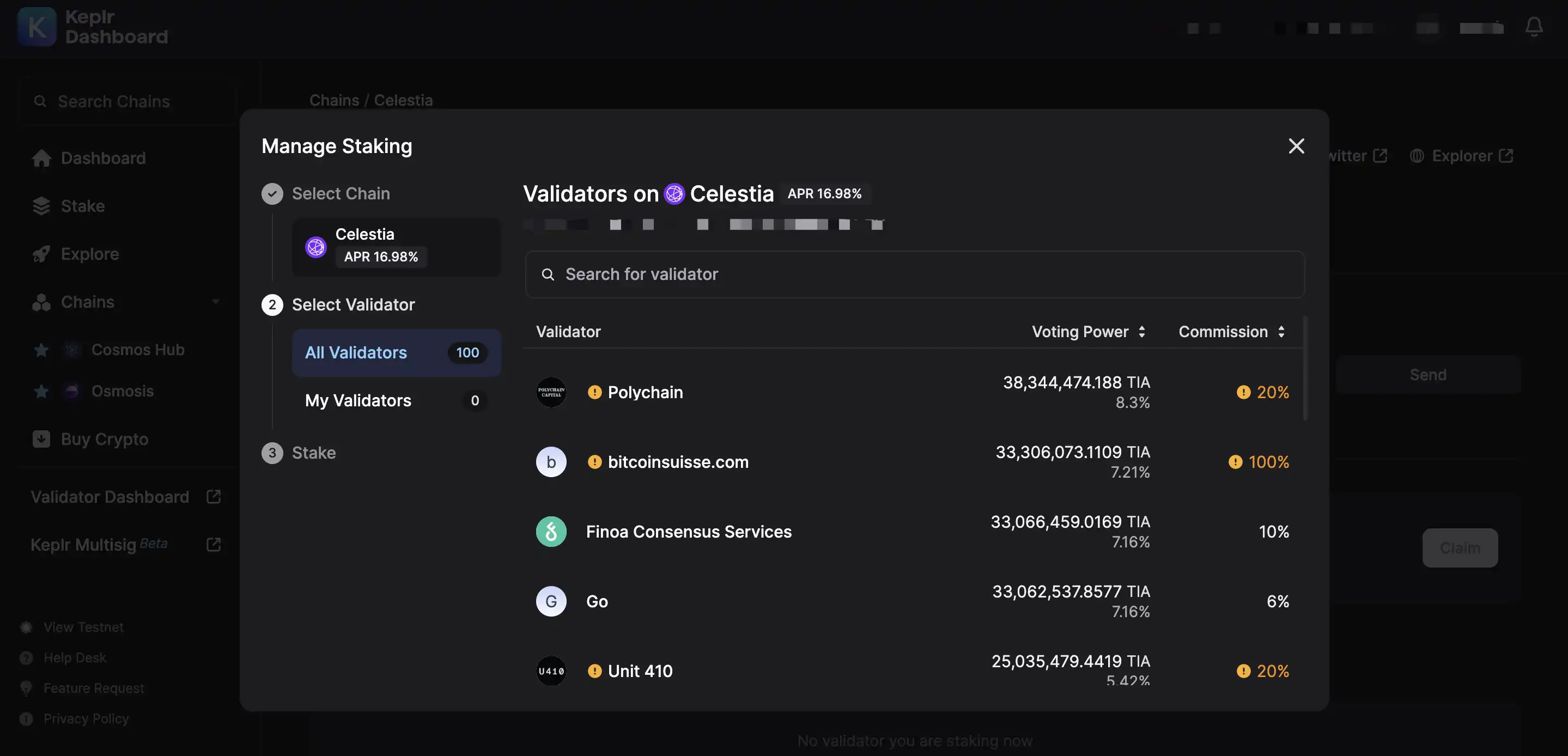
3. Select the Celestia network and select the authenticator;
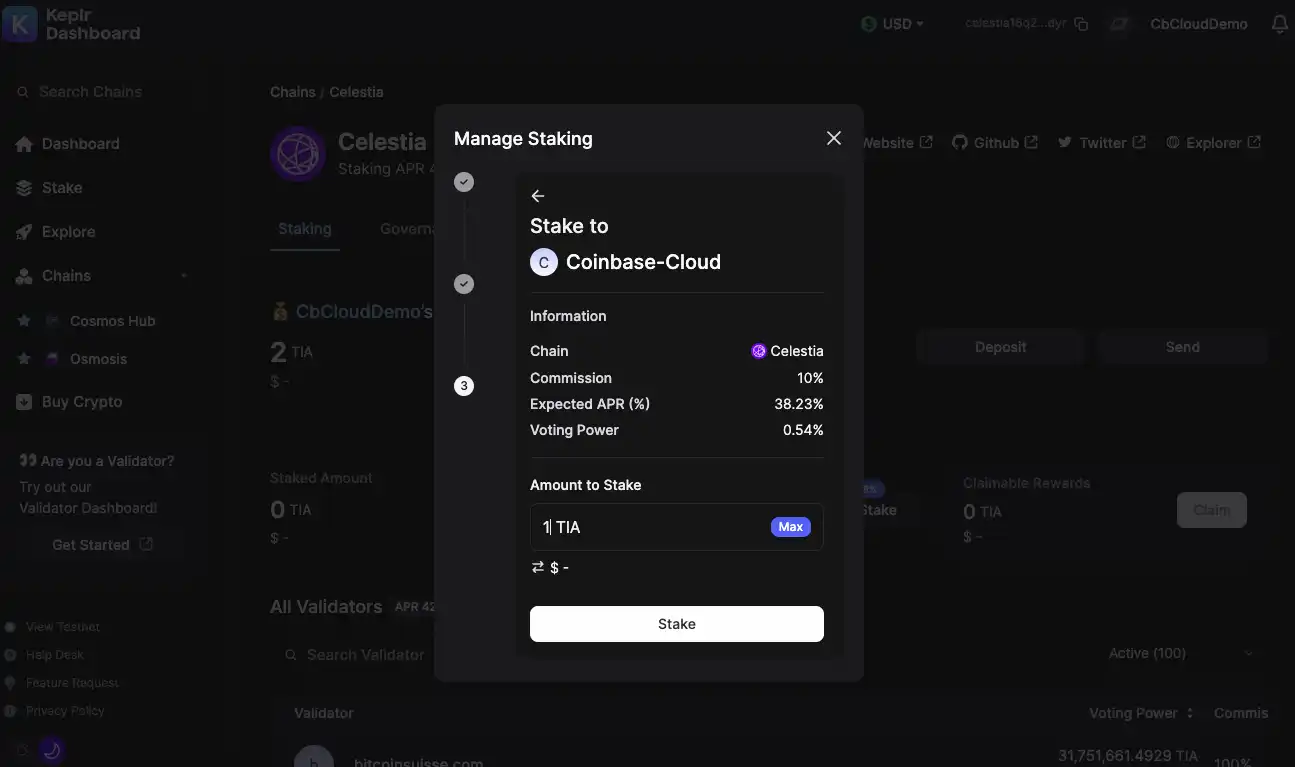
4. Here, take Coinbase Cloud as the Validator as an example, enter the number of TIA tokens you want to pledge and select Stake;
5. If everything is normal, after confirming the transaction, you can view the Celestia staking interface to receive rewards, cancel staking, re-delegate or pledge additional tokens.
Use Leap wallet to stake TIA
The second official staking method is to use the Leap wallet.
1. Click on the upper right corner of the Leap plug-in to select the Celestia network and enter the Stake interface;
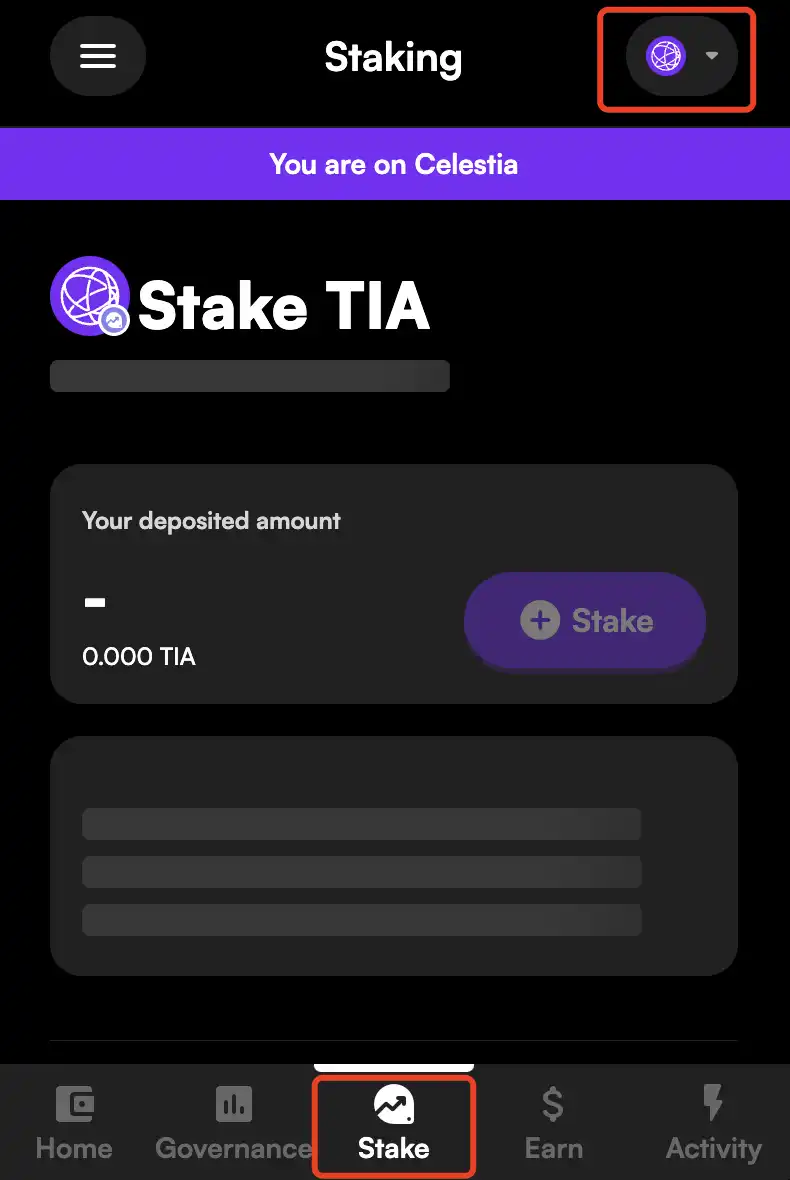
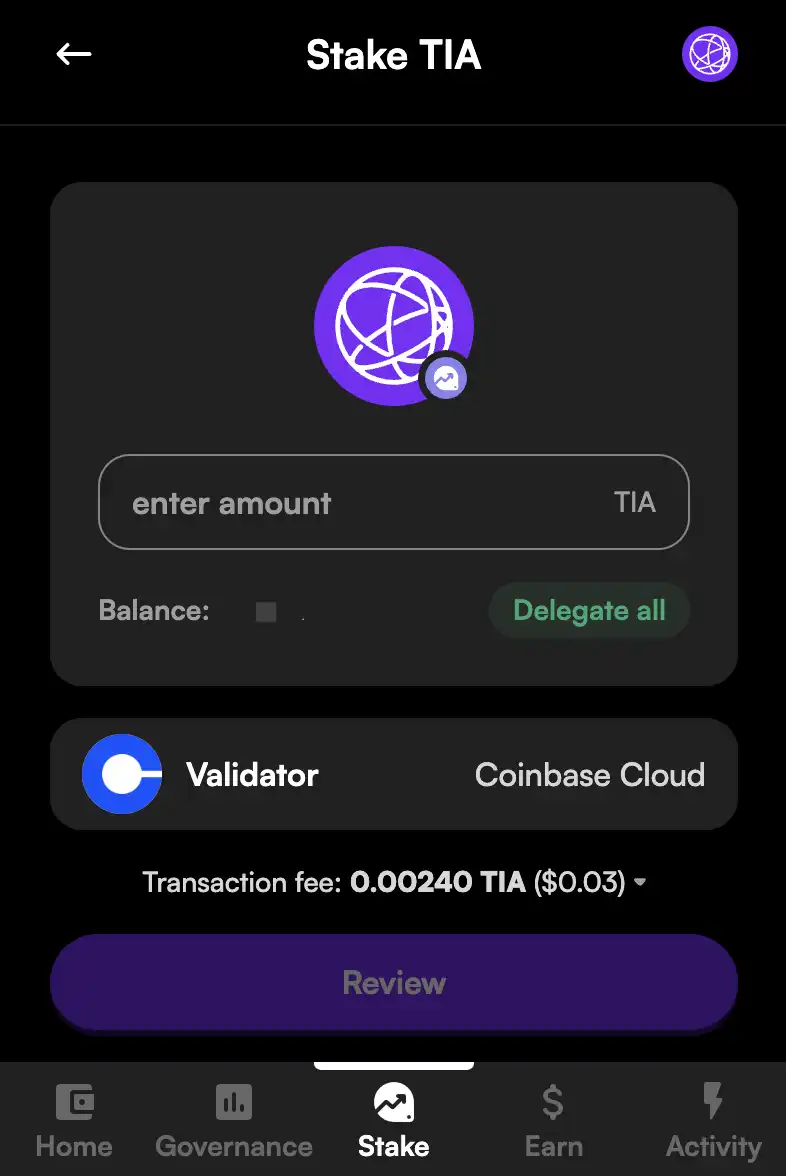
2. Click TIA Stake and select the validator. Here we take Coinbase Cloud as an example. Search for Coinbase Cloud validator and click;
3. Enter the amount of TIA you want to pledge, and then click Review to confirm the transaction.
What are the potential airdrop opportunities?
Berachain
Berachain is a high-performance EVM-compatible blockchain built on the Proof of Liquidity consensus. By combining Cosmos native consensus mechanism Tendermint with its own Proof of Liquidity, and using Celestia as the DA layer, it can provide Faster transaction speeds, lower transaction costs and instant finality.
In April this year, Berachain completed US$42 million in financing, led by Polychain Capital, with participation from Hack VC, dao 5, Tribe Capital, Shima Capital, Robot Ventures, Goldentree Asset Management, and OKX Ventures.
Berachain abandons the single native Token economic model commonly used in traditional public chains. Its team believes that every decentralized economy should have three main parts that are critical to operation:
The first is the medium of pricing and execution (Gas), which is used to price work units and execute work with smart contracts; the second is the medium of consensus and decision-making (governance), which is used to organize democratic functions and reach consensus and decisions; the third A medium for transactions through a common stable denomination (stable).
Therefore, Berachain uses the corresponding Tri-Token economic model:
1. $BERA: Gas Token of Berachain.
2. $BGT: Berachain’s governance token, which can vote on new whitelisted assets. $BGT is non-transferable and can only be obtained by staking $BERA, which ensures long-term consistency for users.
3. $HONEY: Berachain’s native over-collateralized USD stablecoin. $HONEY is the Money of the Berachain ecosystem and is the payment method by which protocol revenue is paid to stakers. Will be overcollateralized by at least 150% to ensure peg to USD.
This economic model is called Tri-Token by the development team, and each Token is assigned a unique role to encourage long-term use by users and maintain consistent liquidity on the chain.
Manta Pacific
Manta Network is a modular blockchain based on ZK applications. Manta Pacific is a modular L2 ecosystem for EVM native ZK applications and dApps. It is also the largest ecological network on Celestia facilities. It launched its mainnet on September 12 this year. Alpha version.
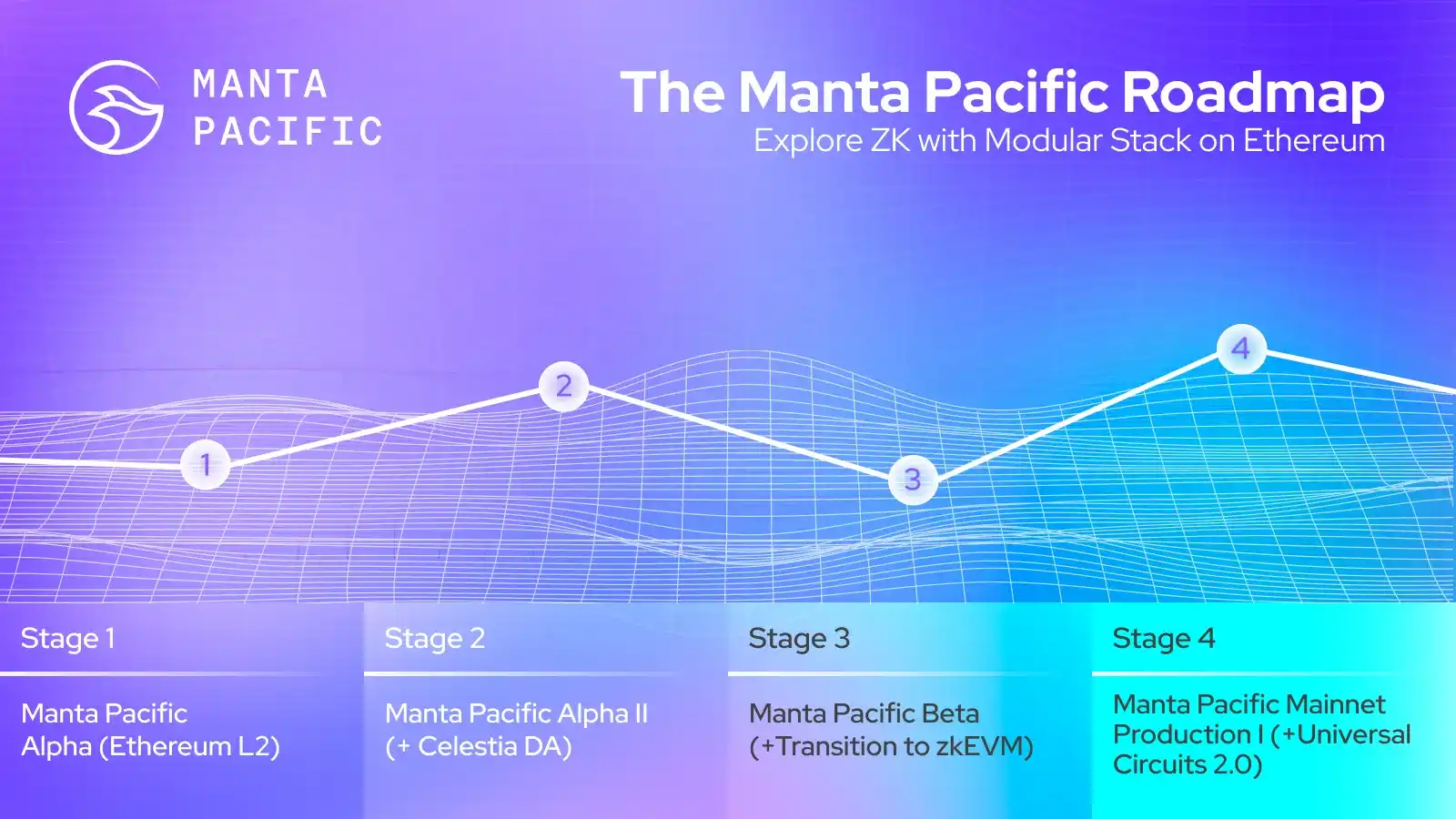
Currently, the roadmap released by Manta Network shows that it will go through four stages before launching the main network, namely Manta Pacific Alpha version, Manta Pacific Alpha II, connecting to Celestia DA; Manta Pacific Beta, transitioning to zkEVM; and finally, for the Manta Pacific main network network, Manta Pacific will further upgrade general circuits to achieve lower gas costs.
Eclipse
Eclipse is a modular settlement layer that can create custom execution chains by selecting the required consensus and DA layers. Eclipse supports EVM and SVM on the execution environment, and plans to support more virtual machines in the future, while also on the DA layer. Already supports Celestia, and may support protocols such as Eigen DA and Avail in the future.
In 2022, Eclipse completed a $15 million Pre-Seed and seed round of financing, of which the earlier $6 million Pre-Seed round was led by Polychain, and the $9 million seed round was jointly led by Tribe Capital and Tabiya.
In September this year, Eclipse released its mainnet architecture, which will use Ethereum as the settlement layer, run the Solana Virtual Machine (SVM) as the execution environment, publish data to Celestia to implement scalable DA, and complete ZK fraud proof through RISC Zero. In addition, officials also stated that the mainnet is expected to be launched before the end of this year.
Polymer Labs
Polymer Labs is a modular network protocol built on IBC, aiming to achieve a decentralized, secure and permissionless cross-chain network. In March 2022, Polymer announced the completion of a US$3.6 million seed round of financing, led by Distributed Global and North Island Ventures. In April of the same year, Polymer Labs and Celestial reached a cooperation to introduce IBC to Optimistic rollups.
In addition to the above ecological projects that are closely related to Celestia, you can also check more ecological projects at https://celestia.org/ecosystem/.