






Q3 Cryptocurrency Market Review Report: The overall market is weak, but there are still bright spots worth paying attention to


Original text: Crypto Market Recap Q3 2023
Author: CryptoRank
Compiled by: Odaily How about
Recently, CryptoRank released the Q3 Cryptocurrency Market Review.
Report shows that cryptocurrencies fell further in the third quarter of 2023, mainly due to lower trader interest and lower trading volume; SEC continues to boycott cryptocurrency ETFs; Friend.tech strives to bring DeFi back into the trend; Telegram bot makes crypto trading threshold Reduced; the DeFi field still has growth potential; token sales and fundraising have stagnated; on-chain data continues to grow; and the NFT market remains in a sluggish state.
Overall, the crypto market is not doing well, but there are still some positives.
The following is the original text of the report, compiled by Odaily.
Cryptocurrencies fell further in Q3 2023. During the summer, the crypto market gradually cooled down, with most assets losing value throughout the quarter. The decline is largely attributable to difficulties in July. It is worth noting that trader interest has decreased significantly, and trading volume and volatility have decreased, which proves a stage in the market cycle and indicates the final stage of a possible shift to a bear market.
The main points
Although market prices are down overall, the situation is not as bad as it could be
SEC continues boycott of cryptocurrency ETFs
Friend.tech puts SocialFi back on trend
Telegram bot makes on-chain transactions easy
DeFi’s new growth point
Cryptocurrency funding remains stagnant
The situation on the chain remains optimistic
market review
The top 100 cryptocurrencies had a disappointing third quarter. Most coins are trading in the red zone, but there is no clear trend. The heat map is like a Christmas tree, mixed with green and red. During this time, some coins performed well while others gradually declined.
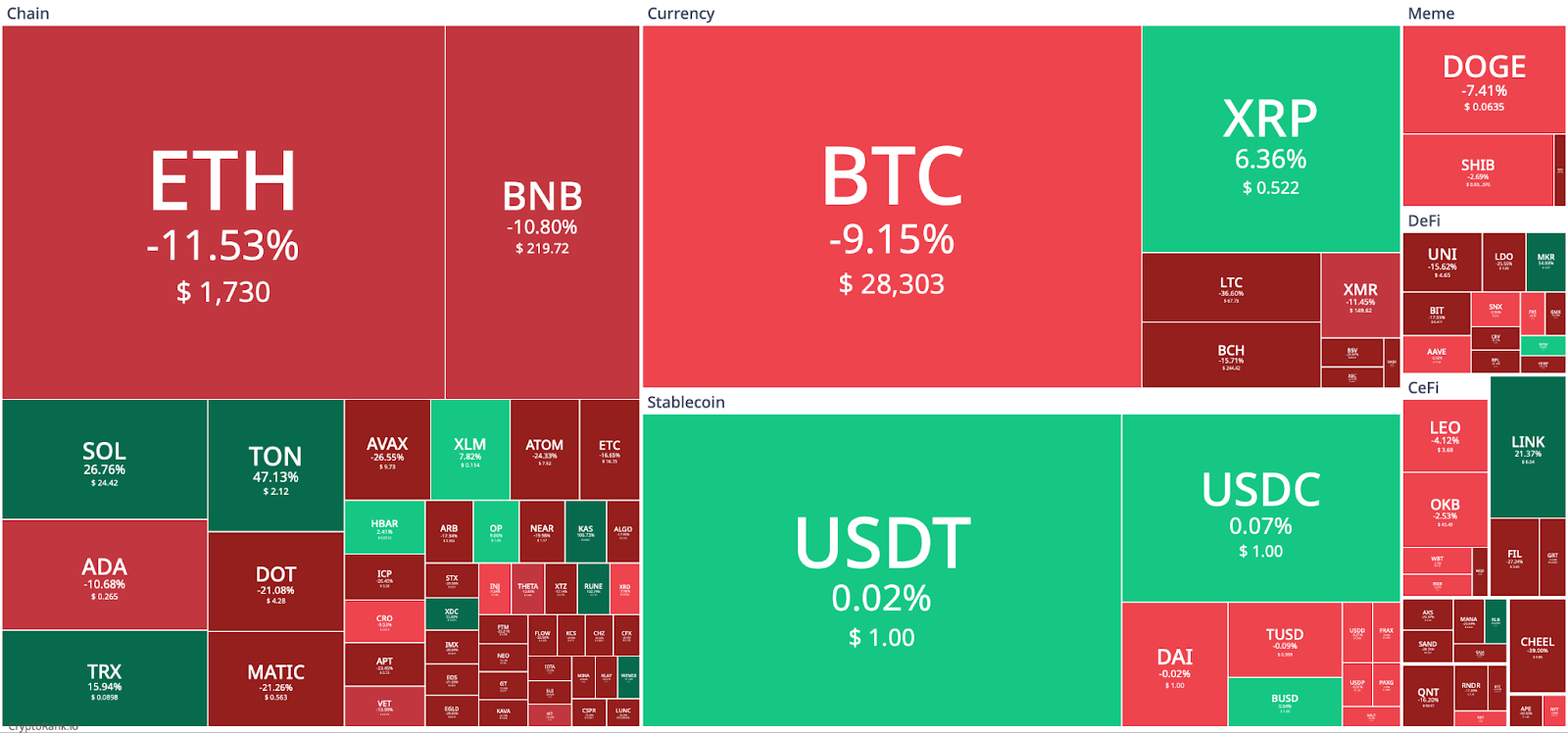
Bitcoin and Ethereum ended the third quarter down almost 10%, and many other altcoins also fell. Notably, several blockchain tokens including MATIC, AVAX, ATOM, and ARB performed much worse than Ethereum.
There were a few projects that were successful during the quarter. One notable project is Solana, which experienced a significant performance decline following the FTX incident. Despite fear, uncertainty and doubt (FUD), prices ended the quarter up 27%. TON coin is an unexpected addition to the top ten cryptocurrencies, having experienced a significant 47% price increase following news of Telegram’s web3 integration.
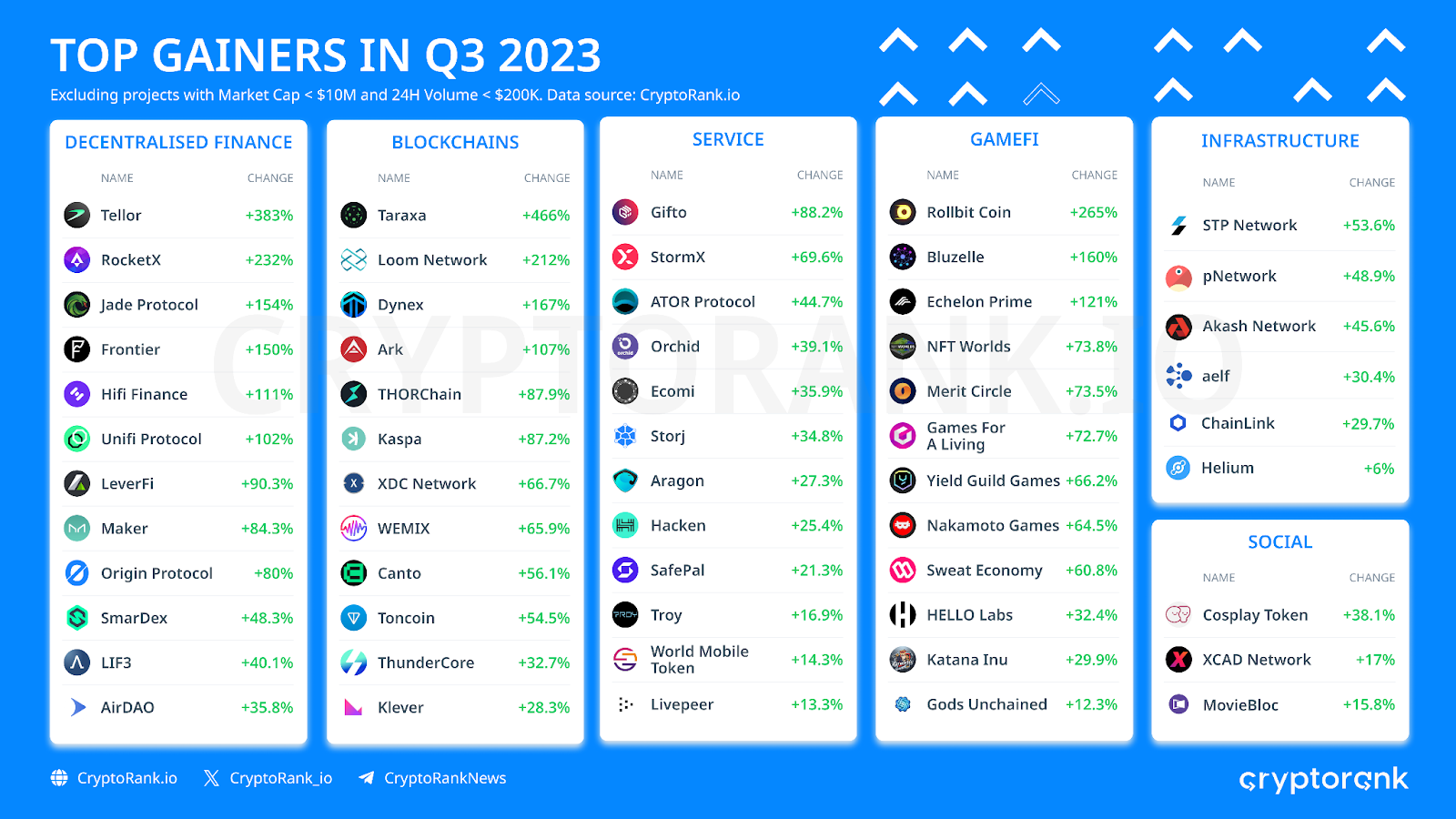
The gainer list contains a variety of projects, but there is still no trend or narrative that is driving the entire industry, similar to DeFi in 2020-2021, GameFi in 2021, or even artificial intelligence in early 2023. Even the new SocialFi DApps we profiled in this article won’t be able to move the industry forward.
As for Bitcoin, this quarter has been quite dismal. Since falling below $28,000 in mid-August, bulls have been unable to push its price above this level. Even the positive news surrounding Grayscale’s court victory wasn’t enough to push the price of Bitcoin higher.
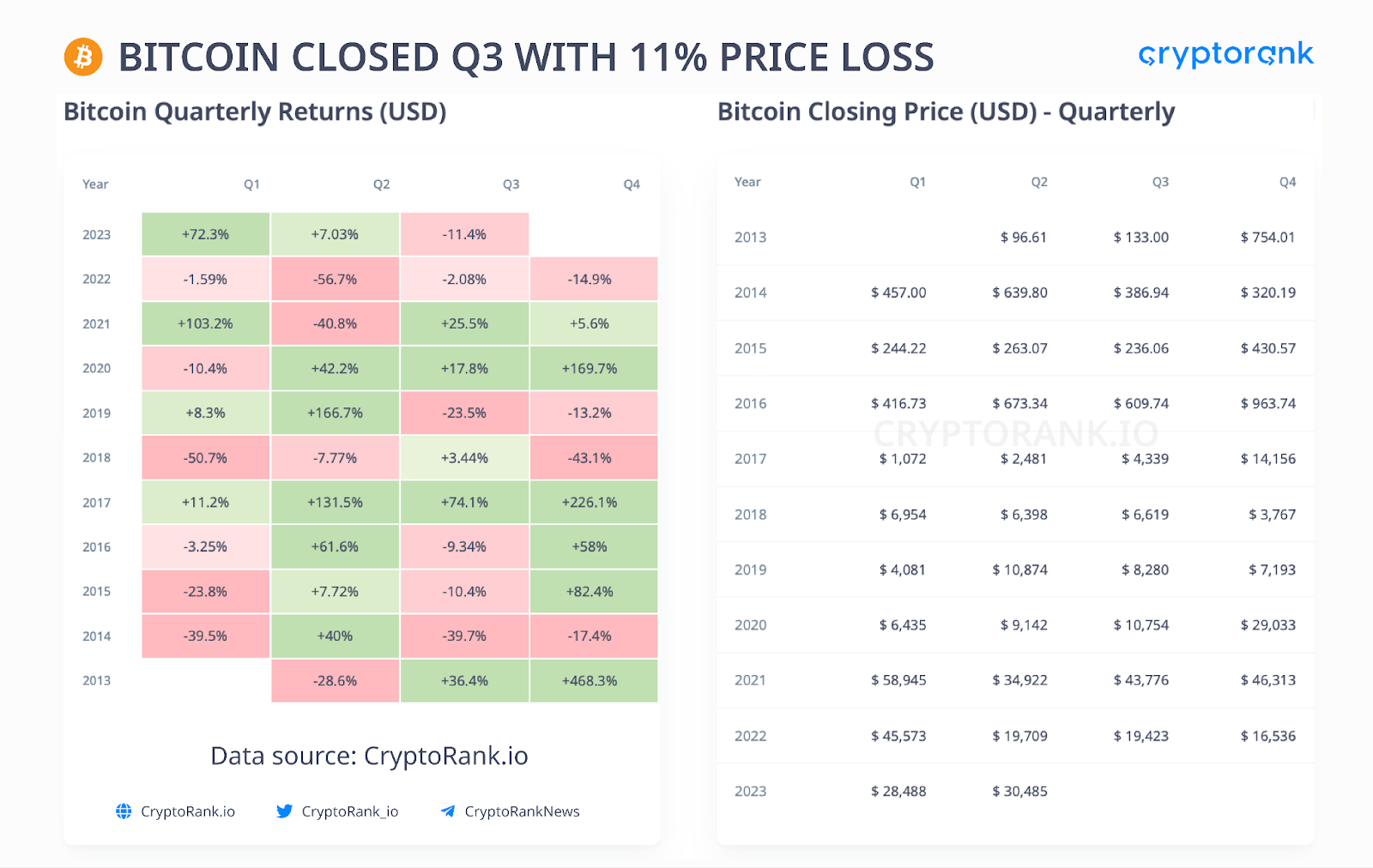
But there are some positives. October is usually the best month for cryptocurrencies, and its first few days have proven that once again. The fourth quarter is also a good time for financial markets and cryptocurrencies, with many traders expecting the market to be filled with optimism.
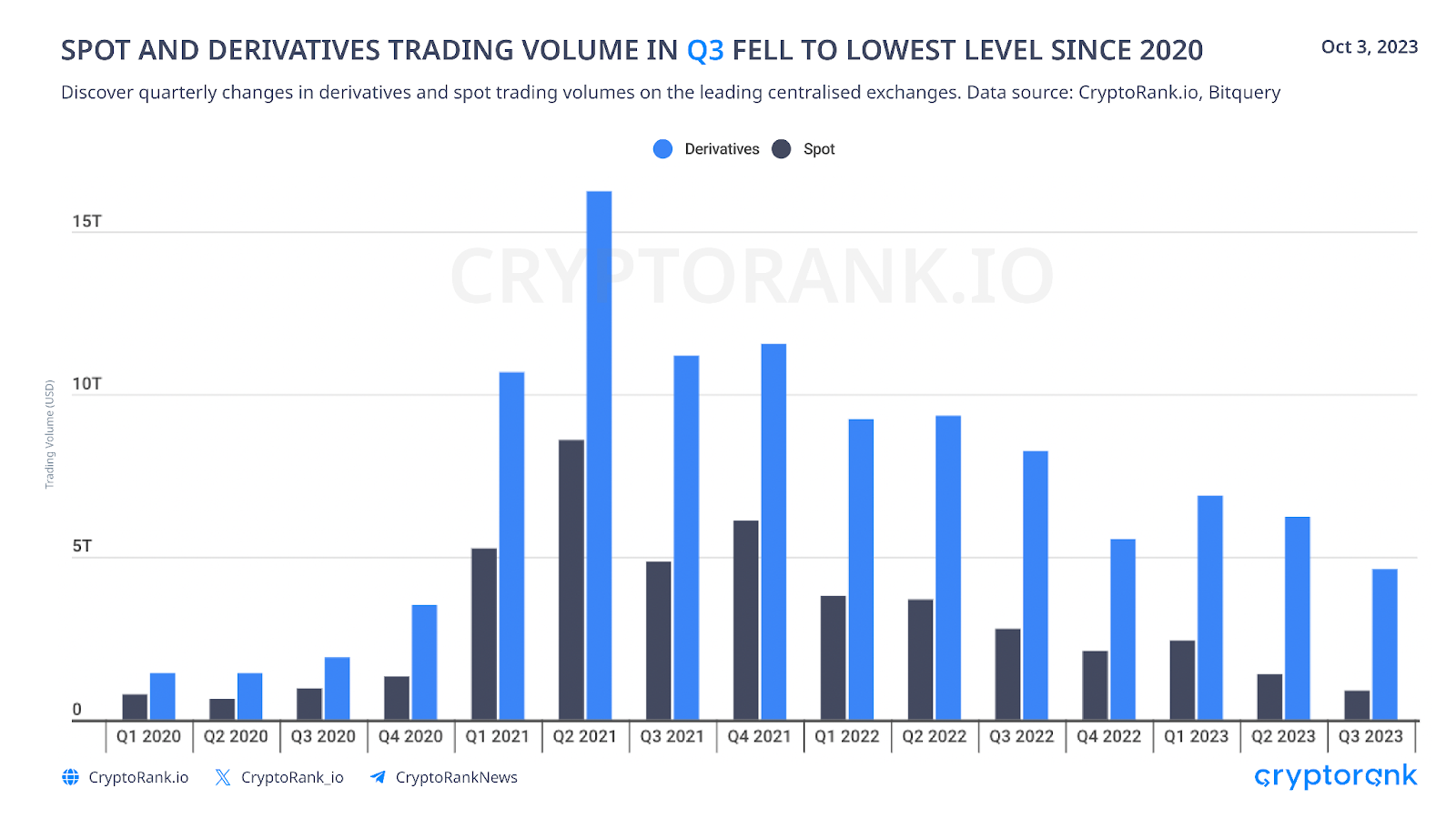
Trading volumes on the exchange have continued to decline since the start of 2023. As trading volume decreases, volatility also decreases, resulting in lower profitability. Many assets trade within a narrow range for considerable periods of time, which reduces market participants interest in trading.
News and news
We cover the key events of July and August in our monthly review. But September ushered in some new stories that had a major impact on the market. Let’s take a closer look:
SEC continues to delay cryptocurrency ETFs
One of the hottest topics in the second half of the year is the launch of Bitcoin and Ethereum ETFs. The market is eagerly awaiting the moment the SEC changes its stance and approves the first spot ETF. But all were seeing now is applications being delayed.
The Bitcoin ETF first sparked interest, and later the Ethereum ETF got involved. Its important to note that were referring to spot instruments, while futures ETFs are already traded in the United States.
The consequences of the proliferation of these tools are unclear. Currently, the market has no unified stance on whether companies like BlackRock have purchased Bitcoin.
The new narrative: SocialFi
The launch of Base Blockchain is truly remarkable. Weve provided detailed coverage in our previous review . Now, our focus turns to the most interesting app on Base, Friend.Tech.
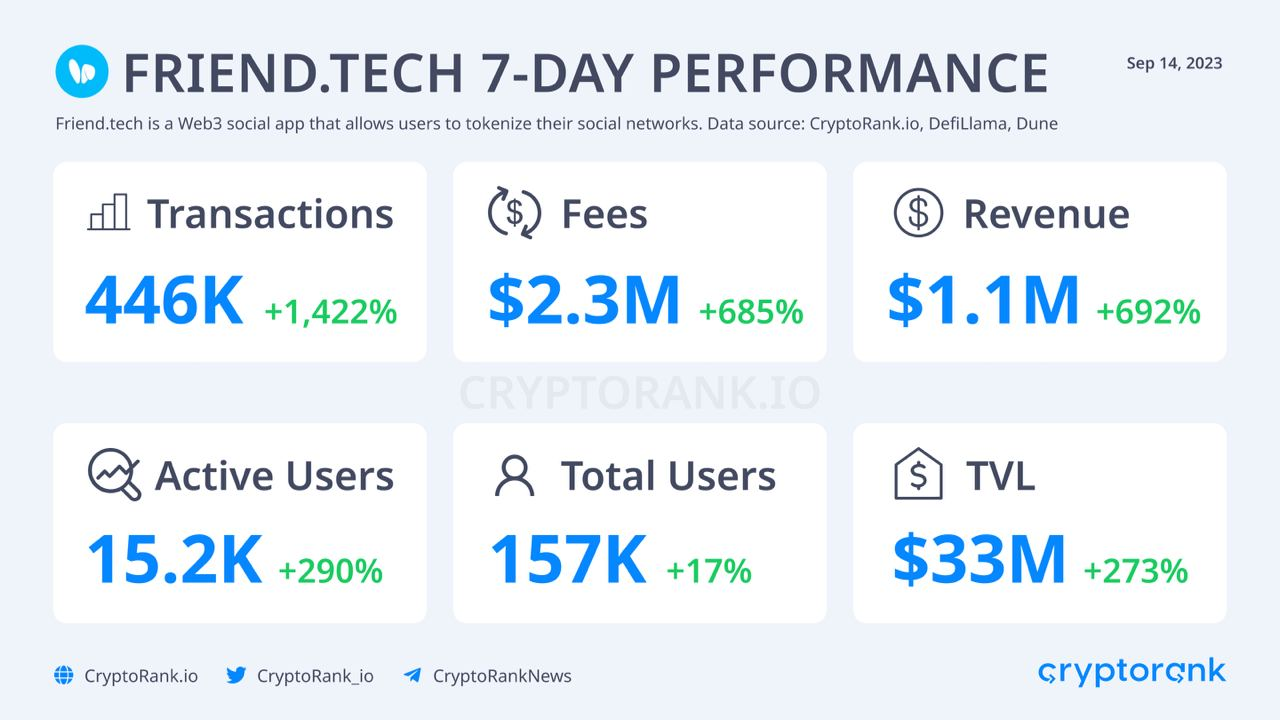
Unfortunately, most of the activity on friend.tech consists of speculators and traders. Currently, the app is mainly used for making money, such as trading keys or airdropping points, and is rarely used for socializing.
Friend.Tech started the trend of social apps, followed by imitations on Arbitrum, Avalanche and other blockchains. While these imitation disks make the concept more convenient, they do not solve the fundamental problem: for most users, they are simply a means to make money in a frictionless market.
Telegram Bot becomes the new hot spot
Snapping up tokens and non-fungible tokens (NFTs) is easier than ever. Telegram Bot provides a more convenient way of working with cryptocurrencies. Unibot is a pioneer in this industry, making it possible to conduct transactions through the Telegram interface. Therefore, developers jumped at the opportunity to create similar applications and earn money through commissions and token sales.
However, the concept is still in its early stages and has imperfections. Some projects were vulnerable, others suffered failed rollouts. Nonetheless, users have embraced the concept of real returns, which allows token stakers to earn a portion of trading commissions without having to bear the risks associated with liquidity pools.
Hopes for DeFi
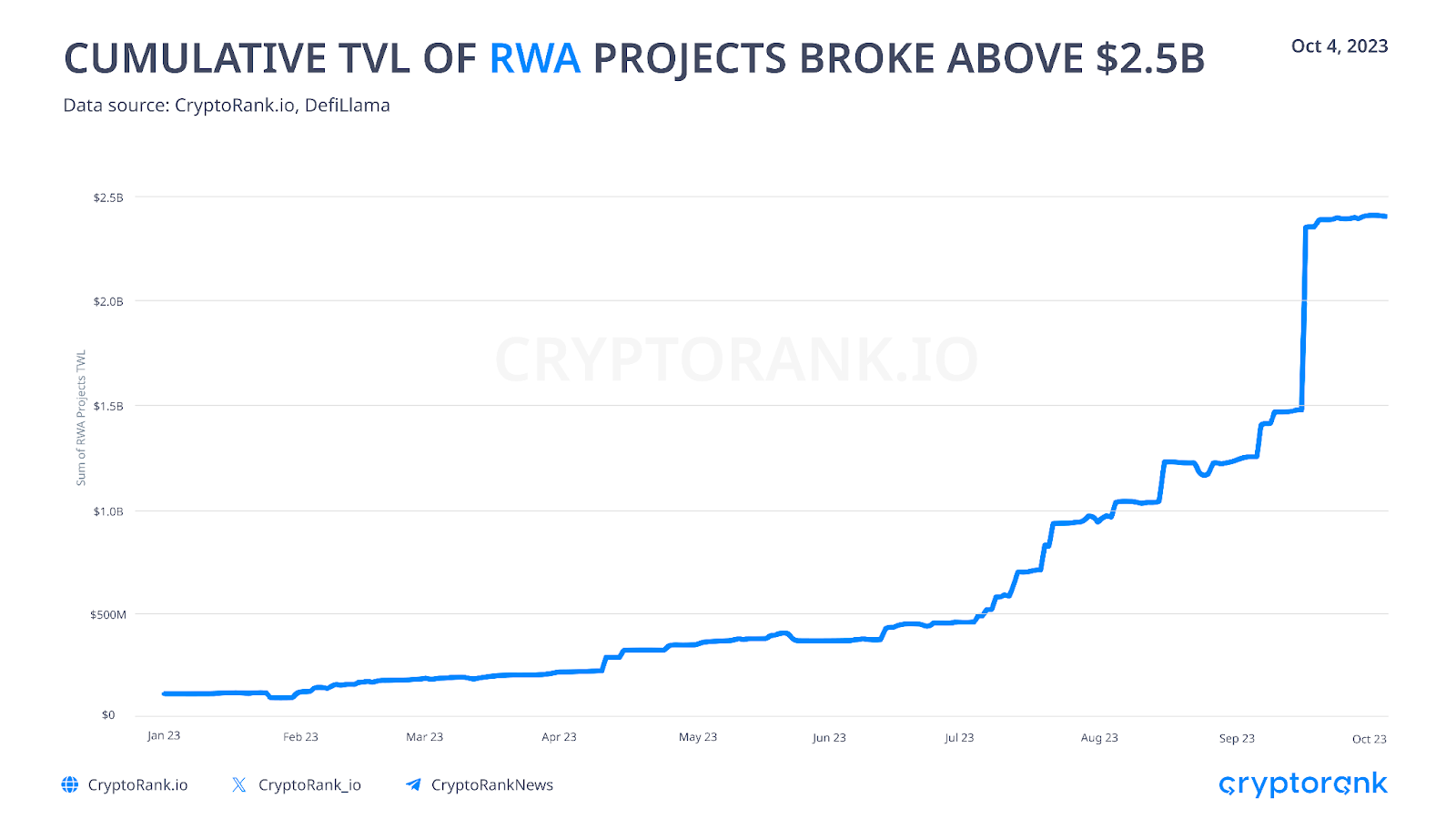
Although DeFi has experienced a long decline, new trends give us hope for a potential recovery. In the first half of this year, liquidity staking projects have demonstrated significant growth and become a dominant force in DeFi. Currently, liquidity staking continues to attract user interest, but RWA showed greater growth in the third quarter.
RWA is a rapidly growing category, albeit a relatively small one. Asset tokenization is not a new trend, but it has gained renewed attention due to the declining returns and high risks of traditional cryptocurrency instruments. Maker Protocol is leading the way by investing a large portion of its revenue in stable cash-flow assets such as Treasuries and other securities. There are other noteworthy projects in this space including Frax, Canto, and others.
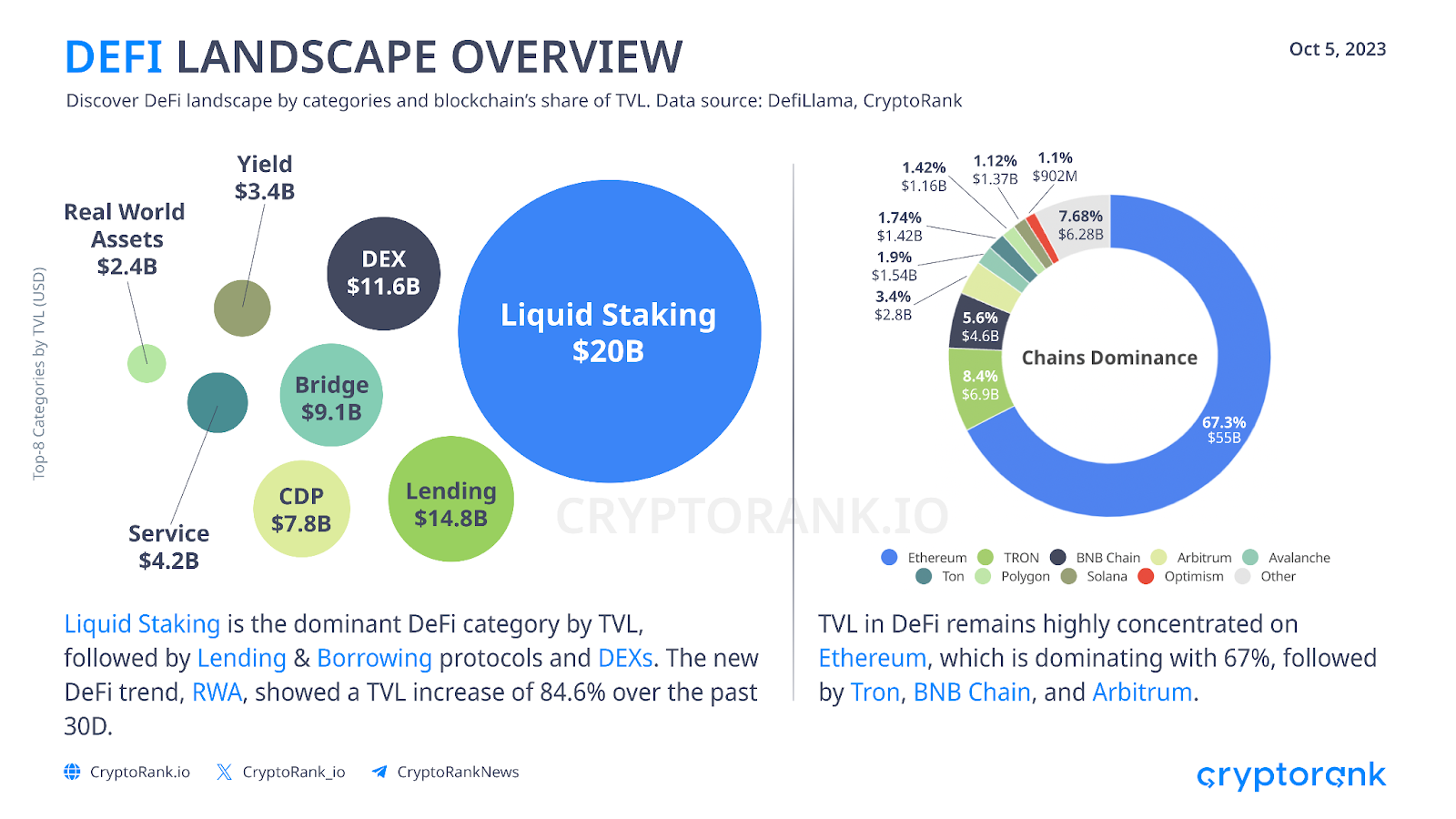
Despite RWA’s rapid growth, the DeFi industry continues to experience stagnation. In terms of TVL, Ethereum remains the dominant blockchain, with a market share of around 70%. Interest in Layer 2 blockchains has declined slightly, resulting in slower TVL growth. During the quarter, TVL may move from leading Layer 2 blockchains such as Arbitrum, Optimism, and zkSync Era to Base, StarkNet, and Linea.
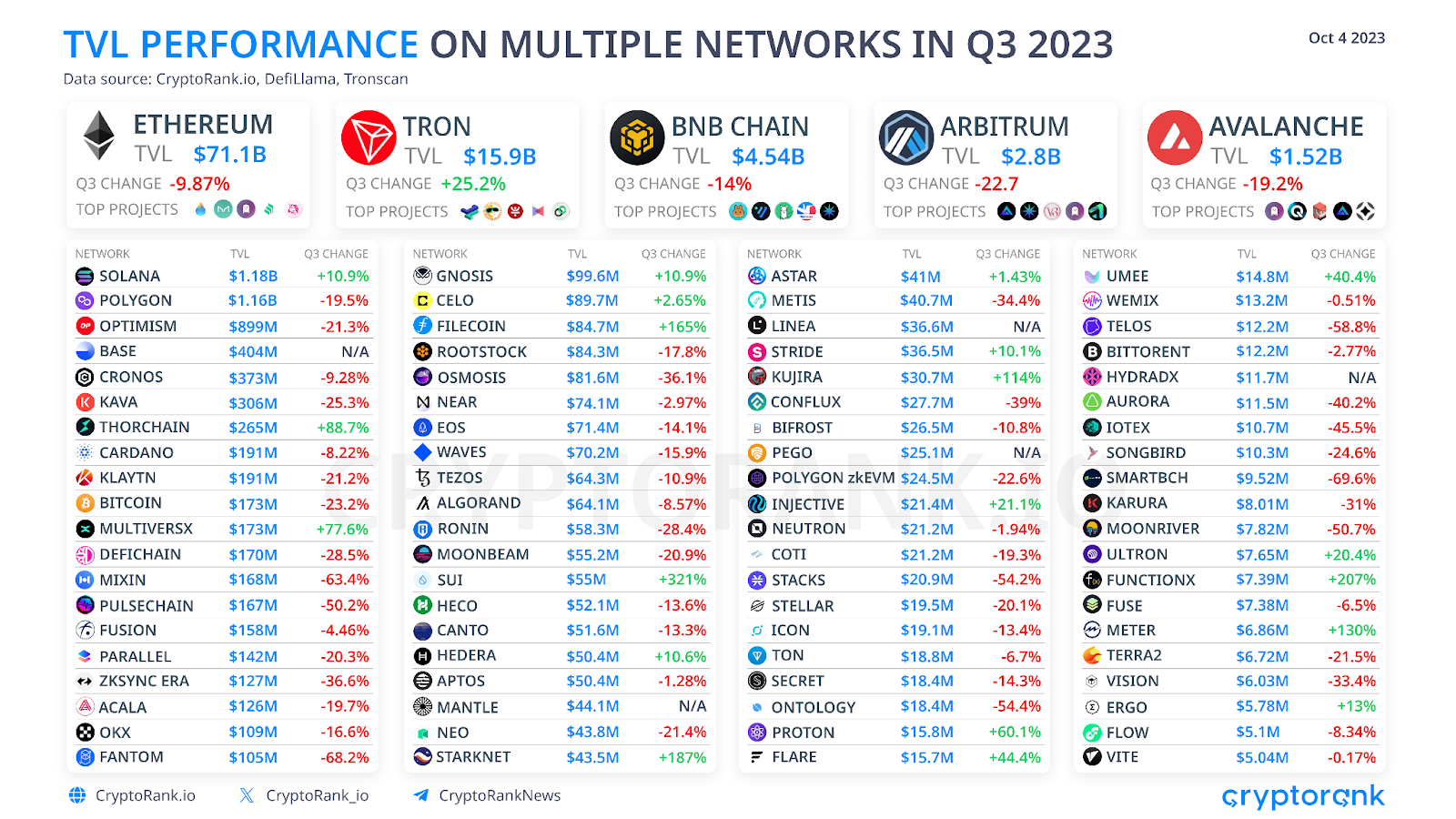
Other blockchains such as Solana were also able to show growth in key metrics during the recovery in coin prices. However, it is still too early to declare a clear trend in DeFi. Crypto markets, especially DeFi, face illiquidity issues.
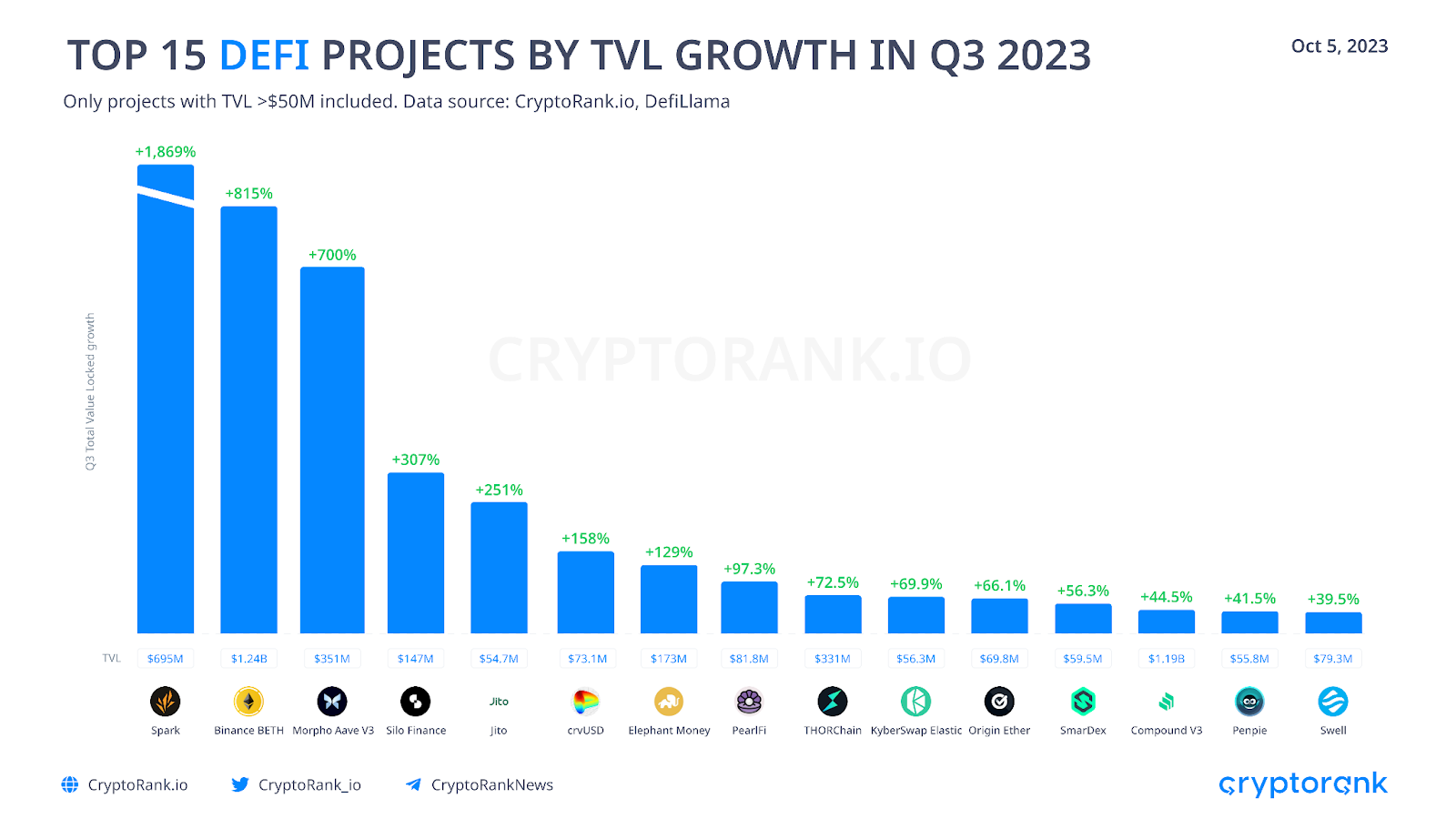
Across protocols, Spark and Binance’s ETH staking services saw the most significant TVL growth during the quarter.
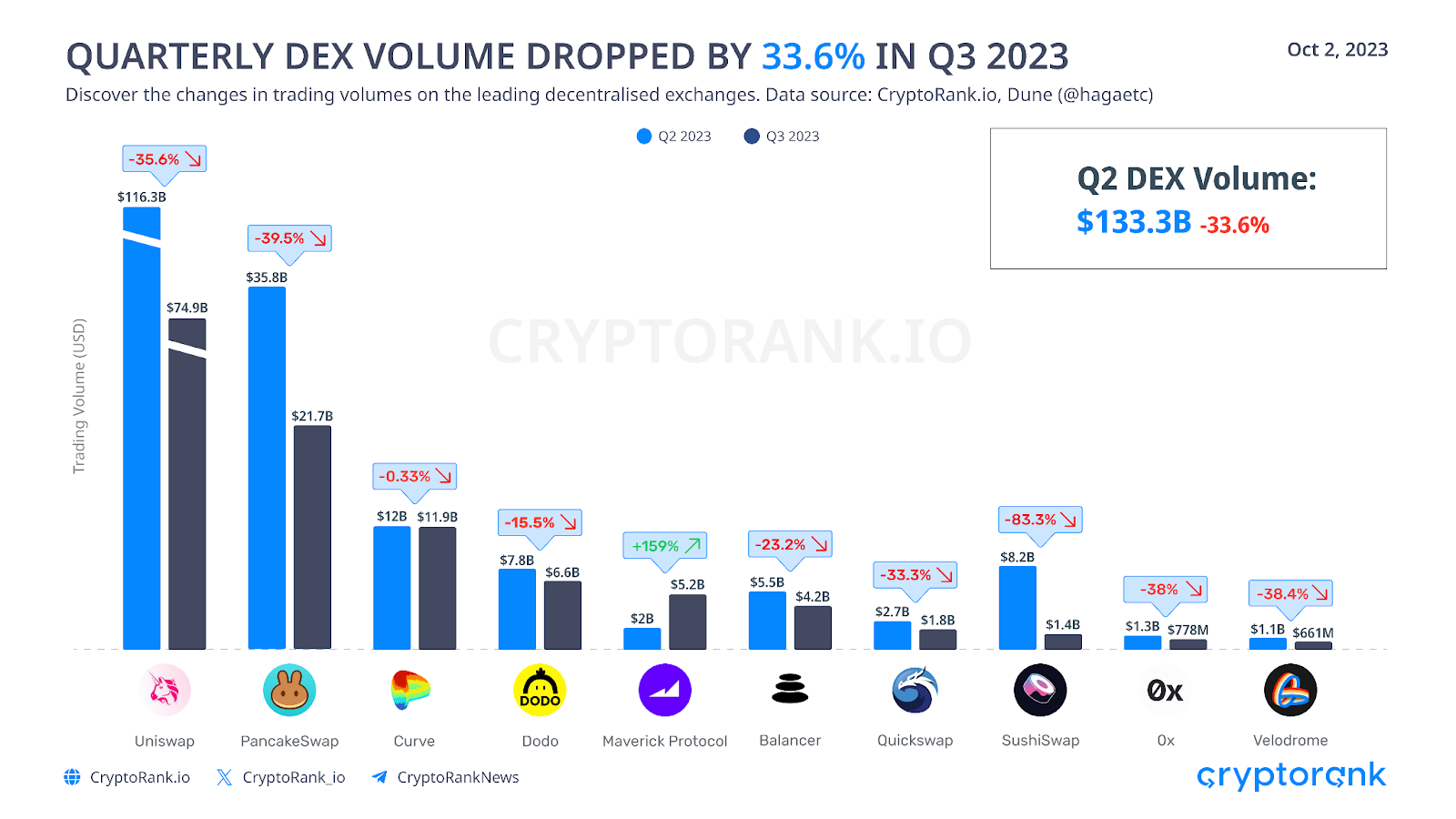
DEX trading volumes also continue to decline. The third quarter witnessed a significant decrease, with trading volumes on most DEXs falling by more than 30%. The exception to this trend, however, is Maverick Protocol, which has experienced significant growth despite its relatively recent launch.
Token sales and fundraising
Token sales are going through a rough patch right now. The reduction in trading activity has had a significant impact on token sales. As expected, fundraising during the summer months was very low. Although the amount raised in September increased significantly compared to August, it is difficult to observe any positive changes: the proceeds from the token sale remained low.
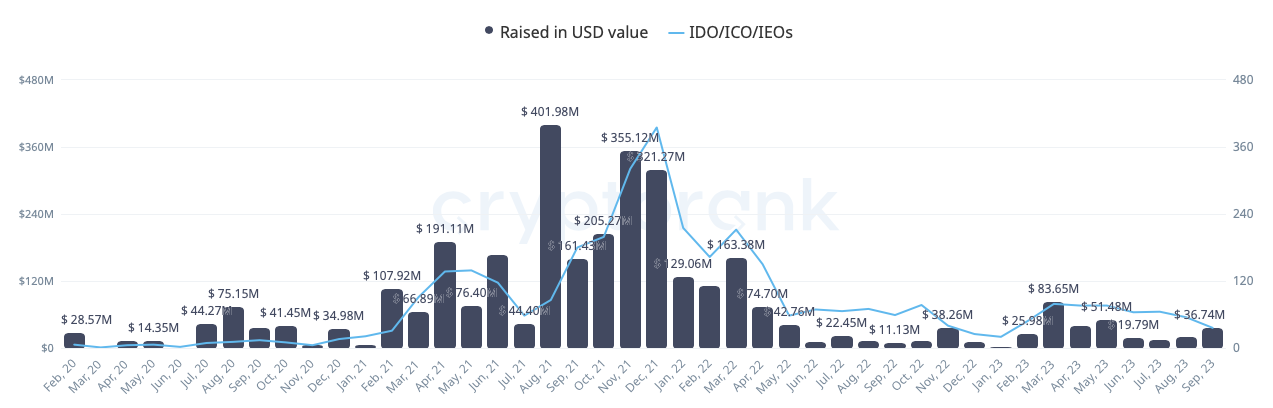
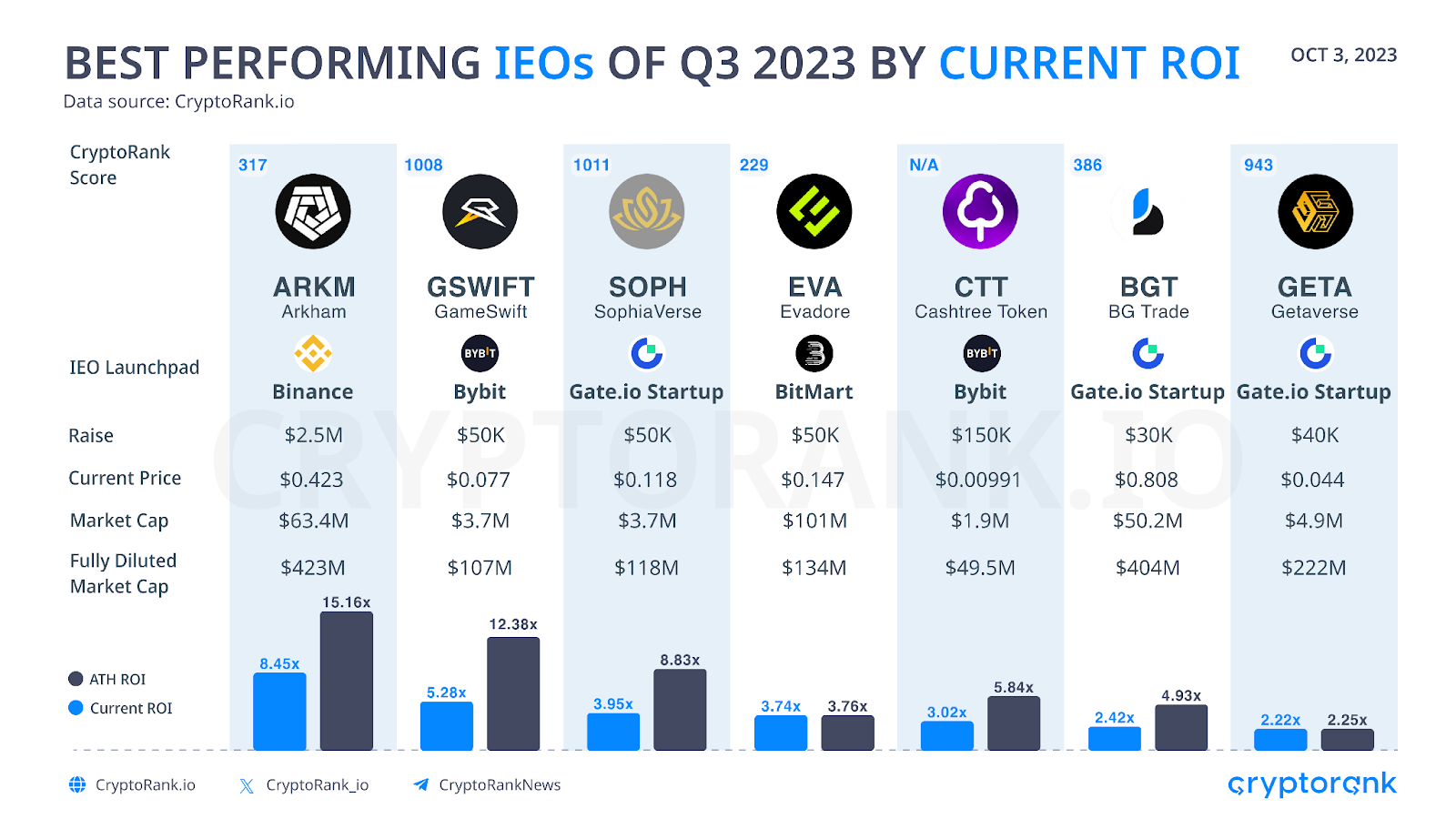
However, there are still some Launchpads on the market that continue to launch great projects. Of particular note is Binance Launchpad, which recently emerged as the most profitable project among IEOs this quarter with Arkham. Despite the market slowdown, Binance Launchpad has already demonstrated multiple successful project launches in 2023. Considering the size and influence of the exchange, we can expect more projects to be successfully launched in the future.
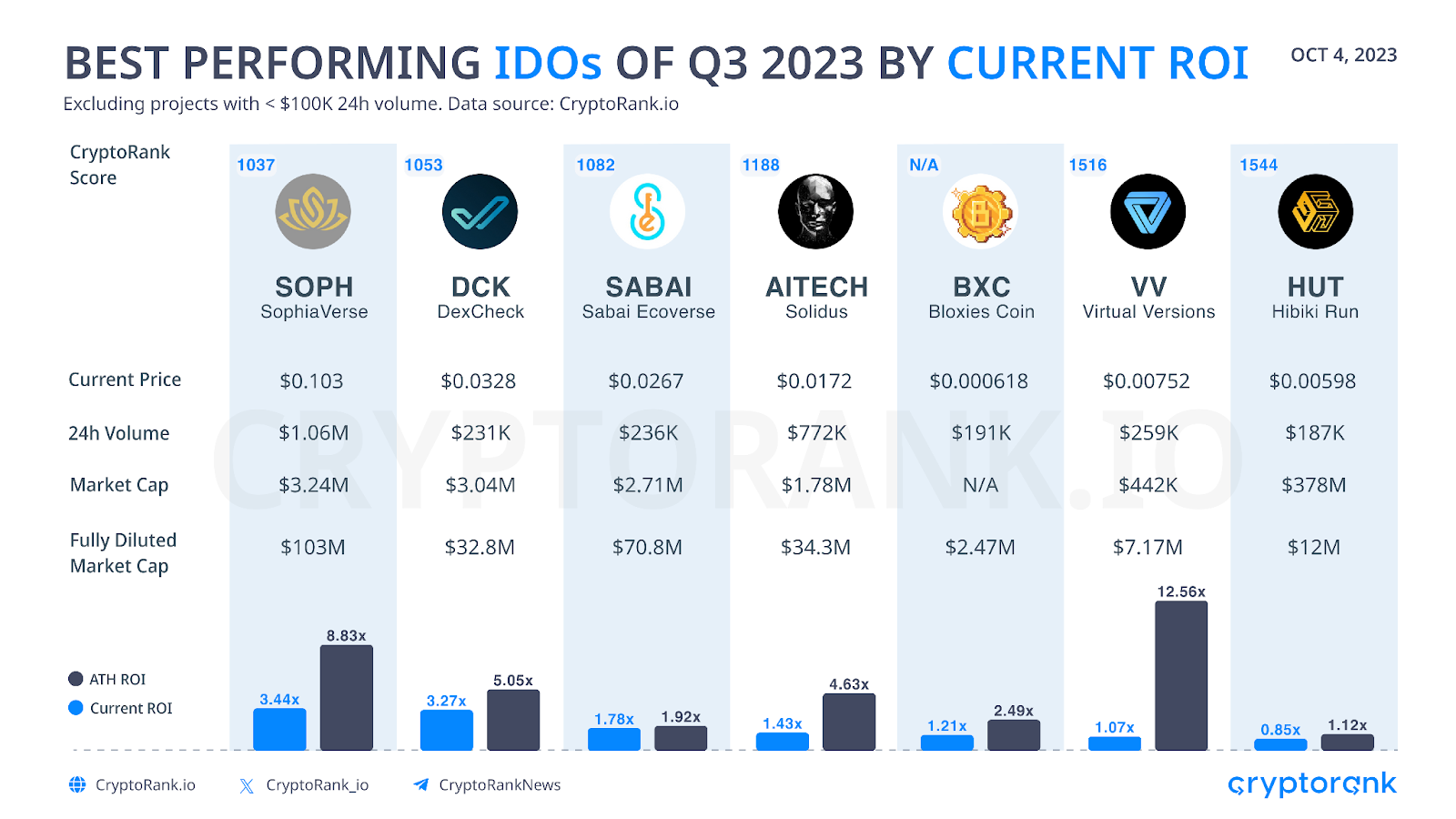
The performance of IDOs shows significant underperformance compared to IEOs. The launch of many projects was not profitable for investors, and even some important projects failed to present promising projects. However, there are still some noteworthy leaders in this space, such as SophiaVerse and up-and-coming Solidus, which offer practical AI solutions, and DexCheck, a platform for on-chain trading. It’s worth mentioning that both Solidus and DexCheck are backed by full-stack venture capital firm Castrum Capital.
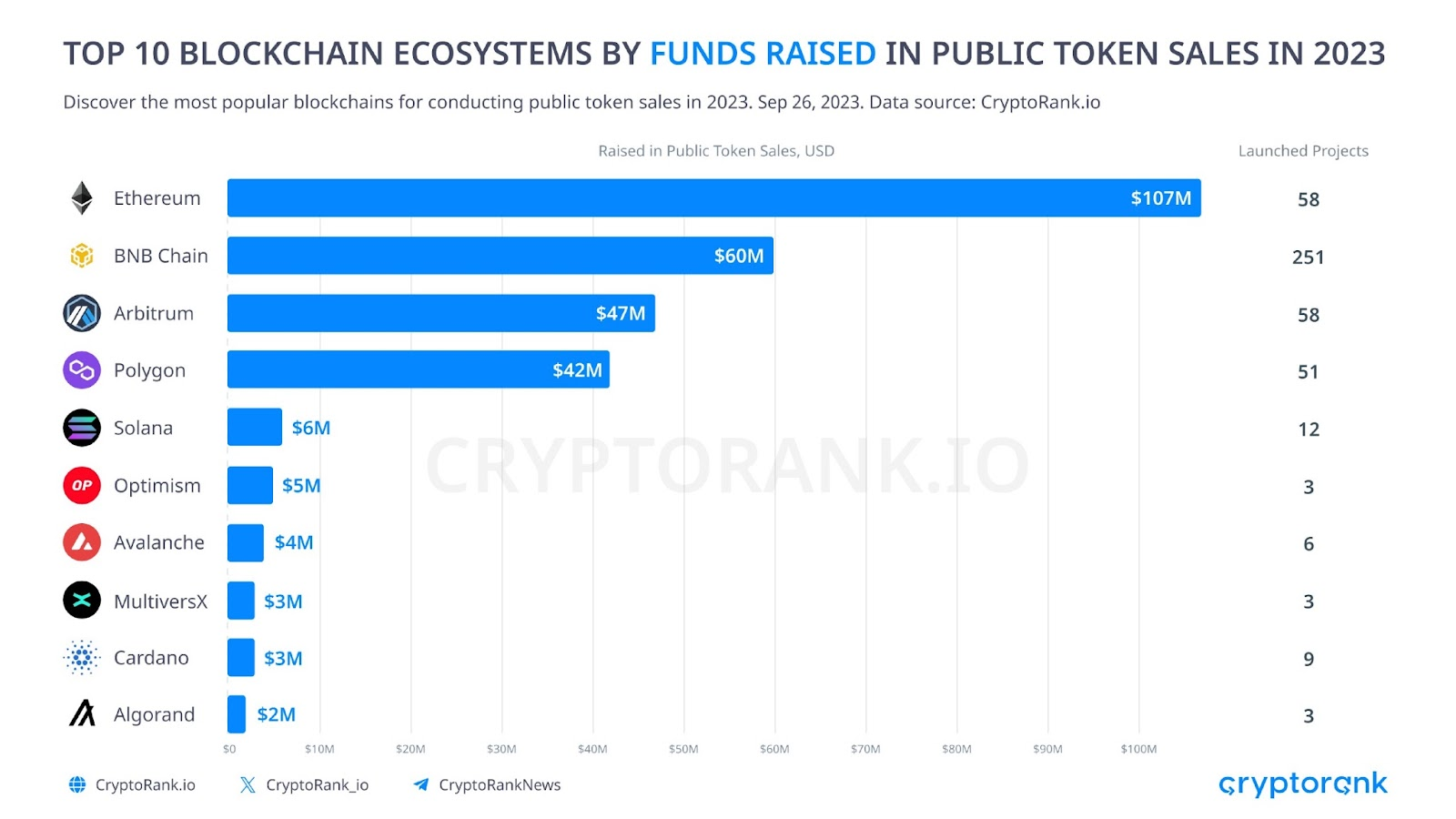
Currently, only a handful of the dozens of projects launched every month are showing positive returns. This limits the growth of Launchpad and token sales as they mostly lack users. If there is no influx of new capital into the industry, we cannot expect stable high returns. In terms of amount raised, the Ethereum, BNB Chain, Arbitrum and Polygon ecosystems are far ahead. At the same time, the BNB Chain ecosystem is in the leading position in terms of the number of projects, and is expected to continue to grow in the future as it continues to develop the opBNB ecosystem.
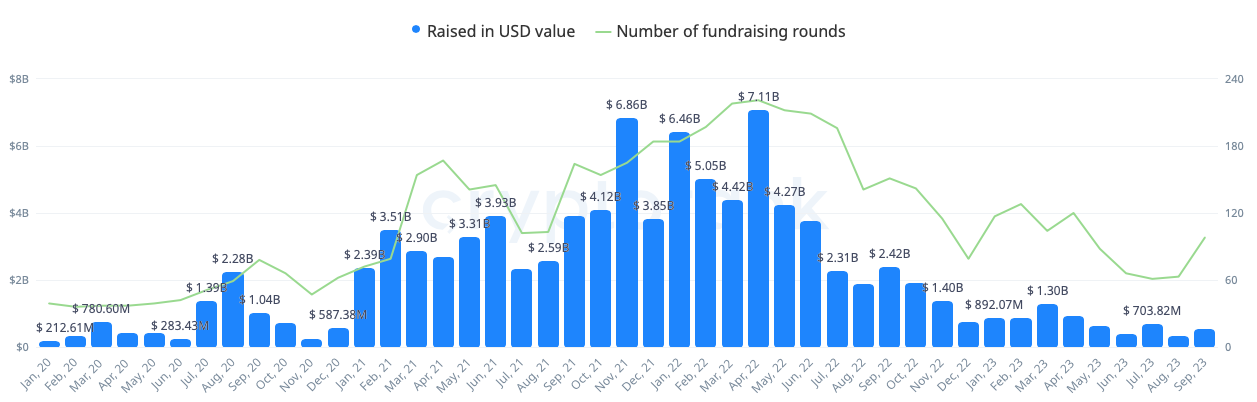
We can also observe stagnation when it comes to private financing in the crypto industry. Despite a significant increase in investment volumes in September, the trend remained unchanged throughout the third quarter.
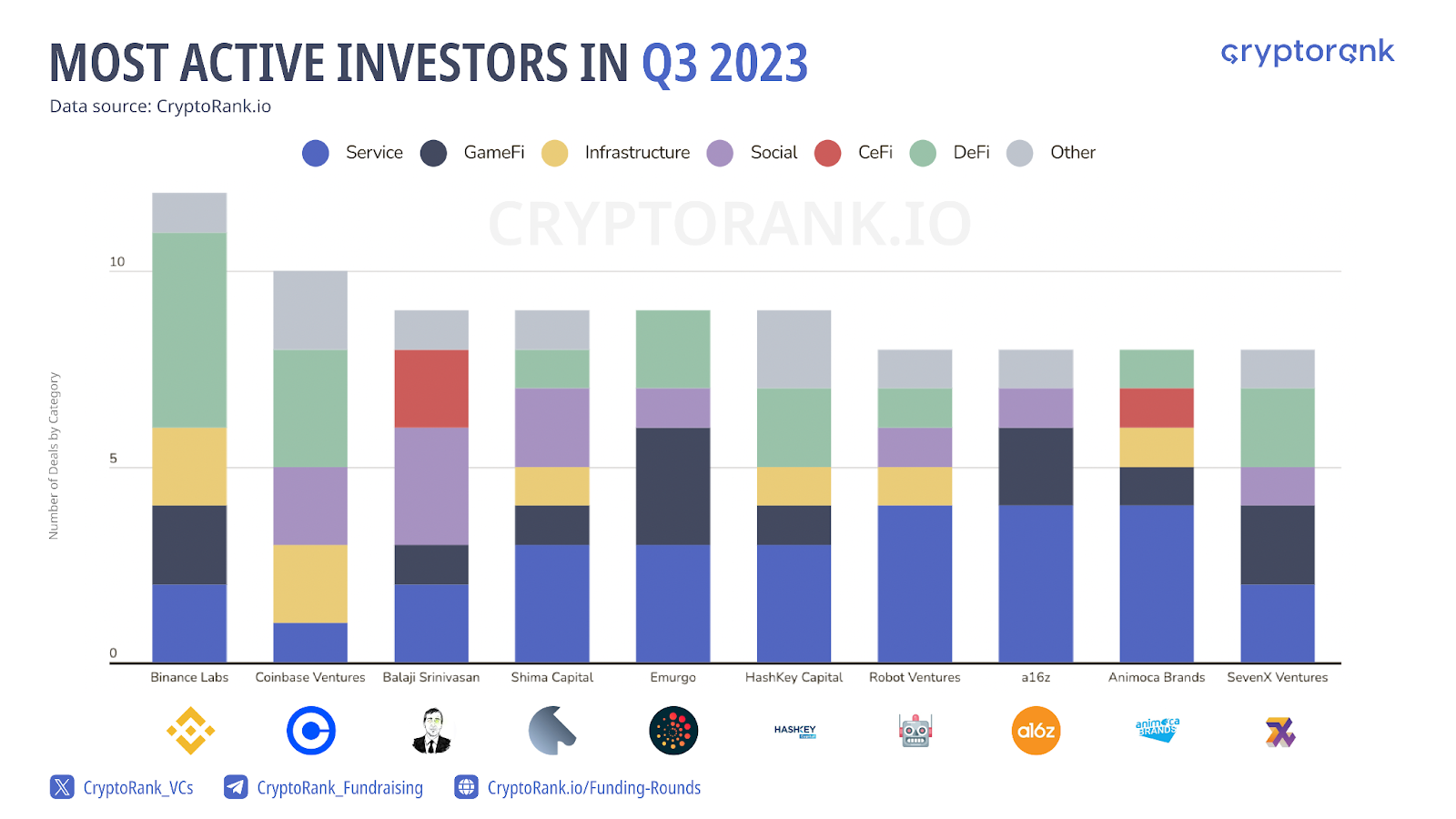
Notably, Binance Labs was the most active investor during the quarter. The fund has invested in 12 projects, most of which are related to DeFi. Binance Labs was followed by high-profile investments from Coinbase, the venture capital arm of another important exchange, as well as its former chief technology officer Balaji Srinivasan.
Data on the chain
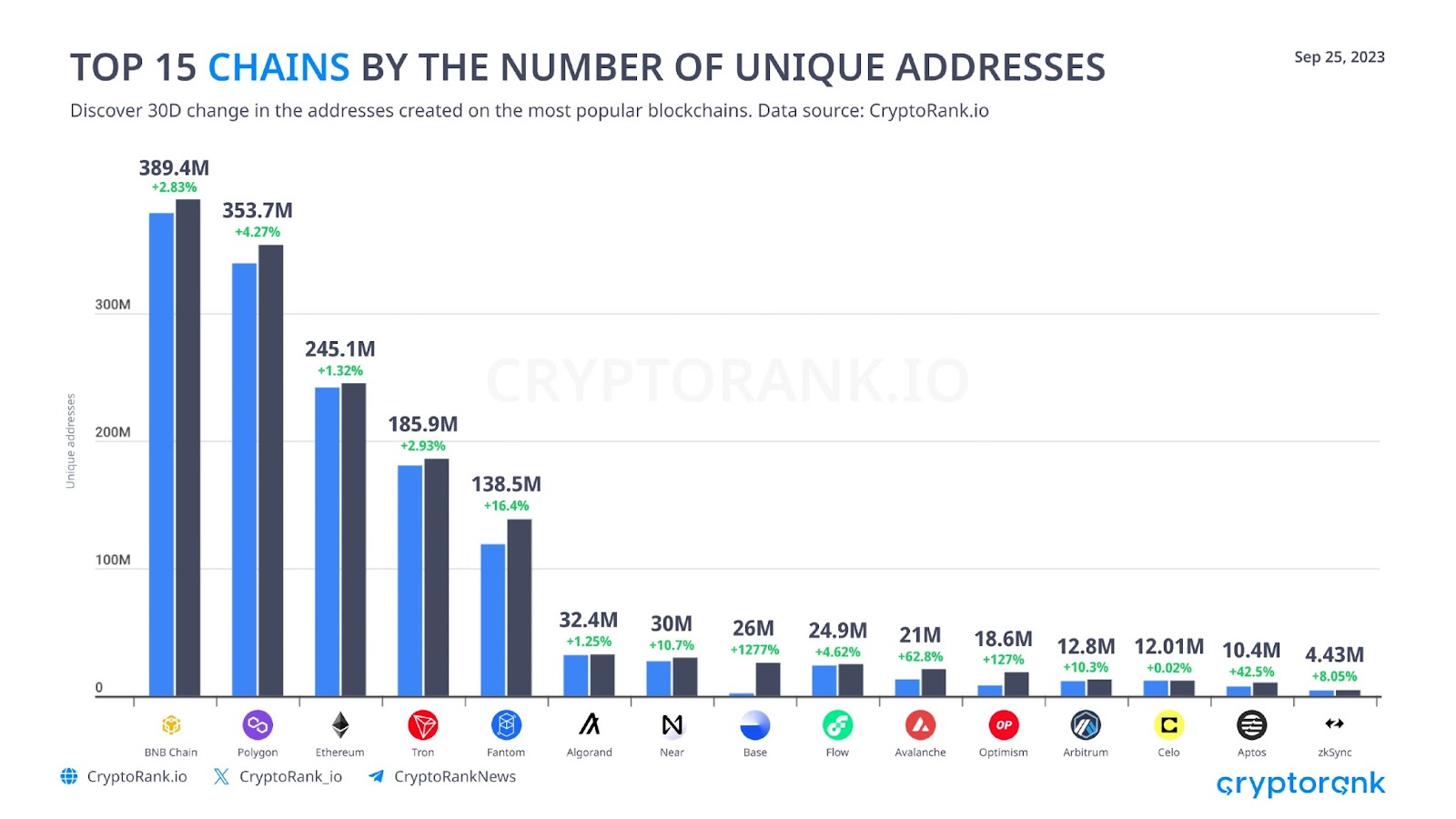
The blockchain’s on-chain indicators do not reflect the negative sentiment shown by other indicators in the crypto market. Although the popularity of different blockchains is changing, blockchain utilization is still growing.
BNB Chain remains the leader in terms of number of unique addresses, followed by Polygon and Ethereum. By the end of September, Base had grown its user base by 1,277% in just 30 days. Another monthly winner is Optimism, up nearly 127%. Note that data for Solana are missing due to computational difficulties.
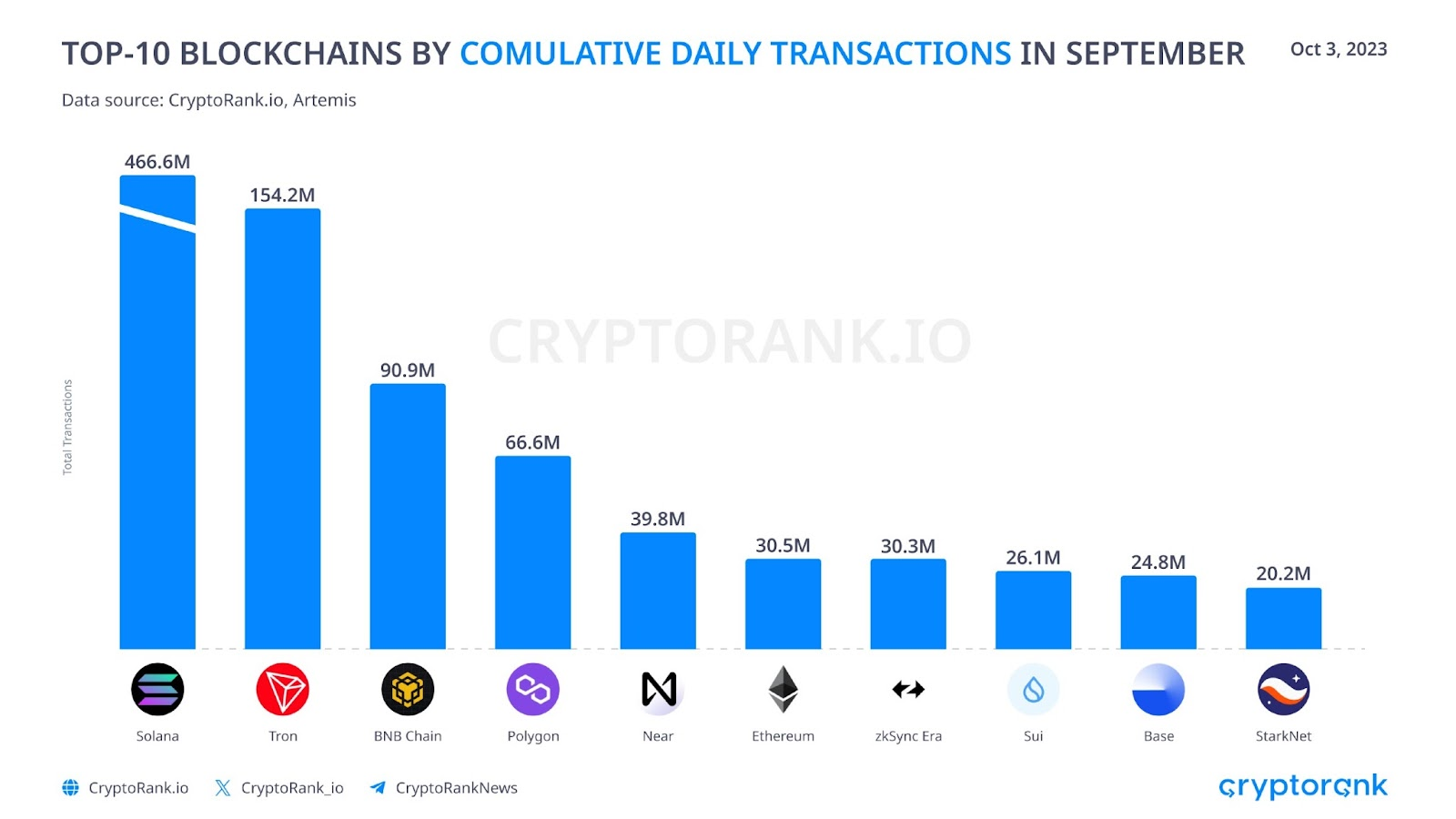
However, Solana was the most popular blockchain in September, with nearly 500 million transactions. Popular second-layer blockchains zkSync Era, Base, and StarkNet also have strong positions in the top ten.
NFT trading volume continues to decline
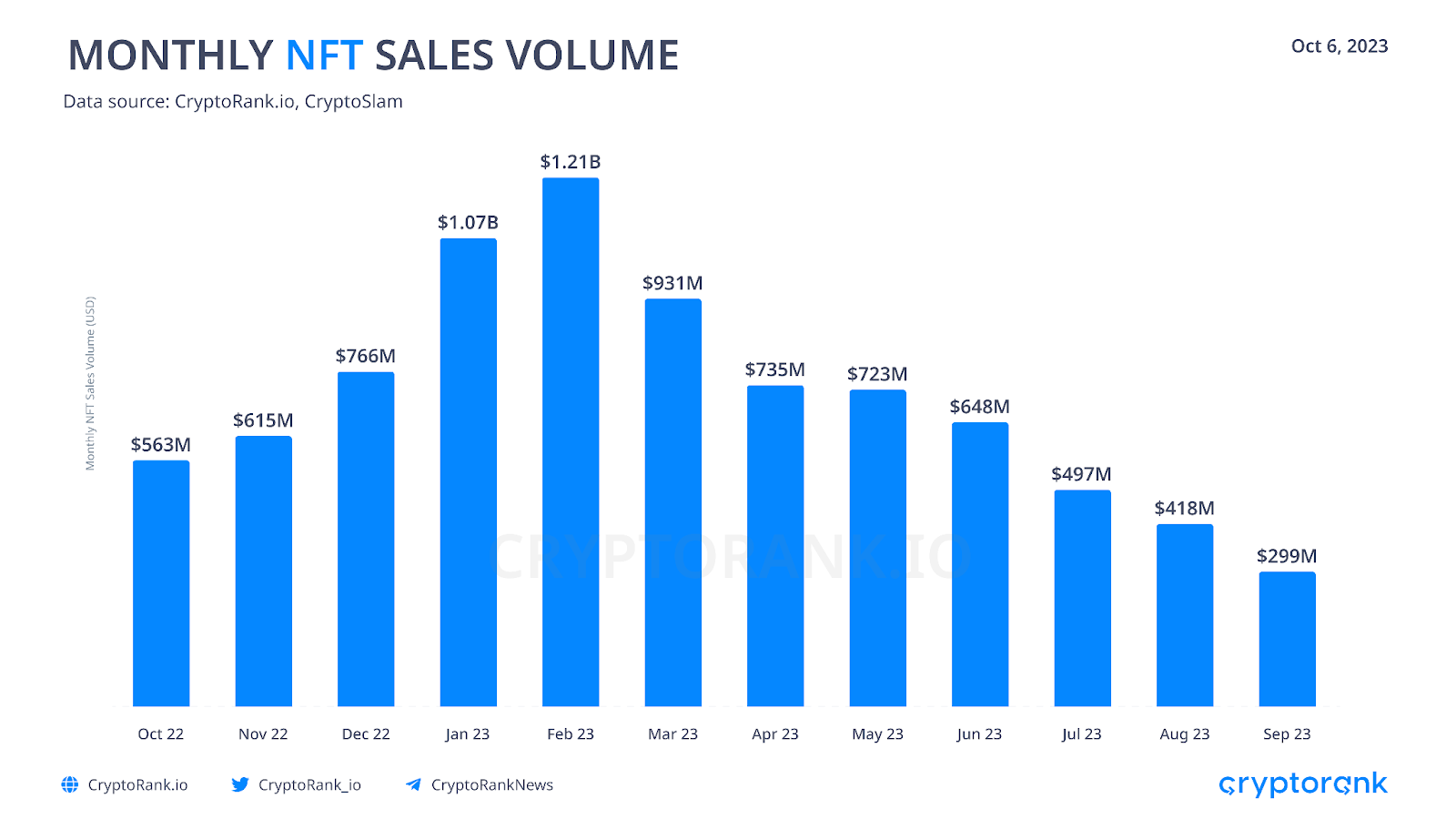
Currently, the NFT market is in the doldrums. While there was some optimism at the beginning of the year, it quickly faded. Currently, NFT trading volumes are similar to what they were before the NFT craze began in early 2021.
Ethereum remains the leading blockchain based on NFT transaction volume. Polygon has been competing with Solana for second place, but so far, no other blockchain other than Ethereum has managed to establish itself as an NFT hub.
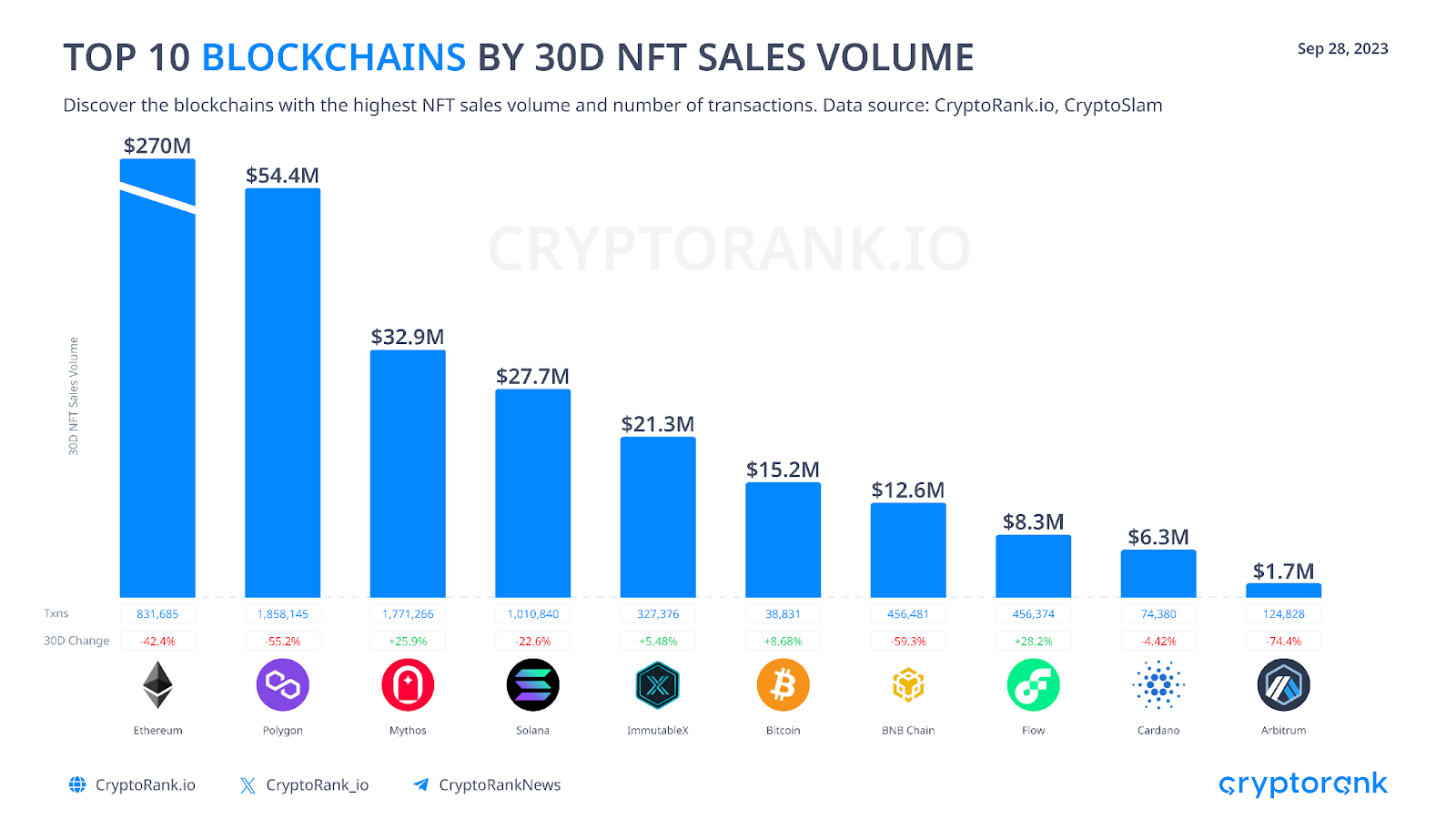
In the NFT market, there are frequent changes and launches of new projects. While NFTs are an important part of blockchain culture, they have underperformed during the bear market compared to many other projects.
Summary of key points
The third quarter of this year has been rather lackluster for the crypto market. The main factors driving the market are expectations for the approval of a Bitcoin spot ETF and the influx of new liquidity into the crypto space. However, it is still too early to declare the bear market over.
Although total crypto investment has declined, the blockchain industry continues to grow. A powerful story line is emerging in the DeFi and SocialFi space, which could become a major trend in the next bull run.
Amid major problems and looming crises in traditional finance, it is difficult to predict a complete turnaround. The crypto market is closely linked to traditional finance, as many companies rely on external funding. The influx of external funds remains the main driver of crypto growth. As the world grapples with its own problems, the crypto market has an opportunity to focus on building and increasing stability.


