






Is GameFi about to rise? Quickly understand the four major chain game projects in the Starknet ecosystem


Original author: 0x Facai, BlockBeats
The highly anticipated Starknet "Quantum Leap" mainnet upgrade is finally coming.
According to official sources, after the upgrade to version 12.0, the time for inclusion in the Starknet network is expected to be less than 15 seconds under normal circumstances, and the TPS of the Starknet network will reach triple digits.
As the Starknet mainnet upgrade date approaches, the Loot ecosystem game Loot Realms will also open its first playable version, LootSurvivor, to players on the Starknet mainnet at the end of July this year. As the first chain game launched on the Starknet mainnet, Quantum Leap of Starknet will bring changes to the player experience and will be validated in this game.
Starknet was not the first choice for Realms. In fact, Realms initially chose to develop the game on Arbitrum. However, after a period of time, the team found that although Arbitrum could reduce the cost of game transactions, it did not reach a level low enough to meet the high-frequency trading needs of in-game assets. The advantage of Starknet is that it not only reduces transaction costs even further, eliminates the withdrawal process that takes up to 7 days but also meets the complex game requirements of "having higher computational power and a large number of transaction scenarios". Therefore, the Realms team chose to migrate the game to Starknet.
Now, "the most suitable infrastructure for developing full-chain games" has become the selling point of Starknet. As the launch date of the "Quantum Leap" mainnet version approaches, whether Starknet is truly the most suitable infrastructure for developing full-chain games will soon be validated.
With the mainnet upgrade imminent, it's time to get to know the four kings of full-chain games on the Starknet ecosystem.
Related reading: "Starknet Founder: V12 Quantum Leap upgrade, what does it bring us?"
Loot Realms
Over the years, countless derivative projects have emerged in the Loot ecosystem, and Realms is the only game derivative project that has survived since Loot.
Realms started as a dashboard presenting data maps related to the Loot ecosystem (Loot and its derivative assets) and was initially developed by a hackathon team. Later, the Bibliotheca team joined and their vision transformed into "helping expand the on-chain hyperverse based on interactive metaverse games" on Layer 2.
After more than a year of development, Realms' on-chain game has taken shape. It is built and deployed using the open-source game engine Dojo. It has gathered a loyal base of test players and developers, a well-designed economic cycle system, and infrastructure developed based on the Starknet Layer 2 solution. With the highly anticipated Starknet "Quantum Leap" mainnet upgrade approaching, Loot Realms will also release its first playable version, LootSurvivor, on the Starknet mainnet at the end of July this year. Currently, the native token of LootRealms, Lords, has been bridged to Starknet, and users can purchase the token on the decentralized exchange platform JediSwap on Starknet.
For any game to operate sustainably and stably, it must have a well-designed economic system. By analyzing the four important aspects of production, accumulation, trading, and consumption in the game system, it can be determined whether there is a need for game item trading, whether the asset supply speed and asset consumption demand reach dynamic balance, and whether the whole system can be expanded to attract more participants or players.
Realms has various different assets, including:
1) The initially issued assets are 8000 Realm NFT parcels, which are a series of kingdom cities. Each Realm NFT has its unique geographical location: they can be cities or regions, adjacent to rivers or near ports. Each Realm produces different mineral resources, with a total combination of 22 different resources. Each resource has a different quantity (scarcity). In addition, 50 Realm NFTs also have 50 mythological wonders (Realms with Wonders will tax other Realms), such as the Temple of Chaos, the Azure Holy Relic Box, and the Altar of Divine Meaning;
2) The native token LORDS, besides its governance functionality, mainly serves as a trading medium for various in-game assets, items, and equipment;
3) Resources are a collective term for various tokens used in different functions/scenarios within the game. There are a total of 22 different resources initially issued in the game. These resources are based on different usage scenarios. In various gameplay, players need to allocate existing resources to maximize productivity by exchanging and trading resources in the market.
On-chain games have scenarios where high-frequency transactions are needed, which requires a settlement layer with extremely low transaction costs. Starknet is obviously the best choice.
In fact, Realms initially adopted the Arbitrum Layer 2 scaling solution (Alpha was deployed on Arbitrum), however, after developing for a while, the team discovered that although Arbitrum can reduce game transaction costs, it is not the best solution for high-frequency trading of in-game assets. On the other hand, Starknet can reduce transaction costs even further, without the 7-day withdrawal process, and can also meet the complex game requirements of "having larger computational tasks and a large number of transaction scenarios." Therefore, the Realms team chose to migrate the game to Starknet.
Funding Situation
Realms is a purely community-driven project that started from a hackathon and does not have endorsements from top investment institutions. Initially, the team only obtained initial funding by selling 8000 Realms NFT parcels. They received a 5 ETH grant from the Starknet team in February 2022 and completed a total of $3,970,473.75 in community fundraising in February of this year, which is worth mentioning that the target fundraise for this round was $625,000, and it was only open to community members, which means it was oversubscribed by 6.35 times.
Current Progress
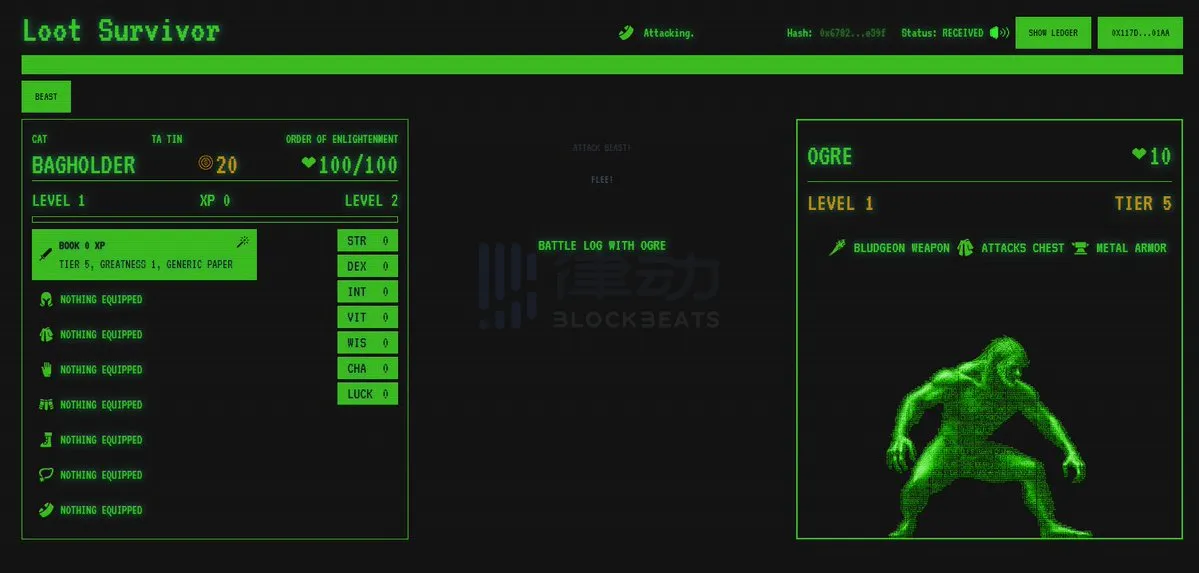
Realms currently only supports a trial text RPG game called LootSurvivor. With the support of Starknet, it is expected to bring a better player experience.
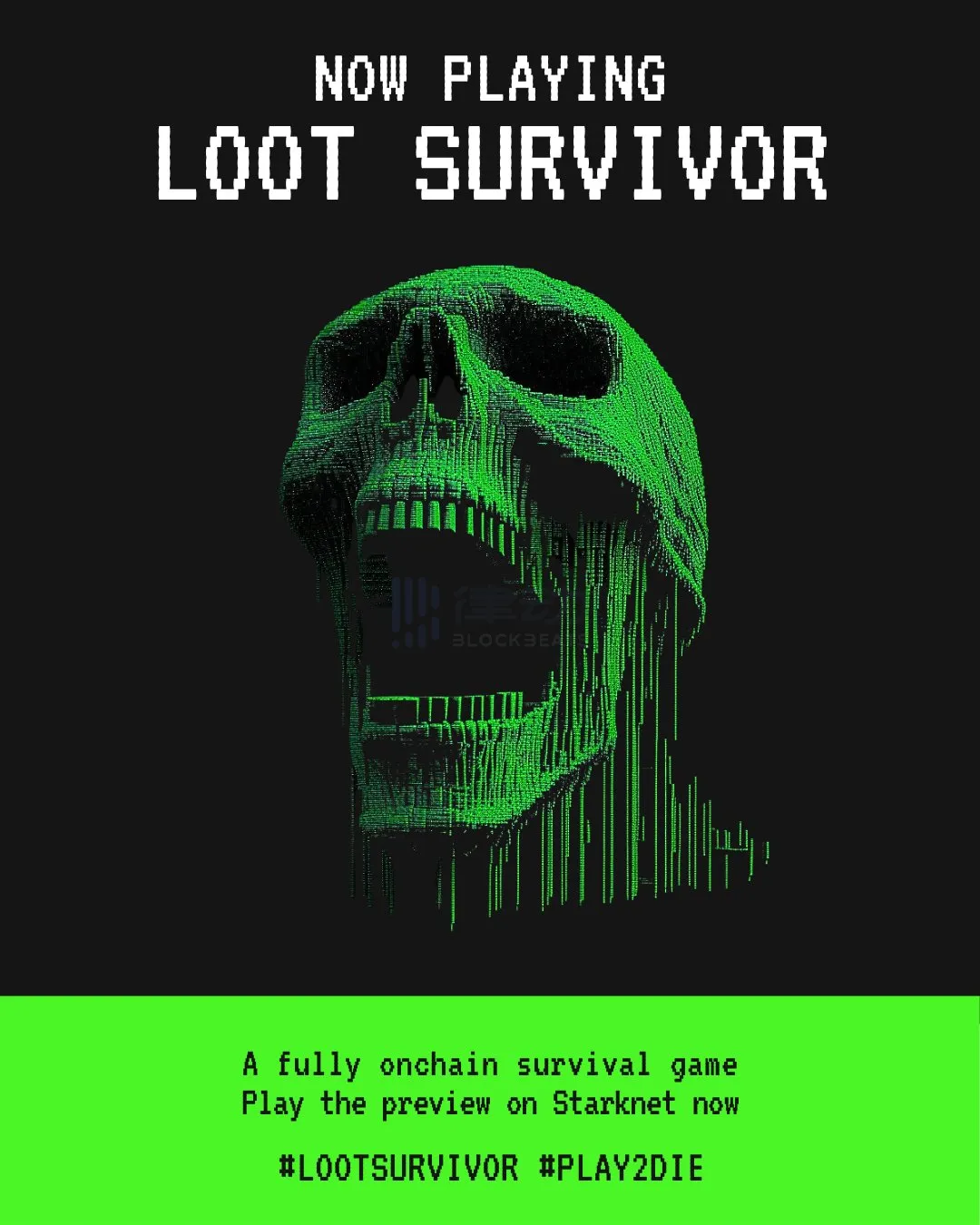
Realms will adopt the Play 2D ie model to attract game developers. This is a market-driven incentive model, where the quality and popularity of the game will determine the developer's reward.
As the highly anticipated Starknet "Quantum Leap" mainnet upgrade date approaches, Loot Realms will also open its first playable version, LootSurvivor, to players on the Starknet mainnet at the end of July this year. Currently, the native token of LootRealms, Lords, has been bridged to Starknet, and users can purchase the token on the decentralized exchange platform JediSwap on Starknet.
Official website: https://linktr.ee/BibliothecaDAO
Official Twitter account: https://twitter.com/LootRealms
Related readings:
《Realms, a Loot derivative chain game with both playability and economic revenue》
《Building Economically Sustainable, Hyperstructures Through On-Chain Games》
Dope Wars
Dope Wars is a hip-hop pixel-style strategy game based on Starknet, inspired by "Drugs Wars". "Drugs Wars" is an OG game set in New York City that revolves around drug trafficking and is the largest and most fun gangster game ever.
Dope Wars originated during the heyday of Loot, and completely copied the Loot distribution model. It released a total of 8000 NFTs for free. Similar to Loot bags, each NFT is randomly equipped with different items, such as AK, Rolls-Royce, gold chain, diamond ring, Gucci belt, black hoodie, Air Jordan 1, and of course, a bunch of drugs. Afterwards, Dope Wars airdropped 125,000 $PAPER tokens to each Dope Wars NFT holder, similar to Adventure Gold (AGLD) tokens.
In addition to NFTs and Paper, the Dope Wars ecosystem has also issued Hustlers. Hustlers are characters in this ecosystem that can be minted for free. By unlocking the items in Dope Wars NFTs, players can equip their characters with weapons, clothes, cars, necklaces, and other gear (DOPE Gear).
Unlike the geeky style of Loot, Dope Wars takes a GTA-style street route. Both its equipment and the cultural vibe of the Drug War perfectly match the style of the crypto finance community. Therefore, the community atmosphere was very active from the beginning and attracted a large number of early OGs.
The initiator of Dope Wars is perama. Currently, tarrence.eth and other members of the Starknet game infrastructure Cartridge team joined later and became core contributors to the project.
Current Progress
The first playable mode, RYO, has been released: RYO is the first playable mode initiated by Dope Wars, which stands for Roll Your Own. RYO is a remake based on the Dojo engine and is the game engine for Dope Wars based on the Starknet L2.
The core of RYO is to extend the drug arbitrage mechanism to a multiplayer environment, creating a competitive and constantly evolving game environment. In this environment, each player's actions will affect the in-game economy.
Players will enter the location of Dope Wars and arbitrage drug prices in different regions, accumulate wealth, and dominate the streets. The player's decisions will directly affect market price fluctuations. For example, if a player buys a large amount of drugs in a certain region, the market price may rise, while if a player sells a large amount, the market price may fall. This adds a new strategic dimension to the game, where players need to make decisions based on market trends and the actions of other players.
In addition, random events will occur between rounds, affecting prices. This means that market prices are not only influenced by player actions, but also by random events within the game, making it more dynamic and challenging.
For players, it is necessary to adjust their strategies based on market conditions (deterministic) and random events (uncertain) in order to succeed in the game.
Dope Wars has developed its own visual Marketplace and launched a game preview on the Starknet network Dope Frenzy, but as the market cools down, the development of the game has entered a stagnant state and is currently available for experience.
Related reading:
"Dope Wars - GTA game developed by Cartridge team"
Influence
Influence is a large-scale space strategy sandbox MMO game based on Starknet, combining elements of 4x, management simulation, and open-world RPG. Players can freely explore, gather resources, build, and engage in battles in the Adalia galaxy, and build their own interstellar empire. All assets and core game logic of the game are deployed on the blockchain.
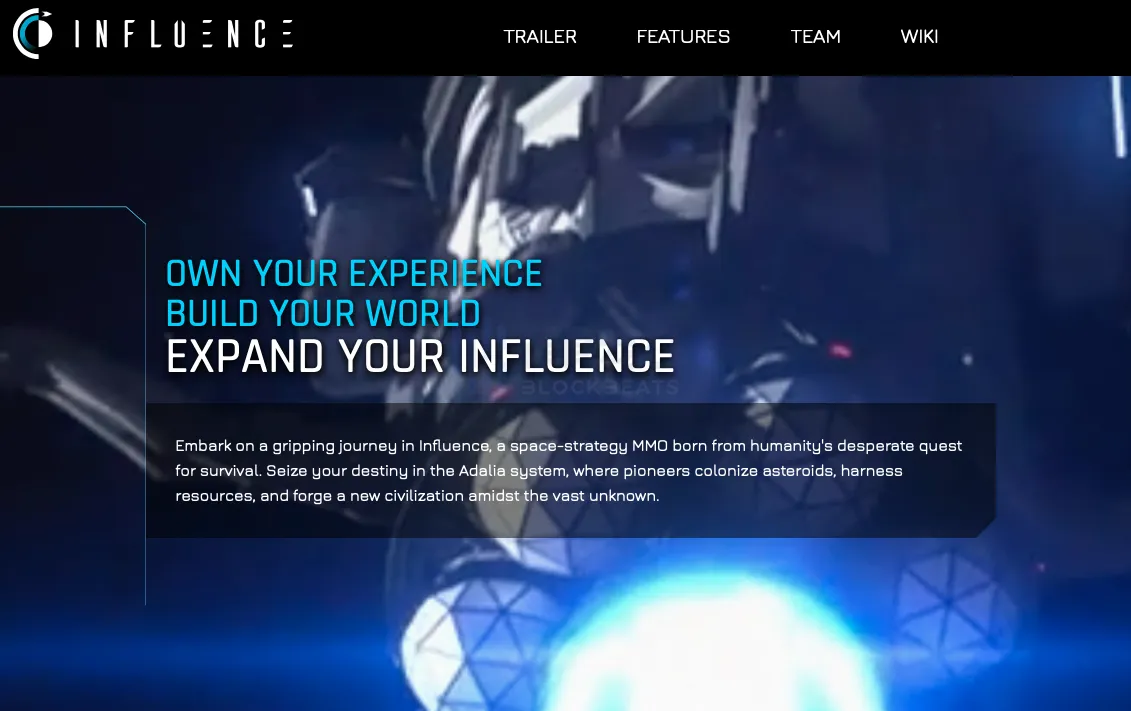
Influence has launched Starknet in August 2022 and conducted the final asset sale activity titled "Prepare for Launch Sale" in March 2023 prior to the Exploitation Release. The latest Token economic model was also announced.
Regarding the community, there are currently only 14 third-party developer applications officially recorded, including active projects in the Starknet ecosystem such as Guildly and Cartridge, while there are 6 grant projects sponsored by the official team listed. Additionally, there is a rich collection of story settings written by community members, accumulating tens of thousands of words of text content, which is of considerable quality.
With the launch of Dojo, the official team is also attempting to remake games using Dojo. The upcoming Exploitation Release is expected to perform well.
Official website: https://www.influenceth.io/
Official Twitter: https://twitter.com/influenceth
Related reading: "On-chain Game Series 3: 'Inheritance of Will MUD&Dojo'"
Topology
Topology is the native game development team of the Starknet ecosystem. Its vision is to create truly deep, inclusive, open-ended, and physics-based blockchain games.
Topology was founded by @guiltygyoza and @iamkunhokim, and it is different from most teams that focus on full-chain games, engines, or other developer tools. Topology focuses on the implementation of the underlying "rule layer" in the fully autonomous world, establishing a "chain reality."
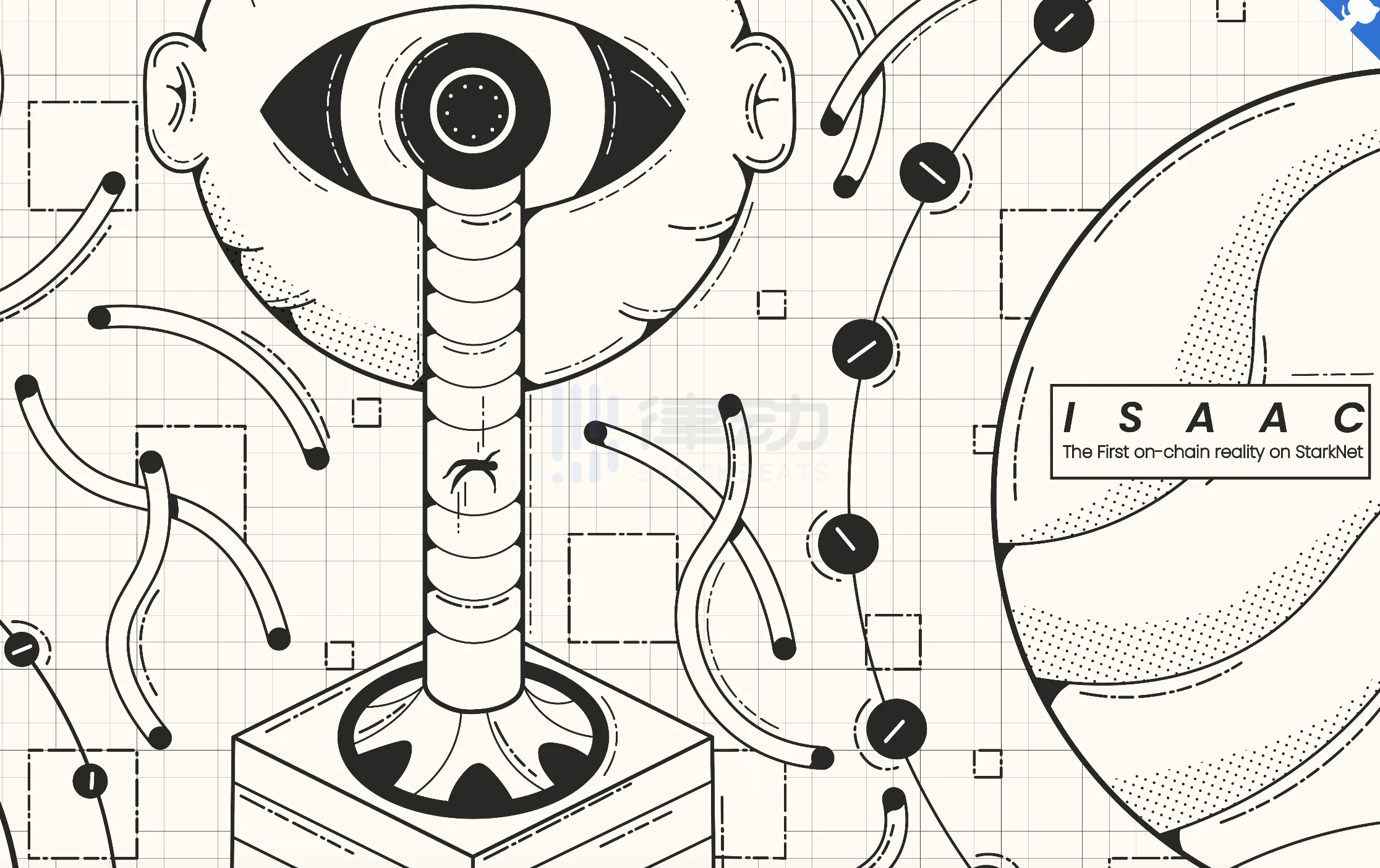
Topology believes that building Autonomous Worlds only requires providing a platform and setting initial "physical parameters," while the progress of the entire game world is determined by the players themselves. The games they create also lean towards combining blockchain and gaming as new media, integrating both with physical knowledge.
So far, the Topology team has developed three games:
Isaac: This is a collaborative construction game combining "The Three-Body Problem" and "Factorio." It was launched on June 24, 2022. Players team up to enter a planet in the Three-Body System. They need to coordinate the use of resources on the planet to build propellers in order to escape and achieve victory. In ISAAC, the team has built a real-time simulation model of the planet and the positions of three suns, and introduced player actions as parameters, increasing the complexity and chaos of the system, providing players with a deep gaming experience.
"Mu-Mu": "Mu-Mu" was launched as an experimental product on November 7, 2022. It is an algebraic digital physics simulator that focuses on introducing players to a new concept of creation. In "Mu-Mu," players need to design a machine, which is entirely designed and used by the players, and can also be endowed with new concepts by other players to complete different tasks or objectives.
The latest project "Shoshin": This game was announced at STARKTokyo in April 2023. It is a strategy combat game where both sides need to set their own Agent's Mind (battle strategy), and the Agents will engage in battles based on these rules. The decisions and battle results of each frame will be validated and settled on-chain. Shoshin Playtest is currently available through application.
Official website: https://www.topology.gg
Official Twitter: https://twitter.com/topology_gg


