


V God’s new article: Beyond Ethereum and the technical values that will eventually affect everyone


original:Make Ethereum Cypherpunk Again
Compiled by: Odaily Loopy Lu
Today, Ethereum founder Vitalik Buterin released a new article Make Ethereum Cypherpunk Again. This article not only discusses how Ethereum transcends traditional financial applications, but also explores in depth its core role in building a decentralized, open society. We will see that Ethereum is not just a cryptocurrency platform, but also a trinity ecosystem of technology, society, and economy.
In the article, Buterin discussed how technology and values interact to jointly promote the development of the Ethereum ecosystem. Different from previous articles that simply discussed the development route of technology, this article is not just a story about technology, but a story about trying to find a balance between pursuing economic interests and maintaining open and fair values.
The power of decentralization is not only reflected in the code, but also in every interaction and decision-making of the community. From anonymous voting to decentralized social media, from the transparent allocation of public funds to the diverse applications of smart contracts, the decentralized revolution is a technological change that touches everyones future.
Odaily compiles the full text as follows:
Make Ethereum cyberpunk again
One of my favorite memories from ten years ago was a pilgrimage to an area of Berlin known as Bitcoin Kiez: an area in Kreuzberg with about a dozen shops, all a few hundred meters apart from each other, And all accept Bitcoin as a payment method. The centerpiece of this community is Room 77, a restaurant and bar run by Joerg Platzer. In addition to simply accepting Bitcoin, it also serves as a community center frequented by various open source developers, political activists of all stripes, and other characters.

(Room 77)
Another similar memory from two months ago was PorcFest ("porc"Refers"porcupine", meaning"Dont step on me"), a gathering of liberals in the woods of northern New Hampshire. The main way people get food there is through small pop-up restaurants with names like"Revolution Coffee"and"rebel soup"Wait, of course Bitcoin is also accepted. Here, a discussion of Bitcoin’s deeper political implications, and its use in everyday life, occurs in parallel.
The reason I bring up these memories is that they remind me of the deeper vision behind cryptocurrencies: that we are not just here to create isolated tools and games, but to comprehensively build a freer and more open society and economy , in which the different parts – technological, social and economic – fit into each other.
The early visions of Web3 were this type of vision, taking a similarly idealistic but somewhat different direction."Web3"The term was originally coined by Ethereum co-founder Gavin Wood, and refers to a different way of thinking about Ethereum: compared to what I originally thought of it as"Bitcoin plus smart contracts"Instead, Gavin sees it more broadly as part of a set of technologies that together can form the base layer of a more open internet stack.
The open source software movement began in the 1980s and 1990s, when software was simple: It ran on your computer and read and written files left on your computer.
But today, most of our important work is collaborative, often at scale. So even though the underlying code of the app is open and free, your data is routed through a centralized server operated by a company that can read your data at will, change the rules, or cancel it at any time Your platform authority.
So if we want to extend the spirit of open source software into todays world, we need programs to be able to access a shared hard drive to store things that multiple people need to modify and access.
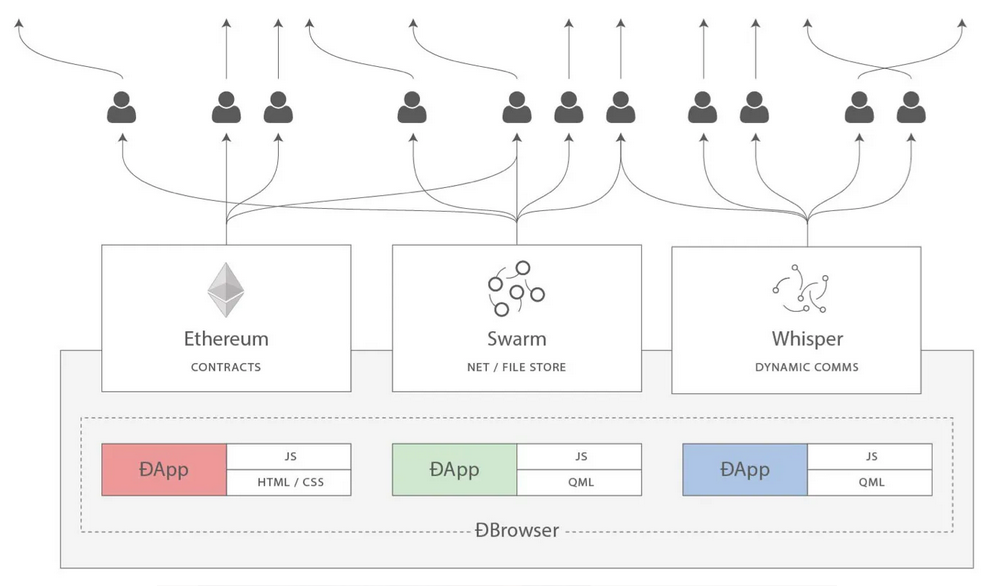
What are the sister technologies like Ethereum, peer-to-peer messaging (then Whisper, now Waku), decentralized file storage (then just Swarm, now IPFS)? A public decentralized shared hard drive. This was the original vision from which the now ubiquitous term Web3 was born.
Unfortunately, since around 2017, these visions have somewhat receded into the background. There’s very little talk about consumer-grade crypto payments, the only non-financial application being used on-chain at scale is ENS, and there’s a huge ideological divide where a significant portion of the non-blockchain decentralized community views the crypto world as A distraction rather than a kindred spirit and strong ally. In many countries, people do use cryptocurrencies to send and store money, but they usually do this through centralized means: either through internal transfers on centralized exchange accounts or by trading USDT on Tron.
Having lived through that era, I feel that the rise in transaction fees is the main reason for this change.
When the cost of writing to the blockchain is only $0.001, or even $0.1, you can imagine that people will create all kinds of applications and use the blockchain for various activities, including non-financial applications. But when transaction fees soar above $100 (as they did at the peak of the bull market), only one type of person is left willing to stay involved - gamblers (actually, they are even richer because rising coin prices make them richer willing to participate).
It’s acceptable to a moderate amount of gamblers, and I’ve met a lot of people at various events who initially joined crypto for the money, but stayed because of the ideals. But when they became the dominant group using blockchain at scale, it changed the public’s perception of the crypto space and the internal culture of the crypto space, and led to many of the negative outcomes we’ve seen over the past few years.
Now, let’s go back to 2023. We actually have a lot of positive progress, both on the core scaling challenges and on the various “side missions” that go into building a truly viable cyberpunk future:
Rollups are starting to really show up.
After a temporary lull following the regulatory crackdown on Tornado Cash, second-generation privacy solutions like Railway and Nocturne are starting to gain traction.
Account abstraction is starting to take off.
Long-neglected light clients began to emerge.
ZK (Zero-Knowledge Proofs), a technology we once thought was decades away, is now here, becoming increasingly developer-friendly, and about to become available for consumer applications.
On the one hand, there is the growing recognition that uncontrolled centralization and excessive financialization cannot represent “everything about crypto”, and on the other hand, the key technologies mentioned above that are finally starting to mature, together provide us with an opportunity to change things Pushing in different directions. Specifically, making at least part of the Ethereum ecosystem truly the permissionless, decentralized, censorship-resistant, open-source ecosystem we originally wanted to build.
What are these values?
These values are shared not only by members of the Ethereum community, but also by other blockchain communities, and even non-blockchain decentralized communities, although each community has its own unique combination of values, and opinions on each of them. The degree of emphasis varies.
Open global participation: Anyone in the world should be able to participate as a user, observer or developer with the greatest degree of equality. Participation should be permissionless.
Decentralization: Minimize the application’s dependence on any single entity. In particular, an application should continue to run even if its core developer disappears forever.
Censorship Resistance: A centralized entity should not have the power to interfere with the operation of any specific user or application. Concerns about bad actors should be addressed higher up the technology stack.
Auditability: Anyone should be able to verify the applications logic and its ongoing operation (e.g., by running a full node) to ensure that it operates according to the rules claimed by the developer.
Trusted neutrality: Base layer infrastructure should be neutral, and in a way that even those who don’t trust the developers can see its neutrality.
Build tools, not empires. Empires seek to capture and trap users, keeping them in their own enclaves; tools fulfill their tasks and interoperate with the wider open ecosystem.
Collaborative mentality: Even when competing, projects within the ecosystem collaborate in areas that are generally valuable to them, such as shared software libraries, research, security, community building, etc. Projects try to stay positive with each other and the wider world.
Within the crypto ecosystem, it is entirely possible to build something that does not adhere to these values. One could build a so-called Layer 2, but in reality it is a highly centralized system secured by multi-signatures, without moving to something more secure. One could build an account abstraction system that attempts to be simpler than ERC-4337, but at the cost of introducing trust assumptions, ultimately eliminating the possibility of a public transaction pool and making it harder for new builders to join. One could build an NFT ecosystem where the content of the NFT is needlessly stored on a centralized website, making it more fragile than if these components were stored on IPFS. One could build a staking interface that needlessly directs users to what is already the largest staking pool.
Resisting these pressures is difficult, but if we don’t we risk losing the unique value of the crypto ecosystem and recreating a clone of the existing Web2 ecosystem, just with a few more inefficiencies and Extra steps.
To become a Teenage Mutant Ninja Turtle, you have to go through the sewers

The crypto space is in many ways a less than tolerant environment.
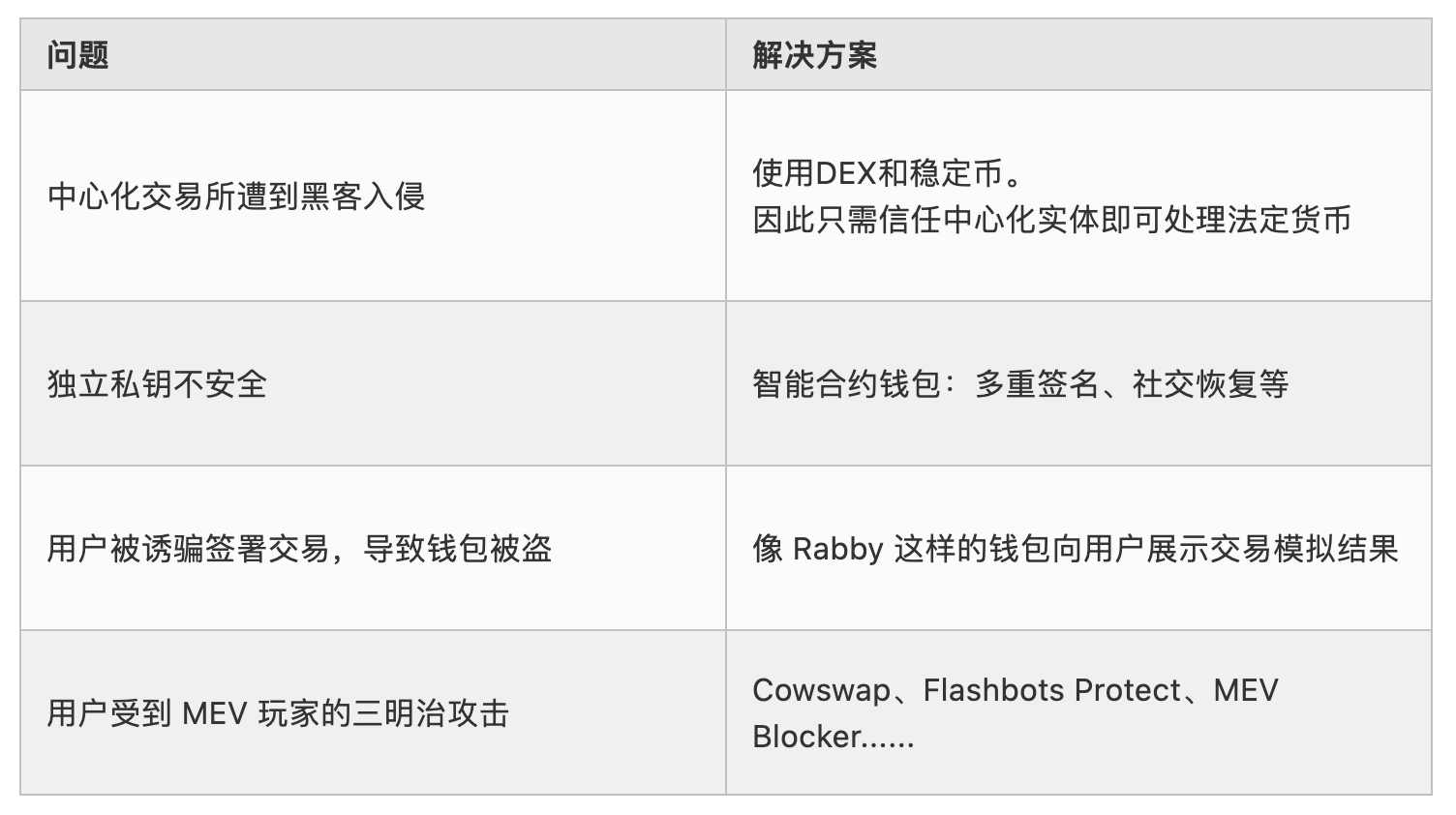
Dan Robinson and Georgios Konstantiopoulos described this vividly in a 2021 article, when discussing Maximum Extractable Value (MEV), they noted that Ethereum is like a dark forest where on-chain traders are constantly faced with being front-loaded. The risk of exploitation by trading robots, and these robots themselves are also easily counterattacked and exploited by other robots, etc. This applies in other ways as well: smart contracts are regularly hacked, user wallets are often hacked, centralized exchanges fail even more miserably, and so on.
This is a huge challenge for users, but it also provides an opportunity: it means that we have a space where we can truly experiment, incubate and provide rapid feedback on various security technologies to address these challenges. We have seen successful responses to challenges in different contexts:
Everyone wants the Internet to be safe. Some have attempted to secure the internet by promoting approaches that rely on a single specific actor—whether a company or a government—that can serve as a centralized anchor of security and truth. But these approaches sacrifice openness and freedom and lead to the tragedy of a growing “fragmented Internet.”
People in the crypto space place a high value on openness and freedom. The level of risk involved and the high financial stakes mean that the crypto space cannot afford to ignore security, but for various ideological and structural reasons it cannot adopt a centralized approach to security. At the same time, the crypto space is at the forefront of powerful technologies such as zero-knowledge proofs, formal verification, hardware-based key security, and on-chain social graphs. These facts combined mean that, for the world of cryptography, the only way to improve security is through an open approach.
All of this is to say that the crypto world is a perfect testing environment to take its open and decentralized approach to security and actually apply it in a realistic high-stakes environment and mature it to the point where it can be used in more wide range of applications in the world. This is my kind of vision for the crypto world, how to turn their differences into a symbiotic relationship between the idealistic and chaotic parts of the crypto world, and the crypto world as a whole and the broader mainstream, and Not constant tension.
Ethereum as part of a broader technology vision
In 2014, Gavin Wood introduced Ethereum as one of a series of buildable tools, the others being Whisper (decentralized messaging) and Swarm (decentralized storage). The former has received significant emphasis, but with the shift towards financialization around 2017, the latter has unfortunately received less attention and investment. Despite this, Whisper lives on as Waku and is actively used by projects like decentralized messaging app Status. Swarm continues to be developed and now we also have IPFS, which is used to host and serve this blog.
Over the past few years, with the rise of decentralized social media (like Lens, Farcaster, etc.), we’ve had the opportunity to revisit these tools. Additionally, we have another very powerful new tool joining the trio: zero-knowledge proofs. These technologies are most widely adopted to improve Ethereum’s scalability as ZK Rollup, but they are also well suited for privacy protection. In particular, the programmability of zero-knowledge proofs means that we can move beyond the false binary of “anonymous but risky” versus “KYCed and therefore secure” to achieve both privacy and multiple authentications and verifications.
An example for 2023 is Zupass. Zupass is a zero-knowledge proof-based system incubated by Zuzalu, which is used for identity authentication at live events and online authentication to voting systems Zupoll, Twitter-like Zucast, etc. The key feature of Zupass is that you can prove that you are a resident of Zuzalu without revealing which member of Zuzalu you are. Additionally, each Zuzalu resident can only have one randomly generated cryptographic identity for each application instance they are logged into (e.g., a poll). Zupass was a huge success and was used for ticket processing at Devconnect later that year.
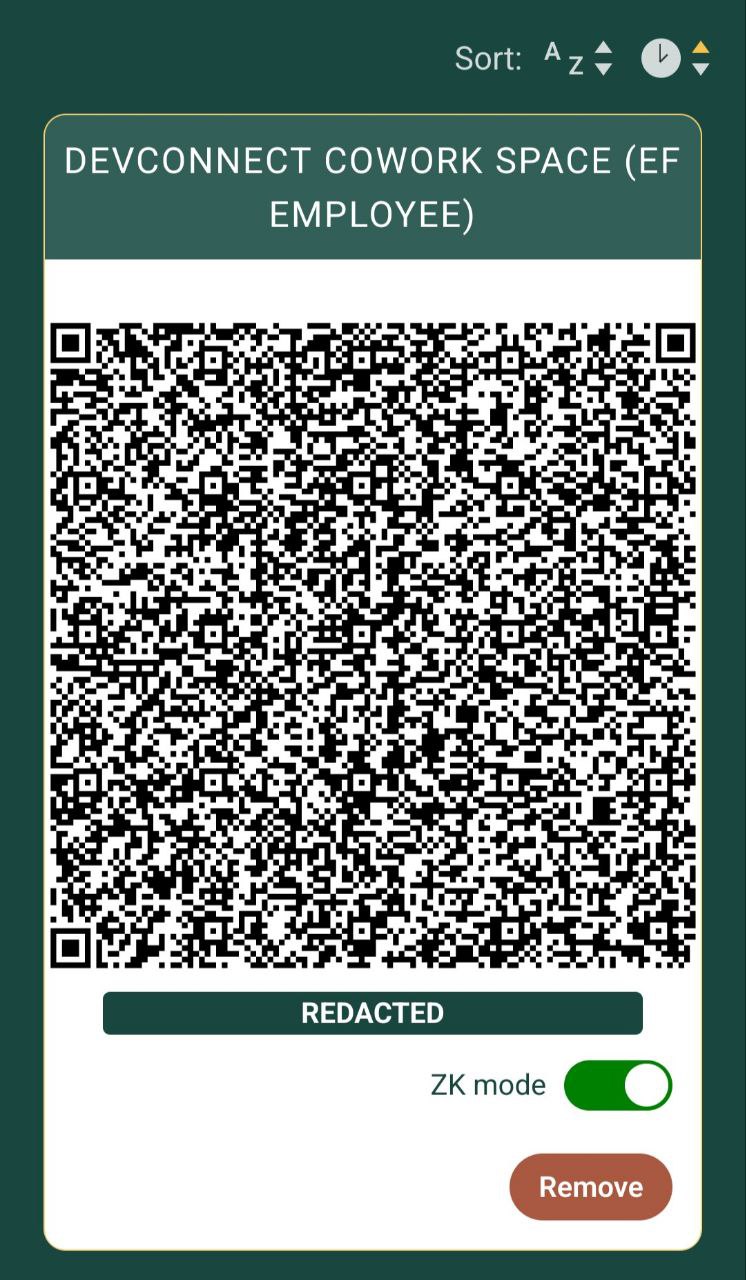
(This ZK can prove that I am an employee of the Ethereum Foundation to access the Devconnect co-working space.)
Probably Zupass’s most useful application to date is voting. There are already various polls being conducted on it, some involving politically controversial or very personal topics, and there is a strong need for people to protect their privacy and use Zupass as an anonymous voting platform.
Here we can start to see the outlines of an Ethereum-style cyberpunk world, at least on a purely technical level.
We can hold Ethereum and ERC 20 tokens, as well as various NFTs, using a privacy system based on stealth addresses and privacy pool technology to protect our privacy while preventing known bad actors from profiting from the same anonymity set. Whether inside our DAO, to help decide changes to the Ethereum protocol, or for any other goal, we can use zero-knowledge voting systems that can use a variety of credentials to help determine who has voting rights and who doesnt. : In addition to the token-based voting conducted in 2017, we can conduct anonymous voting for people who have contributed enough to the ecosystem, participated in enough activities, or one person, one vote.
Face-to-face and online payments can be made through ultra-low-cost transactions on L2, which leverage available data space (or off-chain data protected with Plasma) and data compression to provide users with ultra-high scalability. Payments from one Rollup to another Rollup can be made through decentralized protocols such as UniswapX. Decentralized social media projects can use various storage layers to store activities such as posts, retweets, and likes, and use ENS (cheaply using CCIP on L2) as usernames. We can have seamless integration between on-chain tokens and claims held off-chain through systems like Zupass and passed through zero-knowledge proofs.
Mechanisms such as quadratic voting, cross-tribal consensus finding, and prediction markets can be used to help organizations and communities govern themselves and keep information flowing, and identities based on blockchain and zero-knowledge proofs can make these systems immune to both internal centralized scrutiny and Manipulated by external coordination. Sophisticated wallets can protect people as they participate in dApps, user interfaces can be published to IPFS and accessed through .eth domains, and hashes for HTML, javascript, and all software dependencies can be updated directly on-chain through the DAO. Smart contract wallets, born to help people not lose tens of millions of dollars in cryptocurrency, will expand to protect people’s “identity roots,” creating a more secure system than centralized identity providers like Sign In with Google .
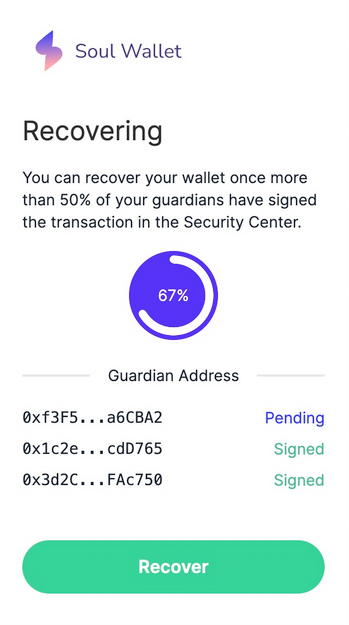
(Soul Wallet recovery interface. Personally, I would rather trust my funds and identity to such a system than a centralized Web2 recovery.)
We can think of the broader Ethereum ecosystem (or “Web3”) as creating an independent technology protocol stack that competes on all levels with traditional centralized protocol stacks. Many people mix the two technologies, and there are often clever ways to match them up: with ZKEmail, for example, you can even make an email address one of the keepers of your social recovery wallet! But at the same time, there are many synergies in using different parts of the decentralized stack, especially when they are designed to better integrate with each other.
This decentralized technology stack not only provides an alternative to traditional centralized technologies, but also provides users and developers with the possibility of more innovation and autonomy:
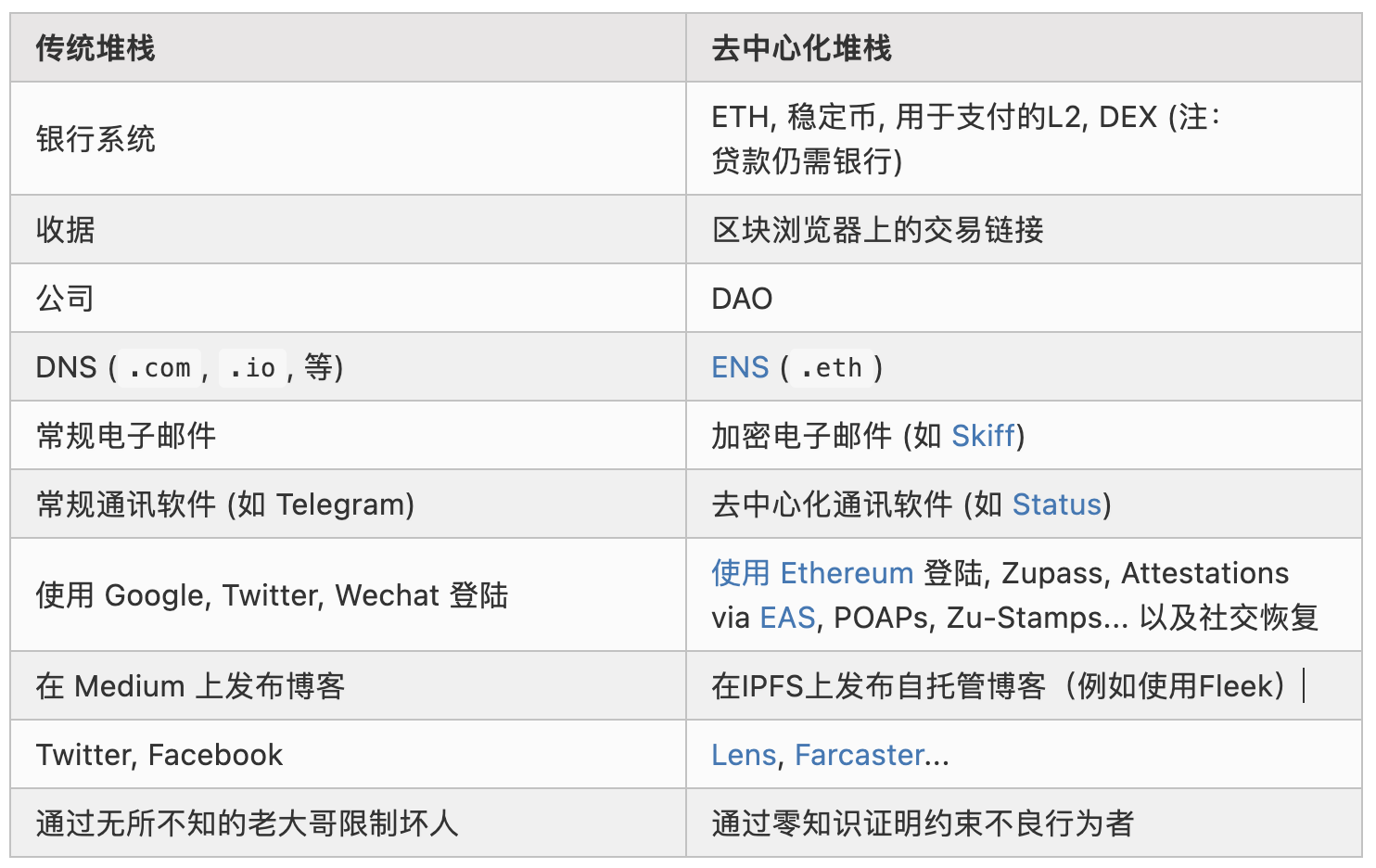
One of the benefits of thinking of it as a technology stack is that this fits well with Ethereum’s pluralist ethos. Bitcoin aims to solve one or at most two or three problems. Ethereum, on the other hand, has many sub-communities that focus on different areas. There is no single dominant narrative in Ethereum. The goal of this technology stack is to promote this pluralism while also striving to achieve growing interoperability among these diversities.
social layer
These people who do X are corrupt and bad, and these people who do Y are the real ones. Its easy to say this, but its a lazy response. To truly succeed, we not only need a vision for the technology stack, but also the social parts of the stack that make building the technology stack possible in the first place.
In principle, the strength of the Ethereum community is that we take incentives seriously. PGP wanted to put encryption keys into everyones hands so we could actually sign and encrypt email for decades, but it largely failed. Then we got cryptocurrencies, and suddenly millions of people had publicly associated keys that we could start using for other purposes—including going back to the beginning of encrypted email and messaging. Non-blockchain decentralized projects tend to be chronically underfunded, while blockchain-based projects can secure $50 million in Series B funding. We didn’t get people to stake ether to secure the Ethereum network because of the generosity of the stakers, but because they were looking out for their own self-interest — and we got $20 billion in economic security as a result.
At the same time, incentives alone are not enough. DeFi projects often start out humble, collaborative, and as open-source as possible, but sometimes begin to abandon these philosophies as they grow in size. We can incentivize stakers to participate and maintain very high uptime, but incentivizing stakers to decentralize is much harder. Simply using the means within the agreement may not be possible at all. Many key parts of the “decentralized stack” described above do not have viable business models. The governance of the Ethereum protocol itself is significantly non-financialized – making it more robust than other ecosystems whose governance is more financialized. This is why it’s valuable for Ethereum to have a strong social layer that strongly enforces its values where pure incentives cannot — but without creating a new politically correct notion of “Ethereum consistency” .
In short, Ethereum’s success depends not only on its technology and incentives, but also on its strong social aspects. This social layer emphasizes values, collaboration, and decentralization, helping to sustain and advance the core vision of the Ethereum ecosystem. This integrated approach to technological innovation and social responsibility is one of the key factors that distinguishes Ethereum from other blockchain platforms, and is also an important driving force for its continued growth and development.

Finding a balance between these two aspects is crucial, but a more appropriate term might be fusion. There are many people who initially came into crypto out of a desire to get rich, but then became familiar with the ecosystem and became fervent believers in building a more open, decentralized world.
So, how do we achieve this integration? This is a critical question, and I suspect the answer lies not in some magic solution but in a series of technologies that will be arrived at through iteration. The Ethereum ecosystem has been more successful than most at encouraging a collaborative mentality among Layer 2 projects through social means. In particular, large-scale public funding like Gitcoin Grants and Optimism’s RetroPGF round is also extremely helpful, as it creates another revenue stream for developers who are unwilling to sacrifice their values for a business model. But even though these tools are still in their infancy, we still have a long way to go to improve these specific tools and identify and develop other tools that may be better suited to specific problems.
This is where I see the unique value proposition of the Ethereum social layer. There’s a unique mix here: valuing motivation, but at the same time not being consumed by it. There’s a unique mix here: valuing a warm and cohesive community, but also remembering that what feels “warm and cohesive” from the inside can easily become “oppressive and exclusive” from the outside, and valuing neutrality, open source, and censorship resistance of rigid norms as a safeguard against the risks of being overly community-oriented. If this mix can be achieved well, it will in turn be in the best position to realize its vision on both an economic and technological level.





