An article to understand the new player Obol Network on the LSD track: DVT technology, basic structure, financing situation


basic introduction
basic introduction
Obol Labs is a research and software development team focused on proof-of-stake infrastructure for public blockchain networks, responsible for promoting the adoption of distributed validator technology by developing the Obol network and its ecosystem.
The Obol Network, currently being built by the core team at Obol Labs, is an ecosystem for trust-minimized staking, enabling people to create, test, run, and coordinate distributed validators. Obol believes that distributed validators will occupy a large part of the main network validator configuration in the future, so it is committed to extending consensus by providing distributed validators (DVT) without permission access, which are used as the core construction of various Web3 products piece.
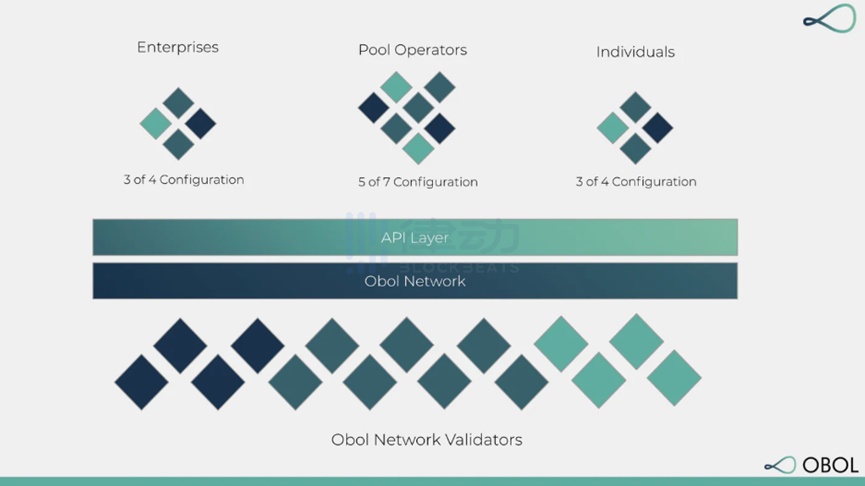
Obol aims to build a PoS operation that supports Ethereum, establish an encrypted economic protocol and a diverse community to develop DVT, make raw data a sustainable public product, and improve the security and flexibility of public blockchain networks.
secondary title
DVT technology
Distributed Validator Technology (DVT) is similar to the multi-signature of consensus voting, which allows the Ethereum PoS verifier to be performed on multiple nodes or machines, so that the verifier can vote on multiple nodes and support Ethereum Validating its distributed operation is the core purpose of the technology.
This opens the way for institutional staking, as validators can be ensured to meet the higher standards required by institutions. This also democratizes ETH staking, allowing users to run a single validator with less than $32 ETH.
In simple terms, an ordinary node can be regarded as a network composed of consensus and EVM, while a DVT node is composed of multiple consensus and execution clients distributed on multiple machines.
first level title
Obol Network basic structure
secondary title
1、DV Launchpad
The vast majority of users who have created validators so far have used the Ethereum 2 Staking Launchpad public welfare open source website, which was established by the Ethereum Foundation together with Obol's core team. This non-profit open-source website tool has had great success in the safe and educational creation of a large number of validators on the Ethereum mainnet.
To facilitate the generation of distributed validator keys among highly trusted remote users, the Obol Network has developed and maintains a website that enables a group of users to come together and create these threshold keys: DV Launchpad. DV Launchpad is a distributed validator launchpad launcher for bootstrapping or creating user application interfaces for distributed validators.
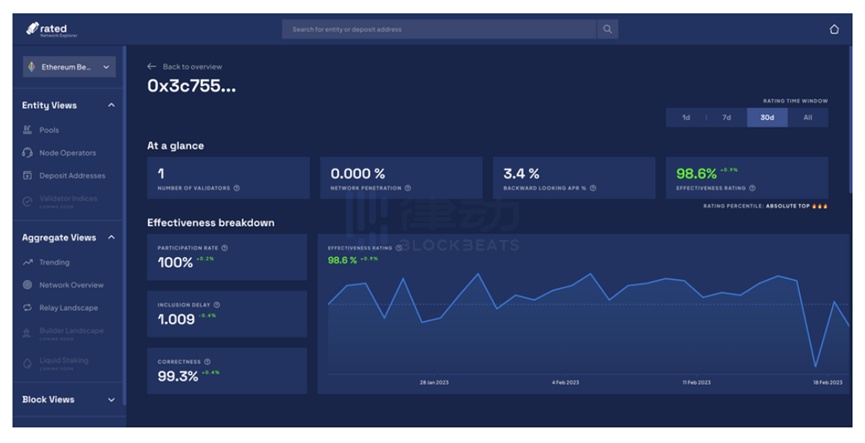
On February 22, Obol announced the release of Mainnet Ethereum's first distributed validator. Obol believes that this marks the arrival of a new chapter in Ethereum staking, a more secure, resilient and decentralized network for all validators and stakers A new chapter of globalization. The strong performance of validators shows that DVT holds promise for improving the performance, resiliency, and security of Ethereum validators, especially for those who can run validators at home.
secondary title
2、Charon
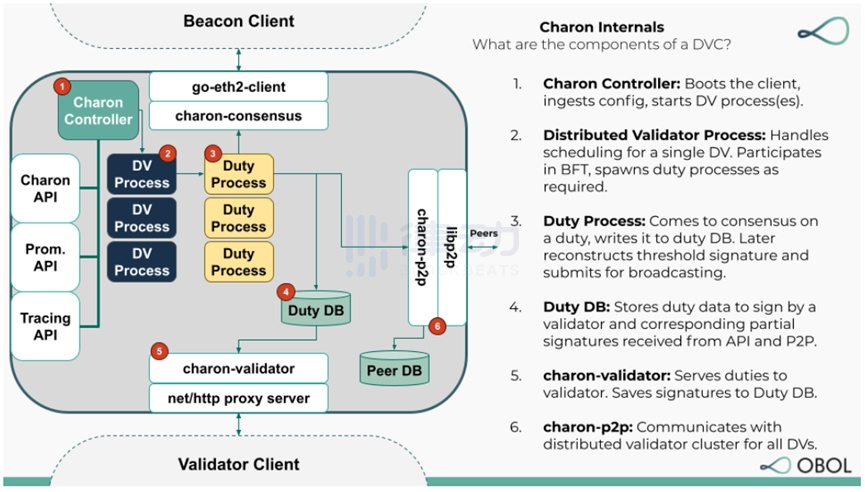
Charon is a GoLang-based HTTP middleware built by Obol that enables any existing Ethereum validator client to run together as part of a distributed validator.
Charon acts as a middleware between common authentication clients and their connected beacon nodes, intercepting and proxying API traffic. Multiple Charon clients are configured to communicate together to agree on validator responsibilities and act together as a unified proof-of-stake validator. These nodes form a cluster which is Byzantine Fault Tolerant and keeps going until the majority of working/honest nodes are satisfied.
secondary title
3、Obol Managers
secondary title
4. Obol Testnet
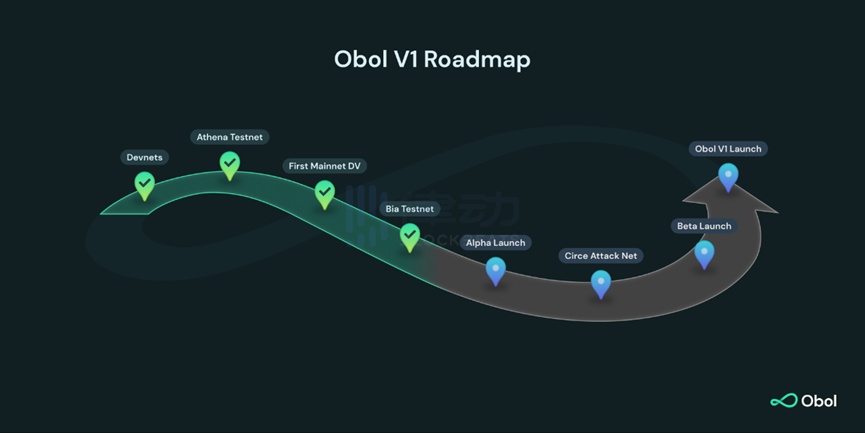
The Obol testnet is a set of continuous public incentive testnets that enable operators of any size to test deployments before serving the mainnet Obol network. In the V1 phase, Obol has five testnets.
Dev Net 1 is the first development test, designed to allow trusted operators to test the earliest processes, completed in June 2022. Dev Net 2, the second development test to bring many trusted operators together to test the earliest process, was completed in July 2022. Athena Public Testnet 1 is the first public testnet, a non-incentivized public testnet, laying the foundation for the official discovery of the witch resistance mechanism, which will be completed in October 2022.
Team & Financing
Team & Financing
Obol Labs' team currently includes 22 members distributed around the world, including co-founder Collin Myers (former head of global product strategy, from the ConsenSys team) and CTO OisinKyne (previously also a member of the ConsenSys team), mainly as technical developers for leading. Before founding Obol, the team researched and built Proof of Stake Ethereum for more than three years, responsible for many widely used tools and research work in the ETH ecosystem, such as Eth 2 LaunchPad, Eth 2 calculator, Internet Bonds paper in Eth 2, and EF's early DVT studies.
In September 2021, Lido provided a $100,000 LDO grant to Obol to continue researching and building the protocol. In October 2021, Obol completed a financing of US$6.15 million. Investors include ConsenSys, Acrylic Capital, Coinbase Ventures, IOSG Ventures, Blockdaemon, Delphi Digital, Stakefish, Figment Fund, Chorus One, Staking Facilities, The LAO, etc.
route map
route map
The Obol V1 roadmap announced by Obol Labs is: