






The dazzling star in the crypto winter: the status quo, challenges and opportunities of the Web3 wallet track


first level title
Wallet (Crypto Wallet) is often called encrypted wallet or digital wallet. In the Web3 world, the wallet not only undertakes the function of asset management in the traditional sense, it is also an essential tool in the Web3 world. From an academic definition, a wallet is a storage tool for the private key, and the private key can be understood as the account password of the wallet.
secondary title
1.1 Introduction to public and private keys
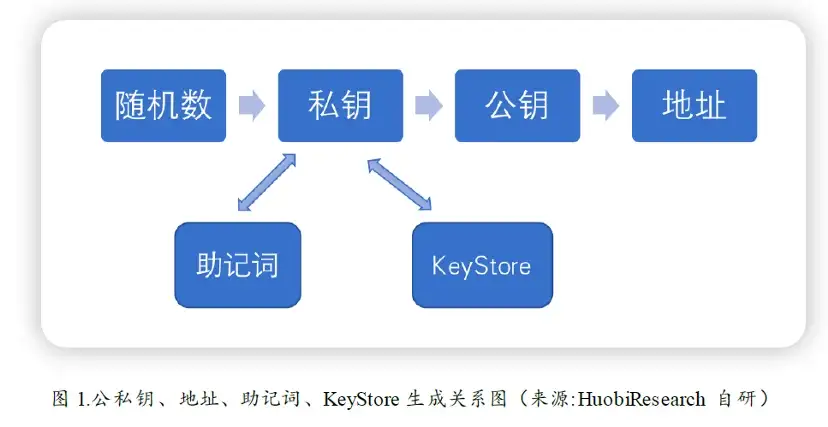
In the concept of wallet, the most basic is the private key, public key and their mechanism. The figure below well reflects the relationship between random numbers, public and private keys, addresses, mnemonics, and KeyStore. A brief explanation is as follows:
Random number: A random number is a random number in the computer, there are 16 to the 64th power possible, this number is approximately equal to the number of all atoms in the universe;
Private key: The private key is generated by random number processing, and the public key is generated through asymmetric encryption (elliptic algorithm);
(1) Private key and mnemonic: the mnemonic is formed after format conversion;
(2) Private key and KeyStore: KeyStore is a file format (JSON) for storing private keys. Users can customize the password, and it is convenient for backup and import. If the other party does not know the password when it is lost, the private key cannot be imported. KeyStore is used to keep private keys conveniently without losing security
Public key and address: The public key is one-way calculated from the private key. After hash operation and encoding format conversion, and after taking the tail, it will generate our common address starting with "0x";
The above is an introduction to public and private keys using Ethereum as an example. Although the address format and standards of non-Evm-compatible public chains are different from the above, the principle of generating public keys from random numbers to private keys and then forming addresses And the process is the same.
secondary title
1.2 Classification of wallets
From the above analysis, we can see that the concept of the wallet is mainly due to the need to figure out the public and private keys. There are many classification methods for wallets at present. According to our general classification method accepted by the public, we can classify according to the following logic:
Dimension 2: According to whether the wallet private key is connected to the Internet, it can be divided into cold wallet and hot wallet. The concept of generalized cold wallets includes "paper wallets" stored with mnemonic words, offline mobile phones, hardware wallets, etc. The hot wallet refers to the wallet whose private key needs to be connected to the Internet when the transaction is signed, including our commonly used wallet APP, web page plug-in wallet, etc.
2. Wallet track market situation
secondary title
2.1 Overview of Wallet Track Market
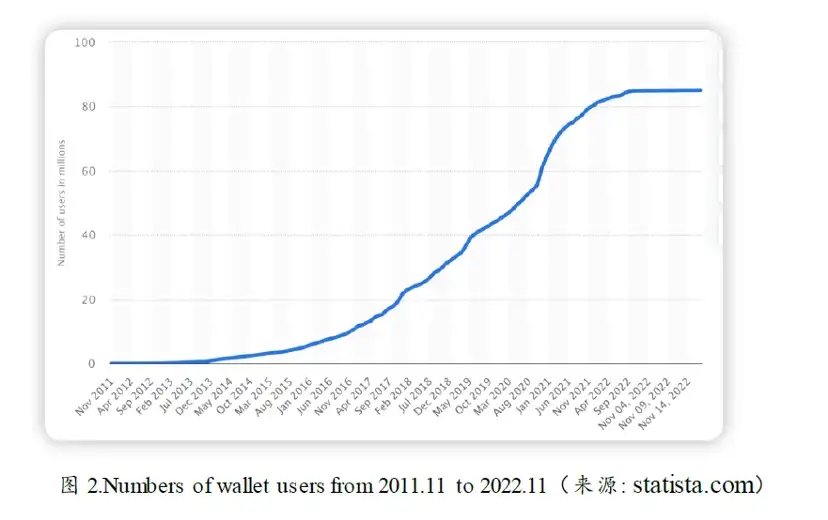
From the perspective of the number of users, there are currently more than 300 million people in the world using encrypted assets. According to data from statista.com, as of November 2022, the number of global wallet users is 85 M, compared with 80 M at the end of 2021 (December). M increased by about 6.3%, a drop from the previous year's 35% increase, but with the end of the bear market and the arrival of the next cycle, it is currently on the eve of explosive growth.
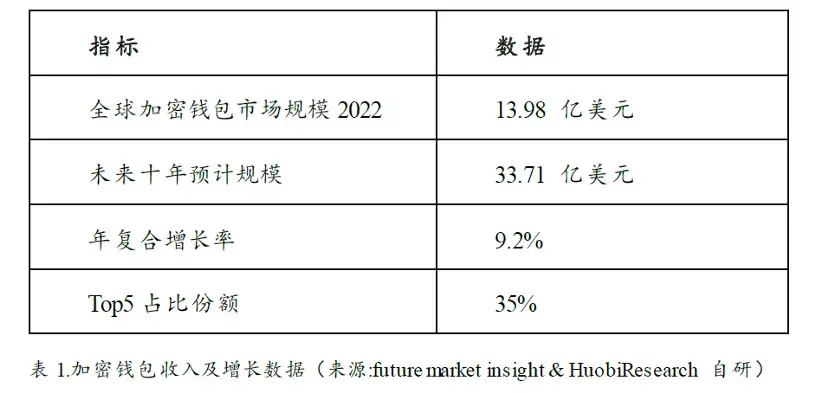
From the perspective of regional distribution, North America started earlier in the global market and occupies a dominant position. Dominated the crypto wallet market in the previous year with a revenue share of over 30.0%. There are several major players in the North American market, including Coin base Global, Inc., Bit Go, and Bit Pay, among others. In June 2022, PayPal Holdings, Inc. announced that all eligible PayPal account holders in the United States can now use PayPal to send and receive cryptocurrencies, which also accelerated the growth of wallet users to a certain extent. Followed by the Asia-Pacific region, especially mainland China and Hong Kong, China is the fastest growing regional market. The Asia-Pacific region will play a vital role in blockchain innovation. The region's large population, including a financially aware and technologically inclined population, is driving innovation in crypto wallets in the region.
secondary title
2.2 Profit model of the wallet
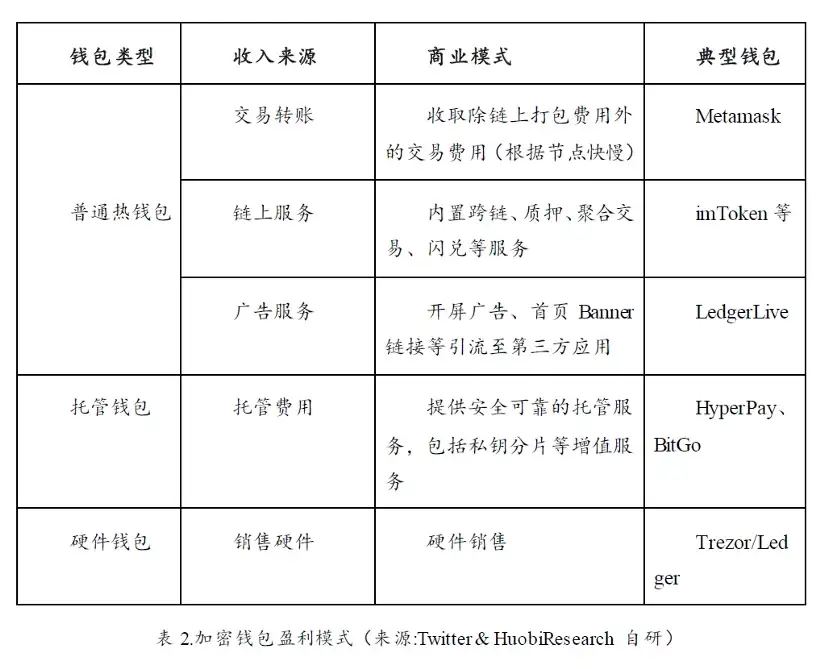
The current profit model of encrypted wallets is constantly changing with the development of the industry. In most of the early wallet (hot wallet) APP, it mainly existed as a private key storage and management tool, that is, it was used to deposit users' funds. Before the application of various types of chains in 2020, the main profit model is to charge transaction fees, and the scale of wallet income is relatively small based on this.
At present, the encrypted wallets in the market can be viewed from ordinary hot wallets, managed wallets and hardware wallets. We have surveyed and counted most of the wallets on the market, and their income sources and business models are analyzed as follows:
secondary title
2.3 Head Wallet Introduction
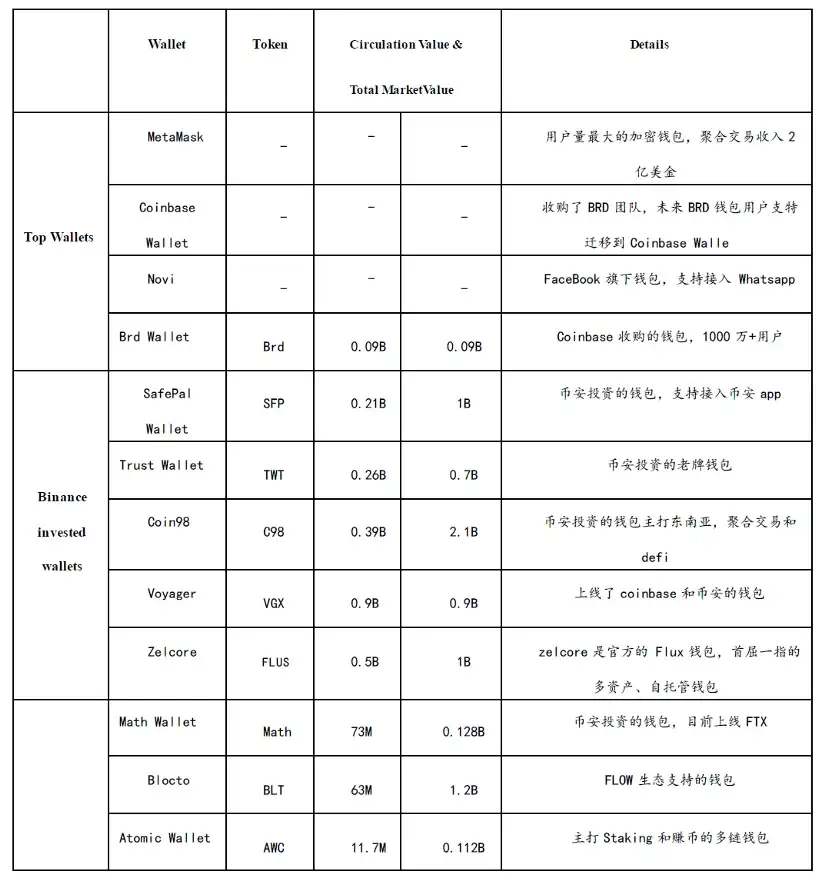
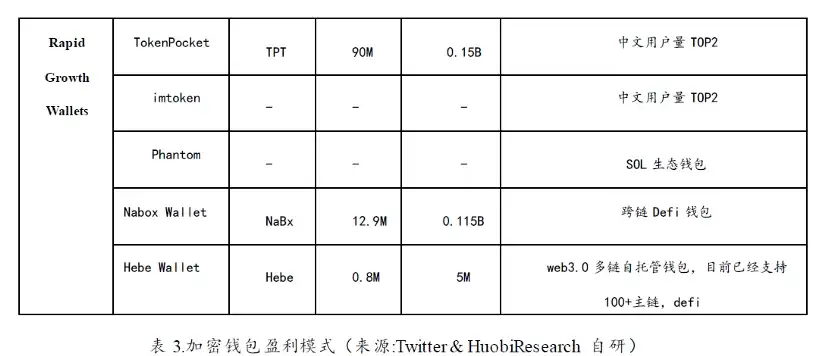
On the whole, Meatmask, as the wallet of the giants, has the highest income (reaching 200 million US dollars), and the second echelon is the wallet owned by Binance, especially the Coin 98 wallet, which focuses on aggregated transactions and DEFI, and its market value is as high as 2.1 B. Among the fast-growing wallets, imToken and TokenPocket are the most well-known, ranking first in the Chinese circle.
first level title
In the current bull-bear cycle (2020-present), the development of wallets has entered the fast lane, and many innovations have accelerated the development of wallets, such as DeFi Summer in 2020, and the public chain ecology in 2021. However, the development of wallets Various challenges have been faced, such as ease of use (user-friendliness), security, and privacy and regulation.
secondary title
3.1 Ease of use (user-friendliness)
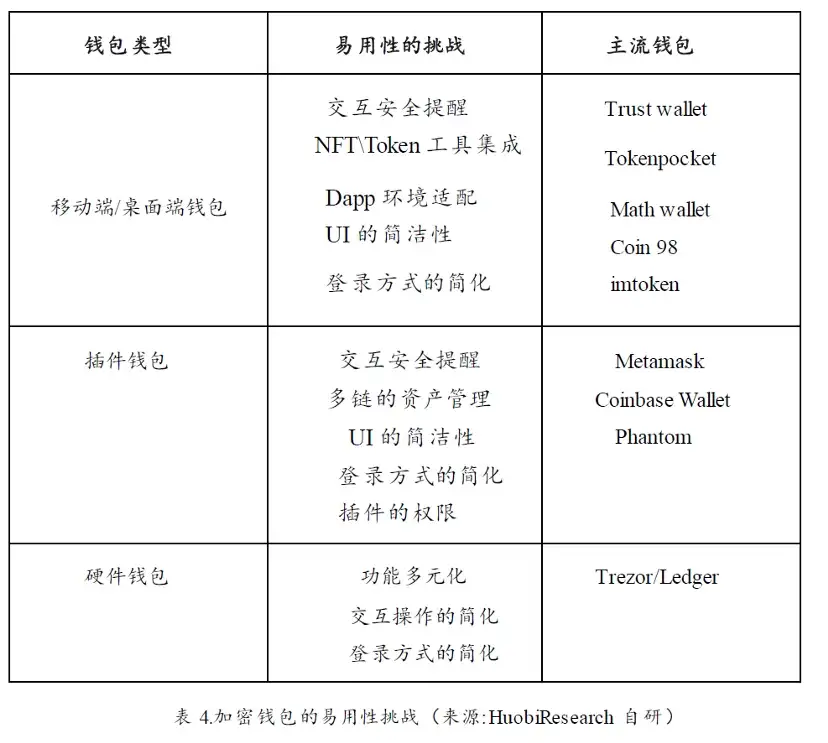
The interaction experience between users and wallets is currently poor for most wallet brands, and there are many areas that can be improved and perfected, such as more user-friendly interactive anti-phishing (security) reminders on the plug-in side and mobile phone side, more convenient and User-friendly NFT\Token tool integration, more widely applicable Dapp environment adaptation, etc. (Table 4). In addition to the interactive experience, the use/login method/UI of the wallet is currently different from the use of Web2 applications. It is precisely because of the above-mentioned lack of ease of use of decentralized wallets that many new and old users finally choose traditional centralized wallets. Although the centralized wallet has certain artificial security risks, it is easy to operate and has a friendly user interface. If the decentralized wallet wants to gain more users, it must solve the problem of ease of use.
secondary title
3.2 Privacy and Regulation
Privacy and regulation have been unavoidable topics in the Web3 field, and this is also a problem encountered by wallets, including user data privacy, wallet business compliance, etc.
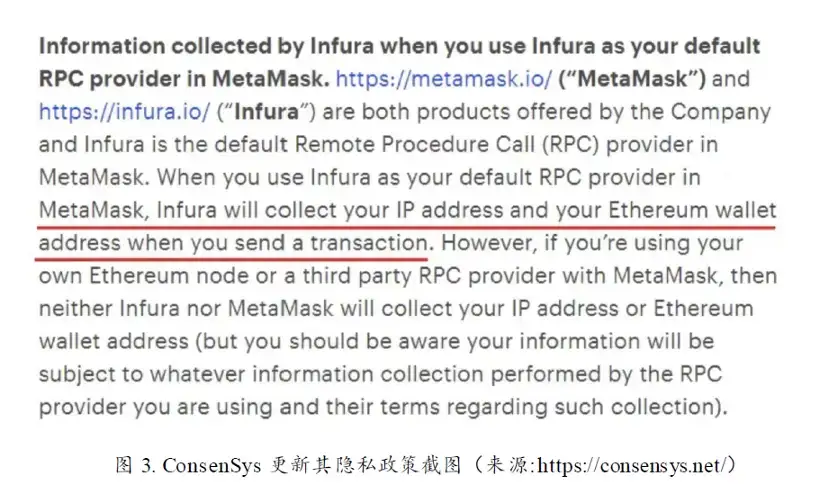
Recently, the privacy collection incident of Metamask finally brought the issue of wallet privacy to the fore. First, the blockchain development platform Alchemy updated its privacy statement in October, saying that it may automatically collect IP addresses, user settings, MAC addresses, cookie identifiers, Mobile operator, browser or device information, location information, Internet service provider and other personal information may also obtain user personal information through third-party services and organizations. And on November 23, ConsenSys’ privacy policy update caused major communities and media to detonate discussions on wallet privacy. ConsenSys (the parent company of MetaMask and Infura) updated its privacy policy stating that when a user uses Infura as the default RPC in MetaMask, the corresponding IP address and ETH address will be collected when the user sends a transaction (Figure 3).
The wallet is currently the largest traffic portal in the Web3 ecology, but in the current situation where the profit model of the wallet is not clear, how the wallet operates a compliant business is not a small problem. Wallet service providers provide services such as currency exchange and lending of digital assets. Global sales and agents of hardware wallets should comply with the policies and regulations of the country where the wallet is located.
secondary title
3.3 Security
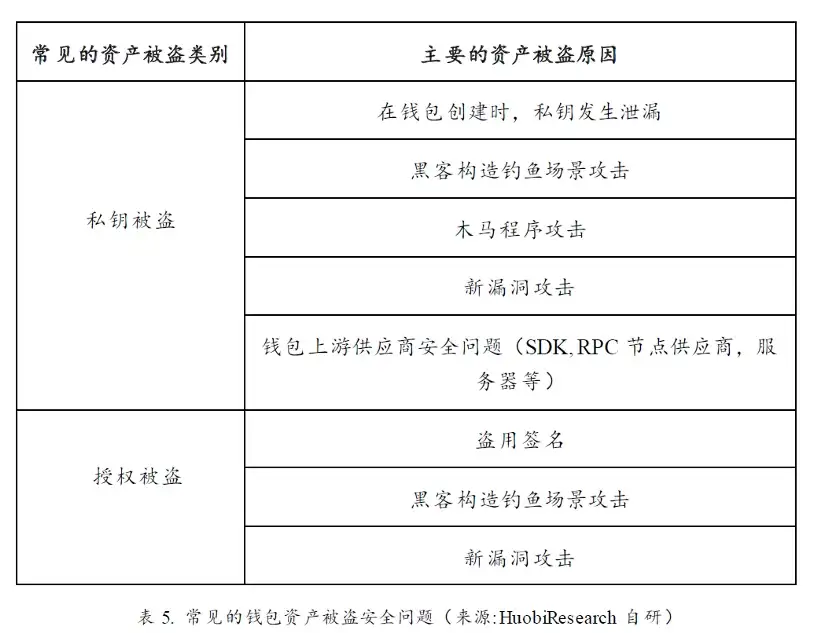
For users, the biggest security challenge at present lies in the custody of private keys and the prevention of social engineering attacks. The lack of security knowledge and awareness, and bad operating habits will create great opportunities for hackers. For wallet developers, the underlying security of the wallet is also full of challenges. In addition to open source wallet code, development must also do a good job in code security audits for each major update, storage and management of wallet private keys, etc.
first level title
Wallets and wallet Dapp ecology have made great progress in this round of bull-bear cycle (2020-present). As the traffic entrance of Web3, wallets have become an essential tool for new users to enter the encryption field, as well as the most important blockchain foundation One of the facilities. Entrepreneurs flooding into the wallet track are also competing in multiple directions, such as EOA wallets, smart contract wallets, and MPC multi-signature wallets. Looking forward to the future, the importance of the wallet portal may surpass all trading platforms and become the Web3 traffic center. It is expected to take the lead in the development of Web3 identity portals, payment portals, non-self-custodial wallets and multi-chain wallets.
secondary title
4.1 Web3 Identity Entry
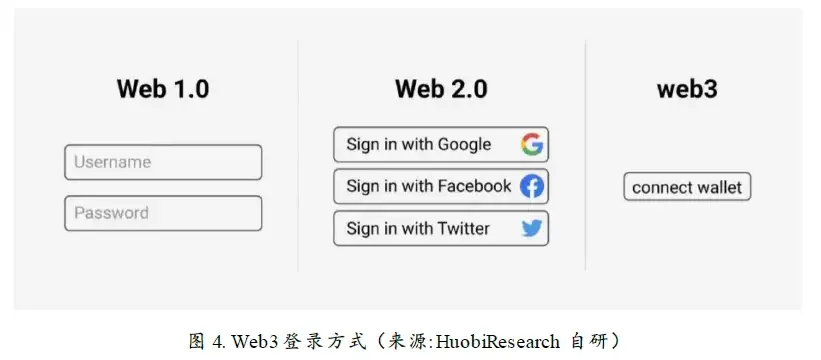
Web3 is a decentralized version of the current Web2 Internet, built on top of blockchain and cryptography. Web3 not only enables users to use the Internet more fairly, but also allows users to control their own data, host their own websites and applications, and use encrypted applications to freely conduct transactions without centralized corporate management authority, and generally avoid Centralized control for Web 2.0. The decentralized nature of Web3 offers various advantages and endless possibilities. According to the GrandView report data, by 2030, the global Web3.0 blockchain market size is expected to reach 33.53 billion US dollars, with a compound annual growth rate of 44.9% from 2022 to 2030.
In the future, users' encrypted wallets will serve as an identity portal, not only can they access any digital assets and metaverse virtual assets (land, real estate, game props, etc. NFT) they own, but also use their identities to participate in the chain that meets their requirements. Among the projects of identity.
secondary title
At present, ToC's cryptocurrency payment is still in a very early stage due to various reasons, such as the imperfection of global regulatory laws and merchants' low awareness of cryptocurrency, etc. However, with the gradual popularization of cryptocurrency and the implementation of regulatory laws, Project developers and cryptocurrency payment users are increasing. As a Web3 traffic portal, the wallet can integrate all projects that can be used for cryptocurrency payment into the wallet, forming a new generation of Web3 payment ecosystem. All relevant offline and online operations of the user can be performed through the wallet, including shopping, ordering meals, taking taxis, traveling and other P2P payments.
secondary title
4.3 Non-self-custodial wallets
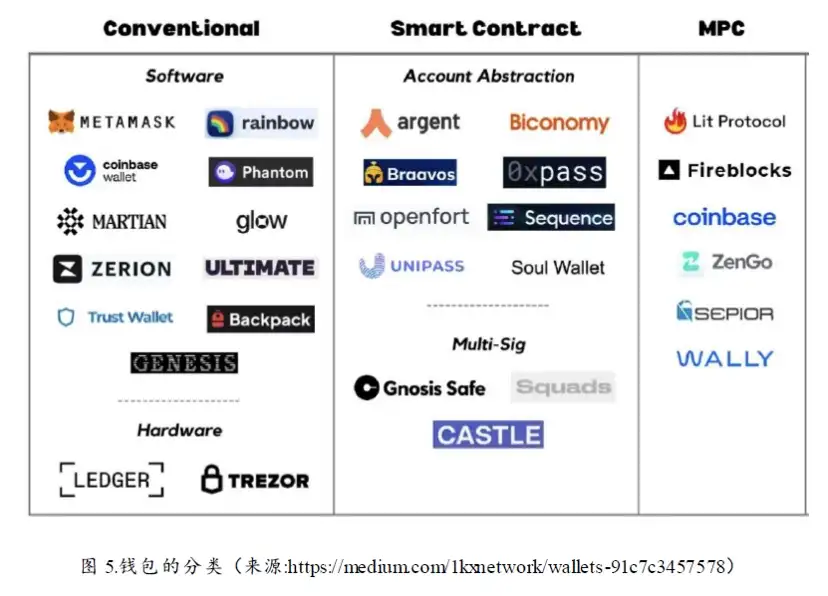
For users who are new to Web3, the login experience is very different, even intimidating. The traditional EOA wallet needs to go through a series of complex and cumbersome processes such as wallet generation, private key management, and storage of mnemonic words before starting to use the wallet safely. The next generation of non-self-custodial wallets without mnemonic wallets is reducing the cost of entry for Web2 users by simplifying the login process and complexity of use. In the foreseeable future, non-self-custodial wallets are likely to become the next growth point for Web2 users to enter Web3.
secondary title
4.4 Multi-chain wallet
contact us:
About Huobi Research Institute
Huobi Blockchain Application Research Institute (referred to as "Huobi Research Institute") was established in April 2016. Since March 2018, it has been committed to comprehensively expanding research and exploration in various fields of blockchain, with a view to pan-blockchain As the research object, the research objectives are to accelerate the research and development of blockchain technology, promote the application of blockchain industry, and promote the ecological optimization of blockchain industry. The main research contents include industry trends, technical paths, application innovation, Pattern Exploration, etc. In line with the principles of public welfare, rigor, and innovation, Huobi Research Institute will carry out extensive and in-depth cooperation with governments, enterprises, universities and other institutions through various forms, and build a research platform covering the complete industrial chain of the blockchain. Industry professionals provide a solid theoretical foundation and trend judgment to promote the healthy and sustainable development of the entire blockchain industry.
contact us:
Consulting email: research@huobi.com
4. The information, opinions and speculations contained in this report only reflect the judgment of the researchers on the date of finalizing this report. In the future, based on industry changes and updates of data information, there is a possibility of updating opinions and judgments.
Twitter: Huobi_Research
https://twitter.com/Huobi_Research
Medium: Huobi Research
https://medium.com/huobi-research
Telegram: Huobi Research
https://t.me/HuobiResearchOfficial
disclaimer
1. Huobi Blockchain Research Institute does not have any relationship with the projects or other third parties involved in this report that affect the objectivity, independence, and impartiality of the report.
2. The materials and data cited in this report are all from compliant channels. The sources of the materials and data are considered reliable by Huobi Blockchain Research Institute, and necessary verifications have been carried out for their authenticity, accuracy and completeness , but Huobi Blockchain Research Institute does not make any guarantees about its authenticity, accuracy or completeness.
3. The content of the report is for reference only, and the conclusions and opinions in the report do not constitute any investment advice on relevant digital assets. Huobi Blockchain Research Institute is not responsible for any losses caused by the use of the content of this report, unless it is clearly stipulated by laws and regulations. Readers should not make investment decisions solely based on this report, nor should they lose the ability to make independent judgments based on this report.
4. The information, opinions and speculations contained in this report only reflect the judgment of the researchers on the date of finalizing this report. In the future, based on industry changes and updates of data information, there is a possibility of updating opinions and judgments.
5. The copyright of this report is only owned by Huobi Blockchain Research Institute. If you want to quote the content of this report, please indicate the source. Please let me know in advance if you need to quote a lot, and use it within the scope of permission. Under no circumstances shall any quotation, abridgement and modification contrary to the original intention be made to this report.


