Genesis is facing a bankruptcy crisis. How is the development of other subsidiaries of DCG?


Genesis stepped into the trap several times in Luna/UST, Three Arrows Capital, Babel, FTX/Alameda and other incidents, and finally announced on November 16 that it would suspend redemption and the issuance of new loans. After seeking financing and being turned down by multiple institutions, the chances of Genesis getting an investment have diminished over time, and bankruptcy may be the endgame. Because of the debt relationship between Genesis and DCG, if Genesis goes bankrupt, DCG may be affected. How is the development of other subsidiaries of DCG, and can it help DCG tide over the difficulties?
Genesis suffers a deficit of US$1 billion in a row, DCG may be insolvent
Genesis’s stepping on the pit starts with LUNA. In May of this year, Luna Foundation Guard (LFG) exchanged BTC of the same value with Genesis and 3 AC for 1.5 billion UST. Genesis may have paid $1 billion in BTC in it, or it may just be a broker in it, depending on Genesis' business. It’s not clear exactly what the deal was, but if it’s the former possibility, Genesis has already lost $1 billion in the deal.
After the liquidation of 3 AC Thunder, Genesis still has bad debts of US$1.2 billion. The parent company DCG said it would inject capital to bear the loss, but the funds have not actually arrived.
After the bankruptcy of FTX, the Genesis derivatives department stated that there were 175 million US dollars in funds in the FTX account, but according to the analysis of Arkham Intelligence, Genesis had received FTT worth more than 1 billion US dollars from FTX and Alameda Research before this, which may have a negative effect on FTX. / Alameda had additional loans that collectively cost Genesis more than $1 billion in losses from the incident.
Ultimately, Genesis had a liquidity crisis. More Genesis-related content can be read:"Genesis on the brink of bankruptcy: 500 million yuan in financing stumped DCG, and once encouraged 3 AC to borrow"
As a subsidiary of DCG, if Genesis maintains an independent relationship with DCG, Genesis can file for bankruptcy without affecting other businesses of DCG. But there are more financial transactions between Genesis and DCG.
According to DCG CEO Barry’s letter to shareholders, DCG had previously borrowed approximately US$575 million from Genesis Global Capital, and the debt was due in May 2023. Following 3 AC's default, DCG assumed 3 AC's liabilities to Genesis for which it had a $1.1 billion promissory note due June 2032. In addition, DCG has a $350 million owed from creditors such as Eldridge. The above debts total approximately US$2 billion.
At the peak of the bull market at the end of 2021, DCG raised US$700 million from SoftBank and other institutions at a valuation of US$100. Based on this calculation, DCG may now be insolvent. Take Grayscale, the "cash cow" under DCG as an example. Grayscale charges an annual fee of 2% for the management of funds. In the past year, the number of major GBTC issuances has not increased at all, while the price of BTC has dropped from 67,000 US dollars to 1.67 million, a 75% price drop. Grayscale's revenue also has a corresponding decline, and considering the difference in price-earnings ratio expectations between bear and bull markets, Grayscale's valuation may have a more substantial decline.
DCG and Genesis have been tied to the same chariot. It is no longer a question of whether Genesis will be saved, but whether it can be saved. That depends on the operations of several other subsidiaries in the DCG portfolio.
Grayscale: Weakened competitiveness, no one has applied for purchase
At present, the most valuable part of DCG's investment portfolio may be managing tens of billions of dollars in BTC, enjoying the grayscale of 2% annual management fee.
Due to the failure of Grayscale products to hit the BTC spot ETF, its trust products cannot be redeemed. With the adoption of a Canadian Bitcoin ETF, Grayscale is losing competitiveness.
As of November 24, Grayscale held BTC worth $10.466 billion, ETH $3.573 billion, ETC $1.668 billion, LTC $697 million, BCH $102 million, and BCH, ZEC, MANA, XLM Equivalent positions within USD 100 million.
Grayscale’s official website publishes the assets contained in each share of trust products. Taking Grayscale’s most important Grayscale Bitcoin Trust as an example, multiply the number of BTC contained in each GBTC by the real-time price of BTC, and then compare it with GBTC By comparing the prices on the OTC market, the premium of GBTC can be judged.
According to coinglass data, GBTC has maintained a positive premium for several years from 2015 to March 2021. Qualified investors use cash or BTC to purchase GBTC through Grayscale, and they can sell it in the OTC market 6 months later to complete arbitrage. From May to October 2017, the premium of GBTC was almost always above 50%, even as high as 130% in certain periods of time.
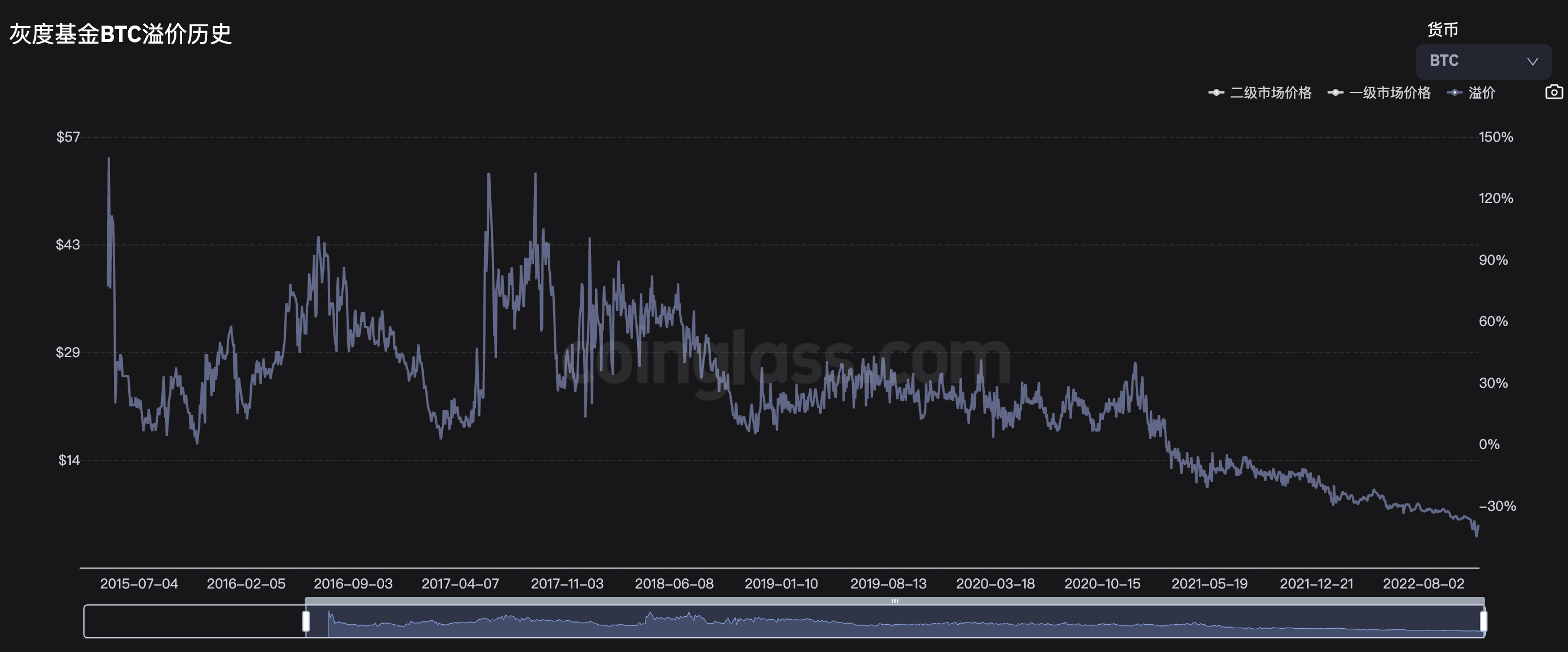
However, starting from March 2021, the GBTC premium will disappear, and it is better to purchase GBTC directly in the OTC market, and no one will apply for it since then. As of November 24, the GBTC premium fell to -39.2%.
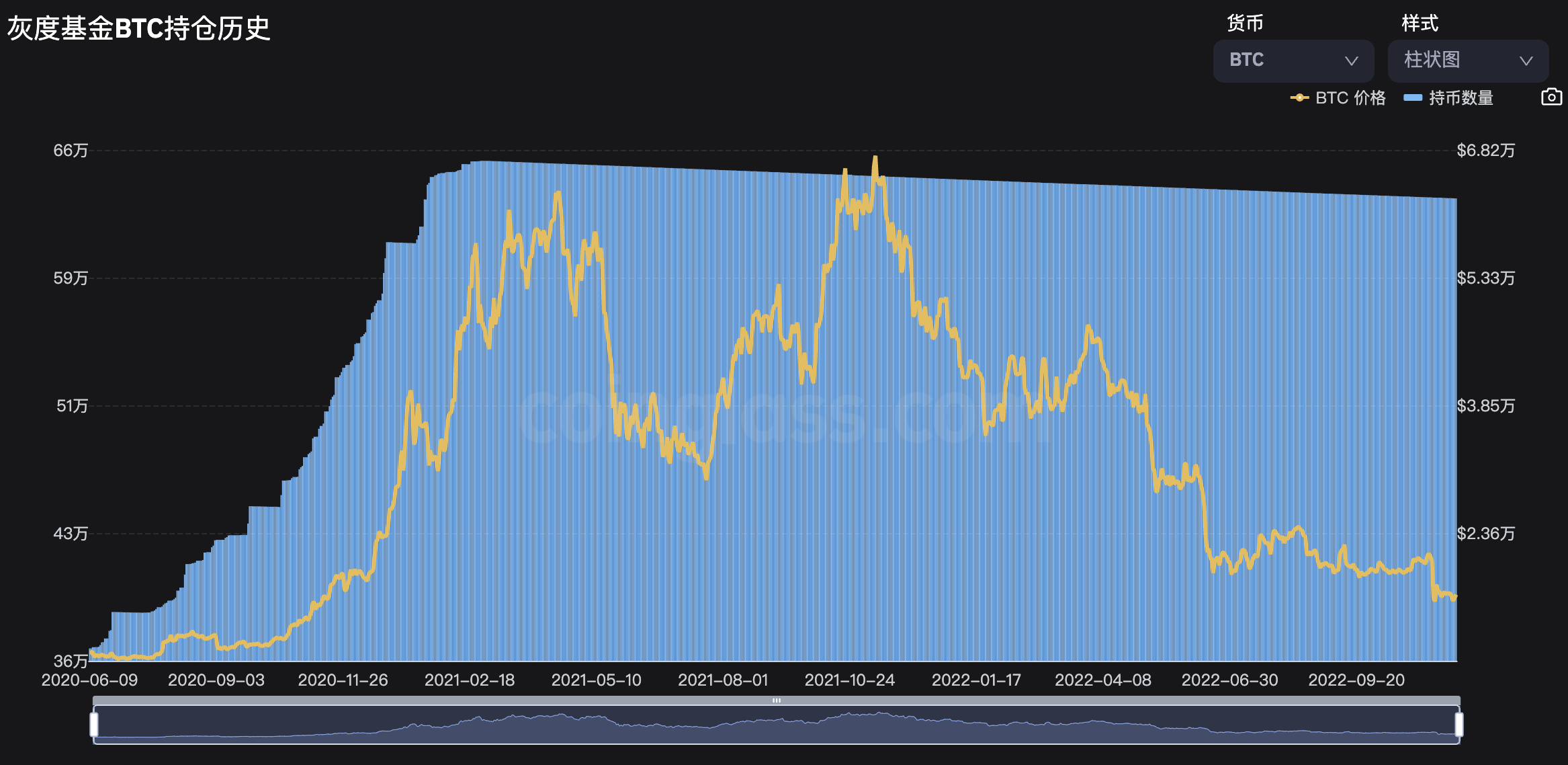
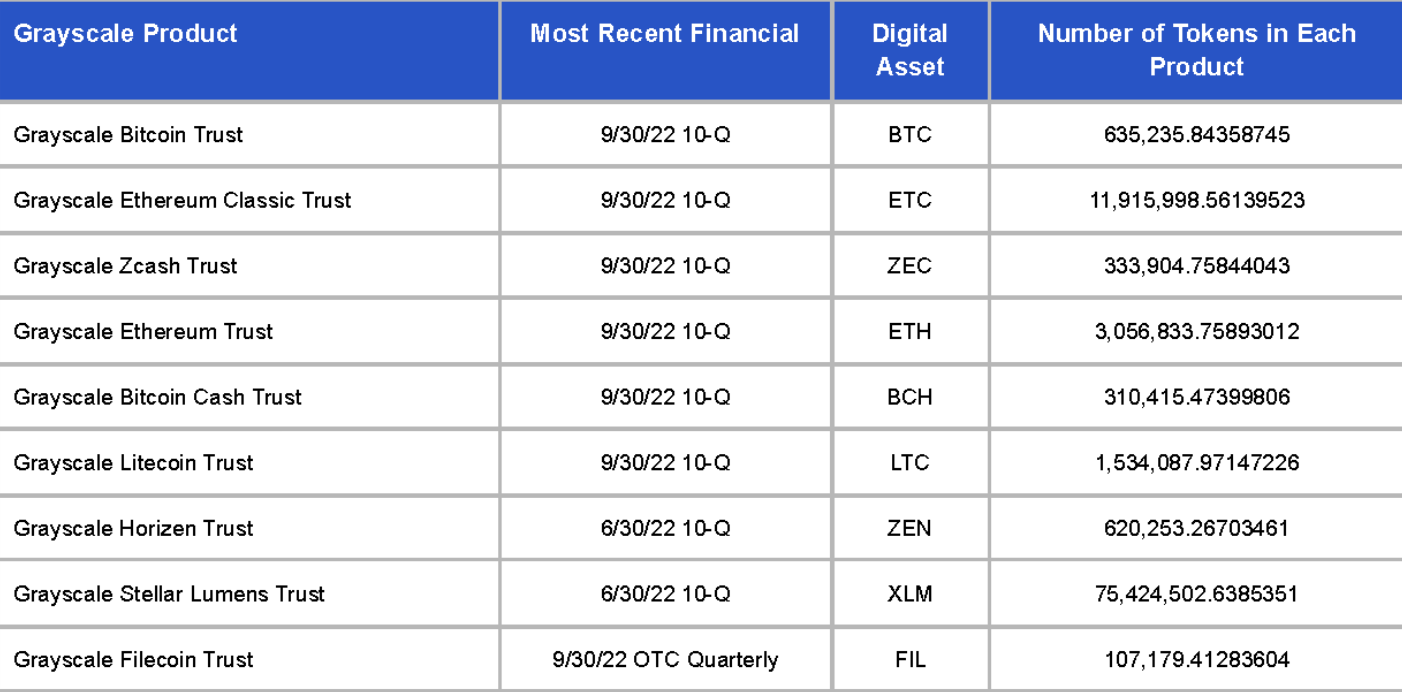
As shown in the figure below, the number of BTCs held by Grayscale Bitcoin Trust began to gradually decrease due to the deduction of management fees. Currently, the number of BTCs held in GBTC is 633,400 pieces, worth 10.466 billion US dollars.
The trading volume of GBTC in OTC Markets is also not optimistic. As of November 24, the average daily transaction volume in the past 30 days was about 6.44 million. Compared with the market capitalization of the US dollar, the daily turnover rate is about 0.93%.
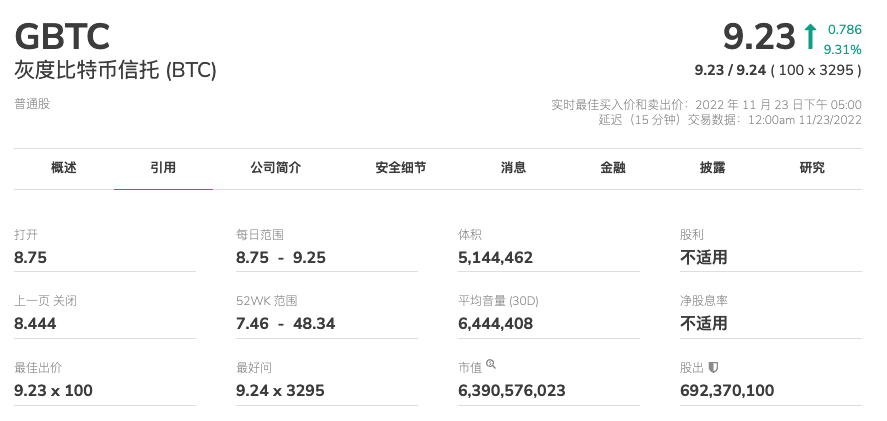
In terms of liquidity, there are only about $30,000 worth of buy orders and $170,000 worth of sell orders within the 2% price range.
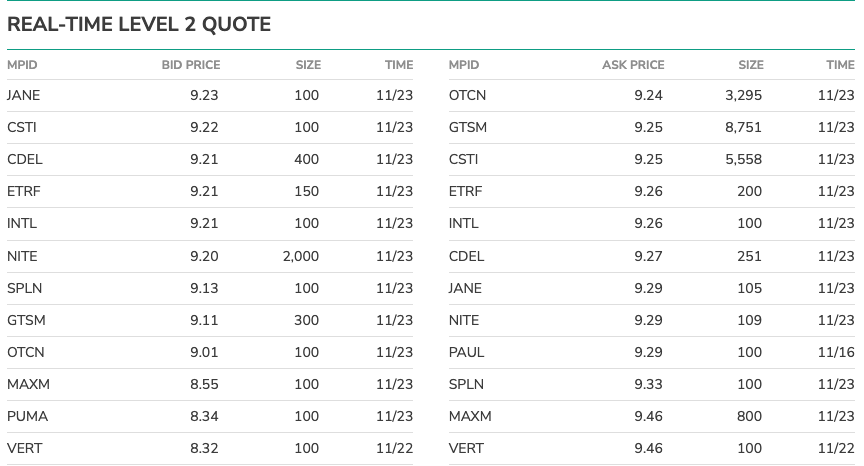
As one of the largest market makers, Genesis may have provided some liquidity in the trading of Grayscale products. If Genesis is disbanded due to this, the liquidity of GBTC may further decline.
In terms of security, even if Grayscale refuses to disclose the reserves of trust products on the chain on the grounds of security, these assets are likely to be safe. Grayscale's assets are hosted by Coinbase Custody, an independent entity under Coinbase that is regulated by the New York Department of Financial Services (NYDFS). The asset packages under custody are stored in offline cold wallets, which meet regulatory standards and have the highest level of security.
Although Coinbase did not provide proof on the chain, it also issued a document jointly signed by Alesia Haas, CFO of Coinbase Global, and Aaron Schnarch, CEO of Coinbase Custody, which proves that as of September 30, 2022, the number of BTC held by Garyscale Bitcoin Trust It is 635,235 pieces, which is equivalent to the official data released by Grayscale.
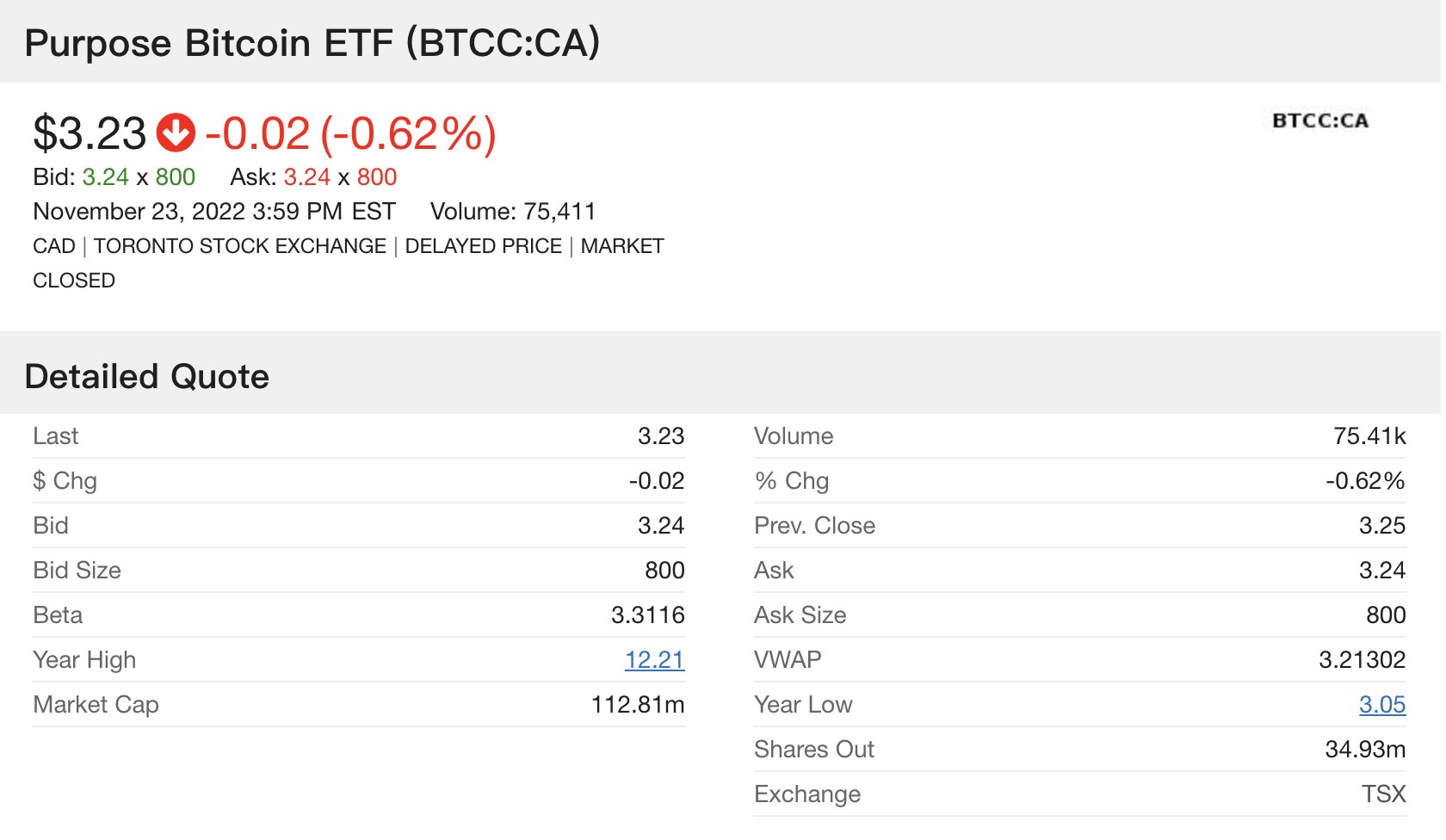
While Grayscale is striving to pass the ETF approval, the Bitcoin ETF itself may have become a false proposition. Take the Purpose Bitcoin ETF, the first approved in North America, as an example. The current market value is only 113 million U.S. dollars, and the daily turnover is about 300,000 U.S. dollars.
Luno: low exchange volume
In September 2020, DCG announced the acquisition of Luno, an encryption exchange and wallet, without announcing the purchase price. Founded in 2013, Luno had more than 5 million customers in more than 40 countries and regions around the world when it was acquired by DCG.
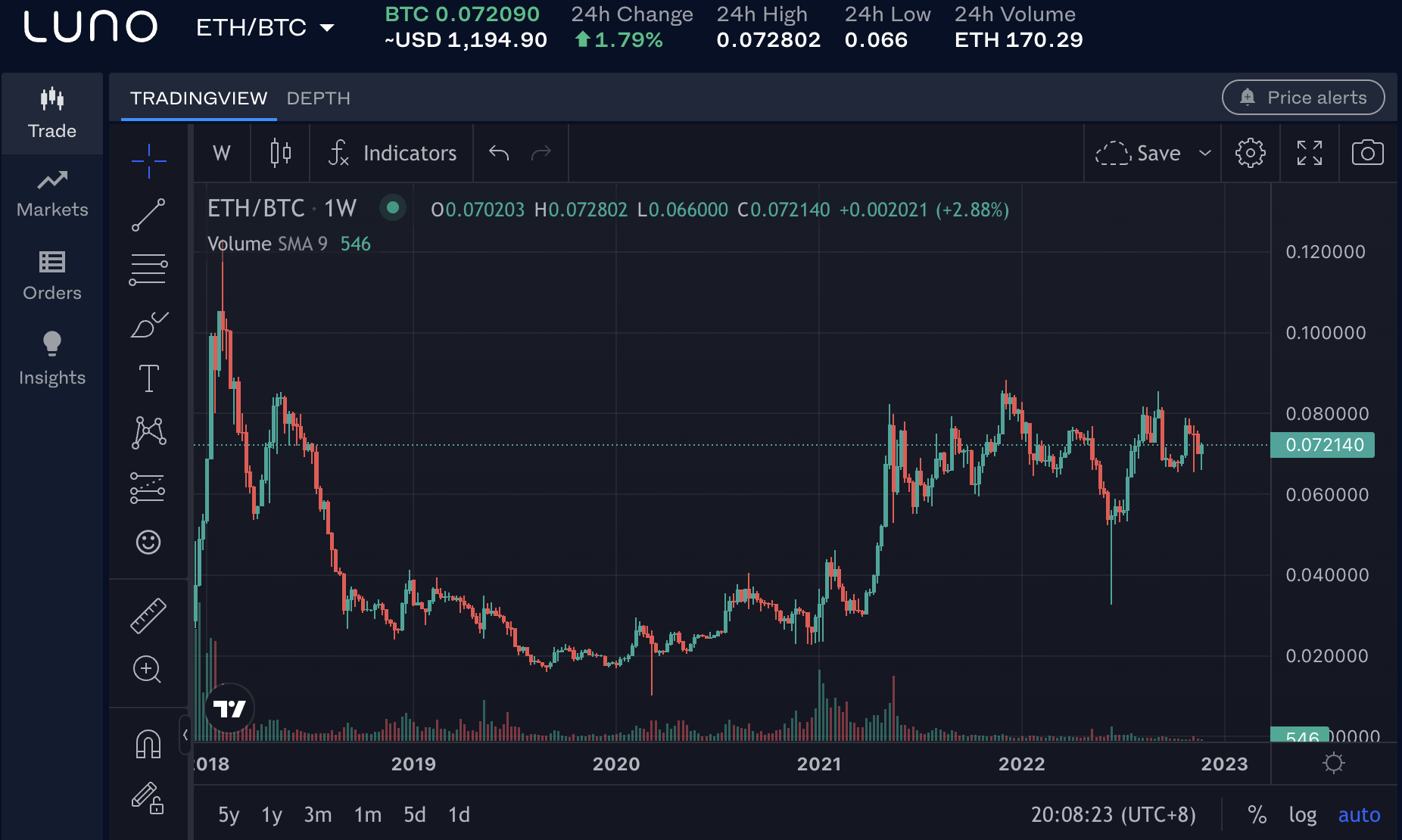
However, as of November 24, Luno’s official website shows that in the past 24 hours, the transaction volume of the BTC/USDC trading pair was 2.4 BTC, the transaction volume of ETH/USDC was 25 ETH, and the transaction volume of ETH/BTC was 170 ETH. This trading volume is negligible compared to other exchanges.
Taking ETH/BTC, which has a longer trading time, as an example, the trading volume is gradually declining. At the beginning of 2021, the weekly trading volume of this trading pair was about 30,000 ETH, and now it is less than 1,000 ETH.
Blockchain media CoinDesk: The upper limit is lower
DCG acquired CoinDesk in 2016 for $500,000, and the latter remains one of the most influential blockchain media outlets.
The risk exposure of FTX/Alameda Research this time was initially due to an article on CoinDesk. In the end, FTX went bankrupt, and CoinDesk’s parent company DCG was also implicated.
CoinDesk earns money on tickets to Consensus 2022, which runs from June 9-12 in Austin, Texas, this year for $1,999. In the territory of DCG, the media business is only a propaganda position, but its revenue and profitability are not high.
Bitcoin Mining Company Foundry
Foundry was established by DCG in August 2020, focusing on digital asset mining, pledge financing and consulting services.
Foundry currently consists of a number of businesses, including: Foundry X, the US mining machine secondary market, Foundry US mining pool, Foundry logistics, Foundry Academy, Foundry pledge, equipment financing and procurement, mining consulting services, Foundry Labs that support mining and pledge , Foundry Deploy that provides mining rig installers.
Foundry does not seem to be affected by the possible bankruptcy of Genesis. According to The Block on November 22, Foundry is buying cryptocurrency mining facilities and other assets from Compute North. Compute North filed for bankruptcy in September last year. Foundry CEO Mike Colyer said that Compute North is a long-term partner of Foundry and is very pleased to have the opportunity to build and develop the North American mining ecosystem on the basis they have laid for many years.
According to what PANews learned from North American mining practitioners, Foundry has been in a rapid market expansion stage. The initial investment in the mining industry is relatively high, and the bear market payback cycle has been lengthened. Therefore, even if there is profit at the moment, it should not be high.
TradeBlock
In January 2021, CoinDesk announced the acquisition of data provider TradeBlock. DCG also invested in TradeBlock before this, and the largest user of the TradeBlock XBX Index is the Grayscale Bitcoin Trust Fund.
Therefore, TradeBlock may maintain data security primarily internally.
HQ
In June 2022, DCG announced the establishment of HQ Digital, a wealth management subsidiary, to provide services such as private investment, estate planning, risk mitigation, and insurance, as a complement to DCG's existing Grayscale, Genesis, and CoinDesk.
The HQ official website shows that the project is still in stealth mode, and there are more recruitment information for financial, product, and investment positions on the website.
Where is the way out for DCG and Grayscale?
The situation of DCG seems to be not optimistic. Among the 7 subsidiaries, Genesis is on the verge of bankruptcy, Luno’s transaction volume is negligible, Foundry’s mining industry currently has low profits, ThadeBlock provides data support, and HQ is in the recruitment stage. The upper limit of the potentially profitable media CoinDesk is not high, and Grayscale has lost its competitiveness.
DCG is currently tied to Genesis. If Genesis goes bankrupt, DCG may also go bankrupt. Before that, there are still many possibilities for DCG, such as completing financing, raising funds through the sale of subsidiaries such as CoinDesk, or reaching a settlement with creditors. In a worst-case scenario, Grayscale, as part of DCG, may also be forced to disband.
However, there is no need to worry about the security of assets in Garyscale trust products. The possibility of misappropriation of assets such as BTC is very low. Even if DCG chooses to dissolve Grayscale to repay debts, it still needs to be approved by the SEC and will not be realized in a short time.
GBTC's negative premium could be an indicator to watch for the possibility of Grayscale's dissolution. If Grayscale is going to be dissolved, well-informed investors will inevitably buy GBTC in the OTC market and wait for redemption.
Disbanding Gryscale may be the last option, and if the worst happens and the BTC locked by Grayscale is redeemed, the market may fall further.