






FTX equity tokens are suspected of manipulating the market, how will it develop in the future?


This article comes from Toknist & the ChainsawThis article comes from
, Original author: Tim Fries & Tom Mitchelhill, compiled by Odaily translator Katie Ku.
Do you remember that FTX used to have a product that allowed its users to trade synthetic equity tokens (digital assets that track stock price movements) on the platform. GameStop (GME) is one of the most popular equity tokens.Now it turns out that these synthetic shares (equity tokens) may be used by hedge funds to exploit “backdoors” (People familiar with the matter: FTX accounting system has a backdoor, and at least $1 billion in customer funds are missing
To understand what is happening to these assets now, it is necessary to understand how they were created and how they are regulated.
secondary title
What are equity tokens?
The value of FTX equity tokens is guaranteed by CM-Equity AG, a licensed investment management company based in Germany.
secondary title
How are FTX's equity tokens different?
Binance, Bittrex and FTX promoted equity tokens, and Estonian exchange DX.Exchange first started listing this form of asset in 2019. Binance canceled the offering in July 2021 due to legal issues, but FTX launched equity tokens to its FTX.US users in July 2022.
By using an oracle network like Chainlink, share value can be fully tokenized on-chain without an intermediary.
For example, DeFiScan.Live trades dGME synthetic assets as on-chain tokens, redeemable using DefiDollar (DUSD). This is a stablecoin index product backed by Curve.Fi LP (Liquidity Provider) tokens.Thanks to a partnership with CM-Equity AG, FTX offers equity tokens backed by physical shares. This means, FTX is an intermediary of intermediaries. In other words, the stock exchange is the infrastructure of the intermediary of CM-Equity AG, and CM-Equity AG is the infrastructure of crypto exchanges such as FTX.
Unlike synthetic assets, FTX share tokens offer dividends but no other shareholder privileges, such as voting rights. This begs the question, now that FTX is out of business and embroiled in various fraud disputes, what will happen to the exchange's equity tokens?
secondary title
FTX's stock broker also files for bankruptcy
At the earliest, users can use equity tokens to trade like ordinary stocks on Robinhood. Equity tokens are also offered by CM-Equity AG. However, the price between real shares and equity tokens is not 100% consistent due to market latency issues and slippage in closing times.
In terms of redemptions, Binance has settled its equity tokens in stablecoins and paid the applicable redemption fees. As an infrastructure intermediary, CM-Equity AG does not redeem FTX share tokens, as clearly stated on the company's website.
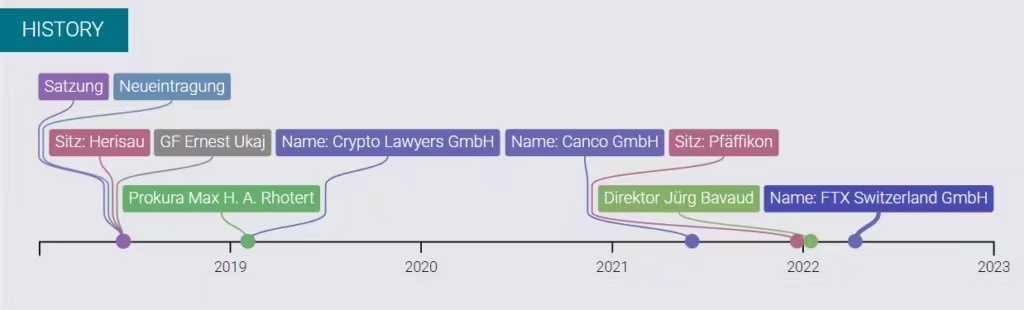
Instead, FTX uses Switzerland-based company Canco GmbH as the settlement party for its derivatives contracts, including equity tokens. On April 12, Canco GmbH (FTX Switzerland), a financial intermediary that custodians the shares of third-party brokerage firms, became one of more than 100 companies from the FTX Group to file for bankruptcy.
More importantly, is the FTX equity token issued as a security in the United States. Despite $1.4 billion in BTC liabilities, FTX listed no bitcoin in its bankruptcy filing.
secondary title
Has the US SEC ever secretly supported "market-violating activities"?
The SEC's Form 4 states that the form is used to provide the public with "awareness of insider transactions in the securities of a company." This includes derivative securities and convertible securities. The SEC offers several trading symbols, one of which can list equity tokens as derivative securities.
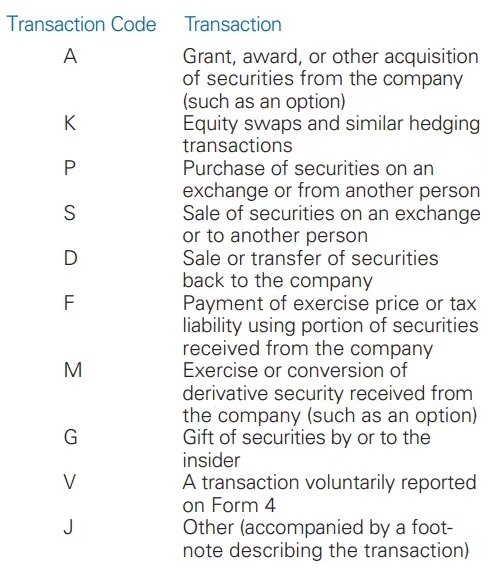
image description
From the SEC.
Furthermore, given that SBF admitted to using the exchange’s native FTT token to leverage users’ funds, it may be the case that FTX’s entire line of equity tokens are leveraged in the same way. Equity tokens could have been used as a support mechanism for FTX’s “house of cards.”
In light of Bitcoin and GME (GameStop) equity tokens, there are now growing concerns that FTX/Alameda is using naked short trades to depress asset prices in favor of Alameda's altcoin portfolio without the need to register for these activities .
This is in line with SEC Chairman Gary Gensle’s repeated rejection of spot-based Bitcoin ETFs in favor of futures-based ETFs. With so many links between Gensler, the political establishment, and SBF's donation campaign, it remains to be seen how the fallout from FTX will be resolved.
secondary title
How does synthetic asset trading affect the underlying asset (underlying) price?
Financial analyst Peter R Hann took to Twitter to criticize FTX’s synthetic token, suggesting that brokers may not be able to find the asset in question.
Another Twitter user, Sanjeev Kale, pointed out that hedge funds are actively using synthetic stocks to drive down the stock prices of large companies, which have a lot of short selling.
Kale tweeted: "FTX token is actually a great way for short sellers/lenders to create/use unlimited synthetic assets to bring down AMC and GameStop. Here's how they stop short squeeze risk in 2021 .Now, with FTX out of business, that approach is out. With AMC/GameStop recovering, the squeeze potential could be even bigger.
(Odaily note: short squeezes): If a certain stock has a large number of short positions and the stock price rises too much, short sellers will be forced to close their positions and suffer losses. This large amount of buying will even drive more buying market, causing the stock price to continue to rise.)
Kale explained how trading in synthetic tokens played a major role in manipulating the price of GameStop’s underlying asset:
“Tokens are derivatives, but not calls or puts in the traditional sense, where there’s a market maker taking on the other side of the trade, holding an open stock position, either long or short. Coins are off-the-shelf contracts that don’t affect the underlying asset, but can affect it. It’s a situation where the cart is turning the cart before the horse.”
Essentially, these equity tokens allow hedge funds to say: "Look, here are 10 million equity tokens that can be redeemed for real shares". This lowers borrowing costs, as shares can be positioned, providing peace of mind.
secondary title
The synthetic GameStop (GME) token contract on Etherscan shows that there are 10,000,000 synthetic GME tokens circulating on the Ethereum blockchain. This means that, on paper, FTX should have an equal number of GMEs, but a statement in FTX’s official terms of service document indicates that this is not the case.
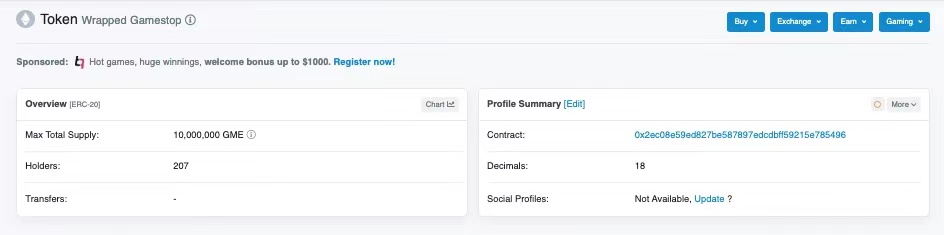
image description
Screenshot of GME token on Etherscan
These spot tokens are backed by Tesla shares hosted by FTX Switzerland. If desired, they can redeem the underlying shares with FTX Switzerland. "
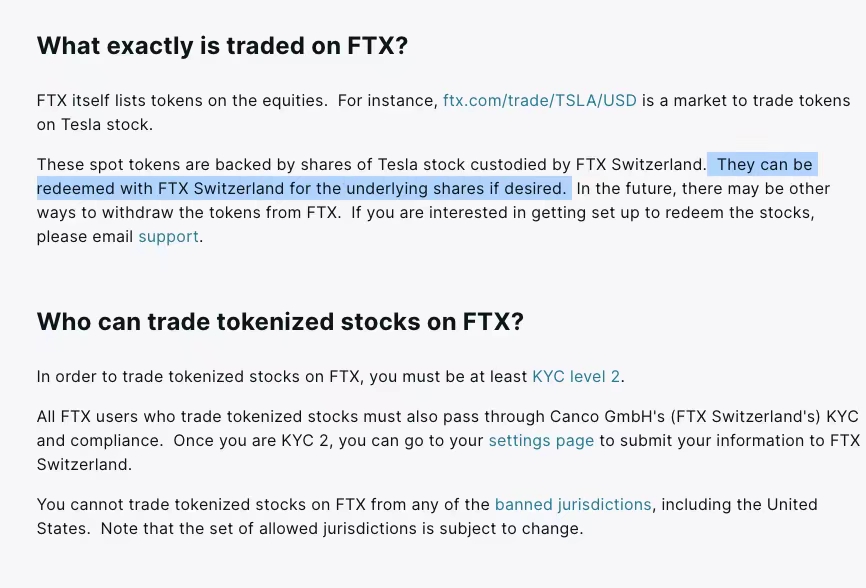
image description
Screenshot of FTX’s disclaimer for equity tokens.This meant that 10 million GameStop "shares" were printed out of thin air.
image description
Digging into FTX's own Equity Token Terms of Service and Key Information documents, beyond the general statement on the FTX website, reveals that a buyer stating a portion of shares has no right to demand delivery of the underlying asset. "This ultimately means that FTX is deliberately lying and misleading customers on the website, in direct violation of its own terms of service.
secondary title
Is FTX also being used as a "back door" to short Tesla stock?
GameStop's manipulation of prices, coupled with FTX's tainted operations, may also be an important reason why Elon Musk strongly criticized SBF on Twitter. If institutions use equity tokens to short a company like GameStop, they are likely to use equity tokens to short a company like Tesla.
Musk is known to hate shorting as an investment tool and has accused Bill Gates of shorting Tesla stock.
In summary, in order to prevent other debtors from liquidating Voyager's encrypted assets and triggering subsequent sell-offs, FTX may have purchased some assets as another false value support. Ultimately SBF's Ponzi appears to be too indebted to turn things around.


