Can NFTfi become an accelerator for the NFT market?


Summary
first level title
Summary
Liquidity is the biggest disadvantage of NFT assets compared to FT assets. With the rapid development of NFT, how to strengthen its liquidity has become an important proposition. Corresponding financial applications and tools have gradually appeared in the market, aiming to pass NFT Combining with Finance, using financial methods to increase the liquidity and priceability of NFT assets, improve the utilization rate of NFT funds, in order to create a better NFT user experience, we collectively refer to such applications and tools as NFTfi applications.
This article focuses on five subdivision tracks of NFTfi, and conducts research and analysis on its current situation, difficulties and subsequent development trends through market, typical projects and mechanism analysis:
NFT lending is the most direct way to solve the liquidity of NFT assets, and it is also the most important demand at present. Currently, it mainly includes two lending models: P2P peer-to-peer and P2Pool peer-to-peer fund pool. Both of them are effective in terms of transaction frequency, trial scope and price discovery Each has its own advantages and disadvantages, and the proportion of homogeneous token lending in the overall market is still very small. In addition to lending products, NFT fragmentation, crowdfunding, and liquidity pools all aim to solve the liquidity problem of NFT assets. However, due to the insufficient NFT price discovery mechanism, the existing market is still insufficient for non-blue chip and non-floor price NFT transactions.
The NFT aggregator integrates the listings and offers information of different order book trading markets into one platform, providing one-stop purchase, pending order and sales. At present, the mainstream general-purpose aggregator platforms are Genie and Gem, and there are also various vertical track aggregation platforms, such as ENS.vision and so on. NFT aggregators meet the needs of information aggregation and transaction aggregation, and integration and acquisitions with upstream trading markets and downstream data analysis tools are in progress. Currently, NFT aggregation transactions account for less than 10% of the overall market transaction share and are expected to expand rapidly.
NFT financial derivatives are financial products derived based on NFT, which can provide more types of trading methods for NFT, mainly including NFT prediction market, NFT perpetual contract, NFT option contract, etc., which are limited by the liquidity and nature of the NFTFi track. Problems such as oracle machines are currently in a very early stage.
Generally speaking, NFTfi has initially sprouted, and various track projects are still in the stage of trial and exploration. There is a lot of room for development in the direction of liquidity improvement, price discovery mechanism and protocol layer.
first level title
NFT (non-homogeneous token) has become an indispensable part of the encryption world. Now NFT has developed from a pure PFP project to a combination with games, metaverse, mortgage lending, etc., and is initially forming NFT+ decentralized finance. mode. But in essence, NFT is a non-homogeneous token, and its indivisibility leads to greater difficulties in liquidity compared with FT, such as limited transaction accuracy, high capital occupation, and insufficient price discovery mechanism wait.
first level title
2. NFT lending agreement
secondary title
Generally speaking, NFT lending refers to the act of pledging one's own NFT to obtain a liquidity loan. Compared with the high liquidity and rich financial derivative methods of homogeneous tokens, due to the particularity of pricing and attributes of NFT, it is difficult to improve its capital utilization efficiency, and problems such as difficult pricing, low liquidity, and low asset utilization are gradually emerging. As a result, more financial needs have been created. Among them, borrowing is one of the direct and convenient ways to solve asset liquidity.
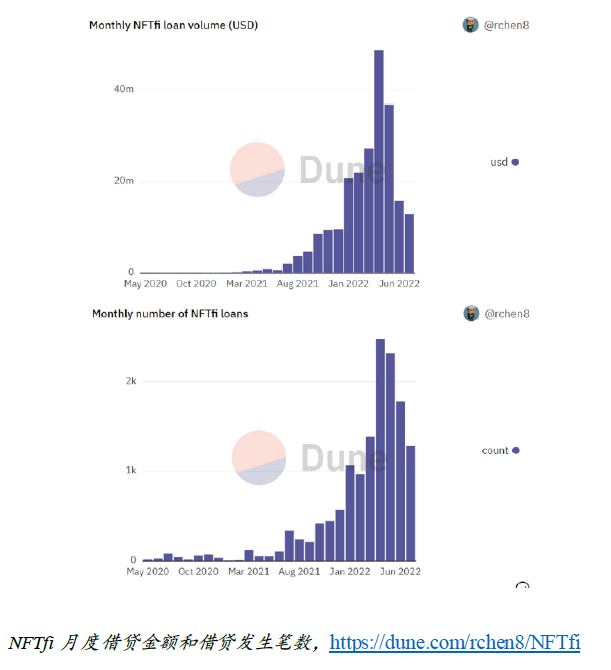
At present, with the cold market and the decline of NFT prices, taking NFTfi as an example, due to the decline in the value of collateral, the number and amount of NFT loans have shown a downward trend. As shown in the figure above, the number of NFTfi loans in April was 2481 Pen, 2321 pens in May, 1784 pens in June, month-on-month change -6.45%, -24.76%; NFTfi loan amount $46.7m in April, May 36.8m, June 15.8m, month-on-month change -21.2%, -57.07%, Both experienced significant declines.
secondary title
According to the different counterparties, NFT lending can be mainly divided into P2P lending from person to person and P2Pool lending from person to lending pool.
P2P peer-to-peer lending is the original means of lending, direct lending between users. Its advantage is that the scope of lending is wider and it is more inclusive of the NFT track, but the transaction cycle is longer and it lacks price discovery. P2Pool point-to-pool lending is similar to traditional lending and non-homogeneous lending. The borrower borrows from the fund pool, and the lender injects tokens into the fund pool to obtain interest income and rewards. The advantage is high efficiency, and the disadvantage is that the price feeding mechanism may have the risk of price manipulation.
secondary title
2.3 Analysis of typical NFT loan projects
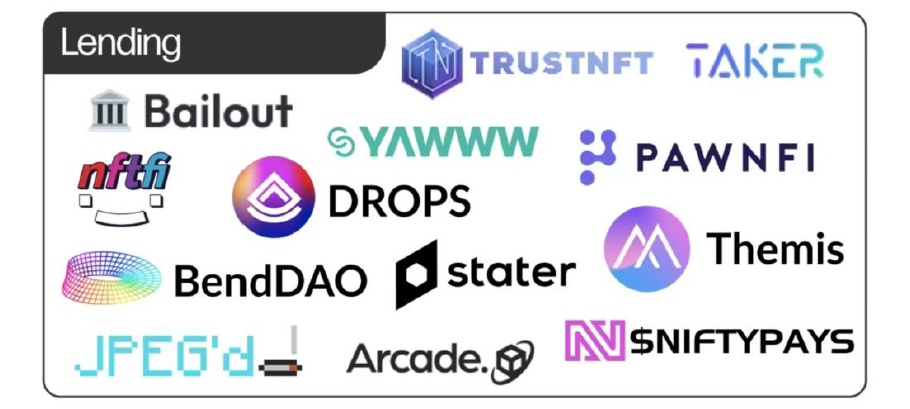
The NFT lending track as a whole is still in its infancy, and the competing products on the track basically revolve around the above two categories, namely P2P and P2Pool. Here we introduce the top lending protocols: the p2p NFTfi protocol and the p2pool-based BendDAO protocol. NFT lending mechanism.
2.3.1 P2P lending platform NFTfi
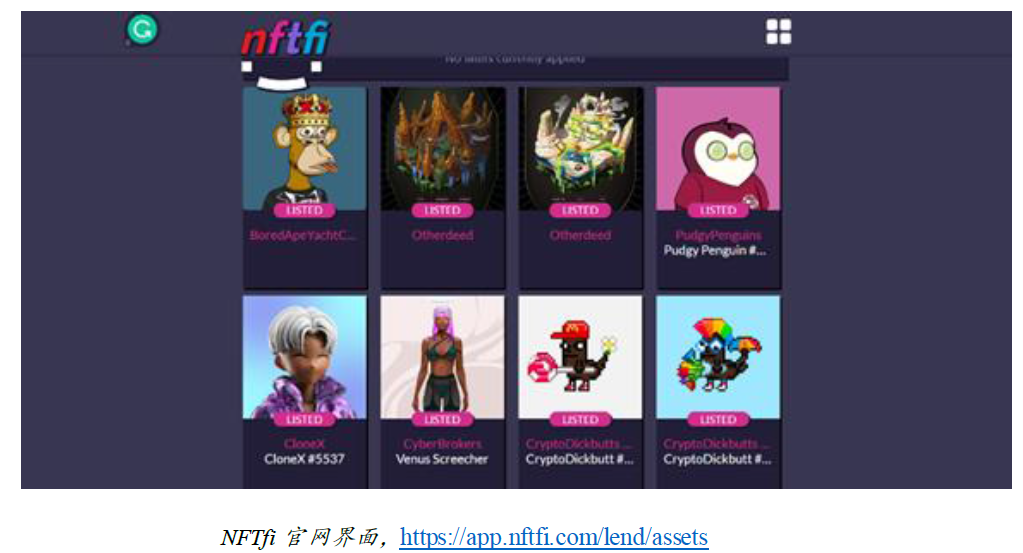
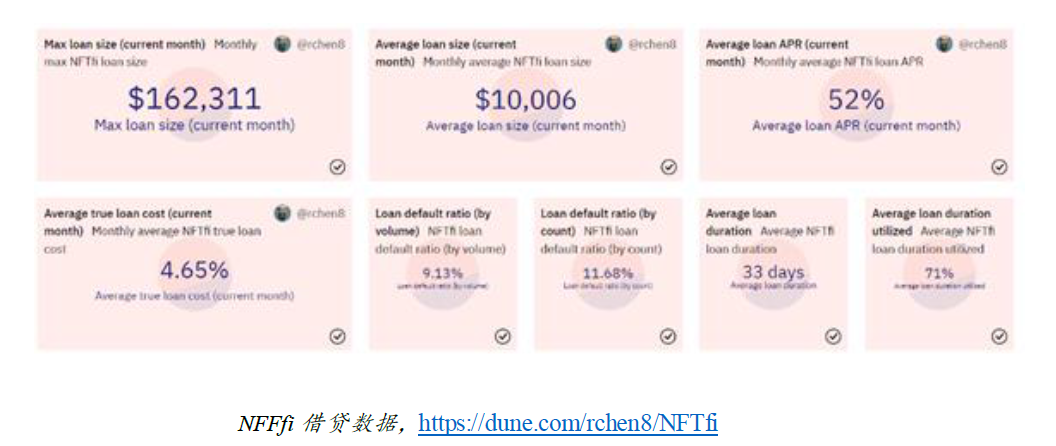
NFTfi is a P2P NFT lending platform. Buyers and sellers use Upshot and NFTbank to feed prices, the borrower deposits NFT, the lender initiates an offer, and the two parties negotiate a deal. Provide a loan period of 7/14/30/90 days, and you can also customize the period. It was launched earlier. At present, the cumulative loan amount issued is 225 million US dollars, the loan balance is 23 million US dollars, and the number of loans is 14,261.
From the data in the figure above, we can see that the current average loan amount is about 10,000 US dollars, the average annualized loan interest rate is 52%, the service fee after revision is about 4.65%, and the bad debt rate is 9.13%. The proportion is 11.68%. Bad debts are mainly concentrated in small and medium loans, and the average loan period is 33 days.
2.3.2 P2Pool Lending Platform-BendDAO
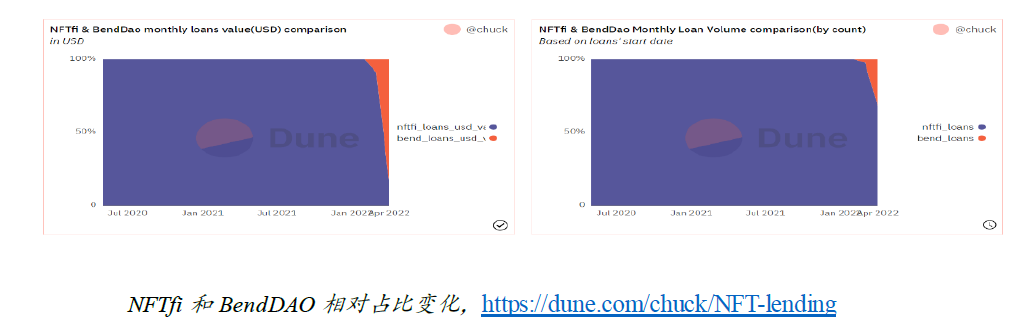
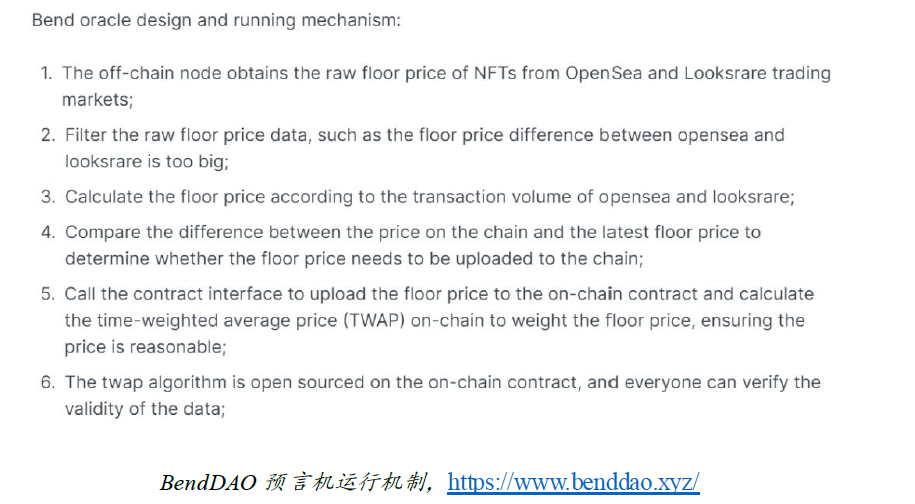
BendDAO is a P2Pool peer-to-pool NFT lending platform, officially launched in March 2022. The project determines the collateral list through community elections. Currently, it mainly supports blue-chip NFT lending including Bored Ape and CryptoPunks. The floor price is obtained in Opensea through its internal oracle machine, and the pledge rate varies according to different targets. At the same time, there is a 48-hour liquidation protection mechanism for users to repay loans and redeem NFT.
Judging from the comparison of the proportions of the two projects, BendDAO has developed very rapidly since its launch, attracting more blue-chip NFTs to participate in lending.
However, with the recent decline of blue-chip NFTs, blue-chips such as BAYC and AZUKI on the BendDAO platform have experienced a liquidity crisis, leading to the verge of liquidation, and users are worried about being liquidated and sell at a lower price, which will lead to lower floor prices and more NFTs being sold. liquidation. When the market is not good, lending platforms like BendDAO have accelerated the decline, and it is easy to form a death cycle.
secondary title
2.4 Summary
There have been some innovations in NFT lending, but the development is still slow. The proportion of relatively homogeneous token lending in the overall market is still small, and the market capacity is relatively limited. Compared with homogeneous lending projects, the project valuation needs There are considerations of lowering the valuation.
In the future, it is expected that NFT lending will realize more financial derivatives and application scenarios based on the current model. In order to achieve large-scale NFTfi, in addition to P2P lending, other financial methods basically need to be based on a sound pricing mechanism. Therefore, the NFT price oracle is the basis for the overall large-scale realization of NFTfi. When the NFT oracle is mature Before, it was unlikely that NFTfi would develop on a large scale.
first level title
3. NFT liquidity solution
As the overall environment of the encryption market shrinks, the NFT market also cools down rapidly, and the disadvantages of poor liquidity become more prominent. Some blue-chip NFTs are priced so high that ordinary investors are discouraged; NFTs under ERC721 can only be traded and circulated as a whole, exacerbating the liquidity threshold. As a result, some agreements began to seek new ways out.
NFT fragmentation transforms NFT into homogeneous tokens with higher transaction accuracy, and uses mortgage, pledge, leverage, etc. of homogeneous tokens or equity, which not only improves user transaction experience, but also enhances capital utilization;
The capital crowdfunding agreement solves the high user threshold in the market from the demand side, allowing participants to pool funds in a multi-signature environment and jointly manage NFT;
The liquidity pool agreement brings together many NFTs near the floor price, providing users with a stable market-making platform.
On the whole, liquidity solutions are emerging in an endless stream, and various emerging projects have begun to emerge.
 3.1 NFT Fragmentation
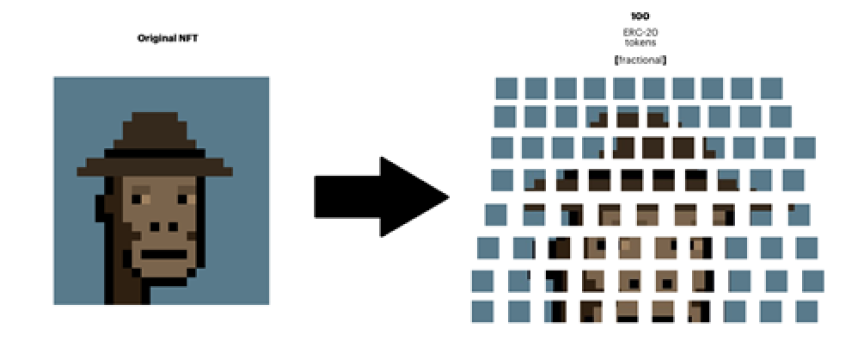
NFT fragmentation is to split a single complete NFT into several small blocks, so that more people can obtain the ownership of the same NFT. It is equivalent to cutting a complete cake into many parts for more people to enjoy.
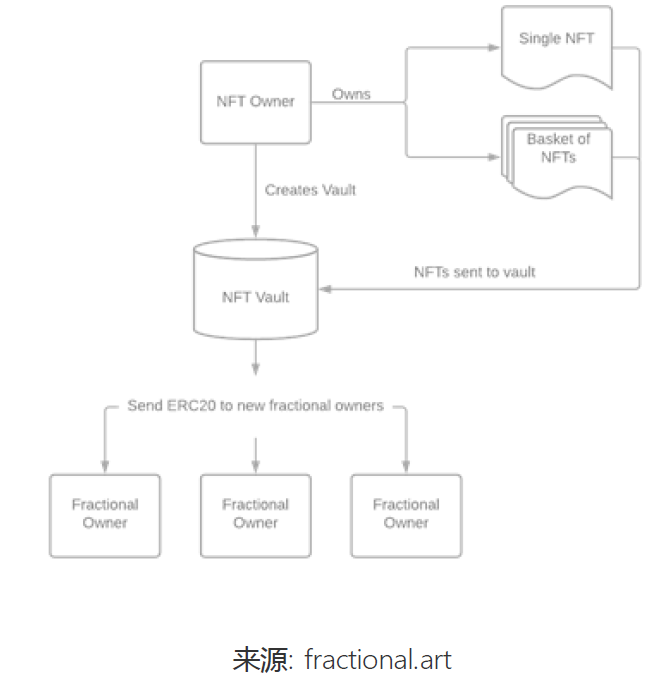
The NFTs currently on the market follow the ERC-721 and ERC-1155 protocols and are indivisible. Fragmentation is the conversion of these two types of NFTs into multiple associated ERC-20 tokens through smart contracts to indicate that the holder has ownership of the NFT. The purpose of this is that the original NFT can only lie in the wallet, but after fragmentation, ERC-20 tokens can obtain more functions in DeFi, such as trading in uniswap, and flowing in curve or aave Sexual mining, borrowing and so on.
In addition, the fragmentation process is also reversible. In general, holders of NFT fragments can transfer a certain amount of ERC-20 tokens back to the smart contract, thereby triggering the buyout option. Once triggered, a repurchase auction will take place within a fixed time frame. Holders of other NFT fragments need to make a decision within a period of time. If the buyout is successful, the fragments will be automatically sent back to the smart contract, and the buyout owner can own the complete NFT.
In general, NFT fragmentation does not break the work into many copies, but divides the ownership of the work. The principle of this division of ownership and then pricing the transaction is similar to that of a company distributing stock. Stocks are the "fragments" of a company. If you are optimistic about a company, you can choose to buy its stocks. The liquidity of the stock market can lead to the vigorous development of the company, which in turn can also bring income to you who own the stock. Therefore, in essence, the process of fragmentation is to treat NFT as a company with market value.
Through the above introduction, we can see that NFT fragmentation has the following advantages:
➢Higher capital efficiency. Complete NFT assets have limited uses, and after fragmentation, they can interact more with existing DeFi protocols, such as liquidity mining, lending or pledge, etc., to obtain additional income and capital utilization;
➢Increase exposure. Fragmentation can improve market liquidity, expand audience groups, and allow creators to gain higher exposure;
3.1.1 Fractional.art
➢ Price Discovery. After the cost is reduced, more people can participate in the transaction, and it is more convenient for NFT pricing.
text
Fractional.art is one of the most representative fragmentation projects. Holders cast an NFT vault before using fractional, which is used for custody and fragmentation. After locking the NFT in the contract, some ERC-20 tokens will be returned to the fragment holders accordingly. They can go to uniswap or sushiswap to create a liquidity pool for transactions.
3.1.2 Unicly
In turn, the combination of these tokens can also be redeemed for NFTs, or can be used to trigger an auction to buy the underlying NFT at a price above the minimum price. This minimum price is jointly set by the majority of holders of that NFT shard.
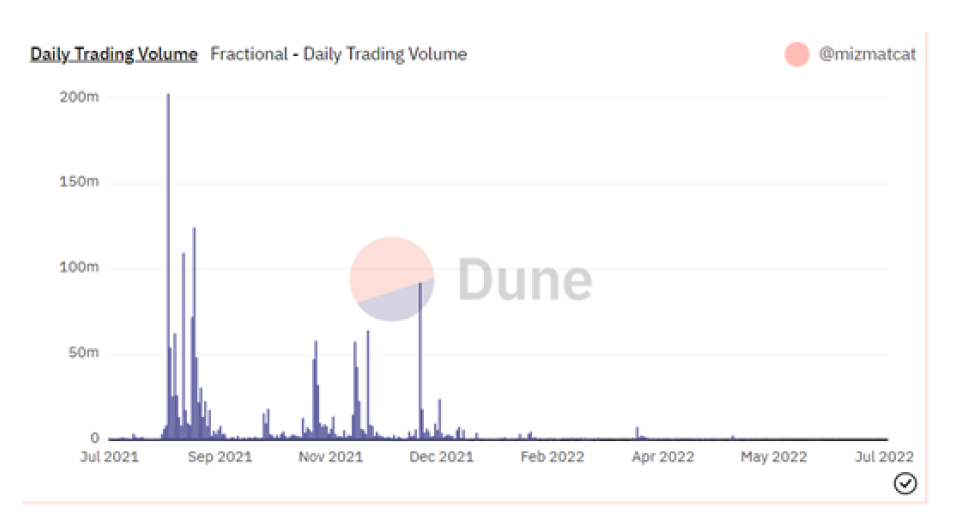
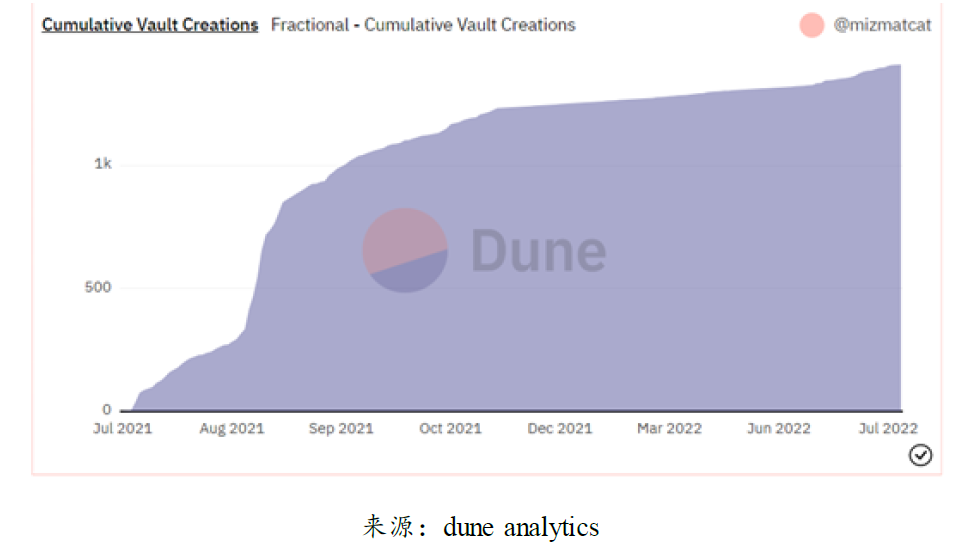
The figure above shows fractional’s daily transaction volume and the total number of vaults created. It can be seen that the project had a very high popularity and traffic in the early days. With the gradual cooling of the encryption market and the NFT track, the demand for NFT fragmentation is also slowly decreasing.
Unicly is also the head project of the fragmented track, but it also introduces AMM, liquidity mining, bidding and other gameplay into its own platform.
The unicly fragmentation process is that the holder first locks one or a series of NFTs in the contract, and then creates uToken and returns it to the user. These uTokens are combined with AMM to trade and participate in liquidity mining on unicly, without going to third-party exchanges.
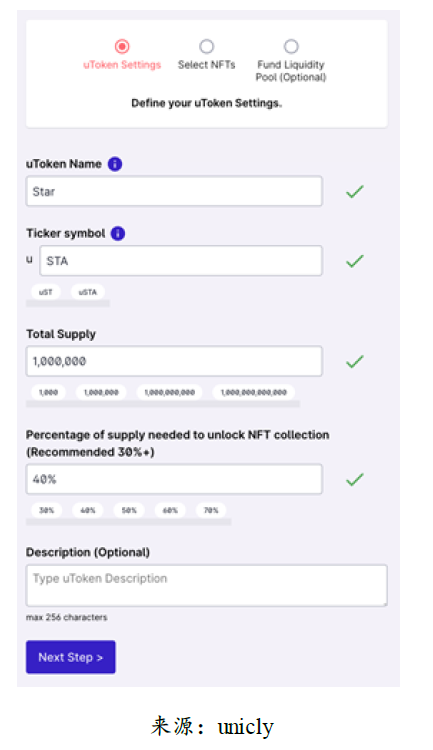
Users can set the name, symbol and total supply of the utoken when creating fragmented tokens. The whole process is the same as building a pool on uniswap.
It is worth mentioning that there is a place in the above picture that requires the initial holder of the NFT to set additionally, that is, how many percent of the votes are required to allow the NFT in the vault to be bought by outside bidders. In this picture, 40% of uSTA is put into this contract, which will trigger an auction, and the highest bidder will be able to buy this NFT, and the money paid for the auction will be divided among Usta holders.
3.1.3 Summary
Fragmentation, as a typical NFT liquidity solution, has alleviated the problem of insufficient NFT liquidity to a certain extent, but it is also facing some problems:
There are common problems in the above two protocols. The library can only be controlled by the creating user, and each user’s library is different. Even the same series of NFTs will produce different libraries, and the split tokens in circulation are also different;
Fractional can only claim the entire library after buying out or collecting all tokens, and cannot claim a single object in the library, which limits arbitrage circulation; unicly has improved in proportion control but still does not solve the fundamental problem;
For mid-to-high-priced NFTs, there are pricing difficulties, and it is difficult to carry out equivalent fragmented calculations;
Fragmented FT tokens will also face the problem of lack of liquidity.
3.2.1 partyBid
3. 2 NFT capital crowdfunding agreement
The so-called capital crowdfunding agreement refers to those agreements for the purpose of pooling funds and providing a safe environment for purchasing NFTs. It aims to solve the characteristics of NFTs that cannot divide ownership, so that investors can not only diversify risks, but also enter the market with smaller funds.
A popular NFT crowdfunding auction product developed by partyDAO, anyone can create a "party" crowdfunding group or directly join a ready-made one. After the group is successfully created, members can participate in the specified NFT auction. Before the bidding starts, the group members can contribute their own ETH, and they cannot withdraw during the auction. If the auction is successful, the NFT profits from the sale will be divided among the members of the crowdfunding team according to their share; if the auction fails, the ETH can be retrieved on the website. The shares shared by the group members are the fragmented ERC-20 tokens, which are allocated on a first-come, first-served basis. For example, the transaction price of an NFT auction is 55ETH, and the crowdfunding team has raised 50ETH. Now there is a user with 10ETH When he comes in, he will only be given points according to the share of 5ETH, and the extra 5ETH will be returned to him in the same way. It can also be seen from here that the underlying logic of partybid is actually NFT fragmentation.
In addition, Partybid will charge the group that wins the auction, charging 2.5% of the auction price and 2.5% of the fragmented tokens as platform fees. The currently supported four NFT marketplaces are Zora auction, Foundation auction, Opensea and Nouns.
3.2.2 Summary
The capital crowdfunding agreement is still in a very early stage and has not yet formed a large-scale ecology. The head project partybid is used to spy on the current status of the entire track. At present, the development is facing some pain points:
It can only run on the Ethereum mainnet and does not support L2;
The bottom layer is fractional.art, which does not have its own fragmentation tools.
secondary title
3.3.1 NFTx
3. 3 Liquidity pool
Some NFT investors adopt the diamond hand strategy, tending to hold a certain NFT for a long time at the expense of immediate liquidity. In order to solve the liquidity problems caused by this, some NFT trading liquidity pools came into being. The NFT liquidity pool is the same as most DeFi pools. The only difference is that users create ERC-20 tokens by depositing NFTs with similar characteristics or floor prices into the same pool. worth of FT to redeem any NFT in the pool. In this way, the liquidity pool provides users who purchase NFTs of the same series with a faster transaction method, no longer needing to wait for others to bid.
NFTX is a platform that creates liquidity for NFT. The user deposits his NFT into the corresponding vault of NFTX and obtains an ERC20 token (vToken) at the same time. Among them, the vault can be created by anyone, but the management right after the creation is successful is handed over to the DAO organization of NFTX, and vToken can be used to redeem an NFT from the vault at any time at random, or go directly to the Swap pool to exchange for ETH can also be combined with ETH to do LP mining directly.
3.3.2 NFT20
When vToken is traded in Dex's liquidity pool, it enters the price discovery stage. At the same time, since vToken can be exchanged for NFT at a 1:1 ratio in the vault, it means that the value of vToken is endorsed by NFT, and a similar value can also be achieved. If users think that the price of cypherpunk NFT is lower than the price of PUNK on the market, users will tend to store NFT in the vault to exchange for PUNK and sell it on the market. In this transaction process, the reserve price of a certain type of NFT can be gradually discovered.
Due to the non-homogeneity of NFT, pricing is difficult. NFTX’s vault actually treats the NFTs in the same vault equally in Mint and Redeem. In fact, the final result is that only the least scarce NFTs will enter these vaults, that is, the NFTs at the floor price are here. A consensus on the price has been found, and since there are a large number of such NFTs, it is easy to form liquidity.
NFT20 is also a liquidity platform designed to convert NFTs into ERC20 tokens so that they can be traded on DEX, and anyone can add their NFTs to the corresponding pool and get ERC20 tokens. Specifically, users can interact with the NFT pool in three different ways:
1. If the holder cannot sell the NFT in his hand temporarily (there is no liquidity), he can put the NFT in the corresponding pool of NFT20, swap out 100 ERC20 tokens representing the NFT, and then use these tokens to DEX Sell online, or do LP;
2. After completing 1, if the holder feels that the NFT in his hand has a higher price (greater than 100 ERC20 Tokens), he can initiate a Dutch auction to fight for benefits;
3. If the holder wants to exchange the NFT in his hand for another in the same series, he can first exchange 100 ERC20 tokens through ①, and then return them to the pool to redeem the target NFT.
Compared with fragmented protocols, liquidity pools can gather a series of floor price NFTs, and thus generate tokens of the same type, with higher acceptance and consensus, and relatively better liquidity. However, the types of liquidity pools are relatively limited, and the trading momentum for non-blue-chip floor price NFTs is relatively insufficient.
In general, the above-mentioned liquidity solutions have various ideas, all of which can improve capital efficiency to a certain extent. However, due to pricing difficulties and problems, the liquidity of long-tail and rare NFTs has not been effectively resolved. In the future, as the accumulation of historical transaction prices gradually improves the NFT quotation mechanism, the liquidity of NFT will definitely get better and better.
first level title
4. NFT transaction aggregator
The aggregator is generated from the batch transaction demand of NFT. Functionally speaking, the NFT aggregator is mainly used for the aggregation of NFT data. Since the same NFT may have different prices in different Marketplaces, the aggregator can combine different order books The listings and offers information of the trading market are integrated into one platform, providing one-stop purchase, pending order and sales. Compared with a single NFT trading market, such as Opensea, X2Y2, etc., NFT aggregators mainly have the following advantages:
4.1 Genie
Standardized and highly aggregated information: Users can conduct single or batch transactions of NFT through one platform, and at the same time view all NFT-related content on the entire network, such as transaction volume, floor price, transaction price, quantity, blue chip index, diamond hands, etc. ;
●Diversified and convenient payment methods: Users can use the tokens (ETH/USDT/APE) supported by the platform to trade NFT on the platform, and save Gas fees by packaging.
4.2 Gem
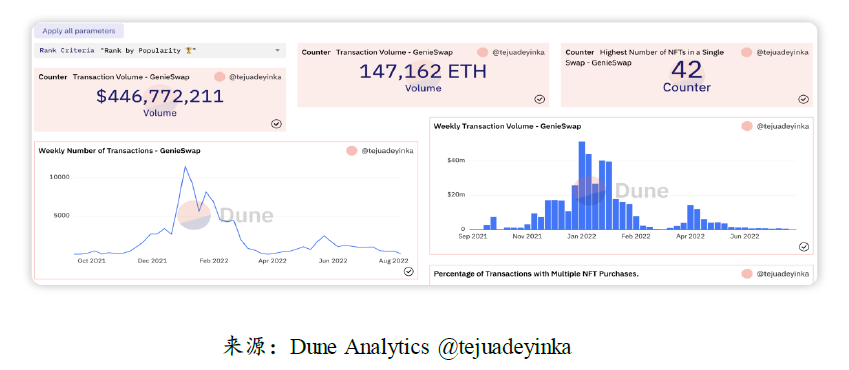
An earlier aggregator in the NFT market is Genie. As the pioneer of the NFT aggregation platform track, Genie gained huge popularity as soon as it went online. The project began closed testing in August 2021. During the internal testing period, a total of 631 users completed more than 1,600 transactions, with a total transaction volume exceeding 5,500 ETH. In theory, the platform can save users up to 40% in gas fees, of course, this depends on the number of NFTs packaged in a single transaction.
The figure below shows the transaction data of Genie since its inception, from which we can see that the current total transaction volume is 14,700 ETH, worth about 446 million US dollars. Judging from the weekly transaction data, it will reach a peak around December 2021, and then gradually decline. Since April this year, due to the overall market, its transaction volume has shown a downward trend.
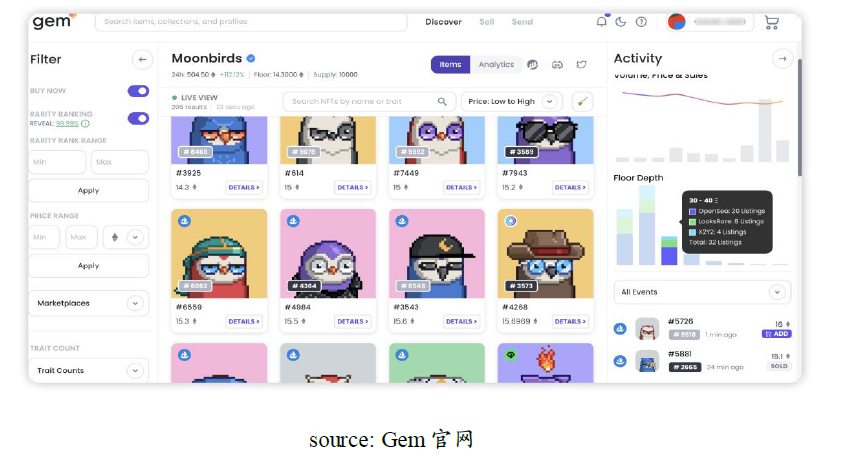
Gem is the second NFT transaction aggregator launched after Genie. Compared with Genie, its interface design is more concise, and it also provides information such as floor sweeping, floor depth, volume and price, and its left filter bar is more suitable for NFT The usage habits of Opensea users in the largest market.
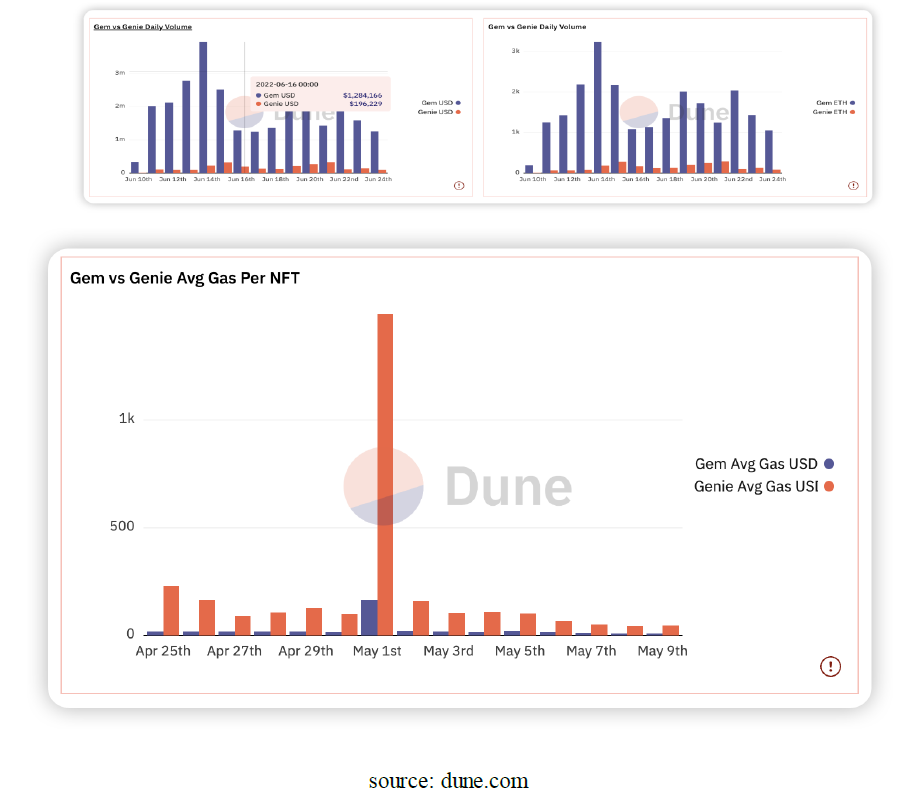
From the comparison between Gem and Genie in the figure below, it can be seen that the Gem platform is far larger than the Genie platform in terms of daily transaction volume and transaction amount.
The NFT aggregation platform started from Genie, but compared to the market acceptance, early user contact and understanding requires a certain process. After Genie opened the market, Gem entered the market with better and more convenient products, and it is also more It is customer-friendly, and has better publicity and capital support, so Gem won the first round of competition on the NFT aggregation platform. In addition, in terms of saving Gas for users, the transaction Gas fee of Gem is much smaller than that of Genie, which is one of the reasons why Gem is more popular than Genie.
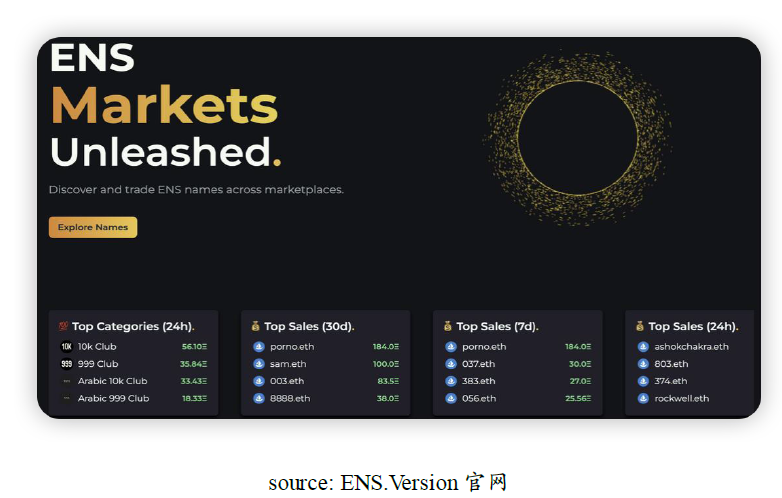
The Gem and Genie we mentioned above are both general-purpose NFT transaction aggregator platforms. With the development of NFT, aggregator projects of various vertical tracks have emerged one after another, among which the vertical track represented by ENS NFT is particularly obvious. The largest ENS NFT transaction aggregator is ENS.vision. It can connect multiple Ens trading markets, including OpenSea and X2Y2. The trading platform provides features such as batch registration, batch query of ENS expiration, and ENS registration on a monthly or daily basis (ENS official is usually yearly). When registering in batches, its handling fee is much lower than other official platforms.
Judging from recent transaction data, the total transaction amount of ENS.Version was once equal to that of Opensea, and nearly 90% of ENS transactions were all undertaken by ENS.Version. It is not difficult to see that there will also be considerable opportunities for transaction aggregators in vertical tracks.
secondary title
4.4 Summary
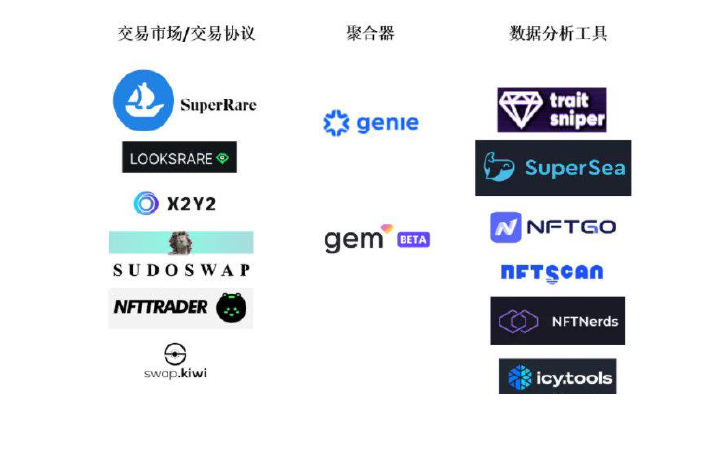
- Judging from the current status of the NFT aggregator track, its competition will be more intense than that of NFT exchanges. Because each exchange can have its own characteristic business, and many exchanges can exist at the same time, but one or two useful aggregators are enough. The trading aggregator track will gradually become more refined, and multiple aggregator platforms that subdivide the track will appear one after another. The reason is that NFT is a product with serious community attributes. Users who are familiar with transactions in a certain field (such as ENS) often or even have been trading on this track.
In terms of profitability, in the three major processes of the entire NFT transaction (trading market, aggregator, and data analysis tools), the closer to the money, the stronger the profitability of the corresponding project, so the profitability of the aggregator is stronger than Data analysis tools but weaker than the trading market.
From the perspective of future market share, NFT transactions completed through the NFT aggregation platform only occupy less than 5% of the market share, and now only Gem is close to 10%. The author believes that its market share will continue to grow in the future, and there will be A super head platform.
From the perspective of horizontal integration, the combination of a more profitable trading market and aggregators has gradually emerged in the industry. Opensea acquired GEM, and Uniswap acquired Genie. Perhaps NFT data analysis tools will also be integrated soon.
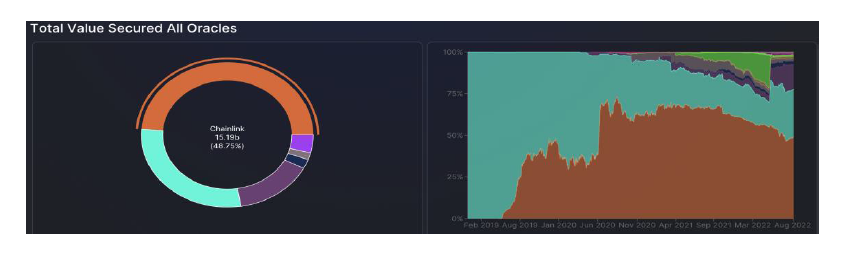 The reason why the Nftfi track cannot be as ever-changing as defi building blocks is that the fundamental reason lies in the individual differences of non-homogeneous tokens. This difference makes it impossible to simply connect the behavior of all nft users. From the tvl of the oracle, the entire nft oracle The track is ranked outside the top ten, and the only one with a certain scale is the tvl from bend to about 95.47m:
To solve this problem, we must start with the most basic pricing. Price is a common parameter for all NFTs. Once there is a price cornerstone, a series of products such as loans can be derived by using price benchmarks. With generally recognized pricing, based on the real-time price of the oracle machine, a series of services such as mortgage, lending, and fragmentation can be built.
secondary title
5.1 Common pricing methods and oracles
At present, what is passed in the field of nft pricing can only pull the floor price of a project in Opensea. Better ones can synthesize data from multiple exchanges and do some simple weighting according to the transaction situation. The oracle that quotes in this way is easy to be taken attack or manipulation. Abacus has explored deeply. They have cleverly designed two pricing methods, evaluation and nft liquidity pool, using game theory, which can provide accurate pricing for a single nft project, but it is not as good as machine learning-based oracles in terms of real-time price feeding. The oracle machine can provide continuous, stable and real-time quotations for assets, which facilitates the expansion of more defi applications. At present, Banksea and upshot are more mature solutions on this track, both of which estimate nft prices based on multi-dimensional data combination algorithms. These two technical routes have their own characteristics. The former can be accurately priced but has a large workload and cannot value multiple projects in large quantities. The latter is less accurate but can guarantee real-time prices and closely follow the market. From the perspective of market demand, The latter has broader prospects.
5.2 NFT game theory pricing model
Classical game theory has several auction pricing methods:
The easiest way to auction is the english auction, which is a rising price auction, as opposed to the dutch auction, which is a falling price auction, these two auction methods are most commonly used in the nft market, which one to choose depends on the desired fragment If you want the price after fragmentation to be lower than the initial price, you should use the Dutch auction. Abacus is a typical example.
Other methods such as sealed auction, sealed bidding, and then the highest bidder gets it. Generally, bulk items are mainly used. The modified version of sealed auction is Vickery auction. The highest bidder can pay the second highest price.
At present, the auction price using the game theory pricing model is relatively accurate, because through the design of the system and the arbitrage drive of the participants, the game theory pricing can be very accurate when there are enough arbitrageurs. The problem lies in the cost of this method. It is too high, and the game requires a process, and there must be enough time for value discovery, while the nft market changes too fast, and it is necessary to continuously open the pool for pricing, so we can simply understand that the game pricing model is suitable for accurate pricing, in the oracle machine The track cannot compete with the machine learning-style pricing model. At present, the best game theory pricing model is the abacus project.
We use a valuation method of abacus to illustrate the role of the game theory pricing mechanism in NFT valuation:
Abacus has an nft price evaluation method called "peer incentive evaluation", the specific method is as follows:
Step 1: The user who needs the valuation initiates the valuation and pays an initial handling fee, which is used as the income of the agreement.
Step 2: Other participating users hand over the NFT price, random number and deposit that they think are reasonable to the agreement.
Step 3: Calculate the evaluation price of NFT after the evaluation deadline, the price-weighted sum of all NFT bids/total votes, the weight is calculated according to the proportion of the pledge, and finally an estimated NFT price is obtained.
Step 4: Calculate the income of participating evaluators. Generally, those within 5% of the final evaluation range will be rewarded. The closer the price and evaluation price are, the higher the income. The price difference is 1%, 2%, 3%, 4%, and 5%. The multiples are 5, 4, 3, 2, 1. Anyone with a price difference higher than 5% will lose money.
It can be seen from the above that Abacus uses the mechanism of game theory to allow participants to give the most reasonable quotation under the incentive of income. This mechanism has several characteristics:
1. NFT can be valued more accurately, and higher liquidity can be released after the price is accurate, for example, the pledge rate is increased from 30% to 70%
2. There are still imperfections in the game mechanism, such as how to prevent price rigging, and influence the final price by connecting participants in series, etc.
3. The pricing process is relatively complicated, which is not conducive to large-scale rapid pricing, so it is more suitable for single-point projects or bulk projects.
4. It is impossible to give continuous real-time quotations according to changes in various market factors.
Game theory still has a lot of room for application in NFT pricing, but it seems that it cannot solve the problem of efficiency if it is limited to a single point of evaluation. An NFT pricing method should integrate game theory into a higher-level, more liquid pricing method.
5.3 NFT autonomous computing oracle
In view of the fact that the evaluation method based on game theory cannot feed prices in real time, and the market has a demand for real-time pricing, the oracle through machine self-learning is an important future development direction of nftfi.
Machine learning oracles can respond quickly based on historical data and market changes. Generally, nft projects with more historical data can have more accurate valuations.
Usually, the machine learning model will extract sales data, bid/ask price, final transaction and other data from historical sales data to build a price prediction model. Some projects with higher algorithms can go deep into specific nft projects to extract different attribute pairs The impact of nft prices. For example, punk’s nft will comprehensively evaluate the price based on attributes such as jewelry, skin color, and hairstyle. At the same time, nfts related to these attributes in the market will be included in the monitoring, and relevant price changes in the market will be fed back to the model in real time, and the estimate will be updated. value. This learning process is currently the most important research direction of the autonomous oracle, and the iterative ability determines the real-time price feeding ability of the oracle.
At present, the better project in the field of independent oracles is banksea. As the winning project of the hackathon, banksea has received a lot of attention in the market and has a relatively large number of users. Its AI model has undergone rigorous testing. Although its core algorithm is a black box that we have no way of knowing, it can be inferred from the interviews with various companies that they cited the most dimensions among several oracle machines. In addition to nft historical data, they also cited community, social Media data and other non-directly related data enrich the data dimension. In addition, setting up a dynamic nft whitelist filtering mechanism also prevents the risk of attacks from data sources.
It is worth mentioning that banksea combines game theory and adds a multi-node penalty mechanism to ensure the joint judgment of multiple models and improve the accuracy of evaluation. Based on the advantages of the model, banksea has developed a lending mechanism. The system identifies the risk preference and automatically matches the counterparty. The platform charges insurance fees to prevent the risk of liquidation due to violent price fluctuations. During the buffer period, there is enough time to replenish the margin. Compared with upshot, the valuation result of banksea tested by the market is better.
6. NFT financial derivatives
NFT financial derivatives are financial products that are derived from NFT and can be used as trading objects. Currently, they mainly include NFT prediction markets, NFT perpetual contracts, and NFT option contracts. Since the NFT market still has liquidity and pricing problems, financial derivatives built on NFT have higher requirements for liquidity and pricing, so most of the current projects in the track are in their infancy, and there are not many projects. The performance of the project data is also not satisfactory.
secondary title
6.1 NFT prediction market Reality Cards
Since the 2020 U.S. election, the prediction market based on blockchain has begun to enter people's field of vision. Vitalik also wrote that the prediction market is one of the most valuable applications of Ethereum. Reality Cards is an NFT-based prediction market that turns betting results into purchasable and ownable NFTs, allowing players to collect NFTs while winning.
How do players get paid? Suppose an event lasts for 10 days. If Gavin holds NFT for 3 days and Vitalik holds NFT for 7 days, Gavin will receive 30% of the total bonus and Vitalik will receive 70% of the total bonus. Prizes are distributed in proportion to how long they have had winning results, regardless of how much rent has ever been paid. In addition, each card has a leaderboard that tracks how long each player has rented the card, and when the event ends the player who has rented the card the longest will get the NFT card.
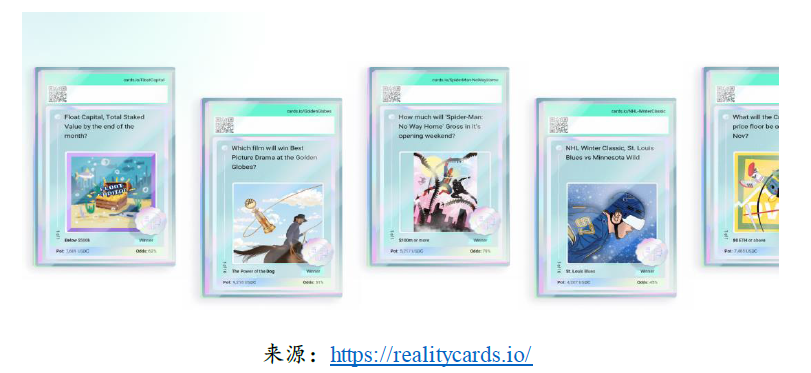
Reality Cards has creatively developed a new way of combining NFT and prediction market, which not only allows users to bet and participate in election prediction, condition prediction, decision-making, etc., but also rent and obtain NFT. Provides more possibilities.
secondary title
6.2 NFT Perpetual Contract Platform
Typical project - NFTperp
The immaturity of NFT oracles is a major problem facing NFT financial derivatives. The solution given by NFTperp is to use ChainLink's quotations, combined with upshot, Banksea, NFTBank.ai, DROPS and other prices for comprehensive calculations, and then use The time-weighted average price (TWAP) approach removes noise and reduces short-term volatility.
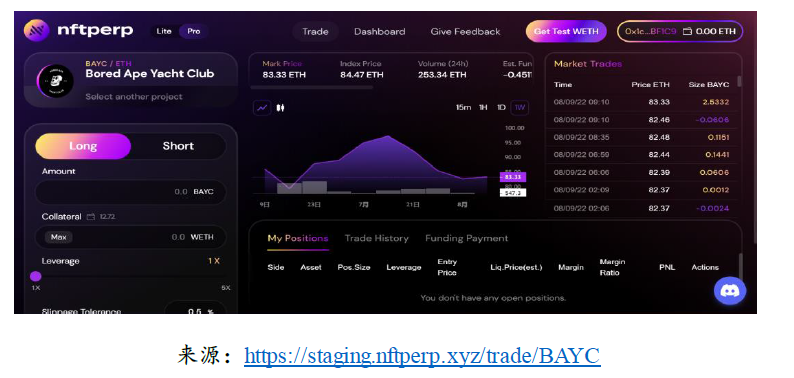
Like most perpetual contracts, NFTperp also anchors the contract price with the spot price through the dynamic transaction fee mechanism and the Funding Rate mechanism. When the positive premium gradually increases, the handling fee of the long side will gradually increase, and the handling fee of the short side will gradually decrease.
text
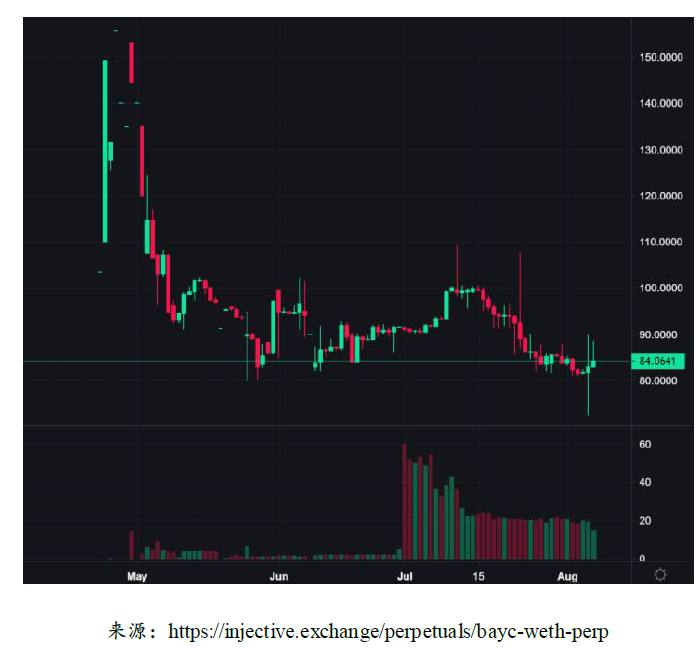
In April 2022, the encrypted derivatives exchange Injective Pro announced the launch of a perpetual contract based on the Bored Ape Yacht Club (BAYC) NFT floor price, aiming to enable retail users to trade according to the floor price of the NFT collection without actually keeping the NFT itself. Users are able to execute long or short positions on specific NFT items for a few dollars.
In general, the BAYC floor price perpetual contract on the Injective platform is one of the earliest NFT perpetual contracts launched, which has more reference value for the future development of NFT perpetual contracts; NFTperp is a truly decentralized NFT perpetual contract The contract platform may become the leading project of the NFT perpetual contract track in the future. The emergence of NFT perpetual contracts can provide hedging opportunities for NFT traders, and it can also give investors the opportunity to participate in the growth of NFT blue chips with a small amount of funds.
secondary title
6.3 NFT options platform Putty
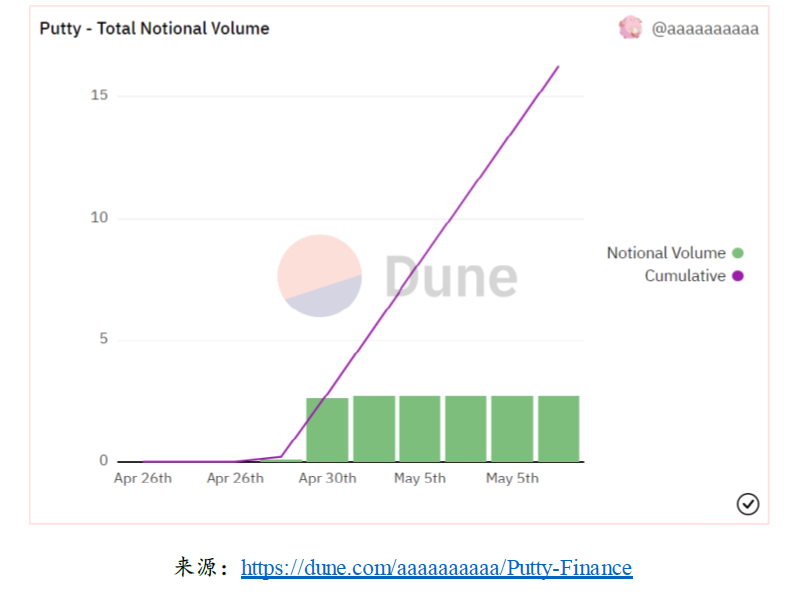
Assuming that an investor holds BAYC#3456, if he thinks that the price will fall sharply below 100ETH in the next month, selling at the price of 100ETH is the low point he is willing to accept, he can set the exercise price of a put option to 100ETH, the option The fee is 3ETH. When someone in the market is willing to sell this put option, the investor needs to pay an option fee of 3ETH to the seller. If BAYC#3456 falls below 100 ETH within one month, the investor can exercise the option to get back 100ETH, and at the same time, BAYC# 3456 to the seller. If the price fails to fall below 100 ETH as expected, investors can continue to hold NFT, but only lose the option fee of 3 ETH.
Putty provides a way for NFT traders and holders to hedge risks, and can set parameters independently, but setting parameters requires high professional knowledge, which ordinary players may not have. It is best for the platform to provide some suggested parameters in the future. In addition, due to the uniqueness of NFT, diamond hand players are less likely to participate. Even if the risk of price fluctuations is hedged, it will cause the loss of NFT.
secondary title
6.4 Summary
Judging from the above typical projects, there are only dozens of accounts involved in Reality Cards/only a few hundred NFTs collected, NFTperp is still in the testnet stage and has not been traded online, and the BAYC NFT floor price perpetual contract on Injective The average daily transaction volume is only tens of thousands of dollars, and the number of Putty transactions on the two networks of Ethereum and OP is only a few dozen. Typical projects in the sector are in the early stages of development.
The difficulties encountered in the current development mainly come from two aspects:
l The overall development of the NFTFi track is insufficient, and the basic layers such as liquidity, pricing, oracle machines need to continue to develop;
lNFT market size is still relatively limited, and the number of people participating in NFT is gradually increasing, but it is still relatively small, and there is not enough audience base. The financial derivatives sector built on the NFT market also lacks sufficient number of participants, and then The ceiling that limits the development of the NFT financial derivatives sector.
Perpetual contracts and option products are relatively mature products in the traditional financial market. When they are transplanted to the NFT market, they only change the underlying assets. In essence, there are not many changes or innovations. It is expected that liquidity and oracles will not be resolved in the NFTFi track. Before the problem, it was difficult to see explosive growth. The NFT prediction market represented by Reality Cards is a new thing. In the future, when encountering historic betting opportunities such as the "U.S. election" and "World Cup", a large number of users may flood in in a short period of time, realizing the rapid development of the project .
7. Challenges and Prospects
From the above elaboration, we can see that NFTfi has made breakthroughs in various sub-fields but there are still many challenges, and of course there are opportunities:
NFT lending is currently limited to mortgage lending of blue-chip NFTs, and has not been expanded to waist or tail NFTs. More breakthroughs are expected to be made when the NFT price discovery mechanism is improved. It is expected that there will be more and more head NFT loan projects, and waist NFT loan projects will also appear;
There are currently various types of NFT liquidity solutions, which have alleviated the difficulty of NFT liquidity for blue-chip rare categories to a certain extent, but for non-blue-chip NFTs that are outside the floor price, this part of the trading momentum is still insufficient. In the future, with the improvement of pricing mechanism and functions, the importance of liquidity will become more prominent;
The NFT aggregator has already shown a state of being strong and strong, and will develop together with the NFT trading market in the future. The vertical integration of NFT aggregators, trading markets and data analysis tools is the general trend. At the same time, NFT aggregators in subdivided fields will appear one after another;
The NFT precise pricing model already has a relatively mature solution. The disadvantage is that it cannot be used in batches and quoted in real time. Therefore, the nft oracle machine based on machine learning was born. It has been technically implemented at present, but it still needs a large amount of data to strengthen the model. Sufficient time to settle the data.
To sum up, the author believes that NFTfi is still in the stage of trial and exploration, and now it is the era of NFT1.0, and it is only expanded outside the protocol layer. With the improvement of liquidity, the improvement of price discovery mechanism and the improvement of NFT itself in the protocol layer (such as leasing, anti-theft, term, etc.) in the protocol layer, coupled with the componentization and intelligence of NFT, the golden age of NFTfi will surely arrival. Let us look forward to this NFTfi journey.
About Huobi Research
contact us:
Huobi Blockchain Application Research Institute (referred to as "Huobi Research Institute") was established in April 2016. Since March 2018, it has been committed to comprehensively expanding the research and exploration of various fields of blockchain, with a view to pan-blockchain As the research object, the research objectives are to accelerate the research and development of blockchain technology, promote the application of blockchain industry, and promote the ecological optimization of blockchain industry. The main research contents include industry trends, technical paths, application innovation, Pattern Exploration, etc. In line with the principles of public welfare, rigor, and innovation, Huobi Research Institute will carry out extensive and in-depth cooperation with governments, enterprises, universities and other institutions through various forms, and build a research platform covering the complete industrial chain of the blockchain. Industry professionals provide a solid theoretical foundation and trend judgment to promote the healthy and sustainable development of the entire blockchain industry.
Official website: https://research.huobi.com/
Twitter:Huobi_Research
https://twitter.com/Huobi_Research
Medium:Huobi Research
https://medium.com/huobi-research
Telegram:Huobi Research
https://t.me/HuobiResearchOfficial
disclaimer
secondary title
disclaimer
1. Huobi Blockchain Research Institute does not have any relationship with the projects or other third parties involved in this report that may affect the objectivity, independence, and impartiality of the report.
2. The materials and data cited in this report come from compliant channels, and the sources of the materials and data are considered reliable by Huobi Blockchain Research Institute, and necessary verifications have been carried out for their authenticity, accuracy and completeness , but Huobi Blockchain Research Institute does not make any guarantees about its authenticity, accuracy or completeness.
3. The content of the report is for reference only, and the conclusions and opinions in the report do not constitute any investment advice on relevant digital assets. Huobi Blockchain Research Institute shall not be liable for any losses arising from the use of the contents of this report, unless expressly stipulated by laws and regulations. Readers should not make investment decisions solely based on this report, nor should they lose the ability to make independent judgments based on this report.