






DappRadar x BGA Web3 Gaming Report: Top Games Still Moving


Original title: DappRadar X BGA Blockchain Game Report
Original source: DappRadar
The blockchain gaming space is growing at a dizzying rate, and GameFi is one of the hottest buzzwords, with industry usage exceeding 50% and $748 million raised. Popular games are booming and new competitors have entered the market. Come and get the latest information in the DappRadar x BGA Game Report.
Web3 is more than just a buzzword, it means a redesigned Internet that provides users with games, social networks and financial services through decentralized applications, or dapps, which run on the blockchain. Managed by the users own wallet.
Gaming-related companies such as Australias Immutable believe gaming will be a leading area for blockchain-based Web3 services, citing the enthusiasm of venture capitalists and the amount of money flowing into the space as proof.
In August, an average of 847,000 unique active wallets (UAW) interacted with blockchain games every day, an 11% decrease from the previous month, but still exceeding 50% of industry usage.
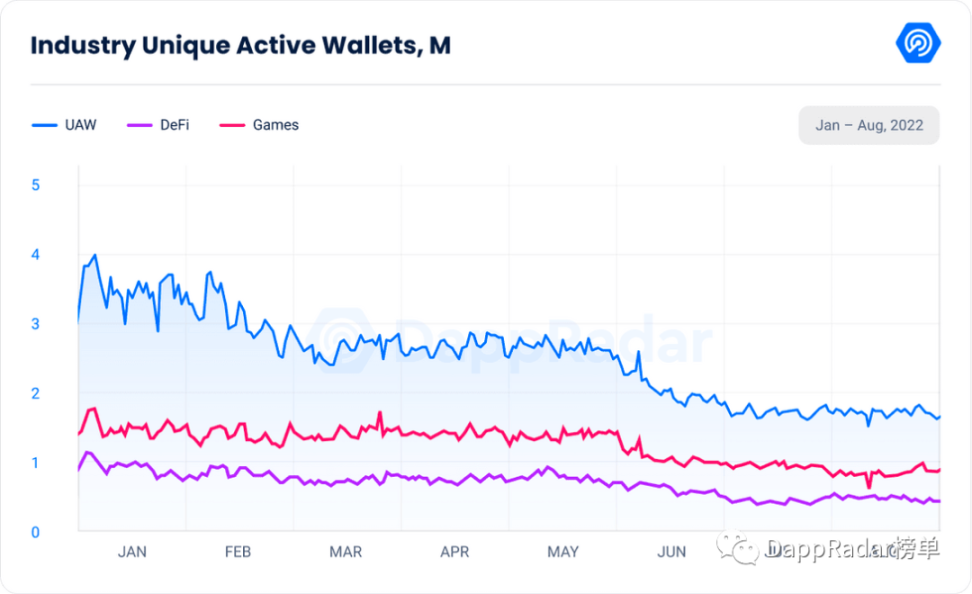
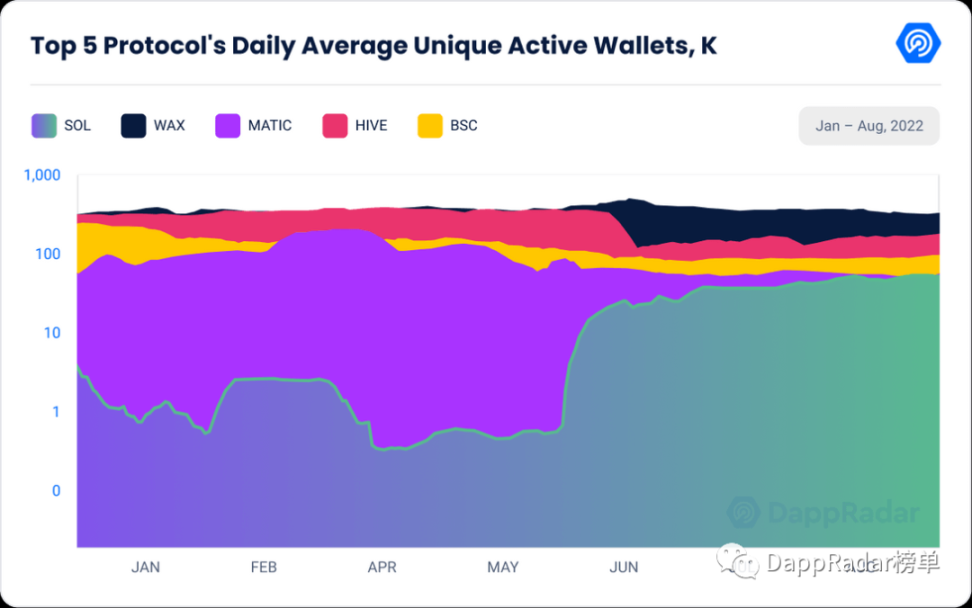
The average number of daily active wallets on popular protocol Wax dropped 8% from the previous month. Despite this, 40% of game activity is on Wax. Hive, the second-largest gaming blockchain and home to Splinterlands, saw its data UAW climb to an average of 169,043 per day, a 12% month-on-month increase.
Similarly, the average daily number of UAW transactions on the BNB chain increased by 8% month-on-month, exceeding 92,000. Solana continues to grow, with monthly growth of 21%.
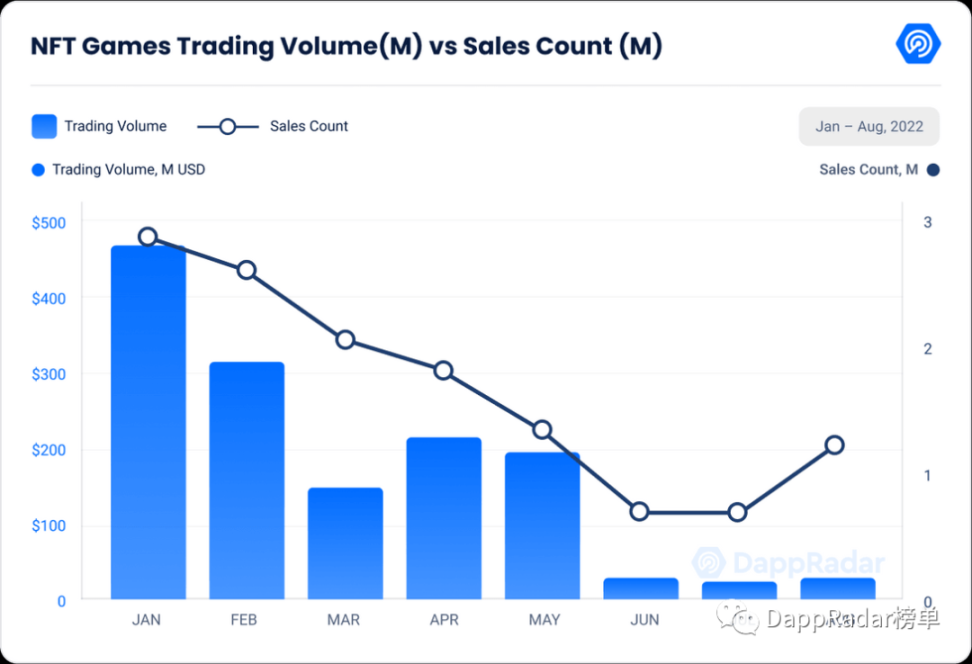
Two other bullish signals are the total trading volume of related NFT games, which increased by 13.25% from the previous month, and the number of sales increased by 83.36%. The trading volume of game-related NFTs exceeded 1.3 million.
Regarding protocols, Ethereum decreased by 14.40% to reach $11 million, but Solana grew by more than 171% month-on-month to $1.7 million. Ronin’s total trading volume also reached $8.2 million, a month-on-month increase of 27.64%.
This report will highlight the most important recent developments that make blockchain gaming a protagonist of the upcoming web3.
Important points
Despite the tough economic environment, Web3 gaming and Metaverse projects have raised more than $750 million since August 1.
Trickshot Blitz, a new flow-based game, attracted more than 400,000 unique active wallets (UAW) in two weeks and processed 4.6 million transactions.
Splinterlands is enjoying its third month of strong growth after revamping the games economy last June.
Axie Infinitys historical NFT sales have exceeded $4 billion, and the game has attracted an average of about 36,000 players per day over the past three months.
Virtual World game NFT generated annual minimum revenue of $25 million in August; the Sandbox kicked off its third Alpha season.
Xterio raises $40 million in investment for mobile web3 games because only 12% of blockchain games can be played on mobile devices.
Top games continue to evolve despite tough market conditions
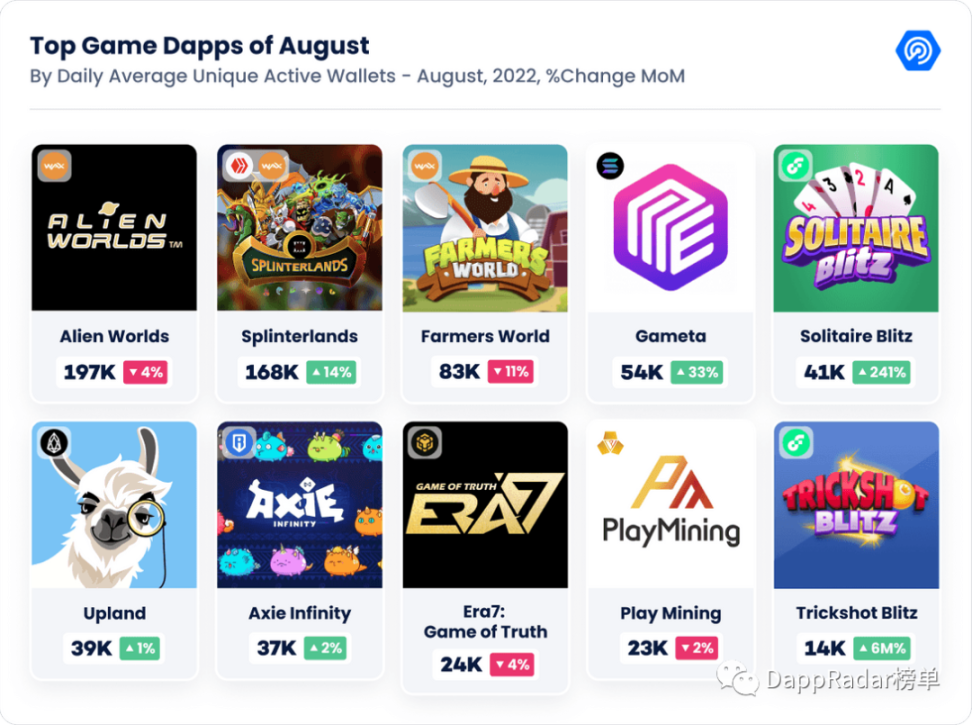
In August, Alien Worlds was the most played blockchain game, with an average daily UAW of 197,555, down 4% from the previous month. They announced a partnership with Zilliqa to integrate Alien Worlds into their platform via the Unity software development kit. If you want to learn more about this partnership and its future plans, check out the latest AMA we produced during DappDays.
Gameta is a solana-based game that was launched on the BNB chain on August 27. Its average daily number of independent active wallets has increased by 33% since July, ranking among the BNB chain decentralized applications (dapps) in terms of number of users. Second, ranking first in the GameFi project.
Axie Infinity has consolidated its on-chain player base to a daily level of 36,000. This month, the game’s NFT collection generated $4.24 billion in sales, followed by CryptoPunks with $2.92 billion. On August 11, they announced the start of Origin Season 0, marking its transition to the third phase. With the arrival of this new phase, the reward system will be changed and SLP will be removed.
Flow keeps growing with new game Trickshot Blitz
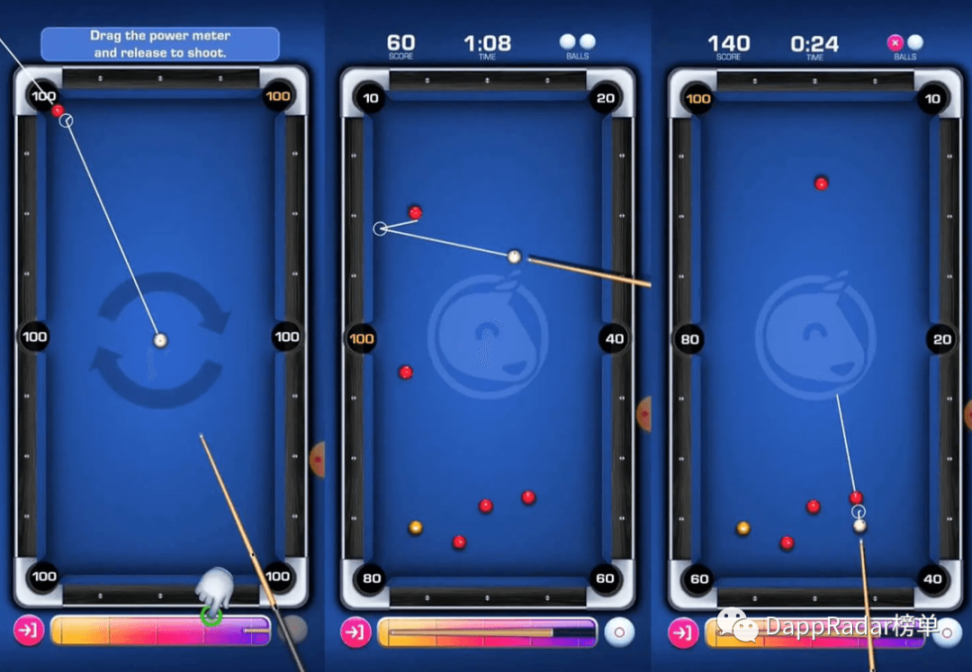
In September, Joyride Games Inc., the game publishing platform that launched the traffic-based game Solitaire Blitz in July, also released Trickshot Blitz on the 15th, a paid version of the traditional 8-ball billiards game. The game gained over 400,000 unique wallets and processed over 4.6 million transactions in its first two weeks of release.
Source: Trickshot Blitz
Another major event is the partnership between Ticketmaster and Flow, which allows event organizers to issue NFTs attached to tickets. These NFTs can be made available before, during, and after the event, allowing for customized experiences such as loyalty incentives or celebrity meet-and-greets, or simply selling souvenirs in the form of NFTs.
As the world rapidly adopts decentralization, Flow has released CAST, a new decentralized autonomous organization (DAO) infrastructure. It is a voting system designed to facilitate community decision-making. CAST proposals can use any non-fungible token (NFT) or Flow token on the Flow blockchain.
Read our comprehensive guide to the Flow blockchain for more details.
Splinterlands has been battled over 3 billion times and continues to grow significantly
August is also a big month for Splinterlands, a trading card game running on the Hive blockchain. The Splinterlands team revealed that the game has reached 3 billion battles. As you can see from the chart below, this happened just a few months after the game hit 2 billion users in March 2022, indicating a steady increase in user engagement.
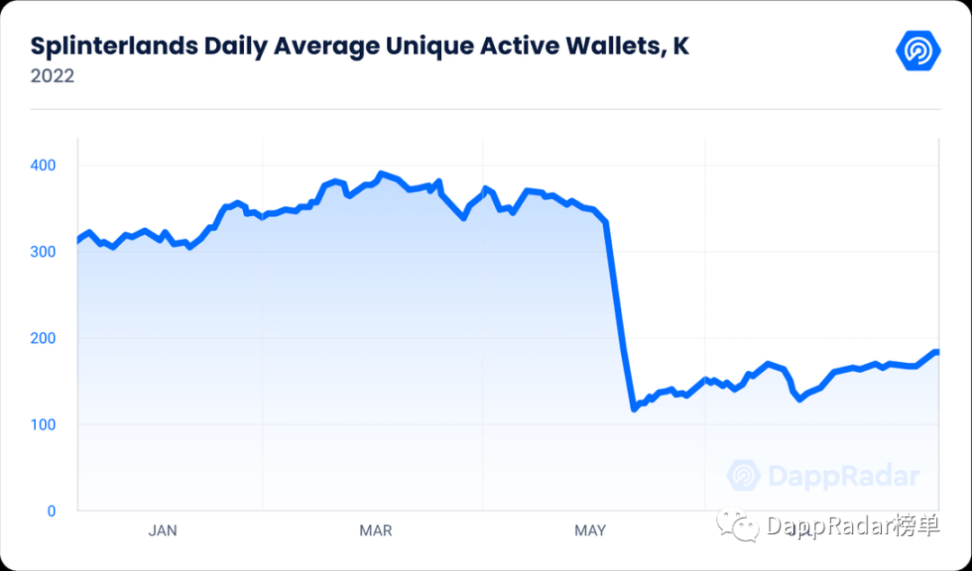
The average number of daily active wallets in Spinterlands increased by 14% month-on-month to 168,000, mainly due to the following announcements.
On August 5, it was revealed that $SPS (Splinterlands), an Ethereum-pegged token that players can use to conduct in-game transactions, will be listed on the Huobi exchange in partnership with EMP Money.
The Major League Soccer Players Association (MLSPA) announced on August 8 that it is partnering with Splinterlands to build and develop a blockchain-based football play-to-earn game (P2E) to enable MLSPA players to earn money in new ways through desktop and mobile platforms. Interact with fans.
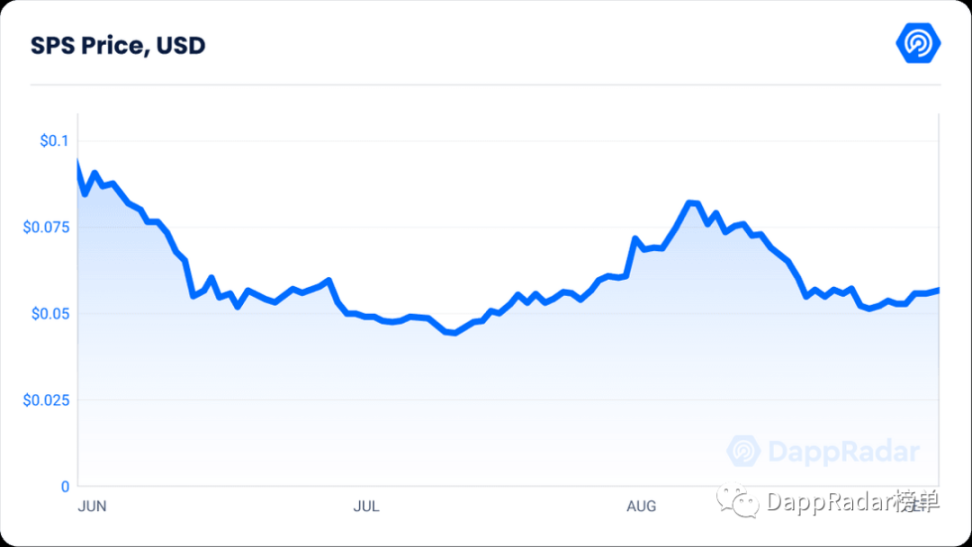
These two announcements sent the price of the Splinterlands currency (SPS) soaring by 38% in the first week of August, before the price began to decline. According to data from Coingecko, the SPS price on August 31 was 0.052, a 13% decrease from the beginning of the month.
After conducting a test vote on August 23rd to ensure the system was working and to measure engagement, the Splinterlands team went ahead with the first vote that will impact Splinterlands gameplay. This specific vote involves the reorganization of SPS bonus distribution, which has caused controversy.
This idea is specifically aimed at the distribution of SPS prizes in ranked matches. Instead of one huge pool of SPS tokens shared by everyone, there are several smaller pools. The plan proposes moving most of the rewards to higher tiers.
Although the idea has now passed with 85% of votes in favor, there are concerns that the reform will only benefit the rich. Currently, there is a fee to obtain Diamond and Champion ranks. You are not allowed to participate in Diamond League until your collecting power exceeds 250,000 (equivalent to about $6,400 worth of cards).
Now, they want to give 30% of the total SPS rewards to the top few hundred players occupying the highest positions. The higher the level, the larger the reward share and the greater the bonus. But allocating a third of the entire supply to a small group of people seems excessive.
The Splinterlands team has stated that they are willing to change these numbers in the future; however, will a new proposal and vote be required to make this adjustment? We will monitor these developments closely.
Virtual Worlds sales down, but sales up
Virtual world experienced a month of decline, with transaction volume falling 28.90% month-on-month to $22 million. However, the number of sales increased by 38.62% month-on-month to 19,354 units, indicating that the demand for such projects is still high.
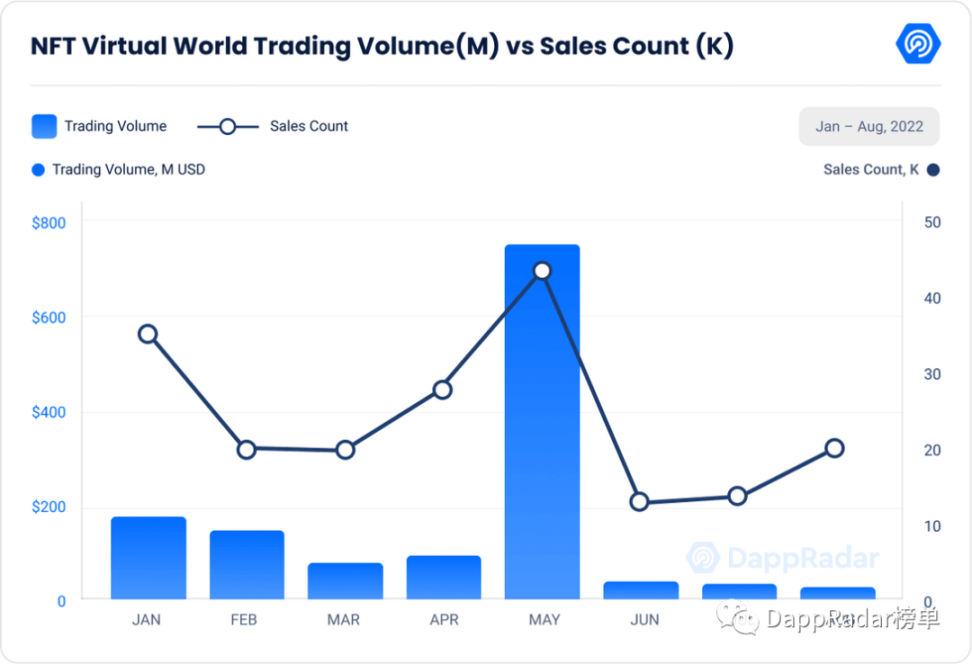
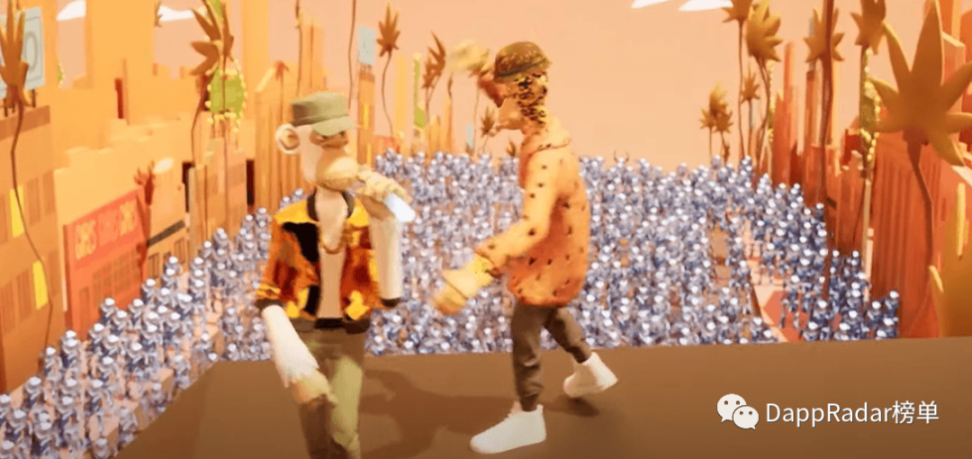
The transaction volume of Otherside in September dropped by 27.41% from the previous month, but still accounted for 73.23% of the total transaction volume of the virtual world. On August 28, Eminem and Snoop Dog performed at the Otherside Metaverse for the Video of the Year Awards, bringing along Bored Ape Yacht Club NFTs.
Source: YouTube
Likewise, Decentraland’s monthly decline of 23.86% is below $1.5 million, the lowest we have registered since January 2021. In addition, the trading volume of NFT Worlds also dropped by 76.43%, which is the lowest trading volume on record.
On the other hand, Worldwide Webb Land, a 2D metaverse inspired by Steven Spielbergs film Ready Player One, saw total transaction volume increase by 87.12% year-on-year to over 500,000. This growth is aided by the latest announcement, allowing users to manually submit potential integrations to their Metaverse.
So now projects no longer need to partner with Worldwide Webb Land to get their avatar in the Worldwide Webb metaverse, users can now manually submit the NFTs they wish to be integrated.
Somnium Space also grew 36% over the previous month, driven by the platforms launch of a new social media platform. Its called Authencity, and it will have a straightforward monetization model where fans can support creators without interruption. They essentially get a share of every profile they support and will ride the wave of its success.
In addition, Arcade Land grew 46.24% from August, driven by its latest collaboration with Ookeenga, a 3D NFT game project developed by CROS Games.
A live look at The Sandbox Alpha Season 3 and its multiple celebrity collaborations
Following the Alpha Season 1 of The Sandbox last year and Alpha Season 2 earlier this year, players are looking forward to Season 3, which will be released on August 24.
The Sandbox Alpha Season 3 is free and available to all players, but in order to receive SAND rewards from the game, you must have an Alpha channel or other Sandbox NFT. Additionally, the Sandbox offers a new KYC bonus eligibility criteria. This is the result of dishonest players setting up multiple accounts to increase their chances of winning rewards.
This Alpha season contains over 90 experiences from numerous sources. These experiences come from partners like The Walking Dead, Snoop Dogg, Smurfs, the Sandbox Team, Game Maker Fund, 12 user-created experiences, and 16 from previous games.
In addition, the Sandbox Alpha Season 3 allows players to use various series of NFT avatars in the game, such as Steve Aoki, Bored Apes, and Moonbirds.
Prizes for Season 3 will be adjusted, including prizes designed specifically for specific NFT holders. Currently, the Sandbox Alpha pass holders can receive the most prizes, and individuals who own the Sandbox land, avatars, and NFTs may also receive prizes by completing tasks.
Visit our recent article to learn more about Season 3 of The Sandbox Alpha.
As the new season launches, The Sandbox is partnering with Gordon Ramsay to bring his wildly successful Hells Kitchen into the virtual world, and Paris Hilton, who will have her Malibu mansion replicated in The Sandbox I serve as a DJ and host a rooftop party.
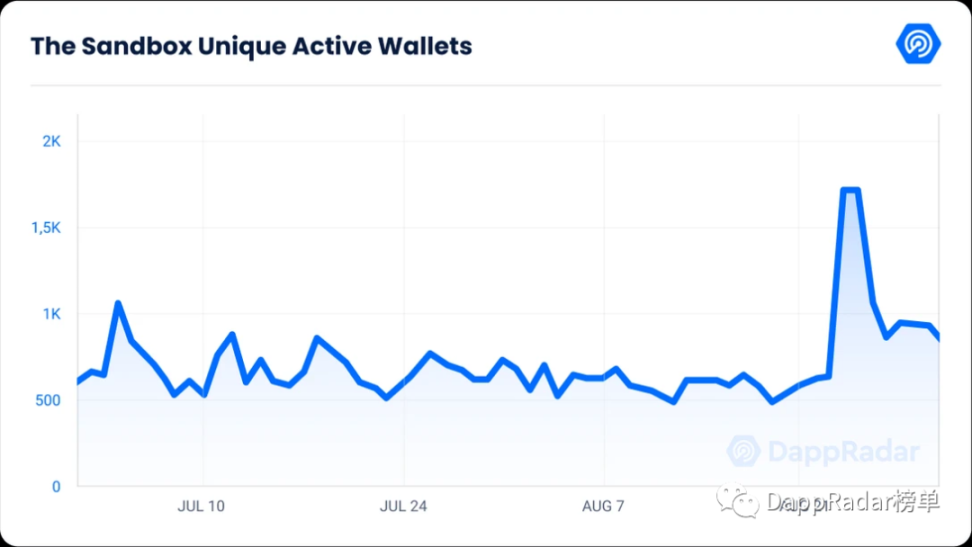
With all these celebrity collaborations and the launch of the new season, independent active wallets have grown 40% since July, peaking at 1,680 the day after Alpha Season 3 launched.
On September 1st, DappRadar interviewed Sebastien Borget, COO of The Sandbox, if you want to know more about their vision and roadmap, please read this article.
With the continuous development of the move-to-earn model, STEPN has more than 3 million registered users every month
Move-to-earn apps are growing in popularity, with players coming from a variety of backgrounds. Thousands of people are attracted to the rewards system for physical exercise, and there are huge communities of fitness app enthusiasts around the world.
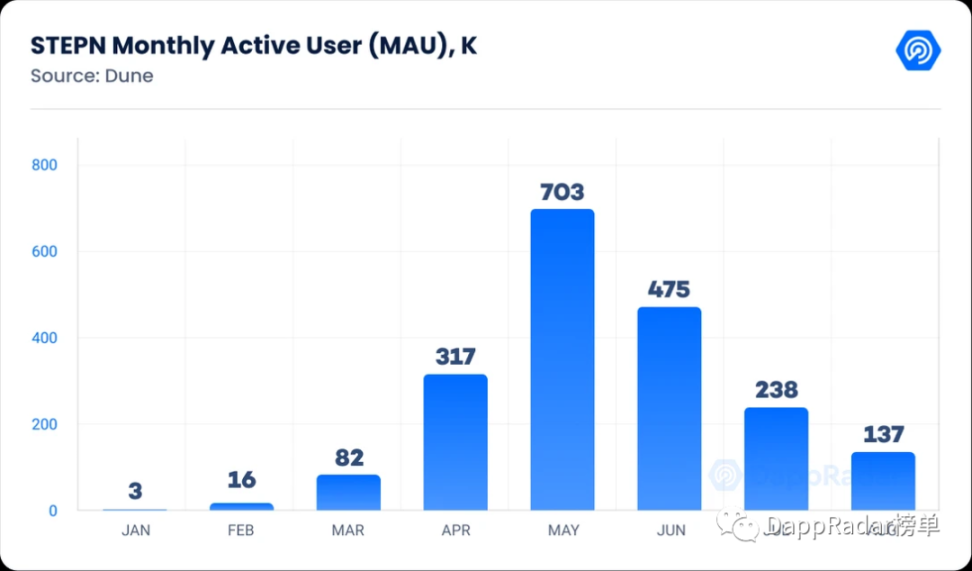
STEPN remains one of the most popular M 2 E (move-to-earn) dapps, with more than 3 million monthly cumulative users, more than 700,000 shoes mined, and is establishing its presence at the Hong Kong government-run startup accelerator Cyberport The first physical office, making the city its first regional headquarters outside of Australia.
Source: Dune Analytics
The decision comes as other cryptocurrency-related businesses leave Hong Kong in preparation for a new licensing regime for exchanges. Covid-19-related quarantine procedures are also among the reasons for businesses to relocate.
Additionally, they announced a partnership with Atletico Madrid and cryptocurrency exchange WhaleFin to develop a new series. The collection will include 1,001 pairs of Atlético Madrid sneakers, which may win signed club items and match tickets. Additionally, this series will be compatible with the app’s running and earning games.
In addition to STEPN, there are a few dapps also dabbling in the M2E ranks, although most of them are still in their infancy.
Genopets is another M2E app on Solana that leverages augmented reality in a similar way to Pokemon Go, allowing users to capture creatures moving in the real world, and now its adding habitat management features for its gamers.
In Genopets, players can forge crystals, habitats, and Terraform seeds. In the future, they will also offer additional functionality through handcrafting and crystal refining. The owner can select a fee rate and designate a leaseholder who will then be able to use the selected habitat features.
With the deployment of habitat management, the move-to-earn economic model on Genopets has officially begun. Any data accumulated during the test is reset and everyone starts from scratch.
Sweatcoin has just announced a partnership with DAO Maker to launch its own digital token, SWEAT. Its IDO aims to facilitate the transfer of the Sweat economy to the global Web3 ecosystem.
Along with the introduction of SWEAT, the fitness app’s development team will offer its own cryptocurrency wallet, Sweat Wallet. Sweat Wallet is an all-in-one terminal for the crypto-centric version of Sweat Economy, with high yields, unique NFTs, and a powerful set of tools.
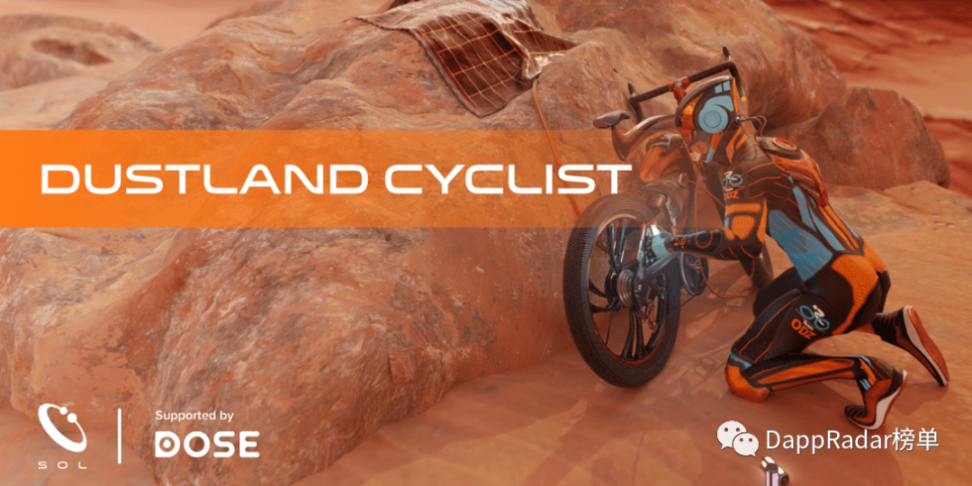
OliveX is a digital health and fitness company backed by Animoca Brands and owns dapps such as Dustland, Zombies Run and Lympo Squat. The business will also release Dustland Rider, a new game where players ride to collect in-game prizes, with a release date yet to be announced.
Source: Dose Token Medium
OliveX founder and CEO Keith Rumjahn will join Silentmode as a non-executive director as part of planned strategic investments to provide advice and insights on currency pairings, marketing and exchange connections.
The company also struck a deal with game developer Parasol Corp Pty Ltd to collaborate on three new games over the next three years. Each of these games will be supported by the DOSE utility token, which is a token for the entire ecosystem. The first game, tentatively titled We Fight Monsters, is designed for players who like bodyweight exercises.
Everyone from walkers to Olympic athletes are using move-to-earn apps. One might say that they fundamentally change the way individuals interact with physical exercise and the crypto world. In the past five years, Web3 and the Metaverse have only been closely associated with crypto enthusiasts and NFT trading users. But now, many people will increasingly participate in the “move-to-earn” trend.
Blockchain gaming and Metaverse projects raise $748 million in funding
As this trend develops, cooperation and investment in blockchain games are also increasing. The scale of financing in August was US$748 million, an increase of 135% from the previous month, but still 16% lower than in June.
Gabriel Leydon, founder and former CEO of Machine Zone, the mobile gaming studio behind Game of War and mobile Strike, has raised an eye-catching $200 million investment in a new blockchain startup called Limit Break. 27% of the total investment. The project gained popularity after the successful launch of the DigiDaigaku free-mint NFT series, which we analyze in this report.
Temasek, Singapores state investment fund and the worlds largest investor, has invested $100 million in Animoca Brands through convertible bonds. Just last month, Animoca raised $75 million in a funding round led by existing investors Liberty City Ventures, 10 T and Kingsway Capital.
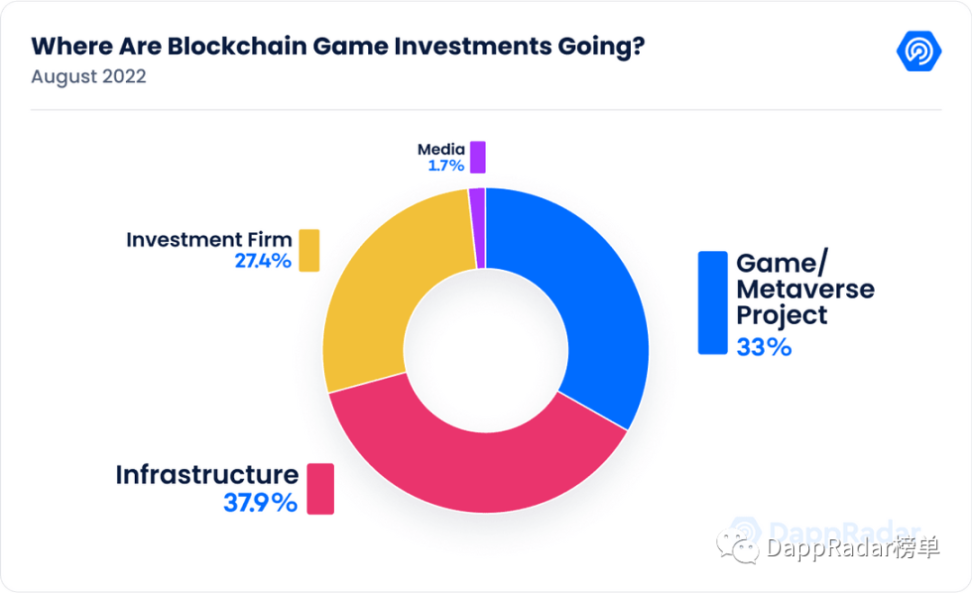
Looking at the overall situation, we found that 38% of the investment was invested in infrastructure, 33% was invested in games and Metaverse projects, and 27% was invested in investment companies.
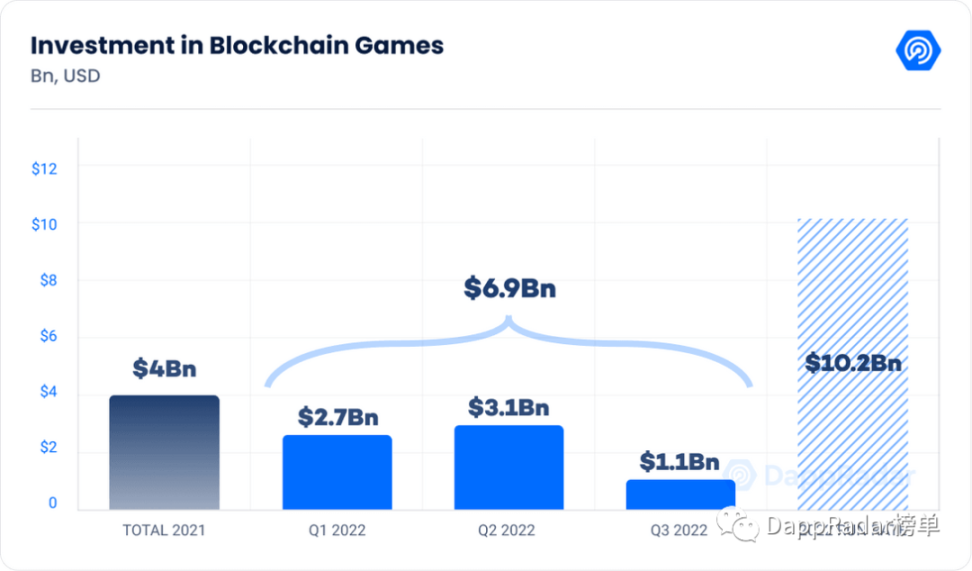
Last quarter, investors poured $3.1 billion into the blockchain gaming industry. Total investment in this growing industry is expected to increase by 20% this year to $10.2 billion.
The amount of investment shows that despite the challenges and uncertainties facing the digital asset market, major investment entities remain optimistic about the GameFi industry.
Will blockchain-based mobile gaming drive Web3 adoption?
Mobile gaming has grown significantly over the past 20 years. Starting with Snake and jailbreaking on outdated Nokia phones, the mobile gaming business has grown rapidly, gaining unprecedented popularity with games like Candy Crush, Bloons Tower Defense and Angry Birds. The mobile gaming space has taken huge leaps forward in the past few years, with more technologically powerful phones and web3 technology making gaming experiences more immersive.
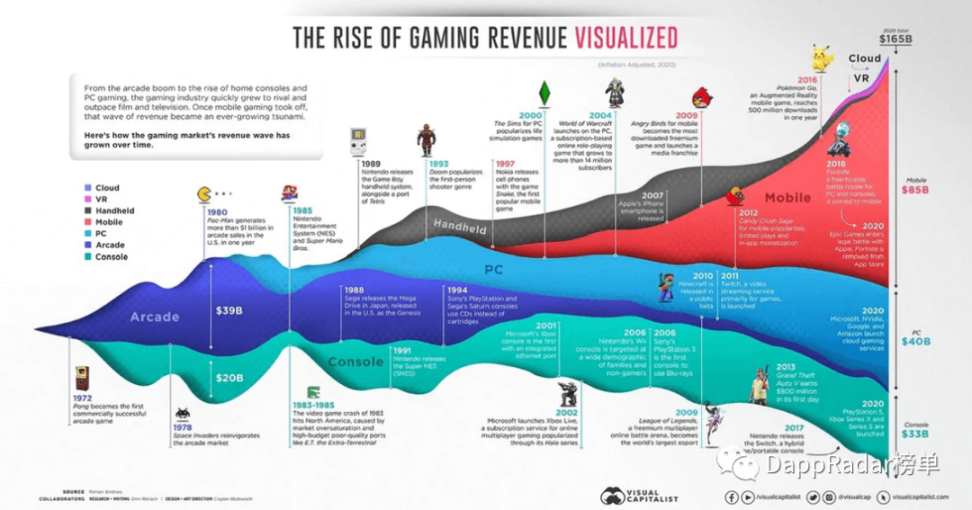
Source: 50 Years of Gaming History
As of today, most of the leading blockchain games such as Axie Infinity, Upland, Gemeta, Splinterlands, etc. have mobile versions of the games. In fact, according to Mirror World, only about 12% of web3 live games can be played on mobile devices.
In September, Coda Labs and Laguna Games teamed up to release four new casual games for iOS and Android smartphones. These four mini-games are planned to be released in the fourth quarter of 2022, namely Unigatchi, Bumper Corns, Mob Run and Rainbow Rumble.
Another thing of note: Xterio, a cross-platform publisher and producer of high-quality mobile and Web3 games, received $40 million in investment last month. FunPlus, FTX Ventures, Makers Fund and XPLA led the round, with participation from Hashkey, Foresight Ventures, Headline, Matrix Partners and Animoca Brands.
The funds will be used to develop and publish its own games and those of partners, with the aim of creating new world-class intellectual property, while continuing to develop the Xterio platform with additional features including a marketplace, social community center and more.
Despite a sluggish economy, conflict in Ukraine, rising inflation, a cryptocurrency winter, and a renewed gaming market downturn, the funding shows that gaming investors are beginning to take a strong interest in blockchain mobile games. In the future, the Web3 team may still receive a large funding round if it has a convincing proposal.
Additionally, with the adoption of Web3 games in the mobile phone space, the challenge is the friction that exists with web3 technology. This barrier is particularly evident in mobile, where a poor user experience can lead to significantly lower retention rates.
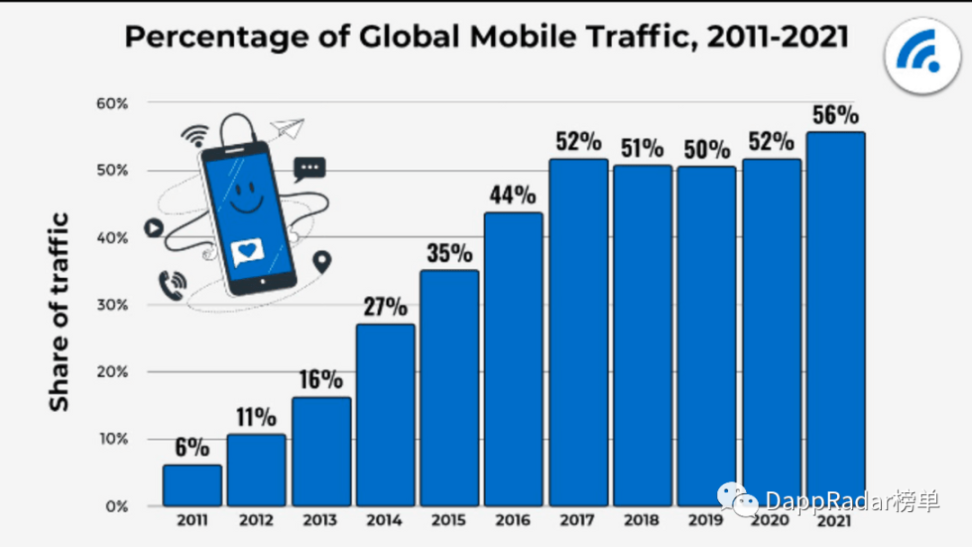
Source: Global Mobile Traffic
Spanning multiple applications to perform operations typical of web3 games, such as logging in, completing blockchain transactions, or trading in the NFT market, will undoubtedly result in a poor user experience.
Platforms like X-terio and Mirror World will benefit the entire industry. Mirror World SDK helps developers integrate blockchain in a smoother way. According to Chris Zhu, co-founder and CEO of Mirror World, developers dont need to build their own stack separately.
Mirror World strives to improve user experience while interacting with blockchain-related goods. Chris mentioned, “Users often need to leave the app to sign a transaction with Metamask or Phantom, which forces them to leave the mobile Dapp, resulting in a 25% conversion rate loss, which is devastating for any game hoping to generate revenue and expand users. number.
With this in mind, the platform has an all-in-one login and authentication feature that allows users to interact with the game via social authentication (Google, email, Twitter, etc.) and automatically bind crypto wallets.
On the same page, it also has a mobile marketplace where developers can easily build a built-in NFT marketplace that allows users to buy and sell game NFT assets directly within the game.
Regarding the importance of SDKs and similar tools as web3 prepares to join the next wave of users, he asserts:
“Similar to how online payment adoption was minimal before PayPal and Stripe, we believe there is an urgent need to provide low-code solutions through SDKs to enable developers to create integrated user experiences in any mobile app, from social to Log in to the self-hosted wallet and marketplace. - Chris Zhu, Co-Founder and CEO, Mirror World
Conclusion
Blockchain gaming is the latest addition to an emerging industry that has yet to lose its mystique. Many people still dont realize its importance, and the ever-changing gaming ecosystem offers little additional help.
However, those who are heavily involved in blockchain gaming believe that its promise of player-owned assets and a circular token economy are undoubtedly advancements in the entertainment industry that will change the way the world views gaming in the future.
Although it is still in its infancy with huge development potential, there are still some aspects that need to be improved. But overall, the industry is constantly evolving and innovating.
GameFis future is bright and it is becoming a leader in web3.


