






Aptos ecological super-comprehensive inventory: which Defi projects are worth paying attention to?


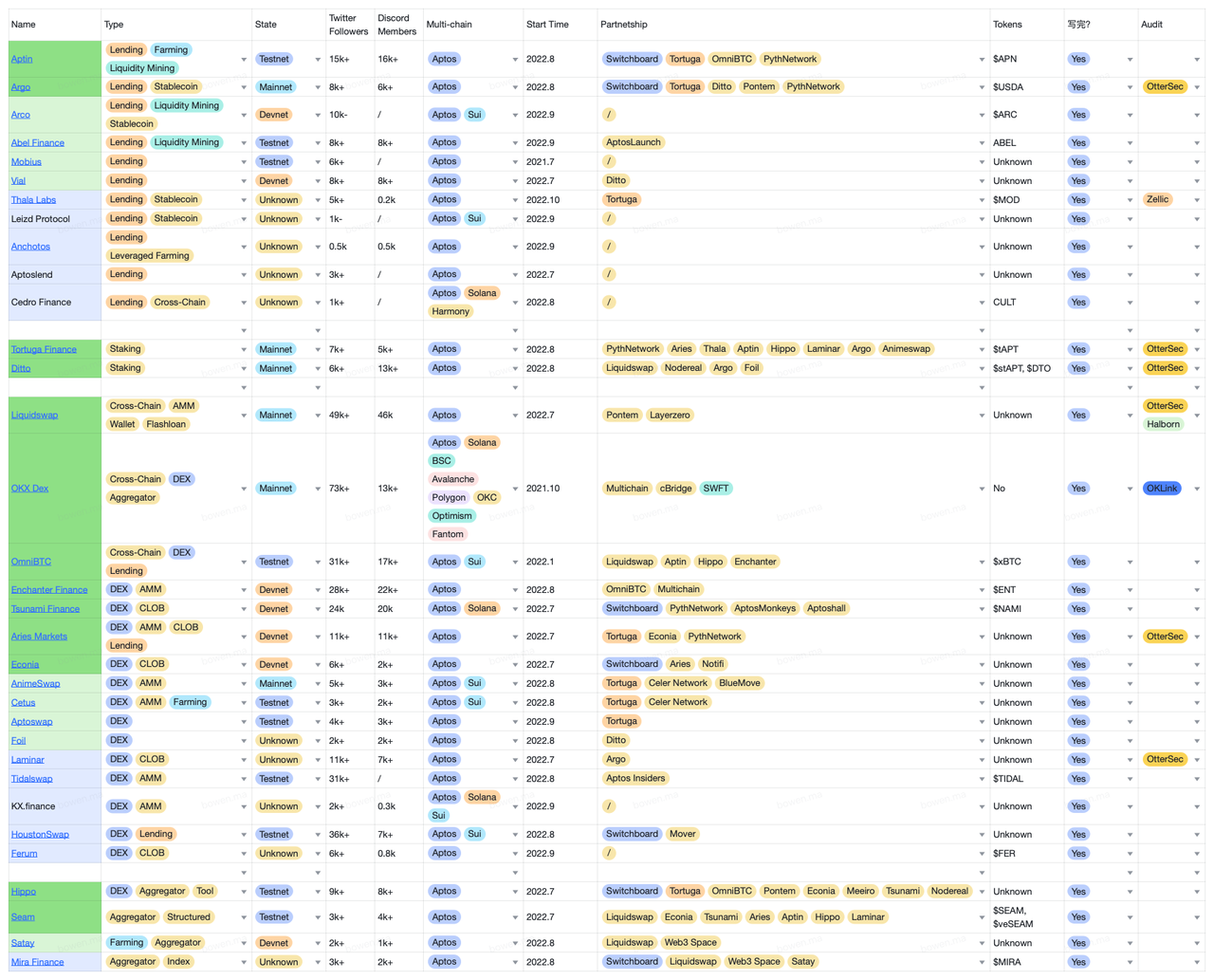
The Aptos ecosystem has more than 160 projects in development and testing in just 8 months. Among them, the categories of DeFi projects range from DEX, lending, stable currency, to liquidity pledge and aggregate income, and the number is close to 40.
Below, OKLink lists the projects of various categories of DeFi on the Aptos chain, and selects the top projects among them, and takes everyone to understand the DeFi ecology of Aptos from the perspectives of the project's operating mechanism, innovation, and degree of completion.
As of press time, DeFi projects that have been deployed on the Aptos mainnet include Argo, Tortuga Finance, Ditto, Liquidswap, and Animeswap. Other leading projects, such as OKX Dex, Aptin, and Enchanter, announced that they will be launched on the mainnet soon.
We will continue to pay attention to the ecological development on the Aptos chain,OKLink project libraryIt will continue to be updated to bring you the latest project information.
 first level title
1. Lending
Aptin
Aptin is a decentralized lending platform, and it is a more distinctive and innovative project among the DeFi projects of Aptos. Its interest rate calculation model is similar to Compound, but slightly different. It is jointly determined by the prevailing market interest rate in the market and the capital utilization rate (u) in the Aptin agreement. The higher the utilization rate, the less borrowable funds in the pool, and the higher the borrowing rate. In addition, the protocol can adjust different strategies through RateCurve Constant.
Mining Reward: As a subsidy (Premium) for participating in the agreement, $APN will be dug out in equal amounts with each block, and borrowers and lenders will share the mined APN according to the proportion of participation, which is used to offset transaction procedures fee.
The above access, lending, returning and mining functions can already be operated normally on the test network.
According to the utilization rate of funds, the platform will lend the surplus reserve assets in the loan pool (the fund pool called 'Aptin Finance') to Compound, AAVE and other agreements to obtain more agreement income.
In terms of ecological cooperation: through the introduction of oracles (Switchboard & Pyth) to provide the asset prices required for the liquidation mechanism; accept cross-chain project OmniBTC’s $xBTC and Tortuga’s pledge certificate $APT as collateral assets to lend other tokens.
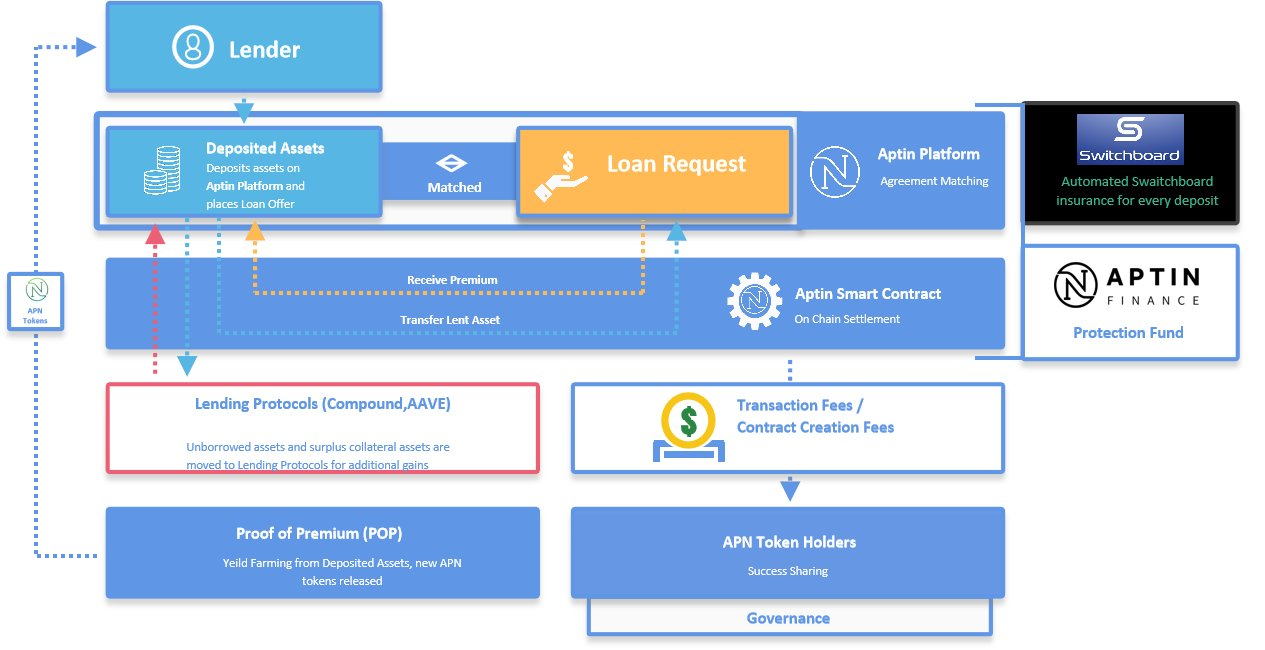
According to Aptin’s roadmap: Aptin’s V2 version will add a cross-chain bridge to allow cross-chain lending and pledge of assets; in Q4 of 2022, Aptin will publicly sell its token APN; in Q1 of 2023, a governance platform will be launched.
Argo
Argo is a lending project similar to Maker - pledge assets (such as $APT) to lend stable currency USDA to release liquidity for idle assets in the Aptos ecosystem. Users who participate in borrowing will receive liquidity mining rewards generated by mortgage tokens while paying borrowing interest. Part of the loan interest will enter Argo Treasury as agreement income.
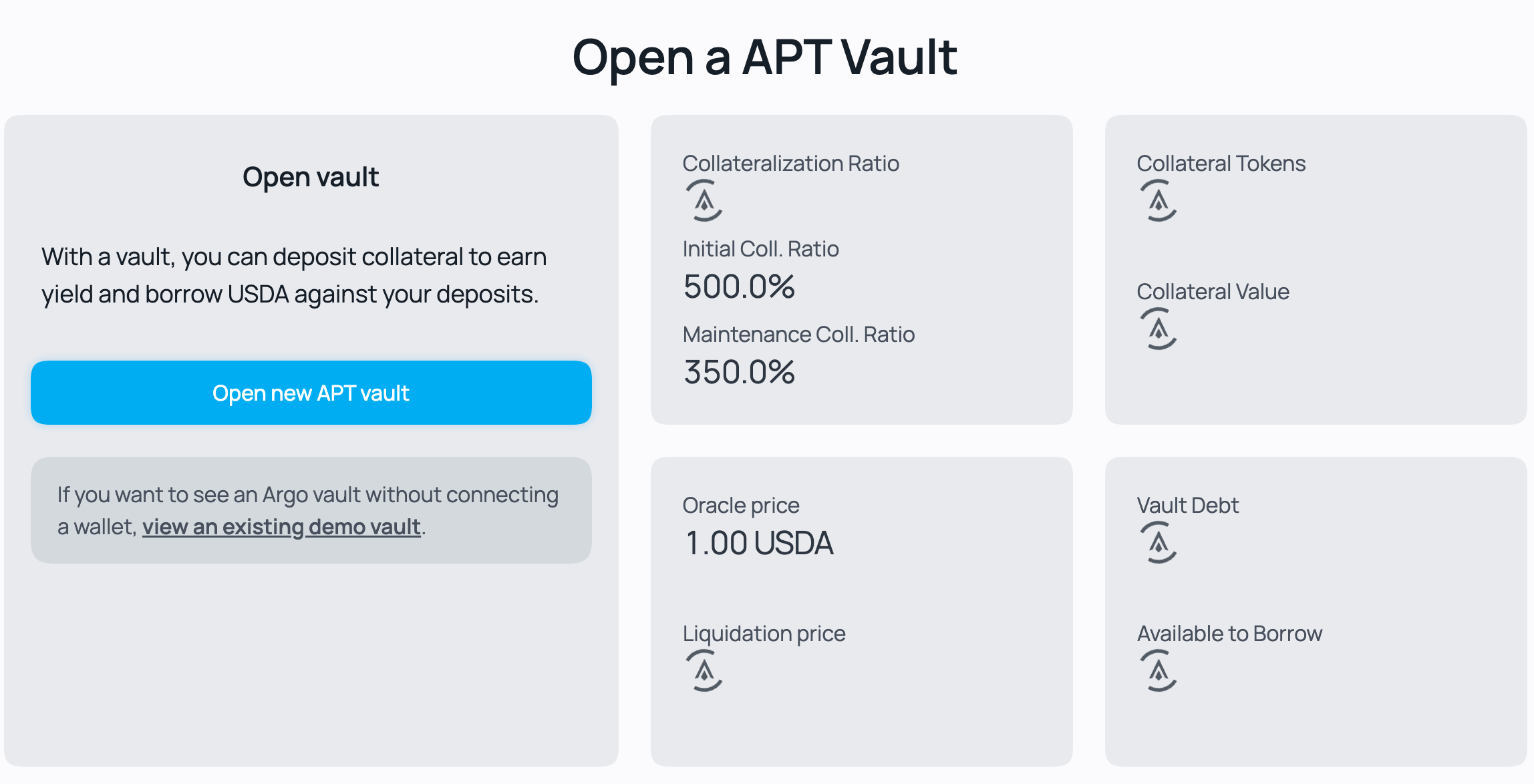
In Argo, the user's mortgage assets and USDA debt together form a debt position (Vault). Some kind of mortgage assets used to mine USDA forms a fund pool (Engine) in Argo. Stablecoin projects are often the target of hackers, so the security of the protocol is particularly important. In order to prevent the decoupling of $USDA, this fund pool needs a batch of parameters (such as borrowing rate, maximum $USDA limit, mortgage rate, etc.) to control the risk of the agreement's debt position, and prevent the price from Manipulation lapses liquidation).
Since the Aptos mainnet has just been launched, it is necessary to pay attention to the various parameter settings of the Vault in order to formulate its own strategy and evaluate the risk of the position.
In terms of ecological cooperation:
At the same time, the pledged tokens ($tAPT, $stAPT) of Tortuga Finance and Ditto will be introduced as collateral for lending $USDA;
Provide the asset price required by the liquidation mechanism by introducing the oracle Switchboard;
Add $USDA to LaminarMarkets (order book DEX);
Currently, Argo does not plan to release $Argo.
Arco
Arco is a lending project on the Aptos and Sui blockchains, and can also mortgage assets to lend stable coins.
For the lending part, Arco adopts the common overcollateralization method, and the lending pools are isolated from each other. The interest rate model is similar to the kinked method of stablecoins in Compound, that is, the borrowing rate increases gently with the utilization rate of funds before kink, and rises sharply after kink. However, the current model design is relatively rough and may be adjusted later.
At the same time, Arco allows users to earn $ARC rewards by providing liquidity.
Stable currency: Arco can also lend stable currency-$USDO by staking token assets. USDO adopts a fixed borrowing rate, which is currently voted by Arco DAO. The first batch of users who participate in USDO mining can also get a certain interest rate discount. However, according to Arco's roadmap, $USDO will not be officially launched until the fourth phase (after the mainnet goes live).
Mobius & Vial
Mobius is a decentralized cross-chain asset lending platform running on Aptos, supporting the interaction of 5 wallets on the Aptos chain. At present, the functions are relatively basic, and only provide deposit and loan services between APT and ETH, BTC, two external chain currencies. It was deployed on the test network on August 3. After the faucet coin test, Mobius has been able to realize basic deposit, redemption, lending and return operations on the test network. However, no project documents (including interest rate models), development code or audit information were exposed.
Judging from the information disclosed so far, Vial is similar to Mobius and only provides deposit and loan services between APT, BTC and USDC.
Abel Finance
Similar to Mobius, Abel Finance is also a cross-chain asset lending platform. In addition to ordinary single-currency mortgage lending, Abel also supports LP Token and NFT as collateral for lending stablecoins. In addition, staking LP Token containing ABEL or USDT can also get a certain $ABEL reward.
In the future, Abel plans to launch a cross-chain lending function to open up liquidity.
other
In addition to the above representative lending projects, there are also Leizd, Anchotos, Aptoslend, Cedro, etc., but the project is still in the start-up stage, and there is no available DApp, official website or complete documentation, and the degree of completion is low.
In general, the current lending projects on Aptos basically follow the lending model and liquidity incentive mechanism of Compound and AAVE, supplemented by some protocol-customized interest rates and protocol income mechanisms, while projects that issue stablecoins inherit the stability of Maker Coin mining mechanism.
2. DEX
OKX Dex
OKX DEX - multi-chain, cross-chain aggregation trading platform. Through the self-developed intelligent routing splitting algorithm X Routing, the optimal transaction path and transaction volume split are automatically calculated to provide users with the optimal transaction price with lower slippage and lower network fees in multi-chain and cross-chain scenarios.
In addition, DEX realizes one-click cross-chain transactions of any currency in 12 public chains including Ethereum, OKC, BSC, and Arbitrum by connecting to a third-party cross-chain bridge.
At present, the cross-chain bridge that is actively cooperating with Aptos and other public chains is intensively connected to the cross-chain transaction service of Aptos and other public chains. The access work of Aptos ecological head DEX has been basically completed, and the service is expected to open on October 27, 2022. 11 At the beginning of the month, it was officially launched on the Aptos mainnet, providing users with the most ecologically optimal asset transaction prices.

Liquidswap
Liquidswap is the first DEX developed on Aptos to adopt an automatic market maker (AMM). Liquidswap is based on Uniswap and Solidly, earning passive income from the transaction fees of the exchanged assets, and users can also add liquidity.
Liquidswap's DEX Pool is divided into two types:
1) Related currency pairs, such as USDT-USDC. In order to achieve smaller slippage in large transactions, Liquidswap uses a curve similar to Solidly: x^3*y + x*y^3 = k
2) Uncorrelated currency pairs, such as APT-USDT, use the same standard AMM curve as Uniswap V2: x * y = k
At the same time, Liquidswap is currently one of the few DeFi protocols on the Aptos chain that supports flash loans. Users can borrow assets from Liquidswap pools and put them in third-party or other Liquidswap pools for farming.
After Aptos announced the integration of LayerZero, a cross-chain interoperability protocol, Liquidswap quickly launched LayerZero's cross-chain bridge UI interface. At present, the testnet is open, and users will soon be able to cross-chain ETH to Aptos.
Currently, Liquidswap has been launched on the Aptos mainnet. Since the mainnet is released soon, you should pay attention to whether the liquidity of each pool is sufficient when trading.

OmniBTC
On October 11, the public chain project Aptos has integrated the cross-chain interoperability protocol LayerZero, and the Aptos ecosystem will use LayerZero to unlock cross-chain opportunities. OmniBTC is a cross-chain transaction and lending project deployed by LayerZero on the Aptos and Sui chains. By cooperating with ChainX, the second layer protocol of Bitcoin, it took the lead in opening up the EVM and MOVE ecology, and brought $xBTC into Aptos.
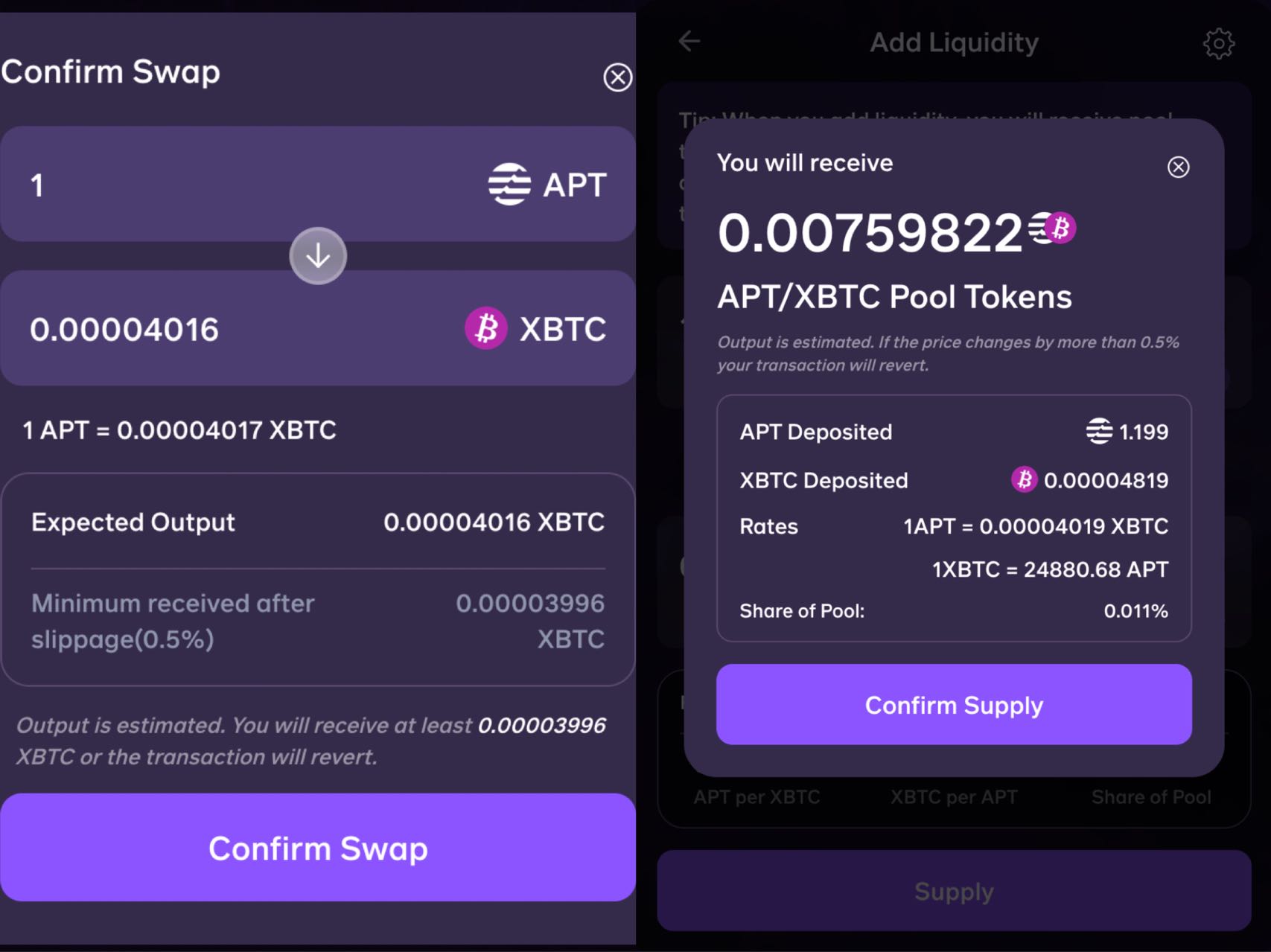
At present, a cooperation has been reached with the DEX project Enchanter, and users can already trade $xBTC on Aptos’ Devnet, and obtain fee income by providing xBTC-APT liquidity pairs.
Econia
Econia is an open source and decentralized Central Limit Order Book (CLOB) trading platform. Econia utilizes a key technological innovation of the Aptos blockchain, namely an optimistic concurrent execution method called Block-STM, to enable its parallel transactions. Specifically, for example, if market participants place two orders at the same time, Econia can enable these two transactions to be cleared at the same time, instead of being processed serially.
Enchanter Finance
Enchanter DEX pays more attention to the transaction of cross-chain assets, and has reached cooperation with two cross-chain protocols Multichain & Layerzero.
Through the release of three Enchantment Spell activities, users will obtain Discord roles after completing the tasks specified in the mission to increase the opportunities and quantity of $ENT airdrops in the future. As a result, he gained a lot of followers on Twitter and Discord.
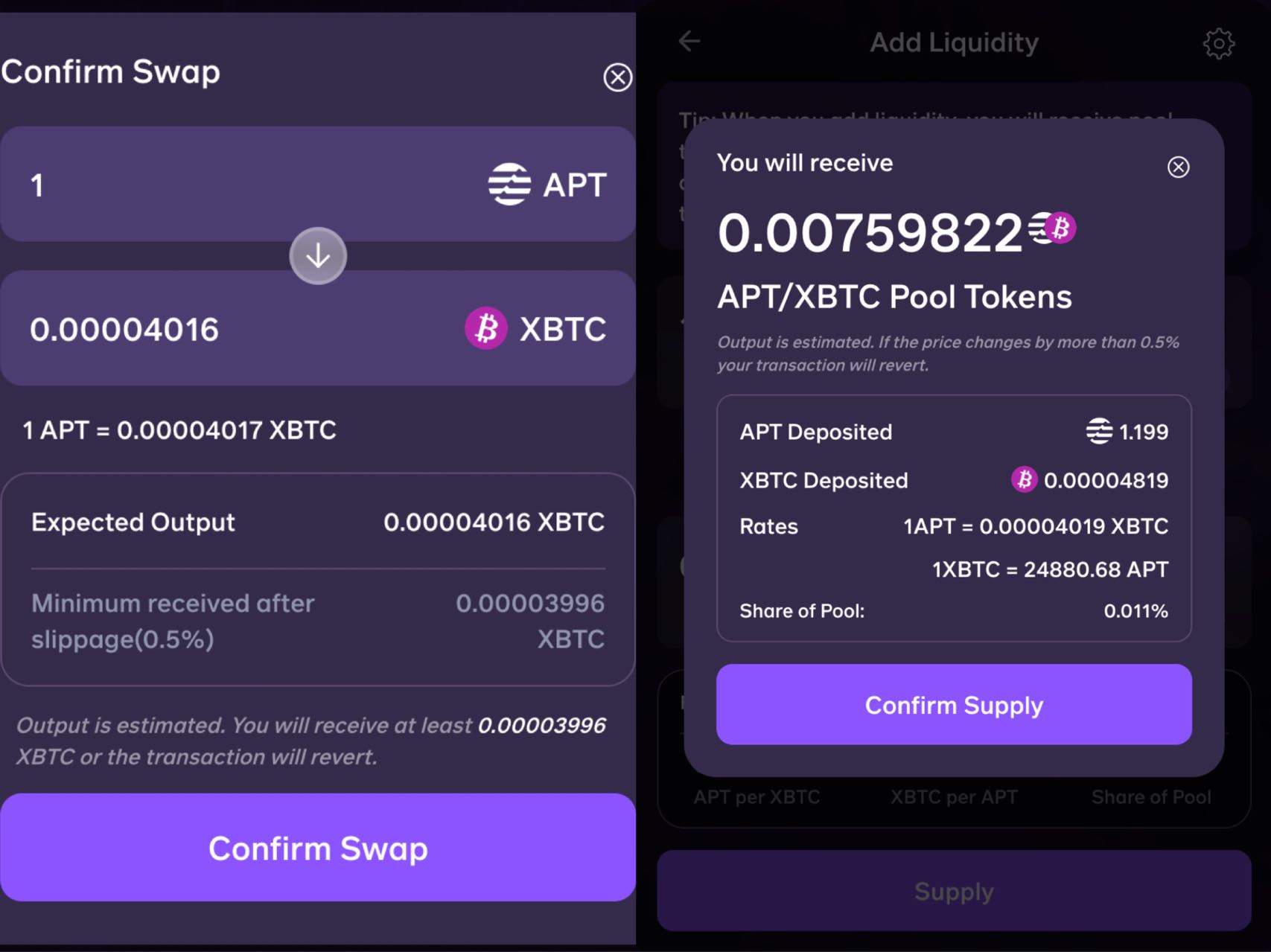
Currently, Enchanter's main Swap and Pool functions are only available on Devnet. The airdropped $APT can be converted into $xBTC, and then combined into an APT-XBTC pair to add liquidity.
Aries Markets
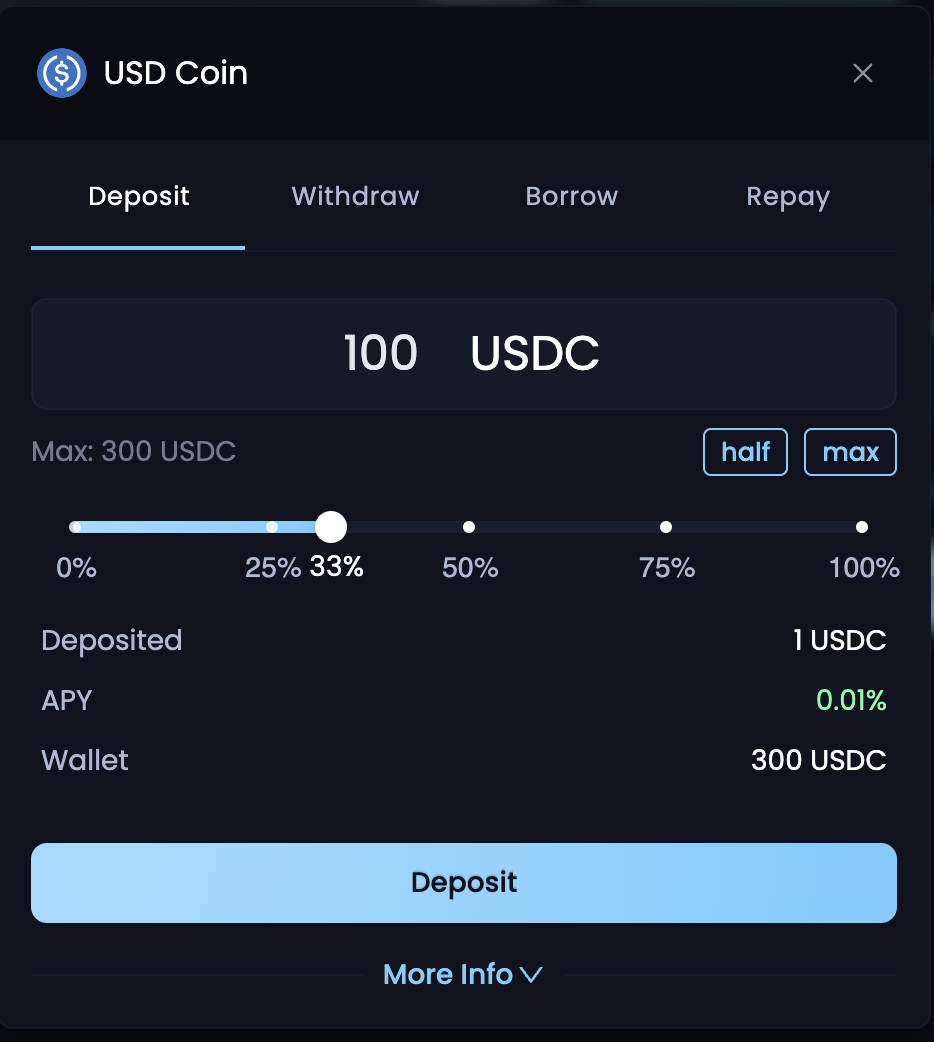
Aries Markets provides the most complete DeFi functions of Aptos: trading (AMM+CLOB), lending, margin trading.
Tsunami Finance
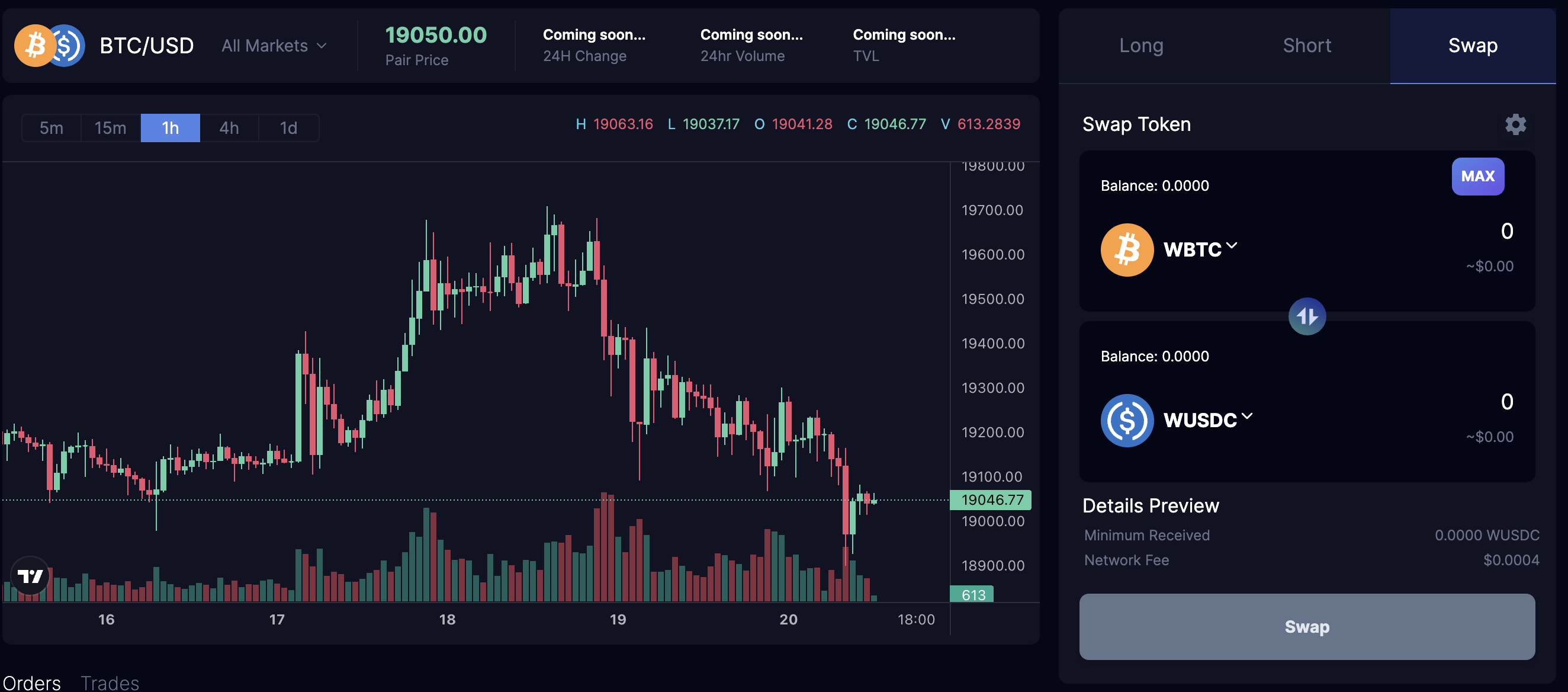
Tsunami is one of the most concerned projects in the Aptos ecosystem, providing zero-slip spot trading and highly leveraged margin trading.
Spot trading adopts the AMM mechanism similar to Balancer, while margin trading is similar to centralized exchanges, which can provide up to 30 times leveraged trading.
Animeswap
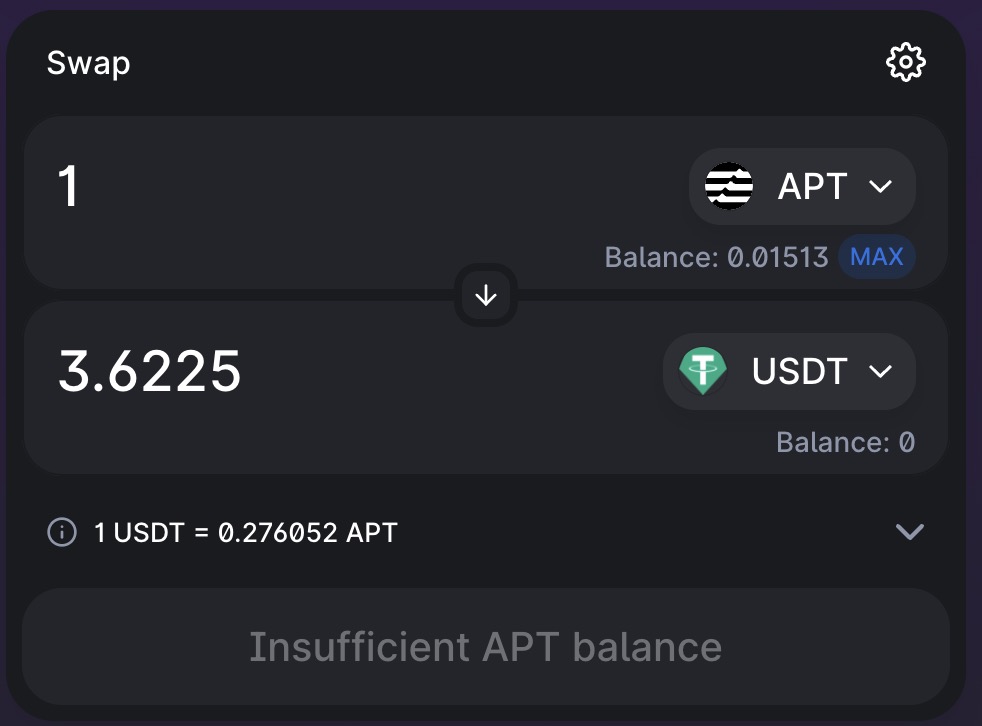
Animeswap provides the basic functions of AMM DEX. Currently, it cooperates with Celer Network to add the asset cross-chain ($ceToken) function to provide more liquidity for the capital pool. In addition, it also cooperates with Tortuga Finance to provide swaps between pledged certificates $tAPT and $APT.
Although Animeswap has been launched on the mainnet, it currently lacks liquidity and cannot be traded yet.
3. Staking
Similar to Lido on Ethereum, users indirectly become validators of the POS consensus by pledging the main chain currency into the smart contract of the Staking project, and get their own income proportionally from the project's block rewards. This method lowers the threshold for retail investors to become POS verifiers, and at the same time provides users with a relatively low-risk income method.
Ditto
The user pledges $APT to Ditto to obtain $stAPT as a pledge certificate, and then Ditto finds a suitable validator to participate in the Aptos POS consensus and obtain block rewards.
For the long-term stability of the agreement, Ditto sets a certain fee for users who need to withdraw $APT immediately, and users who pledge for a long time (up to 30 days) can exchange $stAPT for $APT for free. However, users can also trade $stAPT directly in Liquidswap and Foil(DEX). In addition, users use $stAPT as collateral to participate in the minting of the stablecoin $USDA at Argo.
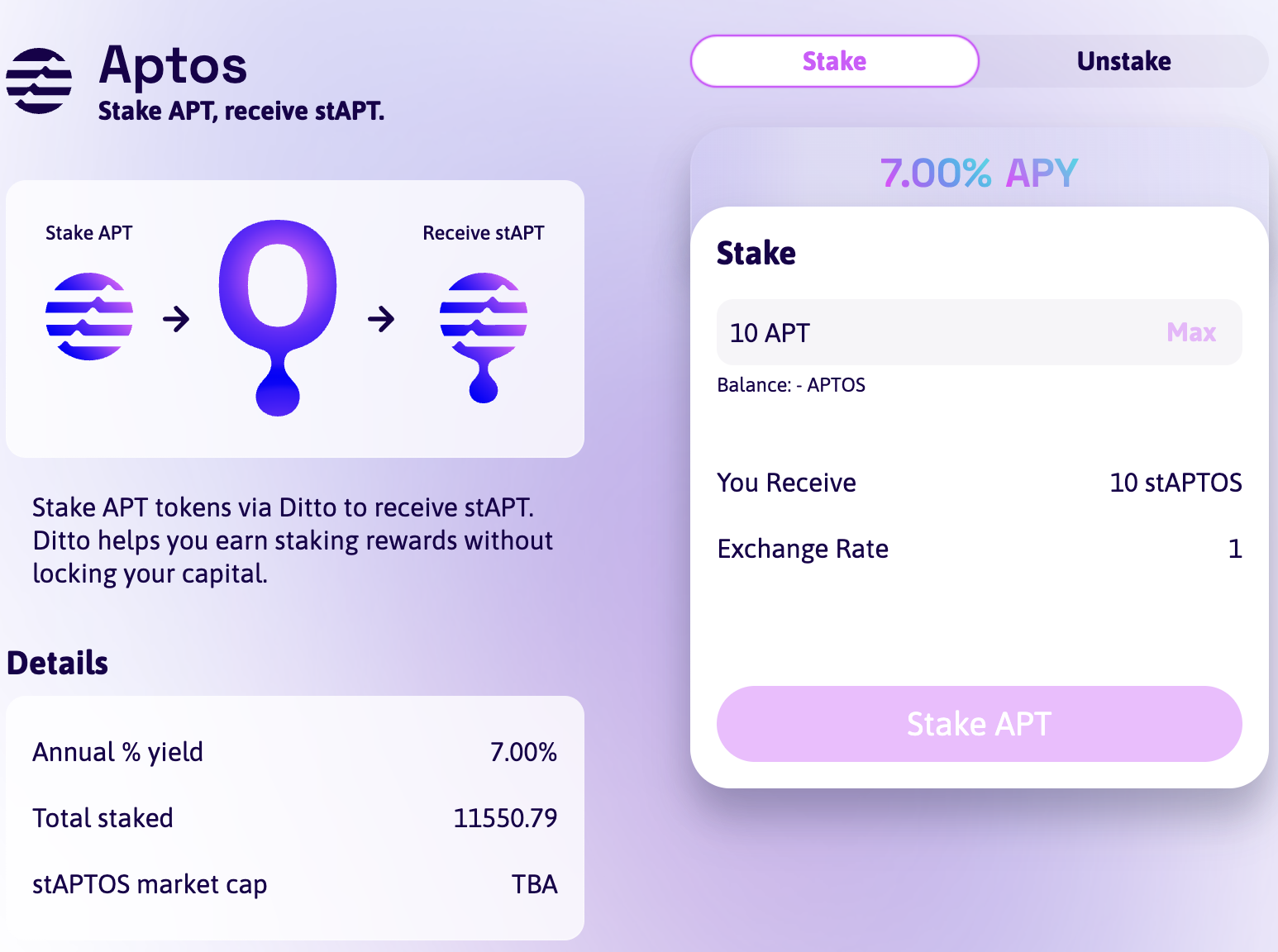
Ditto treasury charges 5% of the proceeds from staking $APT; in addition, all validators who undertake the Aptos network on Ditto can get 5% of the staking rewards for each block. A total of 10%, and the other 90% will be given to Ditto users.
At the moment when the mainnet of Aptos is launched, Ditto launched the pre-mining activity of its governance token $DTO. From the day after the mainnet goes live (10.19), participate in $APT pledge mining on Ditto, and put the certificate token $stAPT into LP Token in the designated pre-mining pool, and you can get $Discount Token as the next $ The "discount coupon" after DTO is officially launched, you can get $DTO at a price lower than the market.
Tortuga Finance
Similarly, users pledge $APT to Tortuga Finance to obtain a pledge certificate $tAPT.
Tortuga has joined forces with projects such as Aries Markets (DEX), ThalaLabs (stable currency), and Aptin (loan) to launch $tAPT transactions, liquid pledge (LP) and mortgage lending services, providing users who hold $tAPT with additional benefits and more good mobility.

4. Aggregator
Hippo
DeFi projects on the Aptos chain (including DEX, lending, and stable coins) provide a series of development tools embedded in Hippo Labs, which can open up the liquidity of the assets on the chain scattered in various pools. At the same time, users can also get a better trading and investment experience.
In terms of DEX, it currently supports seven tokens of APT, BTC, DAI, USDC, USDT, USDA (Argo) and xBTC (ChainX) to form aggregation flows among decentralized exchanges such as Liquidswap, Tsunami Finance, Econia, and Hippo DEX Sex pools look for the best prices, the smallest slippage, and the lowest fees. In Hippo transactions, you can set the slippage range, transaction deadline and gas fee.
In addition, Hippo also cooperates with liquid staking platforms Tortuga Finance and Ditto, which can exchange any Token for pledged $APT / $stAPT to participate in the pledge mining of the agreement.
Satay
Satay is a yield aggregator on Aptos. Satay's first income strategy supports converting 50% of $APT into USDT, and then combining APT-USDT LP Token into Liquidswap's trading pool to obtain DEX's transaction fee income.
V. Summary
From the perspective of popularity, Dex is still the darling of the new public chain. In addition to traditional AMM and CLOB, projects that support margin trading are also worthy of attention. Followed by lending, stable currency and Staking projects, but lack of innovation may become the bottleneck of project development.
The focus of DeFi projects is still around liquidity:
Various liquidity pools (DEX Pool, Lending Pool) are looking for cross-chain protocols such as Layerzero, Multichain, and CelerNetwork to introduce assets from other chains to Aptos, providing better liquidity for assets in the entire DeFi ecosystem;
The Staking project cooperates with Lending and DEX to add $stAPT (or $stAPT-$Token currency pair) to more pools to release the liquidity of $stAPT;
In addition to relying on the traffic of underlying access projects, the development of aggregation products has high technical and usage thresholds in the construction of strategic tools, and there is a certain degree of uncertainty.
Generally speaking, most of the current DeFi projects on the Aptos chain are still imitations of projects on Ethereum, and the actual business innovation is not obvious. The income of the project, the interactive experience, and the security and stability of DApps may all be the watershed in the initial competition for TVL.





