SeeDAO 4D Interview: 11 Months 4 Lows, How to Rebirth from Stagnation?



Original author:Jack(0x137),BlockBeats
Original author:
When talking about domestic DAO organizations, the first thing many people think of is SeeDAO. It took this young DAO explorer less than a year to establish a strong community identity at home and abroad. However, unlike many people's expectations, the development of SeeDAO is far from smooth. Since its inception, SeeDAO has undergone five major changes in its governance structure in 11 months, and the community has once stagnated.
During difficult times, many seasoned DAO explorers like Shawn stepped in to bring SeeDAO back from the brink. On October 6, SeeDAO announced the "SeeDAO Meta-rules". After three months of chaos, SeeDAO has entered a new era of meta-rules.
What kind of problems has SeeDAO encountered in the past? What changes have the new meta rules made? What can other DAO organizations learn from this experience? To this end, BlockBeats conducted an exclusive interview with Shawn, a senior participant in the DAO field and head of the SeeDAO strategic incubator.SeeDAO, Meta Rules, Strategy Incubator, Community Culture, DAO Governance, DAO Tools
first level title
A Brief History of SeeDAO
The establishment and development of SeeDAO are full of accidents and chaos.Before SeeDAO in November 2021, the two founders of SeeDAO, Tang Han and Baiyu, established an NFT distribution company CryptoC. From the very beginning, they hoped to try and explore in the DAO field. However, due to the lack of deep understanding of the establishment and governance of the community, the progress of the "DAOization" work has been stuck in attracting Discord users, and the community has no real members and contributors. Most of them are core members and employees of the company.
At this time, SeeDAO is still in the state of centralized operation of the company.
Although it was at the time of the NFT boom, the team did not choose to use NFT to "attract fans" for the community. Tang Han said in a team discussion: "I can't explain what SeeDAO is, but I can say what it is not. It is by no means a wealth code sharing community."
In January 2022, SeeDAO completed its financing. In order to avoid the influx of a large number of speculators and destroy the atmosphere of the community, the team suppressed the news of financing. In this way, SeeDAO is operating with difficulty under the circumstances of "no discussion of currency speculation" and no money in the treasury. Even so, the team still encourages community members to speak up and participate in governance. The community gradually has its own cultural awareness, the number of members continues to increase, and various guilds are gradually organized.At the end of December, SeeDAO announced the first draft governance structure, governing in the form of a coordination committee.
SeeDAO has entered the stage of mixed operation of the community and the company.
In February 2022, due to the lack of economic incentives, the members who entered SeeDAO at that time were either KOLs or newcomers to encryption. There was a huge cognitive gap among the communities, and effective consensus and governance could not be achieved. After much thought, the team chose to make education the focus of developing community culture. The next three months will be the "explosion period" of SeeDAO's content output. Content output sectors such as translation associations and Web3 universities have been established one after another, and community consensus and awareness of participation have gradually strengthened.
However, as the awareness of community members improves, everyone's ideological differences in interests and governance are becoming more and more obvious. How SeeDAO is governed and who has the final say in the community has become the content of daily quarrels in the Discord channel. The disadvantages of the mixed operation system gradually became apparent. As the founders, Tang Han and Baiyu were also greatly impacted ideologically, which was very painful.After several months of discussions, the two decided to dissolve the company and take DAO as their eventual venture. In May, SeeDAO announced the news of a valuation financing of US$30 million, and all financing funds were put into the SeeDAO treasury.
In June, the two announced the dissolution of the company, and CryptoC officially "weaned" SeeDAO.
But contrary to the expectations of the promoters, the self-governing community is completely out of control. On the day when the financing news was released, a large number of speculators flooded into the community. However, after the financing entered the treasury, the community was unable to apply for funds from the treasury because there were no relevant governance rules.
At this time, SeeDAO has more than 8,000 people in the Discord channel, and there are 10 guilds, large and small. How do you apply for the treasury? Who does project ownership belong to? No one can tell. At the critical moment, the nine-member group was elected and established. As the temporary highest decision-making body of SeeDAO, the nine-member group was entrusted with the important task of resolving community conflicts and formulating governance rules, while Tang Han and Baiyu, the two promoters, relinquished power.
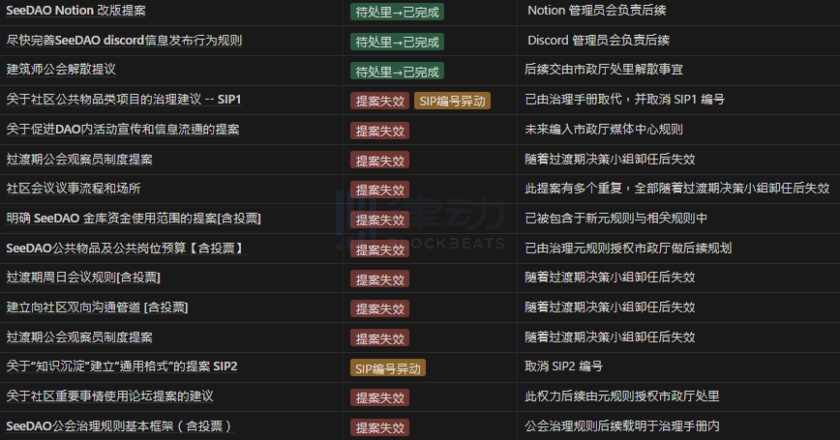
image description
SeeDAO community proposal history, pictures from SeeDAO community
On October 6th, SeeDAO meta rules were born. SeeDAO has successfully "uncocooned" and entered a new stage.
first level title
Eventful
Shawn joined SeeDAO when the community was in its second phase, the hybrid operation phase. Because he had a lot of experience in the translation team of the Ethereum community, Shawn directly entered the translation guild of SeeDAO and gradually became an active member of the SeeDAO community.
It was also at that time that SeeDAO began to undergo various changes, and problems and contradictions also began to erupt. After the community fell into chaos, Shawn was elected into the nine-person group and began to deal with and improve the governance of the community. Throughout the process, Shawn made a significant contribution to SeeDAO with the help of his long-term experience and resources accumulated in the DAO organization.
Shawn:Jack: Why did Shawn join SeeDAO in the first place?
I joined SeeDAO in March and April this year, and now I am mainly in charge of SeeDAO's incubator. At the same time, I am also the editor-in-chief of SeeDAO Translation Association, responsible for the translation and output of SeeDAO-related content.
At that time, I joined SeeDAO because of an opportunity. I happened to read an in-depth research report on gaming DeFi projects, which was very well written. At that time, I also wanted to write a research report like this, conducting in-depth interviews and research on a DAO. In those few days, Tang Han talked to me about SeeDAO. I asked her if she could participate in the SeeDAO community, conduct interviews with active members, and then output an in-depth analysis of SeeDAO referring to the structure of the research report. (Tang Han) At that time, he said "Great, welcome to join", and I took this opportunity to enter SeeDAO.
(After entering the community) I found a very interesting phenomenon: most of the SeeDAO community members I interviewed knew that there was a company behind SeeDAO and that there were full-time employees of the company participating in the community, but most of them could not tell the difference. who came out. This shows that the employees of this company really participated with the mentality of being a DAO. This is what I think SeeDAO has done very successfully in the stage (the company's transformation into a DAO).
Later, I stayed in SeeDAO until now. In the middle, SeeDAO went through the stage from the dissolution of the company system, to chaos, and then to the nine-member decision-making group. I was also elected as a member of the nine-member decision-making group, so I spent three months discussing and formulating (SeeDAO) meta-rules. We have made statistics in the past three months: more than 50 meetings were held, and the longest meeting lasted six and a half hours, which was arguing. Because there were actually many disagreements at the beginning, and no one knew what to do, so I didn't do anything in the first month, and I kept arguing. It was only later that the clues were figured out, and then each had a division of labor, and began to quickly advance many things.
Shawn:Jack: What specific work did the nine-member team do at this stage?The decision-making group was disbanded on October 6. Within three months, the task given to it at that time was to do two things,One is to resolve the various historical issues or disputes mentioned before, because at that time, some people had already started asking for prices, and many people left because of the quarrel. This is the biggest and most difficult task of the nine-member team, to quickly resolve historical disputes, restore the community to a normal state, and stop quarreling every day.The second is to establish the meta-rules of SeeDAO
, including how to use the simplest treasury, that is, how will SeeDAO be governed in the future? There must be rules, otherwise the people who are actually working will not be able to apply for fees from the treasury, and then a lot of people who don't work much will be asking for money every day. This is actually a big problem.
It took three months to resolve these two matters, and the task was disbanded on October 6th, and now it has entered the stage of meta-rule governance. These (meta-rule governance framework) contain a lot of their own thinking, and also refer to the failure lessons of many DAOs in the past.
Shawn:Jack: What are the specific historical issues left by SeeDAO?historical issues,One that everyone clearly feels is ownership of the project. In fact, when I first joined SeeDAO, the most common sentence I heard was "their place is too (chaotic), and often everyone hits it off with a project, and I don't know what stage it is, and then two days later. project".There are so many projects, but there is no word on how they will develop in the future. Everyone says they belong to the community, but the community is a relatively illusory concept.
For example, there are 9,000 people in the community. Does the work that the team stays up every day belong to 9,000 people? Here someone will raise the question of ownership.
SeeDAO had ten major guilds at that time, which brought together a large number of full-time employees (members) in big factories. They felt that many good ideas could emerge in SeeDAO, and there were many highly capable people around them. , everyone can do things together. But if you do it with entrepreneurial ideas, the community level may think that this is a public goods project that belongs to the community.In fact, at the beginning, everyone did not challenge this matter. The biggest reason is that there is no money in the SeeDAO treasury, and many things are based on hobbies and love to generate electricity.Once there was money in the coffers, problems started to arise. You apply for money from the treasury, but the project is your own, so what is this attribute? The logic behind it is unclear.
I think many people don’t really care about that little money, but many people think that there are many misunderstandings about why it is different from the original statement of (SeeDAO). At that time, I was in charge of talking about these things with the community, and I was very impressed. Everyone felt that their ideas were reasonable, so they could chat until two or three in the morning. I think it was one of the biggest disputes at that time.The second point of dispute is who the money in the treasury belongs to and who can apply for it.
All communities are making contributions, so can the money in the treasury be distributed? At this time, most people don’t actually think about (SeeDAO) long-term (development), the money in the treasury is spent, what will happen in the future? And when the money comes in, it actually promises investors a certain amount, because CryptoC is the main body of financing. There is a dispute here, and everyone's understanding is somewhat different. This is the second major dispute, and the rest are some smaller issues, because (the community) happened to be in chaos, and everyone wanted to solve the previously uncertain places at once.
Shawn:Jack: At that time, did SeeDAO learn from other DAO organizations to solve problems?I remember when I was at the Dali Web3 Conference,We connected with some core contributors of BanklessDAO, FWB (Friends With Benefits), and Gitcoin, and held a special event, which took two days
, (to them) raised the problems we encountered and how we solved them. We also wanted to ask, do these well-known overseas DAOs also have these problems? and how did they solve it? Because I only know some general information, but I don't know a lot of inside information.At that time (BanklessDAO, etc.) they also proposed: first, we have encountered all the problems you encountered; second, we have not actually solved the problems you encountered, and we will solve them in the future; third , We have felt some controversy over these issues, and many people in the community have begun to send proposals, but we have not thought about how to solve this issue and whether to have a unified framework. So at that time we decided to discuss the problem first, and after a while everyone will discuss their own solutions and their effects together.So problems like this, I think it is a common problem faced by all DAOs, especially as a large and comprehensive DAO
, there are art guilds, development guilds, product guilds, design guilds, etc.
Shawn:Jack: So the mainstream overseas DAO organizations have no experience in dealing with the situation SeeDAO encountered?Yes, that's how I understand it.Their (problems) may gradually emerge in the long process of 6 months to 12 months. For them, the community can solve these problems "Case By Case". But SeeDAO's problems broke out within two to three weeks, which is a huge difference from other DAOs.
first level title
The era of meta-rules: How is the consensus of steel formed?
The town hall is a daily governance body composed of community contributors, responsible for governance affairs at the DAO level, and rotates every three months. The strategic incubator is responsible for the economic development of SeeDAO and enriches the community treasury. The governance principle is expert governance and operates in a decentralized manner. As an important part of the community, guilds and projects enjoy a very high right of self-determination without violating the meta rules. Members who participate in guilds, projects and public services more and contribute more can become SeeDAO nodes in the next quarter.
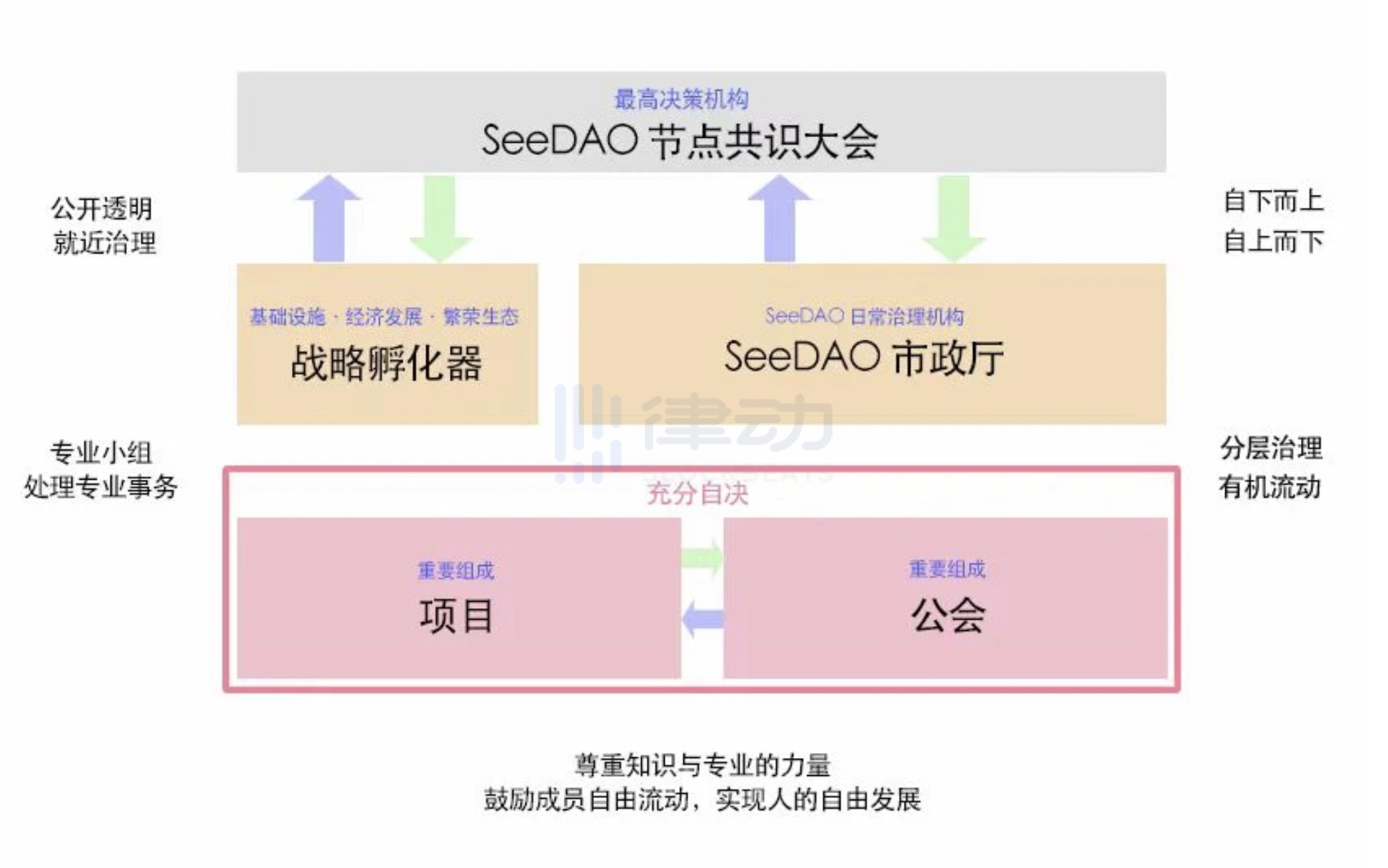
image description
SeeDAO meta rule governance structure, picture from SeeDAO community
In order to design the meta-rules of SeeDAO, Shawn summed up the experience of the community itself and other DAO organizations, and did a lot of thinking on the practicality of the governance structure, the balance between mechanisms and personal influence, and the cultivation of strong consensus in the community.
Shawn:Jack: When formulating the SeeDAO meta-rules, is there a specific blueprint or program?On the one hand, we are learning from the successful experience of other DAOs. On the other hand, most of the nine-member team are people who have studied DAO governance. Everyone will put some of their own understanding into (the design of meta-rules).
There is also an interesting point here. Because in fact experience is a very abstract thing, many younger partners are particularly willing to express, and they will describe a very grand one (vision). We would say: "Then you can also design it, and design it to see how it works", but after the design is completed, they will actually find that in the end (their own rules) cannot be implemented.So landing is the most important thing, you have to be practical
. You need to get the other younger members to approve of you, but if you can't convince him, let them do it themselves. So we had a lot of groups working on this at the same time, and finally found that many people may be talking endlessly during the meeting, but when they write or finally form a complete plan, they cannot form a closed loop, and there are many that cannot be implemented. The gap exists.
The meta-rules we see now were actually drafted by nine people each with a task. When drafting, we also required that all discussions be open and transparent. Each guild sent a consultation team to participate in all meetings. At the final stage of writing, the first draft is also open to community members. Cloud meetings are held in the Discord community twice a week in the evening, and everyone comes to discuss together. Therefore, the meta-rules should be formulated by all active members of SeeDAO.
Shawn:Jack: That is to say, the design focus of SeeDAO meta-rules is practicality?
Yes, it must be practical, and we have gone through repeated deduction. Of course, I think there are still many problems with the meta rules. It is still a trial version, and it will definitely pass a series of tests in the end. The current draft is based on the various pitfalls and lessons we have gone through in the past eleven months (formulated). We hope to avoid the previous problems, but there will definitely be many new problems. Therefore, there will be a consensus meeting to review whether the meta-rules are reasonable and whether adjustments are needed every three months.Most of our votes are not voted by the whole community, which is too inefficient. We require nearby governance and expert governance.
However, the modification of the meta-rules still needs to be done at the level of the consensus conference, and there is a very high threshold requirement for becoming a node of the consensus conference, which requires active contributions in the past three months, and one cannot always become a conference node by relying on historical achievements. There are many other conditions combined, the purpose is to allow those contributors who know SeeDAO and continue to make contributions to join the consensus conference and be able to make decisions on some of SeeDAO's most important proposals.
Shawn:Jack: In addition to the community consensus, what experience did the Nine Group learn during the development of meta-rules?
In the formulation of meta-rules, because I have participated in many overseas DAOs, I first read BanklessDAO (and other overseas DAO organizations). At that time, BanklessDAO's Governance Solutions Team just released the latest version of the Community Charter. I thought this was very good, so I took it for reference at that time.At that time, we first perfected our own culture and vision for SeeDAO, and finally straightened out the narrative, and then formulated the meta-rules based on this narrative. It actually took a lot of time at the beginning.
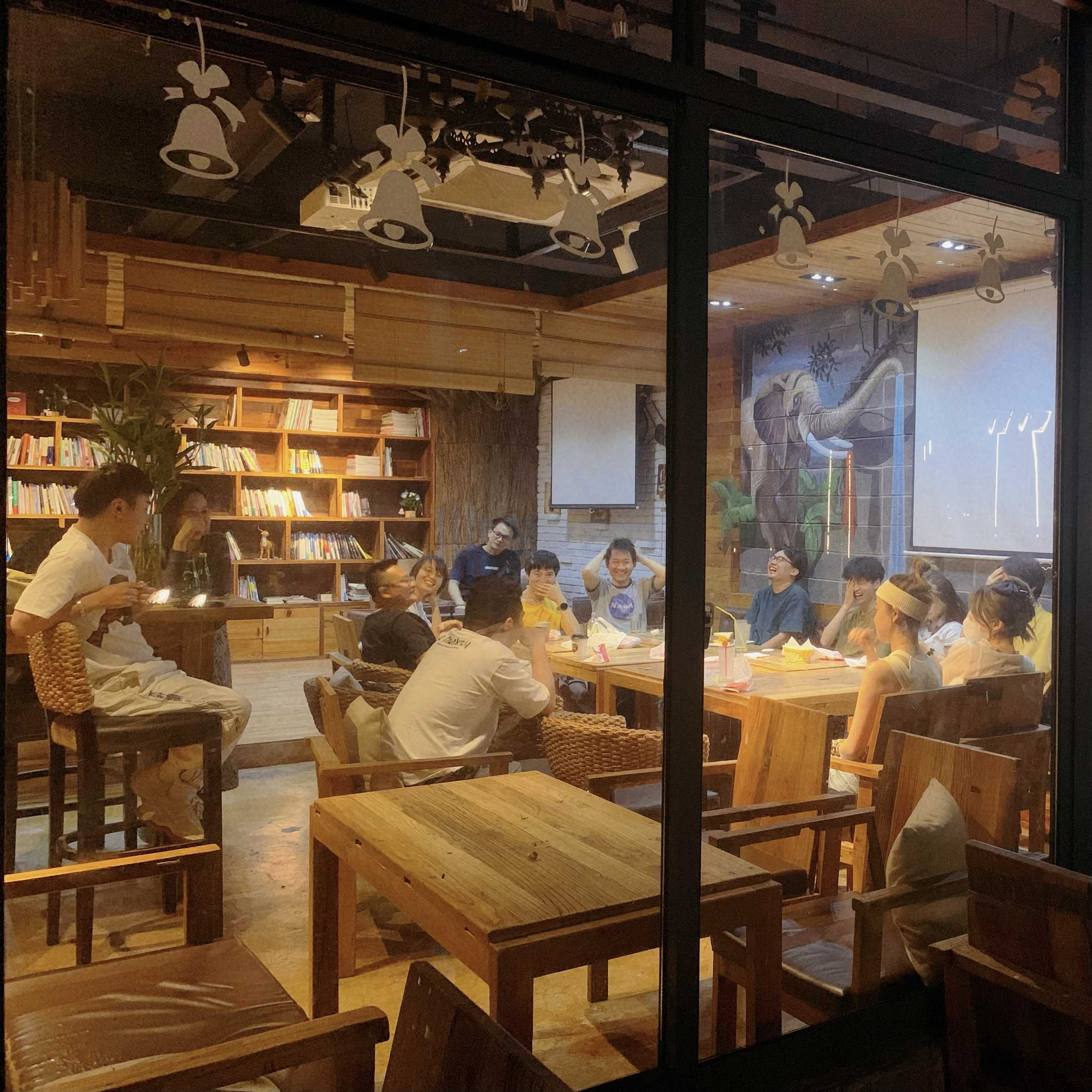
image description
SeeDAO offline discussion, picture from SeeDAO community
Shawn:Jack: How does SeeDAO balance the problems caused by too much internal personal influence?
This is also a problem we particularly want to solve. I have written many articles myself, analyzing how to solve BanklessDAO, TEC’s technical bureaucracy, and so on. But when it comes to SeeDAO, there are still some different areas that need to be resolved. We have spent a lot of thought on this aspect, and we have also adopted some methods in terms of meta-rules and governance framework.First of all, it adopts the mode of nearby governance and expert governance, so that the people who are closest to and understand the problem best make decisions, Let professional people solve professional problems.
After passing these two modes, Tang Han and Baiyu, as the initiators, will stay away from the decision-making position, and if they cannot make a final decision, everyone will not go to them again.Second, we are also constantly enhancing the ability of the community to use tools.
Whatever the decision, the community needs to be able to implement it on its own, not relying on a small group of people. Because as long as there is dependence on a small number of people, there will definitely be a huge role of personal influence. If you want to use a large number of tools, you need education. The Web3 education itself is the most enhanced SeeDAO, and it has been done better in the past few months. We not only provide it externally, but also have a lot of education and training internally, including our governance guild, which actually has academies, with various training, practical exercises and problem solving at different levels. In addition, we also cooperate with many third parties and use their tools in the hope that the community will have the ability to use tools to implement many of the solutions we have proposed without relying on others.Finally, and I think it is very important, Tang Han and Baiyu are the initiators, and they are very active in retreating.
At the meta-rule level, they themselves have imposed a lot of restrictions on personal influence, stripping them from the front line of governance. I think this is very important, that is, the sponsor's own initiative. Of course, SeeDAO has always been in the exploratory stage in terms of solving the balance between personal influence and governance mechanism within DAO. It is hard to say whether it is OK or not, and most of it depends on the effect in the next three to six months.
What I think is relatively good is that SeeDAO has brought together a large number of members of the Chinese community who are particularly interested in DAO governance, and they are relatively far away from money. This feeling is very similar to when I was in the early days of BanklessDAO. I think having such a group of people is a very important factor.
Shawn:Jack: Well, many DAO participants have mentioned the importance of community culture and consensus.In fact, I personally have a very deep understanding of community culture. Because I joined the Common Stack in 2018 and 2019, and was the first DAO to do public goods. They put forward a concept at that time:To be a DAO, the community culture must come first. It will take a year to build the community first, with enough cultural precipitation and community consensus, then the transition to DAO is a matter of course. Otherwise, if Just DAO It appears overnight, it will basically be impossible to go on. So at that time, a very clear concept was put forward, including (Common Stack) the first experimental product TEC DAO, which took a year (building community culture) and finally became a DAO. So I have always believed in this (community culture and consensus),It is really difficult to have a strong consensus for a DAO that was established overnight.
For example, the previous ConstitutionDAO, it (established) had an opportunity, and the opportunity was a single event. It is doubtful whether it can last for a long time.
Shawn:Jack: So how does SeeDAO cultivate a strong consensus in the community?In fact, we have communicated with many DAOs before. I think that if making money is the biggest consensus of a DAO, then it is actually very difficult for it to go through the bear market, especially at this stage, everyone has personal experience. As far as SeeDAO is concerned, philosophy, vision, and mission are not empty words. I did a community survey in August, and it can be seen from the data that
Most of the community members are in the three stages of SeeDAO, and they joined SeeDAO because of the attraction of SeeDAO to three different interpretations of their own ideas.At that time, we wanted to confirm whether a narrative like "digital city-state" could gather the greatest consensus. In the past eleven months, SeeDAO has output three interpretations of its philosophy in three different stages through the output of brands and articles.The first interpretation is the systematic output of articles, (content) is mainly "do not be a Web2 worker", "DAO It, Build It". At that time, it happened to be a wave of domestic Internet layoffs, so a large number of laid-off employees of large factories were particularly moved by these words, and they joined SeeDAO because of this.The second interpretation proposes that SeeDAO is to be a DAO that serves creators, because it is very specific, a large number of contributors who are engaged in the creator economy have joined at this stage.The interpretation of the third stage is "digital city-state"
, this interpretation is an interview with Orange Book and Teacher Li Yang. Teacher Li Yang raised the (latitude) very high and proposed "the birth of a country". Many people were shocked and wanted to see what was going on, so a large number of people joined at that time.These three interpretations attracted three groups of people to join. Although there were some differences at the time, after discussion, we found that we can use the same narrative to bring everyone together. soI think SeeDAO's community consensus is relatively specific, and it will have its own ideas in the next 3, 5, or even 30 years, which can indeed attract a large number of people who have personal experience.
In this regard, Gitcoin has done a better job. When Gitcoin became DAO, their CEO published an article called "The Rise of Group Thinking, What should Gitcoin do in the next 30 years?" ", he came out step by step, with a very clear goal, and he didn't mean to do everything inclusive, he proposed to cooperate, to become a Schelling point, what should I do in the next 30 years?
What SeeDAO proposes is to serve creators first, to help people from Web2 enter Web3, so education is needed, and after absorbing a lot of people, it must become a carrier of a "digital city-state" so that everyone's different dreams and ways can be shared. can do it here. Then SeeDAO adopted "PoW governance mining" from the very beginning. All Tokens are mined through contribution and governance. You have to make contributions to get Tokens. Then PoW has become the strongest consensus in the entire SeeDAO. In fact, it means that everyone (proves) why they don’t work as Web2 workers (way).
Shawn:Jack: In Shawn's opinion, what is the biggest feature of SeeDAO community governance now?SeeDAO's guild has full self-determination rights, and it can make many decisions independently. This is not found in other DAOs, not even in large and comprehensive DAOs like BanklessDAO, etc.
SeeDAO is the only DAO among all the DAOs that I know so far that the guild has such a strong right of self-determination.This is a point that some core members insisted on before. When I first joined SeeDAO, I was very confused about this point, because you will be very painful in the governance of DAO, and there are too many fully autonomous modules. But for contributors participating in various guilds, they will feel particularly comfortable. Because a lot of people are not here to do governance, but there are many like-minded friends who want to do something together in it, just give them an environment. so
Full self-determination (for SeeDAO) attracts a large crowd and keeps the guild alive.
Shawn:Jack: After the guild decides to start a project, can they directly use the SeeDAO treasury?
The guild itself has a certain degree of self-consciousness in the allocation of Tokens, but the application for treasury funds has entered the management rules of the SeeDAO treasury. The management rules of the SeeDAO treasury actually limit some (rights) of guilds to directly apply for funds, because the treasury belongs to all guilds, which is divorced from the right of self-determination. The right of self-determination is (covers) the brand of the guild or the profitable projects made by the guild itself, which is something produced by the guild’s own resources, but when it comes to the overall and public things of DAO, the right of self-determination of the guild cannot be controlled, and it must be determined by the nodes. Consensus Assembly to manage.
Shawn:It is a bit like Sub-DAO, but of course it has not reached this stage, because after all, the same Token is used. Many people don’t understand this (strong self-determination right). We also invited the core members of BanklessDAO to come in for a discussion. He didn’t understand why you couldn’t even unify the identity systems of various guilds? This is actually because each guild has sufficient self-determination rights and will set its own identity system. Of course, SeeDAO will propose a framework and suggestions, I hope everyone can refer to it and bring convenience to everyone.
first level title
Hematopoietic Project: DAO without economic engine is just a limited game
With the new governance mechanism, SeeDAO also needs to solve the problem of its long-term profitability. Shawn often said that a DAO organization without revenue capability is just a "limited game". To make the community sustainable, it must build its own economic engine. After verification and discussion, everyone agreed that setting up an incubator is currently the most suitable "blood-making plan" for SeeDAO.
Therefore, reflected in the governance structure, the strategic incubator is at the same level as the city hall to ensure the sustainability of the community economy. Of course, the incubator is not only to create blood for SeeDAO, but also to incubate the infrastructure needed by the community for SeeDAO, and provide the underlying technical guarantee for the digital city-state.
The strategy incubator adopts the governance principle of expert governance and decides internal matters by itself. As an experienced DAO participant, Shawn is the main person in charge of the strategy incubator. In his view, the SeeDAO strategic incubator should not only generate revenue, but also play an important role in prospering the SeeDAO ecosystem, building a DAO2DAO network, and exporting DAO infrastructure to Web3.
Shawn:Jack: Why is the strategic incubator given such a high status in the SeeDAO meta-rules?Then it comes to the strategic incubator and the city hall. All the public service posts, that is, the hard work we often say, will be placed in the city hall, which itself is a place that serves everyone and spends money. butAs a DAO, it is impossible for him to spend money all the time, which is not sustainable. There must be an economic engine, which is not managed by the city hall, because public services will not consider how to generate commercial profits.
So we had already figured out that there was a side-by-side module, but we were not sure at the beginning who could carry the revenue-generating function of this module.At that stage, the SeeDAO incubator was also in operation, and we found that its book return was OK. After some verification, we feel that it can carry this (income) module. Of course, other new modules may appear in the future, but among the several methods we have explored so far, the incubator is the only one that can continue to produce economic returns. module, which is why we put it (on the same level as Town Hall). Then we promoted it to a "strategic incubator" becauseThe project we incubate hopes that it will serve SeeDAO first
, that is to say, various incubating (DAO) tools are required by SeeDAO.
Shawn:Jack: How many people are there in the current SeeDAO strategic incubator? How many projects are you incubating now?
The expectation set by the strategic incubator is five people, and there are currently three people participating, and everyone is mainly a Chinese-speaking community, running in various places around the world. At present, five projects have been incubated in the first phase of the accelerator. The relatively successful ones are DAOLink and Pirate Radio, and they are now relatively close to the next round of financing. Regular incubation has projects like DeSchool and Ensoul, totaling about 8 projects, 4 of which are DAO tools.
But at the end of the first period, we had a meeting with Tang Han and Bai Yu in Hangzhou, and we were quite impressed at the time. After discussing and evaluating for two days, everyone agreed that DAO tools are the direction that SeeDAO strategic incubator can focus on. So (incubating DAO tools) is actually the direction determined at the end of the first period.
Shawn:Jack: What are the current funding sources for the SeeDAO incubator?
Part of the source of funds for the SeeDAO incubator was the financing (CryptoC) at that time. Part of the financing at that time was entered into the SeeDAO treasury for use by the community, and part of it was directly entered into the incubator, because when SeeDAO first raised funds , it was proposed to be an incubator, so part of it is a special fund. There are also donations from individual investors who also hope to help the growth of DAOs and projects in the Chinese-speaking community. So they proposed at that time that as much as the amount of financing funds entered the incubator, they donated part of the funds 1:1.
Shawn:Jack: What is the specific process of the SeeDAO incubator?The incubation of SeeDAO includes two parts,One part is the accelerator and the other part is the regular incubation
, which can be hatched at any time. We operate the accelerator season by season. We have completed the first phase and are currently preparing for the second phase. The form of its entire accelerator is similar to that of Seed Club. The process is first to sign up and screen, and the entered project will establish a mentor network for it, participate in accelerated tutoring, and finally leave the camp and join the alumni network.Throughout the accelerator process, we are also learning about Seed Club
, because I think Seed Club is the most successful in the Web3 field. In the past two years, the entire incubation process has undergone three relatively large iterations. I can personally see some of his past experience in each iteration. The induction and summary of the lessons, as well as the improvement of some ideas. So at present, in terms of accelerators, we are still learning more about Seed Club, and we also hope to have some features in the future to catch up with it.The second part is the regular incubation.These incubated projects, whether they are Chinese or English communities, basically do not have a formed team, and they may just have an idea. Then we mainly look at whether they are really All In, really have the idea of starting a business, or whether the promoter has the temperament of a CEO who can take on challenges and responsibilities. If so, we will go and help him further.There are two levels of help, the first is to help him build a team, and the second is how to achieve market matching in the MVP stage
, this is where we have an advantage. In the end, although we are not particularly good at it, we will try our best to introduce some opportunities for them in terms of financing.
Shawn:Jack: How long is the cycle from incubation to profit?
Our current incubation process of heavy resource investment is about two months. In the next three months, there will be special personnel to follow up, mainly ourselves, including (team) problems encountered in various aspects, to help them coordinate resources to solve them. After the end of three months, I entered the alumni network, and the incubator actually supports the entire alumni network.As for the revenue cycle, the main consideration is realization.After all, the SeeDAO incubator has only been established for a few months, so it usually takes at least two to three years.The book return we can see now is very good, and the valuation may be dozens of times after the completion of the seed round. Our current funding plan is to incubate 20 projects in the next two years, and there may be another round of financing after that.
We expect that in the next round of bull market, we can get a larger return, but we will not consider revenue before the bull market comes.
Shawn:Jack: Will the projects hatched by the strategic incubator have ownership issues like before?
In fact, there is no ownership problem in the projects of the incubator, because the projects themselves belong to these projects (teams). Most of the projects we incubate now, whether they come from inside or outside the SeeDAO community, as an incubator, we do not define its ownership. This is not the same as the problem we encountered before. The problem we encountered before was that the project used a lot of SeeDAO resources, which would lead to ownership disputes.Most of the ownership belongs to the team, but the project needs to allocate a part to SeeDAO through the principle of restriction when issuing Token.
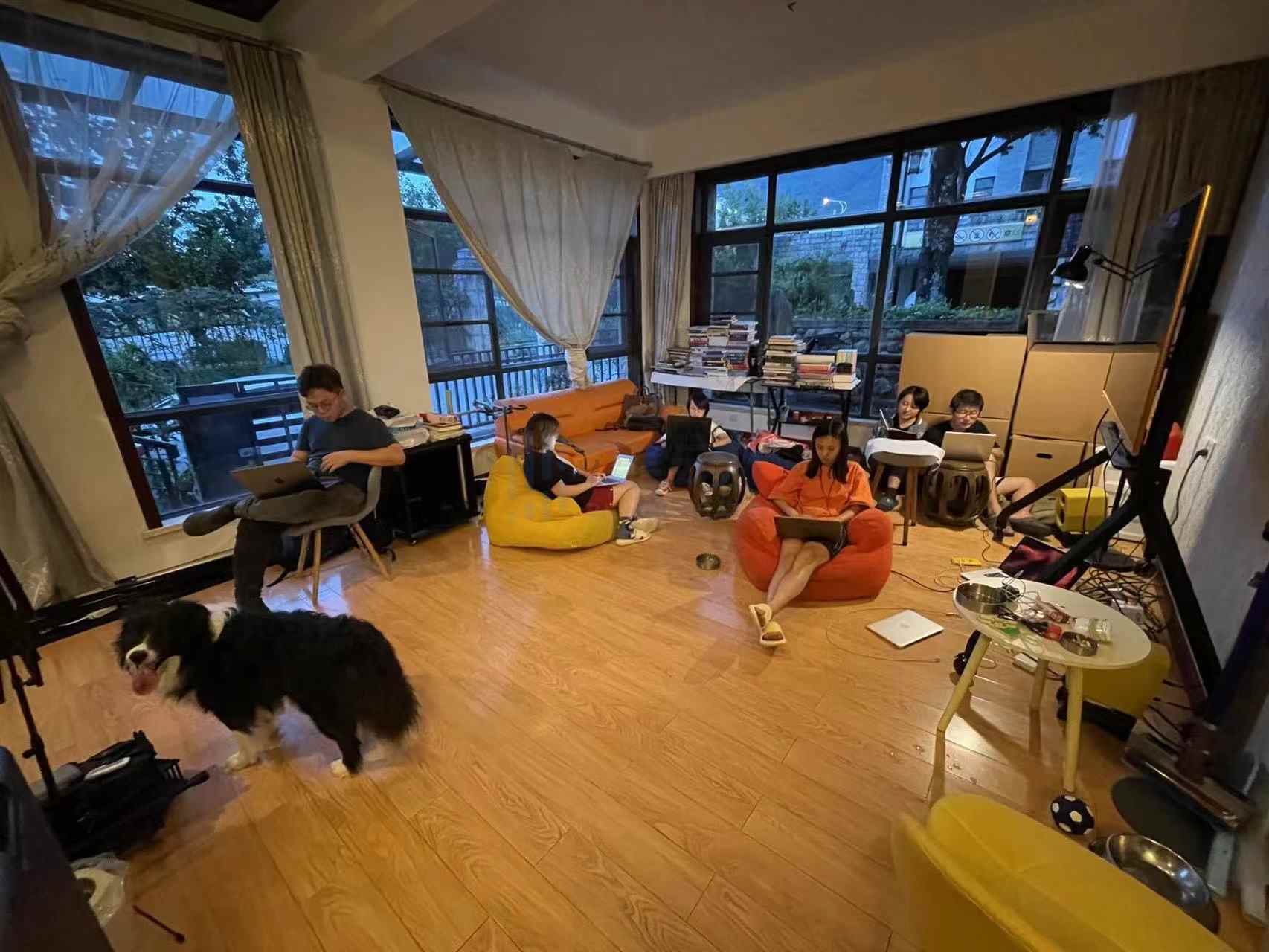
image description
Incubation project team, picture from SeeDAO community
Shawn:Jack: What is the biggest difference between SeeDAO strategic incubator and other types of incubators?In fact, SeeDAO is not a capital investment type (incubator),We are somewhere between a Seed Club and a traditional incubator.Seed Club does not invest a penny and only provides acceleration services, while some early investment institutions may focus on funds or resources, and they cannot participate in projects (development and acceleration). SeeDAO is just in between the two, with a certain percentage of capital investment, because the initial project must be short of money before the seed round of financing, and then it is more like Seed Club, making resource-type investment.The biggest feature of SeeDAO is that there is a strong community behind it, so SeeDAO contributes both money and effort.
Of course, compared with other institutions, we will definitely not be able to pay much money, but at least we can help the team to support the seed round.In fact, we have had some discussions with the Seed Club team. I think the biggest difference (SeeDAO) is that Seed Club is not supported by the community, so with this in mind, the way it chooses is also different. The incubation (cycle) of Seed Club used to be 6 weeks, but now it has become 12 weeks, and the cycle has doubled. Because they also found that they did not have the support of the community, so after the incubation, they were given another 6 weeks to find (other) places to practice. After the practice, the team will come back with questions and discuss them again. Then SeeDAO is different,
Our incubation projects have entered the community for various polishing from the first day. If many projects feel that they are not good during the polishing process, the team will stop doing it, and everyone saves time.I think this difference is quite big in some details, which is why we call it a strategic incubator. Because (incubating projects) must first meet the strategic needs of SeeDAO and be used by the SeeDAO community. Because after all (SeeDAO) now has more than 9,000 members, a large number of guilds and a large number of projects are collaborating internally, there are various strong urges to go to the chain, and there will be various needs (reflected).Therefore (SeeDAO) will also invite the core members of the project to enter the SeeDAO town hall to personally participate in the first-line DAO governance, so that it can truly solve the pain points of the industry and help these products find market matching
, instead of making some "YY" product forms.
Shawn:Jack: Well, I remember when I communicated with Shawn before, I mentioned the importance of the community to the development of DAO tools.Yes, now there is a category in DAO tools called"Universal Tool"
For such tools, I think it doesn’t matter whether the (team) has DAO experience or not, because DAO can be used, and other projects can also be used. DeWork is a typical general-purpose tool. When many Web2 teams come in (Web3), they will ask me what to do (type of tool), and I will recommend them to make a general-purpose tool.「Community First」。
But if you want to make a (tool) that is strongly coupled with all aspects of DAO governance, and really solve many pain points of DAO, many DAOs cannot do without you. General-purpose tools cannot do this. At this time, you need to personally participate in the governance of DAO, so that you know what they need. I think such a tool cannot be produced without DAO, we call it
Regarding "Community First", I also wrote an article to analyze it. In August and September this year, the English community, including some OGs and project parties, was also strongly promoting this concept. Because they think that there are two paths that Web3 took before, one is product priority, the other is protocol priority, and now it should be community priority. So I personally have been focusing on the way to create DAO tools from DAO.
Shawn:Jack: In addition to the community level, what resources can the SeeDAO strategic incubator provide for incubation projects?First of all, SeeDAO's strategic incubator focuses on the field of DAO tools, so the hatched projects can become early users'。
"Lego Brick Integration"DAO2DAOSecond, these DAO tools are also available through SeeDAO's
The network went into other DAOs. We know that there are two most obvious flows between DAO and DAO, one is the flow of funds, and the other is the flow of talents. We hope that these flows can also be carried out after the project itself becomes a node. First, their BD data (will become) very simple, and second, many DAO contributors can participate in their projects, resulting in a strong synergy.On the other hand, the SeeDAO incubator is now devoting major resources toAlumni Network Establishment
. Whether it is a domestic or overseas event, we will promote the alumni network of the incubation project as a whole. Of course, it is still very early stage, and we hope that through these explorations, we can truly form an ecology in the next one to two years. At this time, there will be a good (development) space for both SeeDAO and the incubated projects.
Shawn:Jack: What types of DAO tools are most in demand by the DAO community?The first one is Onboarding, which is how to quickly let (community members) join or train
, some tools with different emphases emerged in this area.The second is the DAO activity on the chain
, the so-called on-chain is not necessarily "Blockchain", sometimes it is Arweave or IPFS, in short, don't put it in Discord, it will not be deleted after deletion (recording method). In fact, I think there is a core (need) that everyone has the idea and impulse to break away from Notion and Discord, and try to develop on-chain governance. Because everyone is building DAOs (on these two platforms), but it is doubtful whether they will be given (to build DAO organizations) in the next ten years.In addition, collaboration tools are also a strong (needed) piece.
Now (community) collaboration is mostly done by people, and it takes a lot of time to get in. We also hope that there will be collaborative tools, such as DeWork, which is a collaborative tool in the form of Bounty. But in addition to Bounty, there is still a lot of daily work, which is done on Discord, without forming a closed-loop process.
Shawn:Jack: From the perspective of the entire DAO, how can a DAO organization achieve stable income?I think in terms of the revenue model of the DAO organization, in fact,All DAOs in the world are still in the exploration stage.
Whether it is BanklessDAO or FWB, every time they issue a financial analysis, I will check their expenditures, the progress of some revenue items, or their own expectations when they will reach a balance of payments. This expectation is actually It's all far away.That SeeDAO itself,On the one hand, there is very strict control over the spending of stablecoins.We have been saying "SeeDAO is very poor", although there are one or two million U in the treasury. Why? It is to ensure that the stable currency in the vault can support the next round of bull market. On the other hand, no matter how spending is controlled, it is always spending, soAlthough its cycle may be very long, we are patient with this return cycle after spending is under control. And at least the returns seen on the books, although not real money, actually gave us a lot of confidence.
first level title
Great voyage
During the Dali Web3 Conference two months ago, Tang Han, Baiyu and Shawn gathered together with a group of Web3 entrepreneurs and investors to discuss the future era of Web3 navigation. Among them, we not only talked about the project going overseas, but also how to open up the market and build a network overseas. As a frontier explorer in the DAO field, SeeDAO is naturally at the forefront of the route, and set the goal of developing a global community in September. After field research, Shawn found that the difference from Seed Club has brought opportunities for the overseas development of SeeDAO incubator.
Shawn:Jack: How does the SeeDAO incubator compete with overseas incubators such as SeedClub?
SeeDAO incubator is also cooperating with some communities, hoping to help some young people who focus on Web3 or DAO. It may be young people who have just graduated from university or even have not graduated. If they are involved in some research and projects (related to the Web3 and DAO field), we hope to fund them.I was particularly excited about a recent blockchain conference we attended at the University of New South Wales,Many projects in the English community have reported to us that there is a big gap between (from idea to) actual completion of the seed round. Some teams with successful experience or star teams can indeed easily get large sums of money, but they may do things very slowly. But for them (ordinary teams), the products have actually been produced, but they lack a network to complete the announcement and cold start. When we communicated, we found that many of them had participated in Seed Club, but they were all eliminated.
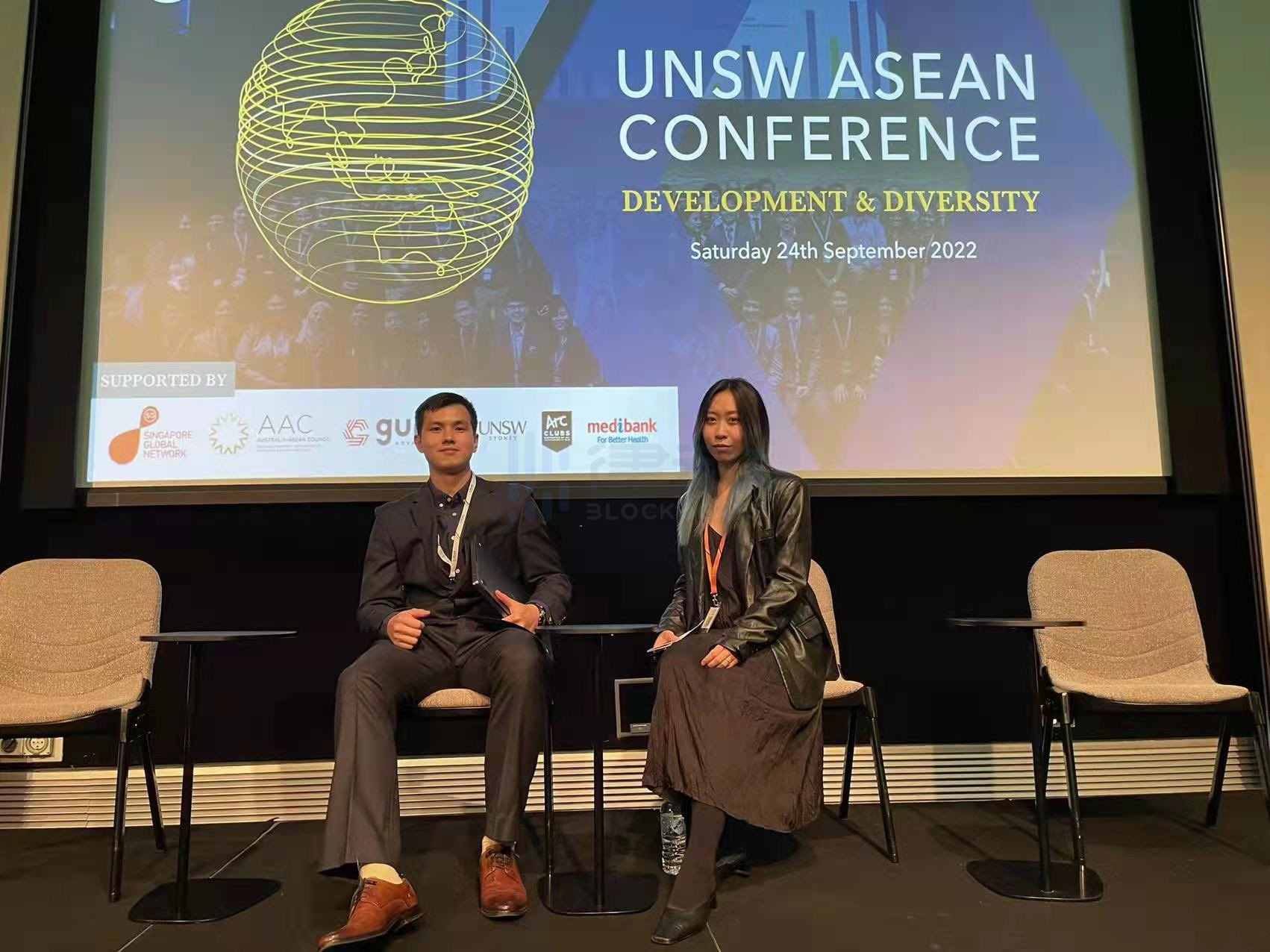
image description
SeeDAO participated in the UNSW ASEAN Conference in Sydney, pictures from the SeeDAO communityIn fact, Seed Club is very different from us in direction.Seed Club actually doesn't like product development projects, and basically eliminated them. They like Community projects, which is to create a community.
Because Seed Club has an "anti-elite" standard, people on the product team often show elite characteristics. What is the so-called "elite"? I often mention "what I want to do", "what I can do", "what I am good at", but Seed Club does not want such people. So I participated in the fifth incubation evaluation of Seed Club and found that all product teams were cut off.But SeeDAO's incubator is particularly focused on product teams.
I don’t need you to be able to tell a good story. What we like is the kind of honest product (team) that can quickly make the product. Other announcements, packaging, commercialization, etc., SeeDAO can help you. So this time, after talking for a month, I found that the English community lacks such an incubator, so these (English community) projects will instead come to the SeeDAO incubator for cooperation.
Two days ago, I chatted with a team in Sydney. They hoped to make a 2B version of Rabbit Hole to help enterprise employees quickly acquire the basic knowledge of Web3. They hope that SeeDAO can incubate them, and they don't value SeeDAO's funds, because the amount of funds (provided by SeeDAO) is too small for them, and it is enough to pay for it themselves. The first thing they value is the SeeDAO community, and the second is that SeeDAO can help them design a large number of Web3 training courses and the design of the achievement system. (In this regard) SeeDAO has already formed (products), which can be directly used use. This is particularly valuable for them, because they themselves do not have a strong understanding of this aspect, and second, it takes time.
Then there are several leading Web3 security teams in Melbourne. They now want to leave university to start a business, and they are also looking for SeeDAO incubator, hoping to help them make up for the shortcomings of the team's commercial capabilities. This is where we feel that we should give full play to our own advantages, because there are indeed a large number of projects that hope to start a business in the industry, and there are obvious shortcomings in the team itself.
Shawn:Jack: Do you need to develop your own overseas community for projects that incubate English communities?The development of the global community is the most important work of the coming year that SeeDAO has set down since September. butThe development of the global community is still biased, we still focus on Chinese (team)
, we still hope to help the Chinese team succeed. We now have a matching plan called the "Global DAO Market" plan, and we hope to set up an offline activity center In Real Life. We made an attempt before. In Dali, we set up a site called See Shore. We hope to set up See Shore in many cities around the world to provide accommodation, activities and work places for early entrepreneurial teams.We were in Dali at the time, and we basically met all the teams preparing to go to sea, and we also talked about the era of great navigation,first level title
epilogue
epilogue
In less than 11 months, the SeeDAO community has output more than 200 translated articles and produced nearly 100 Web3 courses. The SeeDAO incubator has also incubated a number of excellent DAO tools such as DAOLink, while the treasury cost only $500,000. At least for me personally, the results of SeeDAO have indeed strengthened my confidence in the narrative of "DAO catching up with the corporate system" in some areas.PandaDAO 4D Interview: DeWork's largest DAO organization disbanded, what lessons have we learned?PandaDAO 4D Interview: DeWork's largest DAO organization disbanded, what lessons have we learned?
"). As the most cutting-edge explorer in the DAO field, SeeDAO's solutions to these problems are also full of reference. For a DAO organization, it is more important than anything else to cultivate a community consensus culture, find a suitable governance structure, and cultivate sustainable hematopoietic capabilities.
Of course, less than two weeks have passed since the announcement of the SeeDAO meta-rules. Whether there will be new problems in the meta-rules in the future, and whether the community can cope with them are unknown. Just like Tang Han, the founder of SeeDAO, said: "If SeeDAO has any ambitions, we hope to challenge the boundaries of DAO governance in the era when DAO has not really landed. We hope to truly bear the pain caused by radicalization and face the trivial reality, find strength in practice, not in slogans".references:"》