Nansen: A Beginner's Guide to Crypto Lending


This article comes from Nansen, compiled by Odaily translator Katie Koo.

This article comes from
With Web3 booming, crypto lending is becoming an important strategy for crypto players to gain digital currency exposure, generate passive income, and strengthen their portfolios.
But for those new to the crypto space, how does crypto lending work? What risks are involved? What platforms are available? This article will answer these questions one by one.
secondary title
What is Crypto Lending?In DeFi, there is no centralized authority to manage the financial services and products built on the blockchain. Transactions are controlled by smart contracts, and only an encrypted wallet is required for interaction. Contrast this with CeFi, where CeFi companies take care of accounts and transactions through KYC regulations and require users to create an account to access their platform.
The difference lies in whether there is centralization and institutional supervision. Both systems have their own pros and cons, and offer a wealth of crypto lending services.
secondary title
How does crypto lending work?
To participate in lending with cryptocurrencies, users need to deposit their assets into a lending platform and wait for borrowers or investors to lend. Lenders charge interest, which varies by asset type and platform.
DeFi lending is handled through smart contracts, which automate and control the movement of funds. Therefore, variable rates are determined by an algorithm and quickly reflect changes in the market. Interest rates on CeFi are determined by a third party and tend to be more stable because loan funds are usually loaned to borrowers and institutions with fixed repayment terms. In addition, the CeFi platform's own funds can support interest rate changes brought about by small market fluctuations.
secondary title
Crypto Lending Rates
For tokens like ETH and BTC, the annual interest rate on CeFi platforms is usually 2% - 6%, while that on DeFi platforms is usually 0% - 1%. For stablecoins, CeFi’s products range from 10%-12%, and DeFi’s interest rates vary widely.
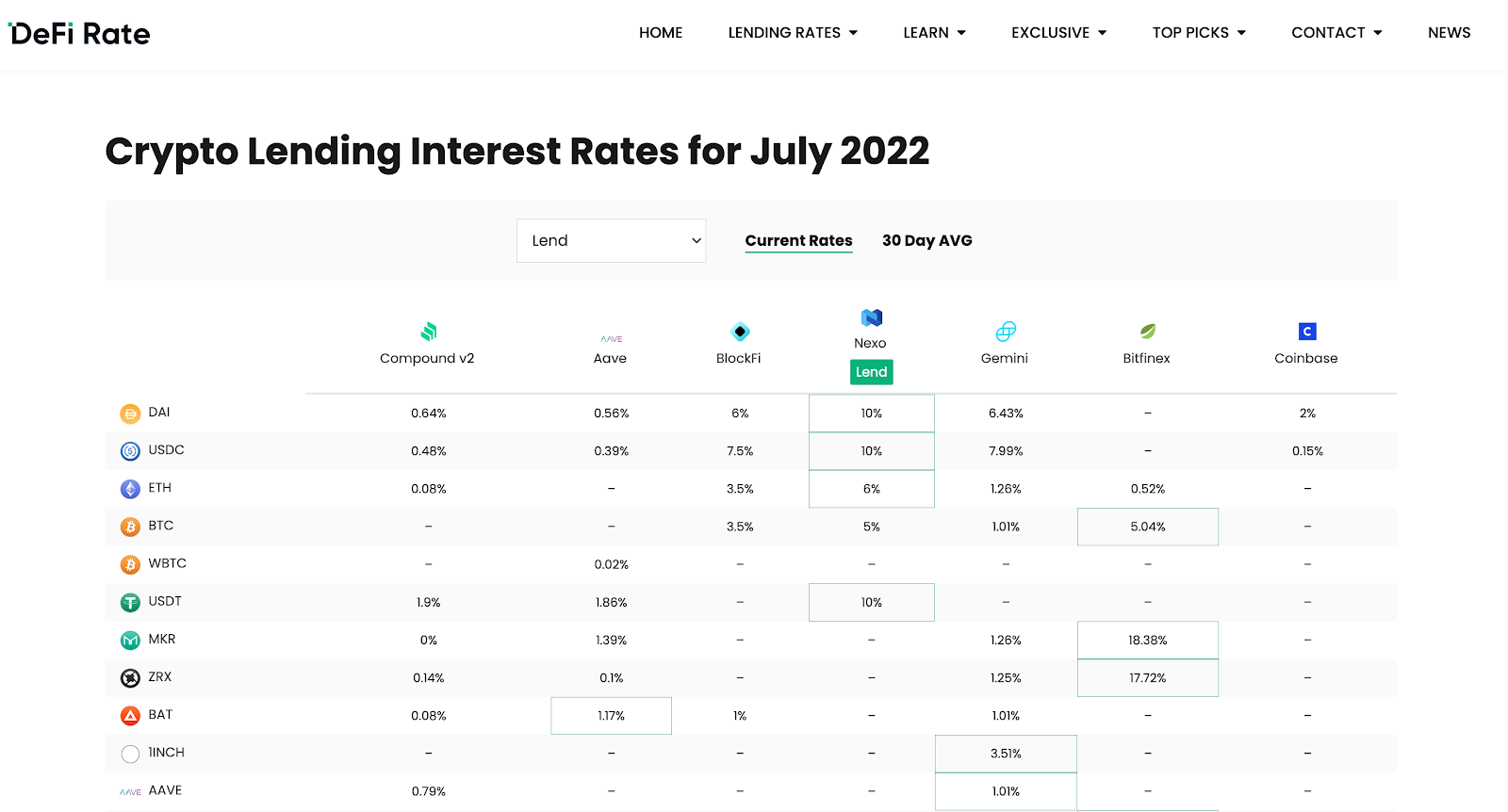
image description
DeFiRate data dashboard
secondary title
1. Aave
Popular DeFi lending platform
Decentralized lending platforms have exploded in popularity over the past few years. There are no financial intermediaries on these platforms and transactions are governed by smart contracts. Additionally, users are not subject to credit checks and therefore do not need to go through an approval process. We will introduce three major DeFi lending platforms in this article:
Aave is a DeFi lending platform initially deployed on the Ethereum blockchain in 2017. Aave is actually a loan pool system, in which lenders deposit assets into liquidity pools to earn interest, and borrowers withdraw funds from these pools when they take out loans. The amount that can be borrowed depends on the collateral provided and the liquidity available.
2. Compound
Currently, Aave supports 17 cryptocurrencies and has two native tokens: aToken and AAVE. Tokens are issued to liquidity providers to represent another asset (eg aBTC, aETH) and are used to represent collateral and earn interest. AAVE is a governance token that allows holders to vote on decisions affecting the future of Aave and also serves as collateral. Additionally, Aave offers both fixed and floating (variable) rates, as well as the option to switch between the two.
Users can gain exposure to different cryptocurrencies by submitting collateral in one currency and borrowing money in another. Another unique feature is the availability of flash loans, which require no up-front collateral and must be repaid in the same transaction.
Compound is another DeFi lending platform that runs on the Ethereum chain. Similar to Aave, users can deposit digital assets into loan pools to earn interest or take crypto loans from these pools.
3. MakerDAO
Compound also offers two native tokens: cToken and COMP. cTokens (e.g. cETH, cDAI) are pegged to crypto assets and can be obtained without restriction by lenders who deposit into liquidity pools. However, they can only be used for specific assets locked in the protocol. COMP is used to interact with users of the Compound market, and lenders receive COMP based on the amount of cToken in their wallets. Compound only offers variable rates that are inversely proportional to market liquidity.
MakerDAO is one of the most widely used platforms on the Ethereum network. Maker has two native tokens: DAI and MKR. DAI is a dollar-pegged stablecoin issued to borrowers who have deposited collateral. MKR is a governance token that grants holders the right to regulate future platform development.
MakerDAO also has a Maker vault, where DAI is created and destroyed every time collateral is deposited or withdrawn. This flexibility allows DAI to maintain its peg to the U.S. dollar.
secondary title
Popular CeFi lending platform
The interest rate depends on the deposit amount, asset demand and loan term. Other unique features include the option to lend in fiat currencies, currency flexibility to pay interest, or use NFTs as collateral.
However, some CeFi platforms have recently faced insolvency issues. For example, Celsius recently suspended all withdrawals and filed for bankruptcy in order to maintain liquidity and stable operations. Following the liquidation of Three Arrows, Voyager similarly collapsed. The lack of federal oversight makes it unclear whether customers will get back some or all of their funds, adding a layer of risk to users opting for centralized lending services.
secondary titleIs cryptocurrency lending safe?There are many risks associated with crypto lending, one of the most notable of which is market volatility.
Since the loan is overcollateralized, market volatility can multiply a user's losses in the event of liquidation or margin calls. Issues related to low liquidity and changes in interest rates can also occur when large amounts of money flow through the DeFi system.
For lenders, there is always the risk of insolvency within the scope of the agreement, although agreements have various systems in place to mitigate this risk.
Additionally, crypto lending platforms are not as heavily regulated as traditional financial institutions. The tax implications of crypto lending are unclear, and major losses are not federally insured. This is a double-edged sword — while crypto loans are more accessible and have attractive interest rates, they are inherently riskier than traditional loans.Researching and choosing a reliable platform with strong financial backing is the key to reducing risk.
The security of lending platforms is paramount, especially in DeFi applications where code vulnerabilities can lead to hacks and exploits. Another consideration is whether the platform has any type of insurance protection. For CeFi, the responsibility for asset management falls to the exchanges, so it is necessary to investigate the investors who support any lending platform. Due diligence should include understanding a platform's business model/white paper, researching the user base and community, and looking for any records of hacking.
secondary title
Steps to Play Crypto Lending
The first step in crypto lending is researching and choosing a lending platform.
After choosing a platform, getting a cryptocurrency loan can be boiled down to the following steps:
Join this platform. CeFi requires account creation. On DeFi, it is necessary to connect the wallet with the lending platform;
Choose the type and amount of deposit collateral. Choose the type and amount of the loan. Remember to study carefully;
deposit collateral;
Deposit money into your account or wallet. The time it takes from depositing collateral to receiving a loan is usually short.
The process of lending out encrypted assets is also very simple:
Join this platform. Just like borrowing, there are many platforms to choose from for CeFi and DeFi. Make sure you understand the interest rate and other terms of the loan agreement;
send funds to the platform;
gain profit. Interest can be paid the same way on both DeFi and CeFi platforms. Additionally, CeFi platforms sometimes offer native platform tokens for interest payments.
secondary title
Once you have learned the basics of crypto lending, the next step is to identify opportunities. Discord and Twitter are the go-to sources for the latest news on major developments in the crypto space. Keep some key metrics in mind, including interest rates, deposit and withdrawal limits, asset types supported, loan terms, fees, and platform risks (including insurance coverage).
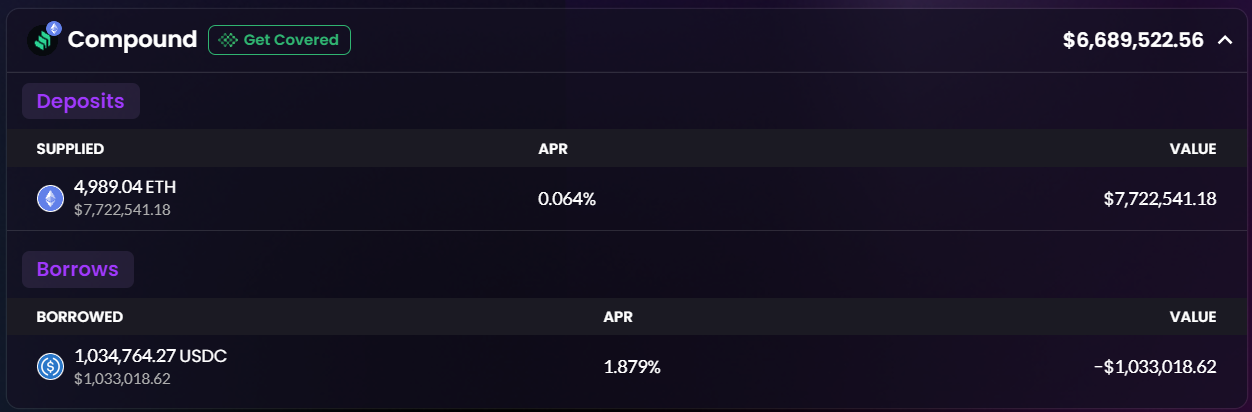
Ape Board Portfolio Tracking Dashboard
image description
secondary title