Web3.0 media invasion? A deterministic revolution may be coming


Original compilation: Block unicorn
Original compilation: Block unicorn
Although it feels like there is endless news, and the drop in price of nearly every coin continues to grab the headlines, but my focus is on how quickly on-ramps into cryptocurrencies continue to grow.
Facebook and Instagram are reporting plans to integrate and support the sale of NFTs.
Twitter has created a bridge to officially link the NFT you own to your profile picture. It is believed that this could be accelerated further.
Coinbase Partners with Mastercard to Facilitate NFT Sales.
Walmart filed a trademark application, marking their entry into Metaverse and digital products.
StockX launches Vault NFT to facilitate trading and investing.
Microsoft acquired Blizzard Activision for $68.7 billion to enhance its Metaverse capabilities and footprint.
YouTube is looking at how they embrace Web 3.0 and NFTs.
Adidas Originals' project: Into the Metaverse's first NFT generated 11,391 ether (ETH) transactions on OpenSea, worth more than $43 million.
Samsung opened a concept store in the metaverse Decentraland, and Samsung reached a cooperation with Theta Labs to distribute NFT to users who pre-ordered the Galaxy S22 and tablet computer S8.
All in all, large corporations and Web 2.0 giants are now building portals to Web 3.0. It increasingly feels like all roads lead to Web 3.0, but even if they don't, one thing is for sure, and that's that these actions have the potential to significantly increase adoption.
first level title
Web3 is still in its early stages
At least that's what people think about Web3.0, NFTs, and the entire crypto market. With the crypto market worth around $2 trillion (down from $3 trillion in November 2021), and NFT sales on OpenSea topping $4 billion this month, "we're too early" might be listening It sounds hard to believe, but it's not.
I say this because while money may flow into the category through new VC funds, acquisitions, and through direct crypto and NFT purchases and investments, the reality is that most people (even many active crypto investors) still don’t understand Web3. 0, it will be unlocked as the Web3.0 market matures.
This is likely because media attention to explosive NFT valuation headlines has overwhelmed articles and interest in Web 3.0 applications. In turn, we see that the public is primarily concerned with NFT valuations and the launch of new NFT projects. (If it sounds critical of NFTs, that doesn't mean I'm terribly bullish on their future utility, as shown below).
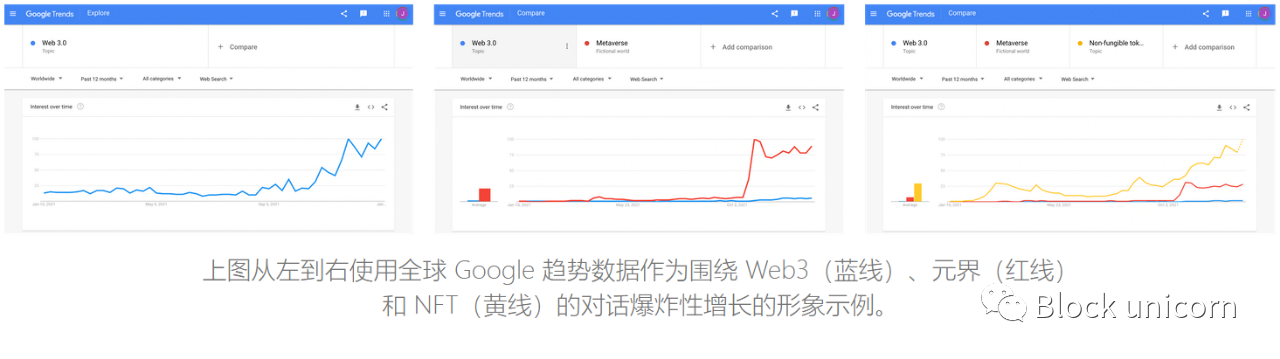
Rather than discussing valuations, the rest of this article explores the potential (and likely) future impact of Web 3.0 on marketing, media, and CRM.
There are a few different charts that are often cycled around on Twitter and LinkedIn in an attempt to simplify the differences between Web 1.0, Web 2.0, and Web 3.0. All are true, but none of them satisfactorily explain what this means for brands and the impact it will have on their communications.
This diagram shows the evolution from a functional perspective, from read-only in Web 1.0 to read+write in Web 2.0, and then to Web 3.0 which allows read+write+execute. In short, the transition from consuming content to creating it and finally owning it.

The picture below is one of my favorites. It takes a more user-centric approach by showing how people will engage with and identify with the digital applications and services they use. But unless you already understand the potential of a crypto wallet to become your digital identity, this chart doesn't mean much to people
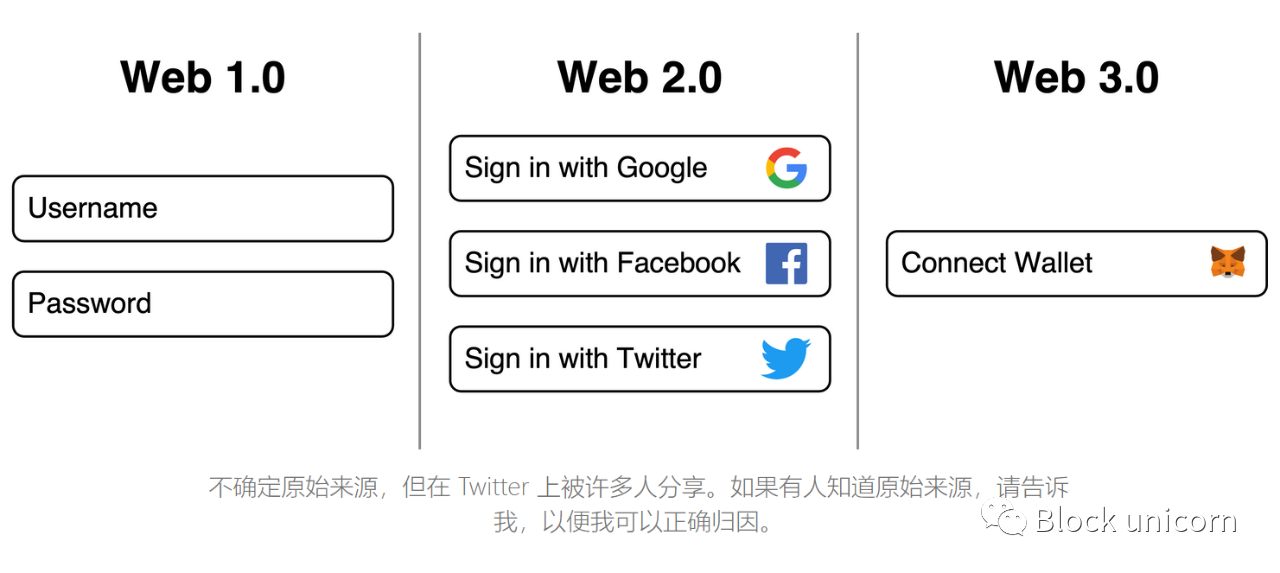
Even if you have a solid understanding of crypto wallets and how they have evolved, you may still only associate this diagram with logins and digital property/content ownership.
Hence the need for a third chart, which I've put together to outline what this all means for brands and marketers who rely on the reach and targeting capabilities of Web 1.0 and Web 2.0 to connect with consumers.
Below, you can see how reach and targeting have evolved from Web 1.0 publisher-based media (where digital copies of media were traditionally purchased offline) to Web 2.0 and probabilistic media (where platforms leverage digital breadcrumbs left behind ) by inferring a person’s interests through every action they take online so they can be grouped), by Web 3.0, the shift to deterministic media positioning will fundamentally change supply and value chains.

At the heart of the change is identity, and in the case of Web 1.0, individual-level identity data was never a factor, knowing broad basic demographic details was enough. Web 2.0 brought a focus on identity and with it the promise of increased relevance, purpose, efficiency, and effectiveness. To drive and deliver on this promise, platforms need to track and attribute signals that can connect back to people. From search history to movie views to likes, shares and more, these platforms create and own images of information tied to our digital identities.
In contrast, in Web 3.0,Individuals will own and control their identity data. Stored in encrypted wallets and managed by smart contacts, this will form the basis of how the digital world understands people.
“I know half my media budget is wasted, I just don't know which half.’ – said every media manager in history.
When you consider the prevalence of ad fraud, the challenges associated with end-to-end attribution (attribution of value), and the excessive range and margin of error accepted in probabilistic systems, what they say is likely to be true. This is the deterministic problem that Web 3.0 capabilities will address.
first level title
encrypted wallet
The big shift for consumers will be the adoption of crypto wallets, I've written about why this is happening in past newsletters, but in a nutshell it's because your crypto wallet will contain:
Your Identity Data - Everything will be in your wallet: from government documents like driver's license, to medical records, to basic PII data like date of birth, address, and more.
NFT as a contract for digital property you own - yes, we will all own digital property.
NFTs as deeds on some real-world property you own - your car deed will be an NFT, your mortgage will be an NFT, etc.
POAPS (Proof of Attendance Protocol) - can be an indicator of the loyalty programs you belong to, the events you've been to, and even the restaurants you frequent. POAP versions may also capture details of your online behavior. Just like Google and Facebook track your behavior today, this will be done in Wallet in the future.
Access to decentralized finance accounts - in short, a proxy for your bank account
private key
1.private keypublic key
2.public keyfirst level title
Decentralized Advertising Exchange
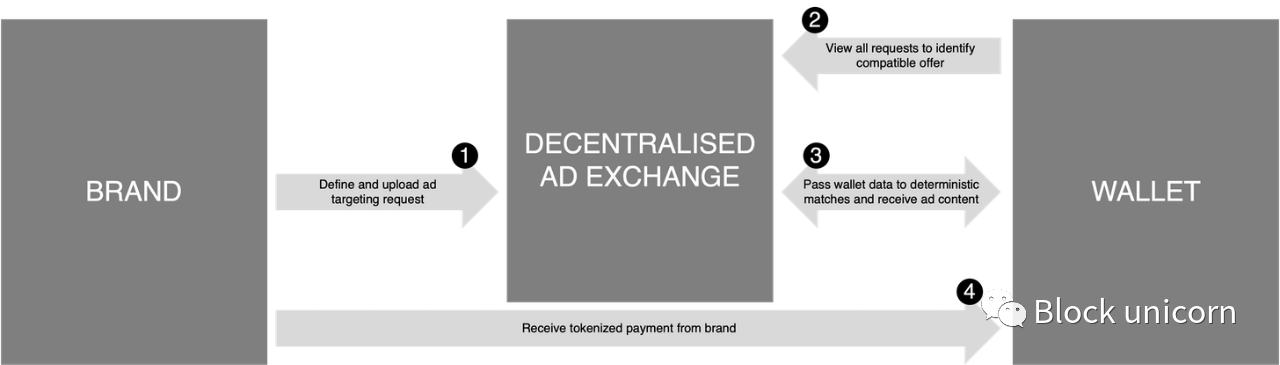
The Decentralized Advertising Exchange (DAEX) is to today's advertising exchanges what Uniswap is to centralized online exchanges. Or to put it more clearly, DAEX is an application that acts as a link between supply and demand by directly matching parties using codes, thus allowing them to transact without the need for a middleman.
What this means for media buying is that advertisers will be able to go directly to DAEX to buy reach and impressions that deterministically target people based on data held in their encrypted wallets, without paying commissions to middlemen.
That sounds great, but most people don't connect their crypto wallets to every website they visit, so wouldn't this process simply result in significantly lower coverage?
Yes, that is true today, but that will change as security improves. The Brave browser has integrated wallets directly into the browser, allowing for comprehensive data collection. This level of integration will soon be the norm, as will behavioral data collection within wallets.
If the data is in a person's private wallet, why would they share it with advertisers? After all, most people don't even like ads.
Correct again, but with incentives. Since brands pay almost no commissions to middlemen, the funds currently associated with placing ads will be paid in tokens to those who receive them. An early form of this incentive structure is in place today: it’s called Basic Attention Token.
first level title
personalise
Now that we've covered the basics, let's talk about something interesting: personalization.
Imagine you're a fast food restaurant chain and you want an ad that not only makes people hungry, but also reminds people that your restaurant is just a short drive away. You can tell people how many locations you have across the country, or you can simply show them ads that look like they were made near them.
Advanced artificial intelligence technologies such as NVIDIA's GauGAN2 will make this possible -- a technology already capable of creating photorealistic landscapes from simple language descriptions, no matter where people live. Combined with geolocation data and access to image libraries from around the world, these systems will soon be able to simulate any location around the globe.
image description
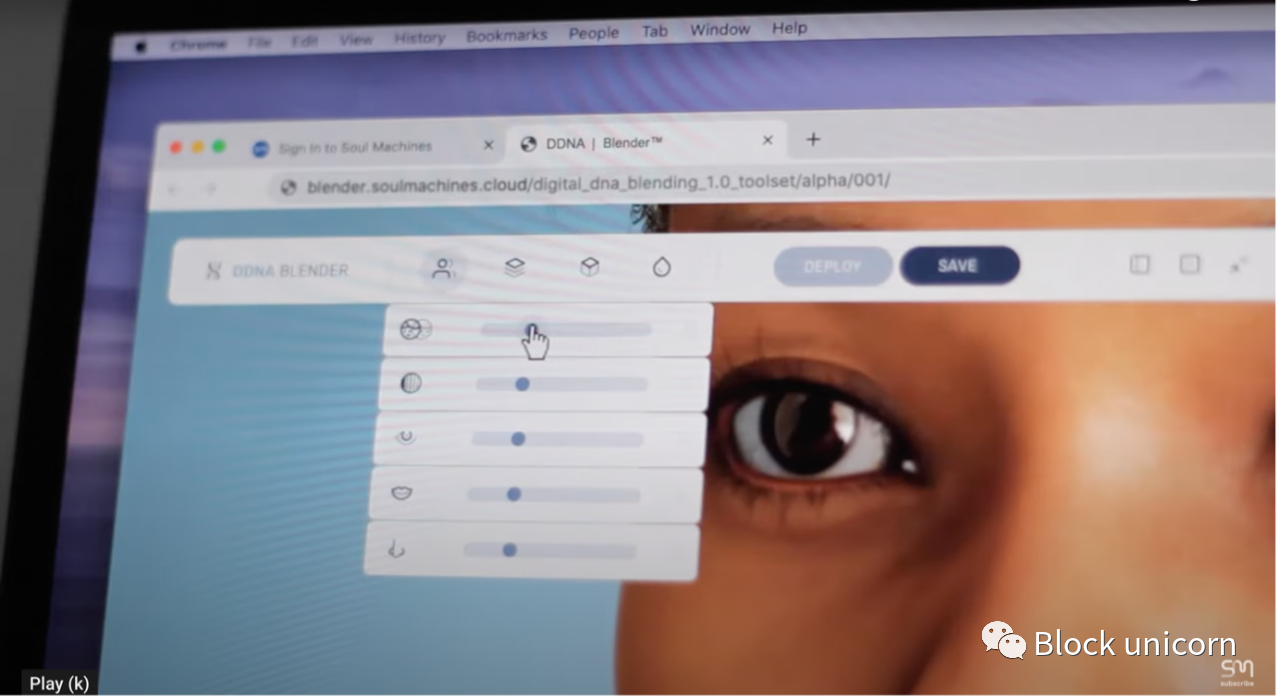
Image via Soul Machine
But it's only when we put these two things together, digital landscapes and digital characters, that we really start to have fun. Think of it like an NFT project, only instead of using traits to build 10,000 boring apes or cool cats, the AI will use a combination of identity data in your wallet, geolocation data, etc. to build an infinite number of different ads.

first level title
Attribution (attribution of value)
One of the most valuable improvements Web 3.0 will bring to brands will be attribution.
Currently, it is nearly impossible for brands to accurately assign value across media channels, touchpoints, and stages of the journey. There are so many different data sources, walled gardens, and measurement ideologies that all need to be brought together for detailed understanding. After all, your customers may be interacting with your brand and content in search, video, social media, mobile web, and even chat apps, and that's a lot of different partners, before finally landing on your website and making a purchase and touchpoints to try and track people.
Brands such as Liveramp are already trying to solve this problem by developing deterministic identity graphs. It's not perfect, however, and their approach relies on stitching together data from multiple parties to build a network of partner data that provides a better understanding than either party could have alone.
summarize
summarize
While much of what I've written in this article has been about how the definitive features of Web 3.0 will hold new promises for marketers and media buyers, the truth is, this isn't the end of Web 2.0. We always read headlines about the death of television or the end of print. But still a lot of people watch TV and a lot of people read magazines. Yes - the numbers have dropped precipitously from their peak, but the world is not an absolute place with only one answer.
The deterministic nature of Web 3.0 will share the stage with the probabilistic nature of Web 2.0. In fact, in some domains and use cases, Web 2.0 may still be the better answer.
But if I look at the signals I've seen in the past 10 days, Microsoft, Facebook, Twitter, YouTube, Mastercard and Walmart are all dabbling in NFTs and Web 3.0, I guess the invasion of Web 3.0 deterministic media will happen more than most Faster than expected.