






The Invisible Hand of Sequoia: How Roelof Botha Became the Most Powerful Man in VC


Original source: WeChat public account old yuppie (ID: laoyapi)
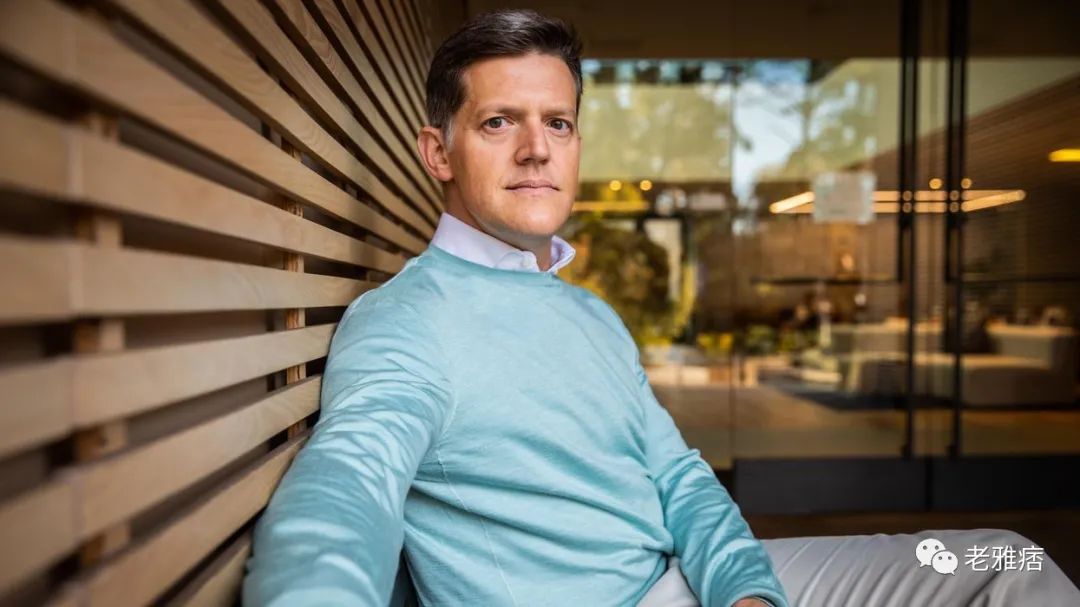
As a potential boss of investing in leading companies in the industry, few people know Roelof Botha, who is changing one of the top venture capital firms in Silicon Valley. This article is the story of what founders and other insiders think of him and his plans to upend VC tradition.
When he started at Sequoia 19 years ago, Roelof Botha would write "109" in the corner of his notepad every week. It's a shorthand that lets him focus on picking great startups to meet his private goal of $1 billion in gross revenue. It's also a milestone, which he believes means he'll have a measurable impact on the venture firm.
He hit 109 goals thanks to investments in companies like YouTube, Instagram and Square. In 2020, he even hit 1010, or $10 billion in total returns, putting him among the top ranks of tech investors.
One thing bothered him. If he gets those bets off the ground, how much more could Sequoia realize? Square (now Block) has grown in value 10x since going public, even taking into account the recent pullback in the market.
“It helps that I’ve never sold a stake in Square since we invested more than a decade ago,” Botha said of his personal holdings."So why don't we offer the same to our LPs?"
Today, Botha's influence outweighs the dollars he returns. An IPO or acquisition used to be the natural end of a VC's engagement with a company. Botha wants to disrupt that -- for Sequoia, not the industry as a whole.
Sequoia's move stemmed from an idea in Botha to create the Sequoia Fund, an evergreen venture capital model that allows it to hold stakes in its winners after the traditional 10-year venture capital fund clock. Removing artificial constraints suits Botha, whose favorite part of the job is working with early-stage company-era founders into public markets. He still serves on the boards of public companies such as 23andMe, Unity and Natera. In fact, he questions what it means to be a "VC" these days.
“I see myself as part of the Sequoia team, where I can work with founders and help them build extraordinary businesses. And I don’t really want to call myself a VC. It’s because we’re not replaced that way. I am an irreplaceable symbol,"he said with a smile.
Botha's own personal experience, from a Tupperware salesman to a 28-year-old CFO of a listed company to one of the youngest partners of Sequoia, is of course unique. The founders praised his integrity and intelligence. At the age of 48, he has become the head of Sequoia's US and European investments and one of the company's three stewards. His job is not just to provide financial rewards. It needs to grapple with how to maintain Sequoia's status as a top company at a time when the venture industry faces more competition in the private market.
He may be irreplaceable. But he and the venture capital industry still face a broader existential question: Is a dollar just a dollar? The rise of businesses like Tiger Global in the industry shows that founders are interested in finding investors who don't get their hands dirty. Less guidance, more cash.
"The biggest threat I see right now, having the money and not having the advice, I'm really worried about what that's going to do to the company," Botha said.
The Sequoias are a company in prime shape thanks in part to Botha's leadership, but now it's his responsibility to keep it that way. Not every company can handle the generational transition well, or continue to pick top companies.
"He doesn't want Sequoia to be the tenth best company, or even the third,"Sequoia partner Jess Lee said."Our goal is to have industry-leading returns in every vintage over several decades, which is difficult to achieve, but possible."
Botha may not be the type of venture capital executive to tweet memes or podcast podcasts, but those who know him caution others against misinterpreting his raw, composed exterior. There are many File 109s at stake, and he wants to win them all.
first level title"。
face the test
Part of that drive came from growing up in South Africa and then moving to the US in my 20s. "There's a sense of loneliness about being an immigrant that leaves you with no choice but to work hard to get something," he said.
He could have stayed in South Africa, where he was one of several prominent Roelof Bothas working in government and economics. His first job as a door-to-door salesman for Golden Products, selling local Tupperware the summer before college took him out of his comfort zone. He admitted:"it's bad". What suits him better are the numbers. At university, he studied actuarial science, economics and statistics, and at the age of 22 became the youngest licensed actuary in South Africa's history. However, instead of continuing this work, Botha decided to join McKinsey with half the salary, hoping that this could be a springboard to living and working abroad.
It was the first "moment of truth" in his career, a phrase that Botha and the Sequoia partners like to use to describe a serious experiment with big results.
Botha's next trial came when he met Elon Musk.
By 1998, Botha had entered the Stanford Graduate School of Business. That's where Musk tried to recruit him to PayPal's finance team. Botha does not have the required work authorization. It's rare to say no to Musk these days, but Botha turned down PayPal twice before the South African rand's fall drained his savings. In March 2000, he changed his course schedule and joined PayPal because he needed to pay his April rent.
"PayPal co-founder Max Levchin said:"He's super young, like he's in his 20s, but for some reason he comes across as serious in a way that the other GSB students don't.
Part of that is because of Botha's size and demeanor: he's very tall, very serious and very smart, and he's also a punctual guy. The combination can be scary, masking a more goofy side. "He always acted like a white-bearded guy in his 40s who was going to take the company public," said Levchin, who described Botha's heart as more like that of a super-competitive 13-year-old.
It was a battlefield promotion in an executive mutiny, and he was thrust into the role without any C-suite experience. When PayPal decided to go public, outsiders questioned his credibility. He's been called out time and time again by reporters and analysts, like, "This kid hasn't grown his hair yet, what is he doing on Wall Street?"Levchin recalled."It was controversial at the time."
But internally, no one questioned Botha. At 28, he took the company public and soon after, helped negotiate its sale to eBay in 2002. Company CEO Meg Whitman wanted him to stay at the company, and offered a lofty title and a sizable option package, which is notable given how competitive eBay and PayPal are.
Sequoia Capital's Michael Moritz, who had identified with PayPal and served on its board, had a different proposal: to join the company as a partner. It's not the richest deal: He won't initially get the spread, the fat share of profits that make VCs rich, but Sequoia will at least match eBay's salary.
first level title
nuggets, then out
After working non-stop at PayPal, the transition to venture capital was not easy. In 2003, which was still a weak year, many VCs were underwater in their dot-com investments, Botha recalls.
His big break came with YouTube, one of the first deals he led. He met the founders through the PayPal relationship when it was just a three-person team. YouTube was one of the first unicorns before anyone used the term, said Gideon Yu, its former chief financial officer.
When Google comes knocking, you'd expect a young venture capital firm to rush to seal a deal, as it did with YouTube. But Botha wasn't interested in selling YouTube quickly for a premium price to win at the boardroom, Yu recalls. Instead, he insisted on striking a deal that would set the company up for long-term success.
"For some, emotions and bright, shiny objects tend to distract you in situations like this. With Roloff there is always a very strong base and a very real north,"Yu said. After working with other investors, Yu Minhong realized that Botha's approach put him in the shoes of venture capitalists."top echelon"middle.
In October 2006, YouTube was finally sold to Google for $1.65 billion. He recalled:"But then I looked at the rest of my portfolio and it wasn't that good.
Money transfer startup Xoom, the first investment he helped lead, was struggling. He missed Twitter and turned down the CFO job at Facebook, thinking he could get Sequoia to invest. (The job went to Yu, Sequoia didn't get the deal.) Then, the financial crisis hit in 2008, and 2009 looked pretty bleak.
Sequoia founder Don Valentine had warned Botha during the interview process that he hadn't failed enough in his career. Successful people join venture capital, but have to face the fact that good investing means taking risks in startups that are more likely to fail."Botha said:"Facing mistakes, not 5% of the time, but 30% of the time, 40% of the time, can really erode your self-confidence, to be honest. There was a lot of regret at this point, he recalls."first level title"。
Out of the "Valley of Despair"
Maybe it was the pesto that saved him.
Looking back ten years later, Botha smiles. Sequoia partner Doug Leone grew basil in his garden and brought him a case of the homemade sauce one weekend. "It's a small thing in a big way, but it makes a difference. It's not just pesto, of course," he said. It was the personal gesture and Leone's consultation that made Botha feel He has a team behind him.
He's on the other side now; he's seen a lot of investors going through a similar "valley of despair" years later. Part of his job running the firm now is recognizing when Sequoia's new generation of partners find themselves in the same situation, though in Botha's perspective, he makes homemade dry bouillon, a beef-like Dried South African snack with salt, pepper, vinegar and coriander.
As Botha entered that dark valley, partners like Moritz, Leon and Jim Goetz rallied around him, "giving me enough rope that I had to work it out myself, but also enough guardrails that I Not going off track.” That’s the advice he needs from his partners to get him back on track.
In 2009, Botha discovered Unity and Eventbrite. The following year, he invested in MongoDB, and then finally had the opportunity to invest in Square in 2011. The companies will all become public companies, part of nine IPOs in his career.
Botha also had some notable failures. Whisper never became the next Instagram. Video API TokBox sold for less than its financing amount. Jawbone became one of the costliest venture capital failures ever.
"That's part of the beauty of this industry. Even though you might make a big mistake, there's another hit tomorrow because people are starting interesting new companies,"Botha said."So if you're willing to swallow your disappointment, buckle up, get back on the bike, get back on the horse, get back on the skis, whatever it is you can identify with, try again."
Interesting things are always changing for Botha at the moment. Unlike many VCs who end up focusing on one sub-industry, Sequoia's Lee said Botha is a true generalist, with investments spanning consumer, enterprise and health care.
It's not just about having intelligence and studying it. Botha have"dream gene", to be able to sit down with founders and imagine a potentially larger market, Lee said."she says:"When Unity started it was a small game and no one knew that mobile games and AR, VR and 3D would be so huge, but he was able to dream with the founders, took off around that, and now it's a huge public company.
After 23andMe CEO Anne Wojcicki met Botha, he sent her a sweet message. Sequoia led a $250 million growth funding round for the DNA testing company."she says:"He was really engaging, he was really constructive, which I think goes against the reputation of some VC firms.
Former Evernote CEO Phil Libin relied heavily on this side of Botha when he built his video conferencing app mmhmm. Botha was Libin's first call when he started mmhmm, although that may seem unexpected. Botha invested early and joined Evernote's board when Libin offered to step down as CEO, a process he initiated but later"out of control"。
"He always did what was good for the company. His actions were genuine and he went out of his way to make sure I was treated fairly and with respect," Libin said.
first level title
butler role
While many VCs seek ways to modestly publicize their role in a company's early days, Botha's style has always been low-key. 23andMe's Wojcicki thinks his intelligence and integrity are"obama style"。
"Several people I know in life are like this, high above."Botha is one of them, Wojc said.
His natural leadership within the company was evident early on. “Walking into that partner meeting, it was very clear that he was actually a leader. It wasn’t a surprise to see him finally formally end his leadership role at the company,” said Yu, the former YouTube chief financial officer.
In 2009, Botha launched a scouting program as a way for the firm to expand its network of startups it heard of, a move that rivals quickly copied and began co-leading the firm's U.S. investments alongside Goetz. Goetz took over the company after Moritz stepped down in 2012"housekeeper", but handed it to Botha after he stepped down in 2017.
It's a complex power dynamic within a classic team-oriented company. Botha was not the one in charge at the deal meeting, nor was he the one who ultimately gave the green light to the deal. When it comes to the company's operational management, though, Botha is one of three stewards, along with Leone and Sequoia China's Neil Shen. (Botha, who loves literature and often tells stories, cites George Orwell's Animal Farm series as an explanation: "All animals are equal, but some animals are more equal than others.")
He said:"He said:"It is very dangerous for us internally to attribute any activity we do to one person.
holding value"holding value", or in other words, what is the actual value that Sequoia assigns to LP vs. what is the situation where Sequoia holds it. That's a good metric, in part because you don't want to assign LPs companies that are about to fall off a cliff, Botha said. But he was disappointed that the fund had to distribute shares to LPs so early, when they would have seen higher returns had they had the opportunity to hold.
The new fund pools LP money into a larger portfolio of public companies. The Sequoia fund then funds a group of more traditional venture capital sub-funds that return their proceeds, including stakes in public companies acquired through IPOs, acquisitions or other transactions, back to the main fund. Sequoia's LPs have signed on to the idea, opting to roll over 95% of the eligible balance to the new fund. After the two-year lock-up period, limited partners will be able to request the redemption of some of their holdings twice a year.
He said:
He said:"A lot of people underestimate the company building that is still going on at every stage, and even when a company goes public and you think it's mature, there's still a lot of innovation that can happen."
The challenge for Botha is to do the same for the Sequoia, which turns 50 this year. Few companies get this far, let alone deliver consistently high returns at the same time. LPs may be loyal to Sequoia, but a new generation of founders is harder to parry. There are plenty of entrepreneurs, including some that Sequoia backed early on, that opt for investors who bring in capital and don't require a board seat.
There has also been a slow deflation in technology stocks, and there are already concerns that later-stage valuations may also fall. That could be bad in the short term for companies looking to get out, but it could also bolster some of Botha's arguments that companies need support. It may also suggest that the timing of the move from evergreen funds, which Sequoia can more easily wait out for the end of the cycle, is very prescient.
Fundraising records have been smashed and startup valuations soared over the past two years, but Botha likens it to an open-book exam. Founders have it easy during the development period, but when the final exam suddenly closes, have they learned enough to survive? The same goes for new investors, whose companies are only flagged in round after round.
"It's easy when things are going well. Personally, I haven't seen a story that's completely true. So what happens when things go wrong? I worry about that," he said.
His own story is proof. A rugby-playing salesman from South Africa is now the leader of a top VC firm, but he needs some help (and some pesto) to get there. Along the way, he learned a key lesson: Cash can dry up, but advice is evergreen.


