Financial Times Dialogue with Microsoft CEO: Metaverse, the entrance of the next generation Internet?


Original Author: Old Yuppie
This article comes from the WeChat public account:old yuppie, republished with authorization by Odaily.
Original Author: Old Yuppie"This article comes from the WeChat public account:", republished with authorization by Odaily.
This is
Technology Exchange
The first of a monthly series featuring conversations between the FT's top commentators and technology leaders, innovators and thinkers about the latest trends in the industry.
secondary title
"Technology Exchange"
The FT's top journalists and commentators will hold monthly conversations with the world's most thought-provoking technology leaders, innovators and academics about the future of the digital world and the role of Big Tech in shaping it. The conversations will be in-depth and nuanced, focusing on how tech groups, consumers and authorities will interact to solve global problems and deliver new services.
Shortly after Satya Nadella was promoted to chief executive of Microsoft in 2014, he faced calls to ditch the tech conglomerate's Xbox gaming unit and focus its resources on cloud computing -- to compete with rivals such as Amazon.com . Instead, Nadella saw an opportunity to build a new customer base through online gaming communities. His first deal as CEO was the purchase of Minecraft, a three-dimensional world-building game.
At the same time, he furthered Microsoft's dominance in personal and business software and expanded its cloud and server offerings. The conglomerate's stock has risen eightfold during Nadella's tenure, and it remains the world's largest software conglomerate.
However, last month's $75 billion deal to buy video game maker Activision Blizzard would also make Microsoft the world's third-largest gaming company by revenue, behind China's Tencent and Japan's Sony.
Not only does this expand Microsoft's vertical integration in gaming, giving its Xbox console and PC game distribution system more content, but it also shows how Nadella sees the future of online interaction -- at work, at school and at home. aspect. He said the Activision acquisition would also push the company into the metaverse — the immersive, virtual, interactive world that big tech companies are racing to build.
Here, in his first interview since the deal was announced, Nadella tells the FT's West Coast editor Richard Waters how gaming will shape the next computing platform.
Richard Waters: When you come in, most of Microsoft's business is in business technology, helping millions of workers get their jobs done. And over the years you've been on the job, the company has gone through an amazing shift to cloud computing. Now, you've acquired a large gaming company, and I guess people are wondering, does that fit in? Is it all part of one story?
Satya Nadella: At Microsoft where I grew up, I always thought about three things -- we added a fourth. The three things we've always had are: we build tools for people to write software; we build tools for people to drive their personal and organizational productivity; and we build games. These are the three things Microsoft has done since ancient times. The first games, I think, were built before Windows came along. Flight Simulator existed on DOS. So, for me, games, coding, productivity or knowledge worker tools are the core."One of the things we've been fairly successful at adding -- and most people think we'll never be able to do -- is to be an enterprise company... to actually actually build enterprise infrastructure... and business applications. guess what? We do this now too."I feel like these are the new things we added, while the other three things have always been there my whole life. And games, interestingly, are more about integration.
Even when Xbox came out 20 years ago, it was an accessory thing, and now...the future of gaming is [subscription services] Game Pass and xCloud, and of course consoles, and PC. One of the coolest features is the ability to play games instantly, without even needing to download them. You can start playing directly on the cloud, and then let its data use the local CPU to slowly flow down.
So, for me, it's better than
SN:Oh that's a heresy
It's much more complicated.
"The Metaverse is essentially about creating games. It's about being able to put people, places, things in a physics engine, and then have all the people, places, things in the physics engine relate to each other."
RW: How does helping people play games relate to the relationships you're building with customers and communities? How do you help them live?
SN:Take the metaverse that's happening now. What is the Metaverse? The Metaverse is essentially about creating games. It's about being able to put people, places, things [into] the physics engine, and then have all the people, places, things in the physics engine relate to each other."You and I will soon be sitting at a conference room table with our avatars or holograms, or even 2D surfaces with surround sound. guess what? Where we've been doing this... is in games."So basically, the system-wise approach that's being built for the metaverse is, democratize game building and bring it to anyone who wants to build any space, and basically digitize people, places, and things, and Interrelated with their physical existence.
RW: But the people who play these games, they're playing first-person shooters at the moment... It's pretty clear why they're playing these games, and it has nothing to do with the metaverse—just to have a little fun. How do you see the future? What are people going to do with this intellectual property that Microsoft paid so much for?
First, if you think about it, we're in a much wider area than first-person shooters. For example, everyone loves flight simulators, Minecraft, first-person shooters or racing games. Think about how we tell the story of racing through a cultural lens. The whole new game we're making [Forza Horizon 5] is all about Mexico, and the Mexican setting and the cars. you will ponder
My avatar in Forza is my car
SN:, how do I decorate it.
To me, just doing a good job building the game gives us the opportunity to build this next platform, which is basically the next generation of the internet: embodied presence. Today, I play a game, but I am not in the game. Now, we can start dreaming through these metaverses. I can actually be in the game, just like I can have a meeting with you in a conference room. This kind of metaphor and technology will be manifested in different occasions and in different backgrounds.
The other point is in the context of a very different business process. If you look at retail or construction, it’s also like you’re creating a digital twin: you have a factory and you’re trying to visualize how it’s going to work. It's also an exercise in a game, except you're not playing a game. You are trying to simulate how a factory works.
RW: When you think about future universes, is there any overlap between the way people behave in games and the way they behave elsewhere, such as in a work environment? The younger generation who grew up playing games are now entering the workforce. How do they perceive these technologies and their behavior at work?
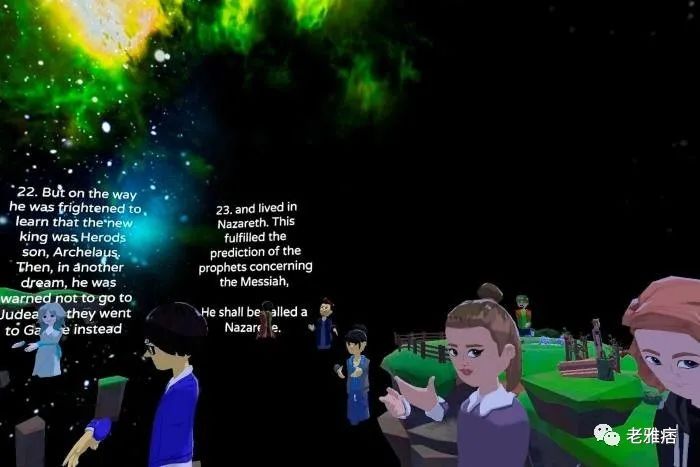
SN:The beauty of games is that, on a mundane basis, you see young people playing these games every year, every day, and it tells you what they expect from a computer-mediated interface.
So when this generation approaches some work-related aspects, you can say what they expect from an immersive environment. Just take some of the research we're doing about how people should relate to their avatars. You and I probably have a particular understanding of what an avatar is, whereas young kids who have built their own avatars in Minecraft or Forza don't. They'll say, oh yeah, I want to use avatars because if you're going from game world to game world, having multiple identities in different contexts is a much more desirable thing.
Noticing that as we introduce new tools and capabilities into what might be considered a work-related product is definitely something we want to learn from."RW: It seems that getting used to representing yourself with an avatar is a critical step, something you're already doing with the collaboration software Teams. It seemed like a pretty big transition to me: I would be joining a meeting as some sort of cartoon character."Today, you go to a website, you see a bunch of text, videos and pictures...and interact with it. But what is a more immersive way for you to interact with digital content? It's still about people, it's about places, it's about things, but you put it in the form of space, and you can see X, Y and Z coordinates, not just X and Y. The most interesting thing is that you can be in the space, so you can look around and things will change - the physical presence of a place. That's really our vision.
Quite frankly, we're building metaverse apps, if I can call them that. Or experiences in business apps, experiences in productivity tools, and conferencing and gaming -- all three on a common platform. Avatars, 2D avatars ... appearing in our team [app] ... people just want to be able to have an avatar, take the signal from your face and your voice. It's a very comfortable way to bring people into the meeting.
One of our features is the team
SN:Together
model. You can put people, for example, in an amphitheater setting. You and I can sit there, but it's basically just our videos.
"The silver lining of this pandemic is that we've learned that we can still continue to team up, still continue to collaborate, still continue to upskill ourselves while looking after the overall wellbeing of our workforce through these digital connections"
RW: So, do you think this will apply to any company that has workers and customers? Will they have to rethink how these digital interactions work?"When you talk to anyone in our industry -- digital technology -- we always say, rethink everything. But the reality is, it will just be an evolution. In fact, I'm pretty confident about the most famous work collaboration tool of all time. This is the so-called workplace!"It's been perfected for over 200 years, and we're not going to just switch workplaces out of the blue. We've learned how to use it effectively to drive collaboration, teamwork, and productivity. But we've also learned that we can't take for granted [the fact] that we will always have a workplace.
In a sense, the silver lining of this pandemic is that we've learned that we can still continue to work as a team, continue to collaborate, continue to upskill ourselves while looking after the overall wellbeing of our workforce through these digital connections.
We won't say when the limiting factor is removed.
SN:Oh let's go back to 2019
. We also don't intend to be like 2020 or 2021. We're going to find this kind of hybrid workplace that we describe. At any meeting at Microsoft, there will be at least some people, maybe 10%, 20%, 15% calling from remote. There will always be some people in the room, and there will be remote participants.
The expectations of remote participants have completely changed. They won't be second class. They want a first-class experience. You now need to get used to that with cameras in the room, segmenting everyone in the room into their own box, being able to use chat. We really have some new inventions to do -- in such a way that people who are together and people who are remote can come together and work effectively as a team.
SN:RW: One of the things you bring up is that the Metaverse — like the Internet — is a platform. It is a series of connected technologies. People have talked about being connected, [so] we don't end up with lots of independent walled gardens. But how can you assure us that this won't happen? Because at this point, like standalone games, the Metaverse is a standalone thing created by companies like yours. What will happen in the future to connect these things?
In a way, that's the unfinished business of the Internet. If not from one site to another, let my identity traverse, or my content relationships truly traverse. And then, in the middle, came the mobile internet...because of the way the app stores work...really, really disconnected on the open web."So now let's at least get back to the basics, even if I go from game to game, or I go from website to website, I can't actually be picked up by someone else from the discovery plane or the search plane, or whatever interfered by the intermediate link."RW: Microsoft has a de facto identity standard that is widely used. But what are you doing to promote industry standards around identity?
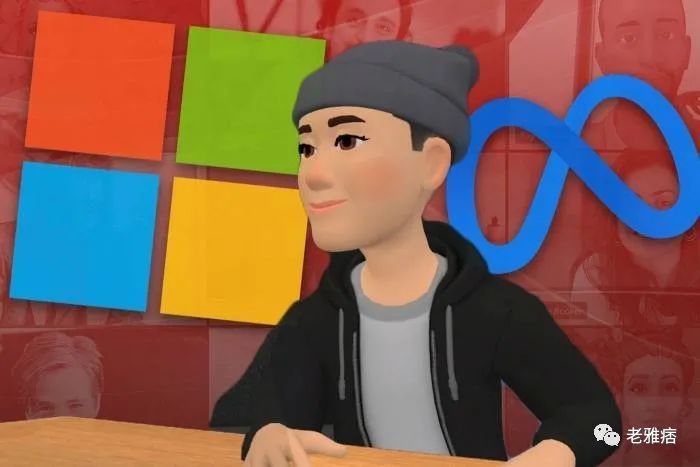
I think the first thing we want is to allow what I call identity federation, which is how we actually allow you, as a user -- whether it's an organization or a person -- to be able to take your identity and Use it in different properties.
How do we actually allow federation of identities? You can see a little, like today's single sign-on.
I can use my identity in multiple products with different authentication
SN:. The thing that we're also talking about is in terms of empowerment. Could even have more to share. If I do a transaction in a store and I buy something, those things are not in your identity, they are in the store.
Microsoft's more incremental approach makes it a place where workers are more likely to experience new Metaverse technologies © FT Montage
For example: the first place [to start], maybe the windows store we're doing, to allow different payment instruments, to allow flexibility even across multiple stores . . . [it's] a way to start allowing multiple identities and multiple way of store relationship.
RW: Going back to hybrid work, while working from home is a crisis for many companies and for many people, there is a clear technological solution in the form of group video conferencing or collaboration software, and everyone is in the same boat. With Hybrid Mode, all of that changes because people want to get back together, work together, [and not] be tethered to a screen while sitting in an office — but people who aren't in the office don't want to miss out on what's going on either. So, is this harder to crack than the problem you faced two years ago?
SN:Undoubtedly, this is a harder problem. rather than because of technical complexity. All the survey data point to this contradiction, that is, 70% of people want to be together, and 70% of people want to have flexibility. This is where the hybrid paradox lies.
[On a] technical level, I think we're good. There are some things we have to do, right? For example, smart cameras powered by artificial intelligence that can segment conference rooms and give everyone a box, etc. They're all solvable problems ... they're all in our labs, so I'd say even by the end of the year, the technical stuff will be done. But some of the team norms, the social aspects, how to set the agenda, how to hold meetings, some of the classic leadership, management soft skills of the job have to be re-established.
How to synchronize 180,000 people to a job demand? We need to essentially reposition. Probably the biggest change is how meetings are conducted - so that everyone has a voice and everyone can contribute. Chat must be lit. Files must be shared. This soft skill is probably one of those things that is as important as technology."RW: How do companies convince their employees that they're not getting the worst of both worlds—whether they're at home or in the office—because they're not getting the experience they want?"I think that's what leadership is all about. Frustration is when I feel like my voice isn't being heard; or that I'm not making progress in my career or work product; or can't collaborate effectively and work effectively as a team. So, I think what you need is someone close to you. Frustration in the workplace wasn't non-existent in the past. It will exist in the future. But, given the changing expectations, what you need are people you engage with who can change how you engage, how you get things done.
For example, at Microsoft, we put a lot of emphasis on management training -- which we've traditionally not been good at or focused on, and last year, I'd say thank God we did that because it's helped us so much during the pandemic.
SN:Coming out of the pandemic, with this we call
model, coach, care
The framework, models, and coaching are perhaps more intuitive, but that last part, which is caring and understanding where your people are and making those people feel very connected, not frustrated, is probably the whole ballgame.
RW: Going back to Activision, one of the things it made people realize is that you're a big company now. You can buy this thing with small change. So do you have a job right now to convince people that you're not just like other tech platforms, we've all become more wary? Or at least regulators are on the alert? Have you put yourself in the line of fire for regulation?
At the end of the day, all analysis here has to be done through a lens of what is the category we're talking about and how is the market structured? Even after this acquisition, we're going to be number three with [market] share in the low teens, even the top player is [in] the teens [market] share. This shows how fragmented content creation platforms are. So, that's the basic category. Yes, we're going to be a big player in this highly fragmented place.
SN:"Even after this acquisition, we'll be number three with a market share in the teens, and even the top player has a market share in the teens. It shows how fragmented content creation platforms are"
Also, the analysis will have to be extended to say. Why are these content companies trying to get bigger? This is because where the real limit is distribution. The only open distribution platform for any game content - guess what? - It's Windows...the biggest store on Windows is Steam [a digital distributor of PC games]. It's not ours. One can do any payment tool, while all other game distribution platforms are closed.