Comprehensive analysis of Decentraland: the pioneer of the metaverse


Article written by Mario Gabriele
Article translation: block unicorn
If you only have a few minutes to spare, here's what investors, operators, and founders should know about Decentraland.
There is only one metaverse.While the catchphrase's meaning often extends to different configurations, there is a clear definition, the Metaverse is simply the Internet, updated to accommodate the spatial experience.
The world of Decentraland is expanding rapidly.Over the past year, Decentraland has seen a 3,300% increase in users, and its token price has risen even more. They owe it, at least in part, to Mark Zuckerberg.
Virtual property can make money.Projects like Decentral Games are proving that it is possible to make money in the "metaverse". The startup operates popular casinos within Decentraland. This attracts serious developers, putting in the work of millions.
Digital cities behave differently than physical cities.While we are used to cities changing slowly, brick by brick, building after building, a virtual metropolis can be played by different rules. "Dynamic land" that changes according to a person's activities is just one example.
We are just getting started.Despite the high valuations that projects like Decentraland have achieved, it feels as though we are in the initial stages of a long-term shift toward more expressive digital experiences. Creating a world with deep, lasting appeal takes time.
In 1905, the railroad connecting Salt Lake City and Los Angeles was completed, passing through a sparsely populated town, and by virtue of its status as a transit station, it acquired 110 acres of land and officially established itself as a city, it was called :las vegas。
Over the next few decades, Las Vegas established itself as a thriving metropolis. It attracted investment — first from the Mafia, then from more benign sources — and established itself as an iconic global travel destination. By 2000, it had a population of just under 500,000, making it the largest city in the United States founded in the 20th century. In 2019, the Las Vegas Valley's GDP peaked at $131 billion.
Some who are still alive may remember the first few decades of Las Vegas as a city — what it felt like to be great. Can you sense opportunity? Can you smell money?
If I had to guess, I'd imagine it's a similar feeling to walking into Decentraland today. Despite its bright colors and nineties graphics, the blockchain-based "Metaverse" bears similarities to America's "Sin City." There are lush casinos, lavish art galleries, seedy bars, ticketed nightclubs and secluded brothels. There are locals, going about their trade and "out-of-towners", stopping by for a concert or conference, or just plain hell.
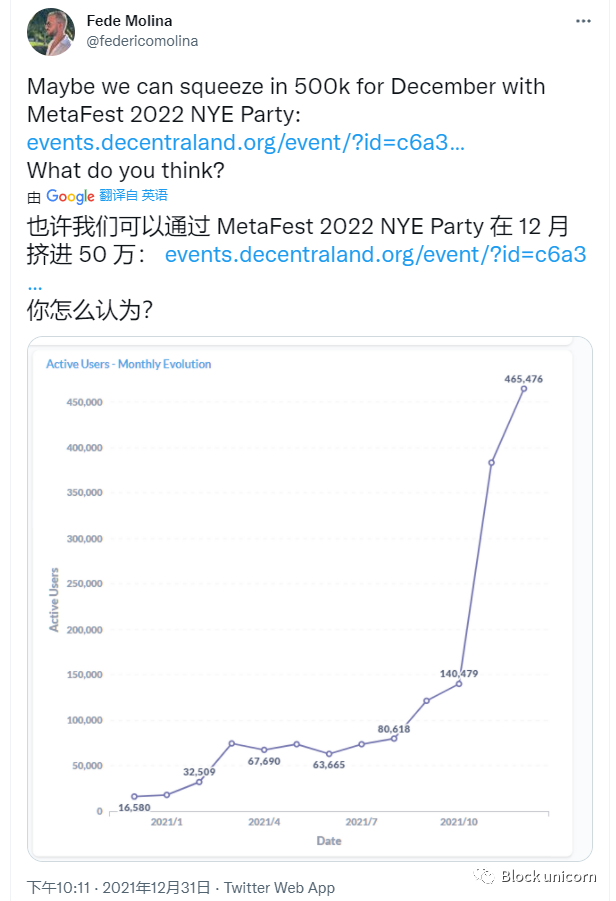
Decentraland's "population" of roughly 800,000 registered profiles already exceeds Vegas itself. According to its current CTO,Its "city" expanded by 3,300% between December 2020 and December 2021.This figure does not include about 70% of "guest" visitors and therefore is not recorded in the system.
Decentraland's token, MANA, mirrored this craze, with its price up more than 4,100% compared to last year. At the time of writing, the project has a fully diluted market cap of $6.5 billion.
How should we make sense of such staggering growth and price increases?It depends on who you ask. Some sources I spoke to noted that Decentraland's performance was stagnant and daily user accounts were low, suggesting that the project's valuation was not so much a reflection of its specific strengths as Mark Zuckerberg's take on Metaverse. s concern. Others argue that Decentraland's market cap undervalues a project that has the potential to be the next big social network, a thriving city of commerce, and a gateway to a new kind of "spatial" internet -- all in a single package.
Metaverse
Metaverse, we will give a concrete definition of an overused and misused buzzword.
The origin of Decentraland.The virtual world was born in a hacker's house in Buenos Aires. It is a hotbed of crypto innovation.
Metaverse effect.Decentraland has been in a massive bull run. In many ways, it has Zuckerberg to thank.
Strange journey.What can you do in Decentraland? A guide through wild and occasionally wonderful lands.
Beneath the city, Decentraland is more than just a virtual game.It's a token, a community, and a governance system that will likely become more important over time.
Tricky valuation.How do you value digital real estate and the projects that power it when some believe that Decentraland properties will be the most valuable in the world?
New virtual worlds are entering the market, innovating conceptually and encroaching on Decentrland's turf, we should expect more iterations.
secondary title
What is the Metaverse?
time
time
Perhaps to balance this ambiguity, some people have proposed interesting alternatives. Entrepreneur and creator Shaan Puri says the Metaverse is an era — a moment when "our digital lives are worth more to us than our physical ones". While pleasingly provocative, no technical changes were required to meet Puri's standards. By this measure, many digital natives may have reason to believe that they already inhabit virtual worlds, with their best friends scattered among Discord servers and primary assets of virtual currencies. For some, digital life has transcended physical existence. When did the "metaverse" begin - when 51% of the world's digital life was more valuable? One hundred percent? Could it really be nothing more than that moment when everyone becomes extremely online?
Shaan Puri's recalibration cuts out (intentionally) something too basic: location. In the science fiction novel Snow Crash, author Neil Stephenson depicts a virtual world consisting of a 66,553-kilometer street surrounded by different points of interest, accessed through a VR-like headset. While words need not retain their original meanings faithfully, much of the meaning of "metaverse" is that it allows users to ingest virtual experiences as if they were physical, spaces and manifestations not accidental. Puri's seductive and ingenious proposal deserves its own name, his is a description like "body flip". (Sounds good, right?)
internet space
The best and most succinct definition I've found comes from Tony, a virtual reality pioneer and creator of the "Virtual Reality Modeling Language" or VRML (VRML is a three-dimensional image markup language designed for the WWW (World Wide Web)). Parisi. Parisi outlines seven "axiomatic" rules, summarized as follows:
1. Only one metaverse.There are no multiple "metaverses". Fortnite and Roblox are not competing metaverses, but "virtual worlds" or "games" that may one day exist within a larger metaverse. Parisi advocates using the "metaverse" like we use the "Internet."
2. The Metaverse is for everyone.According to Parisi's definition, the metaverse is ubiquitous and global. Therefore, he states that it must be widely available and decipherable. It shouldn't be too expensive to use, nor too esoteric.
3. No one controls the metaverse.Although the Corporation will attempt to control the Metaverse, Parisi believes they are doomed because they have nomethod to satisfy all possible use cases. Decentralization will allow creators to better resist attempts at monopoly.
4. The metaverse is open.Tony Parisi argues that it will be built on public standards, just like Internet products. New standards may need to be established to accommodate more 3D-first environments.
5. Metaverse is hardware independent.While much of the virtual world will be in 3D, immersion isn't always necessary. Tony Parisi expects 3D "virtual products" to be accessible from 2D displays.
6. The Metaverse is a network.The Metaverse is not a single program, but a vast network of information that can be easily traversed and participated in. Users can communicate, trade and consume on this plane.
7. The Metaverse is the Internet, a concept that rhymes with Shaan Puri. Tony Parisi believes that, over time, the internet will evolve into a metaverse. Animating properties, however, is not about digital value over physical value (although digital life is sure to become richer), but about new experiences and technologies enabled by the open, collaborative ways of the Internet.
Although Tony Parisi's enumeration is more nuanced, this abbreviation highlights the core elements, and a single sentence at the end of his article serves as a good stand-alone definition:
The Metaverse is the Internet, enhanced and upgraded to consistently deliver 3D content, spatially organized information and experiences, and real-time simultaneous communication.
This feels clear enough to grip and roomy enough to be creative with. The metaverse is the internet, adapted to support a fuller dimensional experience.
Interestingly, Decentraland’s current leader, Agustin Ferreira, started our conversation by noting that he doesn’t think that’s the right word for the project.
"I don't really like the term metaverse. It's not the focus of what we're building." Instead, Ferreira advocates "cyberspace," or the "immersive web."
secondary title
Origin: World Builder
As its name suggests, Buenos Aires' Palermo Hollywood neighborhood is known for its television studios and production operations, and it also stars in some of cryptocurrency's biggest productions.
In 2011, Manuel Araoz was a computer science student at ITBA, a university dubbed "the MIT of Argentina (short for MIT MIT)". As part of his cryptography class, he discovered Satoshi Nakamoto's Bitcoin white paper, and Argentina's past two decades have been marked by economic turmoil and rapid currency debasement, giving tangible weight to Satoshi's words. Arrauz was stunned. As reported in a Decentraland blog post, which has since been removed but still exists elsewhere, he noted:
This paper looks interesting. But when I shared it with my professors, they thought it was nonsense. I think this technology can change the world.
Araoz is trying to break new ground with Proof of Existence (POE), billed as the “first-ever non-financial blockchain application”. The POE acts as a notary, allowing anyone to "prove" the existence of a document by adding an encrypted "digest" to the blockchain, timestamping it. As its website notes, it's "the first online service that allows you to publicly prove that you possess certain information without revealing the data or yourself."
secondary title
House of Voltaire
Made up of BitPay engineers, ITBA (product managers, analysts) friends, and other early crypto fans "House of Voltairequickly became a gathering place for deep thinkers. In researching this article, I spoke to several former residents and visitors, includingEsteban Ordano, one of the founders of Decentraland, he recalled part of what made the place special:
We all work from home, and over lunch we often have deep conversations about technology, science, politics. It was a beautiful experience, a place to express yourself openly and learn together.
Despite the philosophical ideas, the Voltaire "collective" tried to put their ideas into action. Its inhabitants built some of cryptocurrency's most interesting early experiments and enduring infrastructure. That includes:
OpenZeppelin。After the DAO hack, Araoz co-founded smart contract audit firm OpenZeppelin. It has become the standard in the space, trusted by the Ethereum Foundation, Brave, Coinbase, Compound, and more.
Streamium。Although no longer active, Streamium is a competitor to Araoz and Ordano's ambitious attempt to create a web3 Periscope. The streamer got paid in bitcoin micropayments.
Nomic Labs.Nomic is the developer of Hard hat. Hard hat is a developer running on Ethereum. Its team uses the Ethereum network to develop AAVE, Sushi, Uniswap, CELO, Aragon, etc. Franco Zeoli and Patricio Palladino founded it.
Muun。This self-hosted Bitcoin wallet uses the Lightning Network and seems to be appreciated for its ease of use and sleek design. Muun was founded by Dario Sneidermanis.
Big Time Games。While not yet fully launched, Big Time is a blockchain-based multiplayer RPG. Users can buy virtual "spaces," no different than plots of land. It was founded by Ari Meilich, one of the founders of Decentraland.
Even before considering its most successful creations, the influence of Voltaire's Mafia makes sense.
a new continent
In 2015, the House of Voltaire paid for an HTC Vive. VR devices let them see the potential of spatial experiences. Ordano described it as a moment of awakening:
When I first got into an immersive VR experience, it felt like I was learning about blockchain for the first time. I think we've only touched the tip of the iceberg of what's possible.
Ordano, together with Manuel Araoz, Ari Meilich and Yemel Jardi, started discussing the possibility of creating a new type of blockchain environment. Those early conversations had the tone of Voltaire's free-range philosophical lunchtime conversation. In our communication, Ordano described it this way:
[O] Our initial thought was: "How do we build simulations with blockchain-driven transparency?" It was just a thought experiment and mostly impractical, but then "the owner of the 3D space can decide which part of the Metaverse The idea of what exists" starts to make sense.
Like many others of his generation, Ordano grew up playing massively multiplayer online role-playing games (MMORPGs). In particular, he was inspired to start coding after dabbling in Argentum Online, an open-source clone of Ultima Online made for the Argentine market. These experiences will prove formative as he and his colleagues ponder the potential of building virtual worlds. They were also "greatly inspired" by the virtual world Second Life developed by Linden Lab, Ordano noted.
Over the next two years, the quartet developed their ideas, returning time and time again to the idea of building a "fully transparent 'game'/experience, something that's open source and governed by its community," Ordano said. A new type of virtual world; scattered lands.
image description
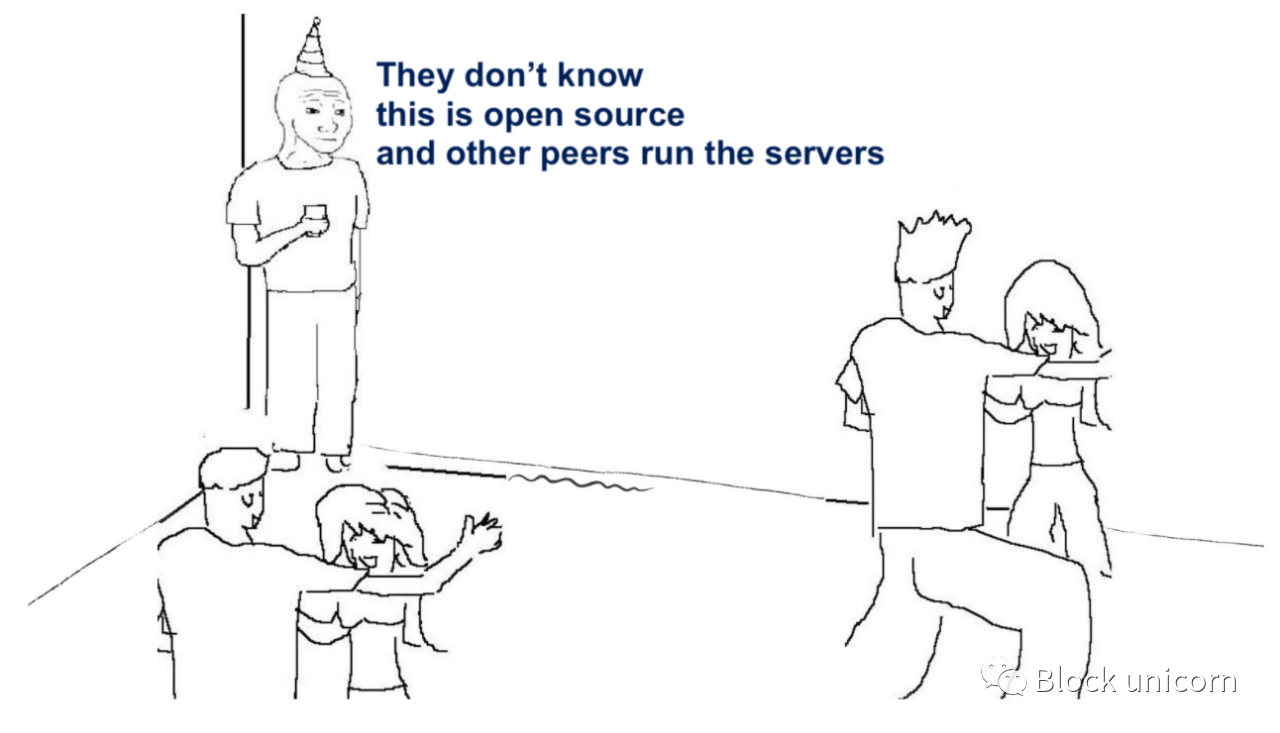
From Esteban Ordano
The team is not intimidated. Starting in 2016, the team started developingThe "Bronze Age" version of "Decentraland"image description
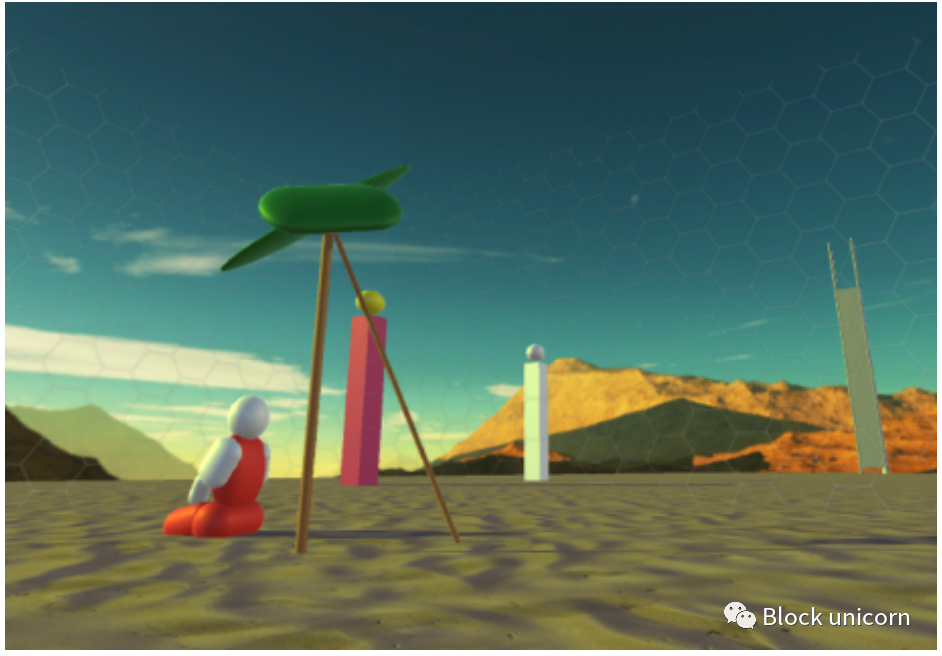
Decentraland
In March 2017, Bronze Age was deployed on the testnet, an alternative blockchain for testing. Time to take it to the rest of the world.
Millions and MANA
After months of testing by the team, they released a white paper outlining their vision. Although the details are vague, the document expresses the intention to build a traversable world governed by the community and featuring an on-chain economy. The terrain of the field is subdivided into land parcels, with details stored on a "blockchain-based ledger". These NFTs — a term that has yet to become popular and is not mentioned in the white paper — can be obtained through Decentraland’s unique token “MANA.” Users can also earn and spend money on world goods and experiences. Anticipated use cases include advertising (think virtual billboards), social interaction, and digital collectibles.
It is worth noting that on August 17, 2017, Decentraland launched an ICO, hoping to raise 86,206 ethers or $26 million. In less than 35 seconds, the entire allocation was sold out. While this gave Decentraland enough firepower to build and bring in 2,000 unique buys, many were left out in the cold and frustrated with the large buy pool snapping up such a large amount of stock. An organization called "ico.info" pooled the funds of more than a thousand participants and ended up with nearly 21% of the distribution.
I interviewed someone who acquired a sizeable estate through crowdfunding — sources estimate they currently own about 0.3% of Decentraland. As they recall, they were intrigued by the involvement of Araoz, an "OG" because of his OpenZeppelin bona fides. While the team's impression resonated, so did the project's vision. "The vision is very broad and ambitious," the source said, "and Manuel's involvement makes me believe they can make it happen."
This sentiment was echoed by Fabric Ventures’ Max Mersch, Decentraland’s first “outside” investor outside of friends and family. After his presentation in 2017, he was impressed by the project's core group:
At the time, the team consisted of Ari, Esteban and Manuel... a group of scammers and crypto OGs from Argentina who mostly worked, coded and lived together at the Voltaire House. They live for it day in and day out — in a time when cryptocurrencies and the Metaverse were nowhere near the hype they are today.
open the door
Those lucky enough to buy land at an ICO don't have much to do with it for the time being, the world is still in an alpha phase while building a usable virtual version. Meanwhile, Decentraland launched a software development kit (SDK) in 2018 that enables developers to create virtual "scenarios" that can be deployed on their land. Around the same time, "LAND Marketplace", the home of platform transactions, went live. As of the end of 2019, it had processed $16.6 million in MANA transactions. Today, the marketplace offers a wider variety of NFTs, including "wearables" and "names" for your avatar.
In January 2020, Decentraland finally opened its world to the public, kicking off with a massive treasure hunt that offered the chance to win CryptoKitties, Axies, and tokens.
Users are starting to flock to the platform, although global performance and dynamism keep total monthly active users (MAU) numbers relatively low. By early 2021, Decentraland had reached roughly 20,000 MAUs, a number that began to climb even faster as crypto mania set in. In the first quarter, MAU more than doubled to more than 50,000. That number will hover between 60,000 and 80,000 throughout spring and summer. Fall MAUs grew further to 140,000.
Then something happened.
metaverse effect
Mark Zuckerberg kicked off his session at Facebook's Connect conference with a review of the history of online expression, and when he moved to this thrust for his keynote, he said:
The next platforms and media will be more immersive — a embodied internet that you experience, not just look at. We call it the Metaverse.
Rumors have been confirmed that the former Facebook company is pulling out all the stops, including a name change. The metaverse was once the realm of science fiction, and Zuckerberg's announcement that the promise and potential profits of virtual worlds suddenly became a reality has raised eyebrows. The world took notice, and within two months of the announcement, a reported 12,000 articles mentioning the term were signed — 30 times more than the previous year — and users and money poured into related products.
image description
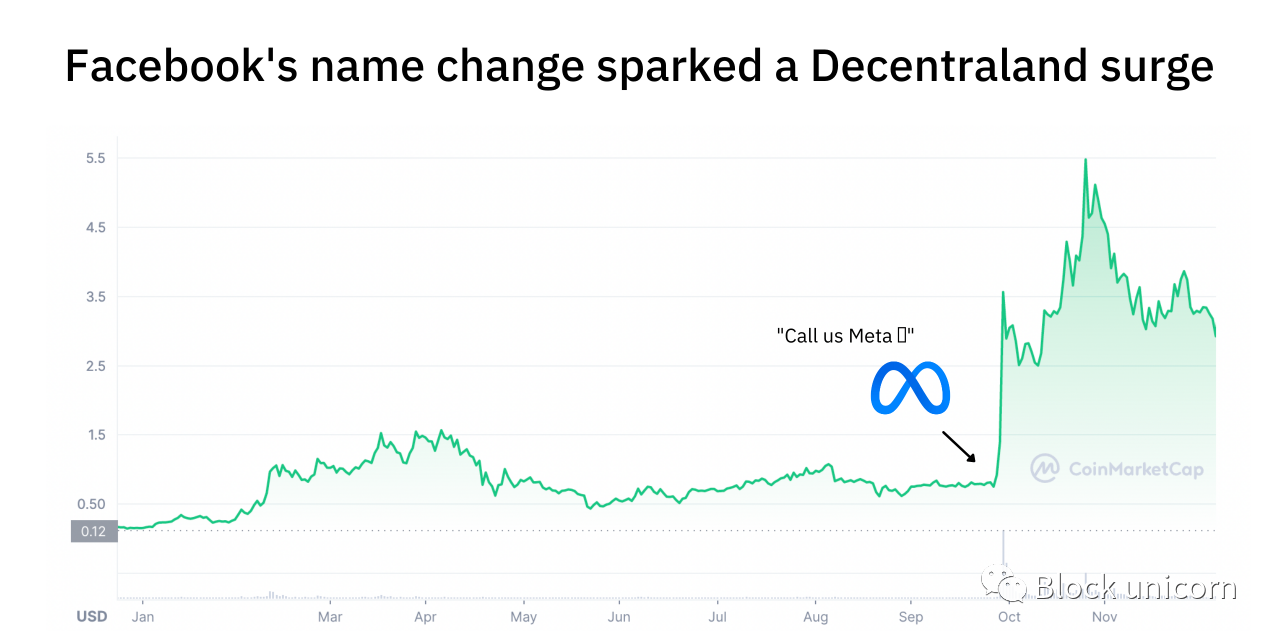
Facebook announced its entry into the metaverse, and the market value of MANA tokens began to soar
Decentraland's fully diluted market capitalization jumped from $1.6 billion to over $7 billion in four days, effectively increasing its size from 1-800-FLOWERS to The New York Times in the equivalent of a long weekend. Since that leap, MANA has fallen back along with many other coins, but is still several times higher than before the Meta announcement.
This sharp rise puts some of Decentraland's struggles into context. As we'll discuss later, the product isn't as stable or mature as one would expect from a project of its size. This criticism is justified from one perspective and unfair from another. Yes, the project is one of the hottest in crypto right now, but the market has pushed it forward for a few years. It may take some time to absorb new requirements. Current head Agustin Ferreira noted that Decentraland is still “a proof of concept in many ways,” while CTO Agustin Mendez explained how tricky the influx was:
I've often thought that "word of the year" might be the Metaverse. All the validation from Meta's new direction and new name has definitely increased awareness for this type of project... the version of Decentraland hosted on play.decentraland.org saw a 33x monthly user growth in December. Maintaining the performance of servers and decentralized nodes at this scale is a challenge.
secondary title
Product: Strange Journey
the answer is:
the answer is:world
world
I want to introduce you to Sutherland, who is my Decentraland avatar with the beard, mohawk, fallout hat, and little yellow shorts.
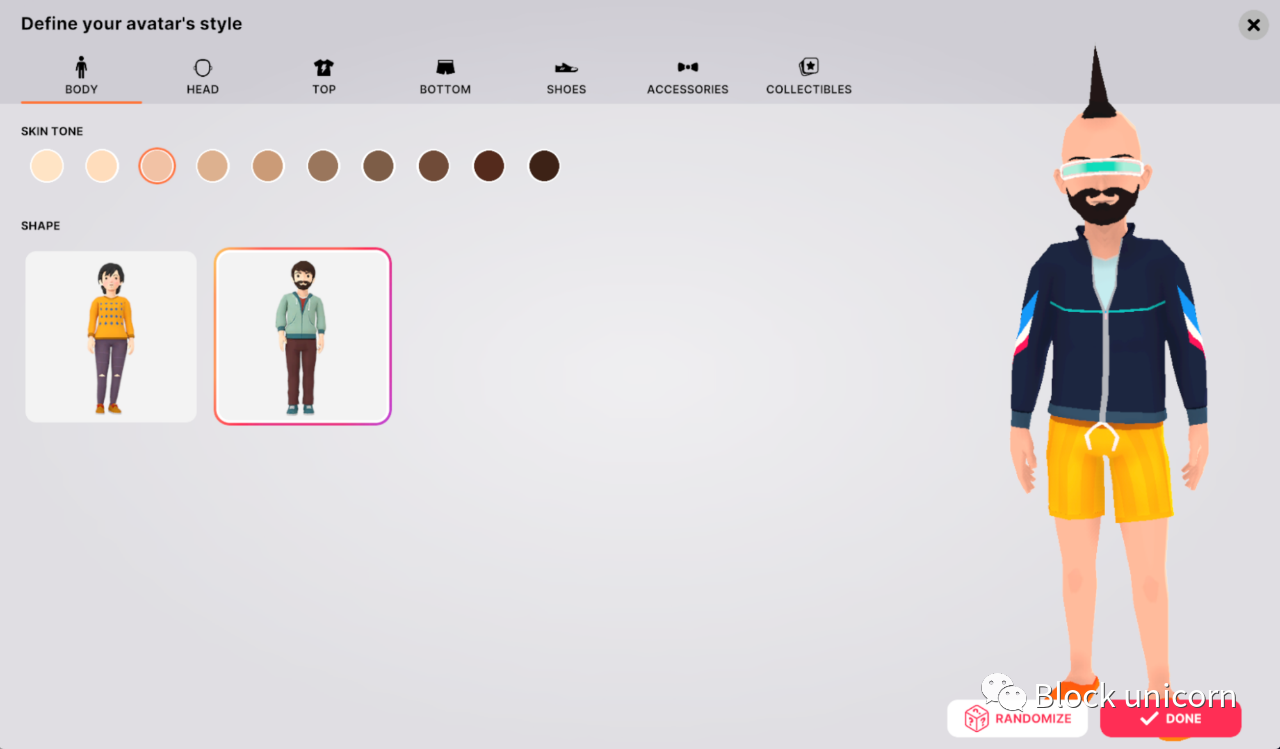
Over the past week, I've used Sutherland to explore as much of the world of Decentraland as possible. We fell from the fountain at Genesis Plaza, fell through the casinos in the city of Vegas, stumbled through the pride parade, mined falling asteroids for gems, went to the stables, and gawked at the whirling spiral houses , at the Sotheby's gallery, and trying to fly a dragon. We walked about ten feet before hitting the wall.
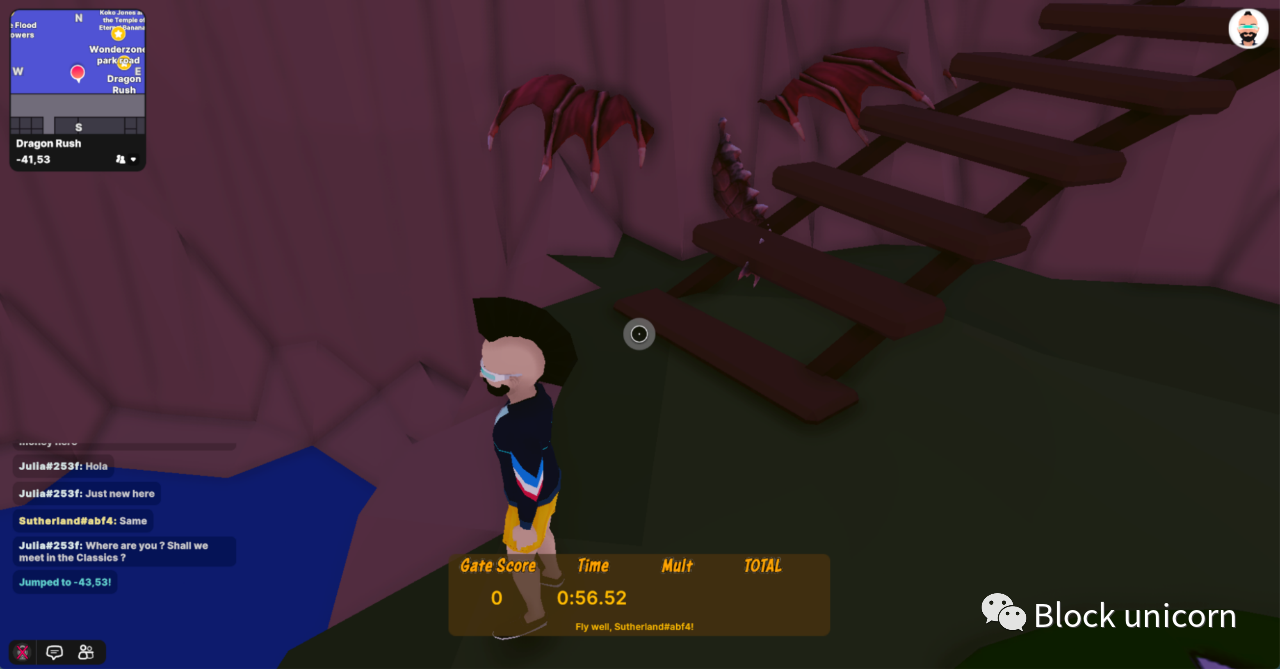
I've also walked through vacant lots and entire neighborhoods and can't see a soul. Around noon on a Tuesday, I was standing alone at Frankie's Tavern, a virtual dive bar, watching a music video. After hearing about Decentraland's red-light district X, I searched fruitlessly for brothels that apparently existed. I hope to interview the most modern members of the world's oldest profession. (How does this work? What do people buy? Is VR involved? Is the money good?). While failing, I did stumble upon "Waifu HQ", a confusing monument to female anime characters featuring a scantily clad break dancer.
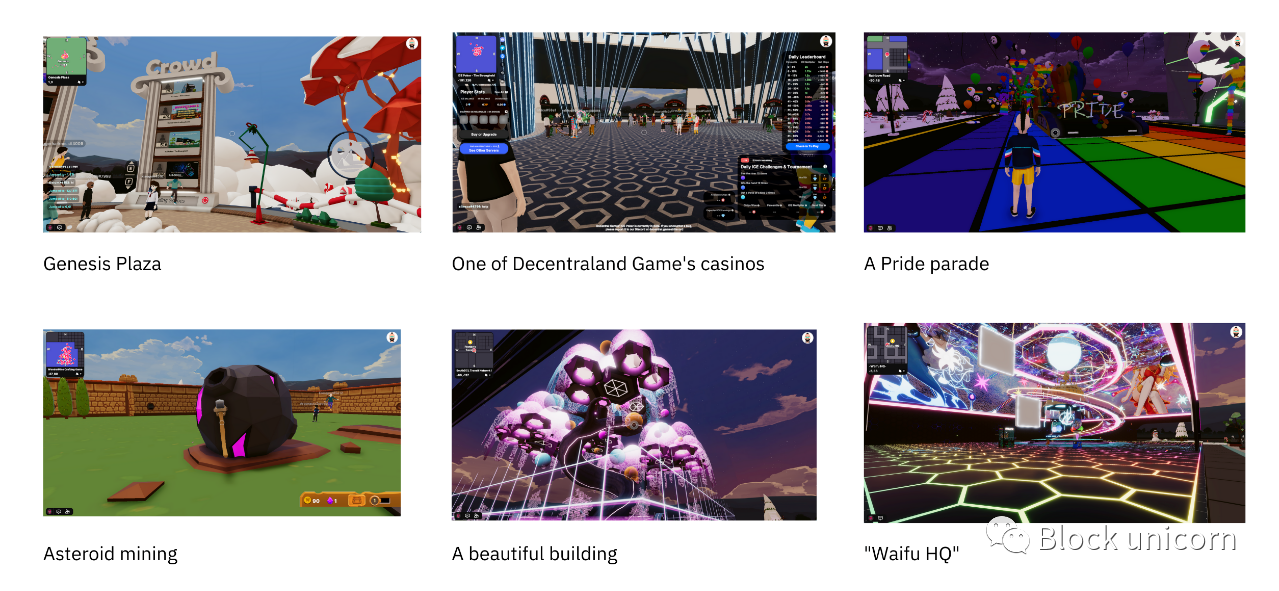
Are these outings enjoyable? Kind of, though spending time in Decentraland itself feels more fun than fun. Despite being out in the world for hours, I didn't find a game or activity that held my attention for more than a few minutes, without an addictive swirl of dopamine pulling me back against my better judgement.
I suspect I would feel differently if I were an enthusiastic or competent gambler. On my various visits, Decentraland's casinos are almost always the most visited places. Decentral Games is running a lot, with the startup reportedly raising $5 million from investors including Digital Currency Group and operating as a DAO. Its locations include the Satoshi Castle, the Aquarium, and the riverboat casino Boring Apes Yacht Club.
The result was that I experienced a Las Vegas-like version of Decentraland, which was fun as an anthropological study, if not a true joy ride.
Spending time on Decentraland can also be frustrating, and anyone without a new M1 Macbook or gaming rig may struggle to start the world. Even those with serious processing power can wait a few minutes to get started, and face stressful graphics and bugs in the process.
Decentraland is solving this problem, and Ferreira told me that the team hopes to launch a desktop client to improve performance and build new experiences. Over time, he expects Decentraland to be able to operate across devices and through different clients.
External parties are also working to improve Decentraland's performance, and I gained access to a beta program that hopes to radically improve streaming across virtual worlds.
Aside from the amount of processing required to use Decentraland, the biggest problem seems to be its relative emptiness. While there's a lot to see, there's still a lot to be developed. Many landowners seem content to let their properties appreciate in value without building on top of them. When I asked Andrew Steinwold, managing partner of metaverse-focused fund Sfermion, what he thought was Decentraland's biggest weakness, he replied:
Lack of content, learning how to actually create structures in Decentraland has a high barrier to entry as you need to know 3D modeling, they have a drag and drop builder but it's very limited.
A few companies are trying to fill this void, and after discovering that most of Decentraland's maps were empty, Ed Radion decided to create Squiggly School. The "metaverse academy" is producing courses to help creators learn how to build in this new space. It's worth noting that Squiggly School focuses on different virtual platforms, favoring The Sandbox. According to Radion, this new world has simpler, more intuitive tools:
We're all for the sandbox. Their no-code game engine and design tools are easy to pick up, which means the ecosystem will have more fun experiences than Decentraland... Decentraland struggles to appeal to non-landowners because their experiences must be built in production-grade tools (Blender , Unity). Most people don't know how to do this and don't have the time to learn how to do it.
Decentraland needs to find a way to involve landowners and make creation easier to realize its full potential.
the platform
While the main way users interact with Decentraland is through its virtual world, it does have a more traditional 2D platform. This includes the event catalog, the aforementioned marketplace, and the build tools Steinwold mentioned.
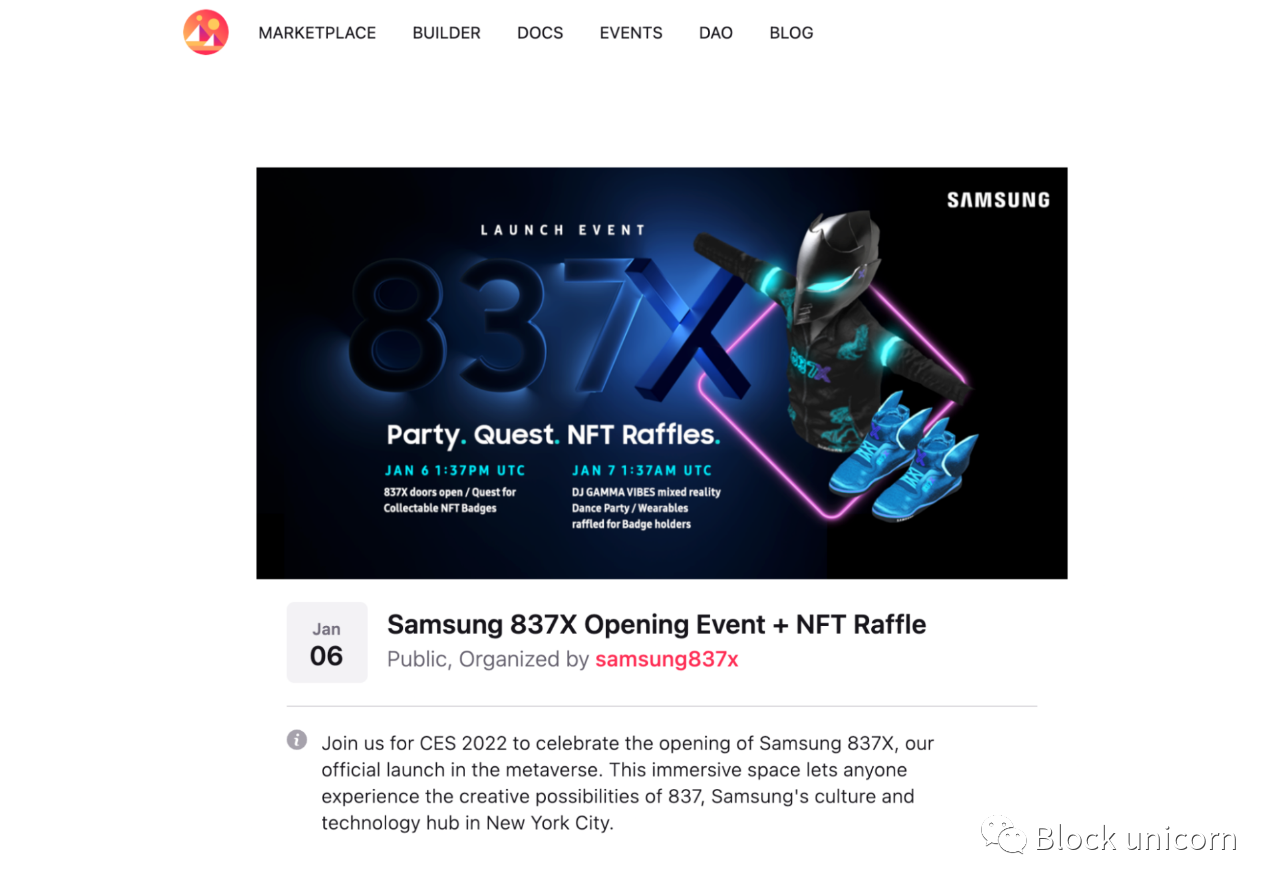
Viewing these events allows me to understand how Decentraland is being used outside of my anecdotal reading. In addition to concerts, giveaways and games, there are comedy acts, charity events and corporate presentations. As part of the Consumer Electronics Show (CES), Samsung unveiled the "837X," their "official launch in the virtual world." As part of the experience, the phone maker hosted a DJ and handed out NFTs.
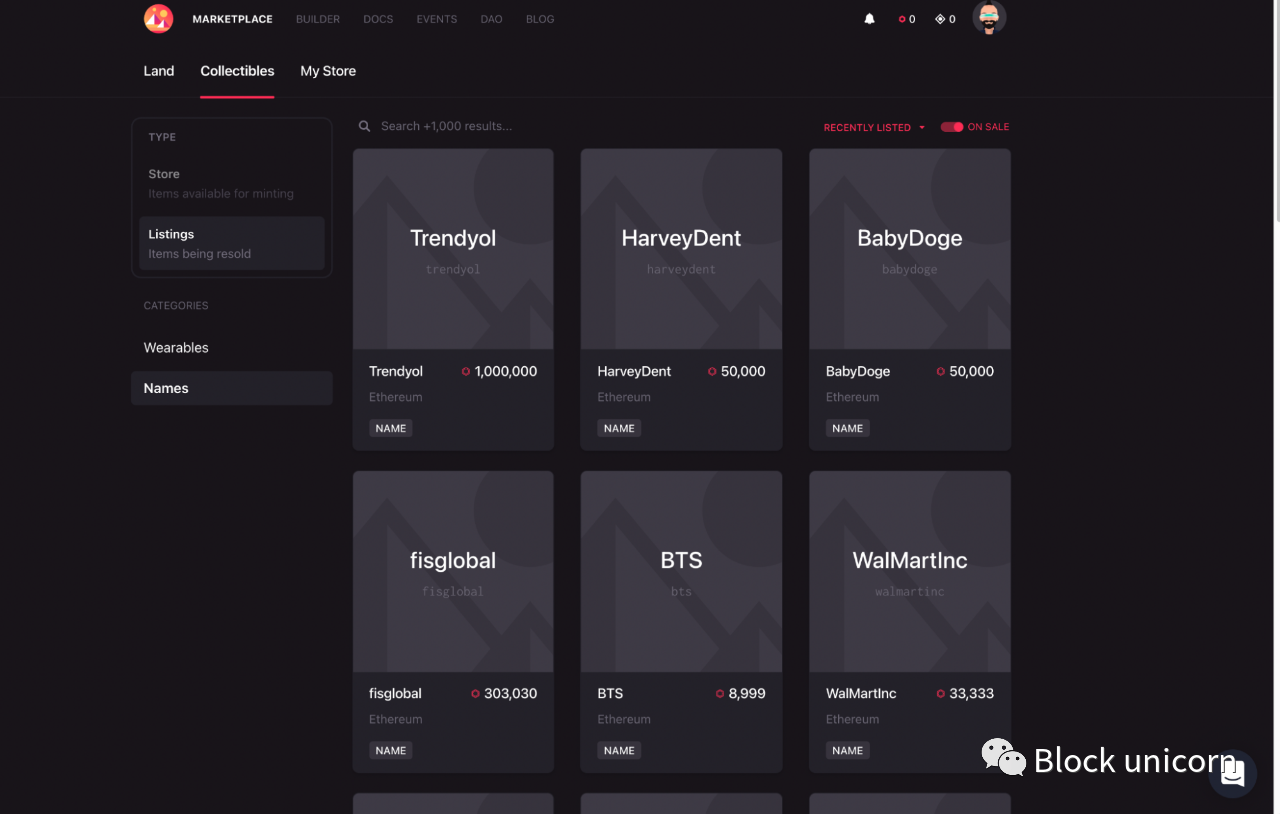
Since launching in 2018, the Decentraland marketplace has expanded to include avatar wearables and names. For some mana, you can buy a new jacket, a dragon head, wings, or any number of other accessories. These are made by other creators, making Decentraland a logical place to build a business.
You can also buy official titles for your avatar; some pretty big brands seem to be selling them.
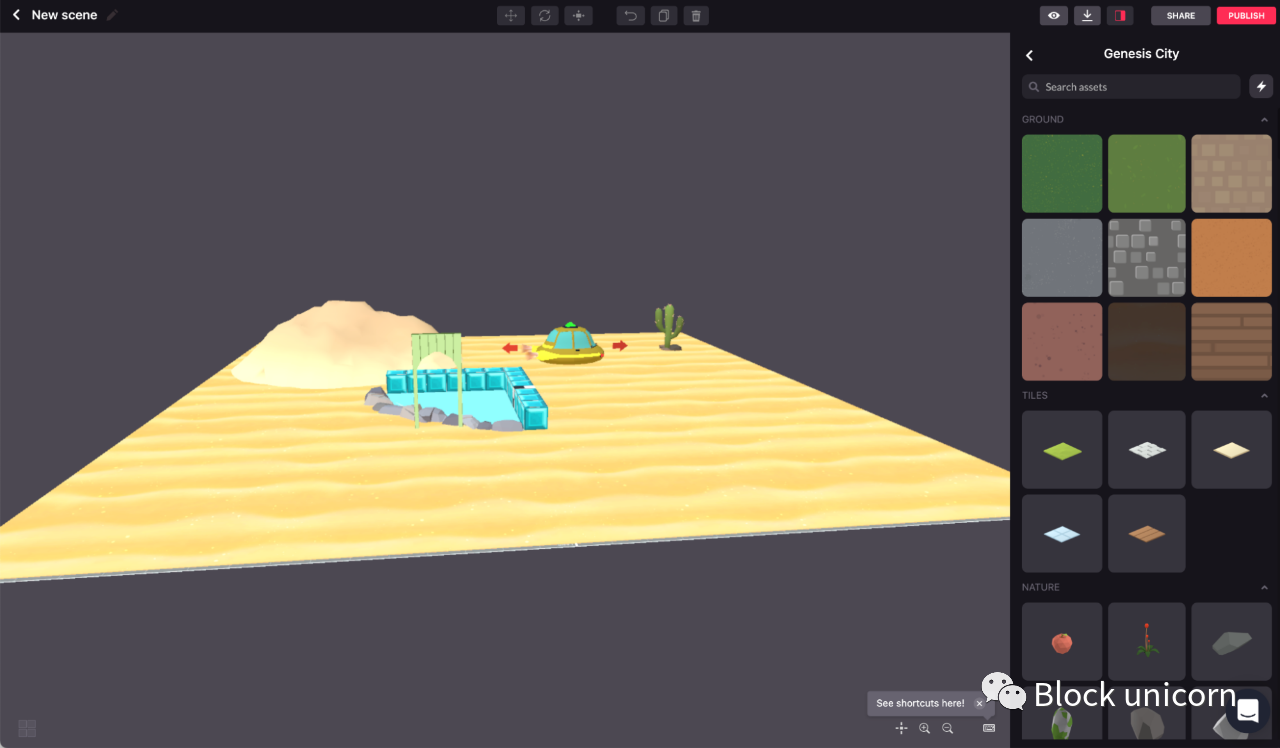
To create a new scene, the user must go to the builder. There, users can upload collectibles, register unique names, or build scenes. I found the builder to be fun and easy to play, although what I created lacked any composition or taste. (Sand, pool, gate, taxi? Cactus!) If I own a piece of land, I can see myself having fun putting together something less scary.
Over time, developing virtual real estate may be viewed as similar to building on real land - you can do it, but unless you're an expert, it's best to hire a professional. Platforms like Renovi enter the market with exactly this thesis. The NFT marketplace aims to be a destination for buying architectural scenes. When asked about opportunities in the space, co-founder Adonis Zachariades said:
Soon, your digital space will take center stage and become the next big thing in the virtual world. What if your virtual space was designed by Zaha Hadid Architects? Or Foster? More importantly, can everyone come and see? What if you could also monetize virtual construction? ...[W]e believe this will be the next Metaverse/NFT frontier.
Over time, the open spaces of Decentraland could become filled with stunning professional creations. Those who want to build their own can access the directly powered drag-and-drop builderSDK (Development Kit)protocol
protocol
image description
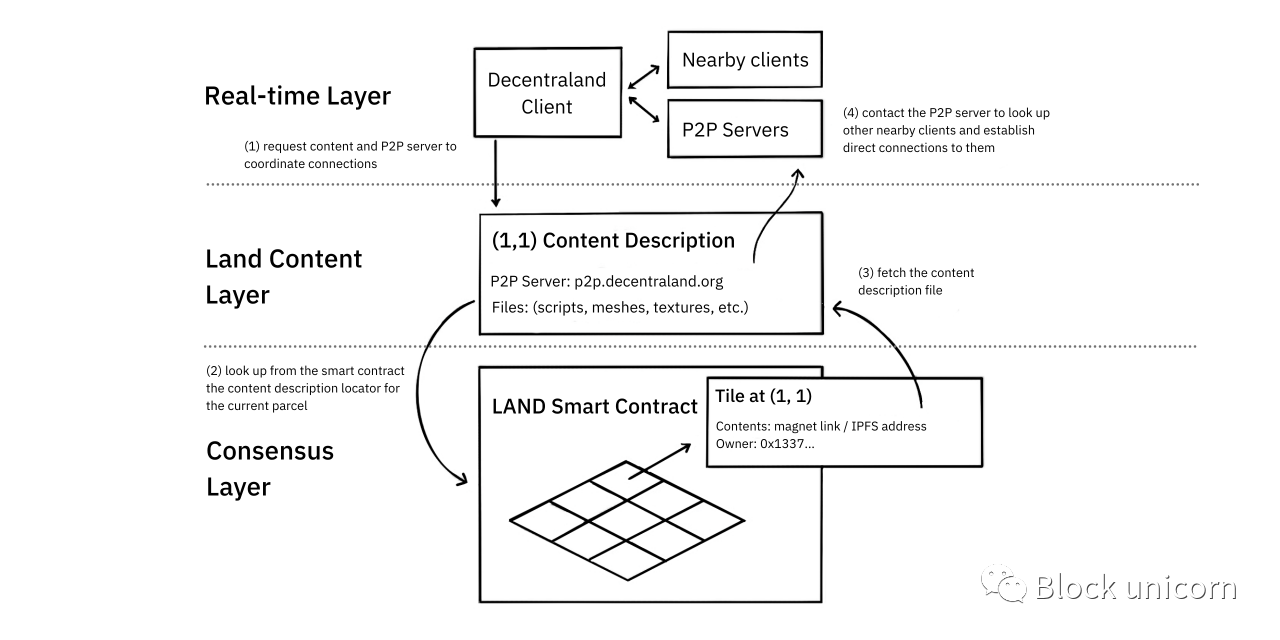
Adapted from the Decentraland whitepaper
As shown in the figure above, the protocol is divided into three layers:
1. Consensus layer.Parcels, or "land" for project preferences, are non-fungible assets with "unique (x, y) coordinates, an owner, and a reference to a content description file." The content files include references to the scenes that the user wants to "serve".
2. Land content layer.Decentralized storage systems distribute content throughout the world, this includes text, audio, visual information, and more complex events such as animations.
3. Real-time layer.Through peer-to-peer connections, the protocol can create social interactions around the world. This includes voice chat, messaging and avatars.
Together these create the complete experience of the virtual world, and Decentraland also manages the flow of payments within its realm.
Token
Token
MANA is the token of the Decentraland realm. In the ICO, the supply of tokens was slightly over 2.8 billion. Over the next five years, it has dwindled to just under 2.2 billion. This reduction has occurred due to Decentraland's economic mechanics. Whenever a user purchases LAND, registers a new name, or purchases a collectible, a certain percentage of MANA will be consumed.
As the supply of MANA decreases, it should theoretically become more valuable. This is especially true if Decentraland can make MANA more useful, increasing how it can be used and earned.
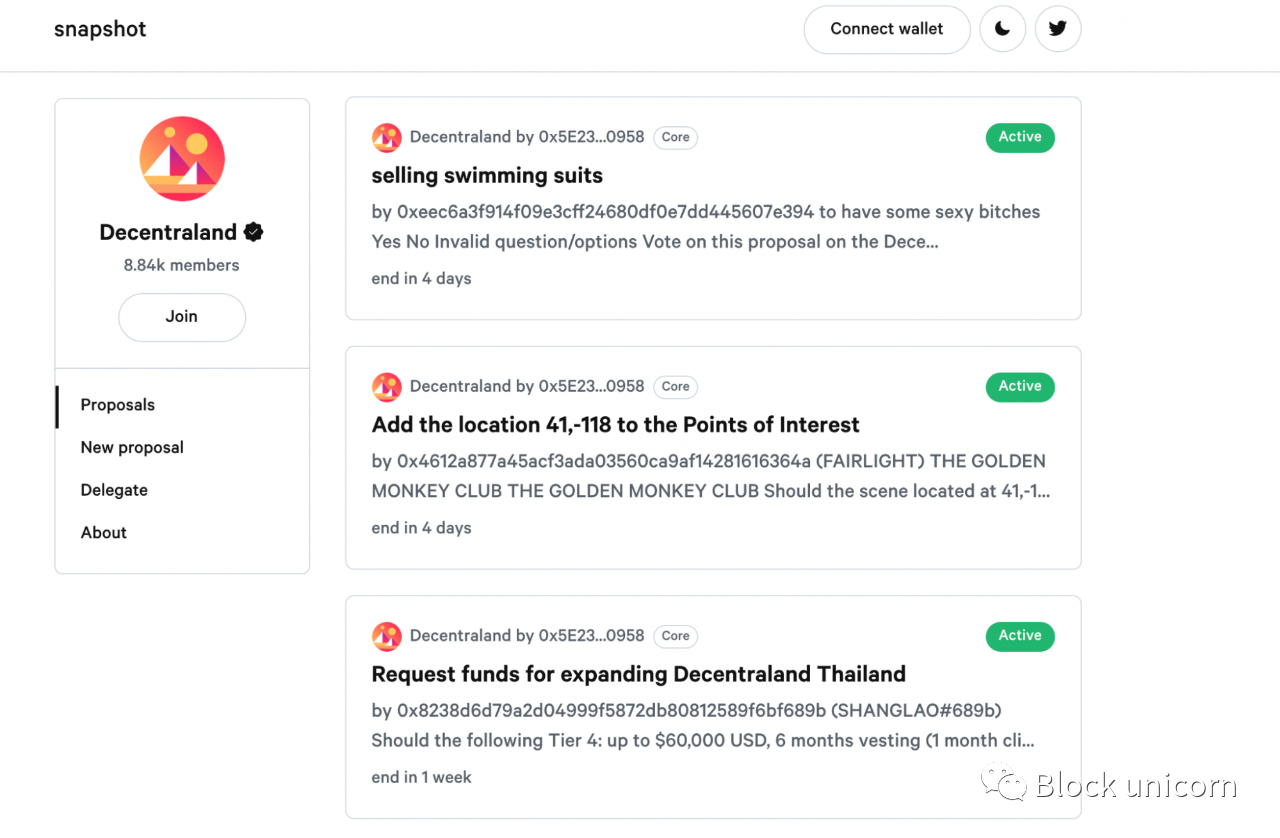
In addition to being used as a means of exchange, MANA is also used as a governance token. Holders of LAND or MANA can weigh the direction of the project through Decentraland's DAO.
DAO
In early 2020, Decentraland accomplished one of its original goals — handing over control of the project to its community. It does this by formalizing the DAO and handing its power over to the underlying smart contracts that control LANDs, wearables, marketplaces, and more. If these were to change, it would be because the community voted for it, not because an individual developer thought it was a good idea.
As part of this transition, the founders of Decentraland took a step back. While Araoz and Jardi co-authored the white paper, neither continued to work on the project full-time. Instead, it is primarily led by Ari Meilich and Esteban Ordano. Both have been in advisory roles since April 2020. Around the same time, Meilich appears to have started working on cryptocurrency MMPORG, Big Time. The pair's exits, both perceived and real, have Metaverse investor Andrew Steinwold on guard:
[W] I get pessimistic whenever a founder leaves a project because you need visionaries to bring something to life until it becomes mainstream...we're still very early in the metaverse, so founders The need is ingrained.
To fill this void, Decentraland turned to Agustin Ferreira. Not only was he part of the House of Voltaire, but he contributed to the project at an early stage. He now leads the foundation along with COO Justin Edwards and CTO Augustin Mendes. Like Ferreira, Mendez has a long history with Decentraland, working on the project full-time between 2018 and 2019.
Ordano's role also seemed far from over, and when I asked him why he had stepped back, he replied:
Startups often take their toll on entrepreneurs. I want to make sure that Decentraland is "a great gift to humanity": just because we can build something doesn't mean we should. After being offline for the most part for a few months, I decided the world needed more examples of open information networks like Decentraland, so I started getting more and more involved in the community to see how/where I could help more.
Decentraland may have made the transition perfectly, bringing in new blood while giving one of its original architects a chance to rejuvenate.
snapshot
snapshot
secondary title
Value: Pricing the Virtual Realm
The red-hot NFT market last year forced investors and commentators to rethink valuations from the ground up. How do you assess the potential appreciation of a petroglyph? What will be the market for digital monkeys in 2025?
Anyone wishing to take this movement seriously (and not everyone will) may have to ditch their DCF (discounted cash flow) models and focus on social signals, imitation value, and community power. That said, trying to evaluate NFTs, whether they be profile pictures or digital plots, can feel absurd or imprecise. In many cases, so do the platforms that support them.
text
Decentraland and Roblox
To recap, at the time of writing, Decentraland has a market cap of $6.5 billion, over 800,000 registered accounts, and recorded 465,000 MAUs (monthly active figures) in December. Over the past 30 days, Decentraland's marketplace has processed $15 million in GMV, collecting roughly $380,000 in fees. This gives it a revenue multiple of 1425x. Notably, the number of individual market counterparties was also low last month, with only 458 unique buyers and 178 sellers.
Let's compare it to Roblox, Decentraland's best public comparison. According to the last quarterly report, web2 virtual world games have a market cap of $49 billion and annualized revenue of $2.4 billion. Quarterly revenue doubled from the same period last year, giving the company a revenue multiple of about 20 times. Roblox's daily active users reached 47 million in the third quarter of 2021.
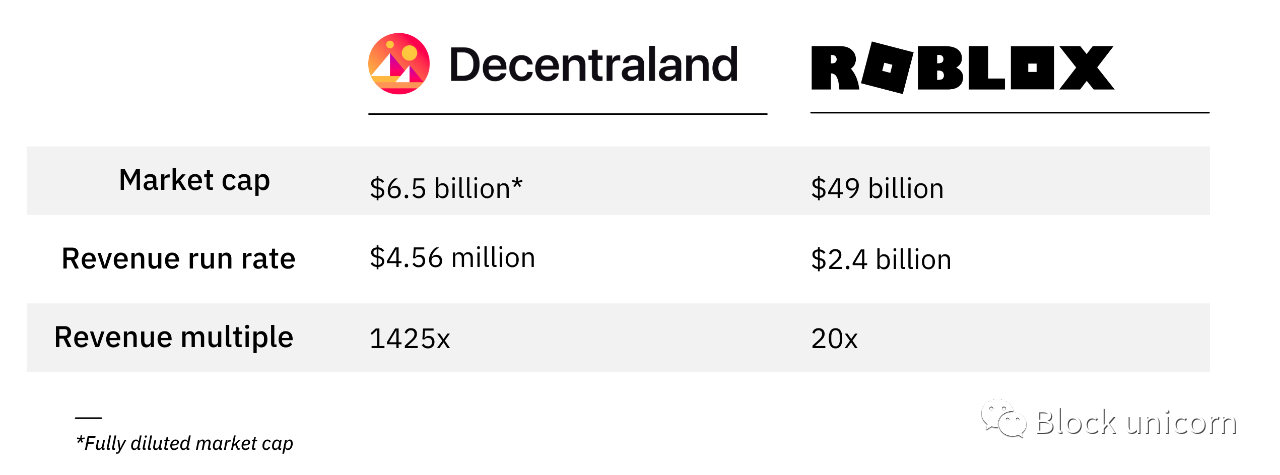
Is this more useful? Too simple means too much. It does not take into account the higher growth of Decentraland, nor the $650 million in the DAO treasury. It's not nothing, though. From a revenue-based valuation perspective, it's clear that investors are taking the web3 world seriously.
More than one source I spoke to either implied or directly stated that they believe Decentraland is overvalued. A large landowner expressed their desire to move some of their assets, while a Metaverse investor and expert said that much of the boom in Decentraland was driven by "baby boomers" who have a clear understanding of "land". Concept attention. Despite his optimism for the space, the source acknowledged that virtual worlds "have a long way to go before they're really interesting."
iowa farmland
Others disagreed, none as firmly as Michael Gord, co-founder of Metaverse Group and GDA Capital. Metaverse Group, a subsidiary of Tokens.com, is a virtual real estate investor and one of the largest developers in Decentraland. The company came to public attention when it completed the most expensive "metaverse land acquisition" in history. Last November, Gord's team closed 116 plots located in the trendy neighborhood of Decentraland for a total of 618,000 MANA. At the time of announcement, this was equivalent to $2.43 million. For Gord, the acquisition was a no-brainer:
Currently, the land value in Decentraland is about 5% of the value of farmland in Iowa. I don't expect the number of people in Iowa farmland to multiply.
For the Metaverse Group team, Decentraland has a chance not only to be the hottest real estate market, but also to be the next social network, again, from Gold:
Decentraland is positioning itself as the #1 social network in the world for social gatherings...Metaverse is going to completely eat the social media market, and now, Facebook and other social media platforms have a market cap of hundreds of billions. I think this is Decentraland Where it should grow over the next few years... the network grows from 500,000 to 600,000 monthly active users to 600 million monthly active users.
How long does this take, exactly? Gord laid out an informal timeline suggesting that we could see Decentraland reach 20 million users this year, 800 million the year after, and possibly global dominance by 2025.
"Assume I'm wrong and assume it's 2030," he added. "But I think the future is ... everyone in the world is using the Metaverse."
image description
UXTD
text
Metaverse Mall
These plans illustrate where the value of digital land comes from. In an exchange with Kevin Clark, an adjunct professor of real estate economics and market analysis at NYU, he noted that income potential can be assessed by "the rents generated by commercial operations (such as retail) or by leasing a retailer." You can imagine a In the future, it will be commonplace to rent a piece of LAND for digital conferences, NFT pop-up stores, consulting business or any other kind of event. Of course, to drive this kind of commerce, location matters. As in the real world, properties near other exciting locations benefit from increased foot traffic and "market interaction," as Clark puts it. He added that digital properties "are here to stay without a doubt".
Someday, we may also use LAND for other purposes than buying digital goods. Aaryaman Vir, founder of NFT project Ludo Labs, introduced me to the Boson protocol. A decentralized network powers physical purchases in a "virtual world". The project purchased $704,000 worth of real estate in Decentraland and developed it into a sort of virtual shopping mall.
Over time, we might shop through the spatial network, using replicas of our bodies to "try on" hoodies or sneakers to imagine the fit. Such purchases will be a true hybrid, offering physical products and conveying virtual benefits — avatar gear or access to private areas.
secondary title
The Future: A Frontier Builder
Metaverse
Metaverse
Should Decentraland be worried about the progress of Zuckerberg's army? Although my sources tend to be more web3-friendly, no one seems overly concerned about Meta's involvement. While the company claims to want an "open" Metaverse, some have expressed doubts that it will follow through on such rhetoric. Is Meta benevolent enough for true interoperability? Esteban Ordano outlines the motivations that might make this difficult:
I'm not sure the incentives make it a very open platform. Even... your display name is very relevant. For example, I don't see Facebook allowing your avatar to be displayed with your Decentraland name, because you want to ensure consistency between different experiences and prevent impersonation... interoperability sounds good, but I believe it's a bigger problem than many Humans are aware of the harder problems. Inside Facebook, some people face a no-brainer decision: Should I risk my career in a 9-month initiative involving hundreds of designers and engineers to make the product's user experience more complex so that Can we support a competitor's identity system? (spoiler alert: no)
Andrew Steinwold couldn't believe it even more:
Facebook lied about the damage its platform did to mental health and built the platform to encourage anger because it increased engagement. They claim their "metaverse" will be open and people will be able to earn and own their assets, but I don't believe them. They have lied countless times in their quest for power, why are they suddenly friendly and "kind"?
Meta (metaverse) may still be successful and show some friendliness to open source projects. CTO Agustin Mendez highlighted its "tremendous" contribution, pointing to their native support for glTF files - an open standard for displaying 3D models. He also called Meta's Oculus product "the key to the Metaverse."
Ultimately, there's plenty of room for multiple winners. The instantiation of Meta is unlikely to satisfy all needs. Many other interesting projects are bringing new ideas.
rebels
Although Decentraland is the biggest name in the web3 world, The Sandbox is not far behind. The Sandbox, a subsidiary of blockchain gaming business Animoca Brands, appears to be in a slightly different spirit. One source called it more of a “game” than Decentraland, which they believe is more akin to an amusement park. Since The Sandbox's "Alpha Season 1" is over, there's no way to play it for now, which may indicate that the product is early in its lifecycle.
These limitations don't seem to stop Sandbox. It also cashed in on Zuckerberg's announcement after it emerged in 2020. Its token, SAND, has surged from around $0.80 to over $8 in less than a month. Its fully diluted market cap is over $14 billion (its float market cap is $4.3 billion). In the past month, it has surpassed Decentraland’s secondary transaction volume on OpenSea.
Cryptovoxels is another player with a loyal base. Piers Kicks, founding partner at Delphi Digital and head of crypto at Bitkraft Ventures, commented on how impressive the project has been for the slender development team. Several other people mentioned the product. Sfermion's Andrew Steinwold praised its "fairer" land prices and content building features. When I asked Mendez, CTO of Decentraland, which other worlds he found attractive, he replied:
I admire the CryptoVoxels project, they put a lot of effort into this, and they were the first to come out with something that actually worked. I think they kept the essence of cypherpunk in their projects, and from my point of view, they do what they think is best and not be colored by anything else.
Somnium has also gained a core following. "It's the only crypto project that's even close to VR," Kicks said. While accessible on the web, Somnium appears to be alive and well under Oculus. Kicks points to the seamlessness of the world and the enthusiasm of the community.
More scores are on the way, some clearly positioned as gaming while others pursue multipurpose. The first category includes Ash Sword by Bright Star Studios, Meilich's Great Age, Distant, and Romance of Defi. The second includes NFT Oasis, NFT Worlds, Nifty Island, and those that stick to our real-world maps, like SuperWorld and Upland. Each new project can bring new ideas to the task of building the Metaverse.
open design space
During our discussion, Piers Kicks highlighted how many gaps remained. How much design space can be explored. Does the land have to behave the way we expect it to in the real world, or can it take on new dimensions? What are the ways to fund its development?
As it currently stands, the base price for purchasing a piece of LAND on Decentraland is over $10,000. While a sign of high demand, it has cost many who would like to throw themselves into the world. Still, it’s unlikely that Decentraland will want to expand its supply in order to maintain scarcity. At the same time, many existing landowners have failed to use their holdings to create value as newcomers are priced out.
How can virtual worlds solve this conundrum? One approach might be to lower the barriers to entry while still allowing whales and OGs to express their identities.
For example, Kicks proposes the potential for "dynamic land" that moves around a fixed point. A valuable location near the center of the map may only be available to those who develop and stake it. You can imagine such a decision, including factors such as invested capital, number of visitors, and holding time. Through this construction, projects can expand their boundaries and increase supply while rewarding those with deep pockets. At the same time, they will reduce the number of "dead zones" that keep parts of worlds like Decentraland barren.
Another example cited by Kicks is allowing users to increase the size of their property on the world map. While their property size won't increase, their terrain will have a higher status and attract more attention, a mechanic that Nifty Island is apparently experimenting with.
There are more ways to experiment with these dimensions, what if some attributes are black and white and others are colored? What if some are low poly and some are high res? What if your community changes based on an asset's price, wallet activity, social graph, time zone, or any other number of factors? Tomorrow's cities don't have to behave like today's cities. More than ever, maps are not territories.
Financial innovation is also needed, and while decentralized finance (DeFi) can achieve double-digit interest rates through staking and stablecoins, this doesn’t seem to be making its way into the virtual world. In our research on Terra, we noticed how the new project allows users to pay for the product on interest earned through Terra’s Anchor protocol. There are no fees to pay other than interest.
What if you could do something similar with Decentraland? Rather than buying LAND directly, investors can stake their Terra through Anchor and buy it slowly over time. Likewise, existing holders can choose to increase their stake in their existing property to fund development, expansion, or push capital back into the project itself.
Over the next few years, we should see a wave of new models emerge.Decentraland is not yet a prosperous city. While it may have ample capital and a fast-growing user base, for now it's a metropolis in motion, one still maturing. There is art and commerce, there is an economy and a system of governance, but it still doesn't have that ineffable quality of life that animates the real world and the cities that draw us into it.
House of Voltaire, the writer who named the birthplace of Decentraland after him, suggests that we should "judge a man by his questions, not by his answers." This feels like evaluating what Ordano and his team have built In the right and fair way, Decentraland is not perfect.
But over the past seven years, few have asked more interesting questions. One day, maybe soon, they'll find out.