Terra: The Rise of the Stablecoin Legion


Research Institution: Mint Ventures
Researcher: Xu Xiaopeng
first quarter
Research Report Highlights
——
1. Core investment logic
Research Institution: Mint Ventures
Researcher: Xu Xiaopeng
first level title
first quarter
first level title
1. Core investment logic
2. Major risks
● Regulatory and encrypted population environment: South Korea, where Terra is located, has a super-high cryptocurrency investment population and a relatively pragmatic regulatory environment, which allows Terra's exploration to go out of the sandbox and fully practice the democratization of encrypted products.
second quarter
Basic information of the project
——
1. Project business scope
2. Major risks
The main risks of the project include a high degree of centralization, uncertainty of regulatory policies, bottlenecks in product growth, insufficient transparency of project information, and the possibility of a debt crisis in the face of extreme market conditions, which deserves investors' attention.
first level title
second quarter
first level title
Basic information of the project
1. Project business scope
Terra Protocol is an algorithm-based stablecoin protocol dedicated to providing a stable currency system with stable prices and wide adoption.
"Terra" refers to the stable currency in the system. Unlike currency protocols such as Maker and Liquity, which mainly focus on minting stable coins linked to the US dollar, Terra aims to provide a richer currency portfolio from the very beginning. Meet the needs of stablecoins in different regions and scenarios. The Terra protocol currently offers multiple stablecoins that are pegged to the U.S. dollar, South Korean won, Mongolian tugrik, Thai baht, and the International Monetary Fund’s Special Drawing Rights (SDR).
In addition to the richness of currency types, the biggest difference between Terra and Maker is that it is not limited to a minting or lending agreement, but tries to build and introduce a larger financial service system around its underlying currency system. Therefore, the Terra protocol is essentially It is rapidly evolving towards a DeFi-focused public chain ecology.
It is worth mentioning that the founding team and market headquarters of the Terra project are all in South Korea-the most fanatical country in the world for encrypted assets, perhaps none of them.
2. Project history and roadmap
The Terra project was established in January 2018. In its white paper, its description of the project vision is: to create a decentralized stable currency system that spans the fiat and encrypted worlds, and to promote the mass adoption of cryptocurrencies in the true sense .
The important time nodes of the project include:
● January 2018: Project approval
● August 2018: The Terra project received leading investment from Binance, Huobi, Okex, Dunamu (the parent company of Upbit, one of the largest exchanges in South Korea), Polychain Capital, FBG Capital, Hashed, 1kx, Kenetic Capital, Arrington XRP Participating in the investment of 32 million US dollars.
● In April 2020, Solona introduced the Terra stablecoin into the Solona ecosystem, and the cooperation of resources between the two parties has been continuously strengthened.
● In December 2020, Terra launched the Mirror Protocol, a synthetic asset protocol.
3. Business situation
● In January 2021, Terraform Labs, the team behind Terra, received $25 million in financing, with participation from Galaxy Digital, Pantera Capital, Delphi Digital, and Coinbase Ventures. The funds will be used for Mirror, Anchor (discussed below) and other key infrastructure investment.
● In March 2021, Anchor, a DeFi savings agreement initiated by Terra, completed a financing of 20 million US dollars. Arrington XRP Capital, Hashed, Galaxy Digital, Pantera Capital, AngelList founder Naval RavikantDelphi Digital, Dragonfly Capital, Alameda Research and other institutions participated in the investment. In the same month, the Anchor V1 version was launched.
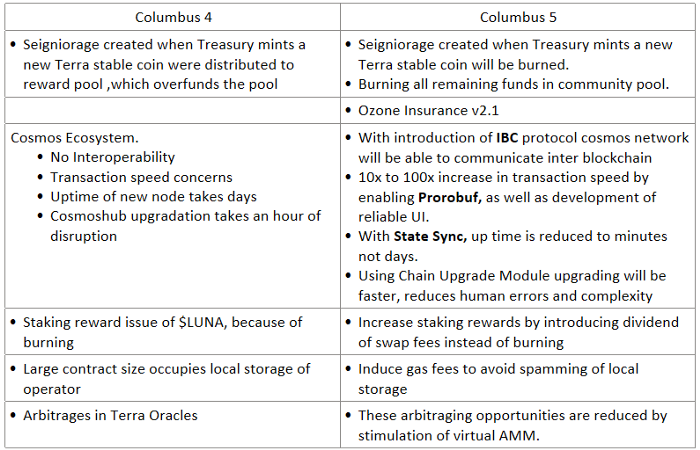
At present, the team is focusing on the development of the latest version of Columbus-5 of the Terra main network. Columbus-5 is a very important main network upgrade, including treasury fund allocation and destruction mechanism updates.
market value
image description
3. Business situation
Trading volume
As mentioned in [Project Business Scope], Terra can be regarded as a public chain platform built around the stablecoin protocol. When we observe its business performance, we should focus on two perspectives: 1. The development of the stablecoin business; 2. The activity of the public chain and the ecology on the chain.
A. Terra's stablecoin business
Although Terra has already provided the minting and exchange of various stablecoins, considering that Terra's main business is still concentrated on Terra's US dollar stablecoin UST, the following business data will be based on UST.
market value
The other two stablecoins on Terra are the World Monetary Fund’s Special Drawing Rights (SDR) stablecoin SDT, and the Korean Won-pegged stablecoin KRT, of which SDT’s existing coinage is as high as 712 million (equivalent to 1.01 billion U.S. dollars) , while the minting volume of KRT is 43.8 billion won (equivalent to 38 million U.S. dollars).
Trading volume
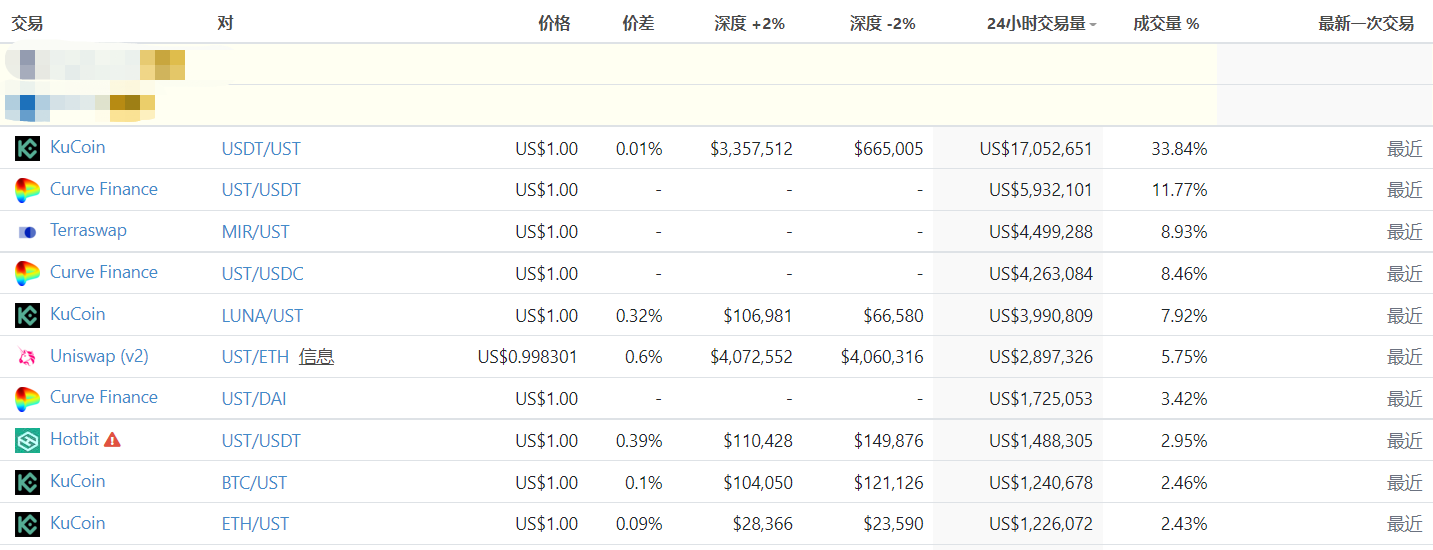
In terms of distribution, the platform with the largest UST trading volume is Kucoin, which has relatively active overseas users. Based on the data on August 2, Kucoin’s 24-hour UST trading volume reached 33.8% of the entire network. Next is Curve, a stablecoin/encapsulated asset exchange platform, and then Terraswap, the official platform of the Terra ecosystem. In terms of transaction types, the largest transaction object of UST is stable currency swap. For example, the transaction pair with the largest transaction volume is the exchange of Kucoin, Curve and USDT in UST, followed by the transaction with Terra’s synthetic asset trading token MIR. Ranked third; the transaction volume between UST and Terra’s governance token Luna is also relatively large, and it also mainly occurs on Kucoin.
Overall, the current main scenario for UST transactions is the stablecoin swap, among which Kucoin is the most popular CEX platform for Terra users.
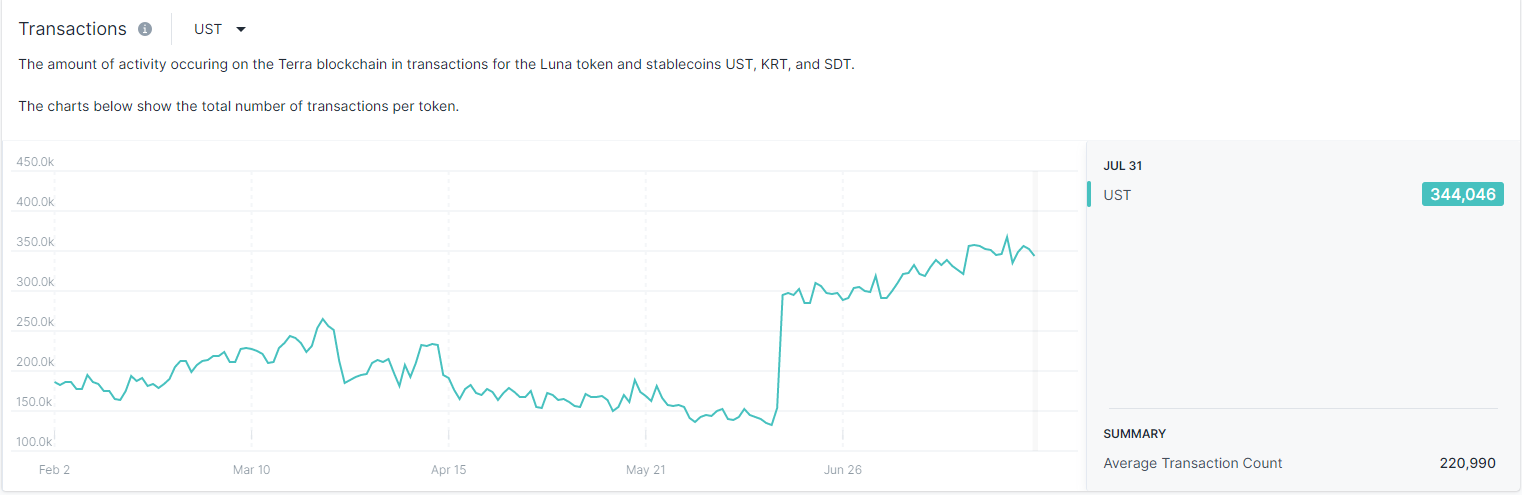
In the past 180 days, the average daily number of transactions on the UST chain was about 220,000. It has recently doubled from the lowest point in mid-June. mainnet data).
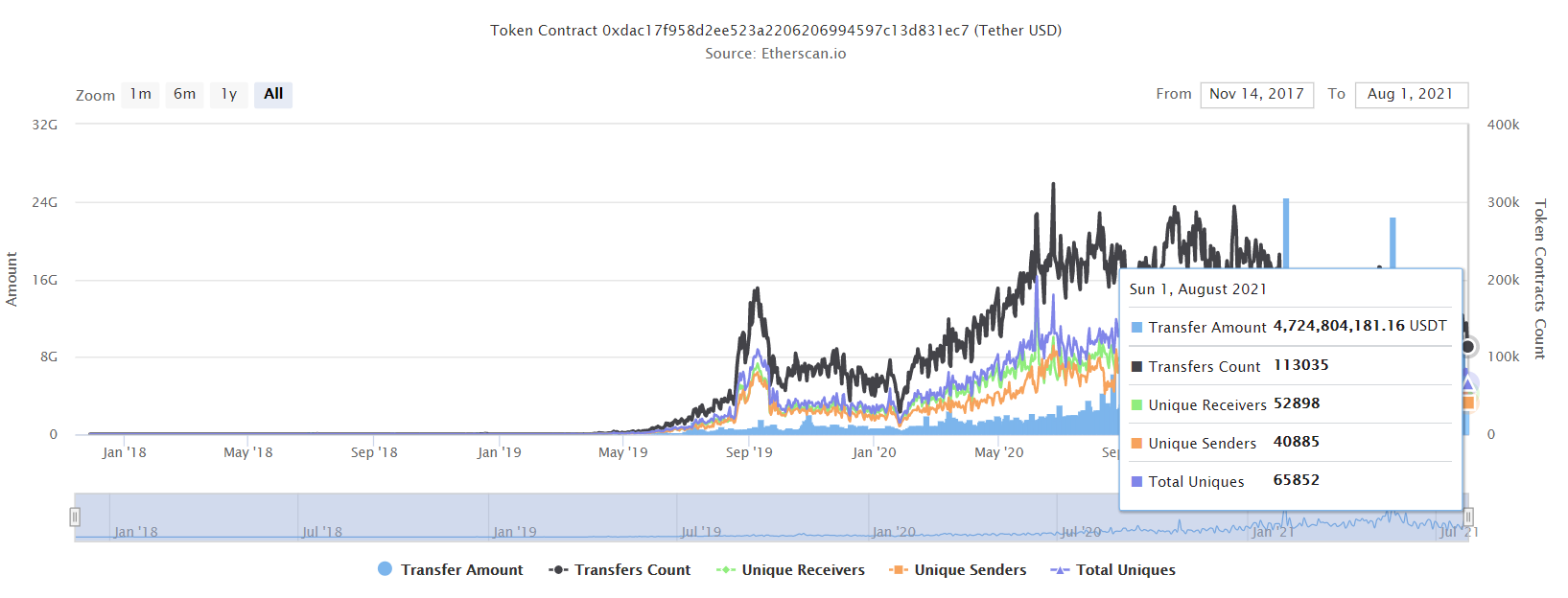
image description
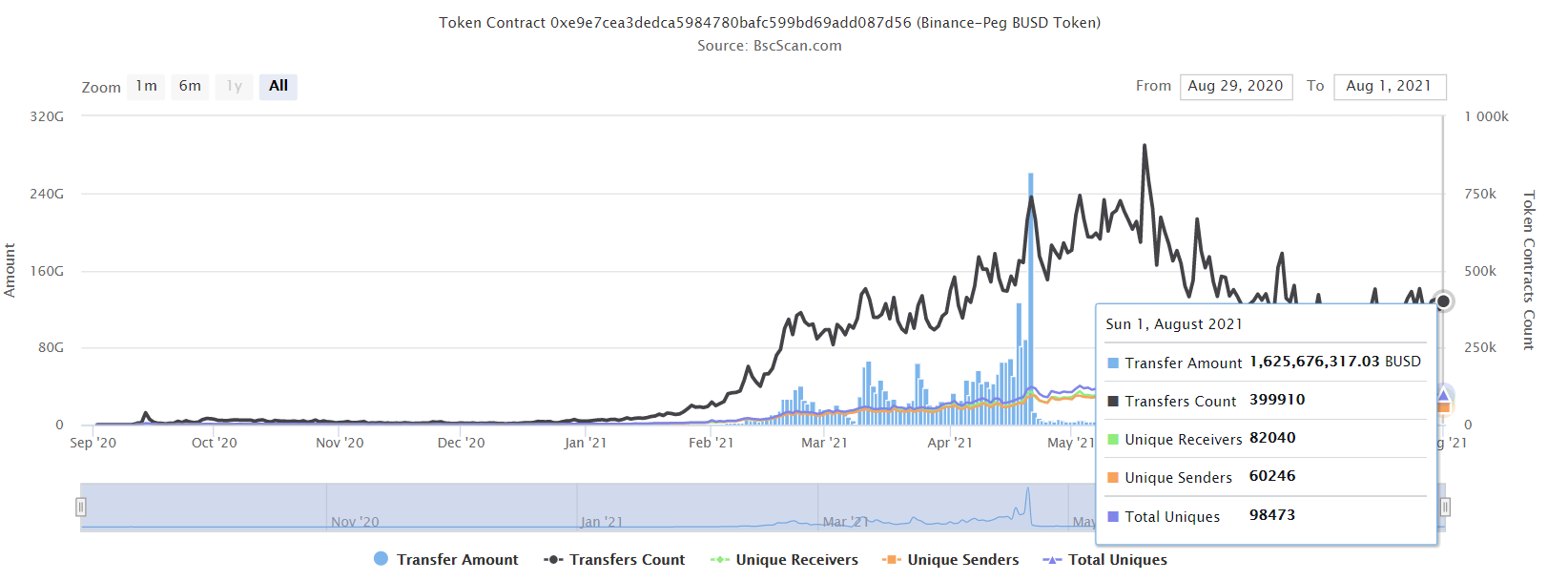
The data of UST should be said to be quite good, almost approaching the transfer activity of BUSD on BSC. Recently, the number of transfers of BUSD on BSC is about 400,000 per day.
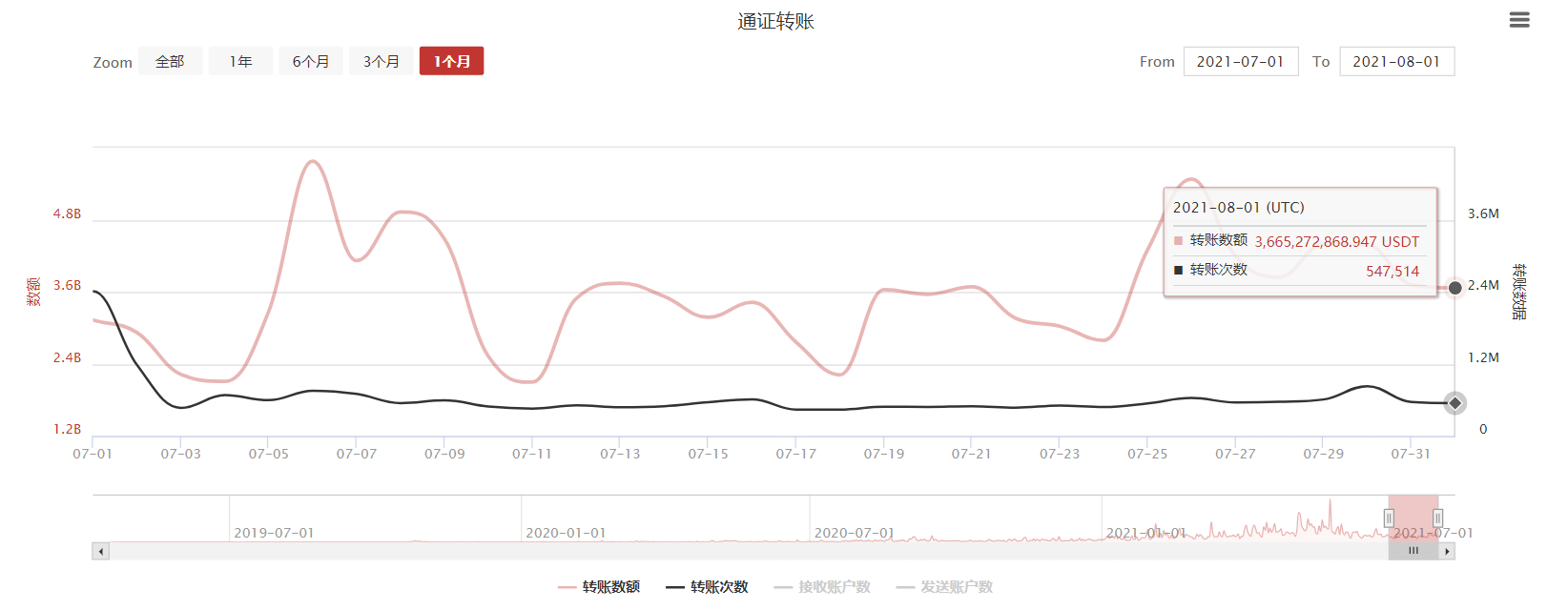
image description
Data source: https://bscscan.com/
image description
Data source: https://etherscan.io/
image description
Data source: https://tronscan.org/
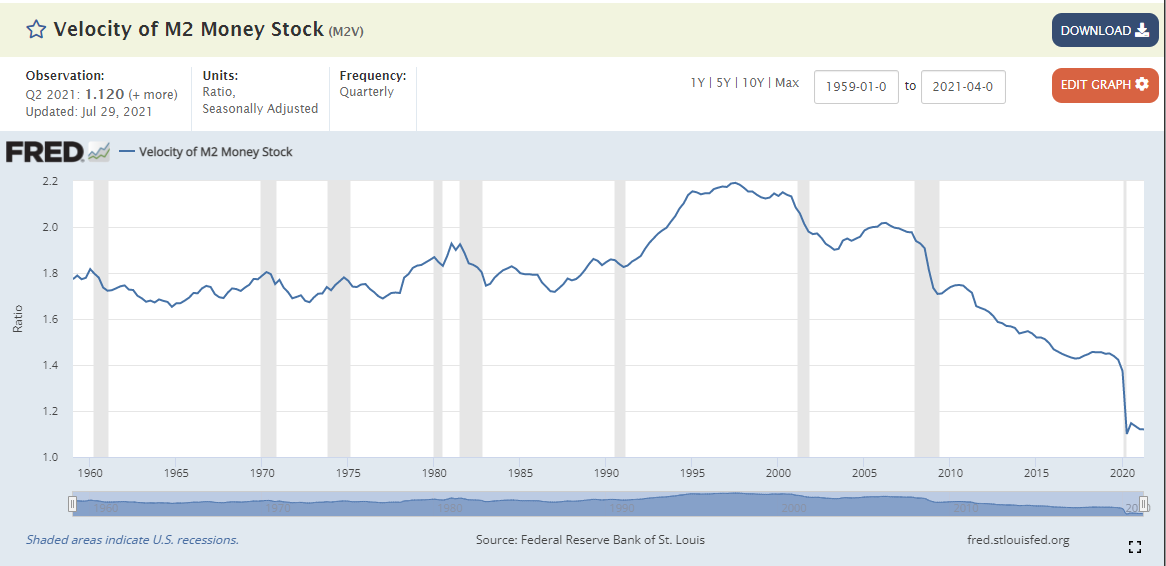
Velocity is a macro data derived from Velocity of M2 Money Stock, which refers to the frequency at which each unit of money changes hands in the real economy. Specifically, it refers to the number of times each dollar changes hands through consumption activities other than investment in a certain unit of time. The higher the number, the more active the economic activity.
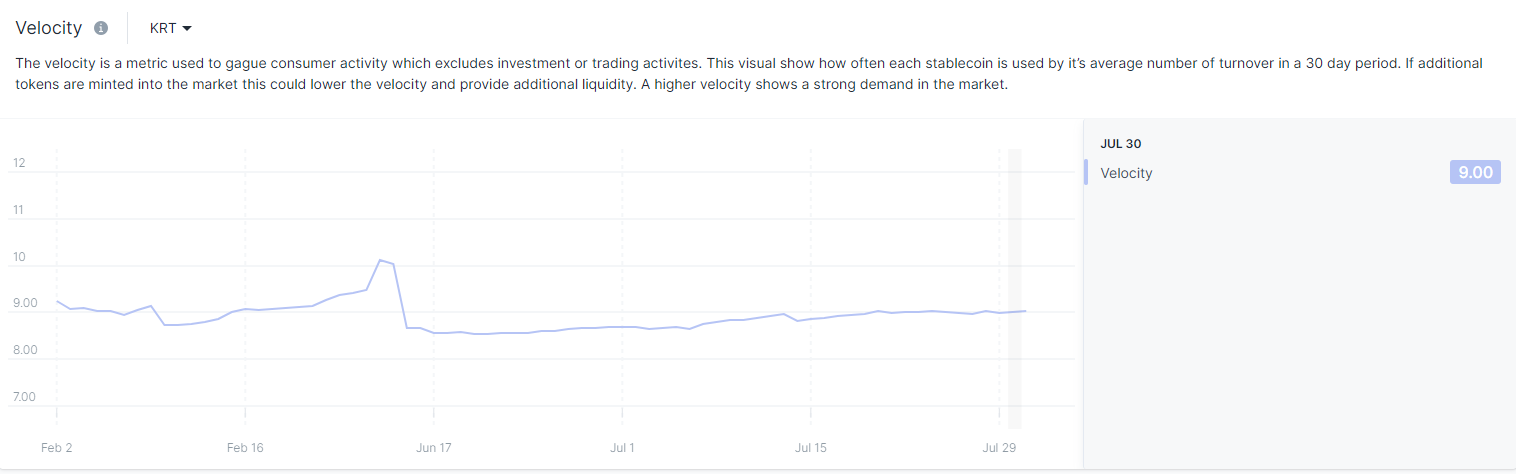
image description
Velocity of M2 Money Stock data released by the Federal Reserve, https://fred.stlouisfed.org/series/M2V
image description
Data source: https://terra.flipsidecrypto.com/
image description
Summarize
Data source: https://terra.flipsidecrypto.com/
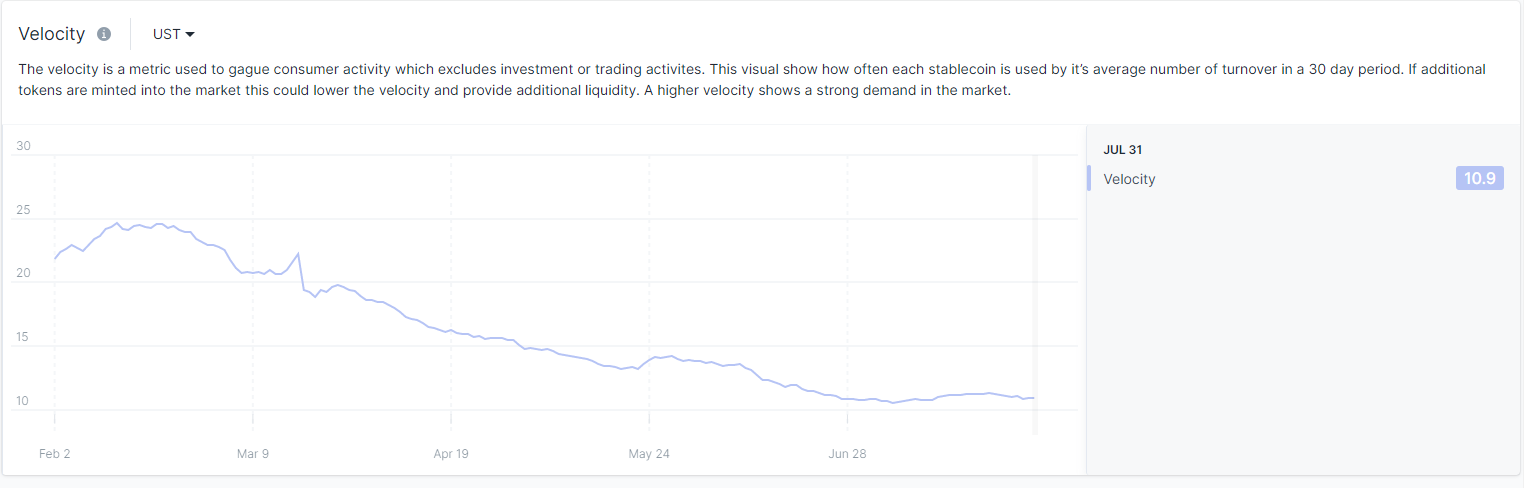
UST and KRT are currently the top three stablecoins issued by the Terra protocol. From the changes and comparisons of their currency flow rates, we may also see significant differences in the application scenarios of these two types of stablecoins:
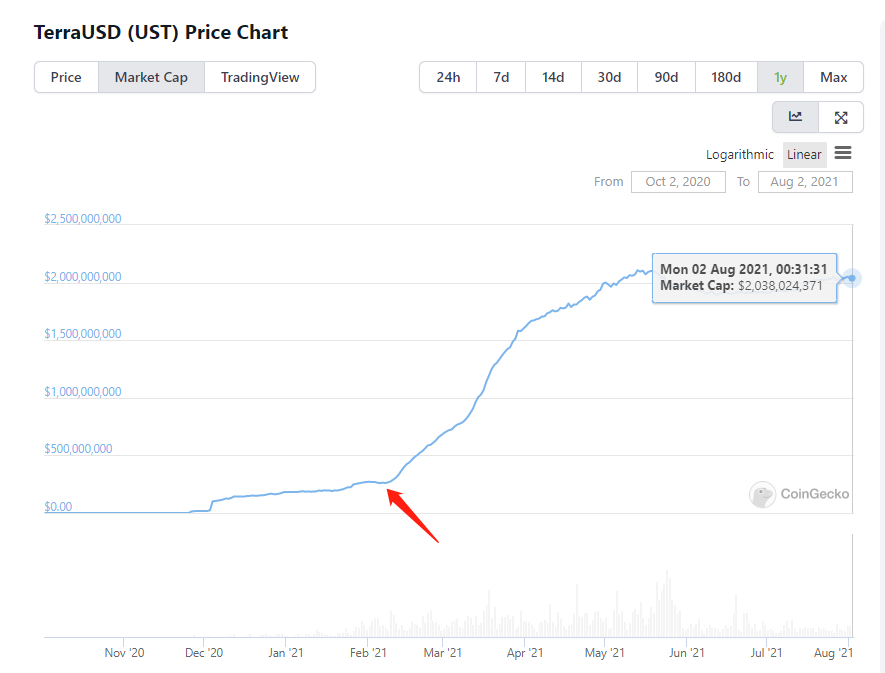
● The main application scenario of UST stable currency is in DeFi, specifically, it is mainly used for transactions and loans. Its currency flow rate reached its peak with the surge of the encryption market in February. Then, with the rapid growth of UST minting volume, the currency flow rate began to decline. Coupled with the launch of the Anchor savings agreement in March, a large number of UST entered the savings agreement, and the proportion of currency used for savings increased, which further led to a decline in currency flow.
Starting from late February 2021, the amount of UST coinage has skyrocketed, resulting in a decline in the currency flow rate of UST. Data source: Coingecko
business data
● KRT, as a local currency linked to the Korean won, currently has few scenarios in DeFi. For example, Anchor and Mirror in the Terra ecosystem do not support KRT. Therefore, the main usage scenario of KRT is local life payment, which is not affected by the encryption cycle, such as e-commerce or offline consumption through Terra’s mobile payment application Chai, which is reflected in the fact that KRW’s currency flow rate remains at a relatively stable level.
Summarize
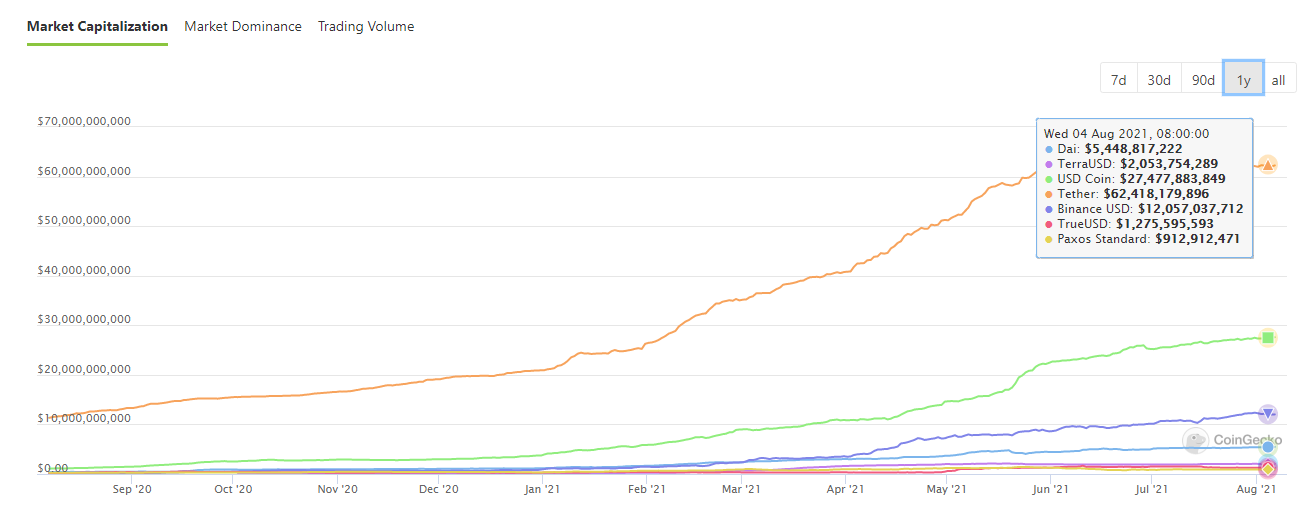
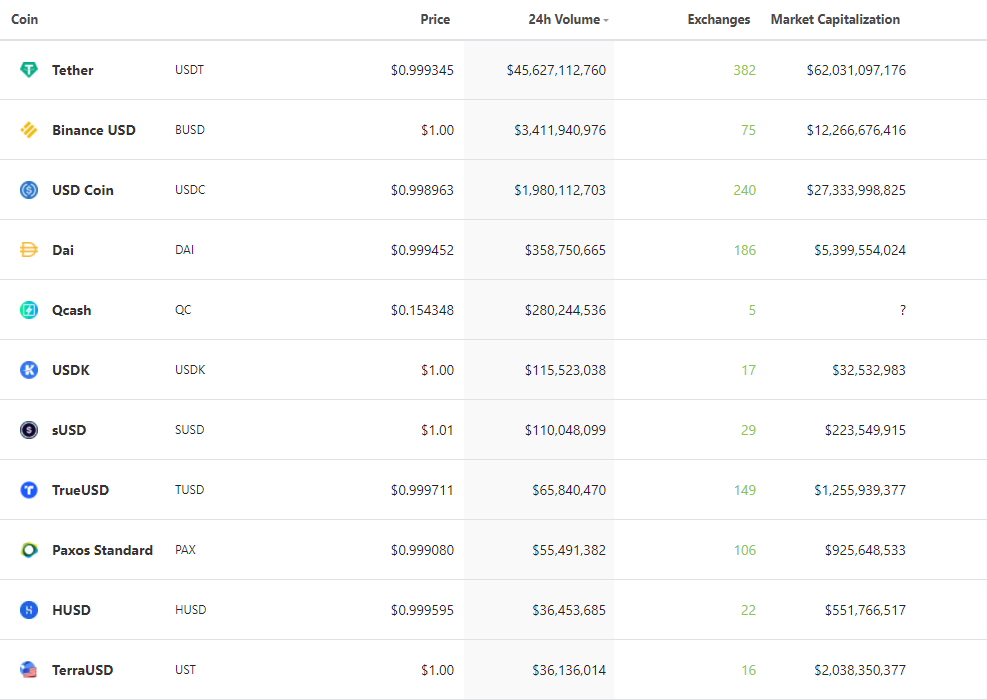
Since the official promotion of Terra's stablecoin last year, it has rushed into the top 5 in terms of total market value\total circulation. In terms of transfer activity, UST's daily average transfer data is also very high. However, in terms of the trading volume of tokens, there is still a big gap between UST, whether it is the centralized stablecoin USDT, USDC and BUSD or the decentralized stablecoin Dai.
But generally speaking, as a relatively new stablecoin protocol, Terra has achieved such achievements in just three years, which is already very surprising. The reason why Terra's stablecoin can achieve a cold start and squeeze into the front row of highly competitive stablecoins in such a short period of time is mainly due to its ecological support, which provides sufficient demand for UST's cold start and rapid development source.
Next, we will focus on analyzing Terra’s public chain ecology
B.Terra's public chain ecology
business data
Terra adopts the POS consensus mechanism, and its core is supported by the Tendermint consensus. It produces a block in an average of 6 seconds. The core token Luna pledges the top 130 verification nodes as the most active block generation nodes.
It is precisely because of the adoption of the consensus between Tendermint and POS that subsequent Terra stablecoin products will more easily enter COMOS and other POS ecosystems, expanding the scope of penetration of its products.
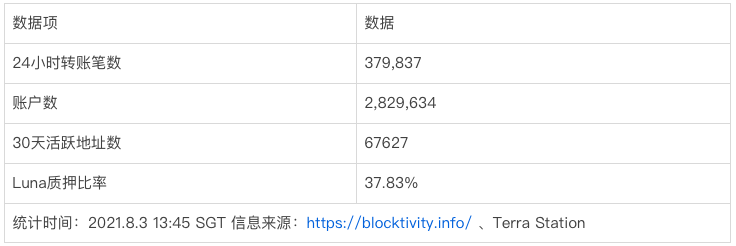
According to public information, the main data of the Terra network are as follows:
Ecological strategy
In terms of building a public chain ecology, Terra has adopted a completely different competitive strategy from most public chains.
Difference A: The internal engine of the public chain is different
Whether it is Ethereum, BSC or Solona, its positioning is an open and decentralized platform. Although the stablecoin protocol is important, it is only a part of the public chain ecology, or even the DeFi ecology. This determines that the application development of the Ethereum-like public chain ecology is open, random, and free to explore. In addition to DeFi, its types include games, social networking, DAO, privacy solutions, etc. The competition among projects And survival is completely the result of the game under the free market.
Before Terra is defined as a public chain ecology, it is firstly a stable currency protocol. It can be said that the application of its public chain ecology has a very clear common mission: to improve the use demand of Terra stable currency and expand its usage scenarios , allowing Terra to gain as wide a global adoption as possible.
Conventional public chain competition focuses on the two-sided market of developers + users, while Terra's competition strategy focuses on the expansion of its stable currency. When Terra is adopted by a wide range of user groups, due to the currency's natural network Effect, a huge stable currency network can in turn drive the public chain ecology above the currency protocol.
It is precisely with this competitive strategy as the main premise that Terra’s early application ecology presented a special appearance of “all DeFi”, because DeFi is the best type of product that rapidly increases the demand for stablecoins.
Difference B: different target users
The target users of most public chains are natives of the encrypted world or investors of encrypted assets. These users are adventurous and advocate the ideal of decentralization (although this spiritual attribute has gradually faded with the expansion of the user group). Financial and cognitive levels are also high, but the numbers are smaller (albeit growing rapidly).
Terra, on the other hand, is more focused on expanding user groups outside the encrypted world, hoping to introduce ordinary users outside the encrypted world into the system, or to embed blockchain services into people's daily lives, and become another alternative to traditional finance. set of solutions. As Mike Novogratz, the founder of Galaxy Digital, said in an interview with Bloomberg in January 2021: "What Terra is doing is great because they are doing a great experiment that breaks out of the sandbox of the encrypted world." Well-known institutions such as Galaxy Digital and Coinbase led a new round of financing of $25 million for Terraform Labs.
a. Savings and income-based applications: introduce users and funds
The main purpose of such applications is to attract users with financial needs to the crypto ecosystem by providing savings yields higher than those in the traditional financial world.
image description
There are two main reasons:
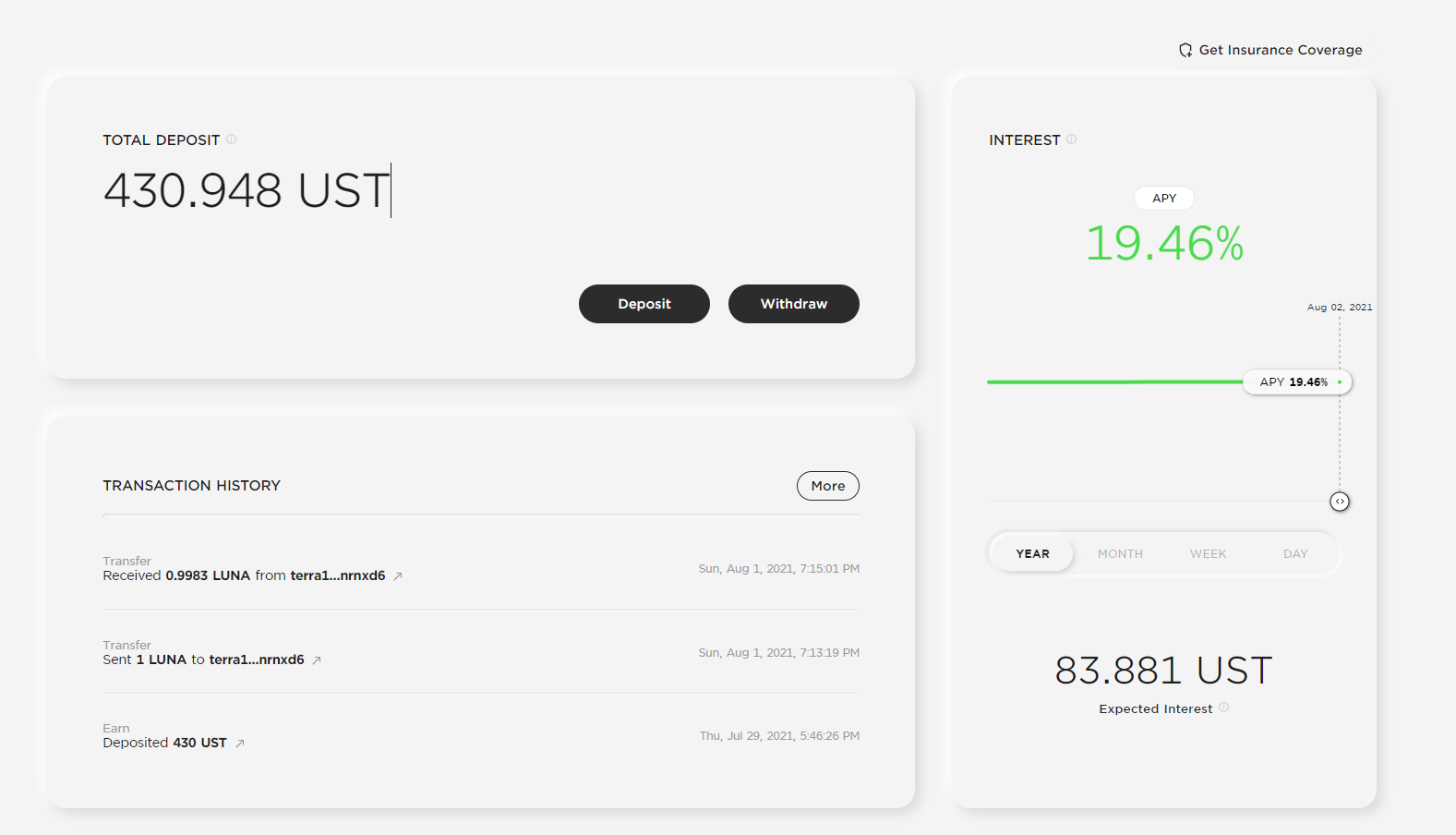
Anchor product deposit interface, https://app.anchorprotocol.com/earn
Anchor's rate of return for saving users is relatively fixed, and its target rate can be adjusted by its community governance, which is currently 19.46%. Compared with the floating deposit interest rate of most DeFi products, Anchor's fixed interest rate is more in line with the financial management habits of traditional financial users. This high and stable "financial management product" is a crude and effective means of attracting new funds. Do you still remember the frenzy when Chinese aunts chased P2P financial management with an annualized rate of 10% a few years ago?
In the cryptocurrency bull market, due to the bubbles in the valuation of various projects, the prices of project tokens have also risen. Coupled with the active demand for speculation and arbitrage, the demand for borrowing stablecoins has increased significantly, which has made all kinds of mining income sustainable in the long run. Keep it in two or even three digits. However, when the crypto market enters a bear market, the value of rewarded tokens falls, the demand for investment and arbitrage shrinks, and the savings income naturally falls sharply.
image description
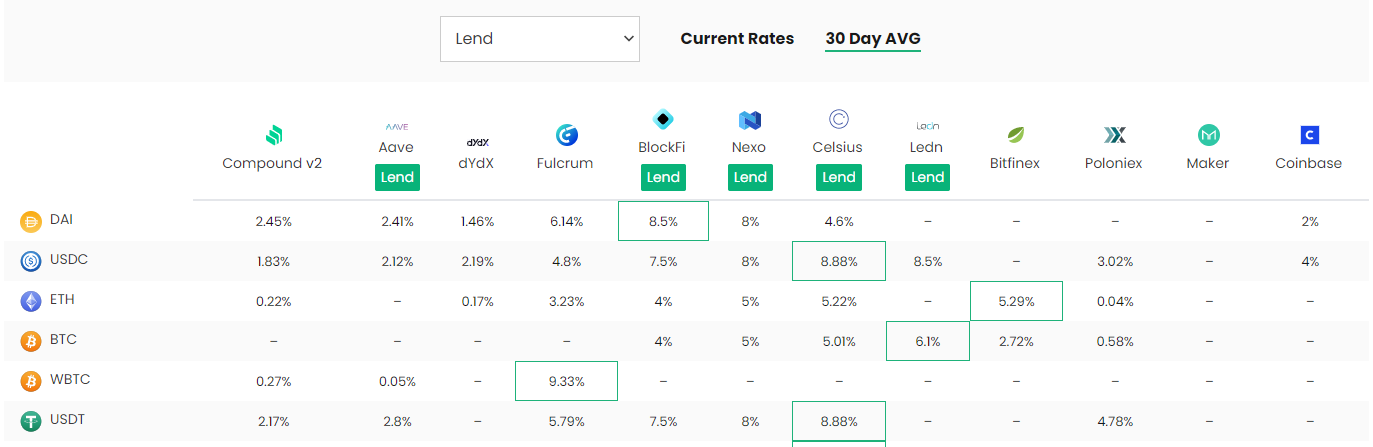
The 30-day average savings rate on major platforms has fallen back to single digits, data source: https://defirate.com/
So how does Anchor ensure that its deposit interest rate is around 20% for a long time?
There are two main reasons:
1. It only accepts assets with native staking income as loan collateral, such as Terra’s core token Luna, and recently supported stETH (by cooperating with staking service provider Lido), so Anchor can obtain additional staking of mortgage tokens Income, used to subsidize depositors.
2. After the launch of Anchor, a 4-year loan mining mechanism was launched. When the actual rate of return of the system (borrowing rate + staking income of mortgage tokens) is lower than the target savings rate, the system will increase the intensity of loan mining. To stimulate borrowing behavior (essentially reduce the borrowing rate through token subsidies), and then increase the utilization rate of deposit funds, and finally increase the lending rate to the target savings range (such as the current 19.46%) to meet the income needs of depositors.
Seeing this, you should have a question: With the expansion of the scale of savings funds, the gradual reduction of the staking income of mortgage assets (reduction in the inflation of the POS network) and the exhaustion of ANC token rewards, how can Anchor maintain the current 20 % savings rate of return?
The author believes that 20% cannot be a rate of return that can be maintained for a long time, but the "early bird subsidy rate" of the Terra ecology. Its purpose is to quickly attract users from the traditional world to enter the market through high returns, just like the early P2P products In order to gain customers, it is the same to increase the rate of return on your financial management through various interest rate coupons, and Anchor’s “interest rate coupons” are its token ANC.
In the end, Anchor's deposit rate of return will also fall back to the industry benchmark line, and perhaps by then it has completed its mission of acquiring customers in the cold start phase.

In addition to Anchor, Terra is also preparing Anchor-like products for different countries, including Tiiik, a savings application that also targets a 20% savings interest rate (open to users in Australia first), and Saturn, a fixed-interest product targeting consumer-grade applications. Money (supports GBP and EUR deposits), which also reveals Terra's ambition to expand more regional users.
B. Investing in platforms and payment tools: retaining users and funds
After attracting users and funds to enter the market through high-yield savings products, Terra Ecology is also making efforts to build two types of applications in order to retain users' funds to the greatest extent: consumer payment and investment.
These are also the two scenarios where funds are used most frequently in the traditional world. After the user transfers funds to Terra's savings platform, if he finds that it can not only meet basic financial management, but also meet investment and most of the daily consumption needs, the possibility of leaving will be greatly reduced, and Terra will be completed. The ultimate goal of traditional users introducing their Terra encryption ecology.
consumer payment application
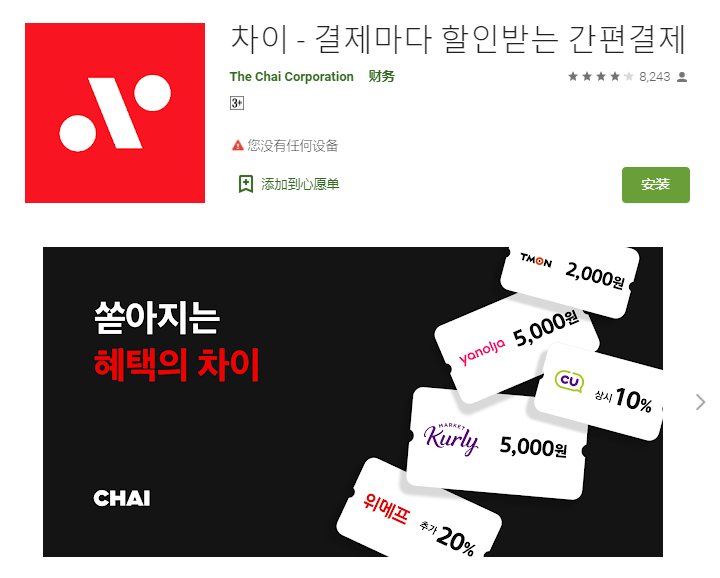
Daily payment is the most frequent currency scenario, and the earliest application of Terra is payment: Chai.
Chai was launched in June 2019 and registered 500,000 users in October of the same year. Currently, the number of officially disclosed accounts is 2.47 million.
According to Chaiscan data, Chai’s recent daily active users are about 85,000-90,000, weekly active users are about 210,000, and daily consumption is 1.75 billion won (1.52 million U.S. dollars). In terms of compliance, Chai has a fiat currency payment gateway regulated by the Korean government and can connect to about 15 large banks.
For users, consumers can get discounts or cash back points when they spend at cooperative merchants through the Chai app or Chai debit card.
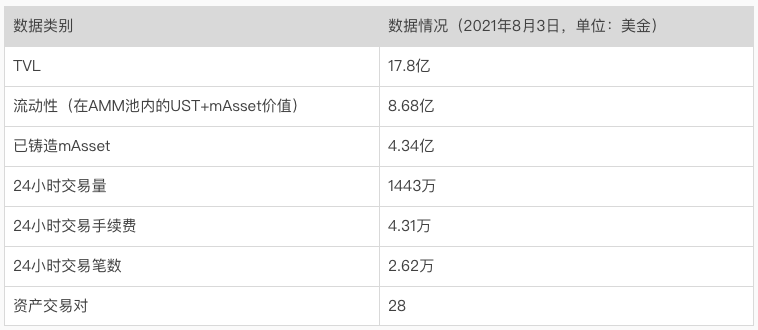
Since the two founders of Terra are from the Internet business field, they have accumulated quite good business resources. The Terra Alliance, a payment alliance formed by them, includes many leading e-commerce companies in Korea and Asia, including: Interpark, the largest ticketing website in Korea Ticket, Bugs, a listed Korean music media company, Ground X, a blockchain company owned by South Korean social giant Kakao, Sinsang Market, a mainstream B2B fashion wholesale platform in South Korea, Yanolja, the number one hotel reservation application platform in South Korea, TMON, the second largest e-commerce website in South Korea, Pomelo, an e-commerce platform in Thailand led by JD.com, and Carousell, one of the largest e-commerce platforms in Singapore, etc.
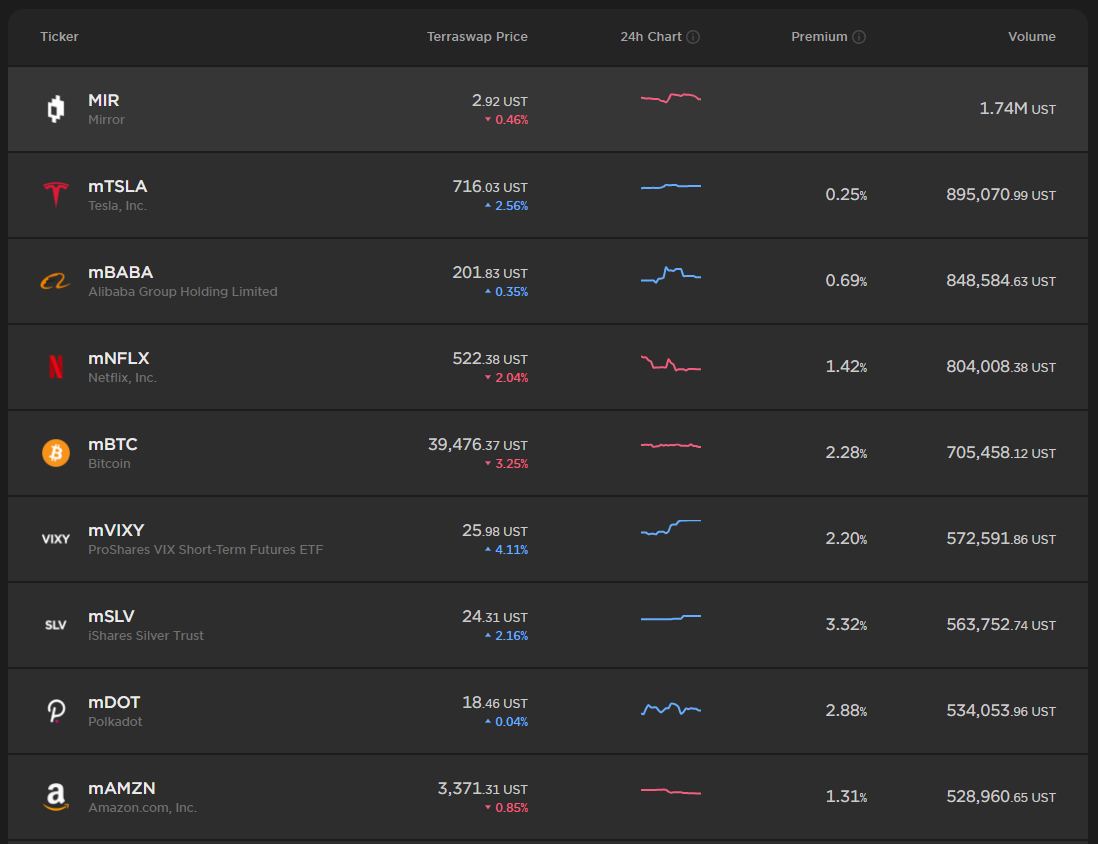
https://terra.mirror.finance/trade
In addition to Chai, other payment applications in the Terra ecosystem include Kash, MemePay, PayWithTerra, BuzLink, etc.
Financial investment applications
The investment platform is another important scenario for user funds, especially important for the retention of funds of high-net-worth users. Compared with payment applications, which are more "defensive" configurations to meet the necessary needs of users, the decentralized investment platform provided by Terra is a more attractive killer feature, and its advantages come from the freedom and composability of DeFi The rich financial asset class derived from it.
The most representative of these is Mirror, a decentralized trading platform on Terra.
Mirror Protocol is a decentralized synthetic asset protocol. It is incubated by Terra and uses Terra stablecoin as the main collateral to freely mint and trade various synthetic assets with a mortgage rate of 150%. Synthetic assets are also called in the Mirror platform It is the image asset (mAssets). The goal of mAssets is to simulate and track the price of any asset from stocks to cryptocurrencies, which provides investors with a wealth of asset classes to choose from.
image description
Theoretically speaking, the price of synthetic assets is a "mathematical function" based on the changes in the parameters of the underlying underlying objects. Tesla shares), synthesized directly on the blockchain.
This makes Mirror theoretically able to meet the full range of investment needs of investors in the Terra ecosystem.
In addition, currently Mirror has enabled liquidity mining. This mechanism has brought additional income to the market, which was originally a zero-sum game. The sustainability of the model still needs to be observed.
Summarize
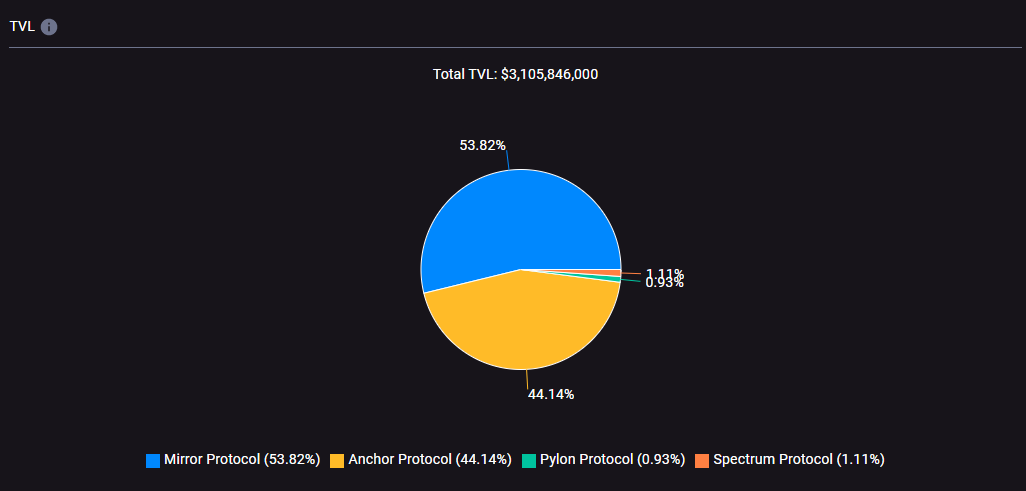
At present, among the top 5 applications of Terra, the TVL of Mirror and Anchor accounts for nearly 98% of the ratio. Unlike Anchor’s demand for Terra’s stablecoins through high-interest fixed-income deposits, Mirror provides Terra through liquidity mining of mAsset assets. Created a huge demand for stablecoins.
image description
In addition to Mirror, Terra is also incubating other investment products to provide users with richer investment options. For example, at the end of March this year, Do Kwon, co-founder of Terraform Labs, said that he is developing an algorithmic ETF product based on the Terra ecology, Nebulas. , in addition to the derivatives trading platform Vega and so on.
4. Team situation
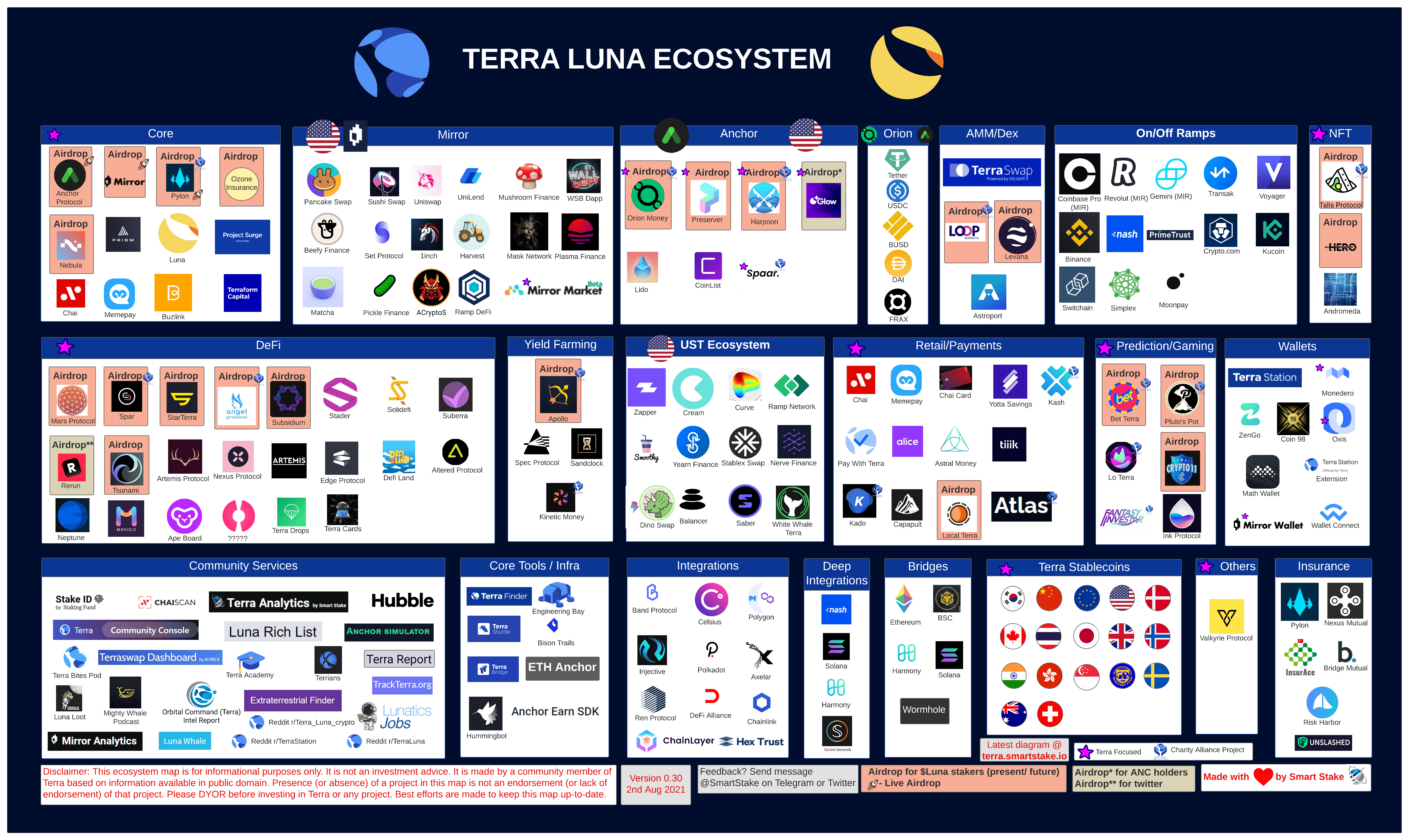
Terra's ecological landscape sorted out by community users
founder
Summarize
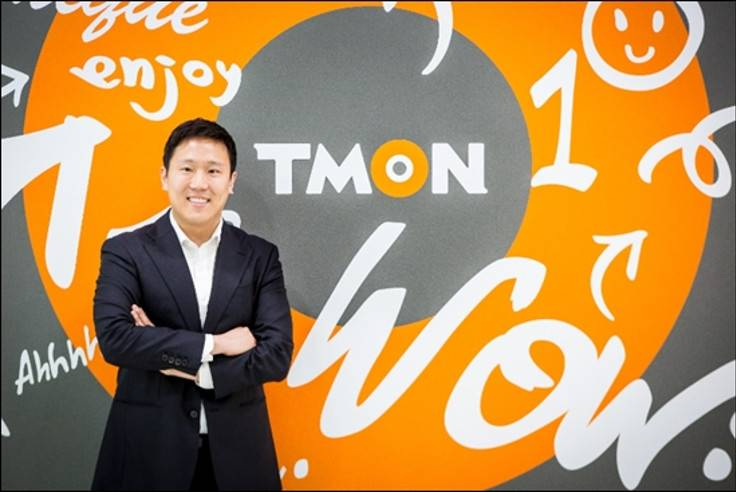
Daniel Hyunsung Shin
Different from the free growth of most public chain ecology, the support of applications in the Terra ecology has a clear purpose, that is, to improve the usage scenarios of Terra stablecoins as the first goal, and build the ability to: 1. Attract users into the circle; 2. A financial services app that holds user funds.
After the online and offline network effect of the stablecoin is formed, it can also reversely drive the ecological development of the stablecoin protocol itself, forming a self-reinforcing flywheel.
Of course, the above plan also has a very obvious time window. If Terra’s stablecoin cannot form a large-scale use case as scheduled before the end of the subsidy for several core applications, it is still uncertain whether this model will be successful.
The main body of the company where Terra's core team members are located is Terraform Labs. We can understand it as the existence of Block.one relative to EOS. This team is the creator and core driving force of the Terra project.
founder
Do Kwon

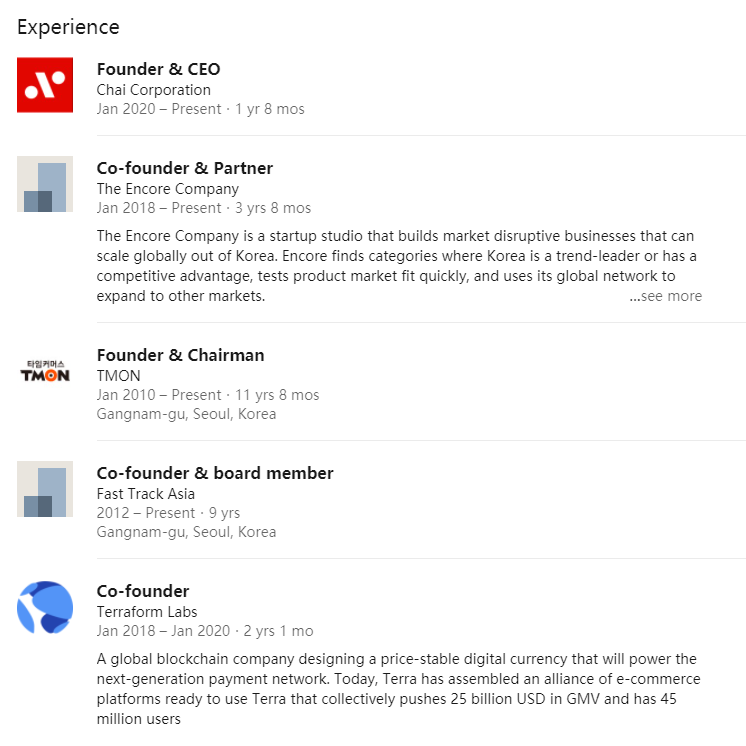
Daniel Shin is the co-founder of Terra. In the early reports of Terra, he appeared frequently in news reports as the company's founder. Daniel himself is a well-known entrepreneur in the Korean e-commerce field. He graduated from the Wharton School of Business in the United States. He is also the founder and chairman of the Korean e-commerce platform TMON. The platform was founded in 2010 and focuses on group buying. million users, according to news reports, is the second largest e-commerce platform in South Korea.
team
But starting from 2020, Daniel Shin gradually faded out of Terra's external publicity, and the team's external spokesperson became another co-founder Do Kwon.
Although he no longer holds a position in the company, Daniel Shin should not actually withdraw from Terra's management and withdraw its related resources, but he may not be able to fully focus on this because he has multiple roles, so he handed over the role of team leader to A younger co-founder Do Kwon was appointed to take on the role.
image description
Do Kwon, CEO and co-founder of Terra, graduated from Stanford University with a major in computer science and was selected as "Forbes 30 Under 30" in 2019. He previously founded the messaging app Anyfi in January 2016, but quit in October 2017. Since 2020, Do Kwon has come to the front of the stage and become the main spokesperson of the company, often appearing in the media and community AMAs to communicate with everyone.
Summarize
team
In an online interview in May 2020, Do Kwon, CEO of Terra, shared his views on stablecoins: “Stablecoins are a very vertical branch of cryptocurrency, and different stablecoins solve different problems. And application scenarios. For Terra, the focus is on the application of business scenarios. Terra’s stable currency can be exchanged on the chain. The starting point of Terra’s stable currency is still based on user use, such as payment, financial management, etc. If compared with Libra Looking at it, Libra's vision and Terra have a certain intersection and overlap. Libra's global cross-border payment is based on Facebook's huge user ecology. Terra's user advantage is the merchant background, and the team background is not from social applications, but more from retailers, who know better this market."
third quarter
business analysis
——
1. Industry space and potential
Terra's team is not all from the encryption field like other DeFi and public chain teams, but mostly from the Internet business background. At present, the team has also given full play to this advantage, using its own industrial resources to continuously embed the Terra ecology into large-scale Internet products through payment applications.
first level title
first level title
business analysis
first level title
1. Industry space and potential
Compared with native encrypted assets such as BTC and ETH, stablecoins do not have the longest history, but they have existed for about 7 years. A stablecoin is a cryptocurrency whose value is usually anchored to another asset, whether it is a government-issued currency, a precious metal, or a purchasing power (for example, Ampl’s goal is to anchor the purchasing power of $1 in 2019).
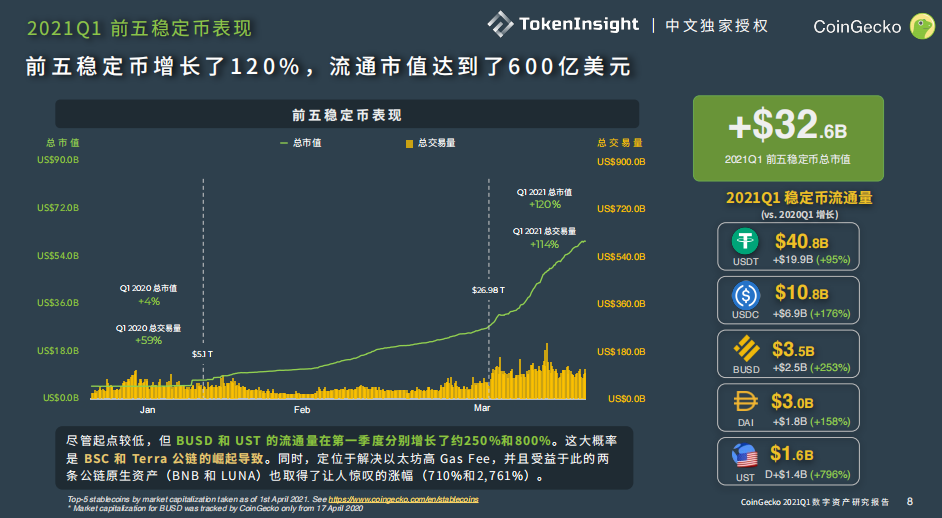
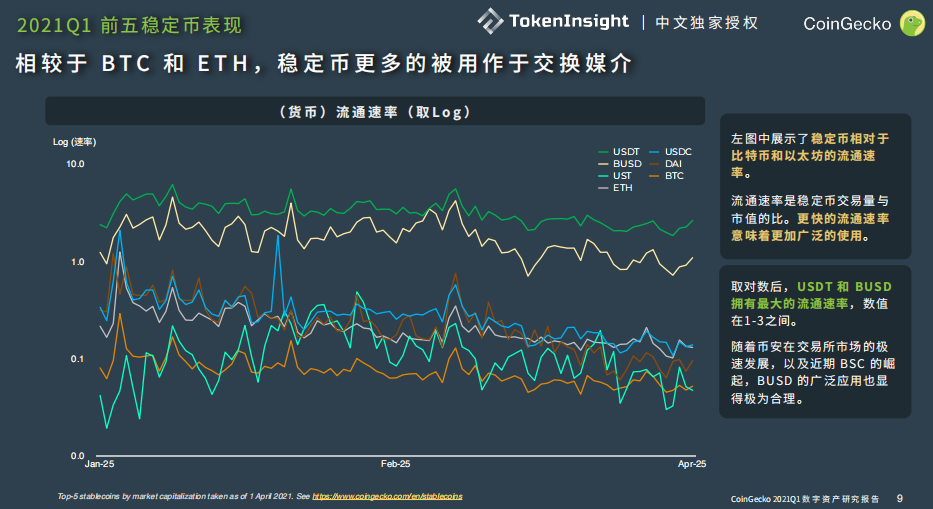
At present, the main usage scenarios of stablecoins are cryptocurrency transactions, lending and foreign exchange. In the 2021 Q1 report released by CoinGecko, they pointed out that stablecoins are more used as a medium of exchange than a store of value, which is specifically reflected in the fact that their circulation speed is several times or even dozens of times that of BTC and ETH.
image description
Source of information: CoinGecko-2021-Q1-Report
In addition, due to regulatory reasons, many countries do not support direct transactions between fiat currencies and cryptocurrencies. Stablecoins have become a transfer station between the traditional world and the encrypted world. For users who want to avoid market fluctuations, stablecoins are also their exchange. first choice.
Although the functions of stablecoins as a medium of exchange and foreign exchange substitutes have long existed, and the market size has been growing steadily, the real explosion of stablecoins began in June and July 2020.
The period when stablecoins surged the most was in the first quarter of this year. According to CoinGecko’s report statistics, the market value of the top five stablecoins in the market increased by nearly 120% in the first quarter. Today, the total size of the stablecoin market has reached 115 billion US dollars, which is about 10 times the level of the same period last year.
image description
Source of information: CoinGecko-2021-Q1-Report
● 2.DeFi
We believe that the rapid expansion of the stable currency market is mainly due to the following aspects:
● The global epidemic has accelerated currency issuance, and governments around the world are expanding their balance sheets to cope with economic stalls
● Various DeFi applications have matured rapidly in the past year, coupled with the rise of the liquidity mining mechanism, the high rate of return has attracted a large number of funds from outside the circle to enter the market
● The cryptocurrency market has come out of the trough, and the total scale of cryptocurrencies represented by Bitcoin has hit a new high, which has stimulated a huge demand for stablecoin transactions
● Compliant and safe custodian institutions and fiat currency entry and exit channels are further improved, and the first year of institutionalization in the encrypted world is coming
Combining the above analysis, we found that the rapid expansion of stablecoins in the past year is mainly due to the recovery and outbreak of two markets that are currently unable or inconvenient to directly contact legal currencies:
● 1. Cryptocurrency transaction
After the crypto market plummeted in June 2021 and began to fluctuate at a low level, the growth of the stablecoin market also began to slow down significantly, because the demand for both crypto transactions and DeFi cooled as the market went down.
2. Token model analysis
Therefore, to predict the expansion trend of the stablecoin market, it is necessary to observe the market conditions, and more importantly: whether DeFi services continue to create new demand for liquidity.
Although the market is currently in a cold mood after a sharp rise and correction, in the long run, the encrypted business territory represented by DeFi has just begun. We believe that although financial services in the traditional world are quite mature, DeFi still has considerable growth potential, and this potential does not only come from the cross-border inflow of traditional funds.
The vitality of DeFi comes from the characteristics of transparency, low trust cost, composability, high liquidity, anonymity, and globalization provided by the underlying architecture of the blockchain. In the economic history of human society, perhaps there has never been such a pure and global free market.
It is this speed of innovation that comes from a completely free market that is the true source of DeFi's vitality. As long as this source still exists, we don't think there is any need to worry about the exhaustion of innovation in DeFi and blockchain businesses.
Token Quantity, Allocation and Circulation
As long as technological and commercial innovations around user needs continue, the trend of traditional funds entering the encrypted world will not stop, and the expansion of the stablecoin market will continue. The current total size of 115 billion stablecoins is far from the end.
There are two main types of tokens in the Terra ecosystem: the core governance token Luna, and the Terra series of stablecoins issued with Luna as the underlying asset. This section will analyze these two types of tokens.
Token Economic Model
Before officially starting to analyze the mechanism of Luna and Terra stablecoins, it is necessary to briefly explain the consensus mechanism of Terra Protocol.
Terra adopts the POS consensus mechanism, and its core is supported by Cosmos' Tendermint consensus, which produces a block in an average of 6 seconds. Luna token holders pledge Luna to the verification nodes, and the verification nodes will produce blocks.
Core governance token: Luna
Token Quantity, Allocation and Circulation
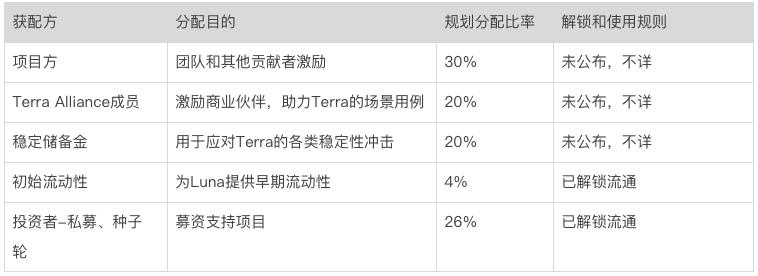
The planned total amount of Luna tokens is 1 billion, and the actual total amount of tokens is about 9.95415. The current actual supply is about 415 million. The distribution of the tokens is as follows:
We found that the unlocking time of up to 70% of the total tokens is unknown. In addition, Terra’s browser functions are extremely limited. Currently, there is no function to query Luna address rankings, holding ratios, etc., which further reduces the value of project tokens. Transparency, this is something investors should be alert to. After all, clear and transparent rules and data disclosure are more reliable than relying on the moral self-discipline of the project.
Token Economic Model
As the core token of Terra, Luna has three main functions for token holders:
● Governance tokens: used to initiate proposals and vote on important parameters and rule adjustments of the protocol, funding sponsorship and other proposals
● Pledge rewards: By staking Luna to the verification node, you can get the Gas fee of the Terra network, the stable currency tax and the minting of Luna
● Minting assets: users must use Luna to mint new Terra stablecoins. This action is somewhat similar to converting Luna into stablecoins. This process is called Seigniorage. The Luna currently consumed by minting will be unified into the community Community Pool, according to the official plan, the Luna in the community pool will be destroyed after Terra Protocol's Columbus-5 mainnet goes live.
In addition, when Terra Station, the official wallet client of Terra, converts Terra to Luna through the built-in Terra Swap function, the transaction fee generated will also be used to repurchase Luna and distributed to nodes as income.
Luna is very important to the Terra protocol, and it has two main functions:
● It is the underlying asset of the POS mechanism. In the POS mechanism, Luna is similar to the computing power of the POW mechanism. It provides the lowest security guarantee for Terra's network through asset pledge
● It is the source of stable prices for UST and other system stablecoins, absorbing the fluctuations of stablecoins and preventing the stablecoins from being de-anchored. This will be detailed in the section on the stablecoin mechanism.
For Terra Protocol, the higher the market value of Luna, the higher the liquidity scale ceiling of its stable currency, the lower the security of its network and the lower the probability of unanchoring of its stable currency; on the contrary, if the market value of Luna is too small, its The energy to ensure the security of the system is insufficient, and it may even happen that the total market value of Luna falls below the total market value of the stablecoins in the Terra network, resulting in the unanchoring of stablecoins under the run.
It is precisely because of this that Terra will spare no effort to empower Luna to increase its intrinsic value.
In summary, Luna's value capture is mainly reflected in:
● It is an indispensable security guarantee for the system and a key resource in the minting process
● Captures most of the economic value generated during system operation
Its value capture of the Terra protocol is more adequate than the current role of Eth in the Ethereum network.
Stablecoin Family: Terra
Terra is the general term for all kinds of stablecoins in the Terra protocol. According to Terra Station, there are currently 17 types of stablecoins supported by the protocol.
Terra is essentially an unsecured stablecoin, or an algorithmic stablecoin. The advantage of an algorithmic stablecoin is that the unsecured mechanism brings it higher capital efficiency. The disadvantage is that users are not as confident in its stability as those fully mortgaged. Stablecoins are more prone to price de-anchoring.
Terra's stabilization mechanism
Terra's stability mechanism comes from the smart contract's commitment to convert its stablecoin and Luna at a fixed ratio. Its essence is the "implicit guarantee" of Luna's market value for the system-wide stablecoin.
Specifically: users can mint 1 USD UST by burning 1 USD market value of Luna, or send 1 USD UST to the system and get the equivalent of 1 USD Luna, then when:
● When the price of 1 UST is less than 1 US dollar, arbitrageurs can buy UST in large amounts, send UST to the system and obtain Luna tokens equivalent to the amount of US dollars at the exchange rate of 1 UST=1 US dollar, and quickly put Luna on the market Selling, this will quickly create buying orders for UST, and reduce the market circulation of UST until the price of UST approaches $1, and the arbitrage space disappears;
● When the price of 1 UST > 1 US dollar, arbitrageurs can buy Luna in a large amount, and exchange Luna for UST according to the exchange rate of 1 US dollar = 1 UST, and quickly sell UST in the market, which will quickly become UST Create selling orders and increase the market circulation of UST until the price of UST approaches $1, and the arbitrage space disappears;
Therefore, the existence of arbitrageurs and the seamless exchange mechanism between Luna and UST ensure the stability of the Terra stablecoin.
Risks Behind the Mechanism
Because the arbitrageurs who maintain the stability of UST are willing to buy UST for arbitrage when UST is lower than 1 US dollar, because they believe that 1 UST is enough to exchange for Luna with a market value of 1 US dollar, and they can quickly resell it in the secondary market for profit.
However, when extreme market conditions occur, if the market value of Luna plummets below the total market value of stablecoins that have been minted by the entire system, in theory, if all stablecoins are replaced by Luna at this time, the corresponding market value of Luna is no longer sufficient to pay for stablecoins. The target anchor value of the currency, plus the last step for arbitrageurs to exchange for Luna is to sell Luna in the secondary market to obtain arbitrage income. This behavior will exacerbate the decline of Luna, forming a death spiral, and eventually causing the entire Terra The serious insolvency of the agreement.
In short, although Luna is not strictly a mortgage asset for minting stablecoins, its market value is essentially an "implicit guarantee" for the value of stablecoins in the system, and it is also the fundamental reason why arbitrageurs dare to participate in arbitrage.
In the sharp transition between the bull market and the bear market cycle, due to the high market value of Luna tokens in the later stage of the bull market, coupled with the strong demand for user transactions and DeFi, the minting volume of stable coins has skyrocketed. At this time, if faced with a sudden bear market impact, the market value of Luna as an "invisible secured asset" will shrink rapidly, while the amount of stable currency as a system debt will be rigid, debt > secured asset, and the debt crisis of the Terra protocol will erupt.
In fact, Terra’s stablecoin briefly experienced the above process during the crypto market crash in late May this year.
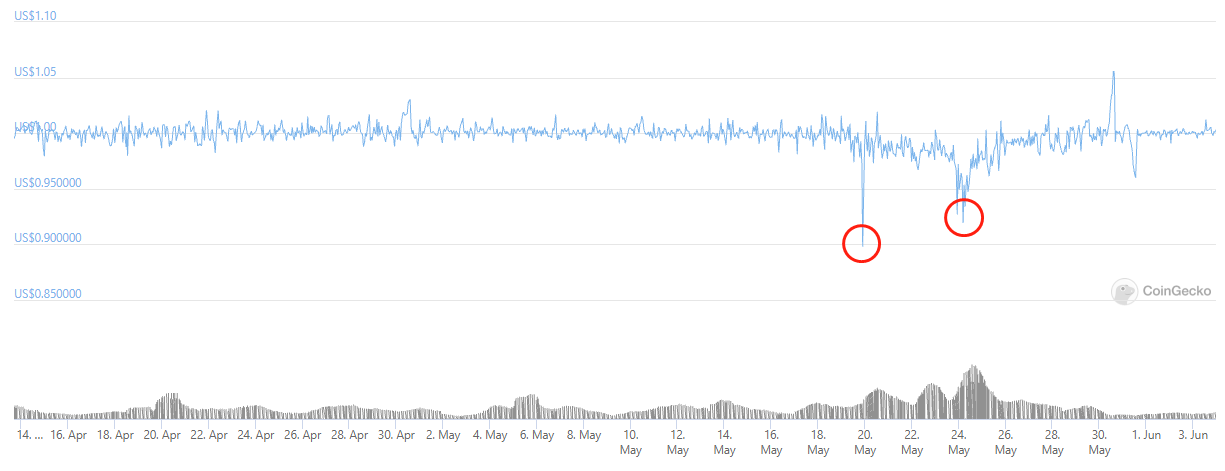
Before May 19, the anchoring mechanism of UST has been working well, and there has been no major downward deviation. However, during the market crash from May 19th to May 25th, UST experienced a negative premium of about 10% for the second time, and it lasted for 2-3 days.
image description
Terra’s main stablecoin UST experienced two serious de-anchors on May 19 and May 24. Source of information: CoinGecko
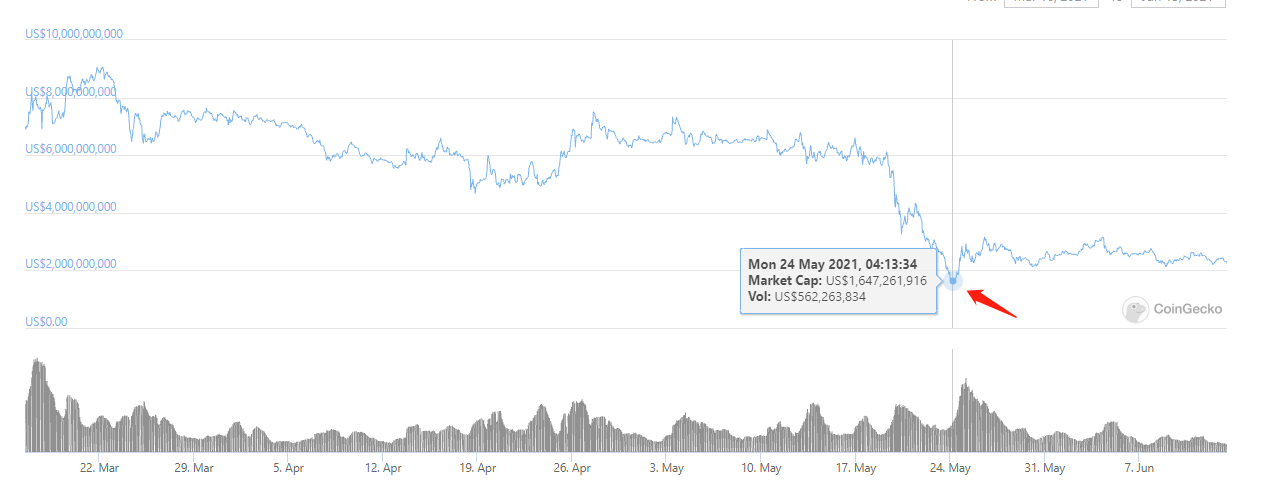
The reason behind this is that Luna's market value has experienced a severe decline, with a maximum drop of 73% in a few days. It is worth mentioning that on May 19, UST broke its anchor for the first time. Although the market value of Luna at that time had not yet fallen below the net value of the issued stable currency, the market had already sold out of panic. . Then, as the market stopped falling and stabilized, UST also quickly regained the lost ground, returning to around US$1. However, in the more serious plunge on May 24, the total market value of Luna fell below the total market value of UST for the first time, which caused the second more serious unanchoring of UST. It was completed after rebounding above the market value of the UST stablecoin.
image description
The lowest market value of Luna fell to around 1.647 billion US dollars, which was already lower than UST’s total market value of 2 billion US dollars at that time. Source of information: CoinGecko
Digestion of systemic risks
Why hasn't the Terra system collapsed and Luna's market value hasn't fallen into a complete death spiral after UST broke its anchor twice?
This is mainly due to Terra's transfer of the volatility risk of stablecoins, that is to say: the short-term fluctuations and risks of Terra's stablecoins are transferred to Luna's miners and they are forcibly absorbed.
Luna's miners are divided into two categories. One is the validators who directly build POS nodes. They are responsible for multiple functions of the Terra network:
● Responsible for system block generation
● Responsible for quoting stablecoins and Luna, playing the role of oracle machine, if the quote is within the accurate range, you will be rewarded, if you make a mistake, you will be fined and confiscated Luna
The delegator’s act of entrusting his Luna to the node is staking. However, if the delegator wants to get back Luna, he needs to go through a long waiting period of 21 days. During this period, Luna has no income and voting rights, and this process is irrevocable. For Clients need to be cautious.
Token Model Summary
And this long waiting period makes it impossible for users who pledge Luna to withdraw Luna even if they want to withdraw Luna when short-term risks occur. And the node can't withdraw Luna in time to sell stop loss. All they can do is to continue to fulfill their block and oracle responsibilities, slowly wait for the storm to pass, and hope that things will improve.
This is what I said before, the short-term risk of Terra stablecoins is passed on to Luna miners, and the fluctuations are absorbed by miners.
Finally, it is worth mentioning that, in addition to the miners, those who defuse the system risk are those who sold UST at a low price in a panic.
3. Project competition landscape
Their "meat cutting" behavior has played two roles: 1. They used their own losses to bear the bad debts of the system, which is essentially helping the system to restructure the debt; To a sufficient extent, bold arbitrageurs will enter the market to buy UST and replace it with Luna to start arbitrage, which causes the deflation of UST and directly helps to stabilize the price of UST.
Of course, if Terra doesn't survive this storm in the end, that's another story.
Token Model Summary
The Terra stablecoin and Luna, the Terra governance token, are interdependent and work together to maintain the operation of the entire system.
The reason why the above logic can be established mainly comes from the fact that Terra has built a POS public chain, which makes Luna no longer a simple DeFi product equity token, but has the opportunity to capture a broader ecological value of the public chain, allowing currency holders to The community of investors and miners can willingly absorb the short-term fluctuations of stablecoins.
3. Project competition landscape
A. Basic Market Structure & Competitors
The core product of Terra is stable currency, and the Terra protocol can also be regarded as a product group built around stable currency. Therefore, the business situation of its stable currency basically reflects the overall situation of the group.
Regarding the main product UST of the Terra stablecoin, the specific data has been presented in the [Terra Stablecoin Business] in the second section of this article. I will not repeat it here. We will focus on observing the situation of other stablecoins in the encryption market.
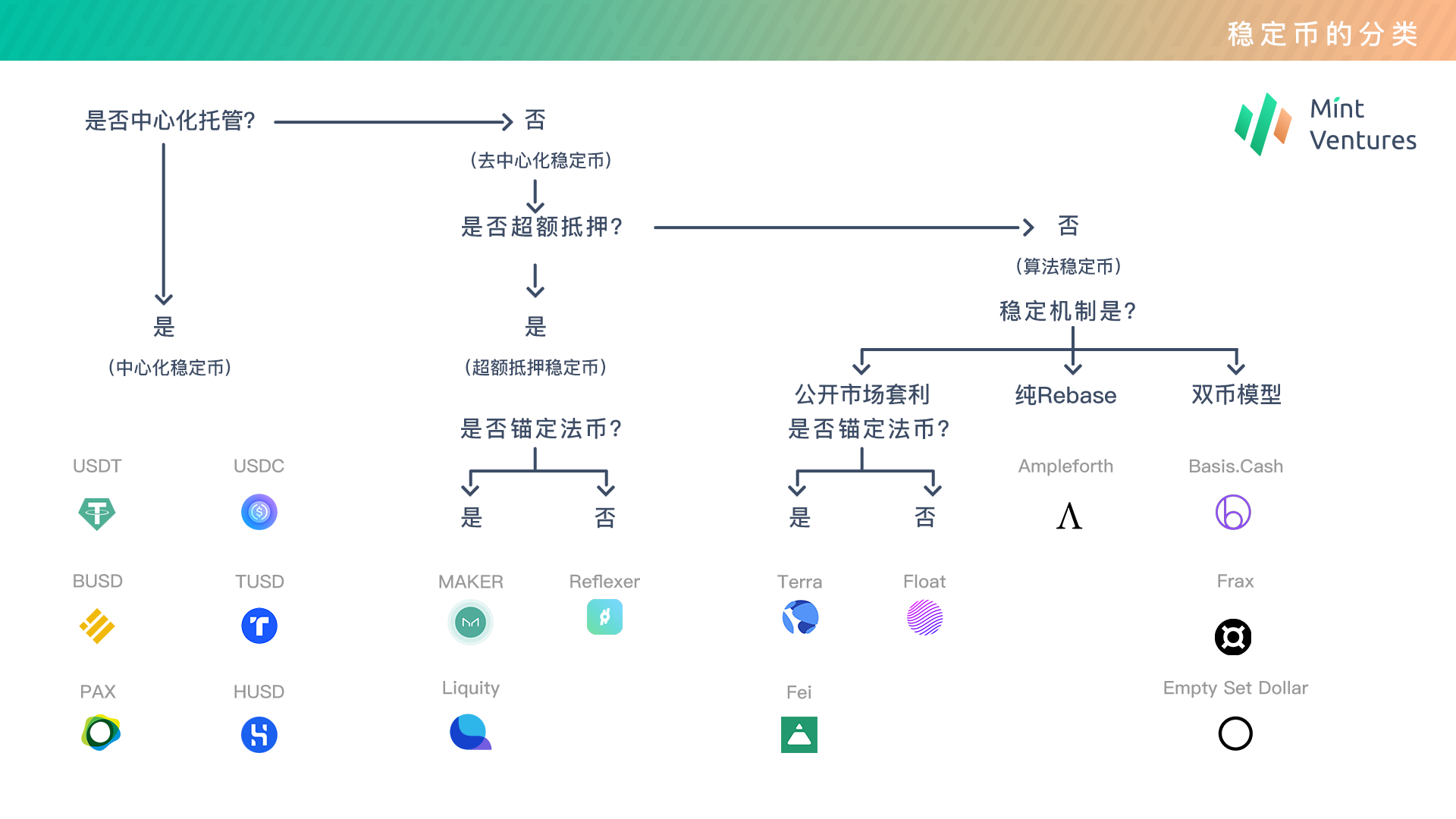
In the current market with a total size of 115 billion US dollars, there are many types of stablecoins. We try to classify stablecoins as follows according to the mechanism.
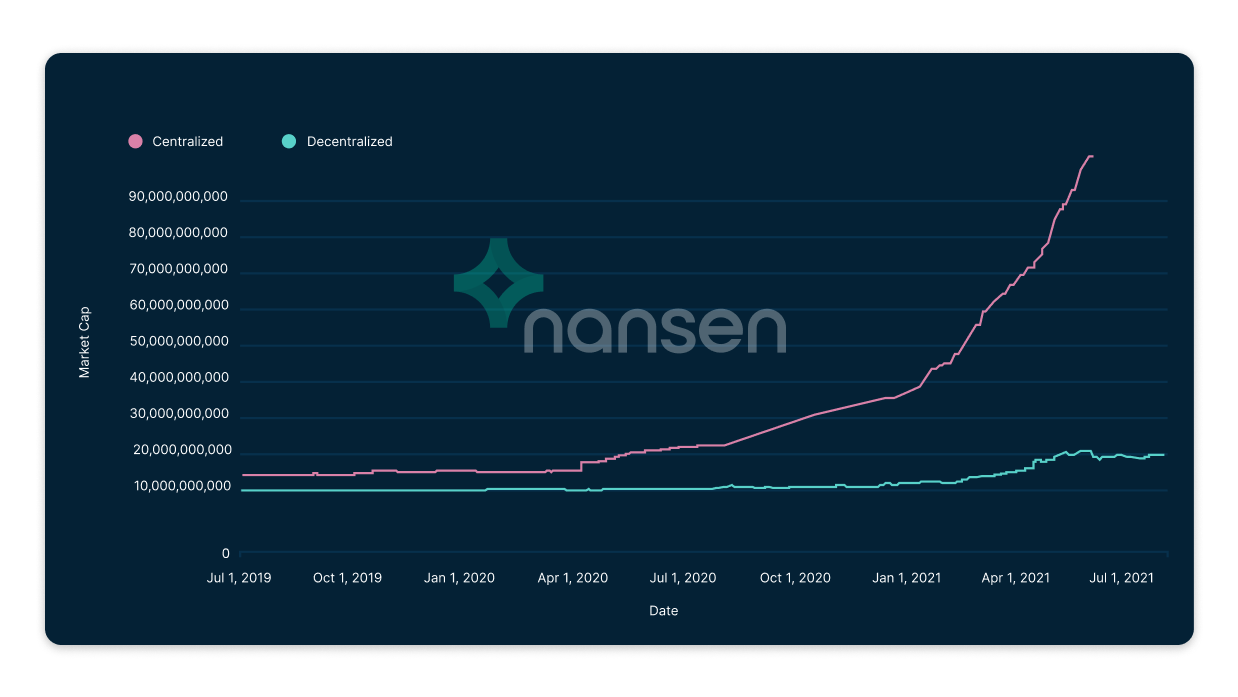
In the current stablecoin market, centralized stablecoins still occupy the mainstream, and their growth rate is much higher than that of decentralized stablecoins.
image description
Market size growth curve of centralized and decentralized stablecoins, data source: Nansen
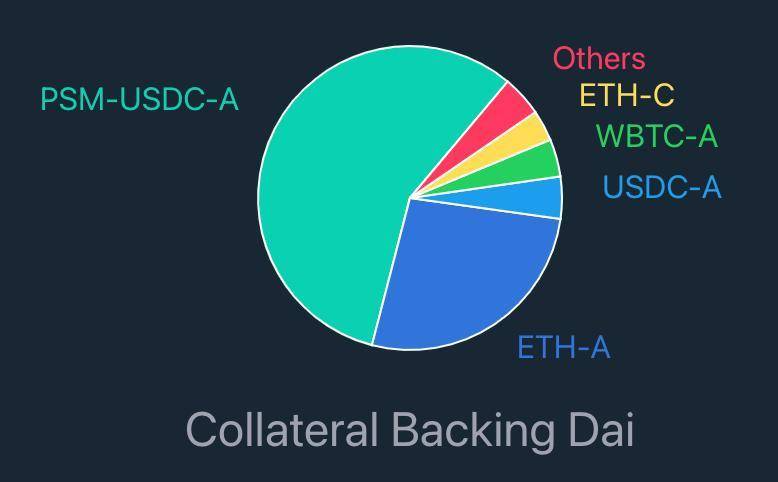
The influence of centralized stablecoins has even invaded the decentralized field. According to data released by Maker in June, nearly 60% of Dai’s collateral is USDC.
This also reflects the unavoidable collateral quality dilemma of the over-collateralized decentralized stablecoin DAI, and the significance of the algorithmic stablecoin is born from this.
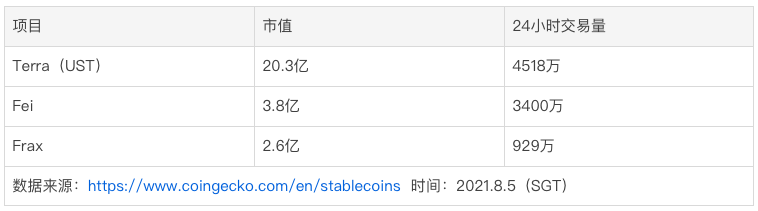
In the field of algorithmic stablecoins, only Terra, Frax and Fei are currently the only projects that can really keep the anchor most of the time.
From the perspective of market capitalization, the market capitalization of Fei and Frax is an order of magnitude worse than that of UST. In terms of use cases, thanks to the development of Terra's ecological applications, the scenario of Terra's stable currency is much better than that of Fei and Frax.
Generally speaking, the Terra stablecoin represented by UST ranks first in the stable calculation ranks, but its real competitor is still a centralized stablecoin with compliance advantages and backed by giant resources. Because of this, the encryption field maintains high expectations for algorithmic stablecoins.
B. Project competitive advantage and moat
Terra's success at this stage comes from a series of highly coordinated continuous actions. The team pays great attention to "strengthening strengths and avoiding weaknesses". Behind the success is the shadow of profound industry insight and excellent strategic planning.
Specifically, in the early stage, it concentrated its resources to build an ecology around stable coins, and let the ecology serve stable coins. After the online and offline network effect of the stablecoin is formed, it will reversely drive the ecological development and form a self-reinforcing flywheel.
This avoids the "Ethereum killer problem" faced by most public chains (that is: why do you want to create a more powerful ecology than Ethereum?), and avoids falling into the brutal application subsidy war, or more precisely: avoid The inefficiency and impreciseness of applying subsidies.
So far, Terra, as a public chain ecosystem built around the stablecoin protocol, we believe that its main competitive advantages lie in:
● It adopts its own POS public chain and Cosmos’ Tendermint core, which brings many benefits to the project——
2. Sufficient platform independence, which allows Terra to initiate proposals to adjust various important parameters according to changes in the situation, including gas, seigniorage, transfer tax, etc., and has a richer "public chain macro toolbox" to adapt The market changes, and the coupling of this product, public chain and miner mechanism also enables the entire system to withstand stronger external shocks and cope with the transition between bull and bear cycles;
4. Risk
3. Based on the development of the Tendermint kernel, it ensures the interoperability of Terra with other external ecology in the future, and improves the circulation boundary and imagination space of its stable currency in the encrypted world.
● Stablecoin + DeFi team play: provide initial use cases for stablecoins through the DeFi ecology to help stablecoins start cold quickly, form a large market value and transaction volume, and quickly enter the first array of stablecoins; and then Through the penetration of stable currency products into more fields, it will reversely drive the rolling forward of its Defi ecology. This stablecoin + Defi group strategy has given Terra a relatively solid foundation.
● Abundant business resources: The early founder of Terra was a well-known Internet entrepreneur in South Korea. The Terra Alliance industry alliance launched later also won a large number of first-line Internet companies in South Korea. Provide more convenient and extensive DeFi product entrances, and introduce the Internet population into its own matrix on a large scale.
● Regulatory and encrypted population environment: The base camp of the Terra project is located in South Korea. This country has a super-high cryptocurrency investment population and a relatively pragmatic regulatory environment, which allows Terra’s exploration to go out of the sandbox and fully practice encrypted products. change.
What Terra is practicing is the most anticipated narrative in the current encryption world - the breaking of encryption applications and the traditional business world. Once the experiment is successful, Terra has great hope that it can further realize the siphoning of various encryption industry resources and expand its ecology.
Compound, Aave, and Maker have all benefited from this narrative before and enjoyed a rise in valuation, but their exploration may not be as thorough as Terra.
4. Risk
Although the Terra protocol has achieved impressive progress in just a few years since its establishment, its market value has also increased significantly. However, there are still many hidden worries in the fast running of the project.
1. Centralization
Compared with other DeFi and public chain projects, the Terra project has a high degree of centralization. This is reflected in many aspects, such as: in the token distribution design, a very high ratio of tokens is distributed to the team and its partners. In addition, some tokens are also theoretically under its control (such as the stable reserve fund ), which gives the team and its stakeholders a disproportionate amount of control over the project.
If someone says that the Terra team and its coalition of interests can actually control the approval of all current proposals, I believe no one will disagree with this.
In addition to the distribution of tokens, the background of the team, the backing of the project, and the current access to commercial resources are all very centralized, such as a large number of Internet companies, payment channels, and so on. The benefits of this are obvious, that is, it is easier to break through the barriers between blockchain products and the real world.
The problem of centralization is not only the excessive concentration of control rights and the vulnerability of anti-regulation, but also the more worrying point is that the idea of team-led industrial support may lead to ecological free innovation and insufficient chemical reaction, and the birth of free The innovation ability and evolution speed of DeFi under the market economy are exactly its core competitiveness relative to CeFi. At present, Terraform Labs behind Terra dominates the establishment and operation of a large number of projects. Will this make those truly creative developers see Terra as an ecosystem with a strong planned economy, and thus be reluctant to enter Terra? These all remain to be seen.
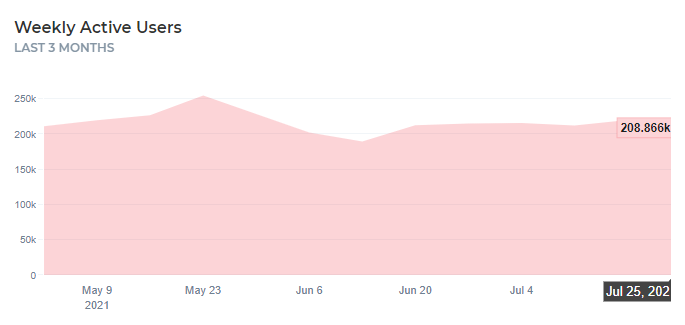
2. Regulatory Policyhttps://www.chaiscan.com/
As mentioned earlier, some large economies represented by the United States and China are paying attention to and even formulating regulatory frameworks for encrypted businesses, especially DeFi. Other countries have also begun to frequently take action against multinational encryption companies represented by the exchange Binance. When Terra faces regulation, in addition to the vulnerability of its centralized organization, more importantly, it is the sensitivity of its business, which may attract heavy supervision from different governments.
At present, whether it is stable currency, savings products, or synthetic assets in Terra's product portfolio, it is currently the key regulatory object of various countries. Whether Binance delisted its tokenized stock assets recently, or Uniswap blocked the stock synthetic assets of Mirror and Synthetix at the front end, they all revealed the gradual strengthening of regulatory deterrence.