






Messari: Fixed income agreement will be the next wave of DeFi innovation?


Editor's Note: This article comes fromCrypto Valley Live (ID: cryptovalley)Editor's Note: This article comes from
Crypto Valley Live (ID: cryptovalley)
Crypto Valley Live (ID: cryptovalley)
This article is a guest post from the Messari community. Rahul is currently the managing partner of Gamma Point Capital, a hedge fund focused on digital assets and decentralized finance. He worked on the foreign exchange hedge fund team at Morgan Stanley and graduated from the Wharton School with a BA in Economics.
Credit is the cornerstone of every financial ecosystem. It allows those with surplus assets to lend those assets to borrowers who have a productive or investment use for those assets, thereby enabling non-zero-sum wealth creation.
The total size of the global credit market is about three times the size of the global equity market. According to ICMA data, as of August 2020, the overall size of the global fixed income market is approximately US$128.3 trillion. In addition, the interest rate derivatives market is the largest derivatives market in the world. According to the Bank for International Settlements (BIS), the total notional amount of contracts outstanding in the interest rate derivatives market was estimated at $524 trillion in the first half of 2019.
image description
Source: Swap.Rate
While most trades in the stock market are conducted electronically, nearly all trades in the U.S. bond market take place on a distributed over-the-counter (OTC) market between brokers and large institutions. As a result, the fixed income market, while mature, is inefficient. DeFi is fully capable of rapidly innovating in efficiency, liquidity, transparency and accessibility for the world's largest financial market.
"The interest rate market is becoming the hottest topic in the DeFi world recently. The potential market size of the interest rate market may be more than 10 times that of the underlying credit market." - Incuba Alpha Labs
There are two main ways for traditional financial institutions to create new credit instruments: one is to create new forms of credit through new underlying issuers/assets (such as treasury bonds, corporate credit, municipal bonds, mortgage-backed securities); Creation of new derivatives in the form of credit (such as interest rate futures and swaps, collateralized debt obligations, credit default swaps).
DeFi innovation around lending (MakerDAO, Compound, Aave), trading (Uniswap, Sushiswap, Curve), aggregation (yEarn, Rari, 1inch, Matcha), synthesis (Synthetix, UMA) and insurance (Nexus Mutual, Cover) protocols Well done. However, so far, there has been primarily only one form of credit in DeFi — over-collateralized crypto-backed loans with variable interest rates. The playing field is very open on the fixed-rate lending front and on the interest-rate derivatives front, with no clear winner yet.
Fixed Rate Loans (Yield Curve): Yield Protocol, Notional Finance, UMA's yUSD
Interest Rate Market (IRS): Horizon Finance, Benchmark, Swivel
Securitization/Trade (CLOs): BarnBridge, Saffron
secondary title
Fixed Rate Loans: Zero Coupon Bonds and the Yield Curve
Fixed rate loans are by far the most common type of loan in traditional finance. For example, of the $15.3 trillion outstanding in the U.S. corporate bond and mortgage market in 2018, 88% were in fixed-rate terms, according to Lending Tree. A fixed rate allows participants to lock in a pre-determined interest rate without being exposed to the risk of interest rate fluctuations.
"With the presence of fixed rates in smart contracts, the type & complexity of derivatives in financial planning that you will be able to build and implement will be a huge shock to traditional financial markets." - Barnbridge
With over-collateralized lending, users can borrow yield tokens against the collateral they deposit and promise to pay back at face value (say, $1). If these borrowers wanted to lock in a fixed rate, they would immediately sell their yield tokens at a discount (say $0.85), knowing that at maturity they could buy them back at $1 face value and pay back the loan. Buyers of yield tokens, on the other hand, essentially loan out their $0.85 of capital knowing they can always be redeemed at $1 face value at maturity, effectively locking in a fixed rate of return.
Dan Robinson's seminal paper "The Yield Protocol: On-Chain Lending With Interest Rate Discovery" laid the theoretical foundation for the generation of on-chain zero-coupon bonds and yield curves. UMA launched the first Yield USD Token (yUSD-SEP20), essentially a zero-coupon bond redeemable for $1 at maturity, and available for USDC through an Automated Market Maker (AMM) pool on Balancer Trading.
image description
Yield Protocol takes this concept a step further and creates a specialized AMM equation to account for the upward price drift inherent in zero-coupon bonds, allowing LPs to trade without exposure to short-term losses (IL) and continuous arbitrage Lower deposit capital.
As we've written here before, "Because the yield agreement offers many different maturities, we can construct a yield curve similar to the US Treasury curve used by fixed income analysts around the world."
image description
Source: Roberto Talamas
Notional Finance has also just launched a fixed-rate lending agreement through a new financial primary product called fCash. fCash is a transferable token that represents a claim on positive and negative cash flows at a specific point in the future, and can be traded at Its native AMM-supported liquidity pool trades against base currencies (such as DAI). Lenders purchase fCash and lock in an interest rate that represents the amount of the underlying currency they can claim for their fCash at maturity. Borrowers mint fCash and can sell fCash for base currency in exchange for an obligation to repay a fixed amount of base currency at a specified time in the future. fCash tokens are always created in pairs - the assets and liabilities of the entire notional system are always net zero."image description"no risk
interest rate market
The standard of yield is not easy. Yet over-collateralized lending platforms like MakerDAO and Compound can be considered fair indicators of risk-free floating rates, while collateral-backed yield dollar tokens like UMA’s uUSD and Yield Protocol’s fyDai, can give risk-free A fair indication of a zero-coupon fixed rate. Yield-generating stablecoins like yEarn's yUSD stack more risk, which should be properly compensated by a spread on the risk-free rate.
interest rate market
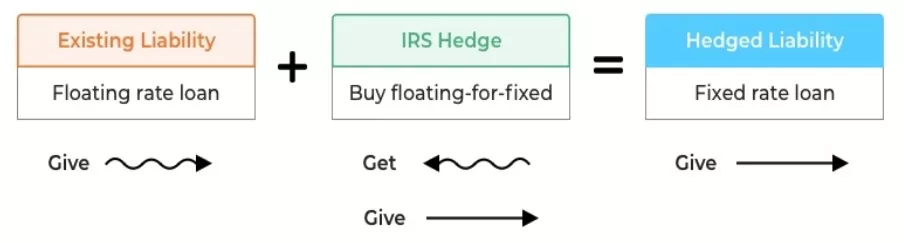
The ability to trade future yield as an asset/token is a very powerful idea. It increases the amount of credit and leverage in the ecosystem, improves price discovery, increases market efficiency, and allows market participants to speculate and hedge interest rate risk.
image description
Source: Delta Exchange
Benchmark is a protocol that enables the tokenization and trading of future yields. It allows participants to peel off the yield on the underlying asset and trade that yield separately as their own token. In this way, Benchmark enables holders of these assets to sell their rights to (variable) yields for cash upfront, thereby locking in a fixed rate for a fixed period of time. Buyers of these rights purchase yield tokens to gain exposure to variable yields in a capital-efficient manner without staking collateral and worrying about liquidation.
image description
Horizon builds on a similar concept and addresses concerns about the limited fungibility and liquidity of fixed-term yield tokens, as well as the margin and AMM requirements associated with such tokens. It adopts the method of game theory to form a decentralized interest rate market. By introducing an interspersed auction market (Horizon mark) with different periods, participants can compete for priority payment in exchange for a cap on the rate of return in a fair and transparent competitive environment.
By using the CLOB system, Swivel avoids the need for AMM pools, avoiding slippage entirely. Also, by running on top of larger lending protocols like Compound and Aave, it doesn't have to bootstrap both sides of the market.
image description
secondary title
Securitization and Equity Conversion
Wall Street's legacy wouldn't be complete without the notorious mortgage-backed securities that crashed the global economy in 2008. If leverage is used irresponsibly, it can lead to overvalued bubbles followed by catastrophic corrections. Yet the underlying innovation behind MBS and other convertible securities is very powerful—segmenting cash flows into different risk profiles to meet the needs of a variety of investors with different risk profiles and utility functions.
image description
Source: Wikipedia
BarnBridge is a volatility derivatives agreement that aggregates the yields of different agreements and aggregates them into high-yield and low-yield convertible bonds with different risk profiles. SMART Yield Bond (structured market-adjusted risk convertible bond) collects and deposits collateral into a lending agreement or yield generation contract, and then bundles its yield into different convertible bonds and marks them. Therefore, the most senior convertible bonds have a lower yield and a safer risk profile, while the junior convertible bonds have a higher yield but have additional risk exposure. SMART bonds essentially realize the free market pricing of yield risk buying and selling."A "This allows users not only to obtain fixed-rate yields, but also to pool the yields of numerous protocols in the entire ecosystem to create greater efficiency by diversifying risks and smoothing industry yield curves."AA "Saffron is another protocol that tokenizes the ownership of assets on the chain. By using the Saffron pool to select customized risk and return conditions, liquidity providers can gain greater flexibility and dynamic exposure.
Saffron tokenizes the future income stream of each asset and the net present value of the principal used. Proceeds based on tokenized holdings are distributed across all tiers via a return waterfall. The initial application of the return waterfall utilized two main types of convertible bonds: a yield-enhanced
Grade convertible bonds, one is a super senior with reduced risk





