






The wave of DeFi "liquidity mining" is coming, will the FCoin tragedy repeat itself?


Editor's Note: This article comes fromBabbitt Information (ID: bitcoin8btc), author: free and easy, released with authorization.
Editor's Note: This article comes from
Babbitt Information (ID: bitcoin8btc)
Babbitt Information (ID: bitcoin8btc)
Recently, in the Defi community, concepts like "liquidity mining", "pending order mining", and "loan mining" have become popular, which will inevitably cause some concerns.
After all, when it comes to "XX is mining", many people's first reaction will be to think of FCoin, a centralized exchange that once became popular by virtue of the "transaction is mining" model, but now it has become a place where everyone shouts and fights. s project.
Is this concern warranted?[1]Before talking about the "XX mining" phenomenon and its impact in the Defi circle, let's briefly understand the history of the centralized platform "XX is mining" model.
secondary title[2]XX is the history of mining
In fact, the "transaction is mining" model is not the first of FCoin. As early as 13 years ago, early centralized trading platforms such as Bit Era
, is already trying this pattern. To put it simply, "transaction is mining" is to encourage users to trade through platform currency. The earlier the participation, the more rewards will be. The rules adopted are also very simple and crude: distribution according to the actual transaction volume.
Inspired by this simple rule, participants can generate astronomical transaction volume by swiping orders back and forth. During the peak period of FCoin, many trading miners used robots to swipe their volume, which led to the FCoin platform being launched on 15 The 24-hour trading volume in Tianhou exceeded 28.8 billion yuan
, Surpassing OK, Binance, Huobi and other established centralized exchanges in one fell swoop.
But in the eyes of a discerning person, this is actually a false prosperity manufactured by people. Once the bubble is blown up quickly, it will be easier to burst.
Through this model, FCoin has tasted the madness of speculation in a short period of time, but it has also planted huge hidden dangers, and finally developed to the point of being out of control.
Of course, the failure of FCoin is not only due to the "transaction is mining" model, but also because of the human factor involved, because managers can use users' funds without any scruples without being regulated.Next, we switch back to the "decentralized" Defi world.secondary title
What is the purpose of Defi's "XX is mining"?
The author wrote in the previous article "
Defi study notes
"It is mentioned that many so-called Defi projects are actually very centralized. For example, in the early stage of the star project Compound, the team is in control of the management key (Admin Key), which means that the Compound project party can suspend/freeze the contract , Modifying rules such as interest rates, theoretically, it can also steal users' funds.
Of course, setting the management key is not necessarily for evil, but as the maturity of the project becomes higher and more funds are involved, decentralized management becomes an inevitable step for the project party to take. Otherwise users will lose confidence and leave the protocol as a result.[3]In such a context, the launch of governance tokens has become a very reasonable choice (Note: This method was first applied on Maker and has achieved relatively good results).
As a result, Defi star projects such as Compound and Balancer have successively announced the issuance plan of governance tokens, so how to distribute these governance tokens?[4]。
This has become a problem that project parties must consider. After all, traditional distribution methods like IXO have long been reduced to street rats, so they are not suitable for adoption.
The way Compound chooses is to allocate half of the tokens to investment institutions and teams, and the other half is allocated through loans, and approximately 2880 COMP tokens are allocated every day
, about 4 years of time allocation is completed.
The way Balancer chooses is to distribute 1/4 of the BAL governance tokens to the founding team, advisors, and investors, and the remaining 3/4 is distributed through the liquidity ratio provided by users, and 145,000 BAL governance tokens are distributed every week. currency
Simply put, Compound's "loan mining" is very similar in effect to FCoin's "transaction is mining". Both encourage participants to complete transactions, which can easily lead to speculation and false prosperity.
The way of Balancer is to attract participants to provide liquidity for the asset pool, which is essentially very similar to another model of "placing an order is mining". As for the purpose, they are to improve the liquidity or depth of the system, rather than directly Incentivizing participants to complete transactions, in effect, does not promote false prosperity, but real prosperity.
However, due to the highly volatile nature of governance token prices, this invites speculation, which may be positive in the short term but negative in the long term.[5]So is there any other way to promote liquidity?
secondary title
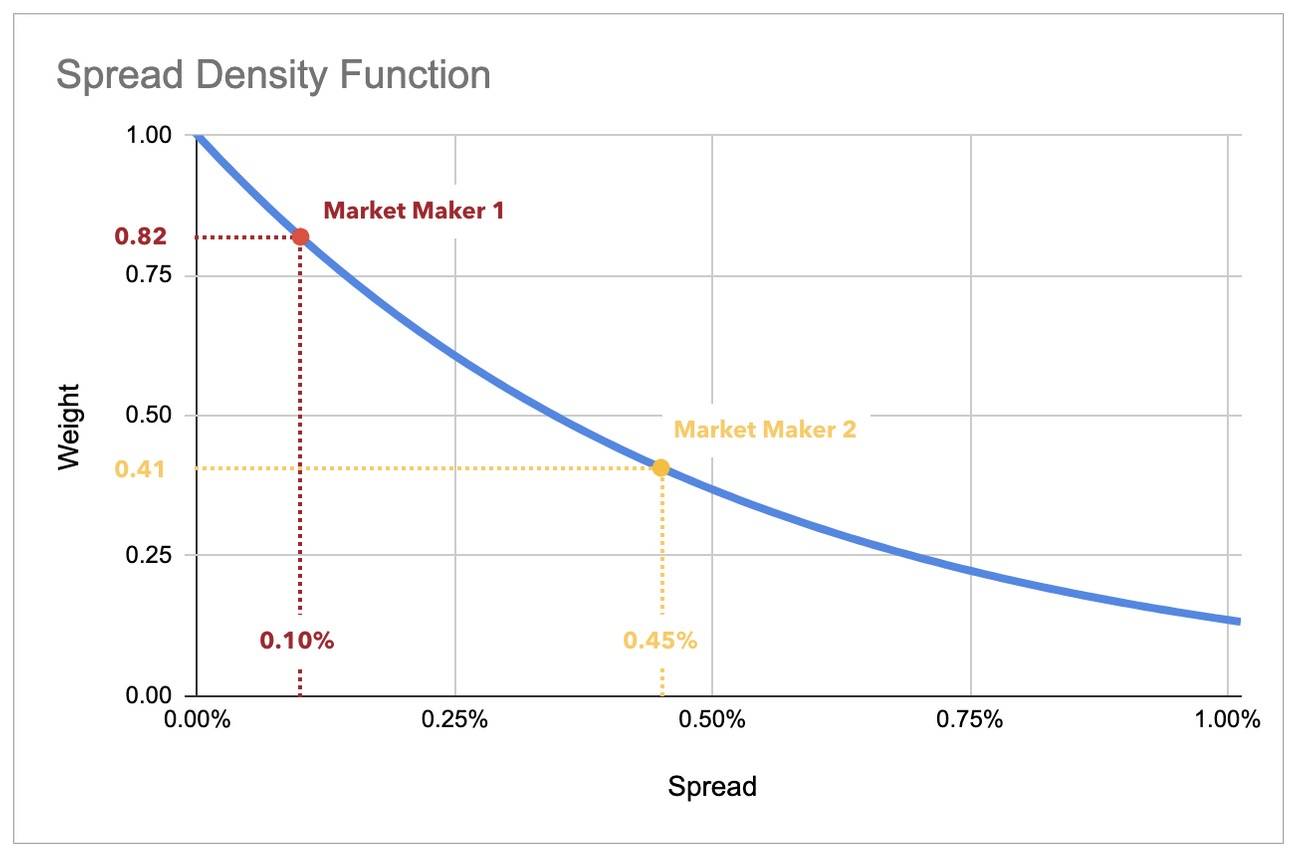
One possibility is to use stable coins to replace platform coins as incentives. For example, Loopring recently adopted Hummingbot’s liquidity mining rules
, using USDT as an incentive to encourage participants to place orders to provide liquidity. (Briefly explain the relevant rules: the higher the pending order volume, the higher the reward, the smaller the price difference between the pending order price and the bid and ask prices, the higher the reward, and then perform a comprehensive calculation through the algorithm, as shown in the figure below)
In this way, the certainty of the incentive amount is very high, which is easy for participants to calculate and will not be affected by currency price fluctuations. Of course, the disadvantage is that the project party needs to provide real money.
Another way is to use the most recognized cryptocurrencies in the market as incentives (such as BTC and ETH). The incentive effect of this method may be better, but the volatility is higher than that of stable coins, so it is difficult to implement calculate. So far, the author has not seen any project parties adopting this method.
secondary title[6]What other ways to promote the liquidity of Defi?
In fact, in addition to the incentives provided by the project party to motivate users to provide liquidity, there are other ways to improve the liquidity of Defi projects.
Common ones, such as the leveraged trading service provided by dydx, this model has been widely used in centralized exchanges and is very easy to understand, and it is also very suitable for order book-type DEX exchanges. Of course, there will be a large number of participants risk of liquidation.
The other is the constant function market maker (CFMM) algorithm adopted by projects such as Uniswap and Balancer.
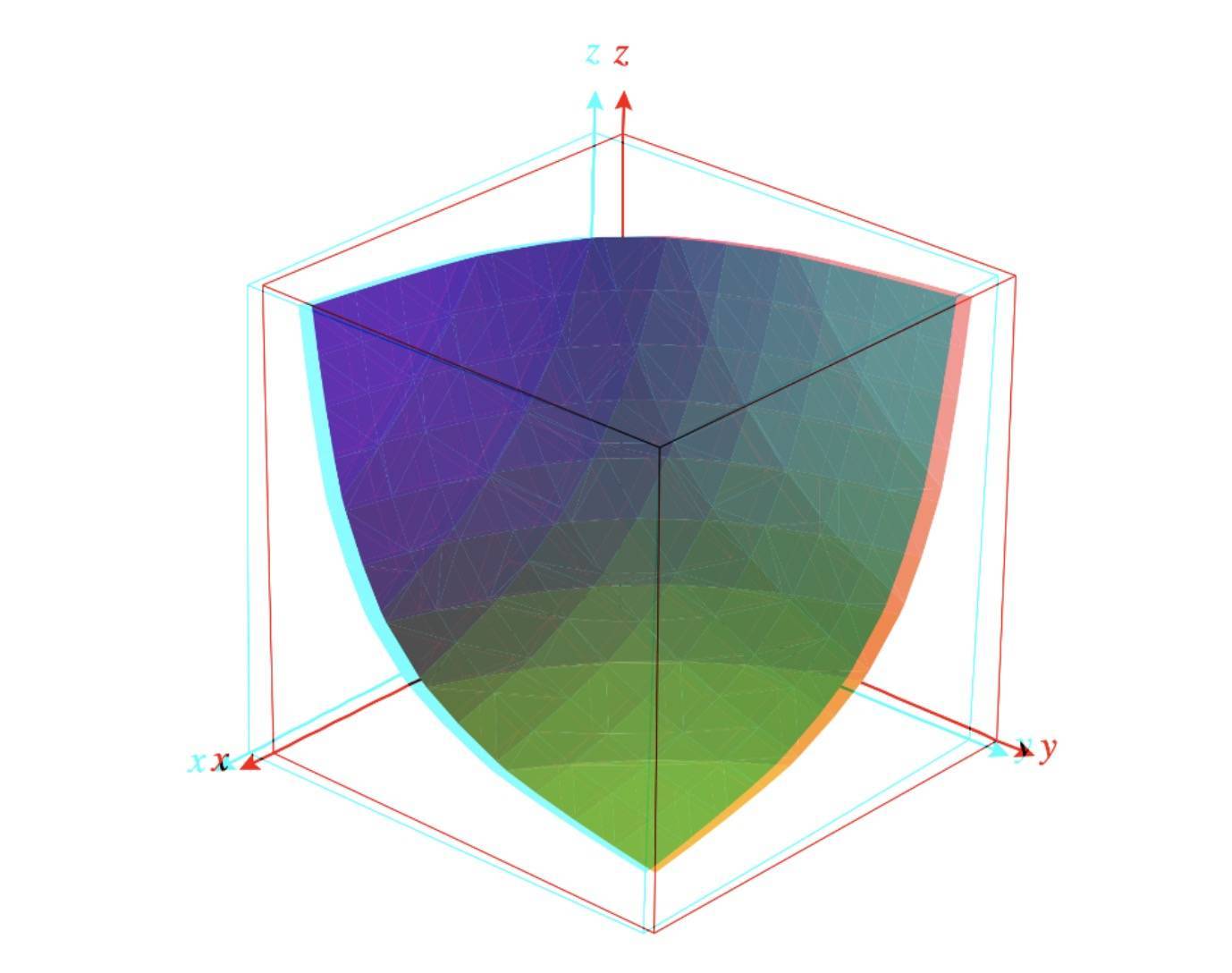
, while in CFMM, there are usually three types of participants:
Arbitrageur: maintain the market price of the assets in the asset pool and profit from it;
Summarize
Through complex mathematical algorithms, the project party can guide users to provide liquidity for the system at a very low cost. However, the biggest drawback of this method is that it is not suitable for large transactions. This is because the larger the transaction amount, the greater the price slippage caused by CFMM, which is naturally not suitable for whale-level participants.
secondary title
Relevant information:





