Kyber and Tokenlon flash transaction and market price deviation analysis


Author: NEST enthusiast_CryptoData
image description
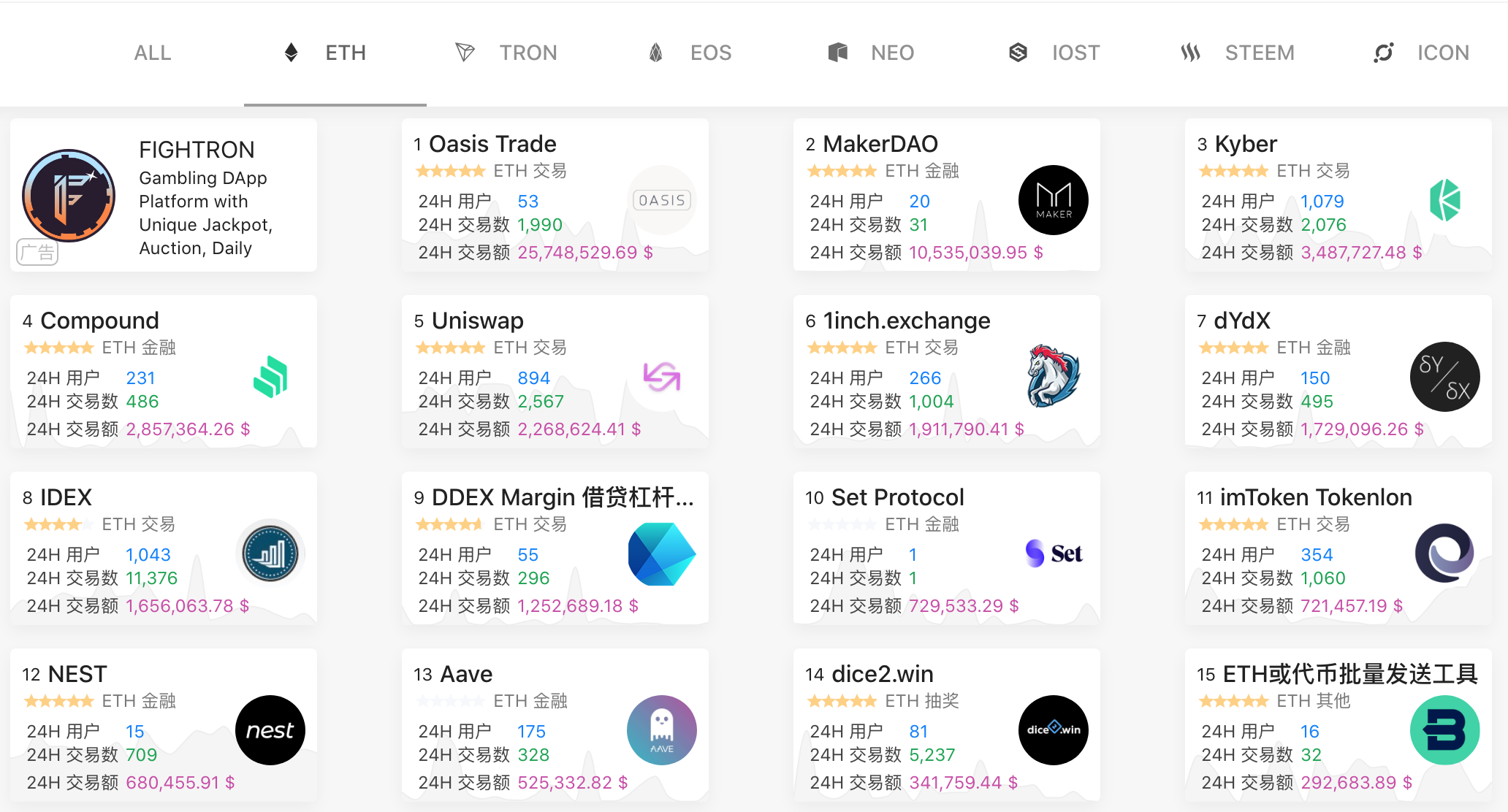
Data source: dappreview
secondary title
Kyber flash exchange data
During the period of 2020.05.11 ~ 2020.05.12, we randomly select40ETH/USDT on-chain transaction order; and find out the transaction price of the Huobi market at that moment at each flash transaction time point. Specific data, as shown in the figure below:
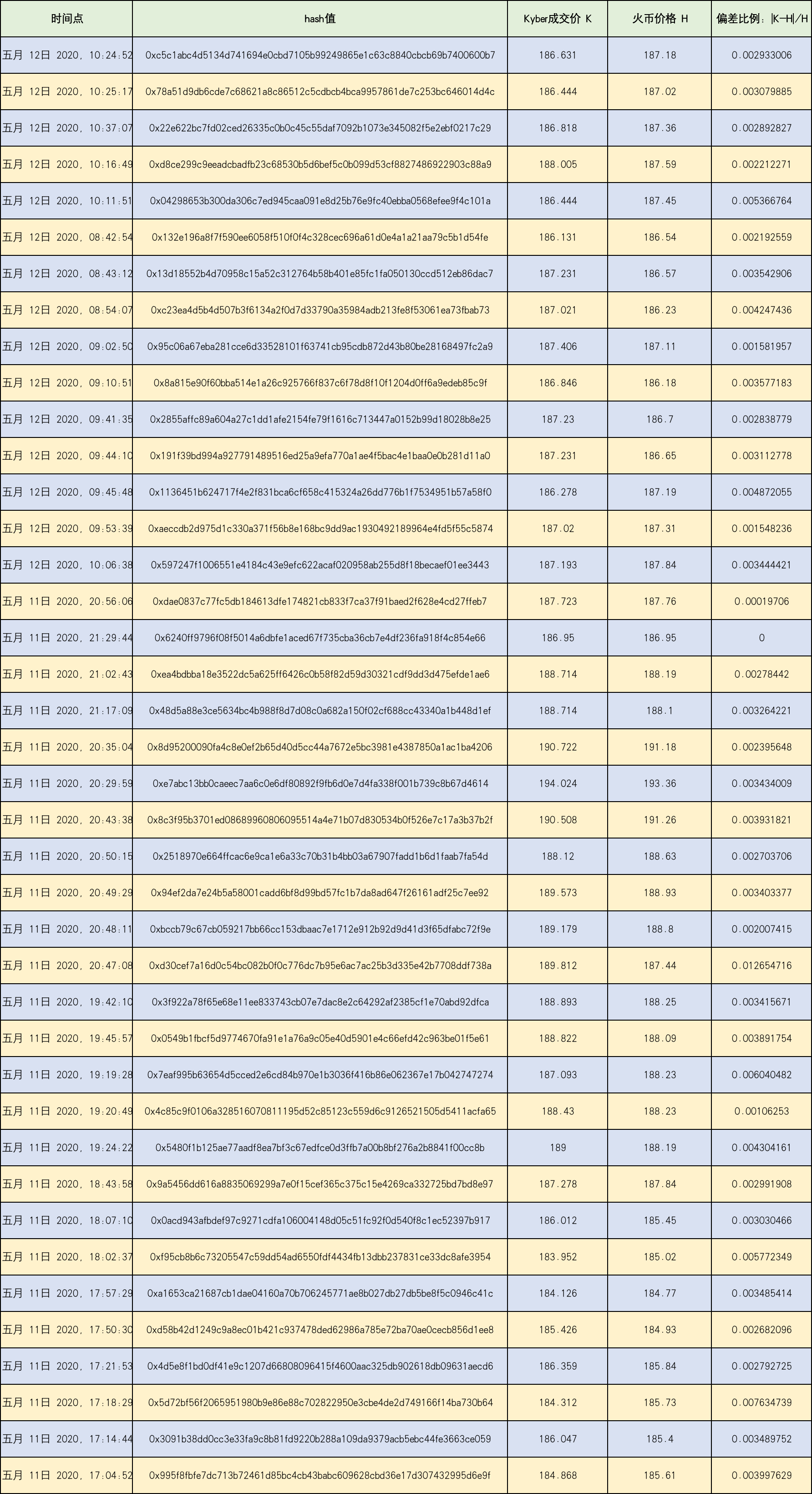
By comparing the Kyber flash exchange transaction price with the Huobi market priceDeviation Rate Calculation, we get:
Average deviation rate: 3.47‰
The standard deviation of the deviation rate is: 2.045‰
According to the introduction in the principle of Kyber flash exchange, there are three main methods of its price mechanism:
Type 1:The group of market makers regularly feeds the price to the contract on the chain, and continuously updates the transaction price in the flash contract for calling during the transaction.
Type 2: Use a predefined algorithmic price, and adjust the algorithmic price after each flash transaction. This scheme is suitable for price generation of illiquid assets.
Type 3: Limit orders initiated by any third party.
Highly liquid asset trading pairs like ETH/USDT adopt the first price scheme. There must be a certain deviation between the price generated by the market maker's price feeding plan and the market price. Currently,The deviation of 2 per thousand is within the acceptable range. ( Remark:Kyber has no transaction fees, except for limit orders)
secondary title
Tokenlon flash exchange data
We will randomly select within 24 hours on 2020.05.1150 ETH/USDT on-chain transaction orders; as above, find out the corresponding Huobi market transaction price at the time point of each flash exchange transaction. The specific data is shown in the figure below:
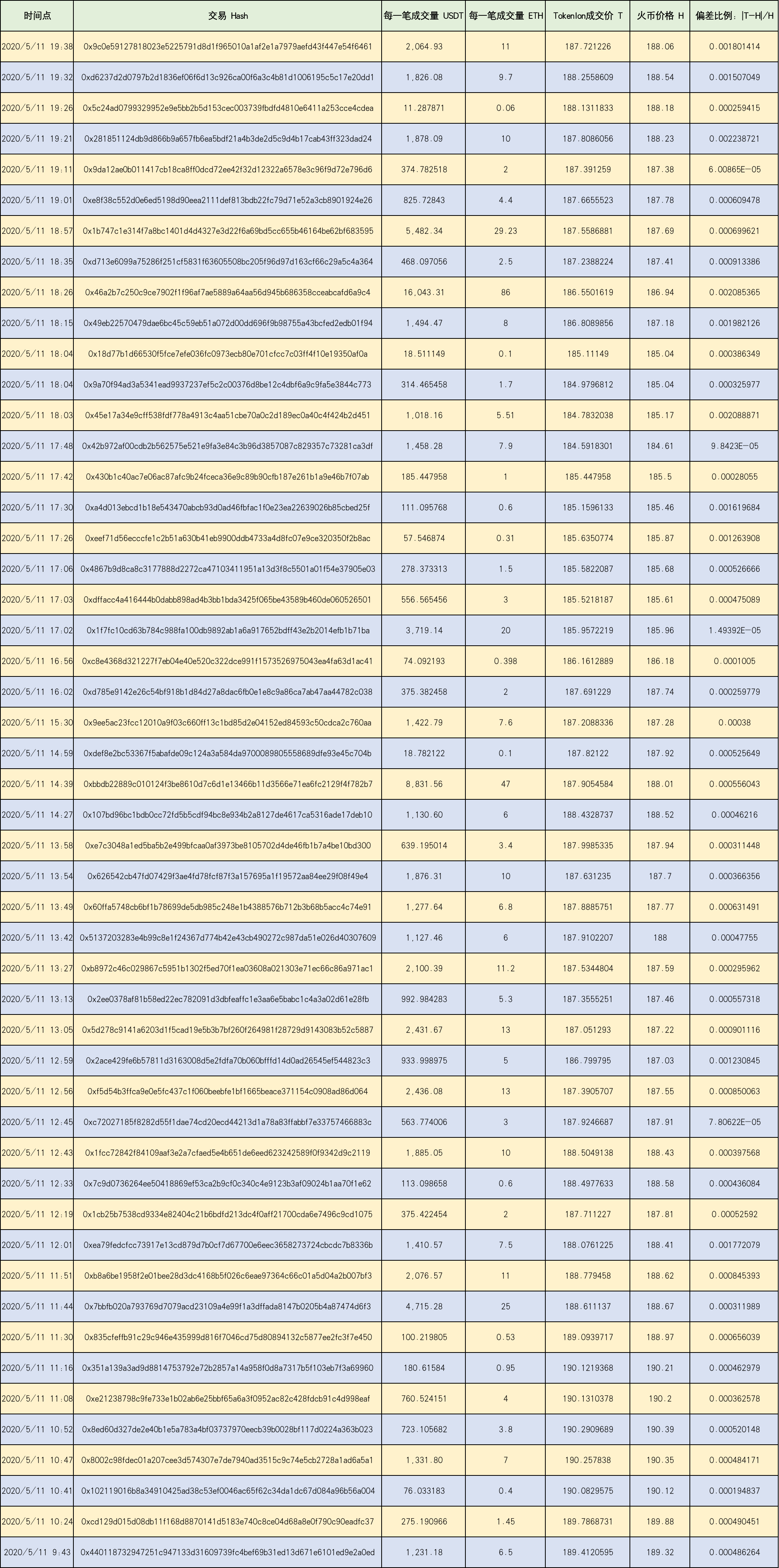
By calculating the deviation rate between the Tokenlon flash exchange transaction price and the Huobi market price, we get:
Average deviation rate: 0.7‰
The standard deviation of the deviation rate is: 0.58‰
We can see that the price deviation between the flash exchange price on Tokenlon and the Huobi market is very small,Only 5/10,000, almost 0 premium。
Let's take a look at Tokenlon's price mechanism:
Tokenlon uses the counter quotation mode. In short, flash exchange is like a token exchange counter. Users can ask for the price of Token, and if they accept the quotation from the counter, they can quickly trade. In order to provide users with satisfactory prices, multiple market makers must be connected to the back end of the counter to improve market liquidity.
When a user asks for a price, Tokenlon will inquire about all market makers; the prices returned by all market makers will be aggregated in Tokenlon, and Tokenlon will filter the best order and return it to the user. The inquiry/quotation process is high-speed and efficient, and the system will continuously push the best quotes to users. This also explains why the Tokenlon flash transaction price is so close to the market price. ( Remark:data analysis:)
comprehensive comparison
data analysis:There is almost zero deviation between the flash transaction on Tokenlon and the market price, which means that the market maker on Tokenlon does not conduct premium operations; while the deviation on Kyber is 2 per thousand, which is within the normal range.
User transaction experience:Kyber is already doing very well, and Tokenlon is faster on top of it.However, the disadvantages of Tokenlon are also very obvious, relying heavily on centralized server information aggregation and front-end interaction; and Kyber is better in this regard, the price comes from the contract on the chain, although it is the price fed by the centralized organization.
transaction cost:For a transaction order of a general scale, because Kyber does not charge users a handling fee, the user's comprehensive transaction cost on Kyber is the aforementioned price deviation, which is 2 per thousand; while Tokenlon's price deviation is almost 0, but The handling fee is 3 per thousand, so the transaction cost after integration is 3 per thousand.
So, in the end, our conclusion is: For ordinary trading users, there is no obvious difference whether they use Tokenlon or Kyber. (for reference only)