Decentralized Exchange Research Report


In recent years, with the rise of smart contracts and the development of blockchain technology, decentralized exchanges (hereinafter referred to as DEX) have gradually entered people's field of vision. There are various implementation methods of DEX, but the core element is that users control their own property, there is no need to trust a third party during the transaction process, and transactions are settled on the chain in real time. DEX utilizes the inherent security of the blockchain system to protect users' property.
The following is a summary of the key points:
1. Most of the current DEXs cannot achieve complete decentralization, and some functions still need to be placed off-chain, and even part of the trust of users is still required. However, compared with centralized exchanges, the time and amount of property required for this kind of trust is much smaller than that of centralized exchanges.
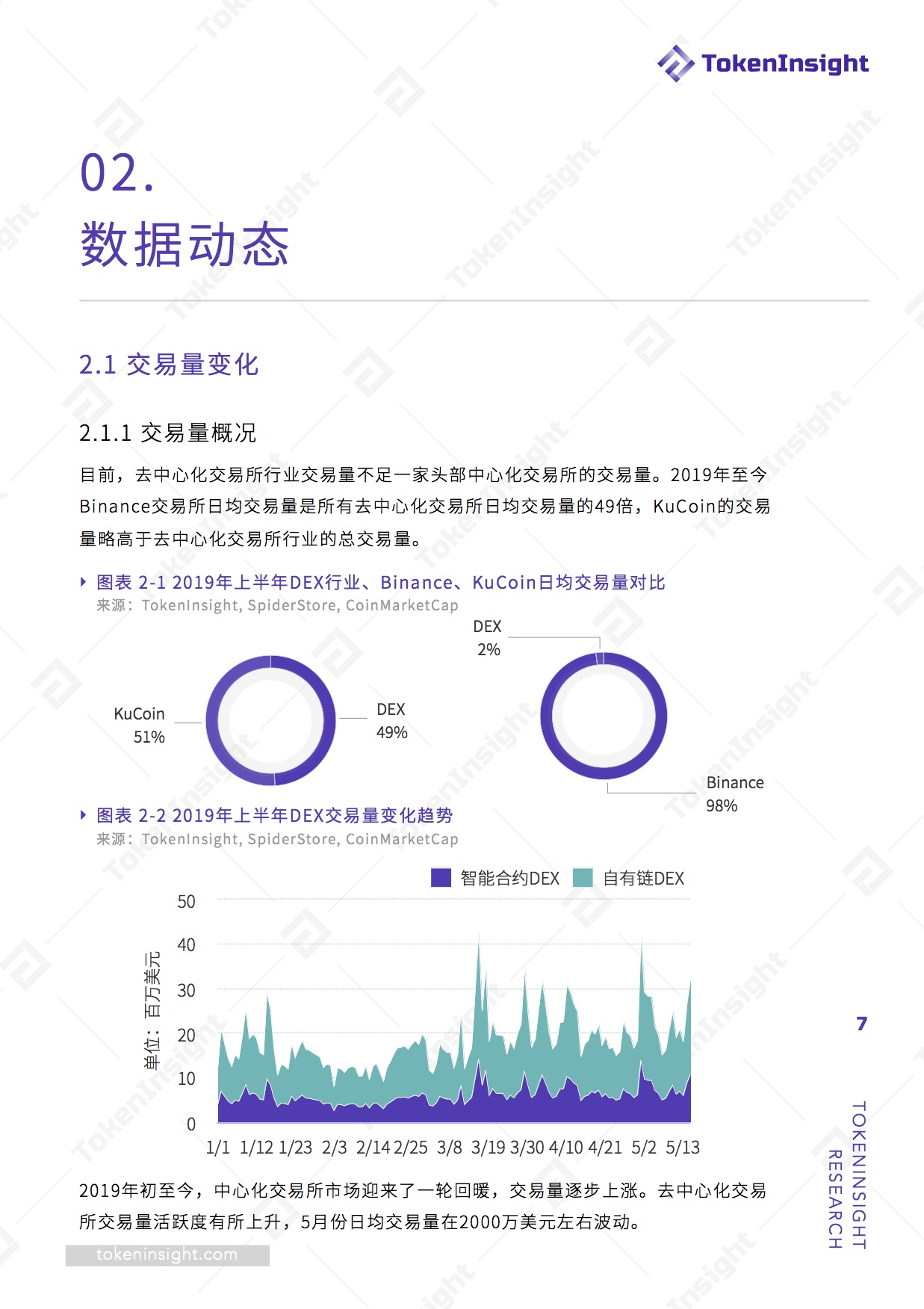
2. Since 2019, the average daily trading volume of Binance Exchange is 49 times the average daily trading volume of all decentralized exchanges, and the trading volume of KuCoin is slightly higher than the total trading volume of the decentralized exchange industry.
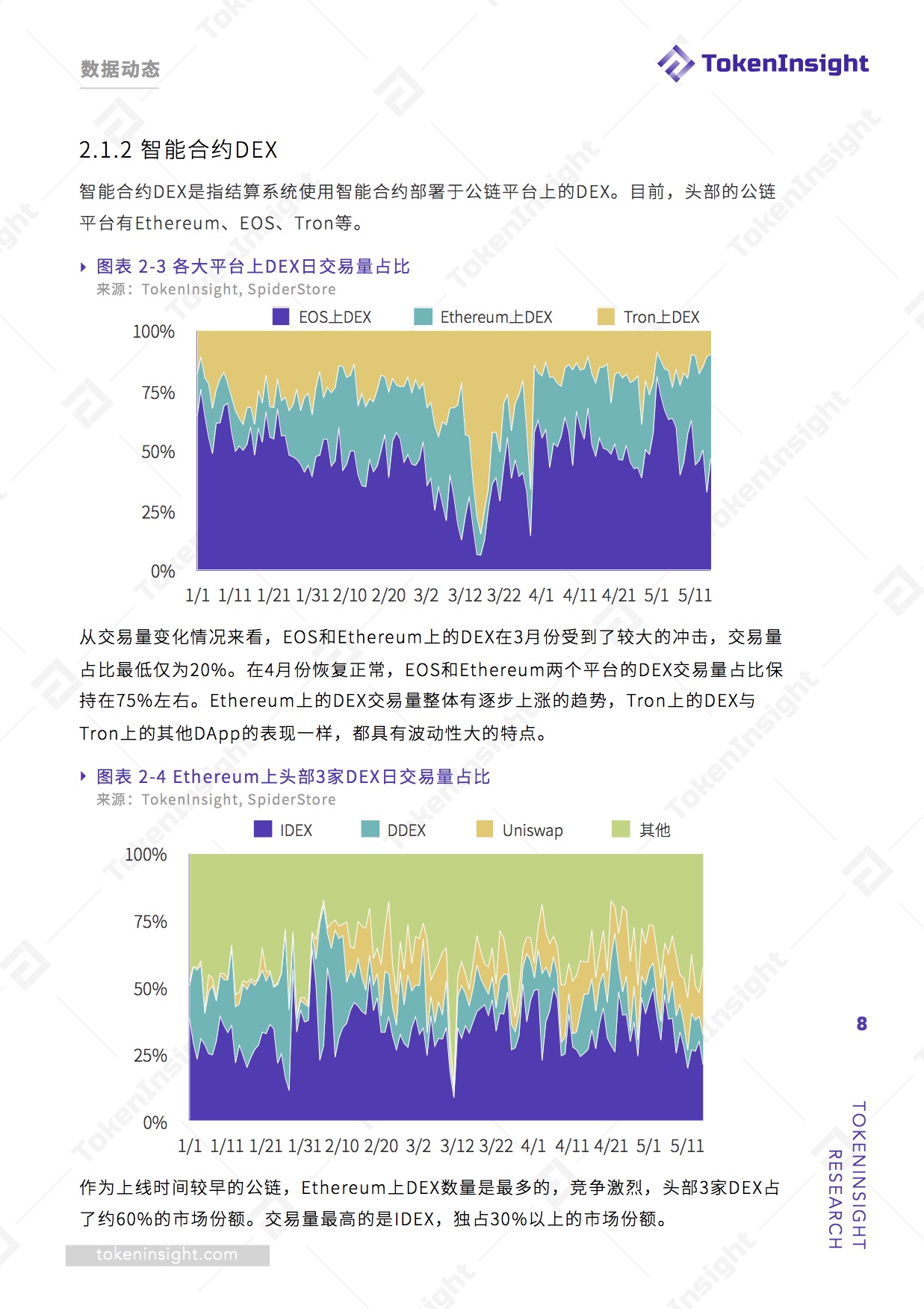
3. Judging from the changes in trading volume, the overall trading volume of DEX on Ethereum is gradually increasing. The performance of DEX on Tron is the same as that of other DApps on Tron, and they all have the characteristics of high volatility.
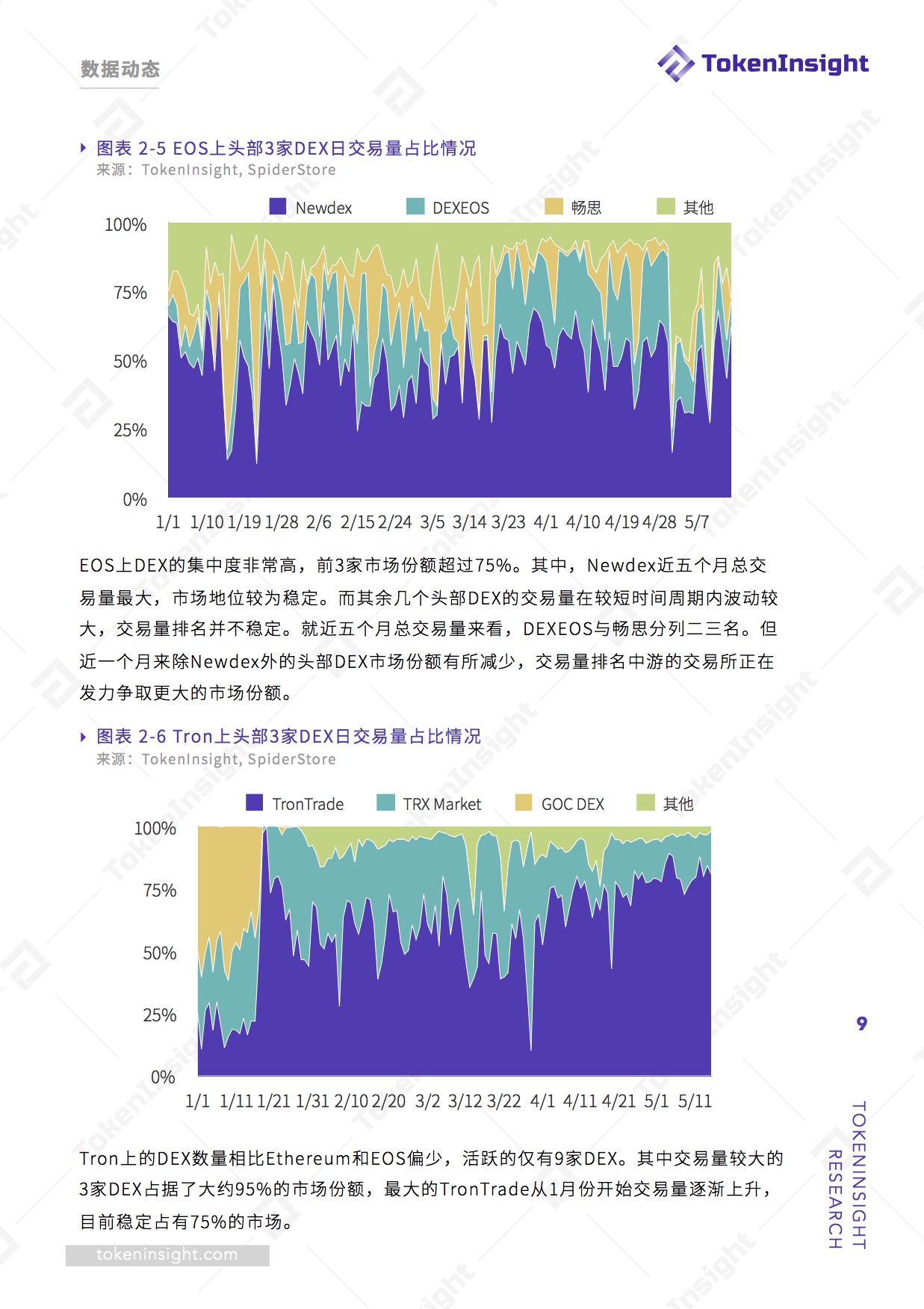
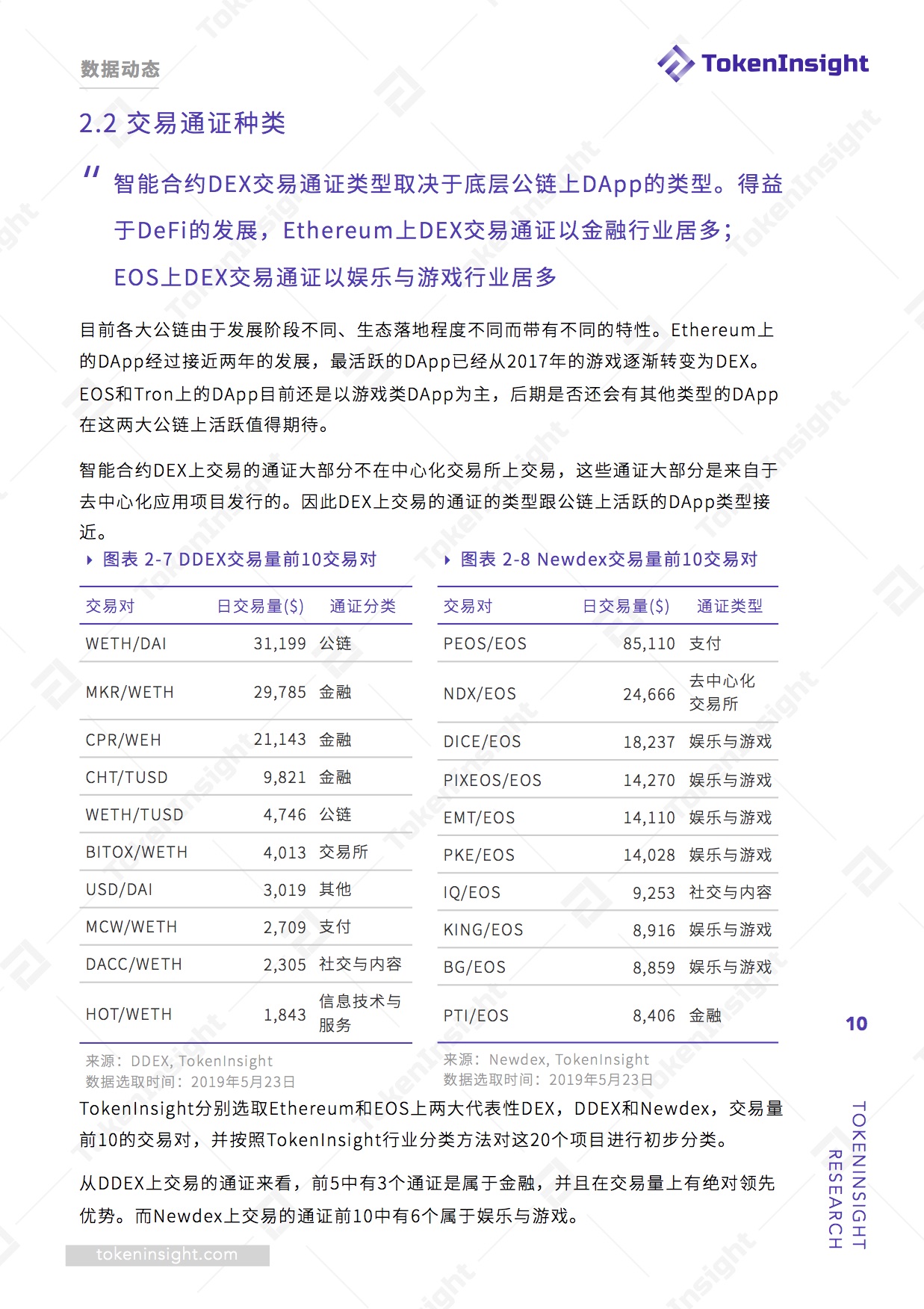
4. The number of DEXs on Ethereum is the largest and the competition is fierce. The top three DEXs account for about 60% of the market share. The one with the highest trading volume is IDEX, which occupies more than 30% of the market share. The concentration of DEX on EOS is very high, and the market share of the top three exceeds 75%. The number of DEXs on Tron is relatively small compared to Ethereum and EOS, and there are only 9 active DEXs.
5. Existing problems: lack of mainstream trading pairs, poor trading efficiency and depth.
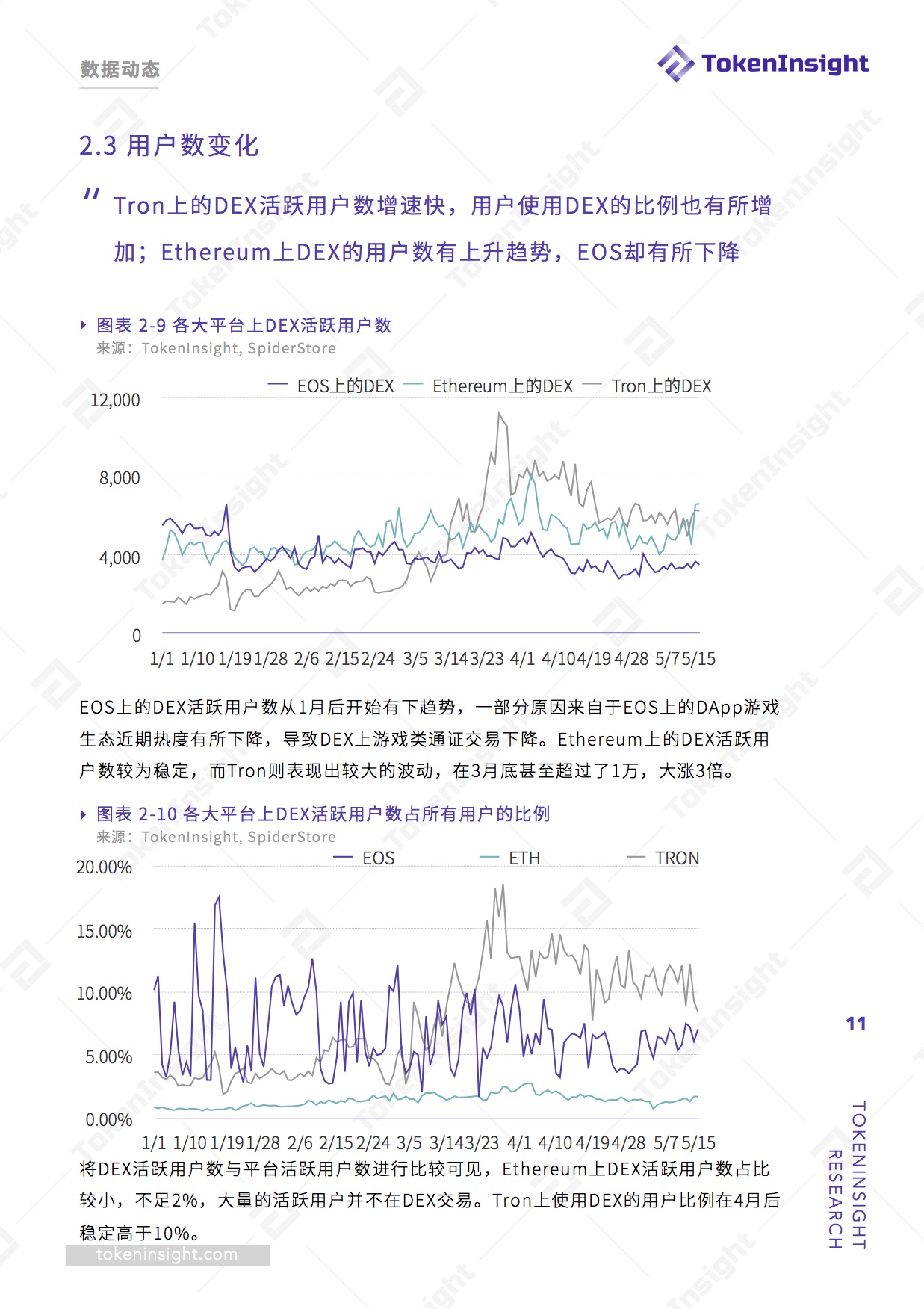
6. Development trend: With the development of decentralized applications, the tradable tokens on DEX are gradually increasing. In the long run, game tokens, functional tokens, and niche financing tokens will still be traded on DEX mainstream.