


Déjà vu? After "AI stock god" gets blown up again, AI trade sees a rebound


- Core View:The AI sector saw a technical rebound after a selloff driven by forced liquidation of crowded positions, but analysts generally view this as a "fragile rather than outright bearish" recovery. Deleveraging has not yet fully played out, and confirmation of a bottom still requires fundamental validation.
- Key Elements:
- The Philadelphia Semiconductor Index ended its eight-day losing streak, closing up 1.6% on Monday, but CoreWeave, despite rising 7.4% intraday, still closed down 0.4%, casting doubt on the quality of the rebound.
- Hedge funds net sold global AI stocks for five consecutive days, and the cumulative net buying of AI stocks since 2025 has been completely erased; net allocation fell from a June peak of 31.7% to 26.1%.
- Star investor Aschenbrenner suffered two blown-up AI bets within six months, with six of the seven heavily concentrated stocks he rebuilt in September plunging sharply, averaging an 18.3% decline.
- Goldman Sachs upgraded CoreWeave's rating to "Buy," with a target price of $106 implying more than 40% upside; UBS raised its 2026 global AI capex forecast to $900 billion, representing 84% year-over-year growth.
- Hedge funds' net exposure has fallen to the 30th percentile of the past five years, but gross exposure remains above the 90th percentile, leaving room for further deleveraging.
- CoreWeave bond prices briefly fell to levels signaling financial distress, as market concerns over the sustainability of AI infrastructure financing structures formed an independent pricing logic.
Author: Bao Yilong
Source: Wallstreetcn
After a new round of violent shakeout, the AI sector staged a technical rebound on Monday, but whether this rebound marks a trend reversal or just a brief respite remains a subject of deep disagreement in the market.
On Monday, October 19, the Philadelphia Semiconductor Index ended its eight-day losing streak, rallying more than 3% intraday before closing up 1.6%.
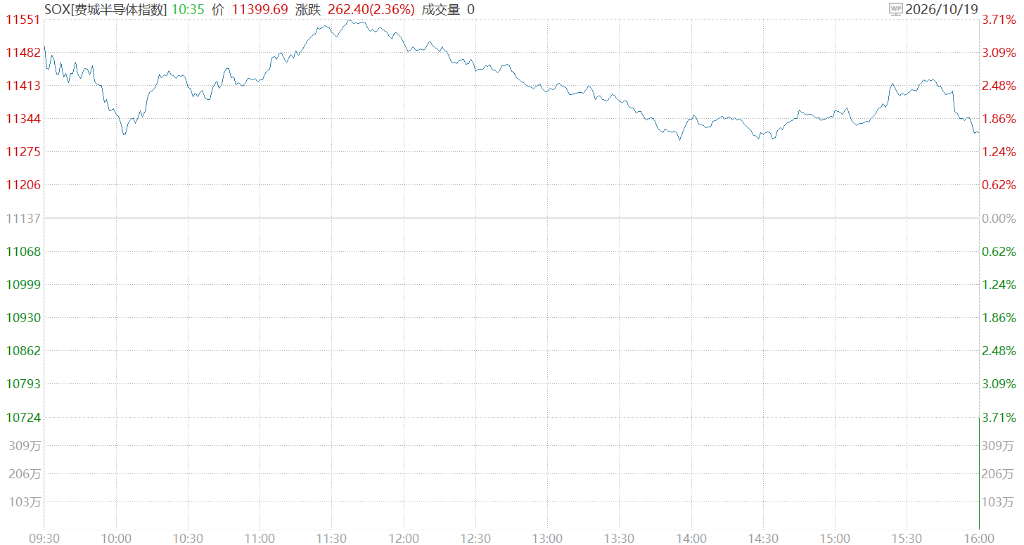
Goldman Sachs that day upgraded cloud computing company CoreWeave from "Neutral" to "Buy," and several Wall Street analysts also spoke out in support of fundamentals, helping to dispel some of the panic over "peak AI capex" that had briefly permeated the market.
The backdrop to this rebound is strikingly similar to the deleveraging episode triggered months ago by the blowup of the Situational Awareness fund.
Wallstreetcn noted that UBS trading desk trader Torsten Sippel explicitly pointed out in a report last week that market action closely resembled the "AI stock god" event—both involved forced liquidation of crowded positions rather than fundamental-driven systemic selling.
However, as the rebound emerged, analysts cautioned that hedge fund gross exposure remains elevated, deleveraging risks have not been fully cleared, and the market remains divided over whether this rebound is a genuine bottom or merely a brief respite.
The "AI Stock God" Gets Blown Up Again
This is already the second time in less than six months that Aschenbrenner has been defeated on AI bets.
In July of this year, Aschenbrenner's Situational Awareness fund suffered losses of up to tens of billions of dollars amid a sharp AI sector correction, setting a record for the largest single-fund loss in hedge fund history. It ultimately had to sharply reduce leverage and sell most of its public market positions to Citadel. In a letter to investors, Aschenbrenner said he would "fight another day" and promised to "learn the necessary lessons."
Yet just weeks later, he was back.Wallstreetcn noted that in September, Aschenbrenner began rebuilding the core positions that had previously blown up, covering AMD, Intel, SK Hynix, SanDisk, and CoreWeave, among others—except that he switched from the high-leverage total return swap model previously used through major investment banks like Goldman Sachs to flexible options structures, aiming to cap maximum losses at the premiums already paid.
The results were equally disheartening. Since September 8, six of the seven stocks he heavily bet on have suffered sharp declines: CoreWeave fell 37.4%, SK Hynix dropped 25.8%, SanDisk declined 23.8%, DRAM fell 22.9%, Bloom Energy lost 18.1%, and Intel slid 9.4%. Only AMD recorded a 9.1% gain, with the seven names averaging an 18.3% decline.
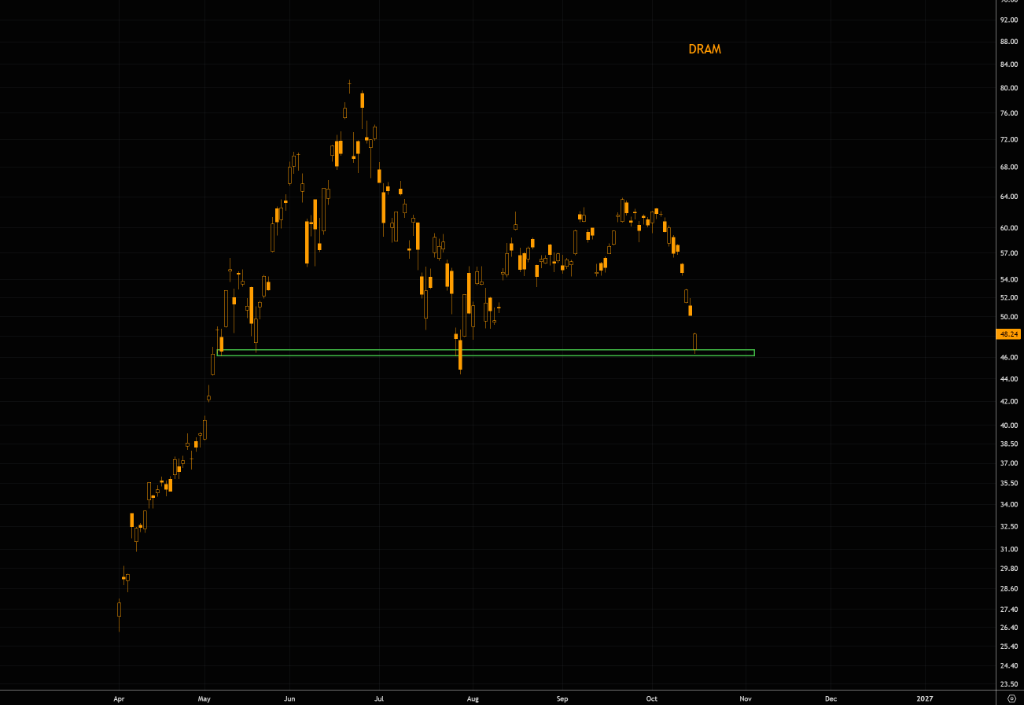
The Market Ear called the episode "Leopold Lows 2.0." DRAM prices have fallen back to the lows seen during the previous blowup.
CoreWeave's RSI has also fallen back to levels seen at that time.

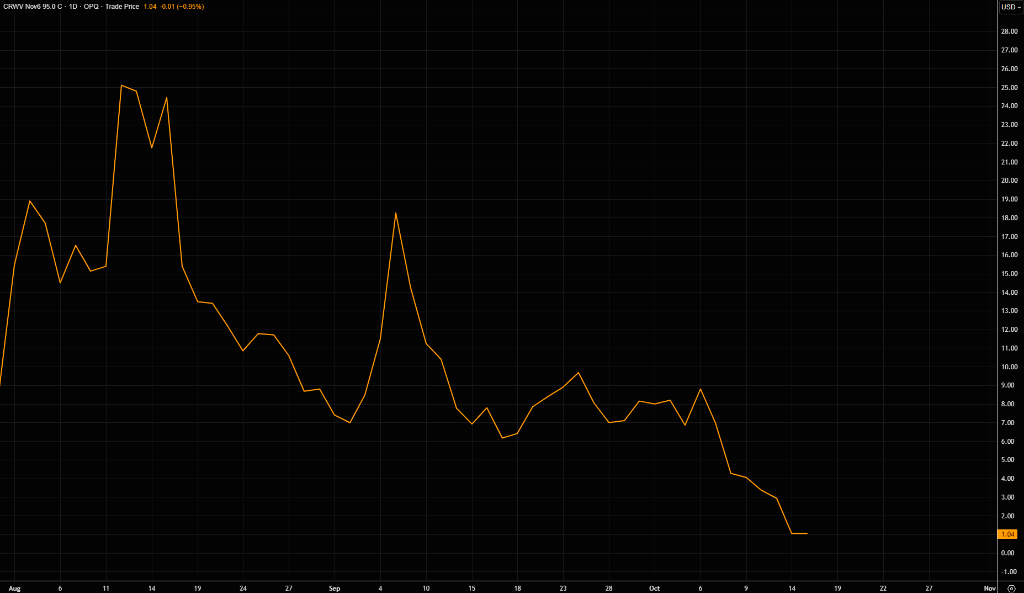
And the CoreWeave November-expiry $95 strike call options he established in early September have plunged from a peak of $18 to just about $1.
Position Flushing and Technical Oversold: Rebound Conditions Are Converging
Judging from Goldman Sachs data, the structural characteristics of this selloff actually laid the groundwork for Monday's rebound.
Hedge funds have net sold global AI stocks for five consecutive trading days. According to Goldman Sachs, cumulative net buying of AI stocks since the start of 2025 has been completely erased.
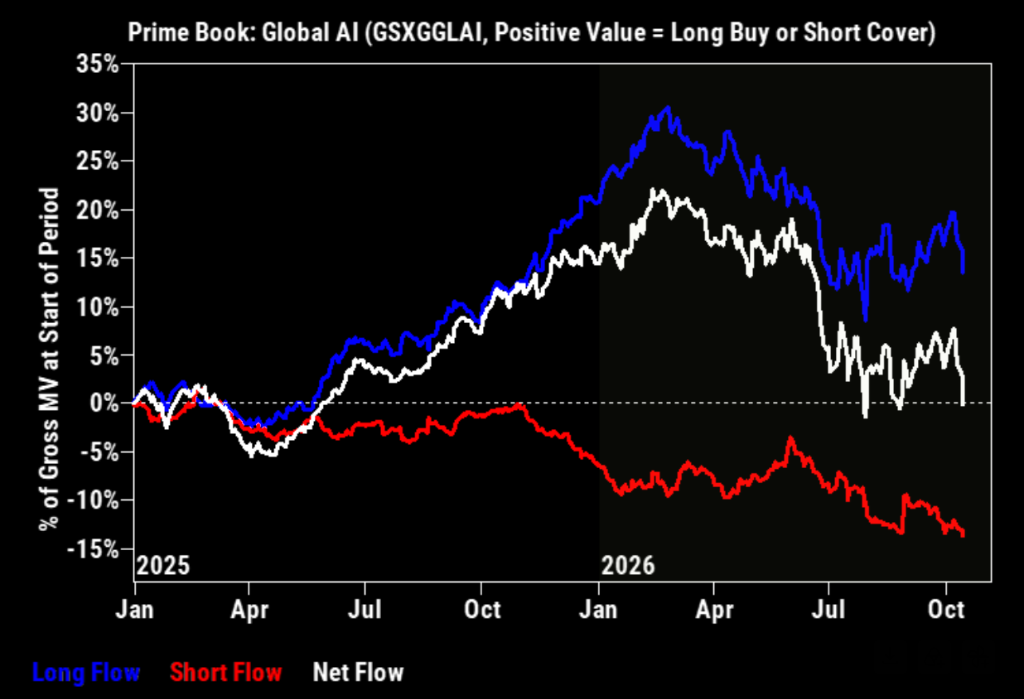
Global AI stocks recorded their second-largest net selling volume in nearly a year during this period. Hedge funds' net allocation to global AI stocks fell from a June peak of 31.7% to 26.1%, sitting at the 49th percentile over the past year; the long/short ratio dropped from 4.34 to 3.27, landing at just the 7th percentile over the past year.
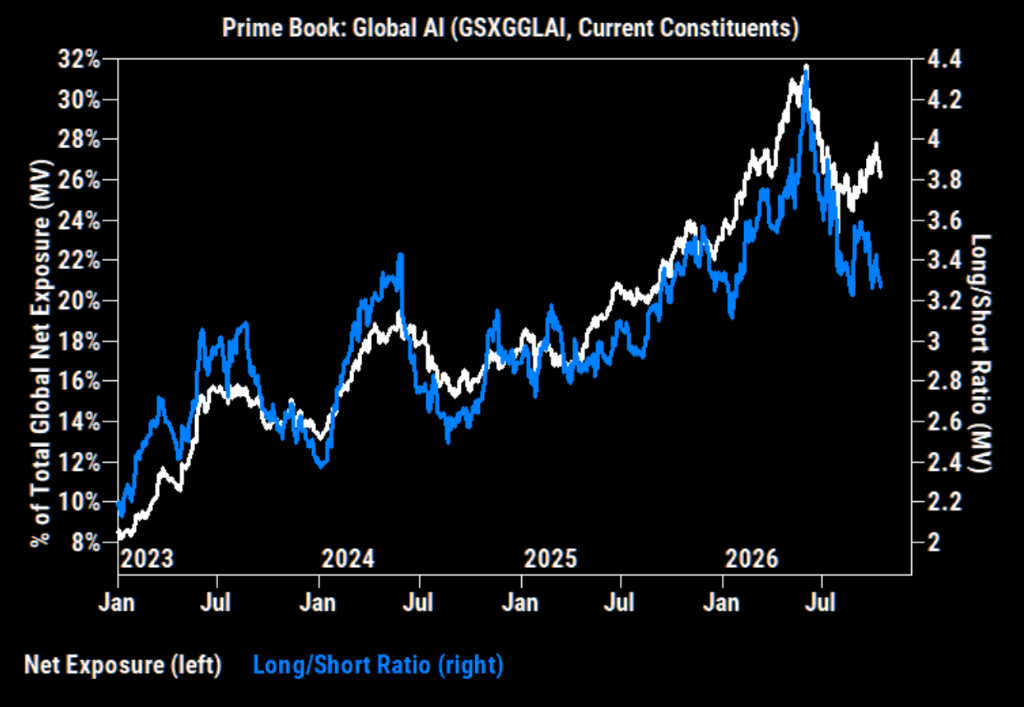
The Market Ear analysis noted that the selling was primarily long reductions. Last week's global net sell flow reached -2.1 standard deviations, with long selling to short selling at roughly a 3-to-1 ratio, indicating the market is in a phase of actively reducing risk exposure.Once forced selling gradually exhausts itself, the technical support logic begins to come into focus.
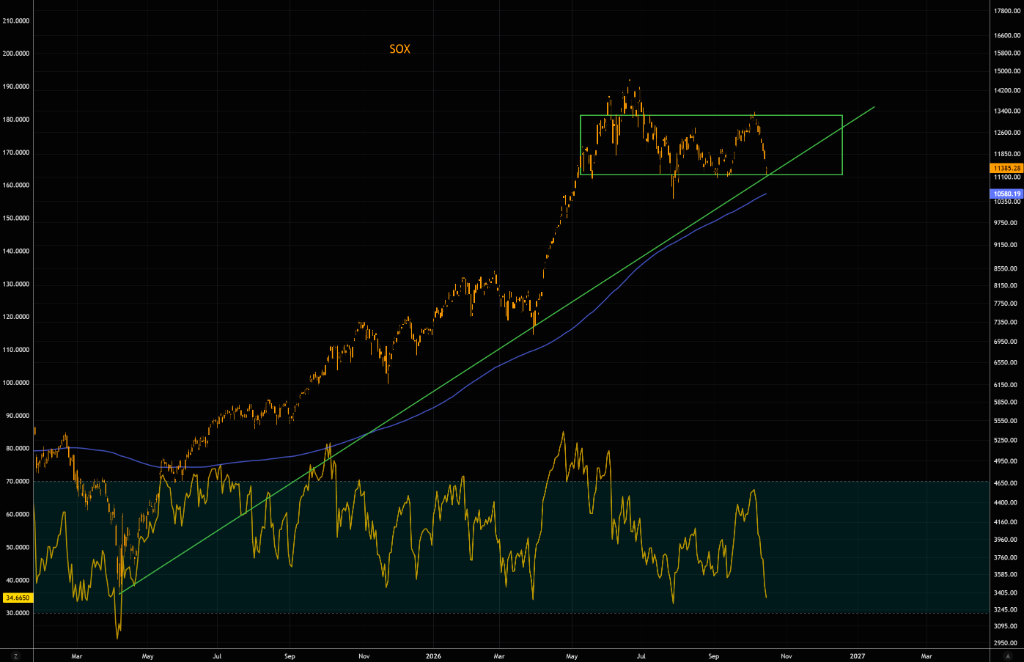
The Philadelphia Semiconductor Index has touched the lower bound of its trading range while approaching longer-term trend support, with oversold conditions reaching extremes.
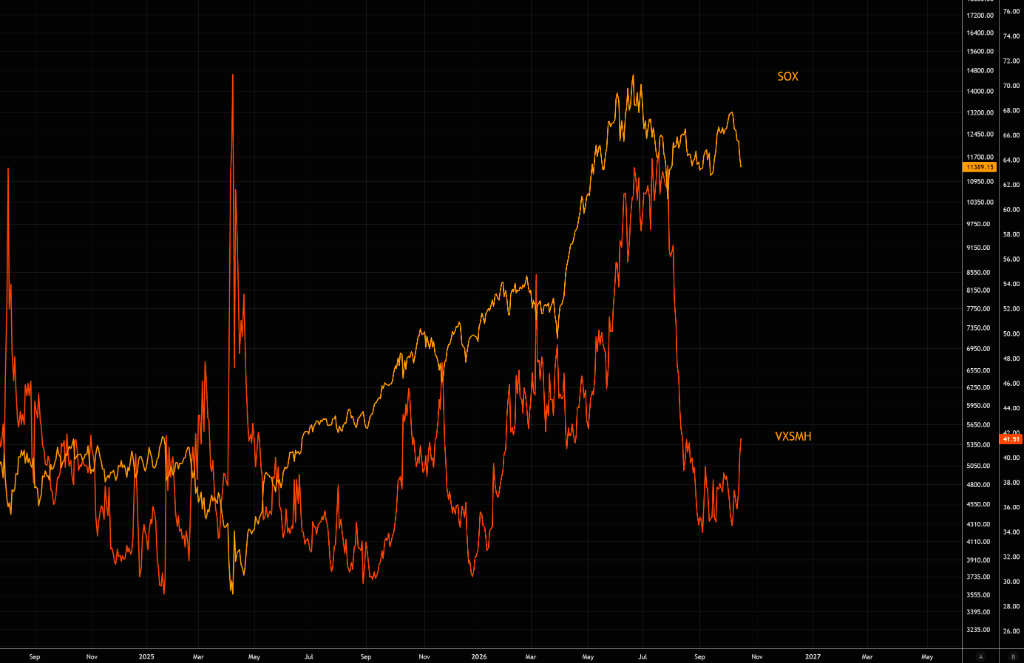
Meanwhile, panic in the options market also concentrated its release this week, with VXSMH (the semiconductor volatility index) surging sharply. But analysts believe that according to the principle of "extremes reverse," the bottom often occurs when the market is in maximum panic.
It is worth noting that passive options liquidation also amplified the prior decline to some extent. Delta hedge positions purchased by market makers when building call options were forced to be unwound as option values shrank, creating additional selling pressure on the underlying stocks and exacerbating downward momentum.
Wall Street Analysts: Fundamentals Remain Intact
The rebound was able to occur on Monday thanks in no small part to a wave of analyst endorsements.
Goldman Sachs upgraded CoreWeave from "Neutral" to "Buy." Analyst Gabriela Borges acknowledged legitimate concerns about the company's financing capacity but argued that valuation had become attractive after the sharp decline.
She noted in her research report that even if CoreWeave's blended debt cost rose by 100 to 200 basis points, it would not break through this range, effectively setting a ceiling on the upside for the weighted average cost of capital and keeping the equity return structure intact.
Goldman Sachs cut its target price from $139 to $106, but that still implies more than 40% upside from Friday's close; according to Bloomberg data, the current average analyst target price for CoreWeave is $135.23, implying gains of about 120%.
Star tech analyst Dan Ives likened the selloff to a "SaaS doomsday panic" moment for AI infrastructure, citing CoreWeave's roughly $104 billion backlog at the end of Q2 and emphasizing that demand-side customer commitments remain intact. He expects the fundamentals-driven uptrend to resume after the panic subsides.
Patrick Moorhead, founder of Moor Insights & Strategy, put it bluntly:
I think this is just another round of panic. People are looking for reasons to sell, not reasons to buy.
On the aggregate capex front, UBS Wealth Management's CIO raised its 2026 global AI capex forecast to $900 billion, up 84% year-over-year; for 2027, it further rises to $1.2 trillion, up 33% year-over-year. The direct trigger was a broad cost increase across the AI server supply chain recently.
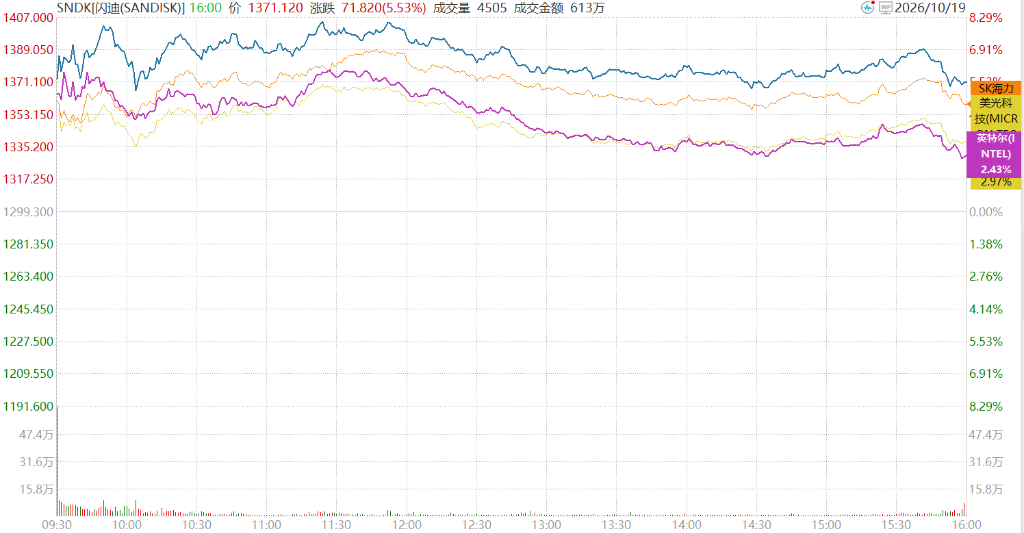
The stocks that rallied most on Monday were precisely those that had fallen the hardest last week. On Monday, SanDisk closed up 5.5%, SK Hynix ADR rose 4.6%, Micron gained 3%, and Intel added 2.4%.
Beyond the Rebound: Deleveraging Is Far From Over
However, this rebound is not without its concerns. Several analysts warned that market structure remains fragile.
UBS's Sippel noted that although hedge fund net exposure has fallen to the 30th percentile of the five-year history, gross exposure remains above the 90th percentile, leaving room for further deleveraging. He characterized the recent market as "fragile rather than outright bearish," arguing that risk is being redistributed.
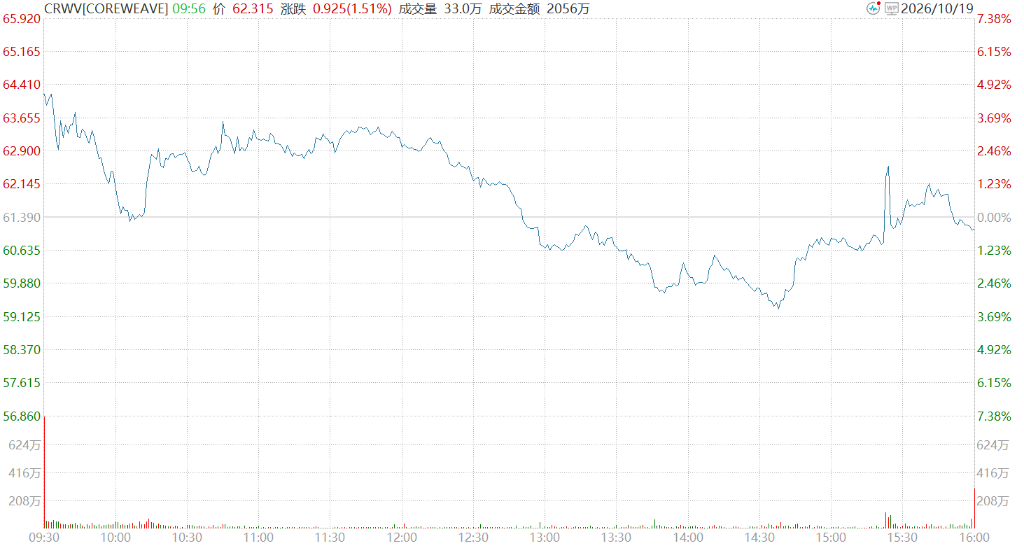
CoreWeave's credit issues have not fully dissipated. Last week its bond prices fell to levels that typically signal financial distress, and the cost of bond default protection briefly climbed to an all-time high intraday. Despite the Goldman Sachs upgrade, the stock rose as much as 7.4% intraday on Monday but ultimately closed down 0.4%.
Sippel noted that market concerns about the sustainability of AI infrastructure financing structures have formed a pricing logic independent of hardware demand, and neither ASML's nor TSMC's strong fundamentals have been able to effectively ease those worries.
Bank of America strategist Michael Hartnett warned that as investors seek to hedge against volatility from rising interest rates, U.S. midterm elections, and AI-themed trades, risk aversion could dominate markets in the coming weeks.
In the week ahead, tech giants including Meta and Tesla will report earnings successively, and the true elasticity of AI capex will face more direct data scrutiny. As for this rebound, the market consensus may be this: positions have been flushed, but confirmation of a bottom still requires clearer answers from fundamentals.





