Sort out the status quo of Synthetix: the trading volume of perpetual contracts has increased significantly, and the V3 update brings more flexible customized services


The on-chain perpetual contract market is huge, and the competition is becoming more and more fierce. In addition to leaders such as dYdX and GMX, the trading volume of Synthetix’s perpetual contract has increased significantly recently, and Synthetix V3 is also being gradually launched, making SNX once again favored by capital.
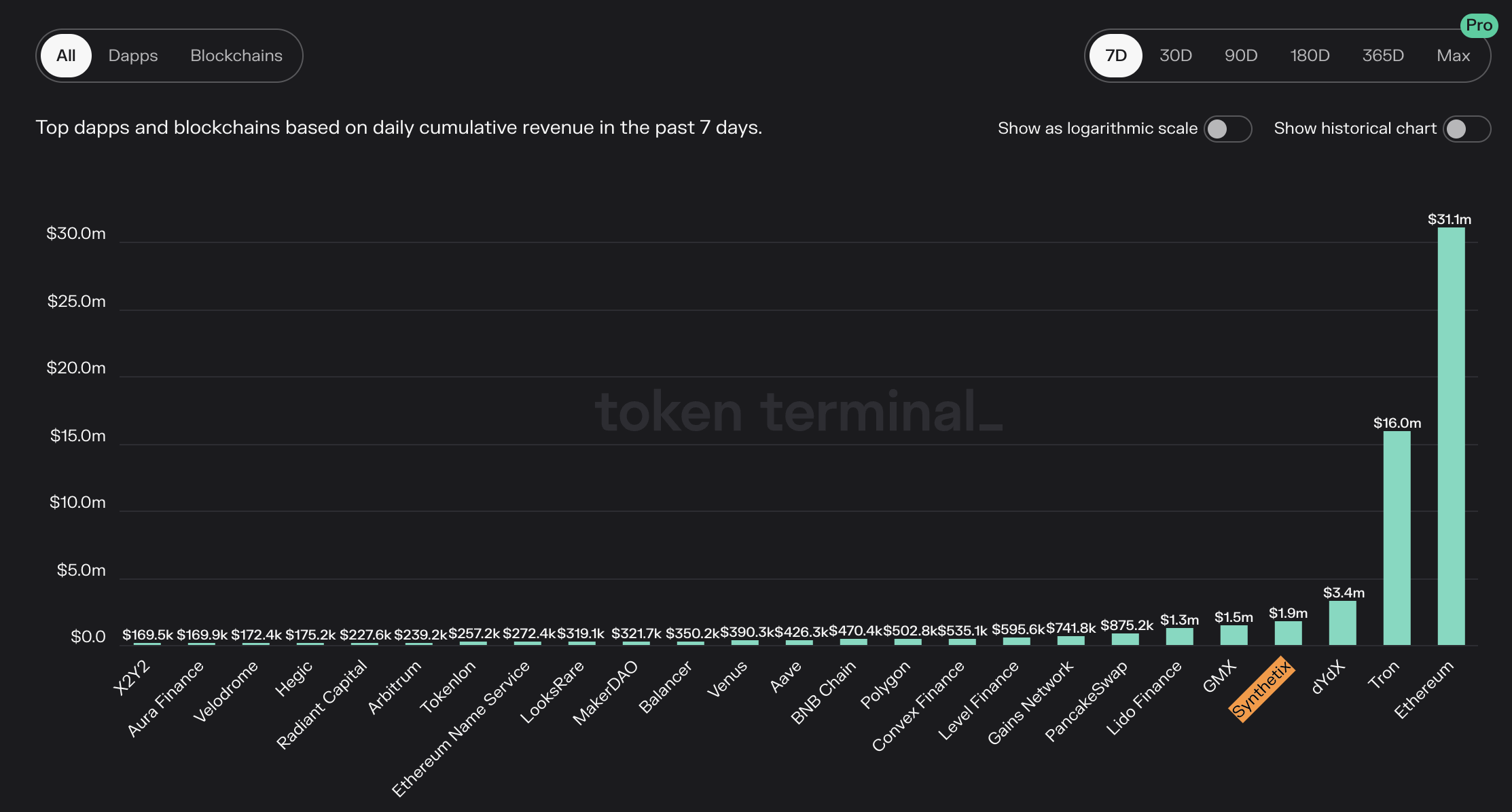
According to Token Terminal data, as of March 20, Synthetix ranked fourth in revenue in the past 7 days, surpassing GMX (the revenue here only counts the part allocated to native token holders, and the total fee is higher than GMX ), Lido, Gains Network and other projects.
Spot trading is sluggish, and the trading volume of perpetual contracts is rising
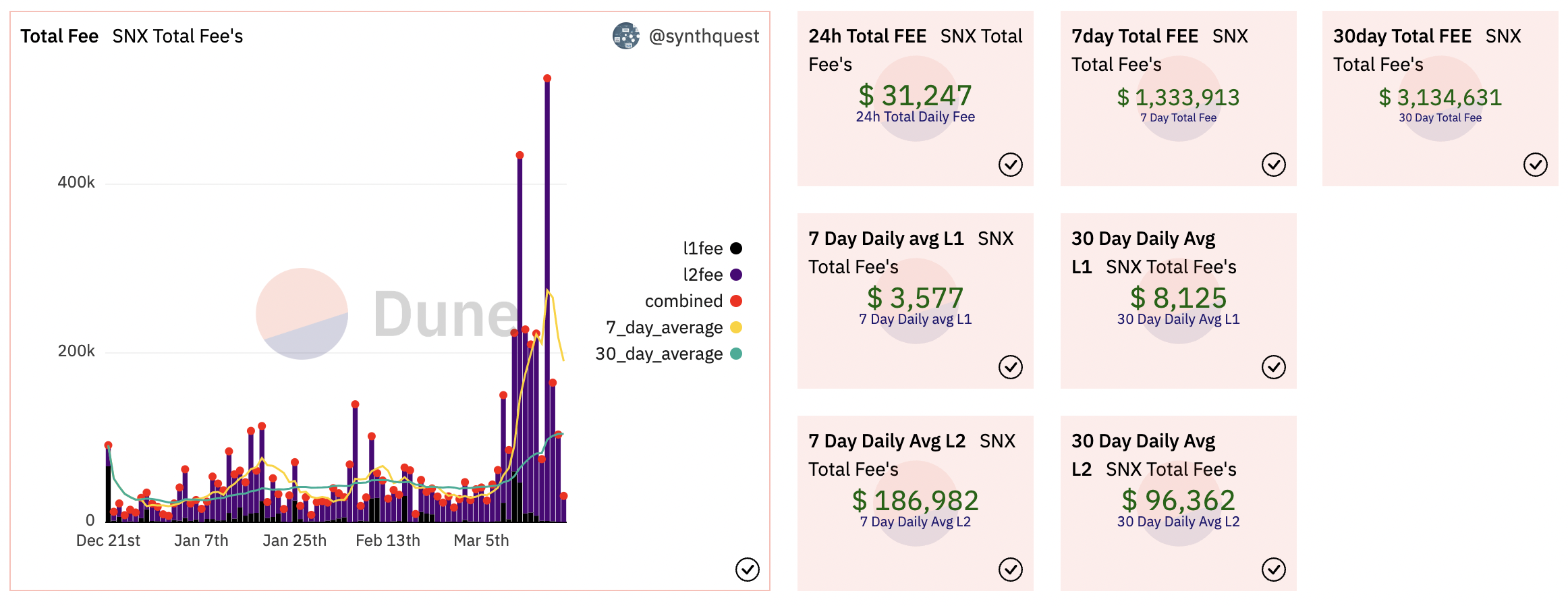
As an important partner of Optimism, Synthetix was deployed on Optimism as early as July 2021. Since then, Synthetix has encouraged everyone to transfer their pledged SNX to Optimism, and transactions and income have gradually been transferred from the Ethereum mainnet to Optimism. The Dune dashboard on Synthetix's official website shows that the total income in the past 7 days was 1.33 million US dollars, the average daily income on L1 was 3,577 US dollars, and the average daily income on L2 was 187,000 US dollars.
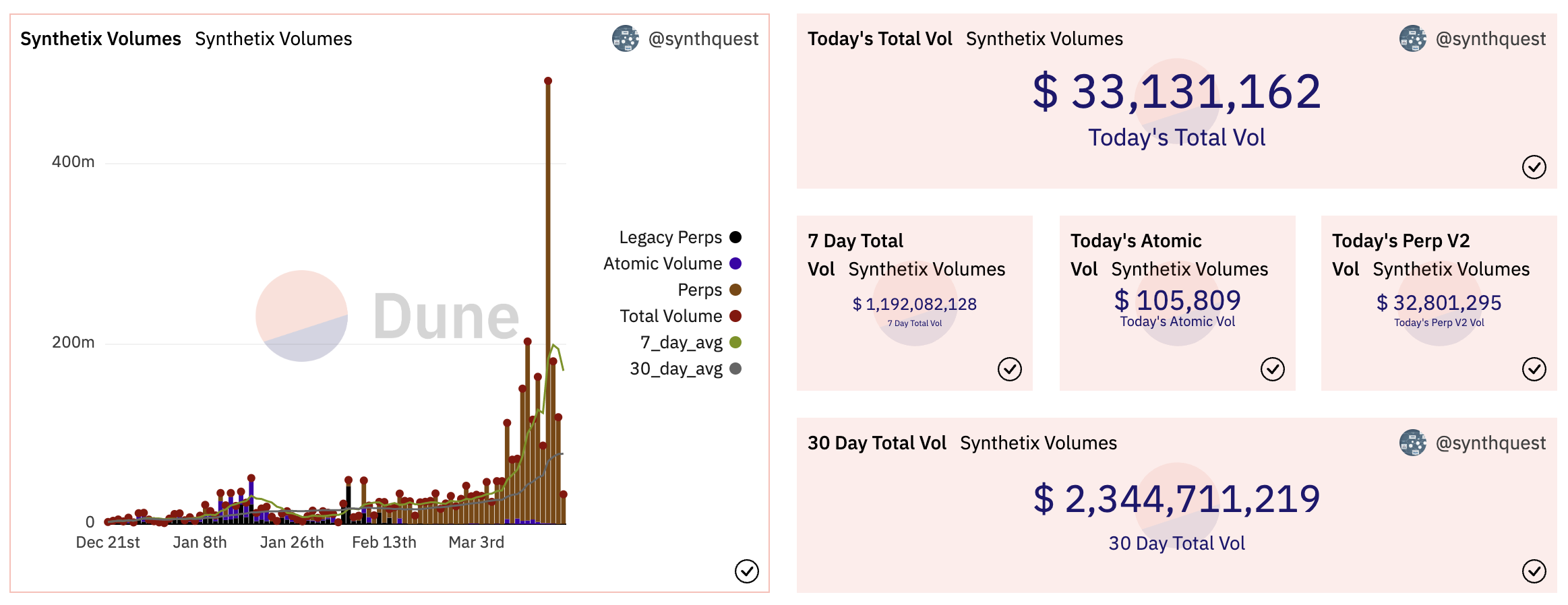
The revenue mainly comes from Synths spot trading and perpetual contract trading, which Synthetix relaunched last yearatomic transactionThat is, it belongs to spot trading. Although it was expected at the time, it may be because the handling fee of Synthetix spot trading (the trading fee between sETH and sUSD is 0.35%) is higher than that of other exchanges, so it is less used now. As shown in the figure below, the total trading volume of Synthetix in the past 7 days was 1.192 billion US dollars, of which the highest trading volume on March 17 was 492 million US dollars, which was comparable to the trading volume of GMX's 500 million US dollars on that day. Atomic transactions generally represent less than 1% of total transaction volume, and at the end of last year, atomic transactions accounted for about 50% of total transaction volume. During the period from March 11th to March 14th, because USDC was unanchored, the market fluctuated greatly, there were arbitrage opportunities, and atomic transactions also played a role.
first level title
Synthetix Perps V2 solution and source of trading volume
Synthetix Perps V2Available in December 2022, it will reduce fees, increase scalability, and increase capital efficiency.
In GMX, GLP acts as the counterparty of the traders, getting 70% of the fee, and GMX pledgers get 30% of the fee. In the current situation where GLP often suffers losses, the pledgers of the native token GMX can still get benefits. All the risks and part of the benefits are allocated to GLP. In Synthetix, the SNX debt pool not only acts as the counterparty of the trader without the need for additional liquidity providers, but also obtains all benefits as the project’s native token. All risks and benefits are borne by the SNX debt pool. Therefore, it is more necessary to take measures to reduce the risk of being a counterparty of the trader.
Synthetix byFunding fees and discount/premium pricing features to incentivize balance between long and short open interest in the market. One side of the transaction congestion will be charged a funding fee, and the other side will get a funding fee. Funding fees are typically charged every 8 hours on centralized exchanges, while funding fees in Synthetix are charged in real time as positions continue. Likewise, trades that skew the long-short ratio are charged a premium and trades that balance the long-short balance are paid a discount, a mechanism that may allow high-frequency traders to aggressively arbitrage when a deviation occurs. Although traders in GMX will also be charged funding fees, this is essentially a borrowing fee for leveraged transactions, and both long and short sides will be charged as income allocated to GLP and GMX, which cannot balance long and short positions This also makes GLP take a higher risk in the unilateral market.
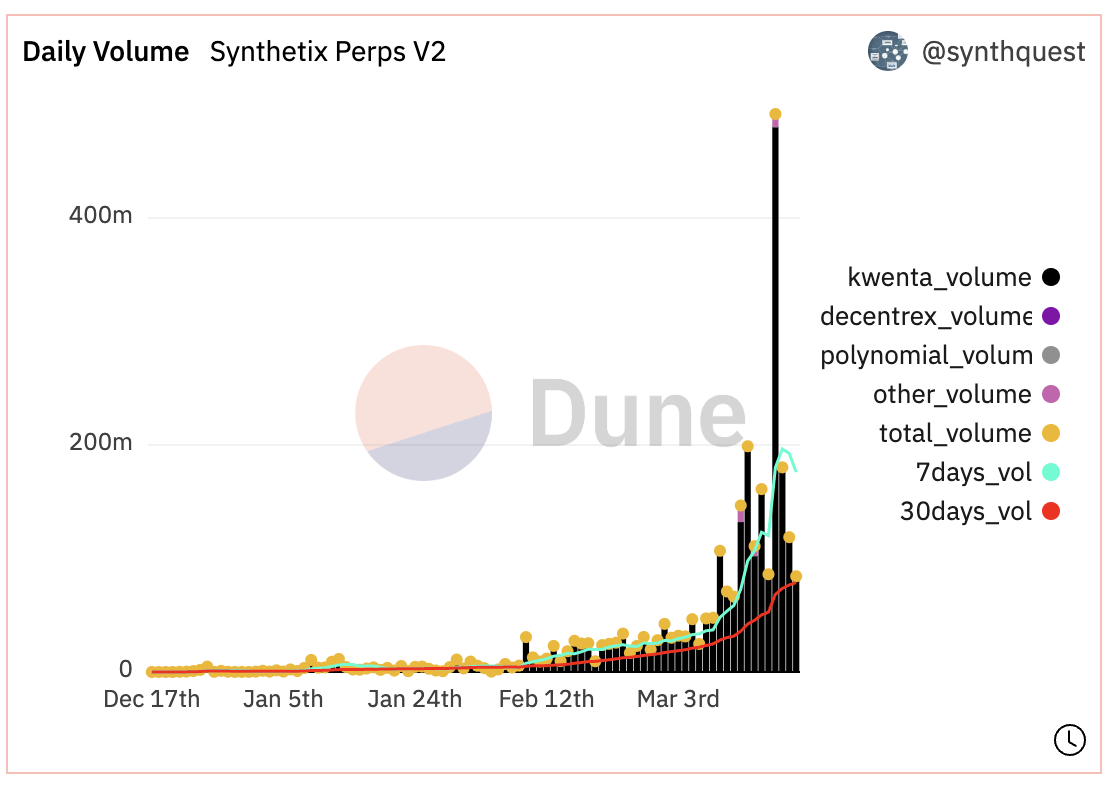
In the decentralized derivatives protocol, in addition to Kwenta, which is independent from Synthetix, Decentrex, Polynomial, etc. also integrate the liquidity of Synthetix Perps V2, and transactions can be completed through Synthetix. Also taking the data on March 17 as an example, the total transaction volume of Perps V2 on that day was 490 million US dollars, of which 480 million US dollars was completed through Kwenta, mainly relying on Kwenta.
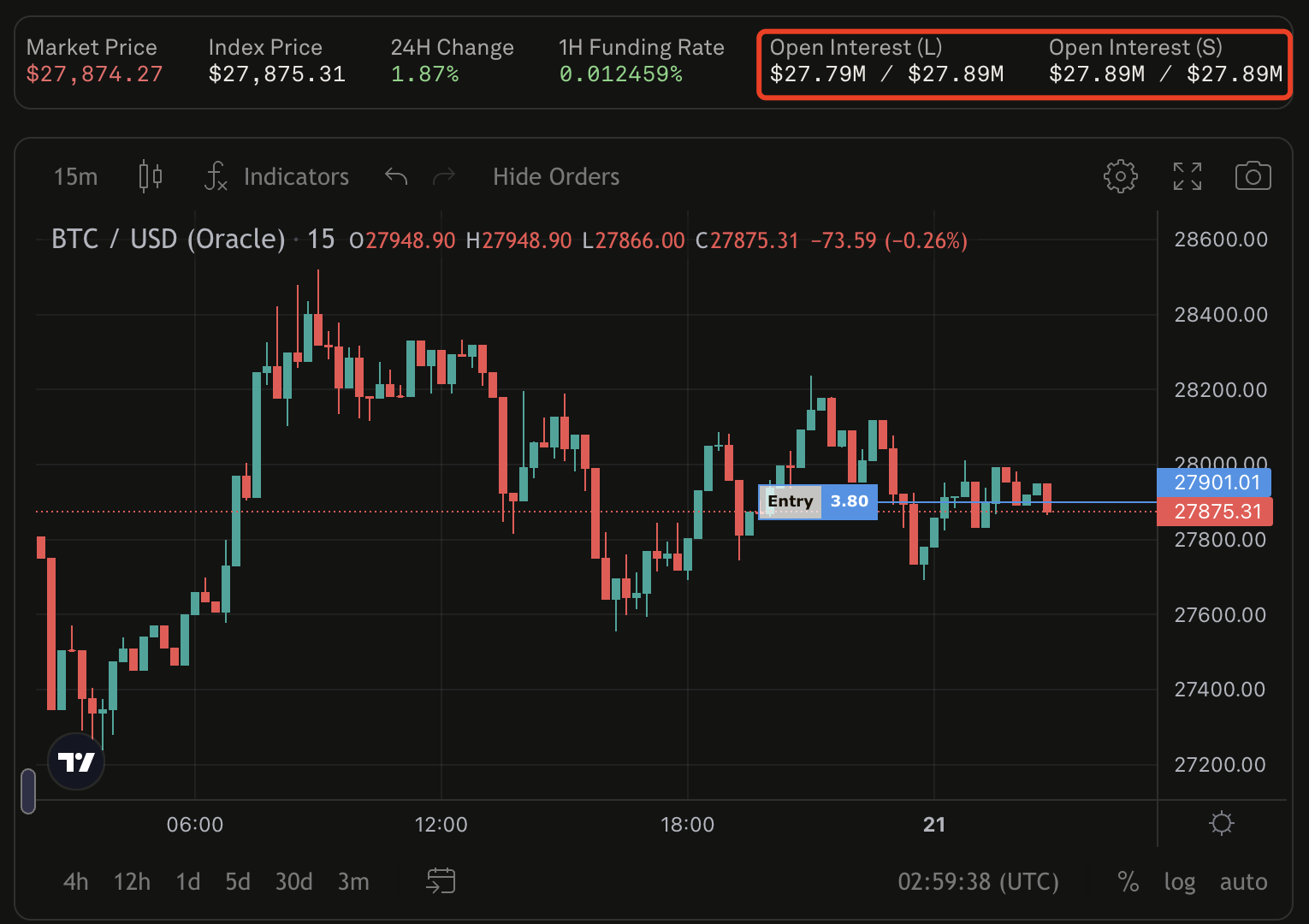
From the Kwenta official website, we can see that the current short positions of BTC and ETH have reached the upper limit, and the long positions are also close to the upper limit. The long-short ratio is about 1:1, which means that the opening of Perps V2 only makes the SNX debt pool additionally bear Small amount of risk. The maximum open interest can be adjusted through governance, which also shows that the transaction demand of Synthetix and Kwenta is strong, and there is still room for growth in transaction volume and open interest.
Additionally, Synthetix has decided through governance to proceed withPerps V2 transaction rewardsfirst level title
Synthetix V3: Custom Debt Pool, New Stablecoin snxUSD
secondary title
Pegged stablecoin snxUSD
First, Synthetix V3 will have a new stablecoin, snxUSD, to solve the problems of sUSD’s lack of scalability and possible de-anchor. After the upgrade, existing stablecoinssUSD can also be migratedfor snxUSD. In the current version, most sUSD is minted by staking SNX. Although Synthetix has also opened the function of over-collateralized WETH to mint snxUSD, only a small number of users use it. There is also a lack of immediate arbitrage activity to bring the price back to $1 when the sUSD price is slightly above or below $1. The new version willAllow 1:1 swap between snxUSD and partial collateralsecondary title
Segregated Debt Pools
In the existing Synthetix V2, all transactions go through a single SNX debt pool. Considering the possible risks, many functions are restricted, such as the above-mentioned snxUSD minting method. Synthetix V3Introduced the concept of a poolsecondary title
reward distribution
Let the pool owner usereward managerto liquidate
to liquidate
Synthetix V3 presentsa clearing mechanismsummary
summary
The Synthetix team has demonstrated a strong ability to update projects. Although functions such as atomic transactions have been seldom used at present, the demand for Perp V2 is strong, and the open interest of Kwenta has almost reached the upper limit. The trading incentives that started in April may also further promote Trading volume.
Synthetix V3 will be more flexible to meet various customized needs while limiting risks to a small area. The new stablecoin, snxUSD, will be easier to mint and anchor to $1.