What impact and enlightenment did the cleaning operation of the crypto-friendly banks in the United States bring to the crypto market?


Original author: Daniel Li, CoinVoice

In the past week, frequent bank thunderstorms have made us feel the risk and destructive power of capital again. When people are worried that the bankruptcy crisis of Lehman Brothers will repeat itself, the emergency intervention of the Federal Reserve and the Ministry of Finance to rescue the market, The fire that was about to detonate the global financial market was extinguished. When we start to look back at the whole incident, we will find that the several banks involved in the thunderstorm are basically involved in encryption business, which seems to be a "cleaning" operation specifically targeting encryption-friendly banks.
first level title
2022 is the most turbulent year for the encryption industry. The frequent thunderstorms of several centralized encryption institutions have also made the U.S. regulators realize that the risks of the encryption industry are not only for the encryption industry itself, but also for the banking industry that is closely related to the encryption industry. Will be threatened by the encryption industry. Especially after the FTX incident, the U.S. regulators made up their minds to isolate the encryption industry from the banking system. The U.S. regulatory authorities have continuously put pressure on banks to force them to abandon their encryption business, so as to achieve the purpose of isolating the encryption industry from the banking system. To this end, as early as January this year, the three U.S. banking regulators, the Federal Reserve, the Office of the Comptroller of the Currency (OCC) and the Federal Deposit Insurance Corporation (FDIC) jointly issued a statement, hoping that banks should not participate in encryption-related businesses. And strictly examine the compliance of each business. In February, the top U.S. banking regulator issued a new warning to banks, asking them to be vigilant about any liquidity risk from cryptocurrency-related customers, saying that some deposits from cryptocurrency-related customers may prove volatile and could It can be seen that the United States is putting more and more pressure on banks. In this context, some banks have chosen to withdraw from the encryption market one after another. For example, JPMorgan Chase announced in early March that it would sever its relationship with the cryptocurrency exchange Gemini, and Moonstone Bank also announced that it would no longer provide services to the encryption industry. The pressure on banks in the United States is more of a warning. At present, there are no relevant laws and regulations that explicitly prohibit banks from engaging in encryption business, which also makes some banks with a fluke mentality choose to continue to carry out encryption business. In addition, there are some banks that are deeply trapped in the encryption market due to debt problems, and Silvergate is one of the representatives.
first level title
Silvergate is deep in encryption and can't get out

However, the sudden thunderstorm of FTX caused Silvergate to fall into a death spiral, which not only caused a loss of more than 8 billion US dollars to Silvergate, but also caused panic in the encryption market, causing a large number of encryption investment institutions and investors to flock to Silvergate to withdraw deposits, which made Silvergate's coffers were quickly depleted and normal operations could no longer be maintained. Additionally, U.S. regulators have been adamant that banks should not get involved in the cryptocurrency business. After the FTX incident, the United States began a large-scale investigation of banks involved in encryption business, which also brought great pressure to Silvergate. Finally, these factors combined to cause Silvergate to choose bankruptcy on March 8.
secondary title
Signature Bank was shut down forcefully
The possibility of SBNY itself falling into a liquidity crisis due to the turmoil in the encrypted market is very low. However, the Silvergate incident has already made U.S. regulators see the potential risks behind crypto-friendly banks. Especially in the context of the US dollar's continuous interest rate hikes, this potential risk may trigger a crisis in the entire financial market. Therefore, even if there is no possibility of a liquidity crisis in SBNY, the regulatory authorities will shut it down in order to prevent the future. The forced closure of SBNY is undoubtedly the determination of the US regulators to show the market the isolation of the banking and encryption industries.
secondary title
Silicon Valley bank's liquidity woes lead to bankruptcy
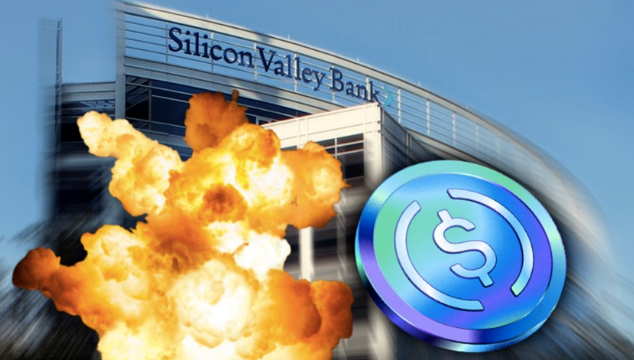
Silicon Valley Bank is also a bank that is friendly to the encryption market, but unlike the reasons for the bankruptcy of the previous two banks (SBNY closed), the bankruptcy of Silicon Valley Bank is not directly related to the encryption market. Investing in long-term treasury bonds and MBS, while the Fed's interest rate hikes have made it more difficult for depositors to raise funds, depositors have intensified their deposit withdrawals, and the cycle of interest rate hikes has also led to substantial losses in their own securities investment, which is caused by depositors falling into liquidity difficulties after a run.
In order to avoid possible large-scale bank failures in the future. The U.S. government has cleared up potential risks in the banking system in advance. Encrypted banks connect traditional traditional finance and encrypted markets, and their vulnerability is the most prominent under the dual influence of the Fed's interest rate hike and the deleveraging of the encrypted market. Therefore, it has received special attention in this Bank of America review. That’s why the three most recent bank failures are all related to the crypto industry. It is foreseeable that for a period of time in the future, banks involved in encryption business in the United States will be subject to scrutiny by the US regulatory authorities. Once violations are found, their businesses involving the encryption market may be shut down. This is not a small blow to the entire encryption market.
first level title
In the week when crypto-friendly banks such as Silicon Valley Bank announced their bankruptcy, the bank liquidity crisis caused by asset mismatch quickly spread to the entire crypto market, leading to a panic-like plunge in the crypto market, which once again reproduced the 312 The epic plunge, the total market value fell below the trillion-dollar mark, and Bitcoin (BTC) once fell below $20,000. As one of the cross-connection points between the encryption market and the traditional financial market, the stablecoin market bears the brunt of the most direct and severe impact.
secondary title
Stablecoin Trust Crisis
Stable currency is a kind of cryptocurrency, which can maintain the relative stability of currency price by means of anchoring legal currency. USDC is anchored 1:1 with the U.S. dollar to maintain price stability. Its price is usually around 1 U.S. dollar, but the collapse of encryption-friendly banks such as Silicon Valley has made the stability unstable.

However, the stablecoin turmoil caused by the collapse of Silicon Valley Bank did not last long. With the implementation of the rescue measures of the US regulators, deposit withdrawals of all depositors of Silicon Valley Bank resumed. The price of USDC is also gradually recovering. As of now, the CoinmarketCap platform shows that 1 USDC= 0.9968 $, basically restoring the anchorage with the US dollar.
secondary title
The crypto industry is caught in a fiat currency liquidity crisis
The U.S. sweep of crypto-friendly banks has seen three banks fail or close in just one week, including Silvergate and SBNY Bank, which operate the Silvergate Transaction Network (SEN) and Signet networks, respectively. These networks play a vital role in the connection between crypto businesses and the traditional banking system. In particular, the SEN trading network, whose trading volume will reach nearly 800 billion U.S. dollars in 2021, and almost all major U.S.-based cryptocurrency exchanges have become customers of Silvergate. The crucial network will also be shut down, which will inevitably have a huge impact on the liquidity of fiat currency in the encryption industry.
In addition, if the U.S. review of banks involved in encrypted business becomes a long-term trend, users in the U.S. market may only be able to purchase cryptocurrencies through OTC (over-the-counter trading) transactions in the future. Without banks as intermediaries, it will undoubtedly transfer the risk to Risk and complexity will also cause some users to choose to give up entering the encryption market, which will affect the liquidity of the encryption market.
first level title
Every crisis is a time for the industry to discover its own problems and make up for its shortcomings. This wave of closures of crypto-friendly banks is an opportunity worth reflecting on, both for the traditional banking industry and the crypto industry.
secondary title
Establish industry regulatory policies and crisis management mechanisms
Therefore, through this crisis, the encryption industry should work hard to establish its own industry norms and crisis handling mechanisms as soon as possible to ensure the stability and sustainable development of the market, enhance the industry's ability to resist risks, and protect the interests of investors. This requires encryption Industry and government regulatory agencies cooperate to jointly promote the establishment of a sound regulatory system and crisis management mechanism.
secondary title
The Crypto Industry Needs to Build Real Stablecoins
Stablecoins are divided into centralized stablecoins and decentralized stablecoins. USDC was the centralized stablecoin in the event that the collapse of the Silicon Valley Bank caused the USDC stablecoin to be briefly unanchored. Historically, centralized stablecoins have also been de-anchored from the US dollar many times, even including the leading stablecoin USDT. Therefore, when similar events happen again, decentralized stablecoins with less external dependencies gain attention again.
Centralized stablecoins usually choose to be anchored with legal currency, and the price of the stablecoin is guaranteed by depositing a certain amount of legal currency in the bank. Therefore, centralized stablecoins need to cooperate with banks, and the U.S. review of crypto-friendly banks has undoubtedly cast a shadow over the development of centralized stablecoins. The censorship of crypto-friendly banks continues, and the USDC unanchored situation will appear again.
first level title
Summarize
Summarize
Since the FTX incident, U.S. regulators have been emphasizing the risks of the encryption industry to the banking industry, and have therefore launched a series of reviews of banks involved in encryption business, hoping to isolate the encryption industry from the traditional banking system. However, the USDC de-anchoring event showed us the crisis caused by the bank's own asset mismatch and financial opacity, which then spread to the encryption industry. Therefore, not all crypto businesses are high-risk businesses, and the banking industry has its own problems and limitations.