






The rise of ETH Staking may promote the revival of DeFi


first level title
The number of smart contract calls rebounded
After experiencing the cold winter of 2022, although the current price of ETH has recovered, it is still down more than 65% from the bull market high of $4,800. Still, smart contract activity on the Ethereum blockchain remains relatively healthy.
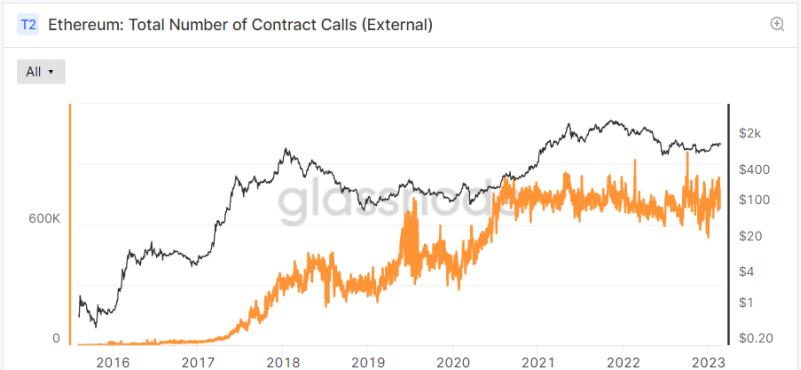
According to data from Glassnode, an encrypted data analysis company, the number of internal contract calls in Ethereum has rebounded to 4 million, which is very close to the high point of the bull market cycle in the previous quarters. The number of Ethereum external contract calls has also recently maintained an all-time high of between 600,000 and 800,000 per day.
Note: Ethereum transactions include the execution of smart contract calls that have been deployed on the blockchain. When a contract is initiated by an external address (EOA), it is called an external contract call, which usually refers to the user who initiated a specific smart contract, such as an ERC-20 token transfer, a DeFi transaction, or an NFT transaction. Contract calls initiated from within an executed smart contract are called inter-contract calls, which allow developers to build and design more complex and composable systems.
Changes in the activity of NFT, ERC-20, stablecoins, and DeFi
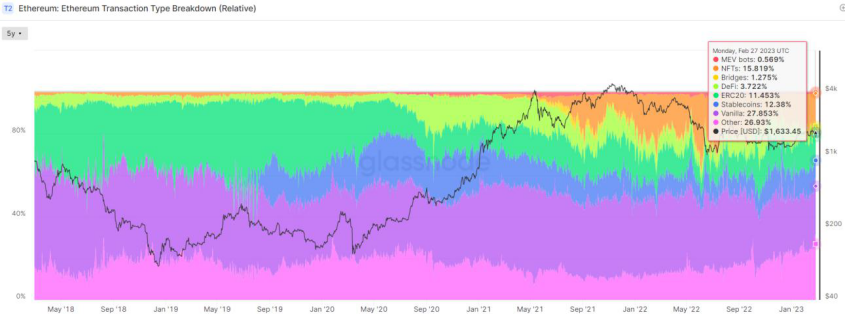
Historically, the continued intensity of smart contract activity on the Ethereum blockchain has been largely underpinned by activity such as NFTs, ERC-20 tokens, stablecoin trading, and DeFi.
In comparison, two years ago NFTs accounted for only around 1.7% of transactions, while stablecoins and ERC-20 tokens accounted for 16% and 12%, respectively. Compared with two years ago, the biggest change is the activity of DeFi-related transactions-in the first half of March 2021, DeFi transactions accounted for about 12% of all Ethereum transactions; 4% or so.
first level title
DeFi activity takes a big hit
DeFi activity has also been impacted against the backdrop of a significant drop in the TVL of the Ethereum DeFi ecosystem. The flight of funds in DeFi smart contracts means fewer DeFi transactions are being made on the Ethereum blockchain. According to data from Defi Llama, the current TVL of Ethereum is about 64.4 billion US dollars, which is more than 65% lower than the peak of 197 billion US dollars in late 2021. When Terra’s UST algorithmic stablecoin collapsed, the DeFi ecosystem also had a knock-on effect, dealing a heavy blow to confidence in the industry.
Therefore, in the new cycle, if Ethereum's Defi ecosystem can experience another upsurge similar to what happened in the summer of 2020, it will help provide a strong impetus for the next ETH bull market.
first level title
ETH staking is poised to fuel a DeFi renaissance
For investors who are bullish on ETH, a new opportunity to trigger the next DeFi boom is coming-Ethereum developers will soon perform a "Shanghai upgrade" to the Ethereum mainnet. This upgrade will allow ETH stakers to withdraw their staked ETH and corresponding rewards.
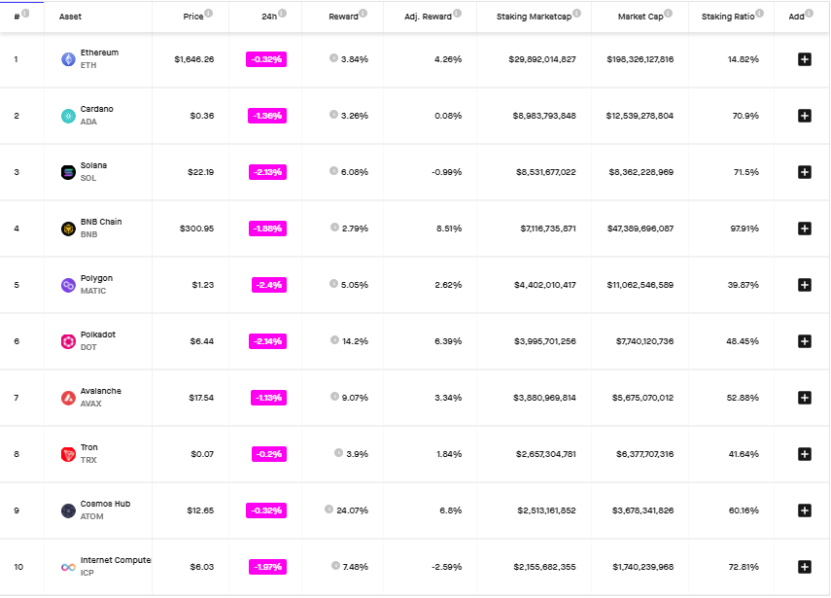
ETH beacon chain staking began at the end of 2020, but the pledged ETH is locked and cannot be withdrawn. The lack of flexibility in staking funds has been a concern for many potential ETH staking investors. As of the end of February, the number of ETH pledges was 17.3 million, accounting for only 14% of the total circulation. In contrast, many L1 blockchains that use the PoS consensus mechanism but can flexibly withdraw pledged tokens have a pledge rate of more than 40%, and the pledge rates of ADA, SOL, BNB Chain, and ICP have even reached 70%. above.
According to a tweet from Messari on March 1, the merger of Ethereum has had a huge positive impact on staker economics. Even though ETH’s price is underperforming, its return on staking is around 6% in 22 years.
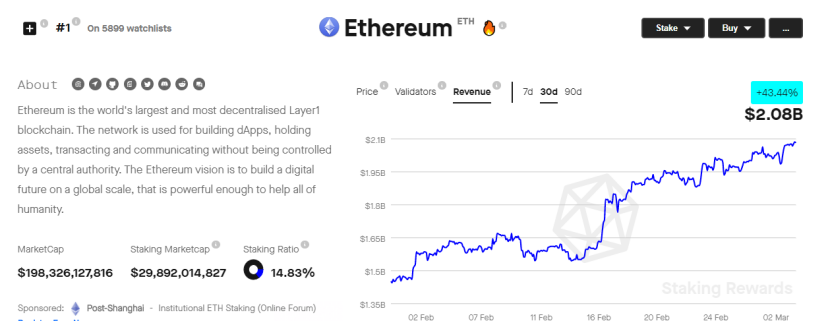
Currently, there are approximately 530,000 validators on the ETH chain. According to Staking Rewards data, the income of ETH verifiers increased by 43.44% in the past 30 days, and the total income of pledgers in the past 30 days reached 2.08 billion US dollars.
At the same time, the number of addresses on the Ethereum network is also increasing. According to Glassnode data, the number of non-zero addresses on Ethereum reached 9.83 million addresses. However, the total transaction volume of Ethereum has dropped significantly. This suggests that many of the new addresses holding Ethereum did not sell their ETH.
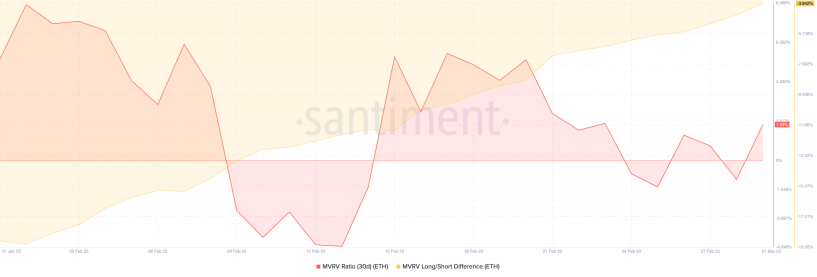
According to Santiment data, ETH’s current MVRV ratio has only just turned slightly positive. This shows that for most ETH holders, it is not possible to make huge profits selling their ETH at this time. This is also conducive to enhancing the motivation of more ETH holders to participate in "flexible pledge" to earn more income after the "Shanghai upgrade".
The further development of ETH staking may help drive growth in other DeFi areas, as investors participating in ETH staking hope to obtain more income through the pledged ETH. And, within the Ethereum ecosystem, rising DeFi TVL will help drive narratives about wider adoption and long-term price growth of Ethereum technology.
Ebunker official website: https://www.ebunker.io





