美股即國運,川普正在把美國改造成一隻基金


- 核心觀點:川普政府正透過「以權換股」策略,將政府權力(補貼、監管)轉化為私營企業股權,旨在做大政府資產端以應對39萬億美元國債壓力,同時將美國國運與美股深度綁定。
- 關鍵要素:
- 美國國債達39萬億美元,利息支出超1萬億/年,傳統減債方式(增稅、減支、通脹)因政治或經濟阻力難以推行。
- 川普以英特爾為模板,用《晶片法案》的89億美元補貼換得9.9%股權,隨後在軍工、稀土、量子計算等20餘家公司複製「補貼換股份」模式。
- OpenAI CEO Altman主動提議向政府出讓5%股份(估值約426億美元),促成「監管保險單」,旨在用股權換取對AI基礎設施的准入和政策確定性。
- 「川普帳戶」計畫為新生兒存入1000美元投資美股,透過強制指數投資培養一代人對美國增長的信仰,企業捐贈超60億美元響應。
- 卡托研究所統計政府已從20餘家公司獲得股權或認股權證,該策略正從個案走向批量化,形成被市場關注的「政府入股」交易主題。
Original Author: Jialiu
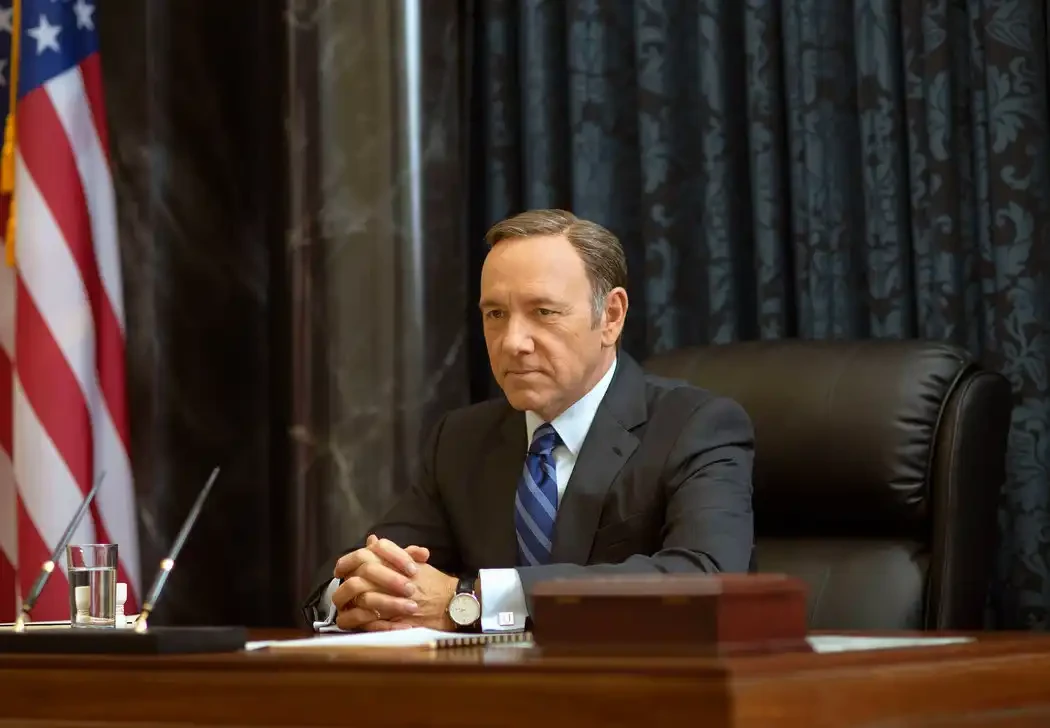
On the 250th anniversary of the founding of the United States, Trump is transforming the country into a fund.
Last Monday, a few minutes before the US stock market opened, Trump sat in the Oval Office with a camera set up in front of him. The opening bells of the NYSE and NASDAQ were connected to the White House, and he rang them remotely. As the bells faded, he said into the camera that as the opening bell rings, these accounts will grow along with our booming economy. In just this week, 800 million dollars in new capital will be invested in the stock market for America's children.
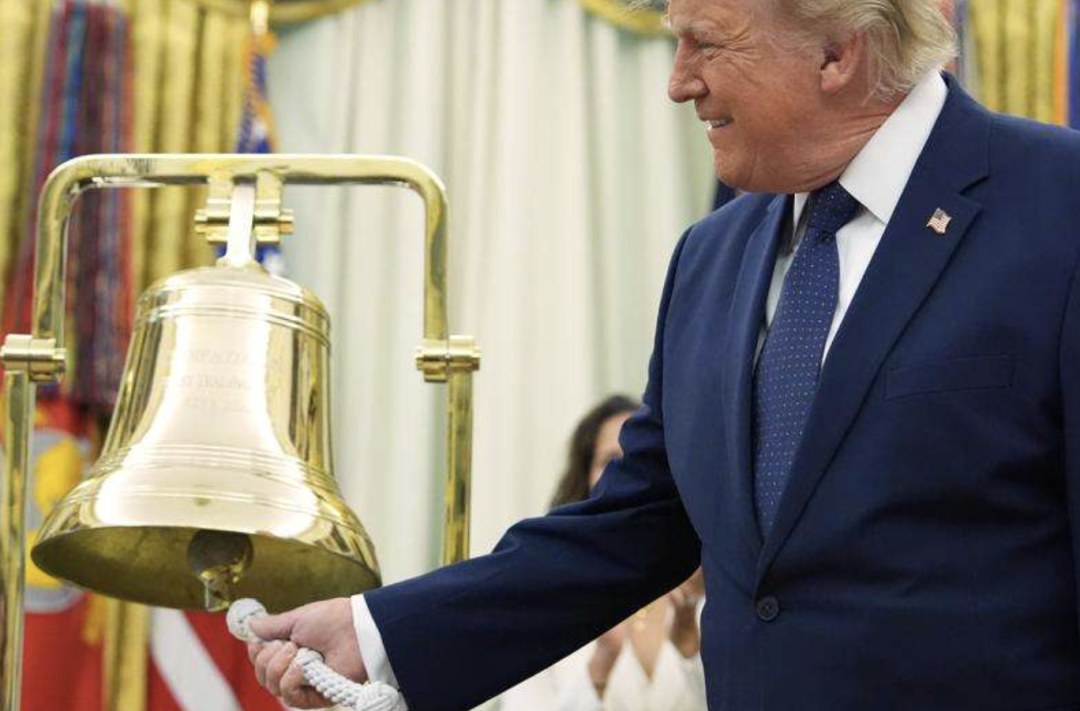
This was the first trading day after the launch of the "Trump Account." Two days earlier, on July 4th, the 250th anniversary of the nation's founding, he gave a birthday gift to every newborn in the country: an investment account in his name, containing $1,000, automatically invested in US stocks. 6 million children were registered even before the launch.
That same week, his Treasury Department was dealing with another matter: $39 trillion in national debt. In fiscal year 2026, interest payments alone would exceed $1 trillion, averaging $170 million per day. Every day, the Treasury had to find a way to pay the interest left over from the day before.
Over the past 18 months, the president, a former real estate mogul, has done three seemingly unrelated things: having the government directly take equity in companies, opening investment accounts for newborns, and seeking equity in AI companies. But they all point to the same goal: deeply binding the US stock market to the nation's destiny.
The Eagle's $39 Trillion Debt
The starting point for this chess game is not ambition, but anxiety.
As of May 2026, the total US national debt has surpassed $39 trillion, approaching $40 trillion. The scale of the debt has exceeded the size of the entire US economy, with a debt-to-GDP ratio of approximately 123%. The national debt increases by about $5 billion per day. The Congressional Budget Office predicts that interest payments alone will exceed $1 trillion in fiscal year 2026, accounting for nearly 14% of total federal spending, higher than the defense budget. For every dollar the federal government takes in, it spends $1.33. Huatai Securities estimates that the fiscal deficit could reach $2.2 trillion in fiscal 2026, pushing the deficit rate to 7%.
Traditionally, there are three ways to solve the anxiety over US national debt: raising taxes, cutting spending, and inflating the debt away (letting rising prices erode the real value of the debt).
The first two options amount to political suicide before the midterm elections, so the Trump administration certainly won't consider them. The third option requires the cooperation of the US central bank, the Federal Reserve, to cut interest rates. But the former chairman, Powell, refused to bow even when threatened with lawsuits and trouble by Trump. If the current chairman, Warsh, directly announced a rate cut under the current economic conditions, it would obviously look very bad.
So Trump needed to find a new path.
And as we all know, Trump's approach to solving problems has always come from his lifelong business experience. A real estate developer looks at a balance sheet differently than a politician: if you can't move the liability side, you make the asset side bigger. On the US government's balance sheet, the $39 trillion in liabilities is clear and obvious; but the asset side is vague. The federal government has almost no financial assets under its name that can be priced at market value.
So Trump's solution is to first use the powers the government holds – subsidies, grants, government contracts, export controls, regulatory authority – as costs and bargaining chips to obtain cheap equity in major companies.
The first company Trump managed to get a deal from was Intel.
On August 22, 2025, the US government announced it would acquire 9.9% of Intel, one of the world's largest semiconductor manufacturers, for $8.9 billion at $20.47 per share, instantly becoming the largest single shareholder of the chip giant. The brilliance of the deal lies in the source of funds: $5.7 billion came from subsidies that were already slated for Intel under the CHIPS Act, a semiconductor industry subsidy bill passed in 2022, and $3.2 billion came from federal funding for a secure chip project. In other words, the government didn't spend a single new dollar; it exchanged "checks it was going to give away anyway" for a significant equity stake.
Trump himself was very proud. He announced on his social media platform Truth Social in all caps: "I paid ZERO dollars for Intel, it's worth about $11 billion, all for America."
Later, talking about the deal in a public setting, he mentioned the negotiation process with Intel CEO Lip-Bu Tan. Tan is a Malaysian-American, who became Intel's CEO in March 2025, previously serving as CEO of Cadence, a chip design software company, for 12 years. Trump said Intel agreed too readily, "We should have asked for more." When someone criticized the practice as shameful, his response was, "It's not shameful, it's business." Asked whether government equity in private companies would become the norm, his answer was, "Aren't tariffs also that way?"
Perhaps to commemorate this good start, White House economic advisor Hassett gave the deal a name: "The down payment on a sovereign wealth fund."
A sovereign wealth fund is an institution where the government invests public funds as long-term capital. Singapore and Abu Dhabi have them, usually accumulated from oil or resource revenues, but the US never had one. In February 2025, Trump signed an executive order requiring Commerce Secretary Lutnick and Treasury Secretary Bessent to formulate a plan within 90 days, but due to legal, funding, and political resistance, the grand narrative version of this so-called "US Sovereign Wealth Fund" stalled.
But the Intel deal clearly signaled that while the shell for the US sovereign fund wasn't formally established with a fancy name, "the bullet was still fired."
The US Government's "Zero Dollar" Equity in at Least 20 Companies
The effectiveness of Trump's Intel position was quickly proven. Since the deal was completed, Intel's stock price has risen over 50%. By early 2026, the book value of the government's holdings had swelled to between $35 billion and $63 billion. Trump turned a subsidy he was going to spend anyway into hundreds of billions in unrealized gains.
After completing the "bold hypothesis," "careful verification," and getting results, the businessman's next conclusion was to replicate the model.
After Intel, Trump's pace of deal-making exceeded everyone's expectations:
The Department of Defense took a 15% stake in MP Materials, the only company in the US with full rare earth mining and processing capabilities, located at the Mountain Pass mine in California, making the DoD its largest shareholder. Americas Lithium, a startup developing a lithium mine in Nevada and generating no revenue at the time, gave up 10%, tied to a $2.26 billion federal loan restructuring. Trilogy Metals, a Canadian-listed miner developing a copper-zinc mine in Alaska, gave up 10% plus 7.5% in warrants (giving the government the right to buy more shares at an agreed price in the future) in exchange for a $35.6 million investment. US Steel, during its acquisition by Japan's Nippon Steel, ceded a "golden share" with veto power to the White House – not an economic stake, but political power: the president could veto plant closures, headquarters relocation, or production shifts overseas. L3Harris, a major US defense technology company, exchanged $1 billion for equity in its rocket engine business; the company's products cover military communications, satellites, and missile systems. Nvidia and AMD, the two largest chip design companies, had a special arrangement, contributing not equity but a 15% share of their chip sales revenue to China. By the end of January 2026, another US rare earth company, USA Rare Earth, was also on the list.
According to statistics from the Cato Institute, a prominent free-market think tank, this administration has obtained equity, warrants, or golden shares in over 20 companies.

In May 2026, Trump's approach became more systematized. The government announced a one-time $2 billion investment in nine quantum computing companies in exchange for equity. IBM received $1 billion exclusively, while GlobalFoundries (a major global chip foundry), D-Wave, Rigetti, Infleqtion, and other quantum startups shared the remaining amount. On the day of the announcement, the sector collectively soared: Infleqtion surged over 33%, D-Wave rose 33%, Rigetti gained 30%, and even IonQ (another publicly traded quantum computing company), which wasn't on the list, jumped 12%. Lutnick stated in a press release that the Trump administration is leading the world into a new era of American innovation.
On prediction markets, traders are starting to pay attention to "who will be invested in by the government in 2026." Currently, IonQ has a 32% probability, defense AI unicorn Anduril Industries (a defense tech company founded by Oculus VR founder Palmer Luckey, focusing on AI-driven military unmanned systems) is at 31%, and Micron (one of the world's largest memory chip manufacturers) is at 28%.
Altman Voluntarily Offers $42.6 Billion in Shares
Besides defense, chips, and quantum computing, "White House stock guru" Trump naturally wouldn't ignore the hottest sector right now: AI.
Interestingly, this time it was OpenAI CEO Altman himself who handed it over to Trump.
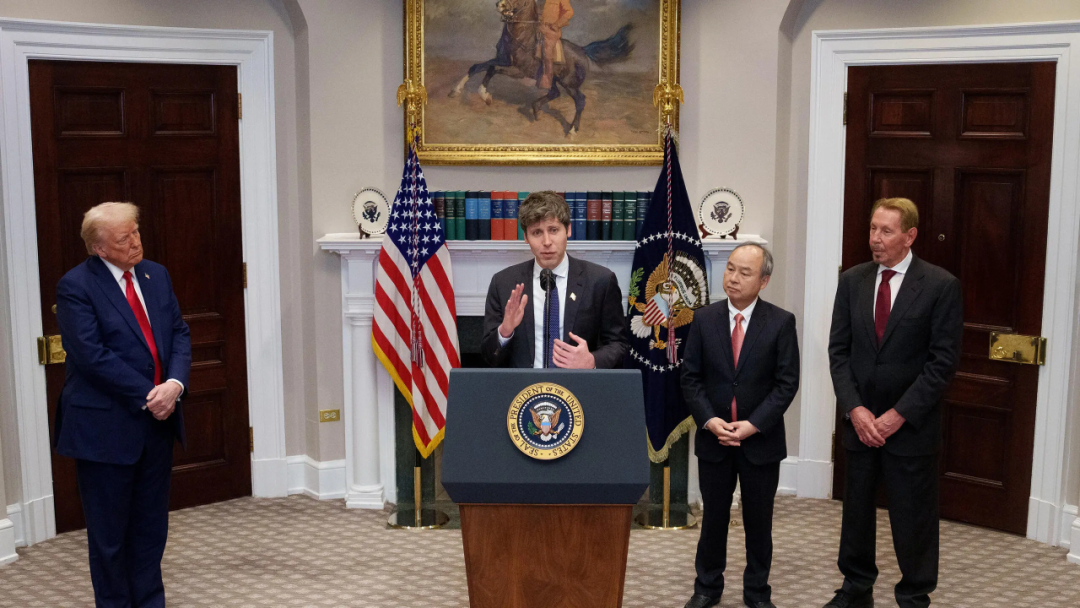
Altman speaking at White House/government event
According to reports from the US political news site NOTUS and the Financial Times, as early as early 2025, Altman proposed to Trump the idea of the government holding shares in major AI companies and subsequently met regularly with senior administration officials on the matter. In early June 2026, the consultations were officially exposed. In early July, the details appeared in the press: OpenAI proposed ceding 5% to the government, valued at approximately $42.6 billion based on its $852 billion valuation after a record-breaking funding round in March.
And Altman's full plan is even larger: not just OpenAI, but every top American AI company would contribute 5% to a government platform institution. The list might include Anthropic, the developer of Claude, founded by former core OpenAI team members and the fastest-growing company in the enterprise AI market, as well as Google, Meta (Facebook's parent), and Musk's AI company xAI. The revenue model would reference the Alaska Permanent Fund, a public fund established by the state of Alaska using oil revenues that pays annual dividends to every state resident. Altman hopes an AI version could also distribute dividends to the public.
Why would a company preparing for one of the largest IPOs in history voluntarily offer $42.6 billion?
Chamath, a well-known Silicon Valley investor and host of the All-In podcast, highlighted the relationship in a recent episode: AI's economics are completely different from the internet. In the internet era, adding one more user had almost no cost. In the AI era, every new user requires real GPUs, memory, electricity, and infrastructure. None of these things are things venture capital can provide; they are all held by Washington.
This means AI companies' dependence on national-level infrastructure is structural, not temporary. And the more you depend on the nation's resources, the stronger the nation's bargaining position.
So the relationship between AI companies and the government is no longer simply "startups hoping for less regulation." They can't function without the government's resources, and the government knows it. The past negotiation was: we give you subsidies, you build factories, hire people, and pay taxes. The current negotiation has become: we give you computing power, electricity, contracts, and policy certainty, what does the public get?
Industry insiders call this 5% a "regulatory insurance policy." Using equity to buy a favorable environment, preemptively mitigating the risk of nationalization or forced breakup, and simultaneously allowing the Altmans of the world to deeply embed themselves in the seat of AI rule-making. Intel's precedent is right there: after the government invested, Nvidia's $5 billion investment, the joint chip factory with Musk in Texas, and partnerships with Apple followed in quick succession, and the stock price took off.
A government shareholder is not a cost; it's the strongest backing.
Of course, not everyone thinks like Altman. There's one notable absence from the list: Anthropic seems less willing. According to sources, Anthropic has not discussed ceding equity with the government.
But those who don't submit their "insurance policy" naturally get pressured by Trump.
Secretary of Defense Hegseth announced on X that Anthropic was classified as a "supply chain risk." This label was previously used only for suppliers from foreign hostile entities, never for a US company. All defense contractors were required to provide written assurance they would not use Claude. Trump followed up with a post on Truth Social ordering all federal agencies to "immediately stop" using Anthropic's technology. Anthropic did not back down. On March 9th, they filed lawsuits simultaneously in San Francisco and Washington, alleging the blacklist was an unconstitutional act of retaliation.
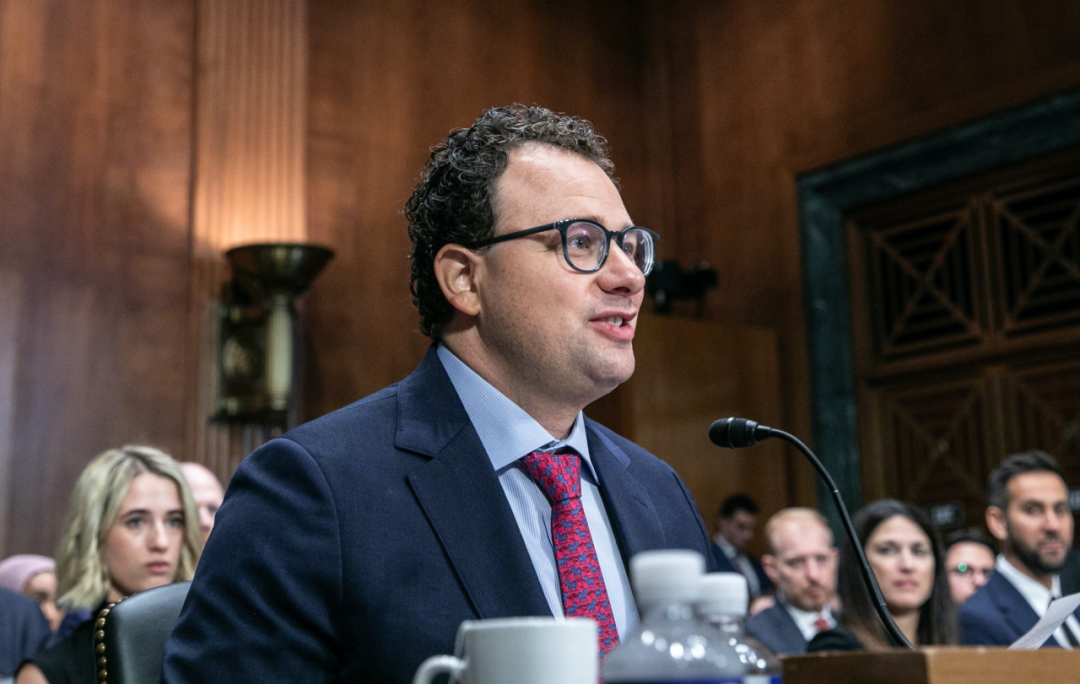
Anthropic CEO Amodei at a congressional hearing
With Intel's template, the batch replication of the quantum nine, and OpenAI's proactively submitted 5% proposal, "which company will be invested in next" has become a real trading theme on Wall Street. Following the government's stock-picking logic, one can outline three tiers.
The first tier consists of frontier AI model companies. These are the ones directly named in Altman's proposal. Besides OpenAI itself, there's Anthropic, xAI, Google, and Meta. Google and Meta are publicly traded; technically, government ownership is easier to execute, but the political optics are more sensitive. The wildcard for xAI is Musk himself. His relationship with Trump soured after the DOGE project for government budget cuts last year, leading to a rift that was only recently mended. SpaceX completed an $86 billion IPO with a market cap of $2.2 trillion. When asked by CNBC if Musk would donate SpaceX stock to the Trump Account, Trump replied, "I think he will." A week later, SpaceX President Gwynne Shotwell announced a donation of one share to over 2 million children's accounts, totaling approximately $320 million.
The second tier consists of AI "infrastructure" companies. Analysts point out that if private capital cannot sustain AI's increasingly massive funding needs, the government's next targets for equity consideration would be data center companies providing computing power for AI and the supporting energy infrastructure companies. The names of this layer aren't as sexy as the model companies, but they are where government resources – such as land, power grids, nuclear power plant approvals – are most intensively realized, and where the "subsidies for equity" logic makes the most sense.
The third tier includes companies already in play or on the watchlist. After the quantum nine, prediction market odds point to IonQ, Anduril, and Micron. Anduril is one of the highest-valued defense AI startups; Micron just donated $250 million to the Trump Account. In this game, a donation itself is a form of a bid, a clear signal: I'm on your side, take care of me.
When US Stocks Become a Belief System
Let's circle back to this baby fund.
For newborns born in the US between 2025 and 2028, the Treasury automatically deposits $1,000 after their parents open an account. This money is mandatorily invested in an index fund tracking the S&P 500, with the default target being SPYM, State Street's lowest-fee S&P 500 ETF. Options include IVV, VTI, SPTM, ITOT – all US large-cap or total market ETFs with annual fees capped at 0.10%. Families can contribute up to an additional $5,000 per year, deductible before taxes, similar to a pension plan. Employers, relatives, and charitable organizations can also contribute separately. The funds cannot be withdrawn before the child turns 18. At adulthood, the account automatically converts into an IRA (Individual Retirement Account), the most common long-term retirement savings vehicle in the US. Bank of New York Mellon serves as custodian, with the accompanying app co-designed by Robinhood, one of the largest zero-commission brokers in the US.
The nonpartisan fiscal watchdog "Committee for a Responsible Federal Budget" calculates the plan will cost approximately $17 billion by 2028. The government's own projection is that the $1,000 will become at least $6,000 by the time the child turns 18.
The reaction from corporations is more interesting than the policy itself. Dell founder Michael Dell and his wife donated $6.25 billion, covering approximately 25 million children under 10 years old in low-income zip codes, $250 each. Micron donated $250 million. Intel and Robinhood matched donations for their employees' children. The world's largest asset manager, BlackRock, and Bank of America offered employee donation matching. Then there were the over