SpaceX 為何擁有如此高的估值天花板?答案藏在馬斯克的商業版圖裡


- 核心觀點:馬斯克透過 SpaceX 上市及生態整合,構建了涵蓋 AI 算力、衛星通訊、太空運輸、智慧製造與人機介面的全域商業閉環,其底層邏輯是各板塊協同降本與相互賦能,以爭奪下一代智慧產業的核心話語權。
- 關鍵要素:
- SpaceX 上市首日大漲 19.2%,市值突破 2.1 兆美元,創史上最大 IPO 紀錄,成為馬斯克生態體系的核心基礎設施中樞。
- 生態體系四大板塊包括:xAI 與軌道算力(智慧大腦)、Starlink 與 Starship(資訊傳輸與運輸)、Tesla 與 Optimus(製造執行)、Neuralink 與 X(人機介面與資料)。
- xAI 併購併入 SpaceX 後,其 Colossus 算力叢集已部署 20 萬張 H100 GPU,但地面算力受限於能源與物理瓶頸,計畫 2027 年底實現軌道 AI 計算演示。
- Starlink 貢獻 SpaceX 約 60% 營收,用戶數超過 1030 萬,Starship 單次發射成本目標降至 1000 萬美元以內,為大規模太空部署提供低成本通道。
- 特斯拉停產旗艦車型 Model S/X,全面轉向 Optimus 人形機器人量產,定位從電動車公司轉型為「物理 AI 公司」,共享感知與製造體系。
- 生態內形成三條正向飛輪:製造與太空物流飛輪、資料與設計迭代飛輪、能源與算力協同飛輪,推動成本下降與效率提升。
- 風險集中在技術驗證(如軌道算力散熱)、公司治理(關聯交易與股東利益衝突)及全球監管(資料主權與通訊許可)三大方面。
On June 12, 2026, Eastern Time, SpaceX officially landed on the Nasdaq Stock Exchange under the ticker symbol SPCX. The company's opening price on its first day was set at $135. The stock price continued to fluctuate upward during the session, eventually closing at $160.95, a significant single-day increase of 19.2%.
Riding this epic listing wave, SpaceX's market value surged by over $2.1 trillion in a single day, setting a record for the largest single IPO in human business history (Post-IPO, SPCX continued its upward trend, highlighting the seemingly limitless imagination of the market regarding SpaceX's development prospects).
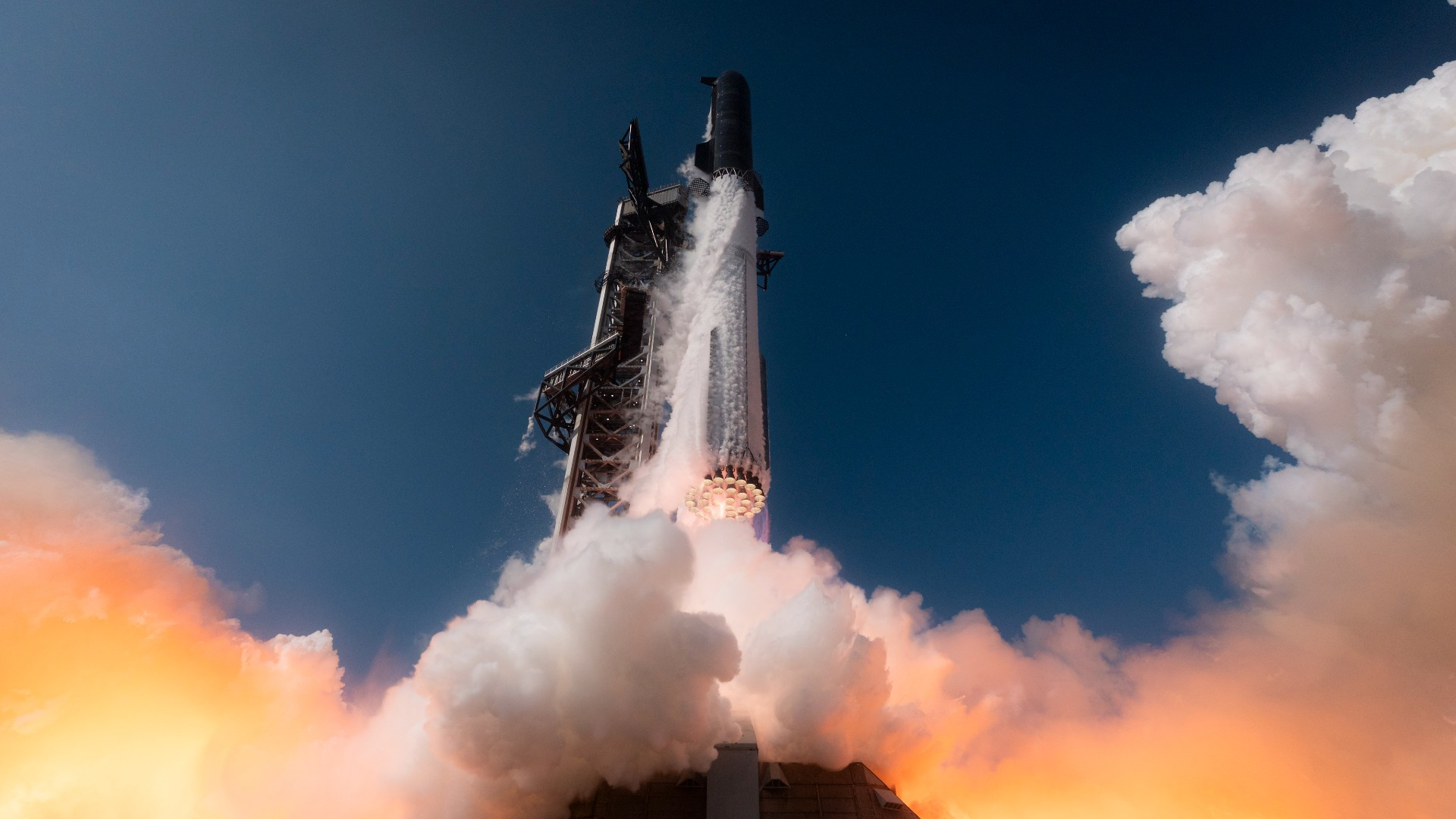
Figure: Starship Launch Photo Source: www.space.com/
This capital feast directly propelled Musk to the pinnacle of global wealth, making him the first super-rich individual in human history with a personal net worth exceeding $1.1 trillion.
Of course, looking back over Musk's series of operations in recent years, it becomes clear that the listing of SpaceX was merely a logical step within his vast industrial layout.
Behind this lies a set of well-planned underlying commercial logic. All seemingly fragmented actions are quietly serving a larger, all-encompassing ecosystem.
Tesla for intelligent manufacturing, xAI for artificial intelligence, Starlink for global networks, and Neuralink for cutting-edge technology - these pieces form layers of groundwork in data entry, manufacturing systems, intelligent computing power, and aerospace technology. They are progressive, interconnected, and, leveraging capital dividends, continuously integrate, iterate, and empower each other, gradually forming a complete business loop capable of self-operation and continuous evolution.
In fact, global technological competition today has long moved beyond the stage of competing with single products or individual technological points. The future of industrial competition will increasingly be a contest of the entire ecosystem chain encompassing computing power, energy, manufacturing, data, and physical execution.
The key to mastering the core discourse power in the next generation of intelligent industries lies more in breaking down industrial barriers across different fields and building a complete ecological closed loop. SpaceX's capital feast might signify the starting point of a new cycle. A deeper-level contest in the technology and industrial sectors has truly just begun.
Deconstructing Musk's Empire Ecosystem Map
In fact, Musk has done many things over the years that, at the time, lacked validation or were even unimaginable. From reusable rockets and global satellite internet to humanoid robots, brain-computer interfaces, and orbital computing, each project requires immense investment, has a long cycle, and is accompanied by extremely high uncertainty.
If we look at these projects collectively, we find they are closely connected. Musk has been consistently filling all the key capabilities needed for the complete tech system he envisions, centered around artificial intelligence, communication networks, aerospace transportation, intelligent manufacturing, and human-computer interaction.
Currently, I roughly break this map down into four parts:
- xAI and Orbital Computing form the intelligent brain;
- Starlink and Starship handle information transmission and physical transportation;
- Tesla and Optimus are responsible for manufacturing and physical execution;
- Neuralink and X connect neural signals and human societal data, respectively.
The development stages of these segments vary. Some have already generated stable commercial revenue, others are entering large-scale validation, and some remain in long-term technological exploration.
However, together they form Musk's highly imaginative industrial moat, continuously extending SpaceX's value boundaries towards communications, computing power, manufacturing, and future space infrastructure.
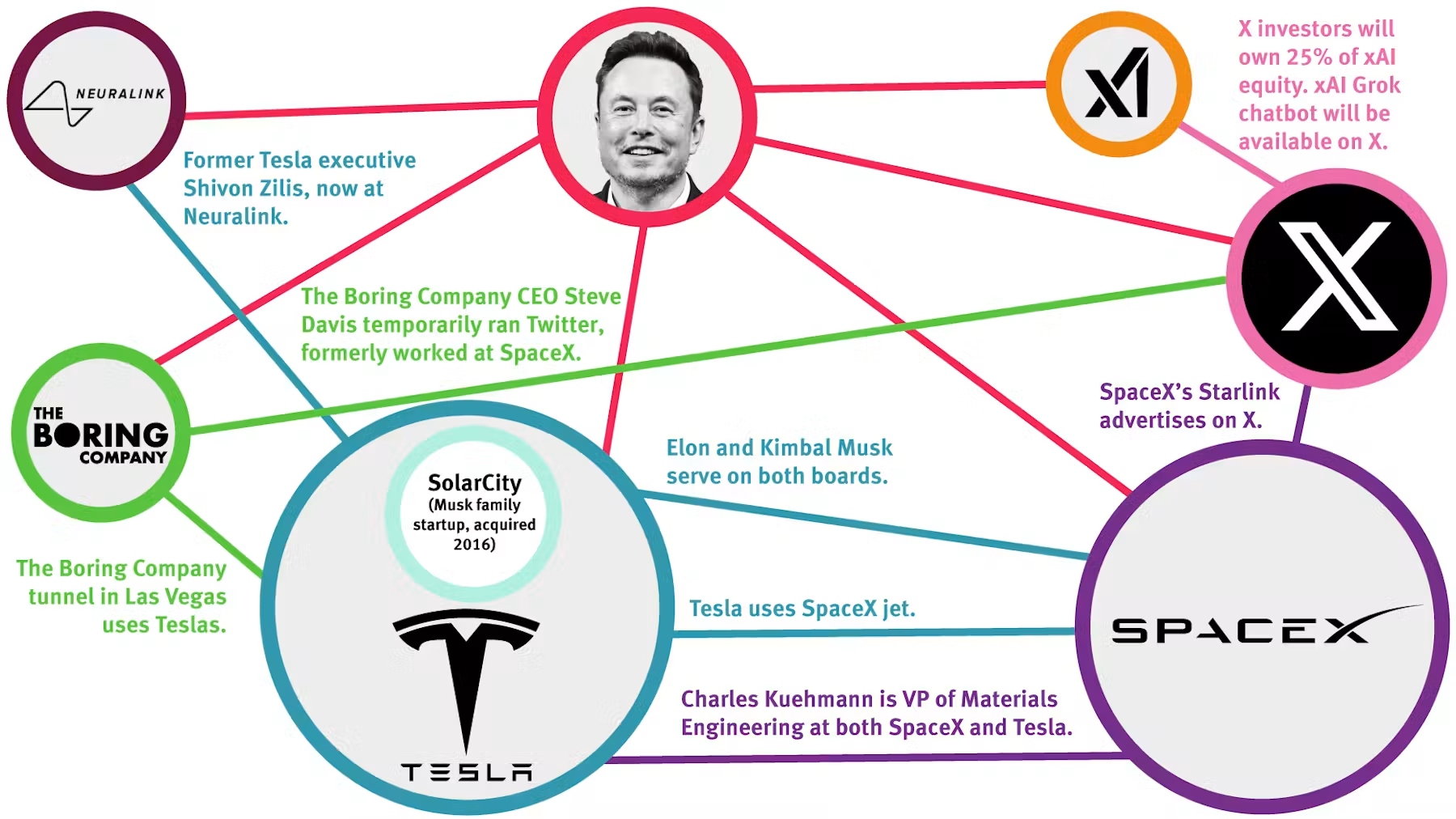
Figure: Musk's Empire Ecosystem Map Source: www.theinformation.com
Brain: xAI + Orbital Computing
xAI is Musk's artificial intelligence company, best known for its product Grok. However, xAI's role is far more significant than just a chatbot. It also controls large models, supercomputing clusters, and AI infrastructure, acting as the intelligence and computing hub within Musk's entire tech system.
In February 2026, SpaceX fully acquired xAI, valued at $250 billion, further integrating AI with its long-developed aerospace technology and Starlink satellite network.
As both companies were under Musk's umbrella, many viewed this acquisition as financial packaging before the IPO, a left-hand-to-right-hand maneuver aimed at paving the way for SpaceX's listing.
But from a longer-term perspective, this acquisition was more about further filling the AI and computing capability gaps within SpaceX's system. After the integration, SpaceX simultaneously covers space transportation, satellite communications, artificial intelligence, and computing infrastructure, forming a tech matrix spanning aerospace and AI.
Therefore, we shouldn't view xAI entirely through the same lens as understanding OpenAI or Anthropic. Grok is just a front-end consumer product for xAI. Its deeper value lies in providing models, computing power, and intelligent decision-making capabilities for Musk's aerospace, robotics, intelligent manufacturing, and future orbital facilities.
The robust and unique computing system behind xAI is also one of its most fundamental differences from ordinary AI companies.
From the perspective of conventional computing clusters, according to xAI's official disclosures, its Colossus computing cluster has deployed 200,000 H100 GPUs. The entire cluster was initially built in just 122 days and then doubled its scale within another 92 days, setting an incredibly fast construction record.
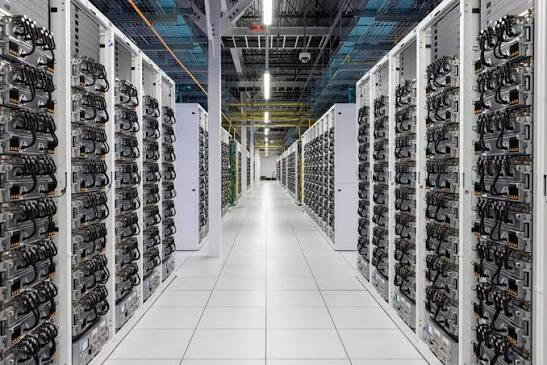
Figure: xAI Colossus Supercomputing Cluster Photo Source: www.naddod.com
This means xAI has entered the most capital-intensive and asset-heavy global AI computing race, building its own intelligent iteration capabilities from the ground up.
Relying on top-tier computing power, xAI can perform billions of uninterrupted virtual simulations for various solid, hardware-intensive scenarios like rocket combustion parameters, robot motion trajectories, space material degradation, and space station construction. It can filter the optimal implementation path from a vast number of options, providing precise intelligent support for the entire system's physical operations.
However, the iterative upgrade of ground-based AI computing systems has already hit inherent physical bottlenecks. This is an inevitable constraint of technological development.
Research data on AI supercomputing shows that while the performance of cutting-edge AI supercomputers roughly doubles every 9 months, the corresponding hardware costs and electricity demands also double annually.
For top-tier clusters like Colossus, industry estimates place hardware costs at around $7 billion and operational power consumption at up to 300 MW. They face four major challenges: energy consumption, heat dissipation limitations, land resources, and network latency. In other words, the iteration ceiling for ground-based data centers is limited. Simply stacking more GPUs or expanding server rooms cannot achieve a qualitative breakthrough.
This is akin to storing items in a fixed-size warehouse; no matter how you rearrange things, the maximum amount you can store is limited.
So, the core reason for Musk's layout of orbital computing is precisely to break free from the fetters of ground-based computing and move into space.
Space offers an inexhaustible supply of free solar energy and a naturally low-temperature cooling environment with low energy loss. Deploying computing clusters in low Earth orbit can completely escape the hard constraints of terrestrial resources, providing a continuous, core source of energy for the ongoing iteration of AI.
So you see, in recent years, Musk has been tirelessly launching satellites. One of the purposes is to forge his space computing network, preparing for the subsequent space computing system.
Reports from Reuters indicate that SpaceX plans to complete an orbital AI computing demonstration as early as the end of 2027 and has already received approval to launch up to 1 million space data center satellites (We will elaborate later on the extremely low cost for Musk to launch satellites, which makes this feasible only for him; others can't really do it).
Last March, xAI acquired the social platform X. One of the purposes of acquiring X is data. X platform daily accumulates massive amounts of real-world human behavior patterns, group preferences, and social dynamics data. Combined with xAI's own accumulated physical scene simulation data, this intelligent system can thoroughly grasp the complete operational logic of both the physical world and human society.
Compared to the static, lagging, sample-based datasets commonly purchased by peers, the endogenous, real-time, authentic, and multi-dimensional data within Musk's system forms an insurmountable differentiated iterative advantage.
Neural Logistics Core: Starlink + Starship
Starlink is the low Earth orbit satellite internet system built by SpaceX. It provides global broadband network coverage through a large number of satellites, especially for remote areas, seas, airspace, and other scenarios beyond the reach of traditional communication networks. It acts as a global communication network built by SpaceX in space and is now widely adopted.
For example, during the Russia-Ukraine conflict, after Ukraine's ground communication facilities were damaged, it relied on Starlink's network services to maintain military command, drone operations, and government communications. After Hurricane Helene caused network outages in parts of the U.S. in 2024, rescue departments deployed numerous Starlink terminals to restore emergency communications.
Starlink is currently highly commercialized. SpaceX's sales revenue in 2025 reached $18.67 billion, with Starlink contributing approximately 60% of the revenue, making it the group's core cash flow source. Currently, Starlink has over 10.3 million global users and approximately 9,600 operational satellites. It has matured from an experimental project into a stable, core infrastructure.
Of course, the core value of Starlink has long transcended ordinary satellite broadband services. Essentially, it is the all-encompassing real-time information network for the entire ecosystem within Musk's system.
Unlike the public perception of it as a "replacement for terrestrial networks," Starlink's core advantage lies in complementary empowerment.
Traditional ground-based fiber optic networks rely on glass media for transmission, suffering from high latency, significant loss, and strong regional limitations, making them unsuitable for the millisecond-level, all-domain collaborative scheduling needs of advanced AI.
However, low Earth orbit satellite networks equipped with inter-satellite laser links can bypass some of the path limitations of undersea cables in intercontinental, long-distance communications. They can achieve lower latency communications by using shorter transmission paths. Moreover, they can build a unique network advantage in scenarios like seamless global coverage, remote area connectivity, extreme scenario communications, and low-latency intercontinental transmission, ensuring the efficient linkage and precise operation of this system.
With Starlink, the future orbital computing center can maintain low-latency interaction with ground-based data systems. For example, a ground terminal initiates an AI inference request, which is uploaded to the space computing center via Starlink for processing, and the inference results are transmitted back to the ground in real-time through Starlink.
Starship is SpaceX's continuously developing next-generation super-heavy lift launch system, responsible for sending people, satellites, and large equipment into space. The "chopstick catch" we saw earlier was Starship's recovery test. After launch, the first-stage booster automatically flies back to the launch tower, where two giant mechanical arms catch it directly. This minimizes refurbishment time and enables rapid reuse, significantly reducing Starship's launch costs.
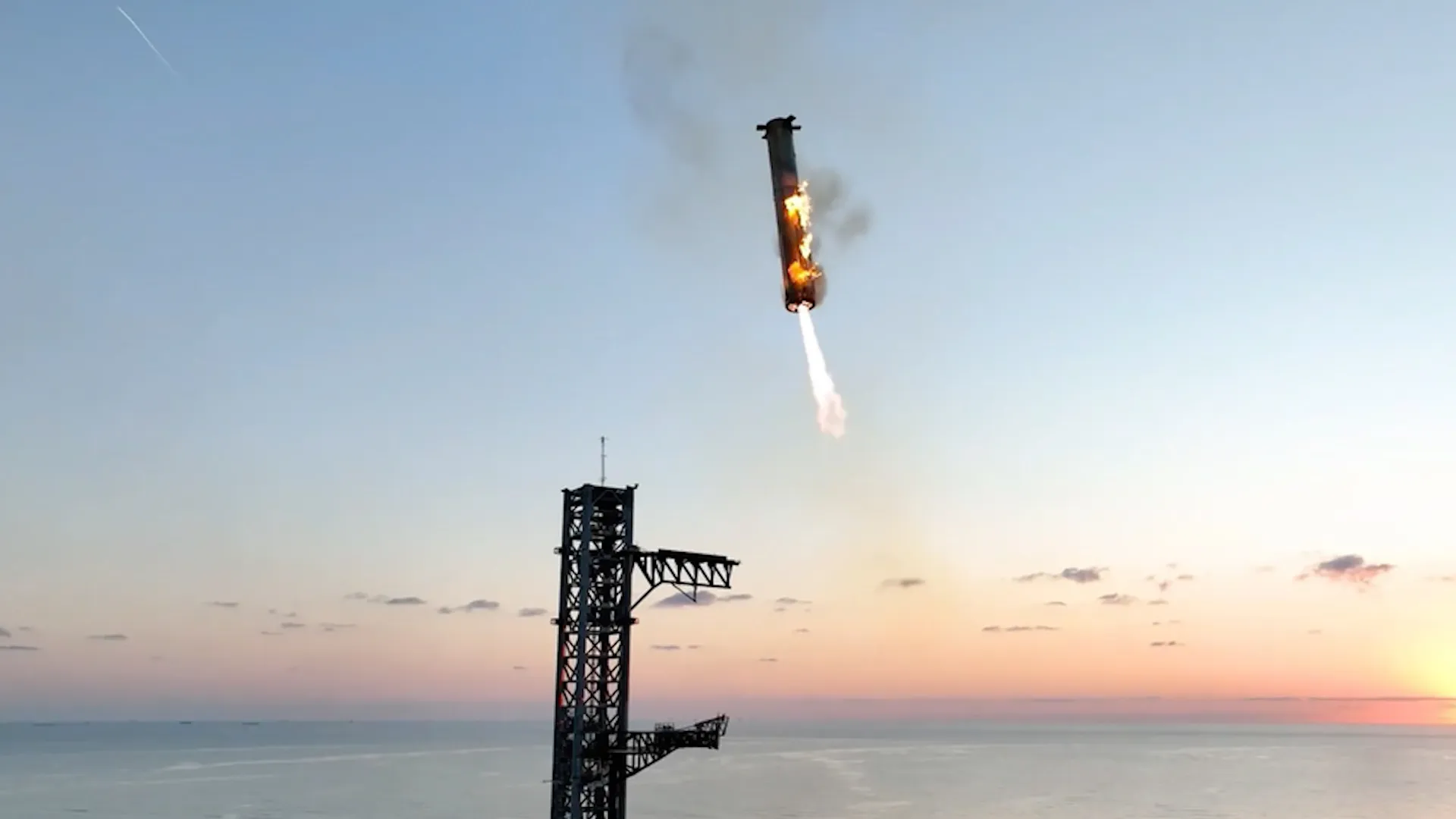
Figure: Starship "Chopstick Catch" Capture Moment Source: san.com
Although Starship is still in the testing phase and hasn't established stable commercial launch pricing, Musk has previously stated that the target per-launch cost after maturity could be under $10 million, with the long-term marginal cost potentially approaching $2 million.
What does this mean? SpaceX's current Falcon 9 standard commercial launch price is around $74 million, which is already considered very low. For comparison, NASA's SLS costs between $2 billion and $4 billion per single mission.
Therefore, Starship, with its such low cost, would be the world's only scalable, low-cost, repeatedly reusable space transport vehicle, capable of delivering over 100 tons of payload to low Earth orbit. Traditional aerospace launches are expensive and infrequent, unable to support large-scale commercial space activities. In contrast, Starship dramatically reduces space operations costs through technology reuse, mass production, and high-frequency iteration.
Leveraging its immense payload capacity and low-cost advantage, Starship can batch-complete core tasks such as deploying orbital computing nodes, forming large Starlink satellite constellations, maintaining and operating space equipment, and ferrying materials between Earth and space.
Starlink handles the lightning-fast flow of information, while Starship handles low-cost physical deployment. One is virtual, the other physical; one handles information, the other matter. Together, they completely open a two-way communication channel between space and Earth, allowing Musk's ecosystem to break free entirely from the competitive limitations of traditional ground-based technology.
Physical Body Core: Tesla + Optimus
We won't go into much detail about Tesla, the electric vehicle company.
In January 2026, Tesla officially announced the permanent discontinuation of its two flagship models, the Model S and Model X. In fact, these two models were once Tesla's flagship products and stable, high-margin core businesses. However, their sales declined, industry competition intensified, and they consumed significant R&D resources, production line capacity, and core talent over time, while their value in empowering the all-domain intelligent closed-loop layout continued to weaken.
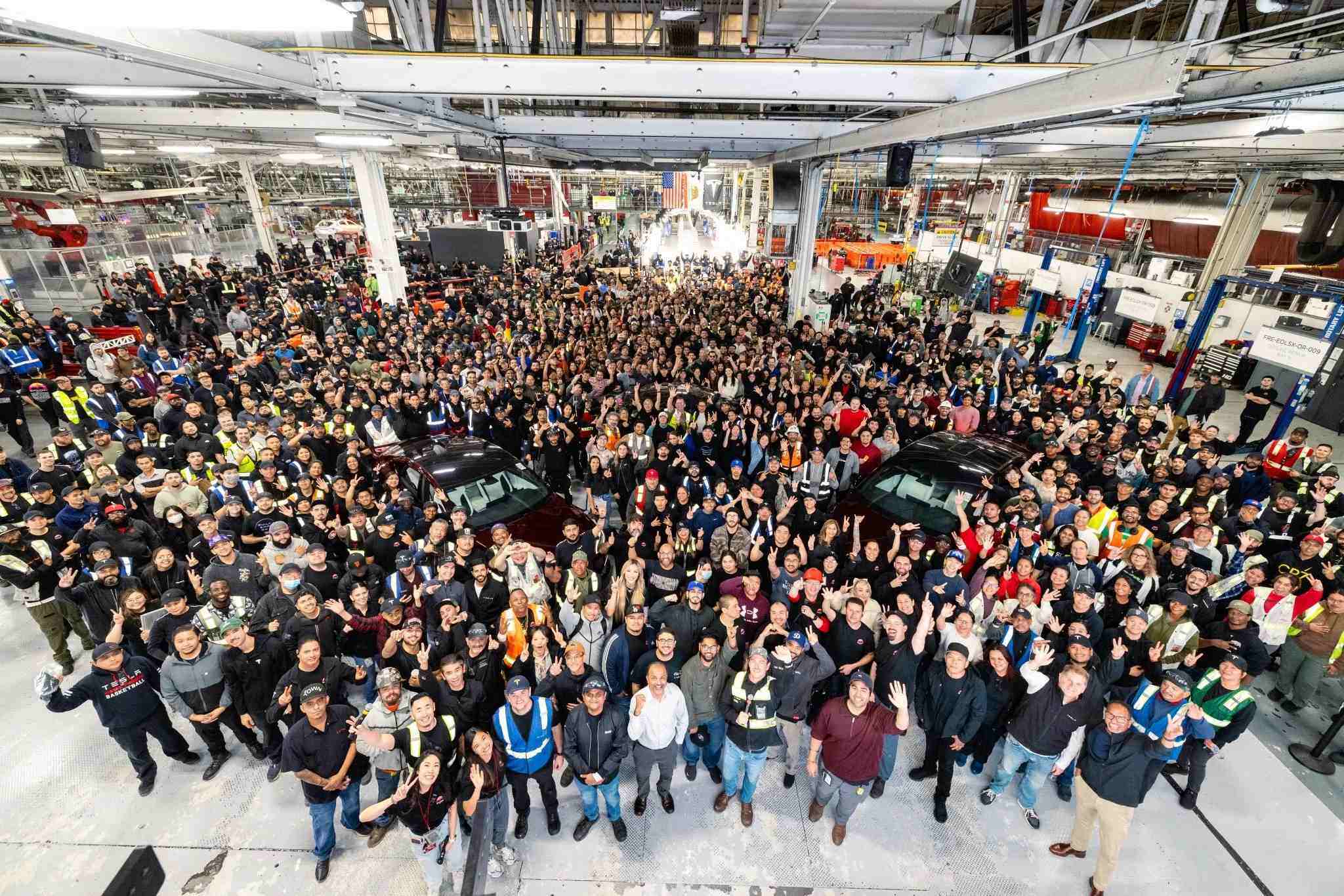
Figure: Group photo of Fremont factory employees + last Model S / Model X Source: cdn.shopify.com
Axios, a reputable media outlet, reported that the core purpose of discontinuing the Model S and Model X was to free up premium production capacity and factory space at the Fremont plant to fully shift focus to the development and mass production of the Optimus humanoid robot. Similarly, The Guardian pointed out that the essence of this product line adjustment is the iteration of Tesla's corporate positioning: a comprehensive transformation from a traditional electric vehicle company into a "Physical AI Company."
In reality, a car is essentially a smart robot on wheels, while Optimus is a general-purpose robot that walks on two legs. The underlying logic of the two is completely interconnected, sharing perception algorithms, intelligent decision-making, motion control, supply chain systems, and mass production capabilities. The core reason for discontinuing the traditional flagship models is to concentrate all high-quality resources on empowering the iteration and deployment of Optimus.
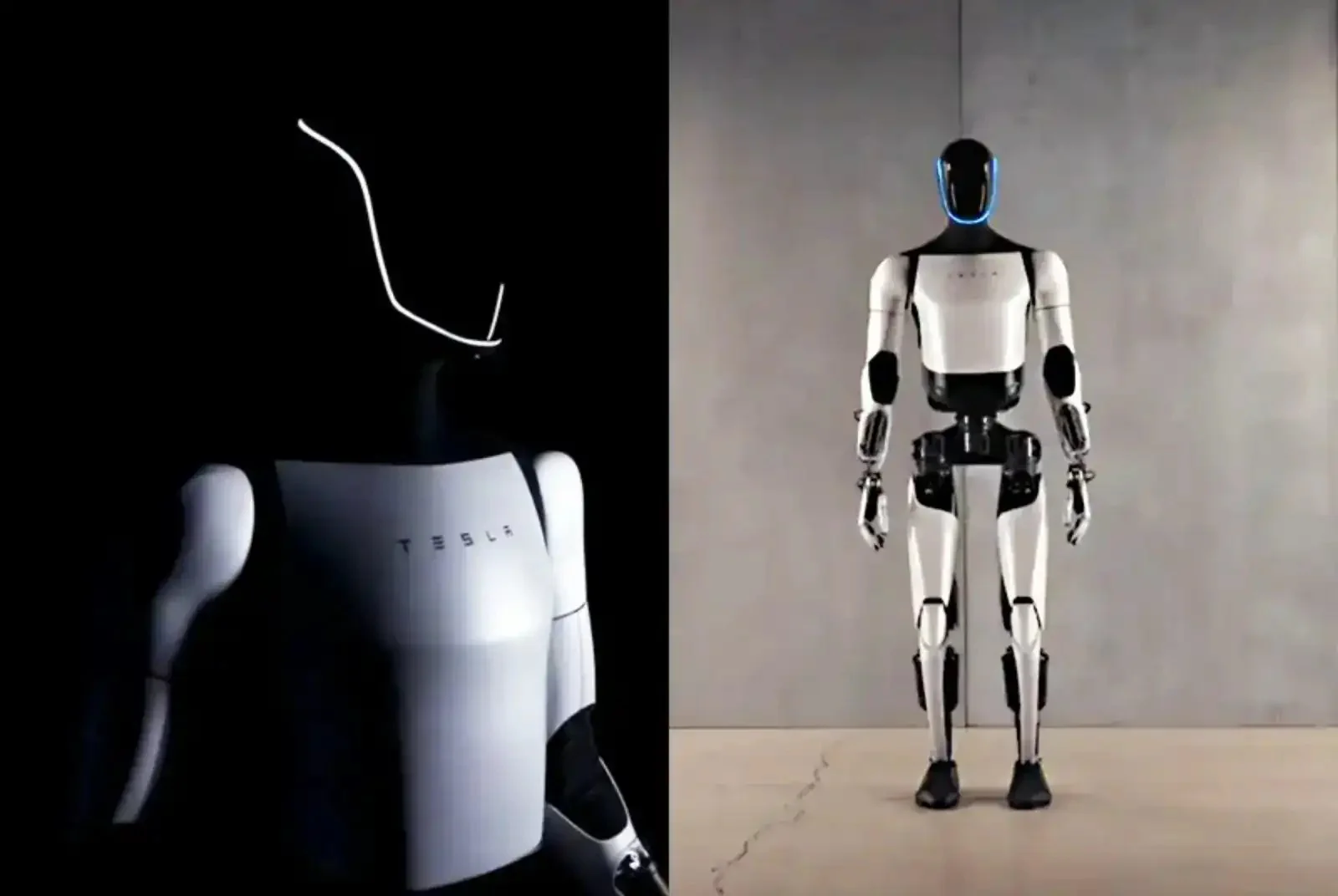
Figure: Full body shot of Tesla Optimus humanoid robot Source: tesery.com
In fact, Musk's fondness for humanoid robots is not a secret, and he holds great expectations for Optimus. Optimus is by no means an ordinary consumer tech product. It is a general-purpose industrial worker adaptable to the entire industry chain, capable of handling high-precision, repetitive, and high-risk tasks like aerospace equipment assembly, industrial precision manufacturing, and hazardous equipment inspection and maintenance. In the future, it could even be stationed in space bases to perform various extreme environment operations, filling the physical execution短板 of the system.
On the other hand, the real physical data generated during Optimus's all-domain operations, such as motion trajectories, environmental parameters, and equipment faults, will be fed back in real-time to the xAI hub. This provides a continuous stream of authentic data support for training algorithm models, optimizing hardware devices, and upgrading operational schemes.
So you see, Tesla's mature global supply chain and mass production system lay a solid industrial foundation for the commercialization of robots. This creates a complete self-sustaining cycle of hardware production, scenario application, data feedback, and intelligent iteration, allowing AI's virtual computing power to truly materialize into sustainable physical productivity.
Human-Machine Interface Core: Neuralink + X
Another track is Neuralink + X.
Actually, I've been aware of Neuralink for a long time, and its role feels very futuristic, even sci-fi. Neuralink is Musk's brain-computer interface company. Its core concept is to implant a tiny microchip into the human brain, read neural signals via electrodes, and convert these signals into operational commands that a computer can understand.
Its most immediate application is primarily to help patients with paralysis or severe mobility impairments control computers, phones, and robotic arms using only their "thoughts." For example, after implanting the chip, a patient doesn't need to move their hands or feet; they only need to generate an operational intention in their mind to move a cursor, type, or control external devices.
In simpler terms, Neuralink establishes a direct communication channel between the human brain and machines. In the short term, it's primarily a medical technology to help patients regain communication and mobility. The long-term goal is to further enhance the efficiency of information interaction between humans, AI, and robots.