






EDGE 幣價閃崩 77%:外部操縱,還是內部劇本?


- 核心觀點:去中心化永續交易所 edgeX 的原生代幣 EDGE 於 6 月 2 日暴跌超過 77%,項目方排除駭客攻擊,指向外部市場操縱,但此事件暴露了其在高控盤、低流通及分配不透明下的結構性風險。
- 關鍵要素:
- EDGE 價格在短時間內從 1.14 美元暴跌至 0.32 美元,跌幅超過 77%,目前已反彈至 0.64 美元,市值約 2.5 億美元。
- 項目方回應稱協議並未遭受入侵,價格異常係特定外部主體的市場操縱行為所致,目前正與交易所合作進行調查。
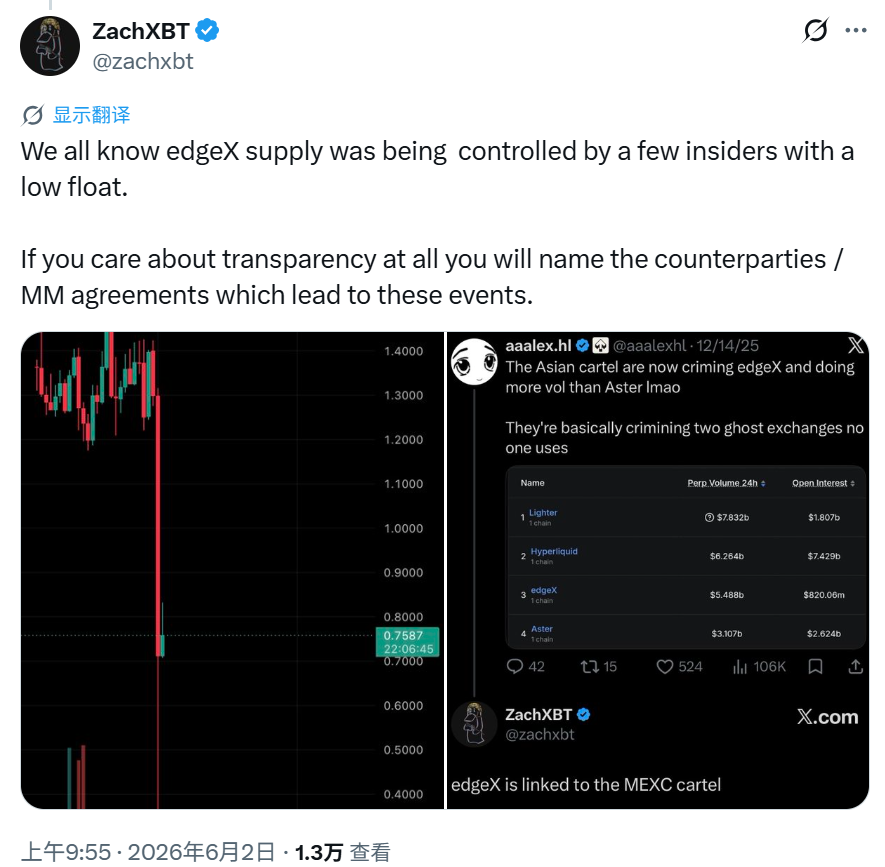
- 鏈上偵探 ZachXBT 指出,EDGE 供應長期由少數內部人士控制,流通量低,並要求公開做市商資訊。
- 在先前的空投爭議中,社群承諾的 25% 代幣分配,實際上僅約 4% 分配給一般交易者,約有 14%(約 9460 萬美元)流向了合作夥伴錢包。
- 積分兌換機制不透明,預估價值與實際到手差距超過 80%,部分早期貢獻者面臨極低的分配狀況。
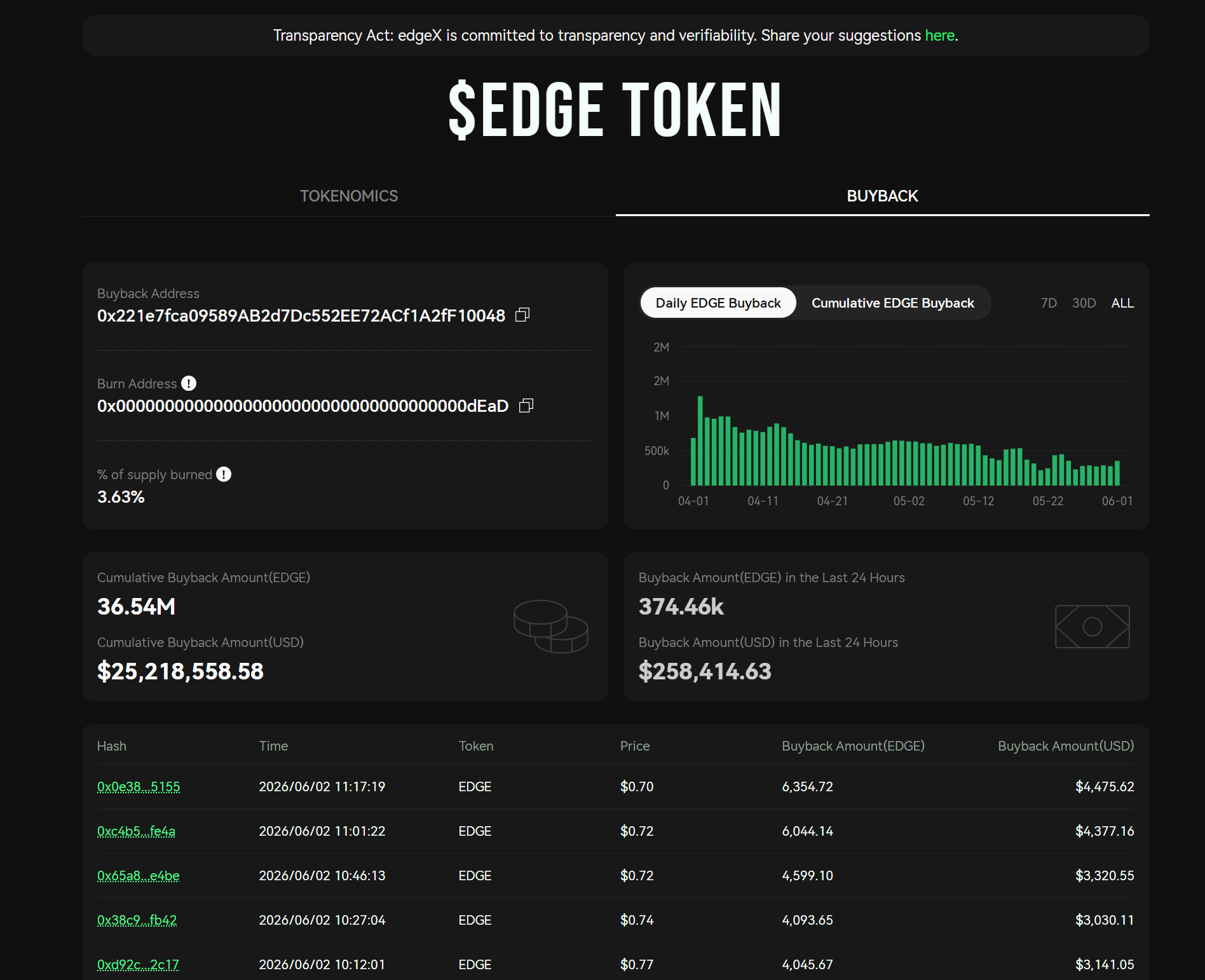
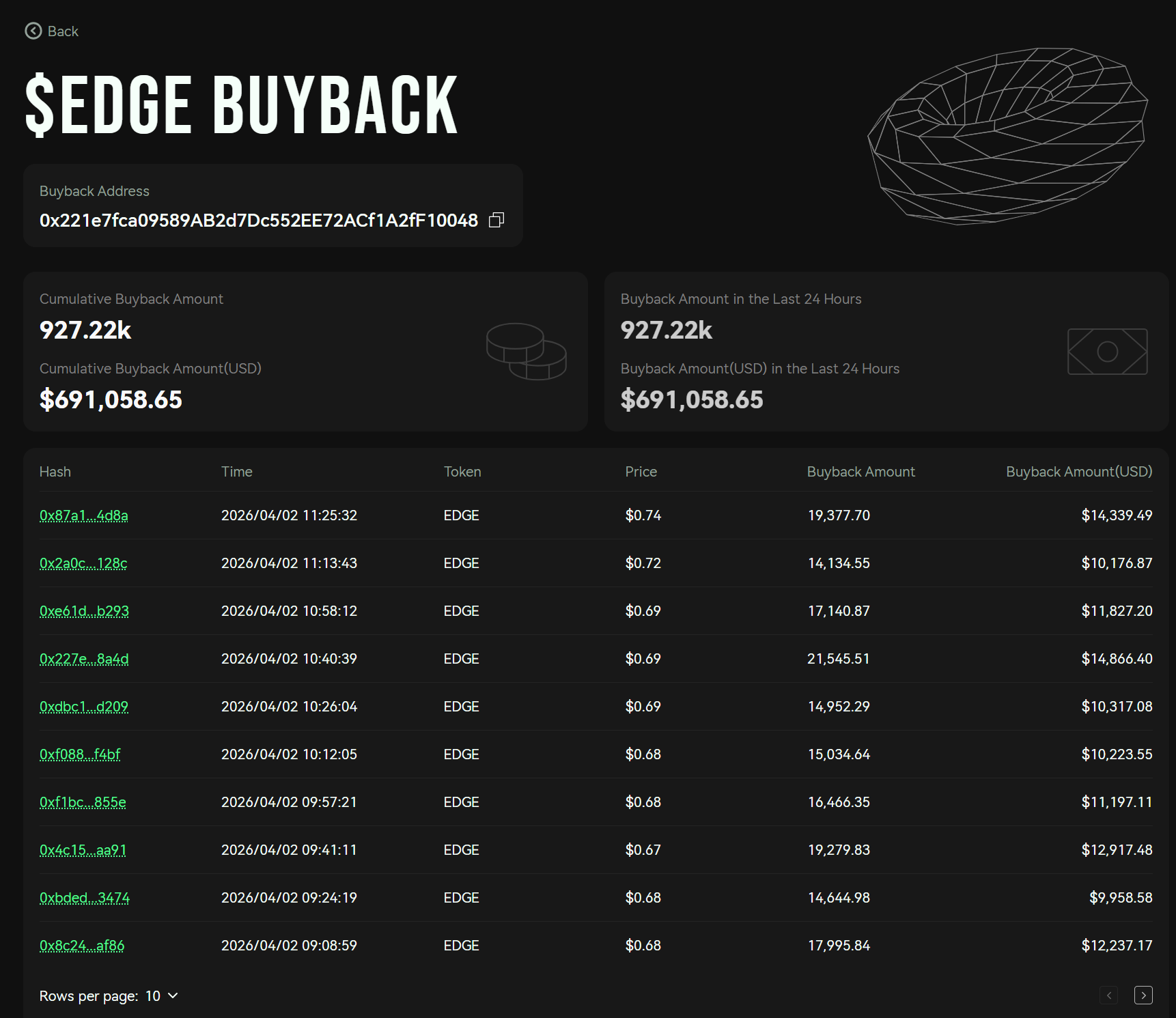
- 協議 V2 上線後調整了代幣經濟學,將全部利潤用於回購,目前已回購約 3654 萬枚代幣(約 2500 萬美元)。
- 項目曾獲得 Circle Ventures 與 Amber Group 的投資,過去 30 天協議費用收入為 1070 萬美元,成交額達 427.65 億美元。
Original author: Mahe, Foresight News
Around 4:00 AM on June 2, the native token EDGE of edgeX experienced severe and unusual volatility. Its price plummeted over 77% from around $1.14 within a short period, hitting a low of $0.32 before rebounding to approximately $0.64, with a market cap of about $250 million.
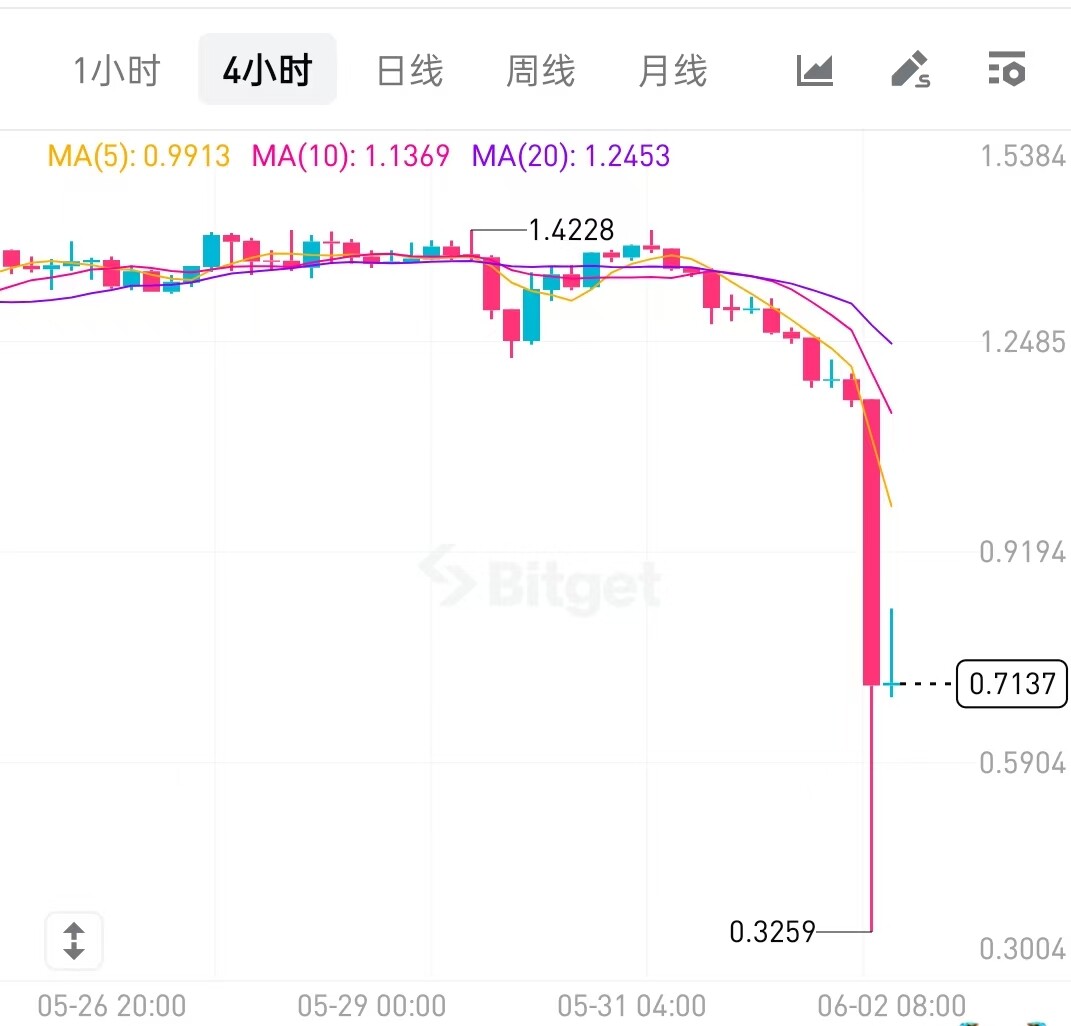
The edgeX official team responded promptly, clearly ruling out a hacker attack or platform security breach, and pointing the finger at "market manipulation deliberately carried out by an external specific entity."
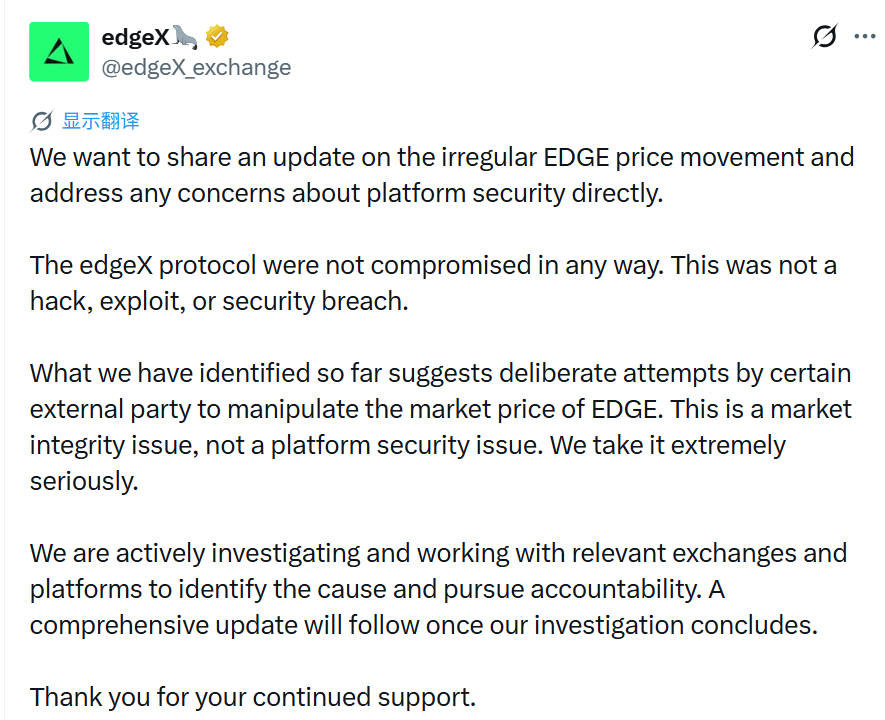
edgeX stated that its protocol was not compromised and there was no hacker attack or security vulnerability. The unusual price movement is suspected to be market manipulation deliberately perpetrated by an external entity, classifying it as a market issue rather than a platform security problem. The team is currently actively investigating and cooperating with relevant exchanges and platforms to track down the responsible party. The complete investigation results will be released upon conclusion.
edgeX emphasized that core contracts like SpotVault are operating normally, with no suspicious activity detected, further focusing the spotlight on external market behavior rather than the protocol itself.
On-chain sleuth ZachXBT commented on the incident, pointing out that the supply of EDGE has long been controlled by a small number of insiders, with low circulating supply. He called on the project team to disclose information about market makers and counterparties to enhance transparency.
As the incident unfolded, many users directly linked this volatility to the project's past actions, expressing disappointment in the team's integrity. One community member bluntly stated: "No one is even discussing the EDGE crash anymore. This project team lacks credibility and breaks promises; there's really no desire to buy the dip."
Since edgeX's Token Generation Event (TGE), the token price surged from $0.7 to $1.5, and subsequently fluctuated around $1.4. Additionally, the official team launched a dedicated token website to self-declare transparency. At the end of May this year, the protocol deployed V2 and adjusted its tokenomics so that all profits would be used to repurchase EDGE. According to its official website data, approximately 36.54 million tokens have been repurchased so far, with a total value of around $25 million.
Furthermore, relevant information indicates that the protocol had received investments from Circle Ventures and Amber Group, although the specific amounts were not disclosed.
Past Airdrop Controversy Sowed the Seeds for the Subsequent Crash
This incident is inseparable from the background of edgeX's previous airdrop controversy. In April 2026, this author detailed the entire process of community dissatisfaction following the TGE in an article titled "The Inside Story of the edgeX Airdrop Mishap: A Carefully Designed Harvest?". The project promised the community a 25% token share, but the actual proportion allocated to regular traders was only about 4%, while approximately 14% (valued at roughly $94.6 million at the time) flowed to partner wallets. Arkham's token flow graph shows that at least 80 associated addresses were created in 2025, exhibiting consistent behavior patterns: small test transactions followed by large deposits, and concentrated outflows post-TGE, involving approximately $90 million in token transfers, with some funds flowing to exchanges.
The core controversy revolved around the opaque points-to-token conversion mechanism. Users reported vast differences in conversion ratios for the same trading volume. Furthermore, the gap between the estimated point value (pre-TGE market expectations of $30-40 per point or higher FDV) and the actual allocation exceeded 80%. Early contributors and NFT holders also encountered cases of "the lowest distribution on the network." Community members flocked to the official account on Twitter to vent their anger, leading the team to close comments temporarily.
Afterward, edgeX announced it would lock up the controversial 14% share for one year and initiate a buyback, but refused the community's demand for burning on Ethereum.
These unresolved issues directly laid the groundwork for the current volatility: with tokens concentrated in a few addresses or affiliated parties, it becomes easier for external entities to influence the price through large-scale operations. The low circulating supply is not accidental but an inevitable result of the initial distribution and lock-up arrangements. When abnormal selling pressure emerges in the market, the lack of sufficient depth to act as a buffer can easily trigger a chain reaction.
Structural Risks and the Test of Transparency
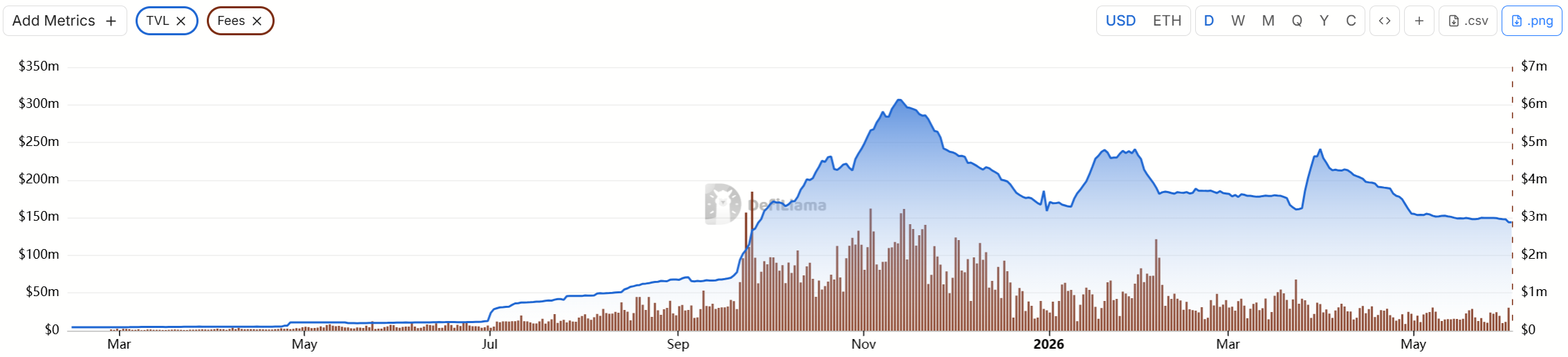
edgeX once carved a niche in the sector with its trading speed, low slippage, and innovations in perpetual contracts. The project experienced a phase of upward price movement post-TGE, with both trading volume and fee revenue frequently ranking among the top in the DeFi space. According to the latest data from DefiLlama, the protocol generated $10.7 million in total fee revenue over the past 30 days, and the trading volume on its perpetual DEX reached $42.765 billion over the same period.
However, from the airdrop distribution controversy to this price anomaly, the model of "low circulation + high control + opaque market making" has become a repeatedly successful "chain harvesting scheme" for new projects in recent years. They pay lip service to community-first values, but their wallets honestly funnel tokens to affiliated parties, essentially operating a single-player game disguised as DeFi.
Allegations of external manipulation are difficult to verify instantly, but the traceable anomalous on-chain transfers in and out are enough to trigger community alert.
Ironically, even as it faced the turmoil of a crashing token price, prediction markets for the EDGE token price have quietly appeared on Polymarket.
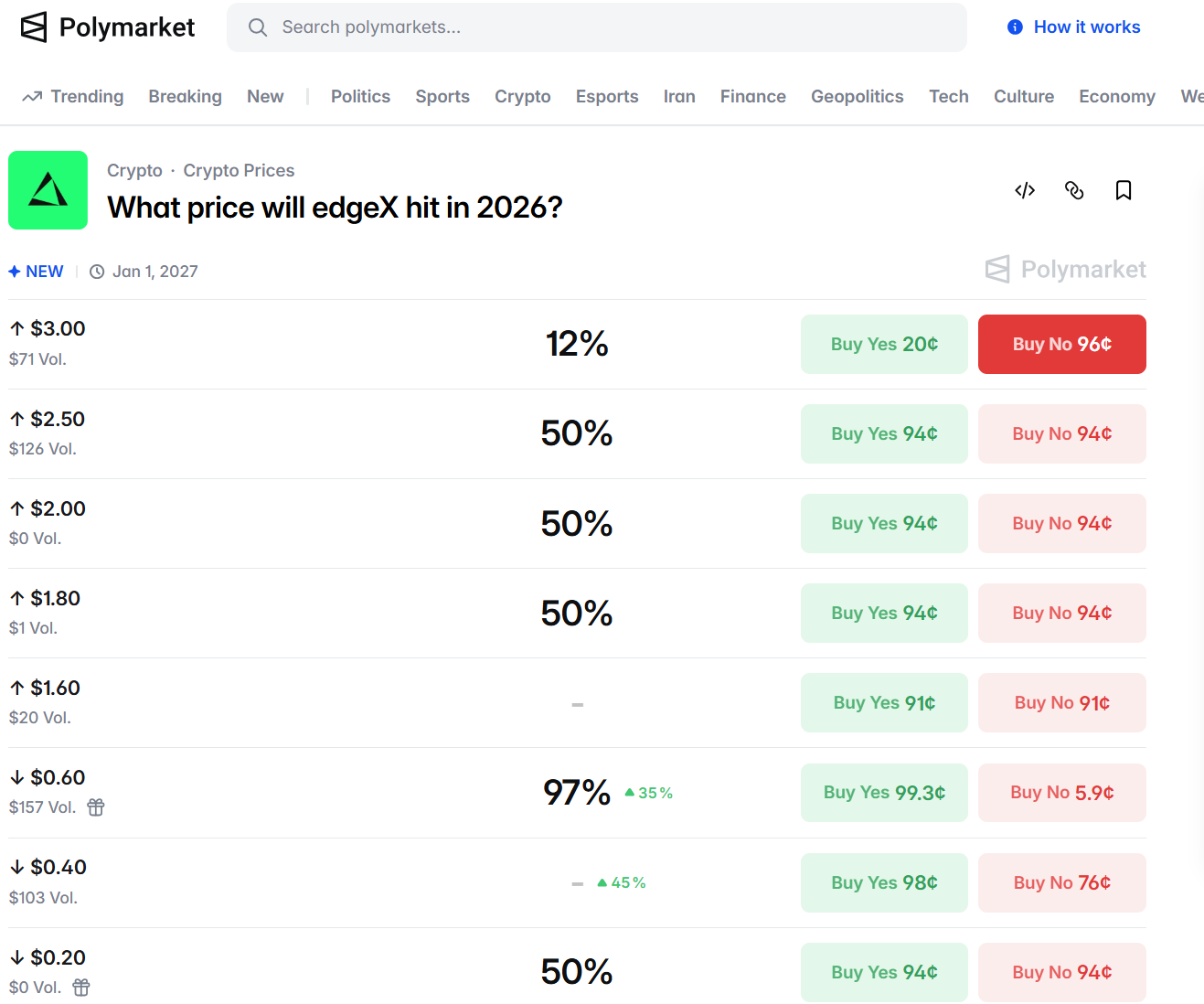
While the project team is busy trying to prove its innocence, retail investors stuck holding the bag are angrily seeking recourse. Meanwhile, on Polymarket, some players have already started betting on where its price will end up this year.


